
The government plays no role in a market-based economy.
Economists argue that individuals should continue to consume until total benefit equals
total cost.
The utility-maximizing rule says that a person will maximize utility by choosing goods
so that the marginal utility for each good is equal.
Among the problems associated with subsidizing an industry in the hope of establishing
a worldwide monopoly is that if two nations subsidize firms in the same industry, each
could lose money.

Giving contributors a small gift is one way to overcome the free-rider problem.
The market system works by getting each person, motivated by his or her own
self-interest, to produce products for other people.
If supply decreases, the increase in price will be smaller if demand and supply are
highly elastic.
The decision to smoke cigarettes is not subject to present bias because the health risks
of smoking cigarettes are widely known.
If you can consume a good at the same time that others consume the same good, the
good is nonrival in consumption.
At Hillary’s current level of consumption, / = 18 and / = 15. Hillary can
increase her utility by increasing her consumption of good X and reducing her
consumption of good Y.
Utility is the benefit a consumer gets from consuming a good.

A perfectly competitive firm has no control over the price that it charges.
Import restrictions create an incentive to smuggle.
If a firm produces components of its goods and services in other countries, it is said to
be outsourcing.

Present bias occurs because there is a mismatch in the timing of benefits and costs.
Firms in a monopolistically competitive industry have small economies of scale which
causes no barriers to entry.
Positive economics answers the question, “What ought to be?” Normative economics
predicts the consequences of alternative actions, answering the questions, “What is?” or
“What will be?”
If demand is elastic, then when price rises, total revenue will decrease.

Rent controls are always efficient in helping the poor and negatively impacting the
wealthy.
Discrimination can affect the income that workers earn due to their race or gender.
If the demand for a product decreases by 16 percent and the supply elasticity is 1.2 and
demand elasticity is 0.80. Then the equilibrium price will decrease by 6 percent.

It takes longer to set up a business in Canada than in Mozambique.
As the price of a product rises, the quantity supplied decreases.
Money is an example of a scarce factor of production.
If producers differentiate themselves by location, consumers can reduce their travel
costs.

Asymmetric information occurs if John who is buying Kim’s used Toyota Corolla has
the same amount of information as Kim.
The opportunity cost of something is what you sacrifice to get it.
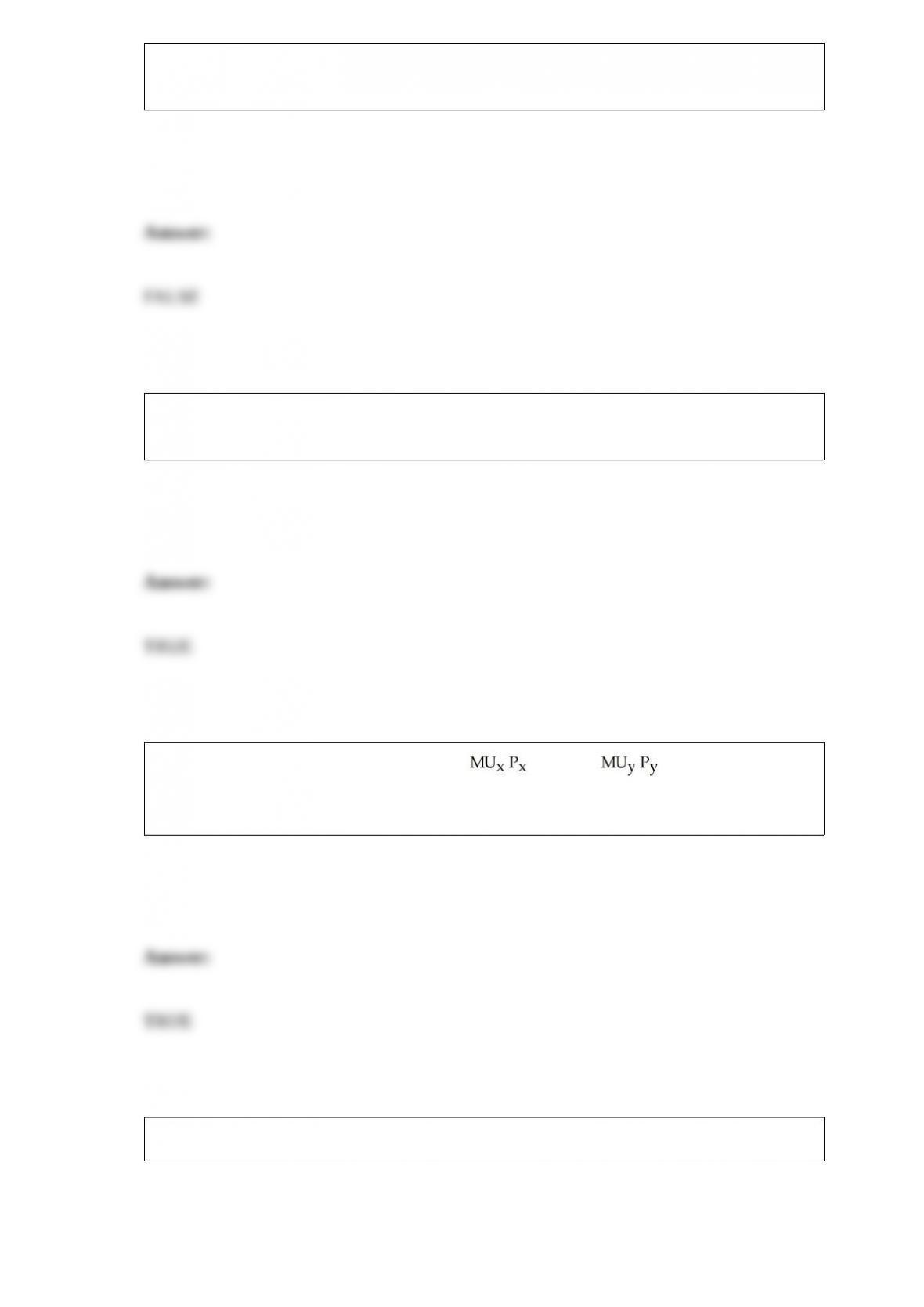
A decrease in the price of a product decreases the marginal utility per dollar of that
product.
The small number of firms is what differentiates oligopoly markets from the other three
market structure types (perfect competition, monopoly, and monopolistic competition).

If consumer income and all prices double, then the budget line does not change.
Suppose a firm experiences lower average costs whenever output increases in the long
run. Then we would expect the firm to have:
A) a U-shaped long-run average cost curve.
B) an L-shaped long-run average cost curve.
C) a long-run average cost curve that always decreases.
D) a minimum efficient scale relatively close to the origin.
The idea behind the pollution tax equal to the external cost per unit of pollution is to:
A) increase the social benefit to be above the marginal cost.
B) internalize the externality.
C) allow the firm to evade external costs.
D) drive polluting firms out of developed countries.
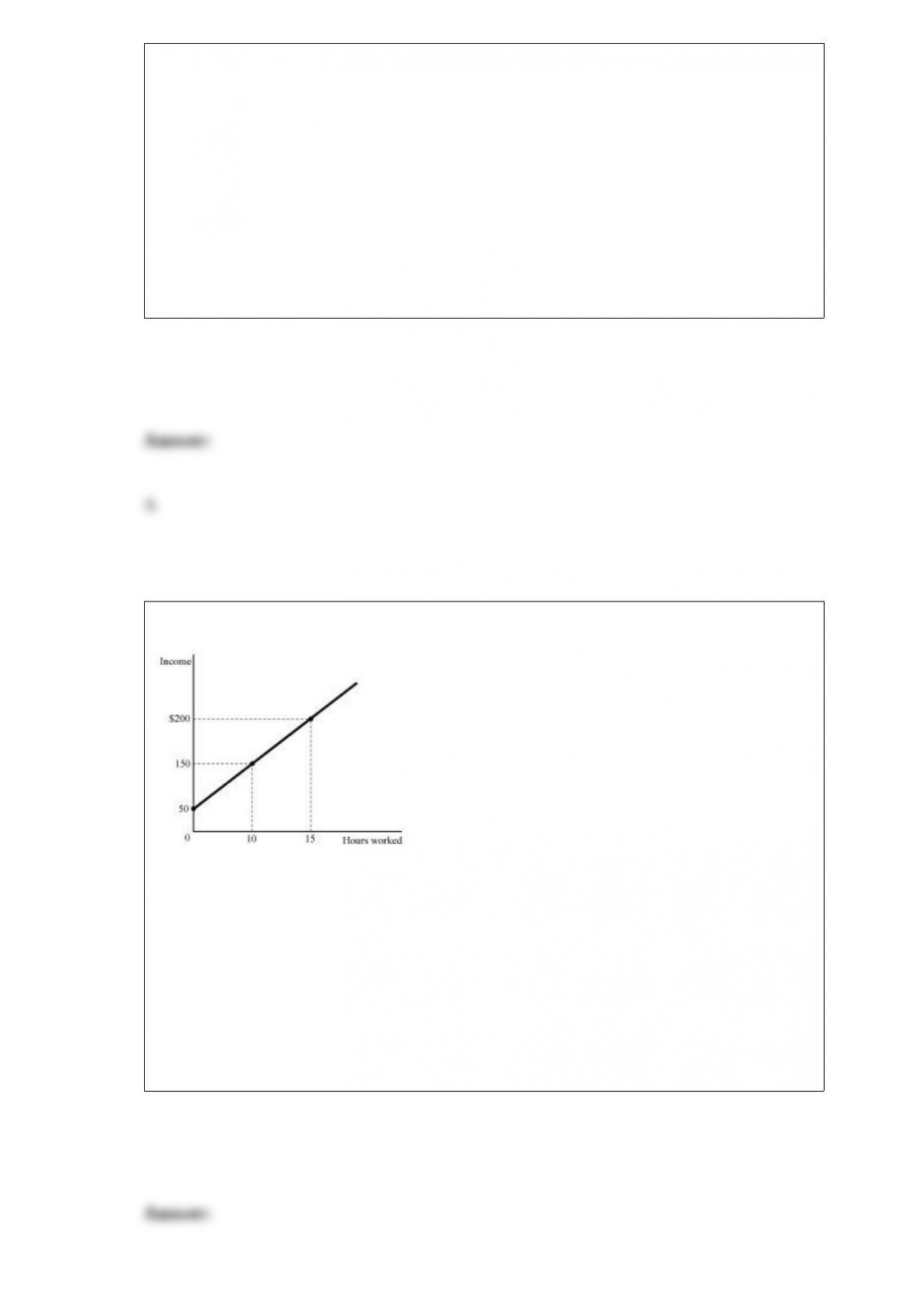
Refer to Table 7.3. The marginal utility of the first book is:
Table 7.3
A) 20.
B) 22.
C) 1.10.
D) 21.
In communities where more people carry property insurance you would expect people
to be:
A) less careful about securing their possessions.
B) more careful about securing their possessions.
C) less likely to engage in behaviors that would be classified as moral hazard.
D) paying less for property insurance relative to communities where fewer people carry
property insurance.
Refer to Figure 1.1. Slope of the relationship or the wage rate shown in Figure 1.1 is:
Figure 1.1
A) $5.15 per hour.
B) $10 per hour.
C) $13.33 per hour.
D) $15 per hour.

The duopoly price strategy provides ________ incentive to maintain cartel pricing as
compared to the grim trigger strategy.
A) a greater
B) less of an
C) the same
D) The answer depends on the firms’ average cost curves.
Scenario 8.1: Ana used to work for a Advertising agency where she earned a yearly
salary of $60,000. She got tired of working for another company so she opened his own
Advertising company. Ana now pays her designer $40,000 per year and spends $25,000
for rent and utilities. She earns $120,000 in annual revenue.
Refer to Scenario 8.1. Ana’s accounting profit is:
A) $65,000.
B) $55,000.
C) $5,000.
D) $120,000.
The Celler-Kefauver Act of 1950:
A) established the FTC.
B) closed down a loophole in the Clayton Act by outlawing mergers through the
purchase of another firm’s physical assets.
C) closed down a loophole in the Sherman Act by outlawing mergers through the
purchase of another firm’s physical assets.
D) banned tying contracts.
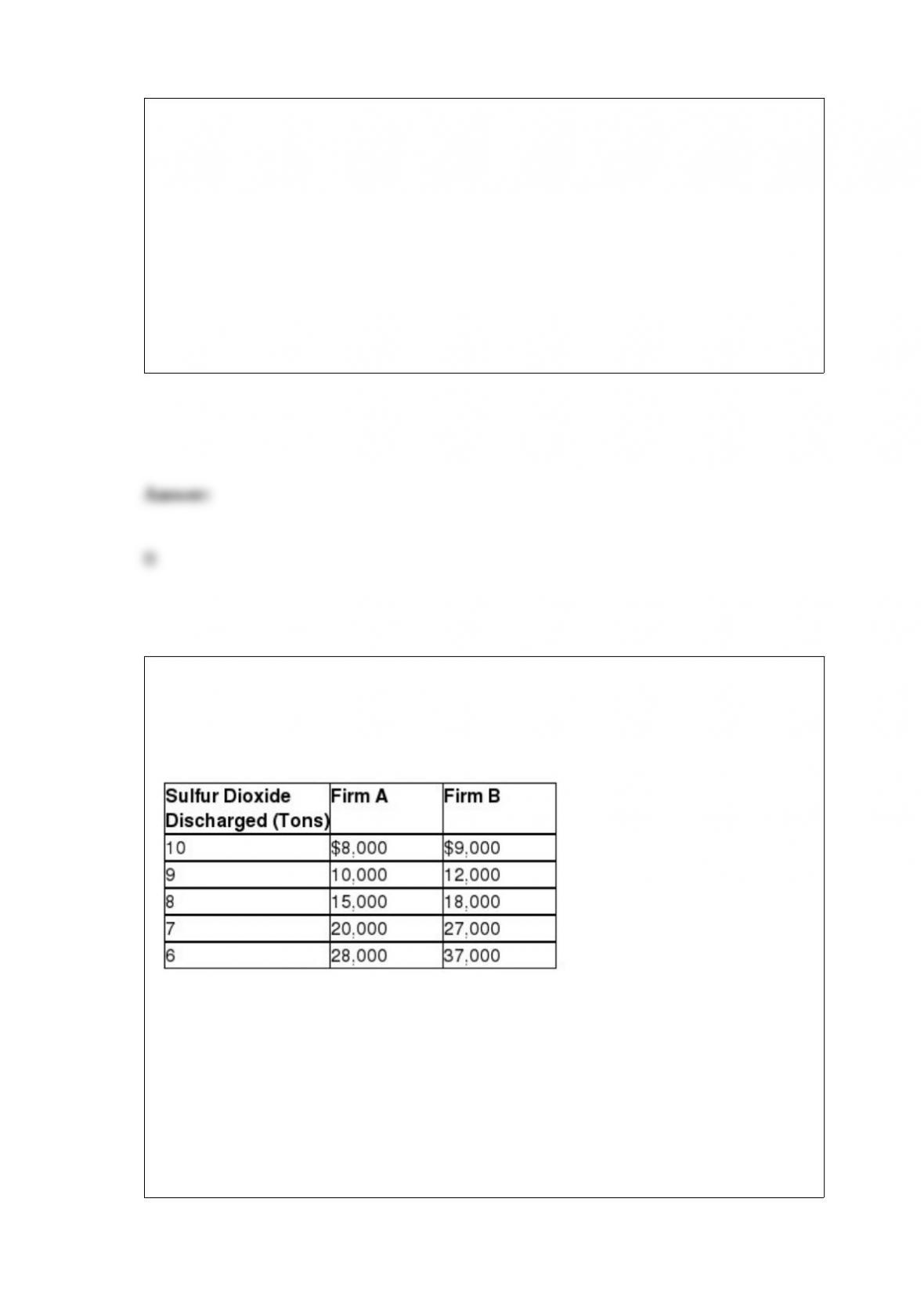
Table 16.3 shows the production cost for two utilities at different levels of sulfur
dioxide emissions. Assume that the government issued 8 marketable pollution permits
to each firm. If Firm A contemplates selling one permit to Firm B, what is Firm A’s
willingness to accept?
Table 16.3
A) $3,000
B) $5,000
C) $6,000
D) $7,000

Suppose that Sun beach only has three movie theaters. One movie theater decreases its
movie ticket price and later that same day, the other two do the same. Which of the
following is true?
A) This is illegal because the movie theater are colluding.
B) This is an example of explicit price fixing.
C) The first movie theater to lower price is probably the implicit price leader.
D) All of the above are true.
If demand for a product increases, ceteris paribus, the equilibrium:
A) price increases.
B) price decreases.
C) price remains unchanged.
D) quantity decreases.

Due to the existence of external benefits associated with public goods:
A) private markets will lead to an efficient allocation of resources.
B) government intervention can possibly improve on private market outcomes.
C) private markets will correct for the underproduction of the good.
D) the free-rider problem is eliminated.
If a technological advance makes it possible to produce computers at a lower cost:
A) the demand for computers increases.
B) the demand for computers decreases.
C) the supply of computers increases.
D) the supply of computers decreases.
Relative to hotdogs, hotdog buns are considered:
A) complements.
B) substitutes.

C) inputs.
D) luxury goods.
A firm facing a linear demand curve maximizes its total revenue where demand is:
A) perfectly inelastic.
B) inelastic.
C) elastic.
D) unitary elastic.
In Figure 2.3, point B:
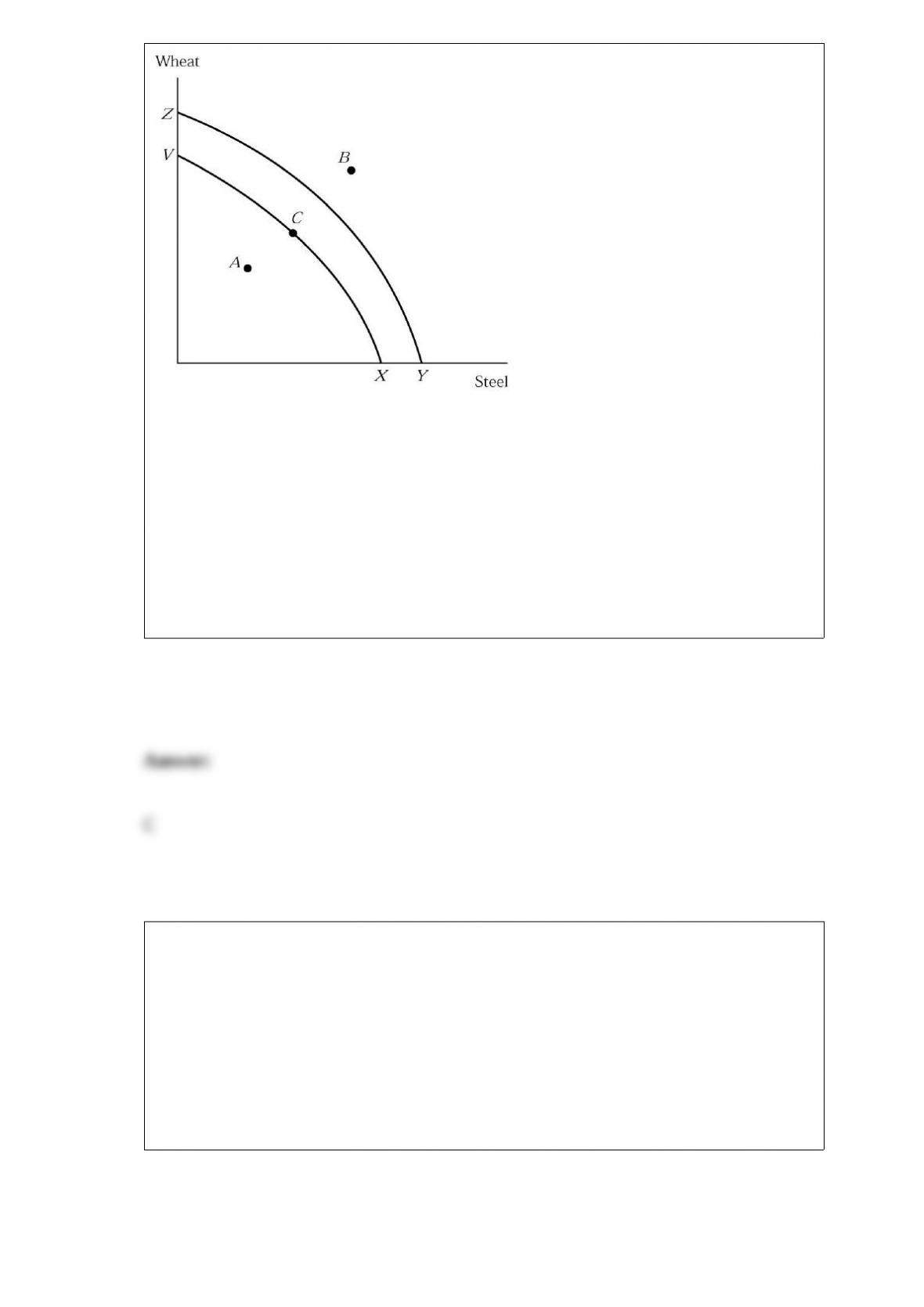
Figure 2.3
A) implies unemployment of some resources.
B) is the optimum.
C) cannot be produced.
D) all of the above.
The saying that “There’s no such thing as a free lunch” refers to the:
A) marginal principle.
B) spillover principle.
C) principle of opportunity cost.
D) reality principle.

A firm produces its product using both capital and labor. When it does not change its
capital usage, but doubles its labor input, its output increases by less than 50 percent.
Which of the following is the most likely explanation of this finding?
A) the principle of opportunity cost
B) the principle of diminishing returns
C) the marginal principle
D) the spillover principle
A firm will not shut down in the long run as long as the firms revenue:
A) is larger than the firm’s variable cost.
B) is greater than the firm’s marginal cost.
C) is greater than the fixed cost.
D) is less than the total cost.
As price falls along a particular demand curve, consumer surplus:
A) decreases rapidly.
B) decreases by a very small amount.
C) remains constant.
D) increases.
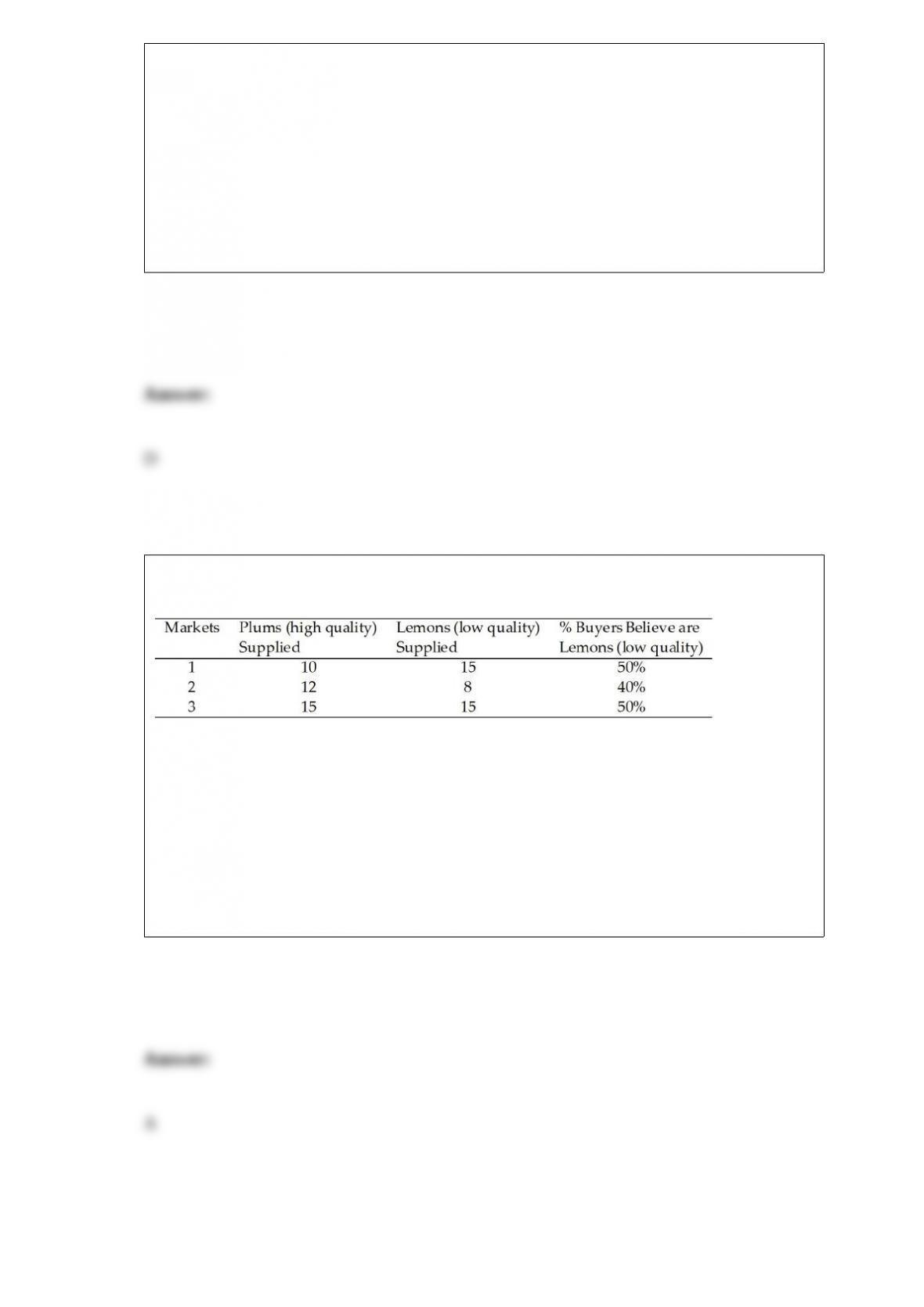
Refer to Table 14.1. In which market do buyers underestimate the chance of getting a
lemon?
Table 14.1
A) 1 only
B) 2 only
C) 3 only
D) 1 and 3 only
In the short run, at least one factor of production is fixed. This implies that beyond
some level of output a firm will:
A) “learn by doing.”
B) experience diminishing marginal returns.
C) experience increasing marginal returns.
D) have a U-shaped long-run average cost curve.
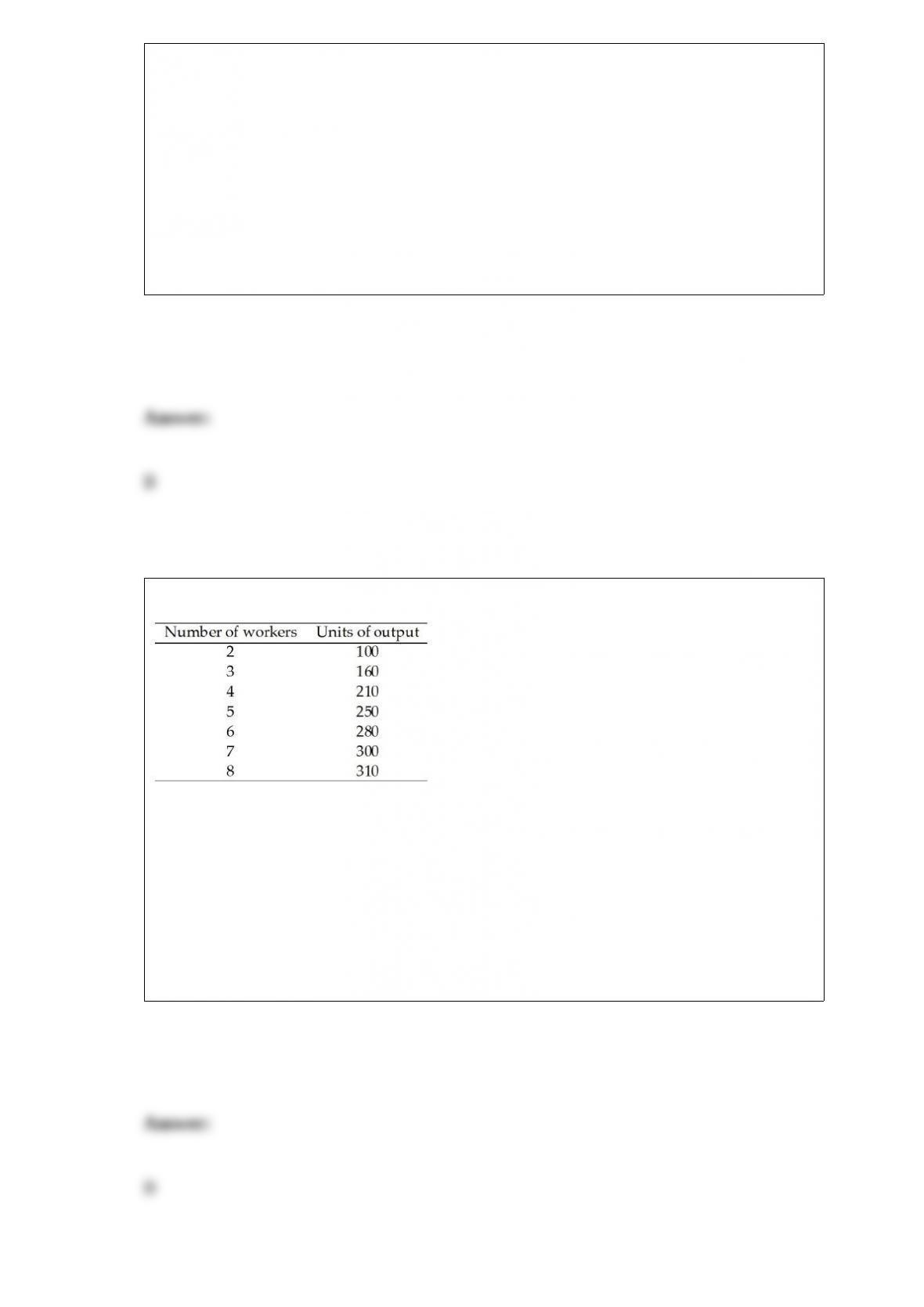
Refer to Table 17.1. The marginal product of the fourth unit of labor is:
Table 17.1
A) 40.
B) 50.
C) 52.5.
D) 210.

Recall the Application about the costs involved in opening a Dunkin’ Donuts shop
to answer the following question(s).
Recall the Application. Which of the following prevents Dunkin’ Donut from being
classified as a monopoly?
A) There are many sellers of donuts other than Dunkin’ Donuts.
B) There are no patents or regulations that prevent entry. All an entrepreneur needs is to
pay the franchise fee and the royalties.
C) Donuts are differentiated products that have many close substitutes.
D) All of the above prevent Dunkin’ Donuts from being classified as a monopoly.
A perfectly competitive industry is in long-run equilibrium. If demand for the product
decreases, we can expect:
A) firms to enter the market.
B) firms to exit the market.
C) no change in the number of firms in the market.
D) Not enough information to tell what will happen to the number of firms in the
market.
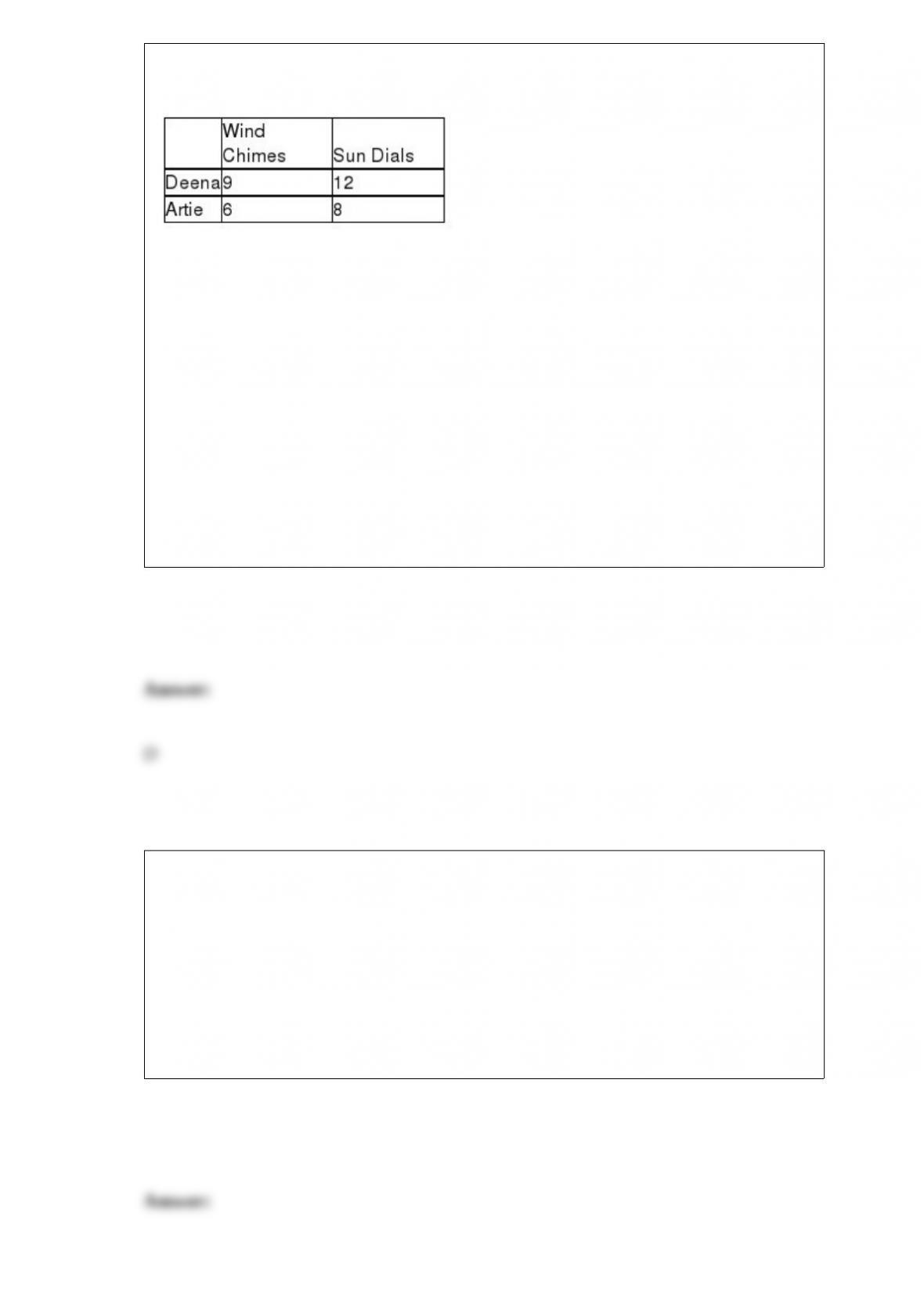
Consider two individuals, Artie and Deena, who produce wind chimes and sun dials.
Artie’s and Deena’s weekly productivity are shown in Table 3.4.
Table 3.4
Which of the following is true?
A) Deena has an absolute advantage in producing both goods, and a comparative
advantage in producing wind chimes.
B) Deena has an absolute advantage in producing both goods, and a comparative
advantage in producing sun dials.
C) Deena has an absolute and a comparative advantage in producing both goods.
D) Deena has an absolute advantage in producing both goods, but no one has a
comparative advantage in producing either good.
Marginal utility is defined as the:
A) additional utility gained by consuming an extra unit of a good.
B) total utility from all units consumed of a good.
C) total utility from all units consumed divided by the number of units consumed.
D) additional utility gained divided by the price of the good.

When a firm hires a worker for one hour, the marginal benefit to that firm equals the:
A) dollar value of the goods produced by that worker in one hour.
B) hourly wage of that worker.
C) number of items the worker produces in that hour.
D) price of each item that the worker produces in that hour.
Recall the Application. Because when a patent ends and generic drugs are introduced
there is downward pressure on price, the makers of the brand name drug will:
A) raise their price.
B) abandon the product.
C) claim the generic is not as good as the patent version of the drug.
D) price discriminate.
Suppose that the marginal benefit per dollar spent on pop tarts exceeds the marginal

benefit per dollar spent on waffles. The consumer can always increase her utility by
buying:
A) more pop tarts and fewer waffles.
B) fewer pop tarts and more waffles.
C) more of both goods.
D) The consumer cannot increase her utility.
An economy in which people exchange goods and services in a market is called a:
A) socialist economy.
B) market economy.
C) centrally planned economy.
D) command economy.
Refer to Table 7.6. Pete has $10 to spend. He buys four cookies and three candies.
Using the equimarginal rule which of the following is true?
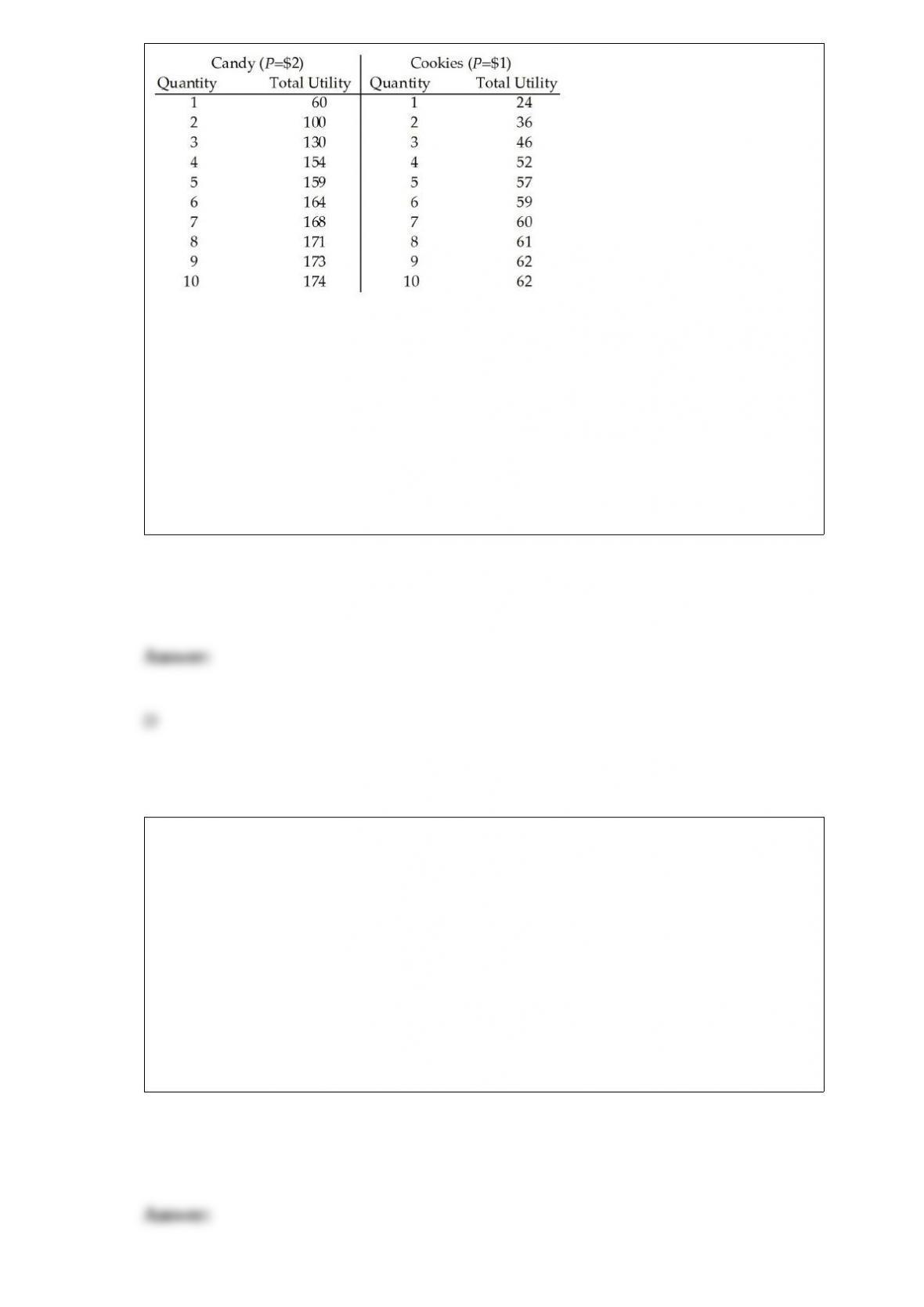
Table 7.6
A) Pete is maximizing his utility.
B) Pete is not spending the entire $10.
C) Pete could make himself better off by buying less candy and more cookies.
D) Pete could make himself better off by buying less cookies and more candy.
Suppose that Gigantic Company is increasing in size. As Gigantic Company grows,
coordination of work teams is becoming more difficult because of increased
bureaucracy. It is likely that continued growth will result in:
A) economies of scale.
B) Gigantic Company achieving the minimum efficient scale of production.
C) diseconomies of scale.
D) increasing marginal returns.
Frank’s Burgers employs workers in a competitive market. It currently has 15
employees. The marginal revenue product of the 15th worker hired is $8.50 per hour.
The market equilibrium wage is $10 per hour. Is this firm maximizing profit? Explain.
Explain why a monopolist must lower its quantity relative to a competitive market to
maximize its profits.
Can you think of an example of a good whose demand could be perfectly inelastic?
Can a firm’s accounting profit be smaller than the economic profit? Assume that all
costs are positive.
What are the benefits of using a pollution tax rather than a command-and-control
system to internalize an externality?
Explain when a firm will shut down to minimize losses. Draw a graph to illustrate this
situation.
Explain the concept of “learning by doing” with respect to infant industry protection.
Why is the demand for labor downward sloping in the short run?
Use the supply and demand model to explain why it is difficult to find an on-campus
parking space during peak mid-day times, although it is much easier to find a parking
space during less popular evening hours.
When XYZ Corporation produces 35 units of output, its average variable cost is $5. The
marginal cost of the 36th unit of output is $7. If the firm choose to produce the 36th unit
of output, what will happen to average variable cost? Explain.
What is the opportunity cost of investing $10,000 of your own money in a business you
wish to start?
Why does it usually NOT make sense to reduce pollution to zero?
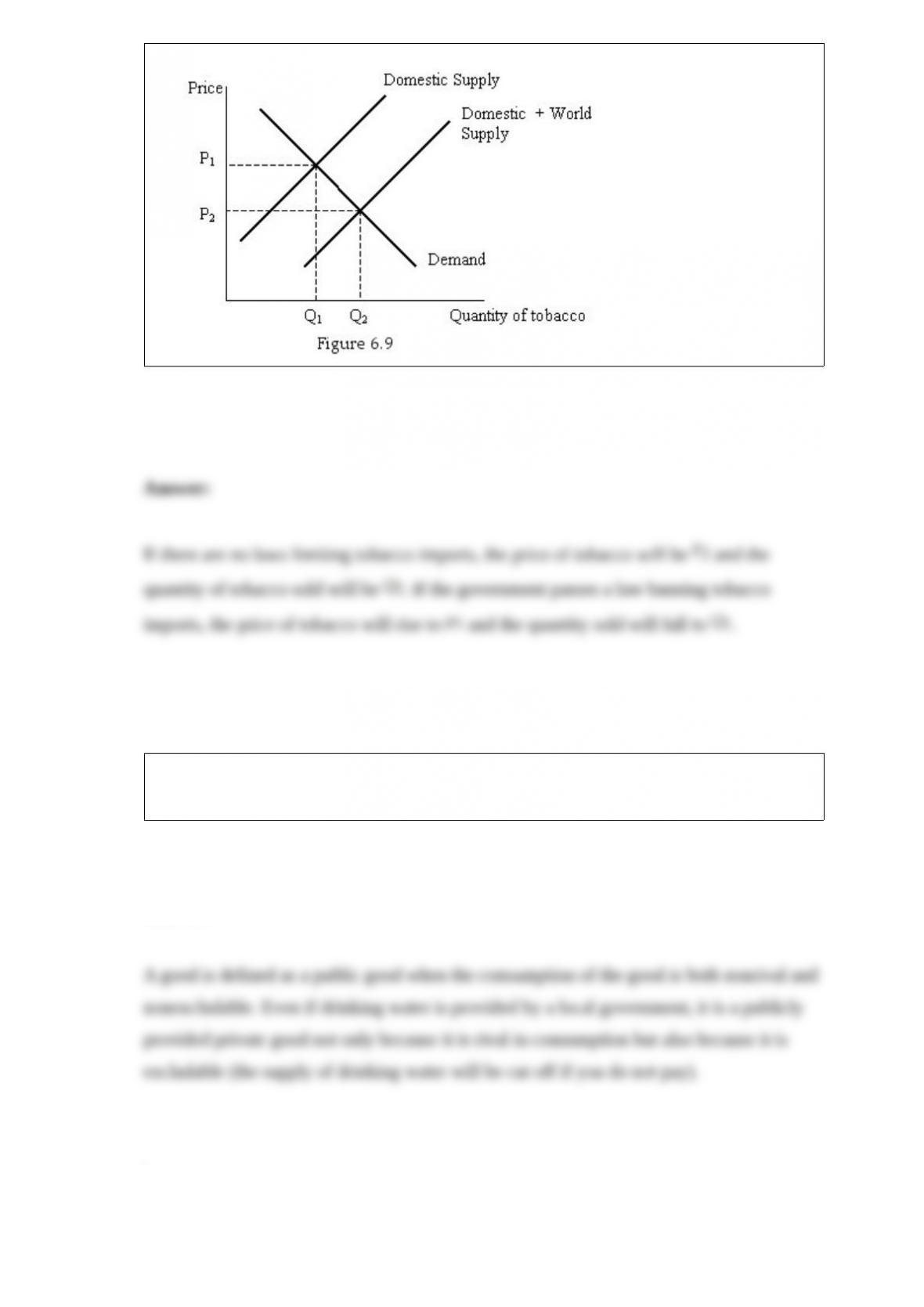
Figure 6.9 shows the market for tobacco. If the government has no restrictions on
imported tobacco, what will be the price of tobacco and the level of tobacco produced?
If the government passes a law banning tobacco imports, what happens to the price of
tobacco and the quantity of tobacco sold?
Suppose that your local government provides drinking water and charges a 10 cent per
gallon. Explain whether or not the drinking water is a public good.
What is a constant-cost industry? What does the long-run industry supply curve look
like for a constant-cost industry?
Explain how an import tariff results in an import ban.
People who buy used homes often insist on having a “home inspection” before they
finalize the purchase. If the house fails the inspection the buyer has the right to refuse to
buy the house unless the seller fixes whatever problems are found. Does this help or
hurt the seller?
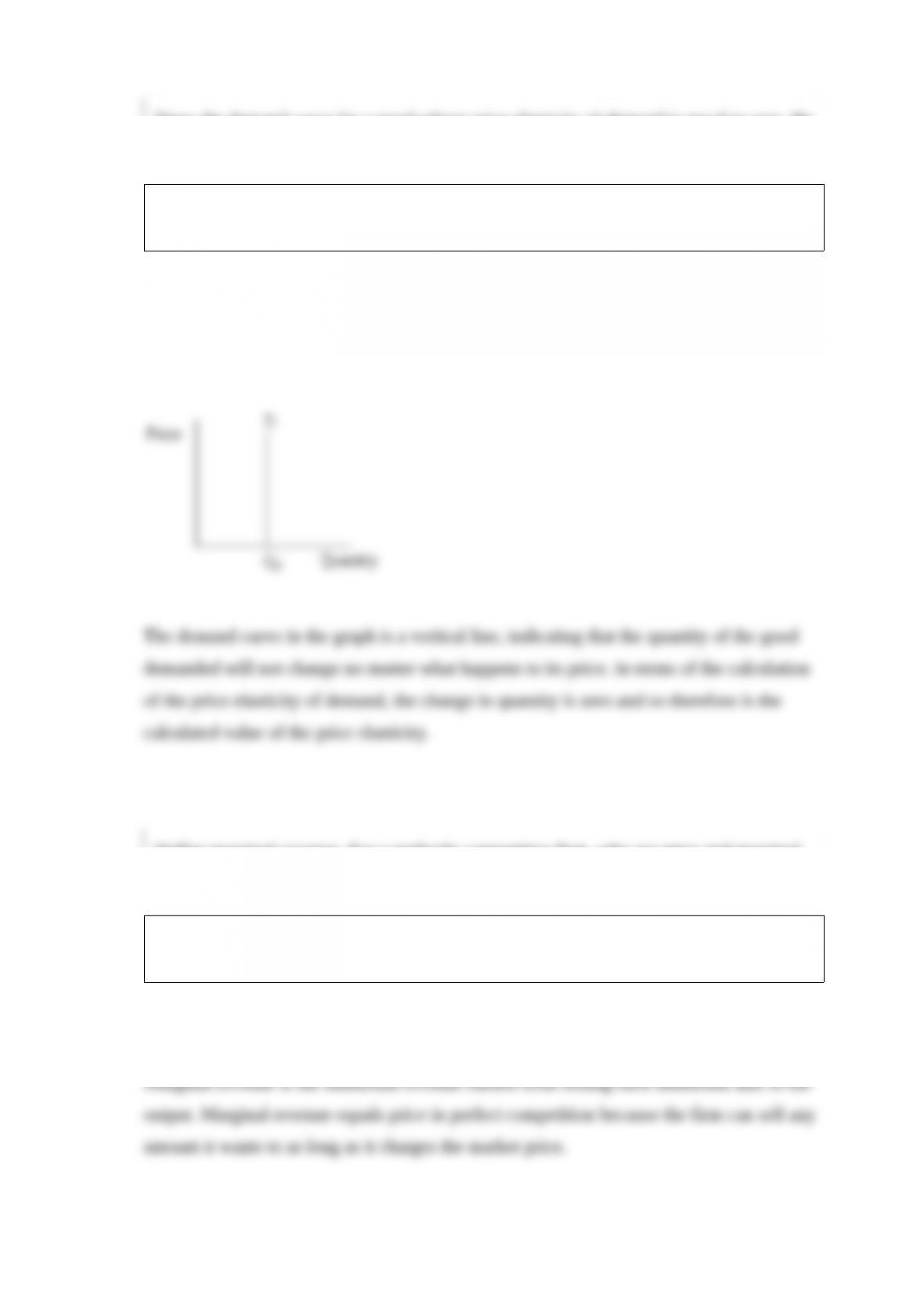
Draw the demand curve for a good whose price elasticity of demand is equal to zero. Be
sure to label both axes. Explain what the graph represents.
Define marginal revenue. For a perfectly competitive firm, why are price and marginal
revenue equal?