1) You have driven 800 miles on a vacation and then you notice that you are only 15
miles from an attraction you hadn’t known about, but would really like to see. In
computing the opportunity cost of visiting this attraction you had not planned to visit,
you should include
a.both the cost of driving the first 800 miles and the next 15 miles.
b.the cost of driving the first 800 miles, but not the cost of driving the next 15 miles.
c.the cost of driving the next 15 miles, but not the cost of driving the first 800 miles.
d.neither the cost of driving the first 800 miles nor the cost of driving the next 15 miles.
2) If a firm in a competitive market doubles its number of units sold, total revenue for
the firm will
a.more than double.
b.double.
c.increase but by less than double.
d.may increase or decrease depending on the price elasticity of demand.
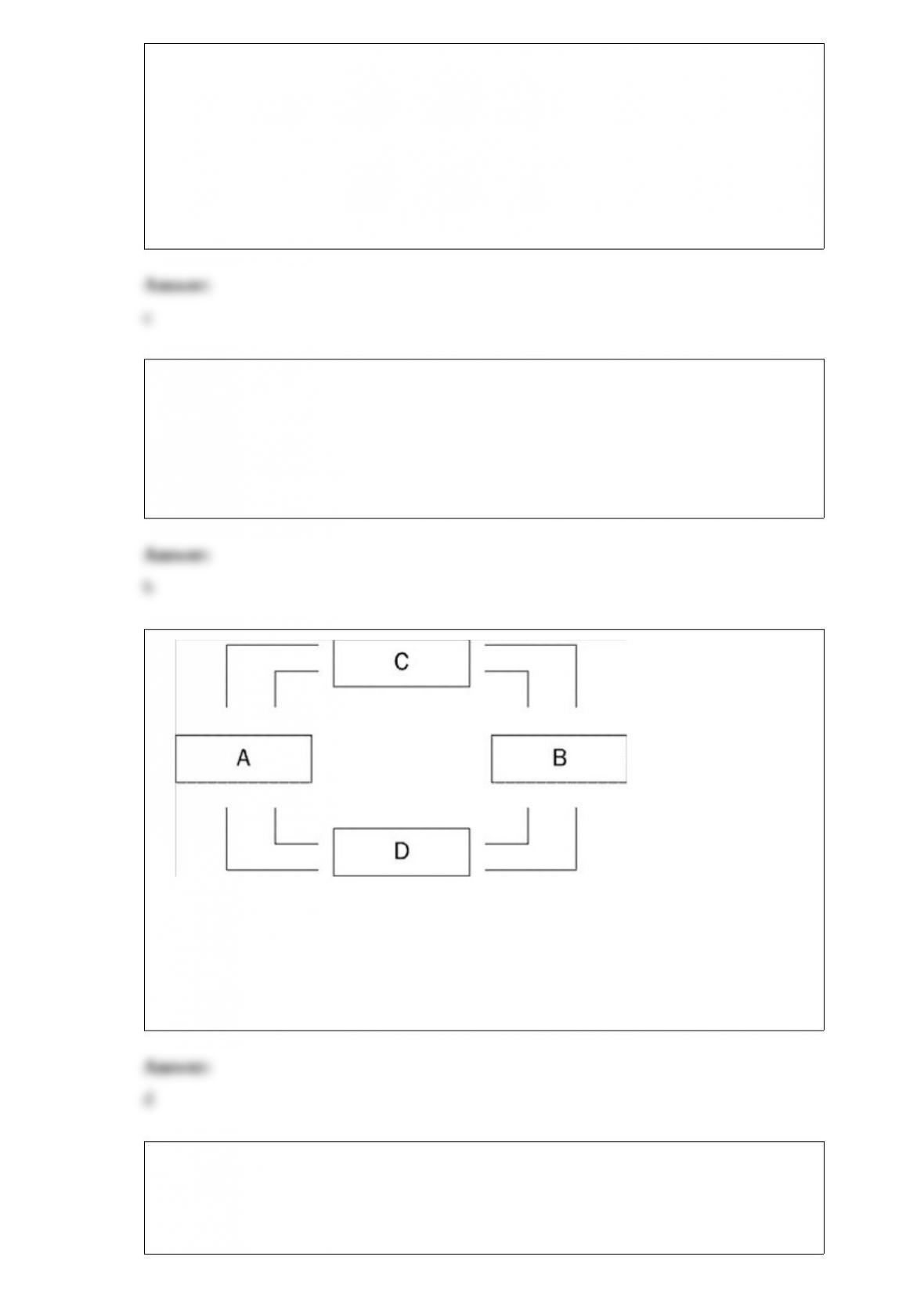
3)
If households are sellers in the markets represented by Box D of this circular-flow
diagram, then
a.Box D must represent the markets for factors of production.
b.Box C must represent the markets for goods and services.
c.firms are buyers in the markets represented by Box D.
d.All of the above are correct.
4) Refer to Figure 9-22. With free trade, consumer surplus is
a.$48,000 and producer surplus is $48,000.
b.$18,000 and producer surplus is $12,000.
c.$108,000 and producer surplus is $12,000.

d.$18,000 and producer surplus is $48,000.
5) What would happen to the equilibrium price and quantity of latt©s if coffee shops
began using a machine that reduced the amount of labor necessary to produce steamed
milk, which is used to make latt©s, and scientists discovered that latt©s cause heart
attacks?
a.Both the equilibrium price and quantity would increase.
b.Both the equilibrium price and quantity would decrease.
c.The equilibrium price would decrease, and the effect on equilibrium quantity would
be ambiguous.
d.The equilibrium quantity would decrease, and the effect on equilibrium price would
be ambiguous.
6) Most people agree that taxes should impose as small a cost on society as possible and
that the burden of taxes should be distributed fairly.
a.True
b.False
7) Which of these instances would constitute labor-market discrimination? Courtney
and Nicole are identical in all of their labor-market characteristics except that Courtney
earns a higher salary than Nicole because
a.Courtney is beautiful and Nicole is not.
b.Courtney is 40 years old and Nicole is 60 years old.
c.Courtney works the night shift and Nicole works the day shift.
d.Courtney attended on the job-training seminars which allows her to do tasks Nicole is
not qualified for.
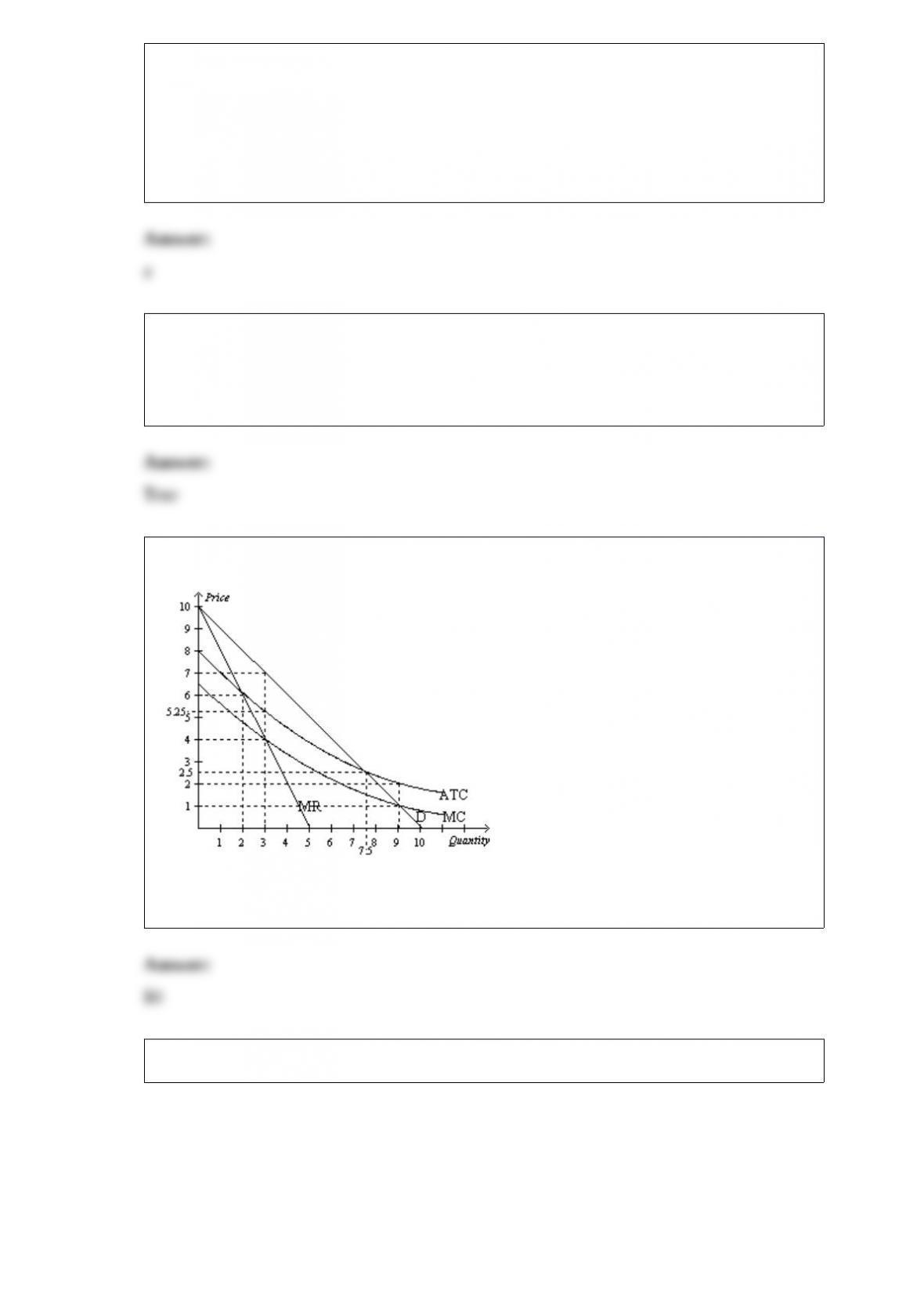
8) Figure 15-19
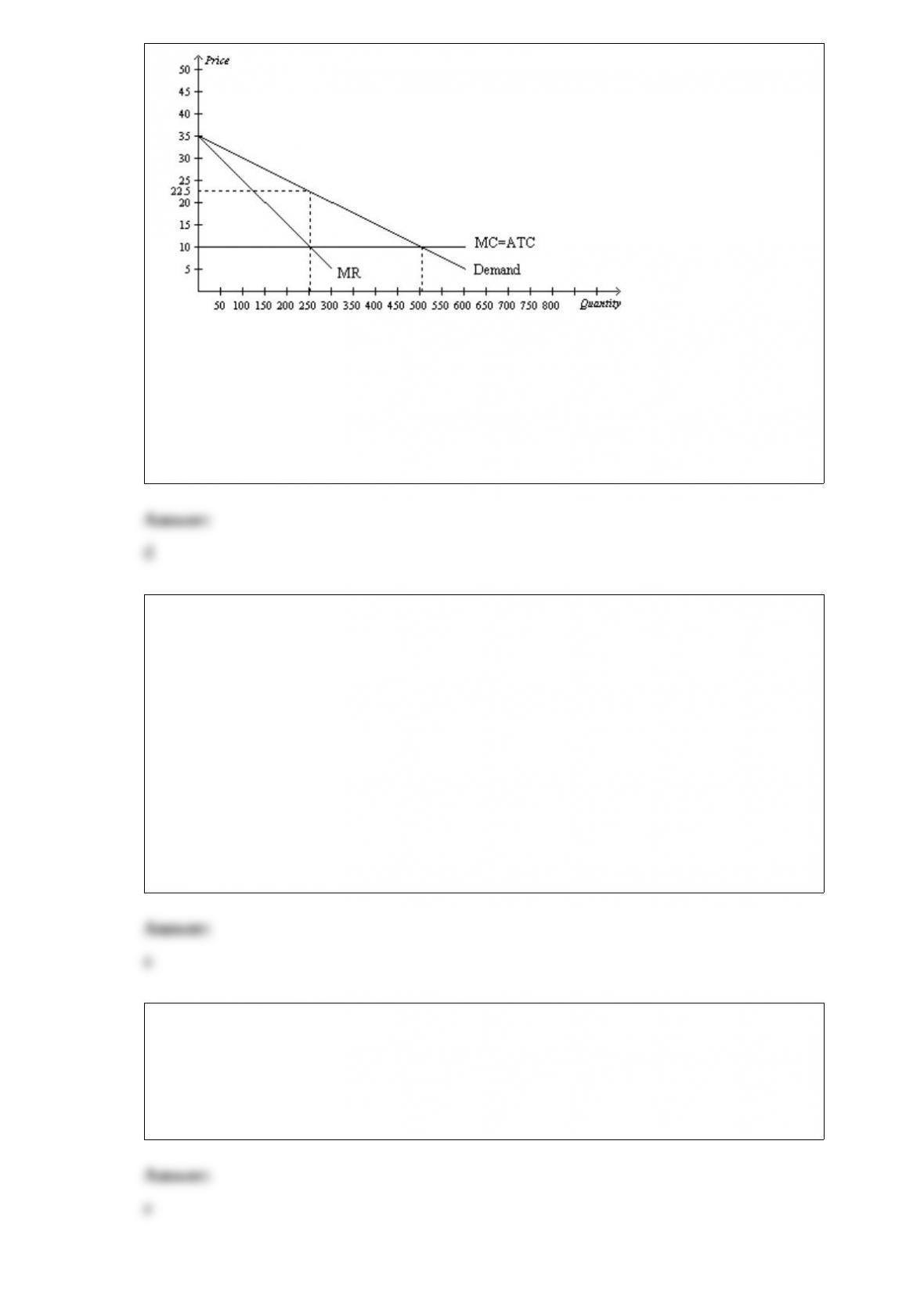
If there are no fixed costs of production, monopoly profit with perfect price
discrimination equals
a.$1.
b. $1,562.5.
c. $3,125.
d. $6,250.
9) Suppose that when the average college student’s income is $10,000 per year, the
annual quantity demanded of Patty’s Pizza is 50 and the annual quantity demanded of
Sue’s Subs is 80. Suppose that when the price of Patty’s Pizza increases from $8 to $10
per pie, the quantity demanded of Sue’s Subs increases from 80 to 100. Suppose also
that when the average student’s income increases to $12,000 per year, the annual
quantity demanded of Patty’s Pizza increases from 50 to 60.
What can you deduce about the type of good Patty’s Pizza is and about the relationship
between Patty’s Pizza and Sue’s Subs?
a.Patty’s Pizza is a normal good and Patty’s Pizza and Sue’s Subs are substitutes.
b.Patty’s Pizza is a normal good and Patty’s Pizza and Sue’s Subs are complements.
c.Patty’s Pizza is an inferior good and Patty’s Pizza and Sue’s Subs are substitutes.
d.Patty’s Pizza is an inferior good and Patty’s Pizza and Sue’s Subs are complements.
10) If the labor supply curve is very elastic, a tax on labor
a.has a large deadweight loss.
b.raises enough tax revenue to offset the loss in welfare.
c.has a relatively small impact on the number of hours that workers choose to work.
d.results in a large tax burden on the firms that hire labor.
11) Which of the following is the least likely to be a competitive market?
a.ice cream
b.soybeans
c.cable television
d.new houses
12) Economists claim that a resale price maintenance agreement is not anti-competitive
because
a.suppliers are never able to exercise noncompetitive market power.
b.if a supplier has market power, it will be likely to exert that power through wholesale
price rather than retail price.
c.retail markets are inherently noncompetitive.
d.retail cartel agreements cannot increase retail profits.
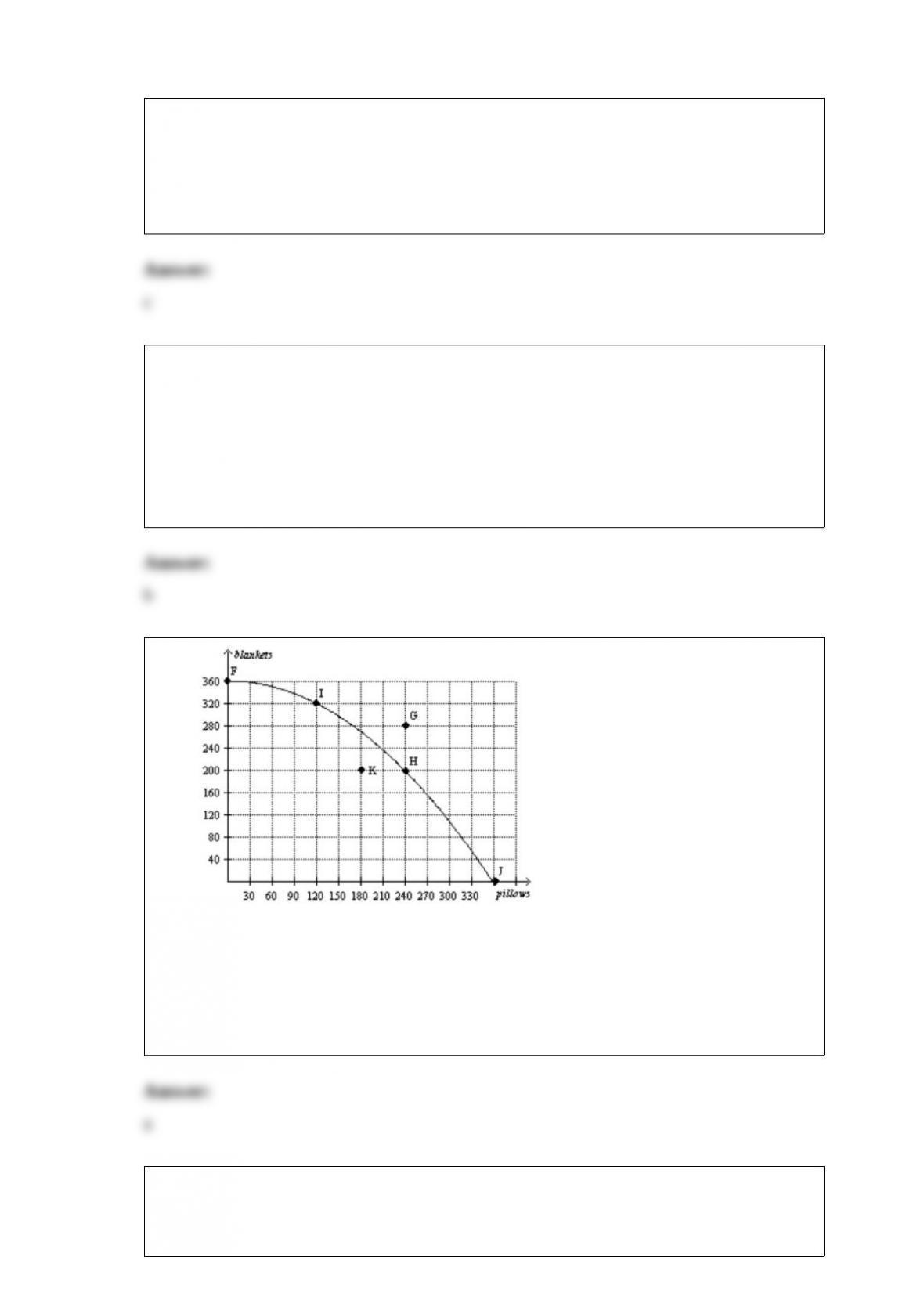
13)
The opportunity cost of this economy moving from point K to point H is
a.zero.
b.50 blankets.
c.60 pillows.
d.50 blankets and 60 pillows.
14) Private markets usually fail to provide lighthouses because
a.lighthouses cost too much to build relative to their benefits.
b.government intervention makes it hard for private lighthouse owners to compete in
the market.
c.ship captains have incentives to use lighthouses without paying.
d.lighthouses are valued very little by ship captains these days.
15) In 2011, which category represented the largest category of spending for the U.S.
federal government?
a.health
b.income security
c.national defense
d.net interest
16) When the price of a good is lower than the equilibrium price,
a.a surplus will exist.
b.buyers desire to purchase more than is produced.
c.sellers desire to produce and sell more than buyers wish to purchase.
d.quantity supplied exceeds quantity demanded.
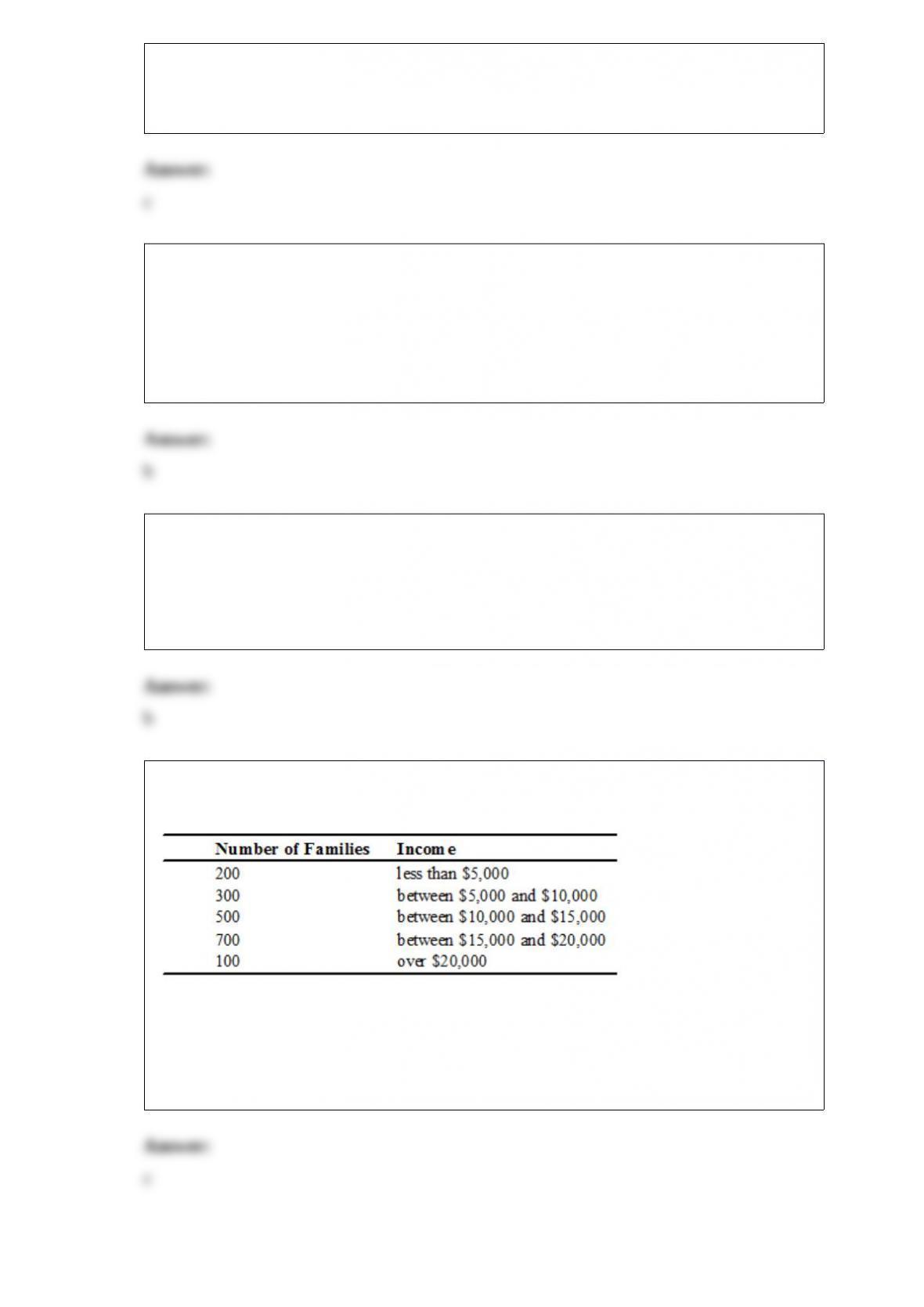
17) The poverty line in the country of Inequalia is $10,000. The distribution of income
for Inequalia is as follows:
The poverty rate in Inequalia is
a.11.1 percent.
b.16.7 percent.
c.27.8 percent.
d.55.5 percent.
18) Which of the following is not an interpretation of the “beauty premium”?
a.Beautiful workers are not willing to work for lower wages.
b.Good looks are a type of innate ability causing the worker to be more valuable to the
firm.
c.The beauty premium is a type of discrimination.
d.Beauty is an indirect measure of other types of ability.
19) The concept of external cost is associated with a negative externality, but not with a
positive externality.
a.True
b.False
20) Figure 15-23
If a regulator requires the firm to charge an average cost price, what is the amount of
profit or loss earned by the firm?
21) Figure 19-6
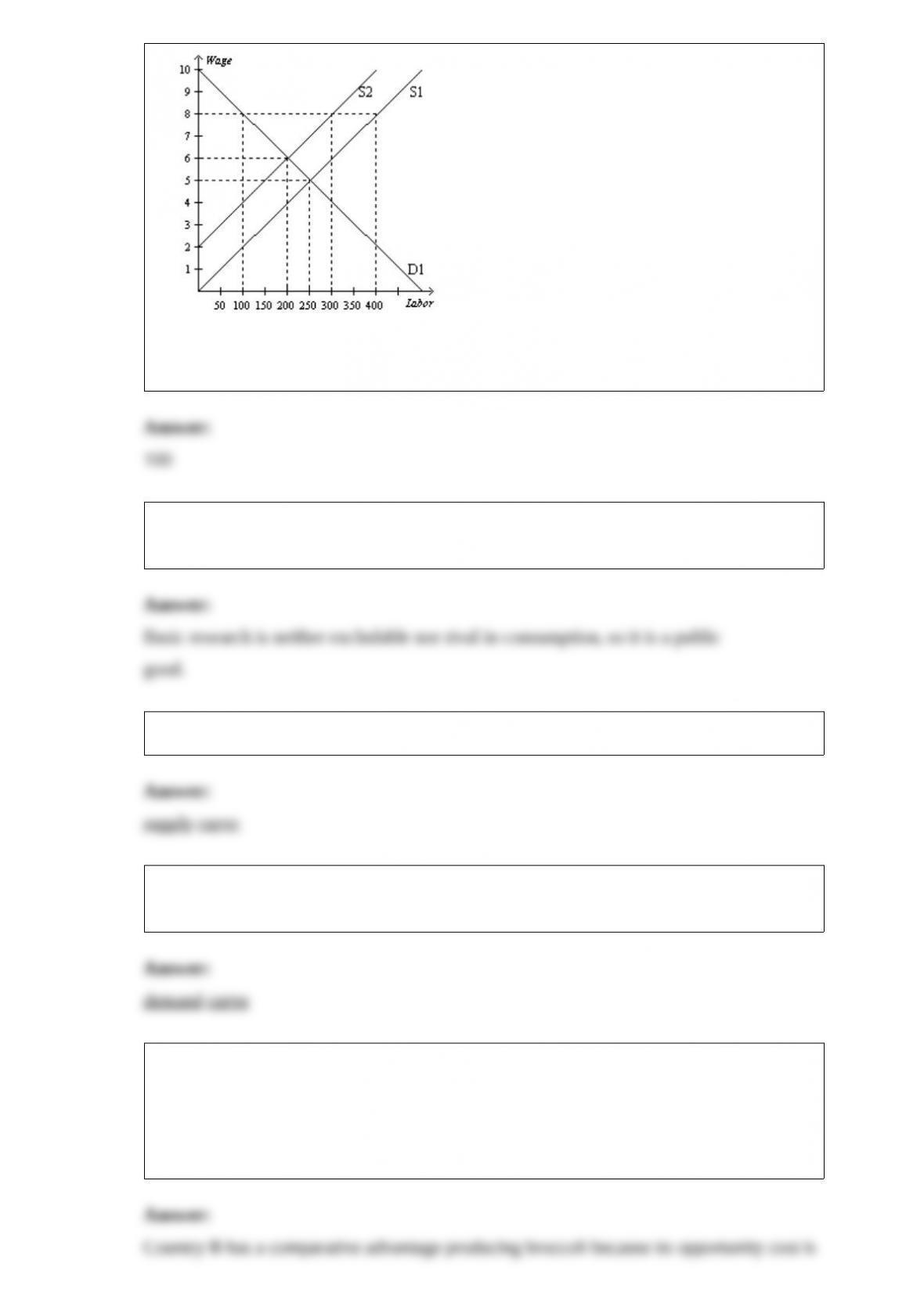
Refer to Figure 19-6. Given demand, D1, and supply, S1, what is the quantity of labor
demanded if a minimum wage of $8 per hour is imposed on this market?
22) Is basic research excludable? Is it rival in consumption? How do we classify basic
research in terms of the four types of goods?
23) At any given quantity, the cost of the marginal seller is the height of the.
24) At any given quantity, the willingness to pay of the marginal buyer is the height of
the.
25) In country A a worker who works 40 hours can produce 200 pounds of rice or 100
pounds of broccoli. In country B a worker who works 40 hours can produce 160 pounds
of rice or 120 pounds of broccoli.
Which country, if either, has a comparative advantage producing broccoli? Defend your
answer using the numbers given.

26) Entry of new firms in monopolistically competitive industries can convey a positive
externality on consumers because new products result in more consumer surplus. This
externality is called the