
Deregulation has led to higher prices.
a. True
b. False
The most volatile component of aggregate demand is
a. consumption spending.
b. government spending.
c. investment spending.
d. net exports.
Under the gold standard,
a. no nation had control of its domestic monetary policy, and therefore no nation could
control its aggregate demand.
b. the world’s commerce was at the mercy of gold discoveries.
c. discoveries of gold meant higher prices in the long run and higher real economic
activity in the short run.
d. All of the above are correct.
To make rational forecasts, your predictions do not have to be correct all of the time.
a. True
b. False
Figure 4-2
If the government has stated that it will buy any amount of good X offered at $30,
which demand curve in Figure 4-2 is appropriate?
a. 1
b. 2
c. 3
d. 4
The game theory approach to the analysis of oligopoly assumes that oligopolists
a. ignore their interdependence.
b. behave with little forethought.
c. do not take their businesses seriously.
d. act strategically.
During fiscal year 2012, the most recent mentioned in the text, the federal government
spent approximately
a. $1.7 billion
b. $1.9 trillion
c. $3.7 trillion
d. $14.0 trillion
Advocates of activist policy making point to the swift response of the Fed after
September 11, 2001, as an example of effective policy making.
a. True
b. False
Which of the following would be most likely to cause an outward shift of the demand
curve for electricity?
a. a decrease in the price of electricity
b. an increase in the price of air conditioners
c. an increase in the price of heating oil
d. a decrease in the price of natural gas
The United States has never suffered through periods of hyperinflation in its history.
a. True
b. False
If average cost is falling, then marginal cost must be falling.
a. True
b. False
Lower prices are always better for society.
a. True
b. False
An increase in the money wage rate will cause the aggregate supply curve to shift
a. outward, which means the quantity supplied at any price level decreases.
b. outward, which means the quantity supplied at any price level increases.
c. inward, which means the quantity supplied at any price level increases.
d. inward, which means the quantity supplied at any price level decreases.
A bubble is best defined as
a. an increase in the price of an asset resulting from fundamentals causes.
b. an increase in the price of an asset resulting from factors other than fundamentals
causes.
c. a decrease in the price of an asset resulting from fundamentals causes.
d. a decrease in the price of an asset resulting from factors other than fundamentals
causes.
If the prices of all goods and services rise during the year,
a. real GDP may fall.
b. nominal GDP must rise.
c. nominal GDP may increase.
d. real GDP must rise.
If price rises, what happens to supply for a product?
a. It increases.
b. It decreases.
c. It does not change.
d. Uncertain-economic theory has no answer to this question.
Taxes reduce total spending
a. directly by increasing government purchases by an equal amount.
b. directly by substituting investment spending.
c. indirectly by reducing government spending.
d. indirectly by reducing disposable income.
The idea of opportunity cost is relevant
a. only in consumption decisions.
b. only in production decisions.
c. only in financial decisions.
d. in almost any kind of decision.
If the random walk theory is correct, a prudent investor might choose her stock
portfolio by
a. throwing darts at the newspaper’s financial page.
b. spending money to consult a stock forecaster.
c. spending time analyzing past stock performance.
d. not investing in stocks at all, since price behavior is completely erratic.
Which of the following will cause movement along the reserve demand schedule?
a. a change in the price level
b. a change in real GDP

c. a change in tax rates
d. a change in interest rates
The federal income tax began in the United States with the
a. Morrill Act of 1862.
b. addition of the Bill of Rights to the Constitution in 1791.
c. passage of the 16th Amendment to the Constitution in 1913.
d. New Deal legislation of the 1930s.
Although a variety of commodities have been used as money, the most commonly used
have been
a. stones and cattle.
b. shells and beads.
c. gold and silver.
d. cigarettes and candy bars.
AC is lower in the long run than in the short run because
a. prices often fall, allowing savings on purchases.
b. inputs can be combined more efficiently in the long run.
c. over time the prices of all inputs tend to decrease.
d. AFC falls with output over all ranges of output.
Demand elasticity equals quantity times price.
a. True
b. False
Figure 17-4
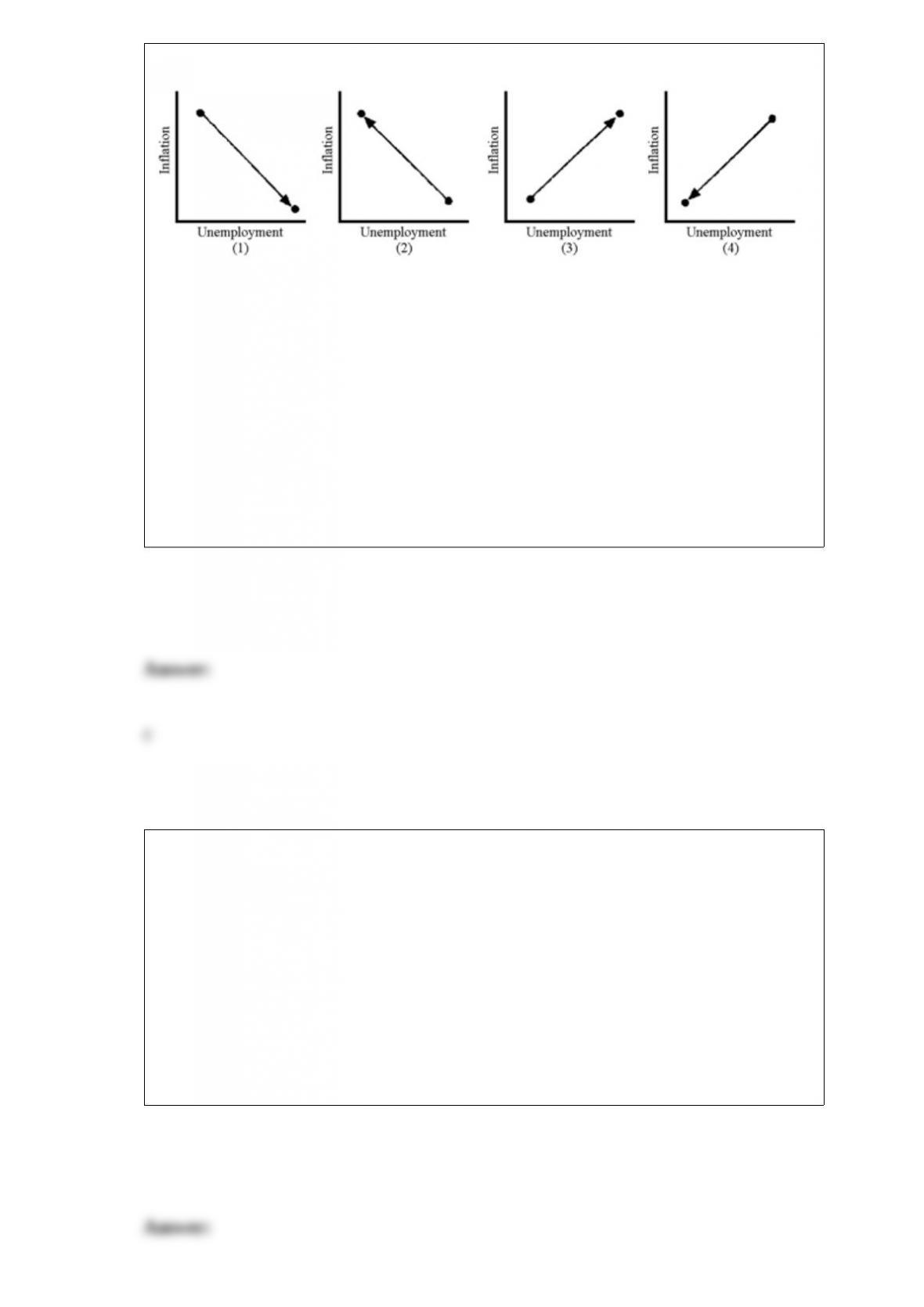
Figure 17-4 shows four movements of the inflation rate and the unemployment rate.
Which panel shows the movement associated with a “supply shock” like those of the
1970s?
a. 1
b. 2
c. 3
d. 4
Under monopoly
a. too small a share of society’s resources is used to produce the monopolized
commodity.
b. Adam Smith’s invisible hand assures efficient resource allocation.
c. too large a share of society’s resources is being used to produce the monopolized
commodity.
d. MC > MU.
Economists and others use economic theory
a. only to analyze situations in which money changes hands.
b. as a partial basis for public policy recommendations.
c. to confuse their enemies.
d. to replace value judgments about important policy issues.
Selling at a price that is only slightly above the firm’s cost of production is called
predatory pricing.
a. True
b. False
The “law” of diminishing returns rests on the “law” of variable input proportions.
a. True

b. False
The branch of economic theory that analyzes decisions about education and training is
a. welfare economics.
b. equilibrium analysis.
c. human capital theory.
d. consumption theory.
A consequence of an inflationary gap is ____ as output begins to decrease and prices
continue to increase.
a. stagflation
b. reflation
c. disinflation
d. perflation
In the short run, if price is below AC, maximizing profits really means minimizing total
losses.
a. True
b. False