Marginal revenue product for a perfectly competitive seller is equal to
A) the output price multiplied by the total product of labor.
B) the output price multiplied by the number workers hired.
C) the change in total revenue that results from hiring another worker.
D) the marginal cost of production.
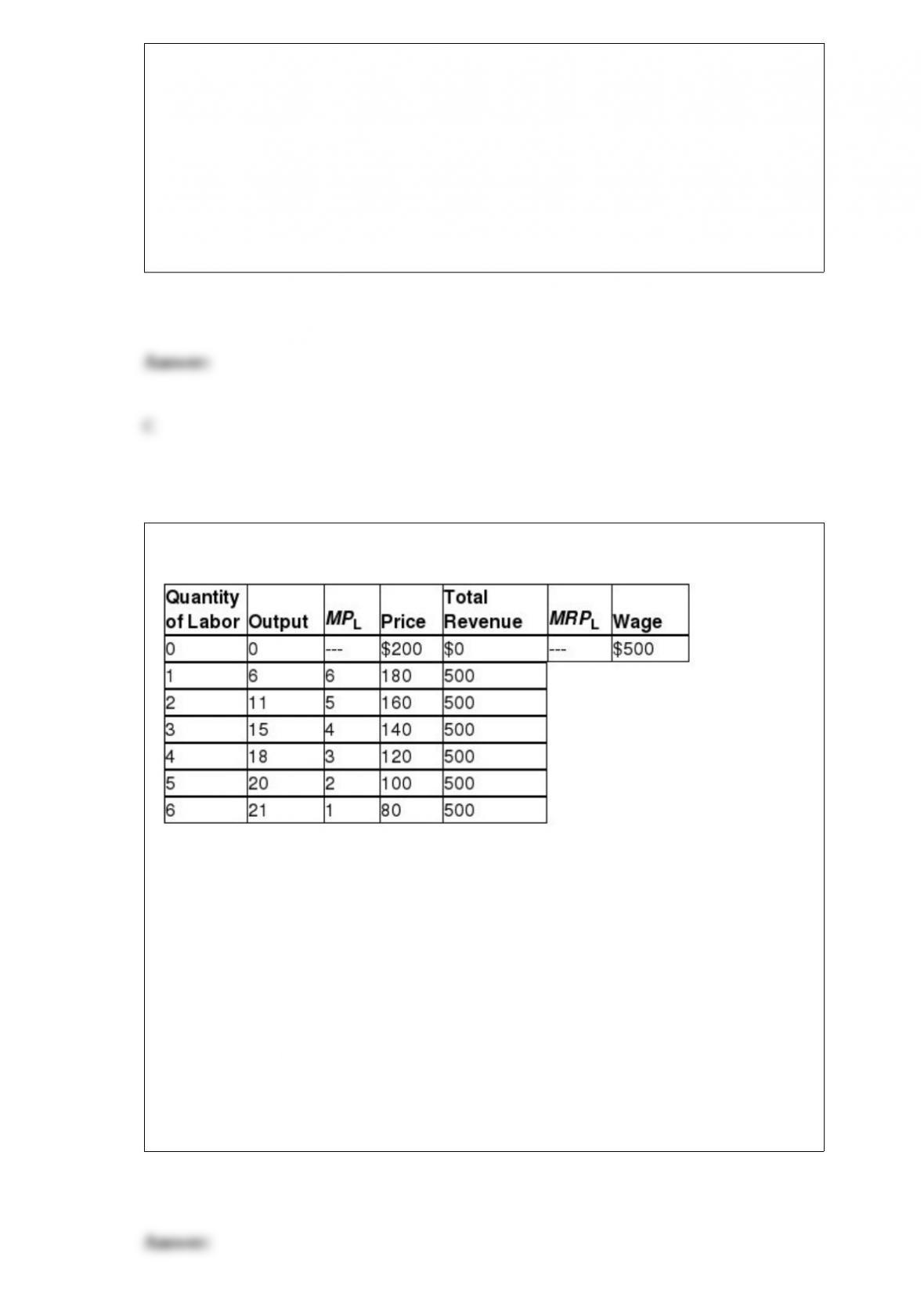
Table 17-4
Table 17-4 lists data for the production of Apple iPods. Apple is assumed to be a price
maker, so to increase its sales of iPods the firm must lower its price. MPL and MRPL
refer to the marginal product of labor and the marginal revenue product of labor,
respectively. What are the quantity of labor and marginal revenue product of labor that
will maximize the profit Apple would earn from selling iPods?
A) 2; $160
B) 3; $340
C) 2; $680
D) 3; $140

Allocative efficiency best explains ________, and productive efficiency best explains
________.
A) how something will be produced; when something will be produced
B) when something will be produced; why something will be produced
C) why something will be produced; what will be produced
D) what will be produced; how something will be produced
Figure 16-2 Plato Playhouse,
a theatre company in the university town of Wegg, caters to two groups of customers:
students and the non-student population. Figure 16-2 shows the demand curves for the
two groups of customers.
Suppose Plato Playhouse price discriminates. Which of the following statements is
true?
A) By charging two different prices, the theatre company has redistributed some profits
from those who can pay higher prices to those who cannot, thereby increasing
economic efficiency.

B) By charging two different prices, the theatre company essentially allows those
willing to pay higher prices to subsidize those who are not.
C) By charging two different prices, the theatre company has redistributed some profits
from those who can pay higher prices to those who cannot, thereby improving equity.
D) Plato Playhouse will earn higher profits if it charges a single price-an average of the
two prices- instead of charging two different prices to the two different groups of
customers.
One reason that Iceland recovered from the financial crisis which began in 2007 more
quickly than did countries like Greece, Spain, and Italy is that Iceland does not use the
euro, and the value of its currency was able to ________ versus the euro, which
increased its ________.
A) decline; exports
B) decline; imports
C) rise; exports
D) rise; imports
If more insurance companies decide to cover part of the price of voluntary laser eye
surgery and more doctors decide to enter the field of laser eye surgery, what will happen
in the market for laser eye surgery as a result of these two factors?
A) Demand will increase, but these two factors will not shift the supply curve.
B) Supply will increase, but these two factors will not shift the demand curve.

C) Demand and supply will both increase.
D) Demand will increase and supply will decrease.
Scenario 14-2 Imagine that Kristy deposits $10,000 of currency into her checking
account deposit at Bank A and that the required reserve ratio is 20%.
As a result of Kristy’s deposit, Bank A’s excess reserves increase by
A) $2,000.
B) $8,000.
C) $10,000.
D) $50,000.
Table 15-2
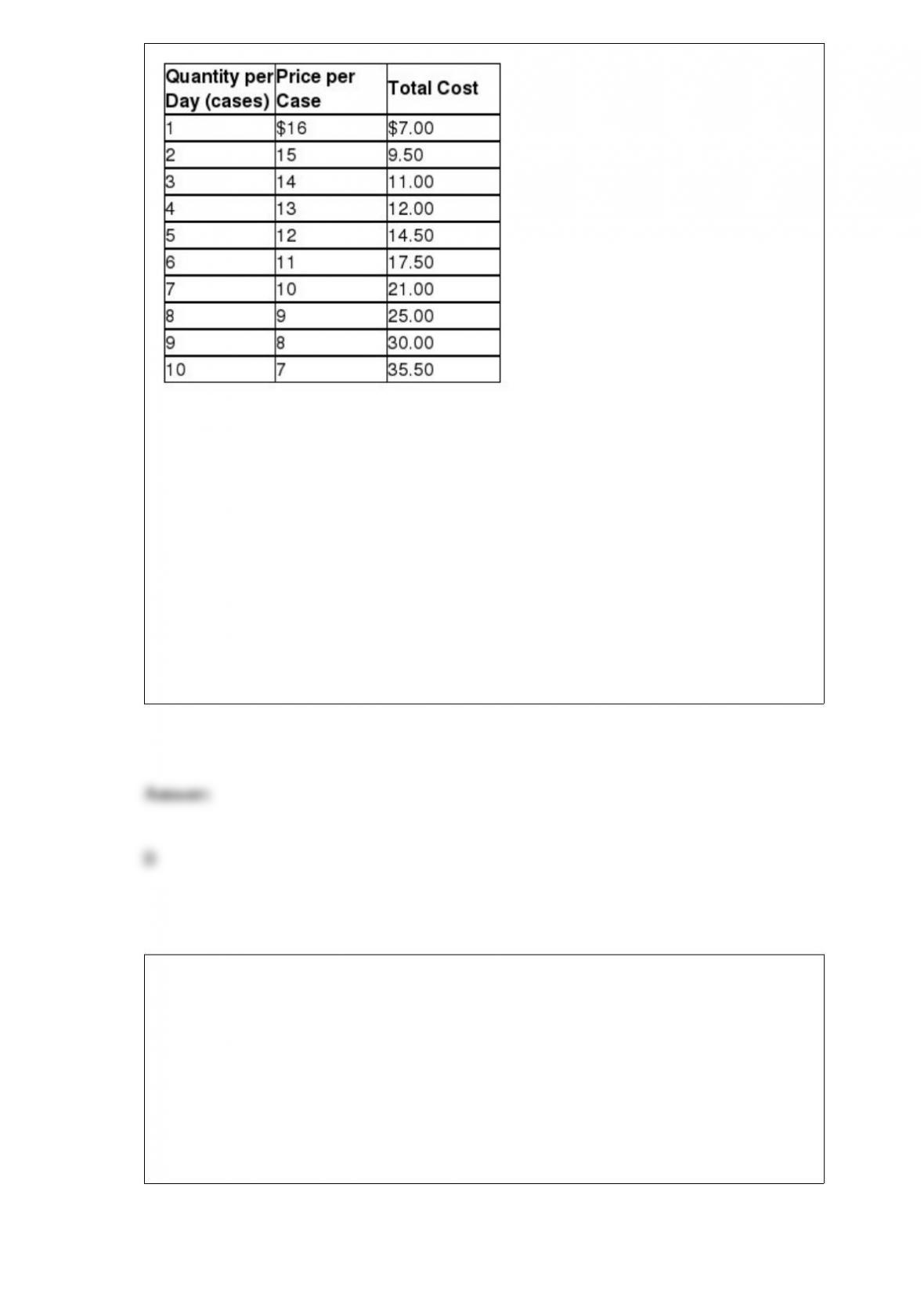
The government of a small developing country has granted exclusive rights to Linden
Enterprises for the production of plastic syringes. Table 15-2 shows the cost and
demand data for this government protected monopolist.
What is the profit-maximizing quantity and price for the monopolist?
A) Quantity = 8 cases, Price = $9
B) Quantity = 7 cases, Price = $10
C) Quantity = 9 cases, Price = $8
D) Quantity = 10 cases, Price = $7
Firms free ride on the research and development of other firms when they
A) buy a firm’s newly developed product, and then give it away to consumers.
B) use knowledge other firms have developed without paying for that knowledge.
C) license a new technology from a firm that developed the new technology.
D) choose a level of research and development that is inefficiently high.
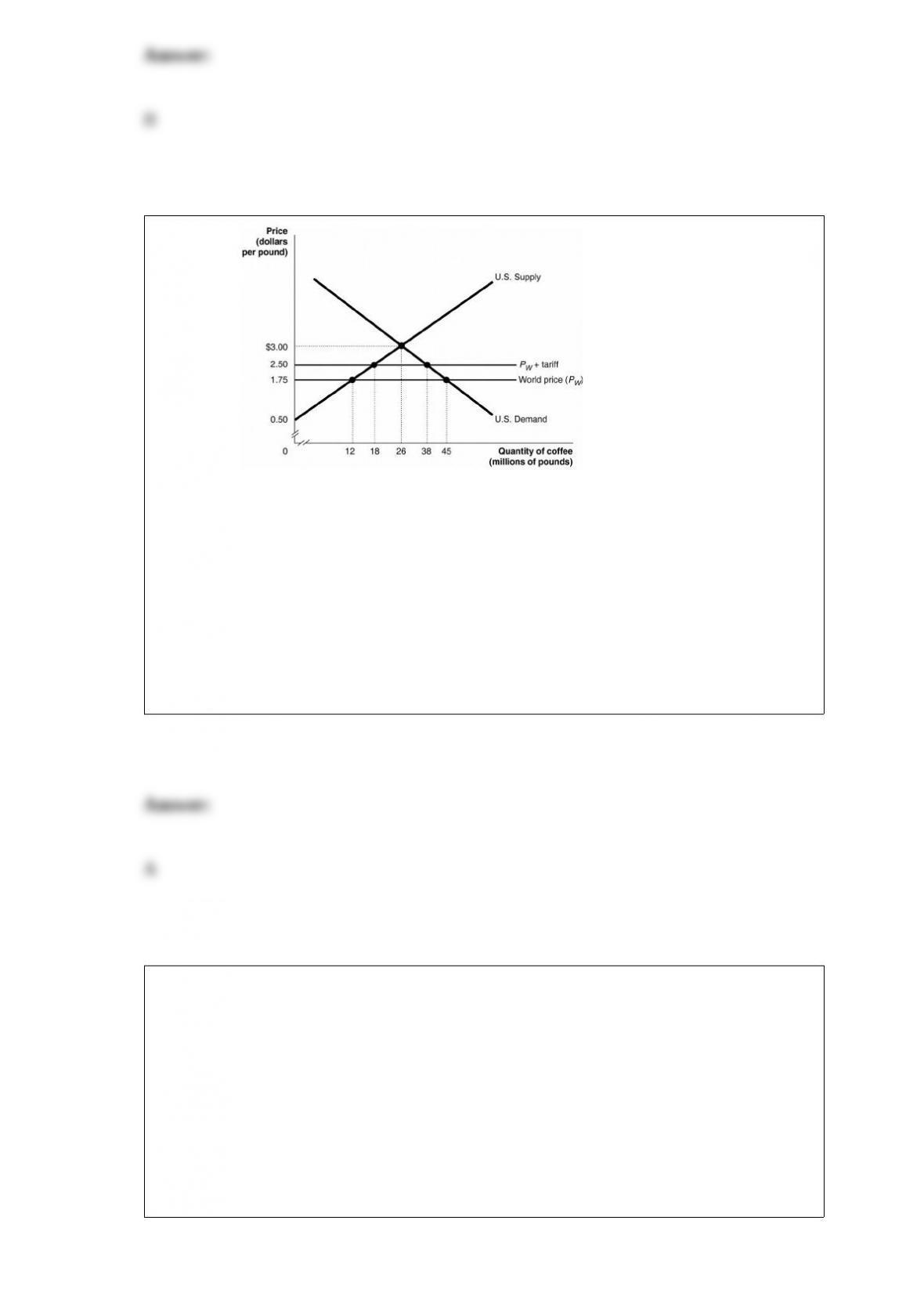
Figure 9-5 Suppose the U.S. government
imposes a $0.75 per pound tariff on coffee imports. Figure 9-5 shows the impact of this
tariff. With the tariff in place, the United States produces
A) 18 million pounds of coffee.
B) 20 million pounds of coffee.
C) 26 million pounds of coffee.
D) 38 million pounds of coffee.
Which of the following is not one of the four main categories of spending identified by
John Maynard Keynes?
A) consumption
B) planned investment
C) government purchases
D) transfer payments
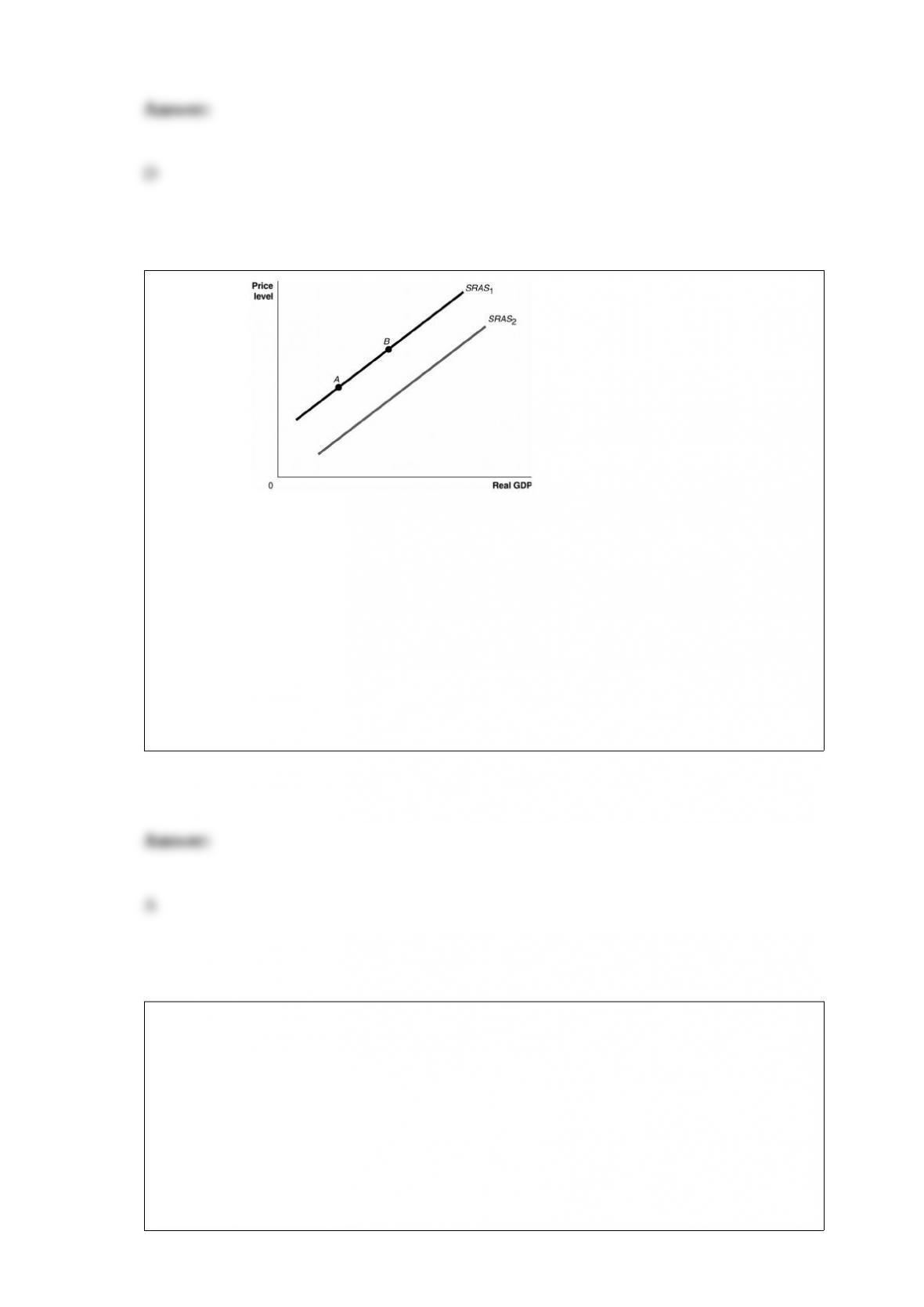
Figure 13-2
Ceteris paribus, a decrease in the expected price of an important natural resource would
be represented by a movement from
A) SRAS1 to SRAS2.
B) SRAS2 to SRAS1.
C) point A to point B.
D) point B to point A.
The short-run aggregate supply curve has a
A) negative slope.
B) positive slope.
C) slope equal to infinity.
D) slope equal to zero.
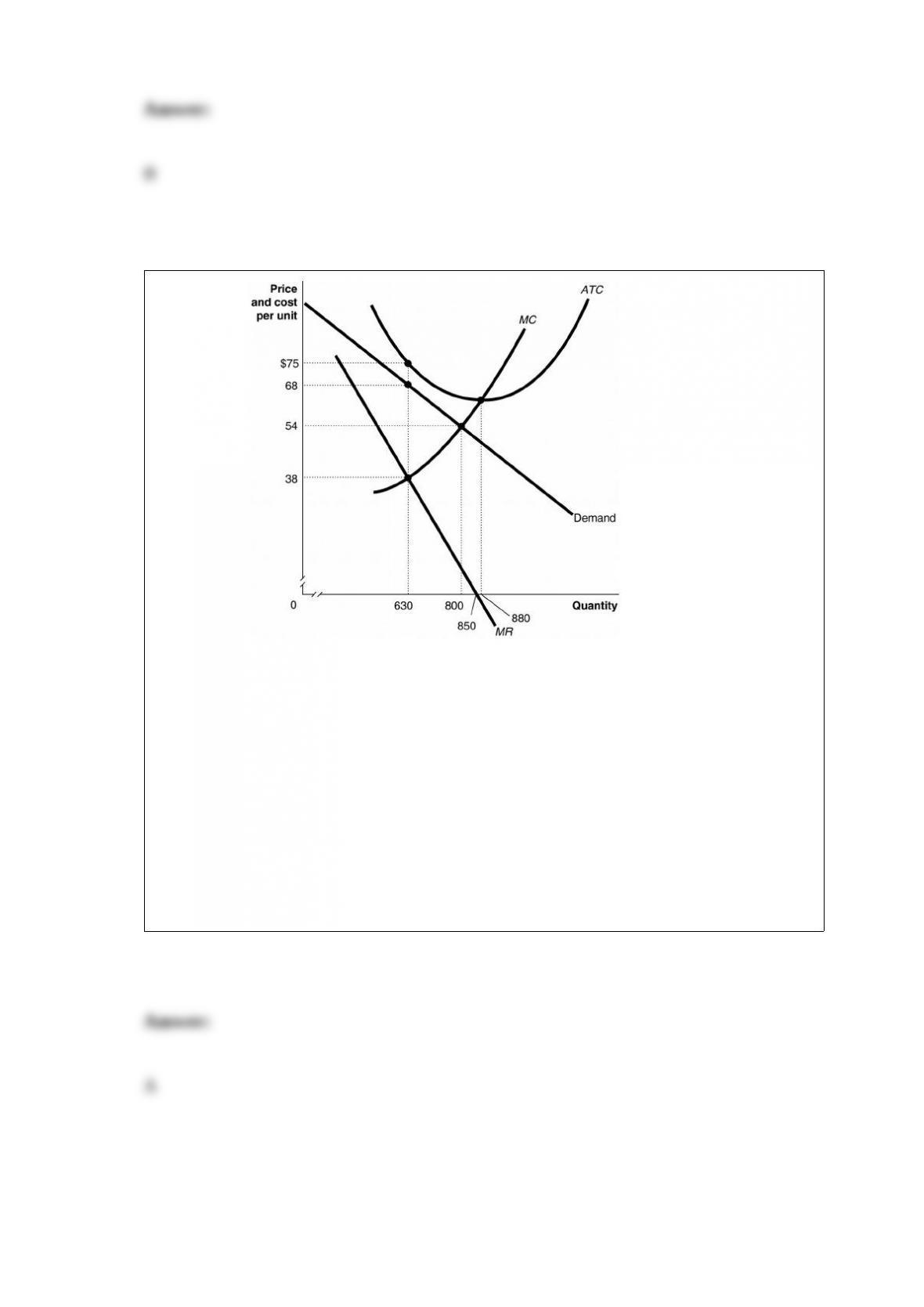
Figure 15-3 Figure 15-3 above shows
the demand and cost curves facing a monopolist.
Suppose the monopolist represented in the diagram above produces positive output.
What is the profit/loss per unit?
A) loss of $7 per unit
B) profit of $30 per unit
C) loss of $21 per unit
D) profit of $14 per unit