Net foreign investment is equal to
A) capital inflows minus capital outflows.
B) foreign direct investment.
C) the balance of trade.
D) net foreign portfolio investment plus net foreign direct investment.
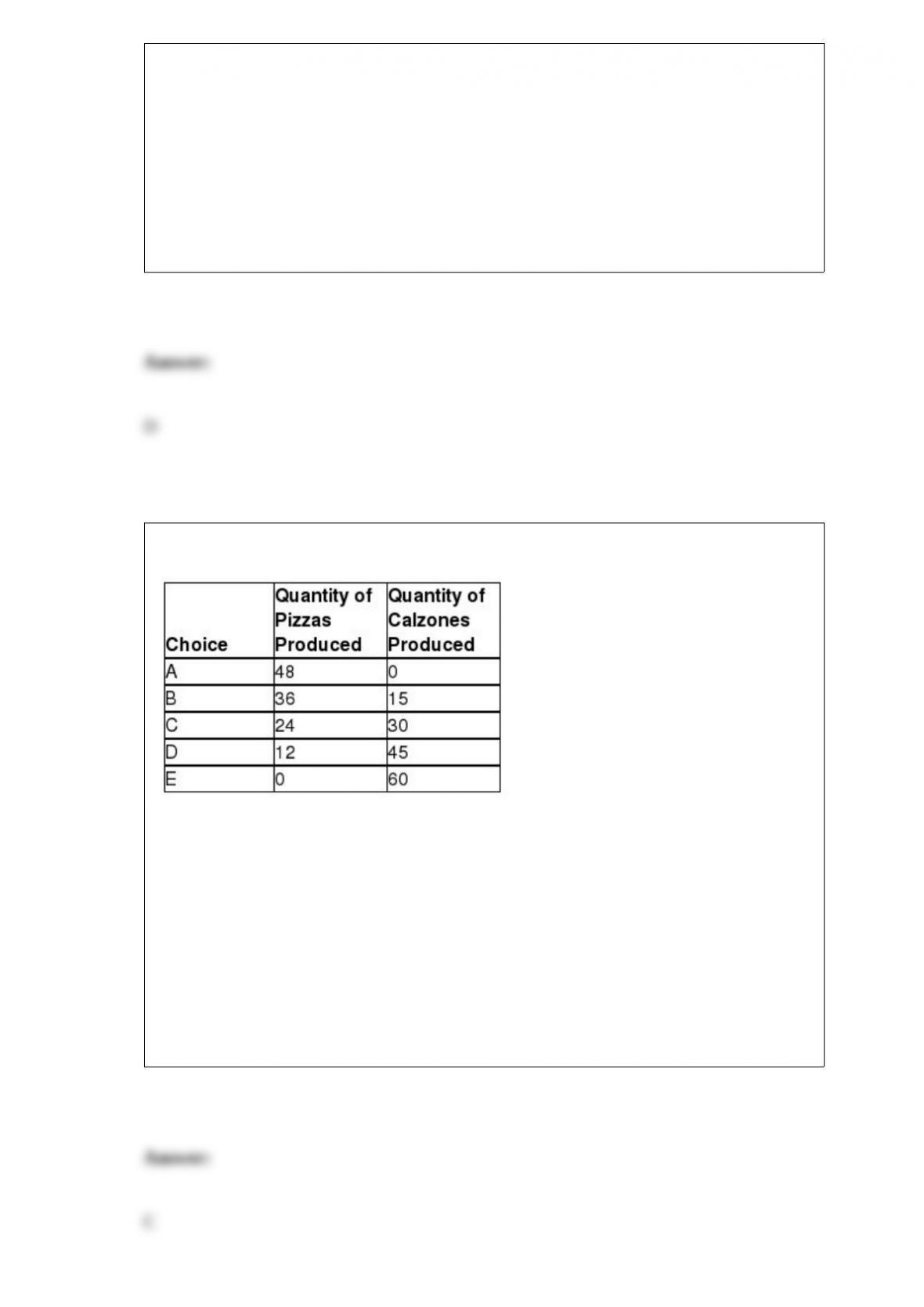
Table 2-1 Production choices for Tomaso’s Trattoria
Assume Tomaso’s Trattoria only produces pizzas and calzones. A combination of 36
pizzas and 30 calzones would appear
A) along Tomaso’s production possibilities frontier.
B) inside Tomaso’s production possibilities frontier.
C) outside Tomaso’s production possibilities frontier.
D) at the horizontal intercept of Tomaso’s production possibilities frontier.

If there is pollution in producing a product, then the market equilibrium price
A) is too high and equilibrium quantity is too low.
B) and equilibrium quantity are too low.
C) and equilibrium quantity are too high.
D) is too low and equilibrium quantity is too high.
All of the following questions or statements regarding medical school are positive
except:
A) How do changes in expected future incomes affect the decisions of medical students
about which specialty to choose?
B) Medical students who enter specialized fields make a larger contribution to society
than do student who enter primary care.
C) What role does tuition play in a student’s decision about whether to attend medical
school?
D) Have tuition increases had a large effect or a small effect on the number of
applications to medical school?
Table 14-10
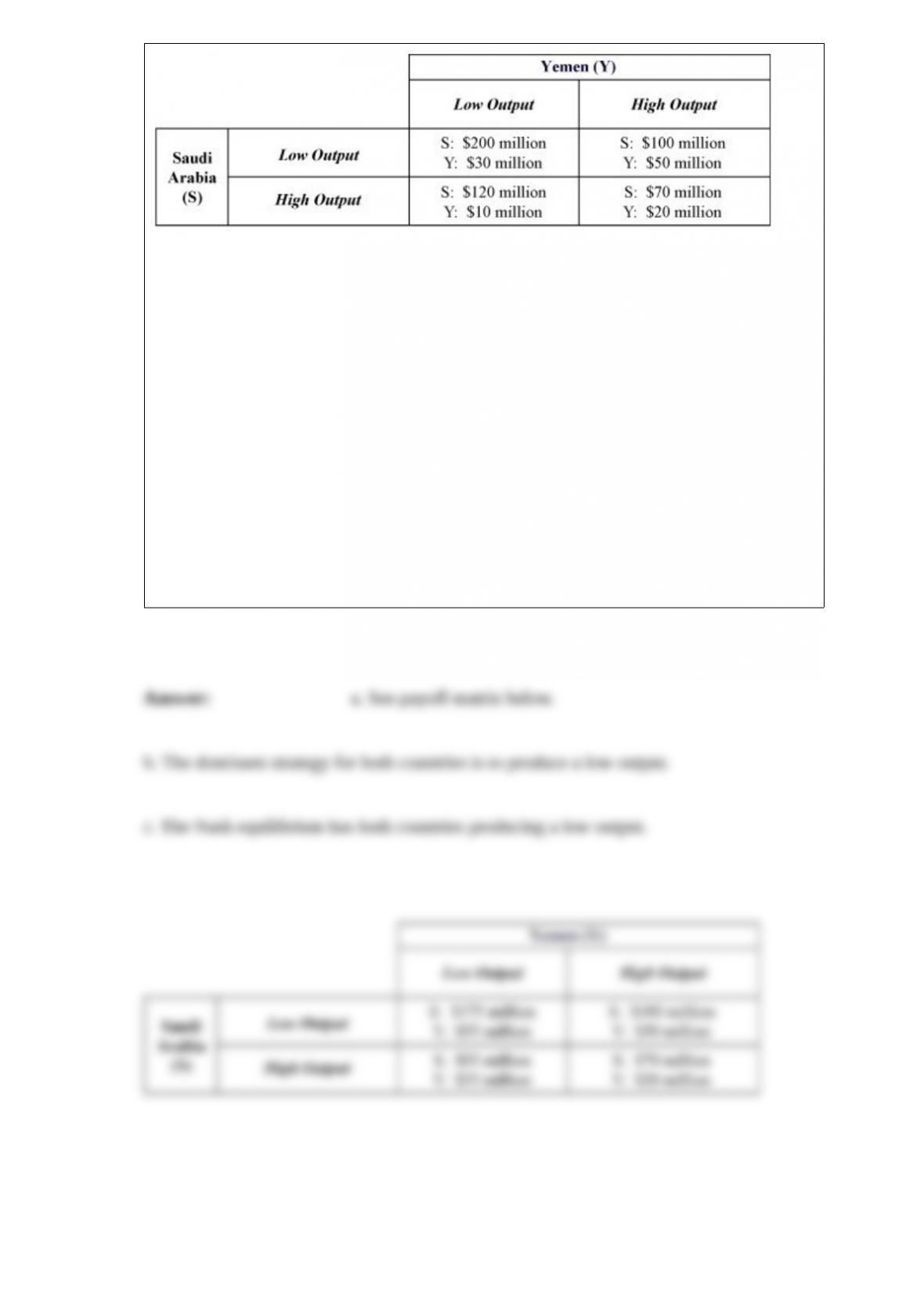
Suppose the payoff matrix in the above figure represents the payoffs to Saudi Arabia
and Yemen for the production of oil. Saudi Arabia and Yemen must decide how much
oil to produce. Since the demand for oil is inelastic, relatively low production rates
drive up prices and profits. Saudi Arabia, the world’s largest and lowest cost producer, is
able to influence market price; it has an incentive to keep output low. Yemen, on the
other hand, is a relatively high cost producer with much smaller reserves. Assume Saudi
Arabia now decides to try to further influence the oil market by offering to pay Yemen
$25 million to produce a low output.
a. Create a new payoff matrix that reflects Saudi Arabia’s willingness to pay Yemen $25
million to produce a low output.
b. What is the dominant strategy for each country in this new game?
c. What is the new Nash equilibrium?

Upon your graduation from college, you find that the economy is in recession and the
unemployment rate is relatively high. Nonetheless, you continue along your career path
looking for a new job because
A) the cost of additional education is always higher during recession.
B) high unemployment rates do not usually last for very long.
C) looking for work is your only option.
D) the wages of college graduates do not fall during recession.
Which of the following statements is true?
A) An increase in demand causes an increase in equilibrium price; the increase in price
causes supply to increase.
B) A decrease in supply causes equilibrium price to rise; the increase in price then
results in a decrease in quantity demanded.
C) If both demand and supply decrease, there must be a decrease in equilibrium price;
equilibrium quantity may either increase or decrease.
D) If demand increases and supply decreases one cannot determine if equilibrium price
will increase or decrease without knowing which change is greater.
Suppose the California Nurses Union successfully secured a 12 percent increase in the
wages of registered nurses. If a hospital responds by reducing the quantity of registered
nurses hired and increasing the quantity of physician’s assistants hired, what conclusion
can you draw?

A) Physician’s assistants are more valuable in terms of their productivity.
B) The price elasticity of demand for registered nurses is negative while the price
elasticity of demand for physician’s assistants is positive.
C) The cross-price elasticity of demand between registered nurses and physician’s
assistants is positive.
D) The cross-price elasticity of demand between registered nurses and physician’s
assistants is negative.
Mrs. Lovejoy decides to invest in companies which she believes are producing its
goods based on the preferences of consumers. Mrs. Lovejoy is investing in companies
that are
A) productively efficient.
B) allocatively efficient.
C) both productively and allocatively efficient.
D) always going to be profitable.
An economic growth model explains
A) changes in real GDP per capita in the long run.
B) how changes in the money supply affect real interest rates.

C) changes in government tax policies over time.
D) the growth rate of the price level over time.
The ________ the sale of an additional unit of a product is a marginal benefit to the
firm.
A) revenue received from
B) extra cost of
C) total value of
D) sales tax on
You’re traveling in Ireland and are thinking about buying a new digital camera. You’ve
decided you’d be willing to pay $125 for a new camera, but cameras in Ireland are all
priced in euros. If the exchange rate is 0.85 euros per dollar, what’s the highest price in
euros you’d be willing to pay for a camera?
A) 105 euros
B) 106.25 euros
C) 110.15 euros
D) 147 euros

A four-firm concentration ratio measures
A) the extent to which industry sales are concentrated among the four largest firms in
the industry.
B) the price elasticity of demand among the four largest firms in an industry.
C) the number of firms in an industry.
D) the price elasticity of demand in an industry.
How does a market system prevent people from getting as many goods and services as
they wish?
A) Governments interfere with the market mechanism to influence the allocation of
goods and services.
B) In a market system, firms can charge any price they want, thus preventing poor
people from getting as many goods and services as they wish.
C) The market system allocates goods and services to those who are able to pay for
those products and therefore income is a limiting factor.
D) The government imposes taxes on those who earn beyond a certain amount of
income.
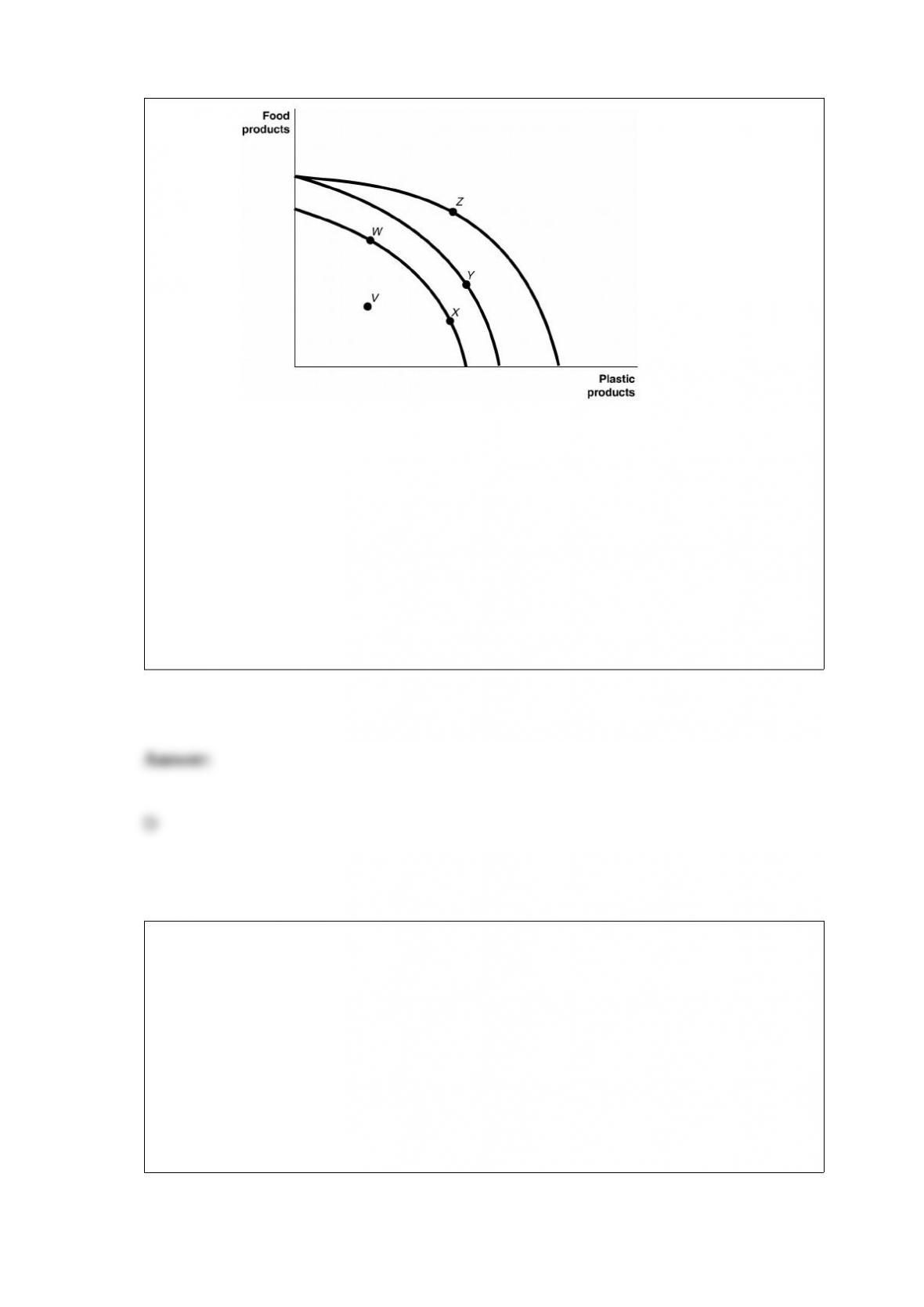
Figure 2-4 Figure 2-4 shows
various points on three different production possibilities frontiers for a nation. A
movement from ________ is the result of additional government restrictions on the
pollution that results from plastic production.
A) X to V
B) X to W
C) Z to W
D) Z to Y
If Abercrombie & Fitch borrows $8 million from a bank to finance the construction of a
new store, this is an example of
A) a stock market transaction.
B) direct finance.
C) a bond market transaction.
D) indirect finance.
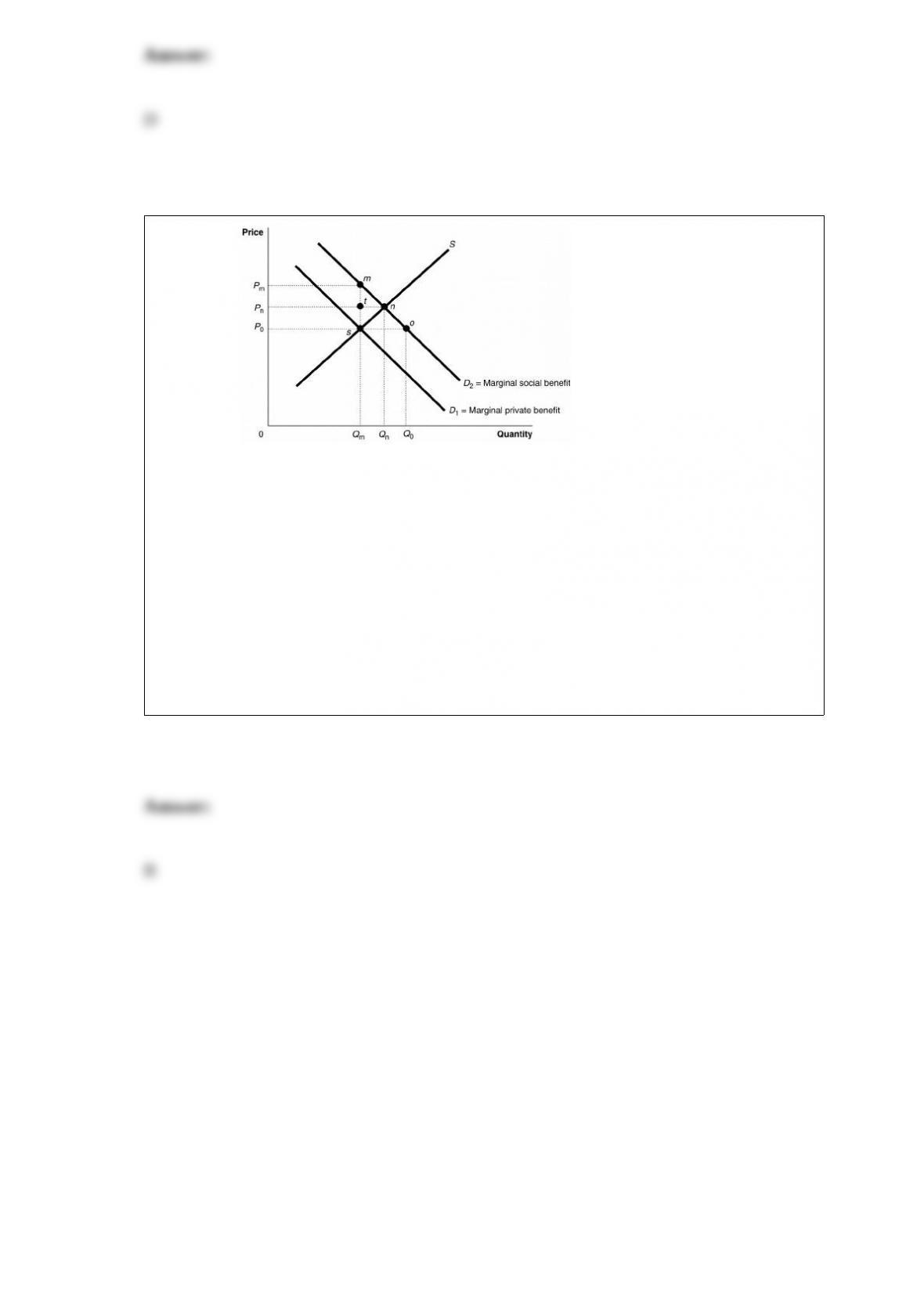
Figure 5-3
At the competitive market equilibrium, for the last unit produced,
A) the size of the external cost is Pm– Po.
B) the size of the external benefit is Pm– Po.
C) the size of the external cost is P– Po.
D) the size of the external benefit is P– Po.