The aggregate demand curve will shift to the right ________ the initial increase in
government purchases.
A) by less than
B) by more than
C) by the same amount as
D) sometimes by more than and other times by less than
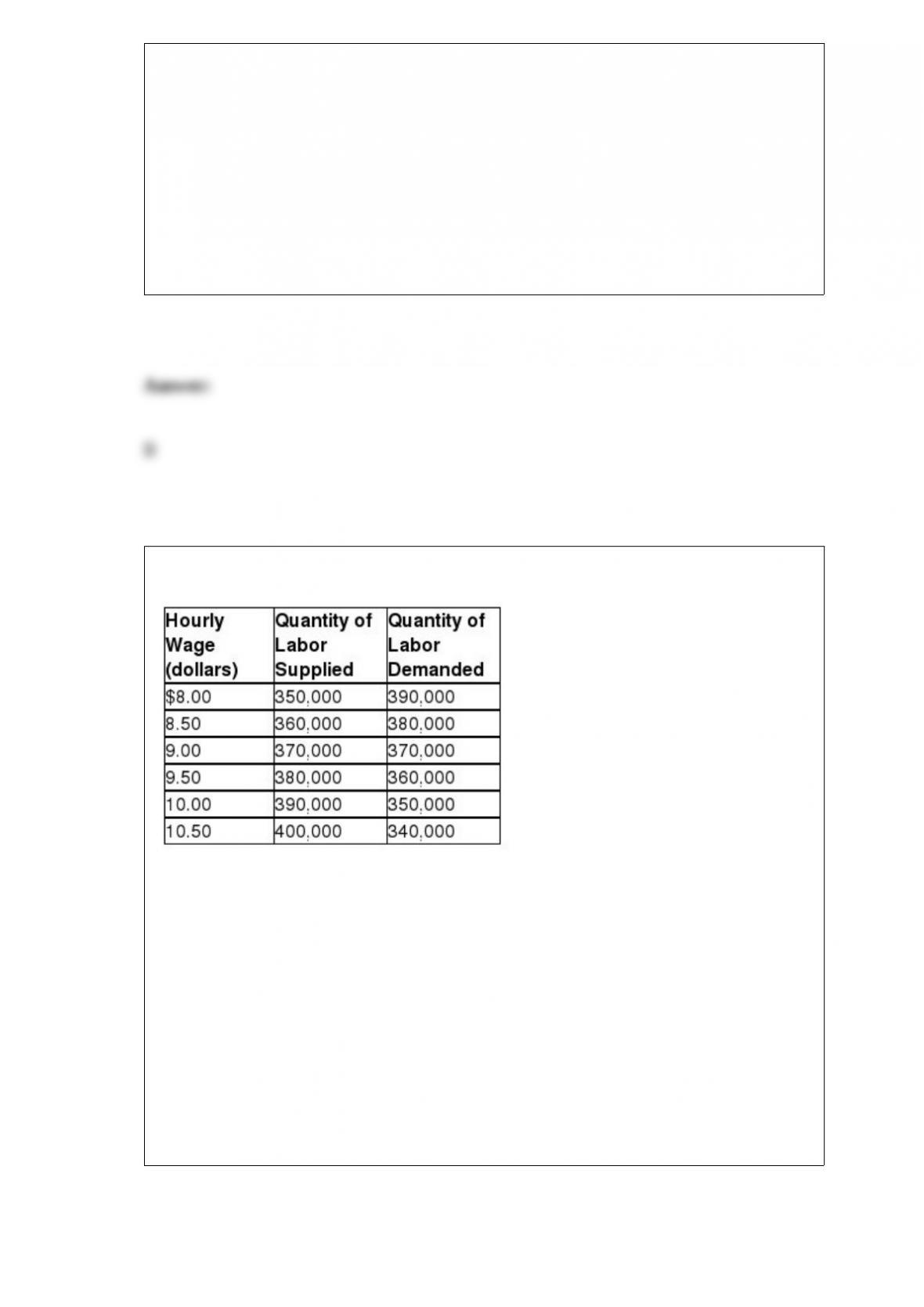
Table 4-4
Table 4-4 shows the demand and supply schedules for the low-skilled labor market in
the city of Westover.
If a minimum wage of $9.50 an hour is mandated, what is the quantity of labor
supplied?
A) 390,000
B) 380,000
C) 370,000
D) 340,000
The reason that the Fisherman’s Friend restaurant in Stonington, Maine had a monopoly
on selling seafood dinners in that town is most likely due to
A) a government-imposed barrier.
B) occupational licensing.
C) no competitors apparently found the profit level attractive enough to enter the
market.
D) the restaurant owned all the fresh seafood in the state.
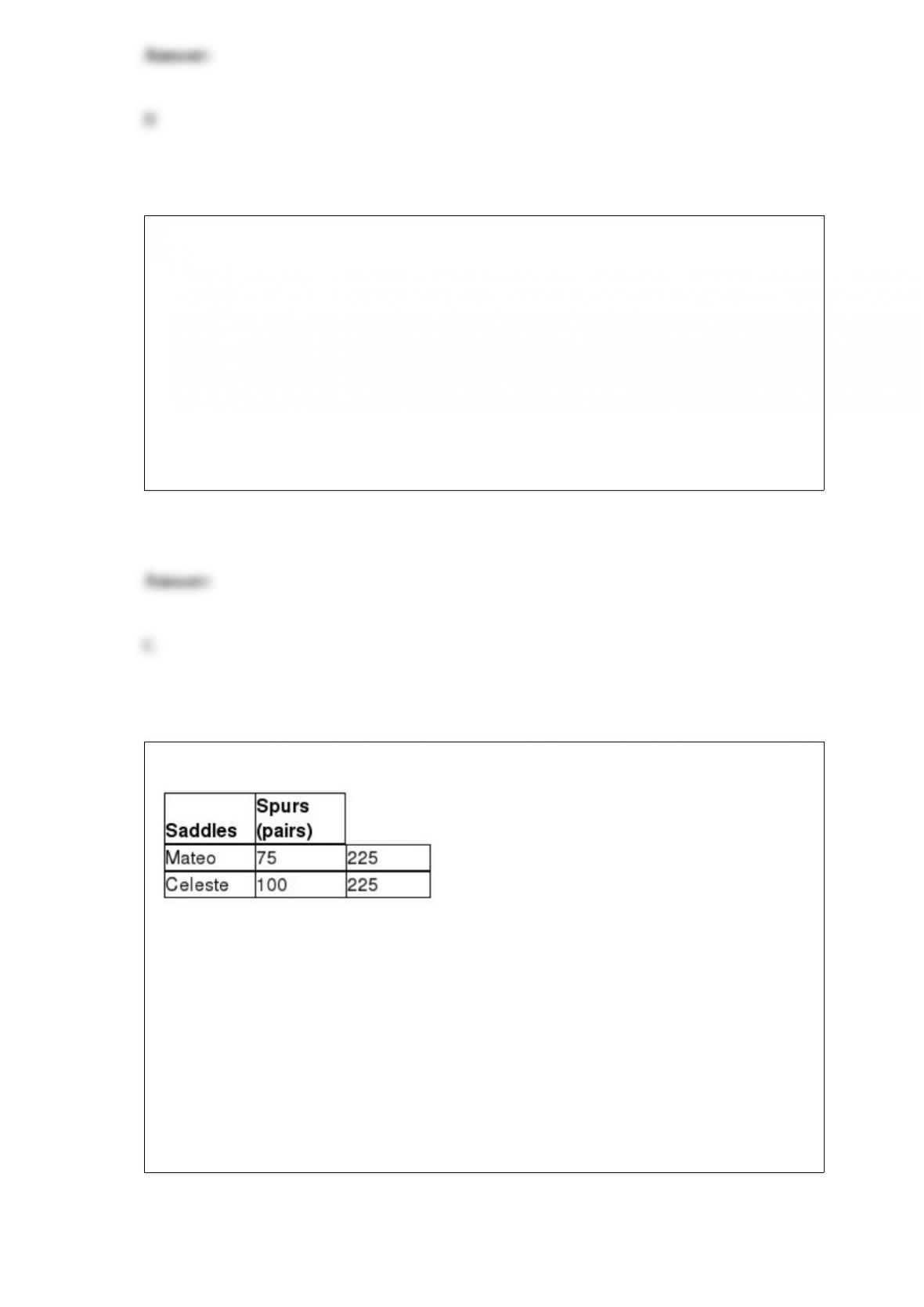
Table 7-3
Mateo and Celeste produce custom saddles and spurs. Table 7-3 lists the number of
saddles and pairs of spurs Mateo and Celeste can each produce in one month. Select the
statement that accurately interprets the data in the table.
A) Mateo has an absolute advantage in making saddles and spurs.
B) Celeste has an absolute advantage in making saddles and spurs.
C) Neither Mateo nor Celeste has an absolute advantage in making saddles.
D) Neither Mateo nor Celeste has an absolute advantage in making spurs.
Holding all other personal characteristics€such as age, gender, and income€constant,
economists would expect that
A) people with health insurance will be less likely to be overweight than people without
health insurance.
B) people with health insurance will be more likely to be overweight than people
without health insurance.
C) people with health insurance will be equally likely to be overweight as people
without health insurance.
D) there is no correlation between having health insurance and being overweight.
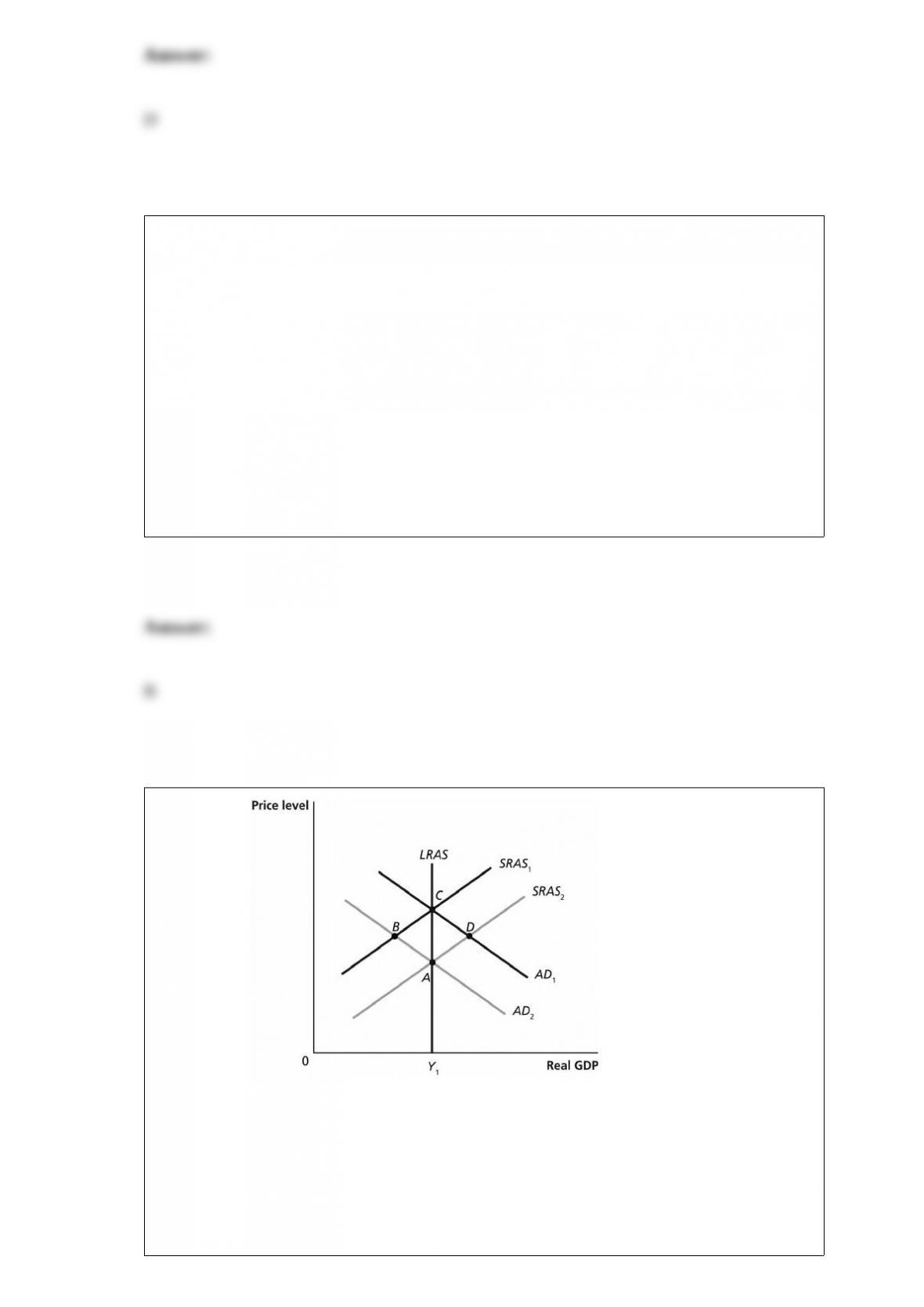
Figure 13-3
Which of the points in the above graph are possible long-run equilibria?
A) A and B
B) A and C
C) A and D
D) B and D
In the United States, the annual growth rate of real GDP per hour worked between 1996
and 2012 averaged
A) -0.3%.
B) 1.9%.
C) 6.9%.
D) 10.2%.
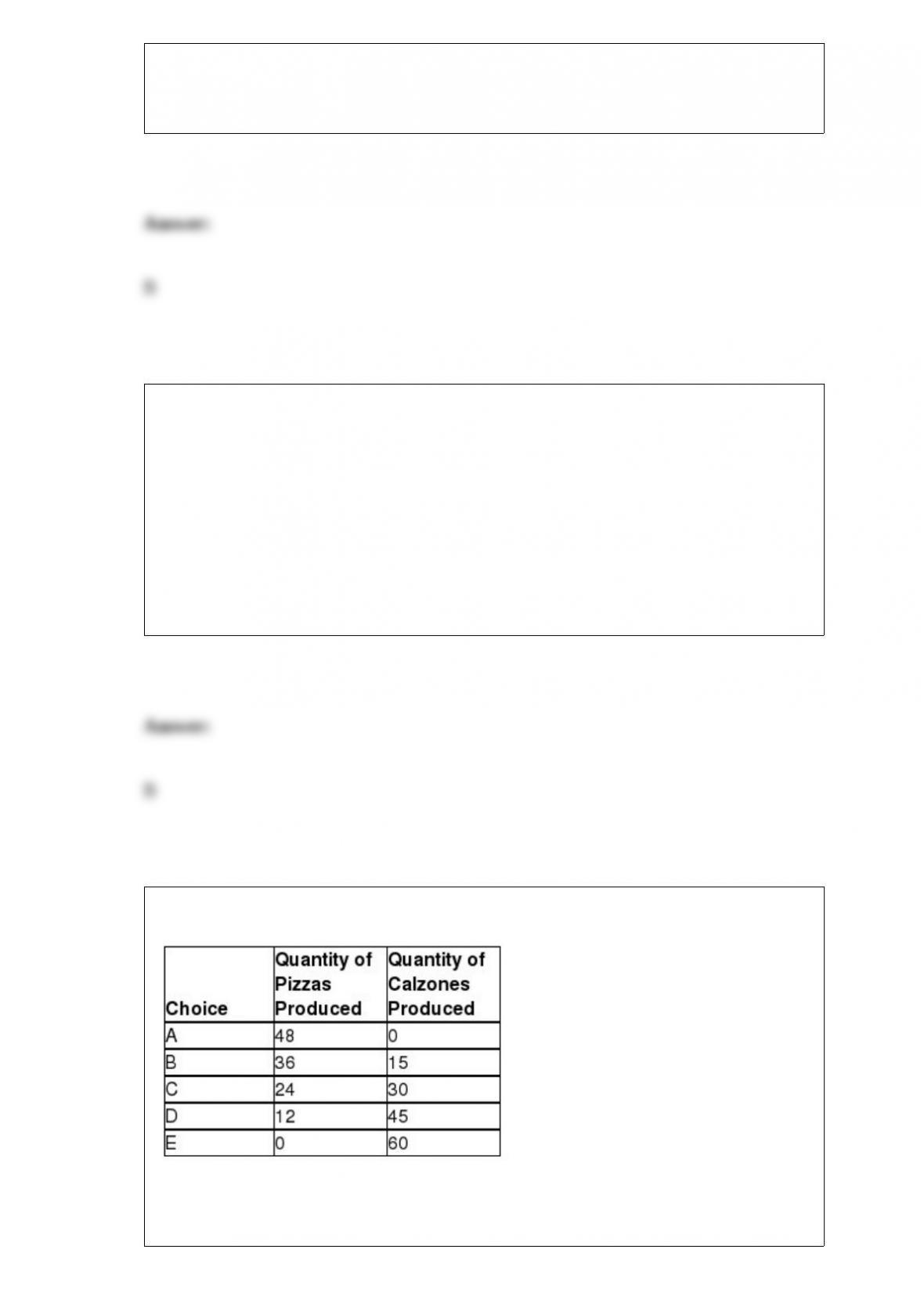
Table 2-1 Production choices for Tomaso’s Trattoria
Assume Tomaso’s Trattoria only produces pizzas and calzones. Tomaso faces ________
opportunity costs in the production of pizzas and calzones.

A) increasing
B) decreasing
C) constant
D) negative
An increase in expected inflation will
A) increase real wages.
B) decrease the natural rate of unemployment.
C) shift the long-run Phillips curve to the right.
D) None of the above is correct.
Which of the following is not a consequence of hyperinflation?
A) Money’s function as a medium of exchange is enhanced.
B) Money loses value so rapidly that firms and individuals stop holding it.
C) It causes an economy to suffer slow growth.
D) The price level grows in excess of hundreds of percentage points per year.
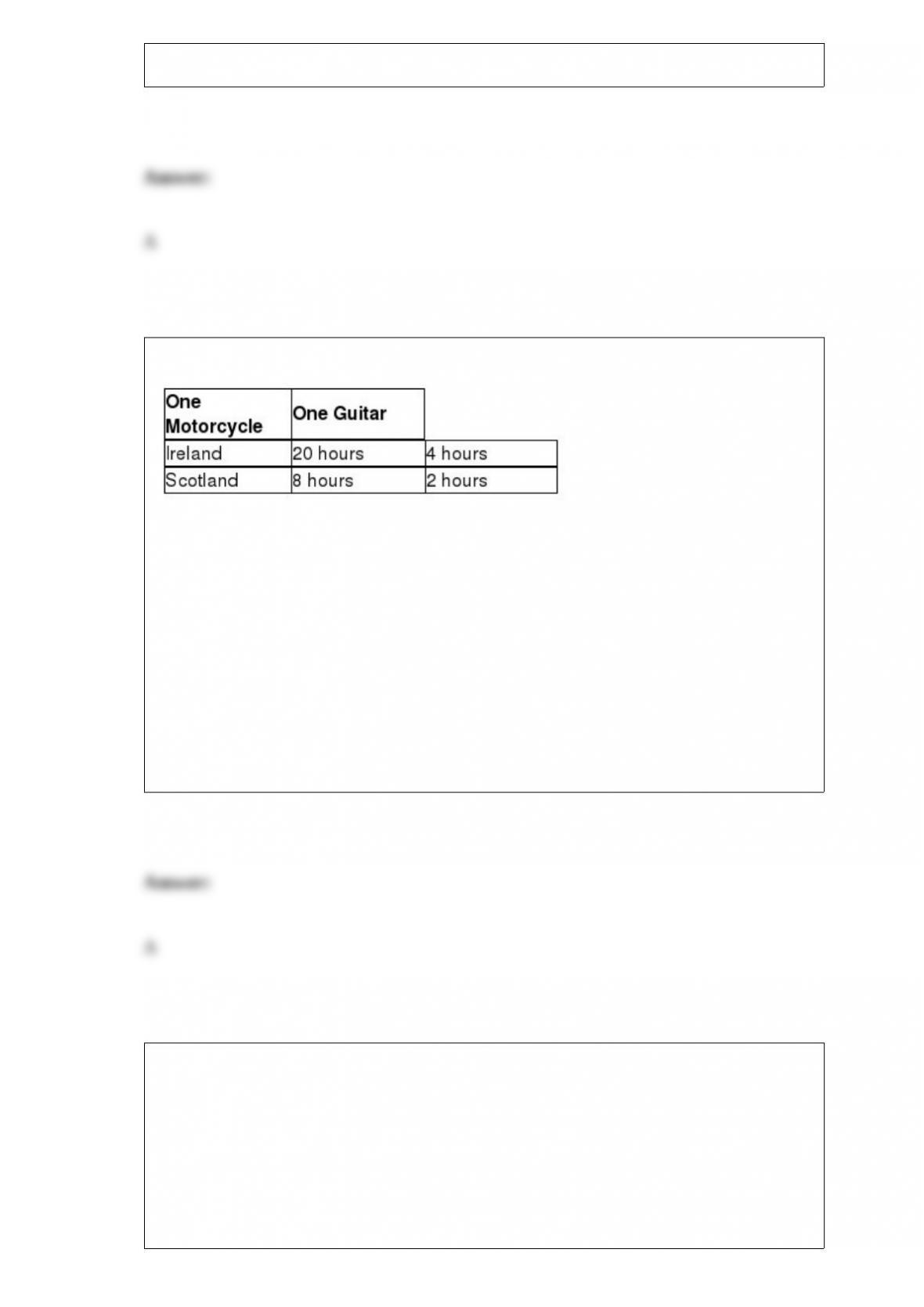
Table 2-14
Table 2-14 shows the number of labor hours required to produce a motorcycle and a
guitar in Ireland and Scotland.
What is Scotland’s opportunity cost of producing one guitar?
A) 0.25 motorcycle
B) 4 motorcycles
C) 12 motorcycles
D) 16 motorcycles
If you were to ask your employer for a raise, which of the following would be your
most effective argument?
A) “I have a job offer at another firm that will pay me more than my current wage.”
B) “I am willing to work more hours each week.”
C) “Increases in my productivity have resulted in greater revenue and profits for your

business.”
D) “My marginal product is greater than my current wage.”
Compared to a competitive market, a firm that has a monopsony in a labor market
would
A) hire fewer workers and pay higher wages.
B) hire more workers and pay lower wages.
C) hire fewer workers and pay lower wages.
D) hire more workers and pay higher wages.
An increase in the real interest rate results in which of the following?
A) an increase in the demand for loanable funds
B) a decrease in the demand for loanable funds
C) an increase in the quantity of loanable funds supplied
D) Both B and C will occur as a result of an increase in the real interest rate.

A patent is a government-imposed entry barrier because
A) it allows a firm to achieve economies of scale.
B) it is a key input owned by the firm that is granted the patent.
C) it limits the quantity of a good that can be imported into a country.
D) it gives a firm the exclusive right to a new product for a period of 20 years from the
date the product is invented.
The Gini coefficient for the United States in 1980 was 0.403. In 2011, the coefficient
was equal to 0.477. This means that
A) per capita income in the United States rose from 1980 to 2011.
B) there was a decrease in the amount of government transfer payments from 1980 to
2011.
C) cuts in federal income tax rates in the early 1980s and 2001 helped to reduce income
inequality.
D) income inequality increased from 1980 to 2011.
Which of the following is one reason for the decline in aggregate demand that led to the
recession of 2007-2009?
A) falling oil prices
B) an increase in net exports
C) the end of the housing bubble
D) a decline in government spending
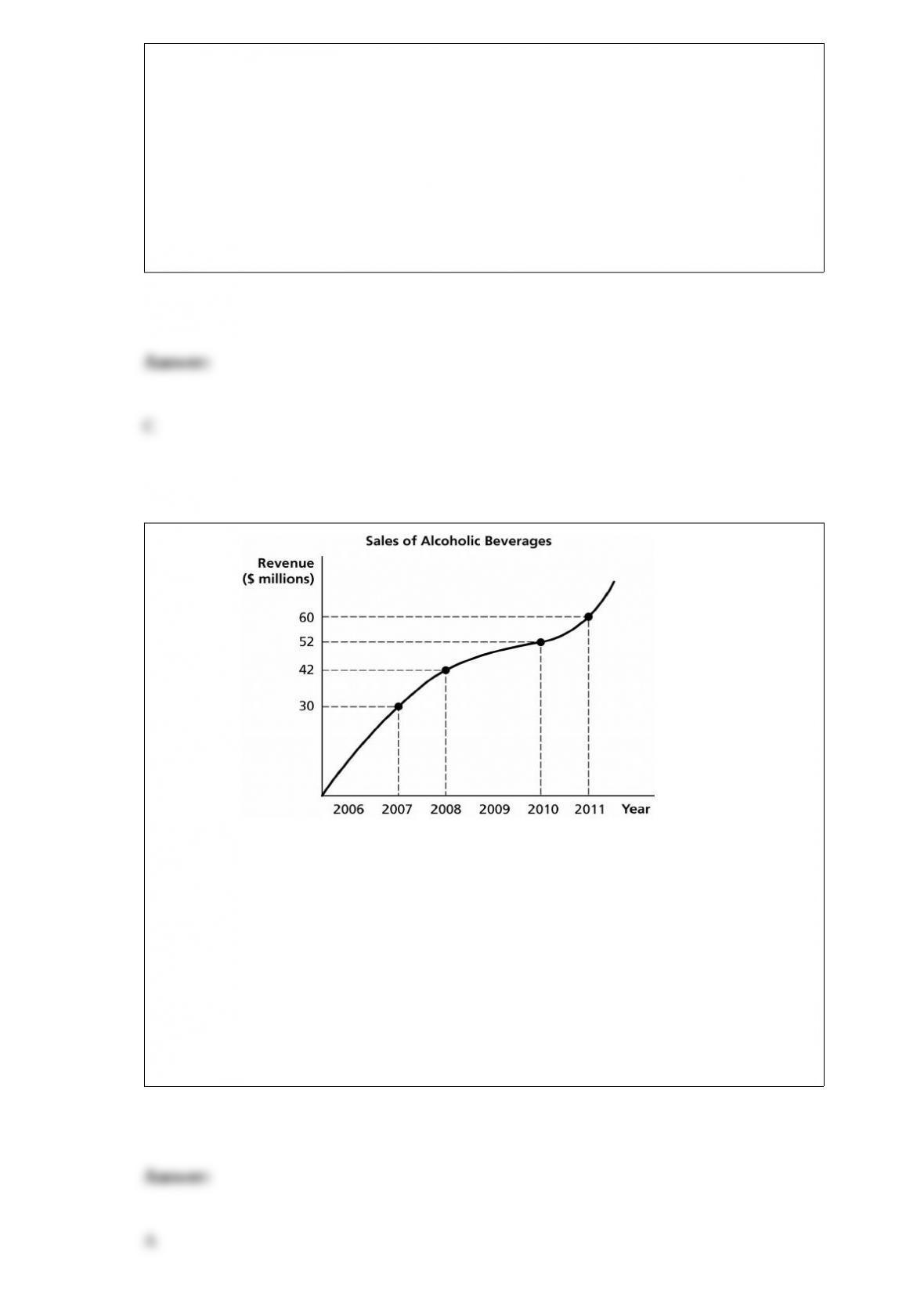
Figure 1-1
Using the information in the figure above, calculate the percentage change in sales of
alcoholic beverages between 2008 and 2010.
A) 23.8%
B) 40%
C) 42.9%
D) 73.3%
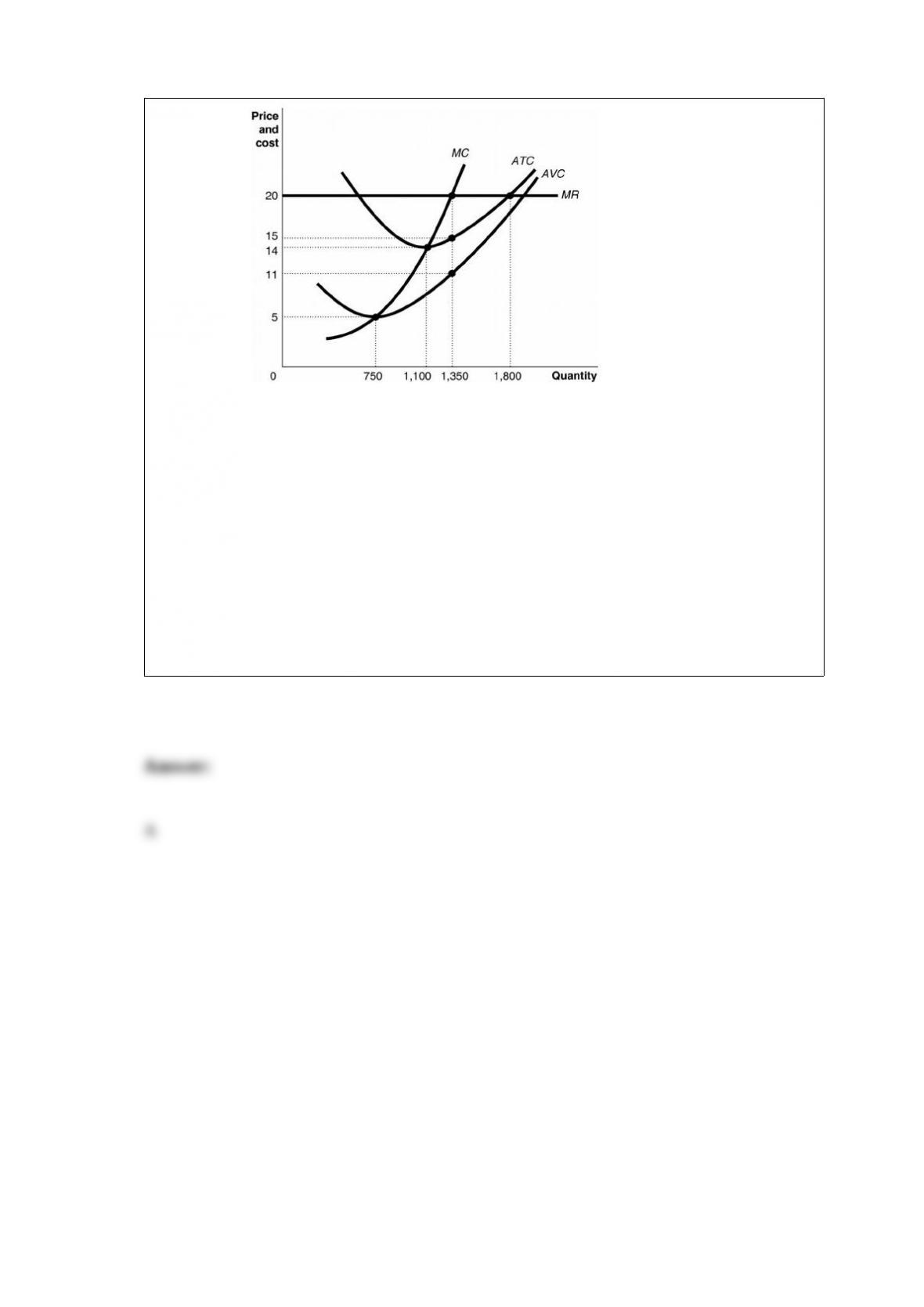
Figure 12-5 Figure 12-5 shows cost and
demand curves facing a typical firm in a constant-cost, perfectly competitive industry.
The firm’s manager suggests that the firm’s goal should be to maximize average profit.
If the firm does this, what is the amount of profit that it will earn?
A) $6,600
B) $6,750
C) $12,150
D) $36,000