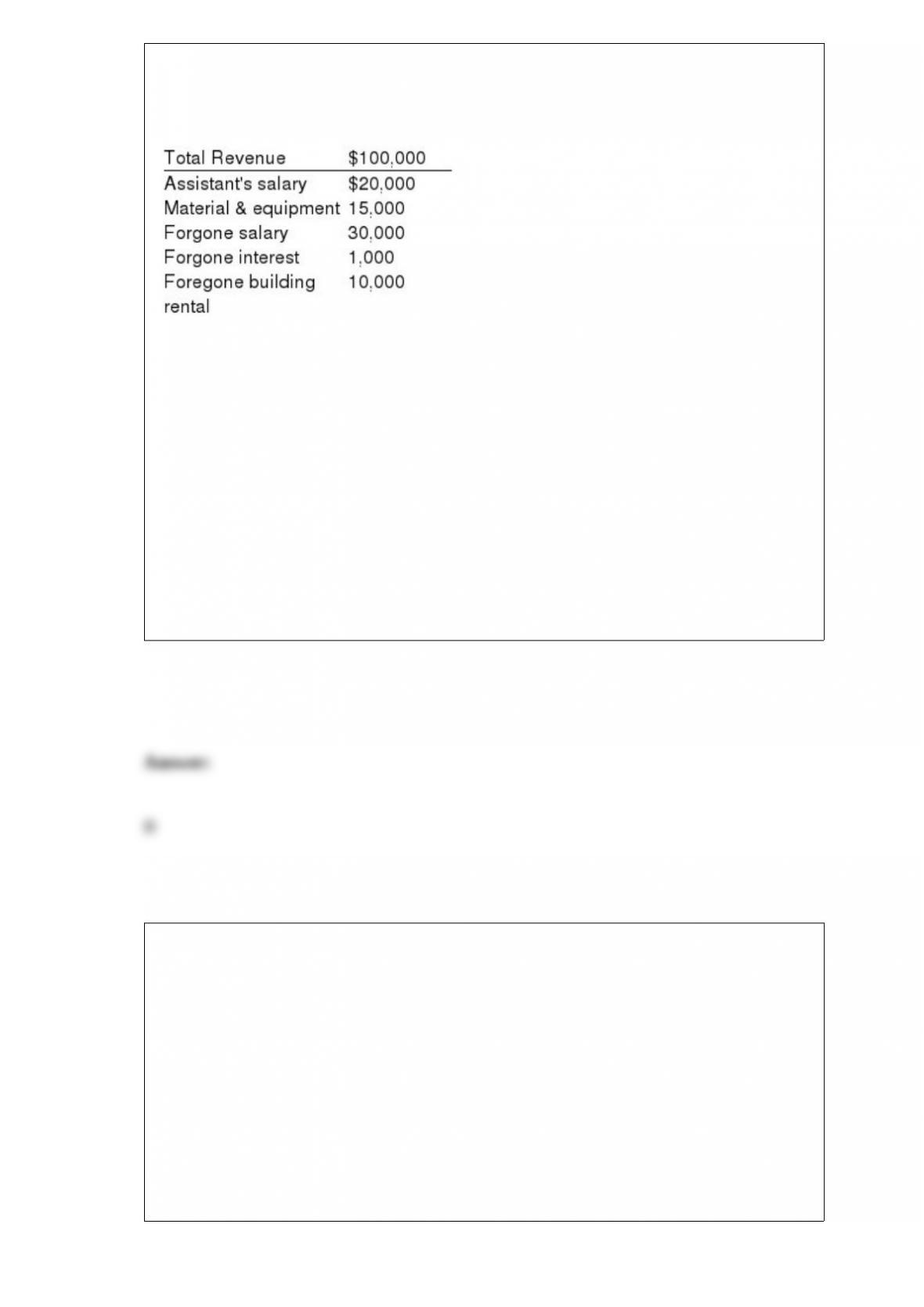
Exhibit 7-1
Sally owns a small business that she operates in a small building she owns. Given the
information in Exhibit 7-1, Sally’s normal profit is
a. $80,000
b. $41,000
c. $65,000
d. $35,000
e. $24,000
If the country of Deficitland is experiencing trade deficits, they are more likely to cut
imports of
a. beef
b. cocoa
c. coffee
d. capital goods
e. soybeans

“Congress must recognize that the growing national debt is the most serious problem
that the country faces,” is an example of
a. a positive statement
b. a normative statement
c. a misleading statement
d. a negative statement
e. a marginal statement
The sum of the individual demands of all consumers in the market is called
a. individual demand
b. market demand
c. inferior good
d. market supply
e. quantity demanded

Legislation that provides a price support for dairy farmers is an example of
a. public-interest legislation
b. competing-interest legislation
c. a positive-sum game
d. special-interest legislation
e. concentrated-costs legislation
Marginal revenue product for a price taker equals
a. MP x P
b. MP/MRC
c. MP x MRC
d. MRC/MP
e. MP/P

If you hold a bond at a time when market interest rates are increasing, you will find that
the bond’s value has
a. remained the same since the interest payment remains constant
b. increased
c. increased only if the market interest rate exceeds the interest rate payable on the bond
d. declined because you will receive a lower price when you sell the bond
e. increased only if the interest payable on the bond exceeds the market interest rate
Disappointed with problems caused by being a recipient of foreign aid from donor
governments, the country of Upsilon should consider
a. refusing all future offers of aid
b. privatizing of aid, such as receiving funds from private not-for-profit agencies
c. becoming a donor instead
d. seeking even more government-sponsored aid
e. All of the answers are correct
Perfectly elastic demand curves are irrelevant, since real world demand curves are
never perfectly elastic.
a. True

b. False
If coal and oil are substitute inputs in the production of electricity, an increase in the
price of oil
a. will increase the demand for coal
b. will reduce the demand for coal
c. will increase the supply of coal
d. will reduce the supply of coal
e. will not affect the demand for coal
Upon opening a printing and copy shop, a firm budgets $30,000 for copy machines and
labor. If the price of labor is $30 per hour, what is the vertical intercept of the isocost
line when labor is measured on the horizontal axis?
a. 75 hours
b. 1,000 hours
c. 90,000 hours
d. 300,000 hours

e. It is impossible to tell from the information given.
The first video rental outlets
a. earned short-run economic profits because they faced little competition
b. suffered short-run economic losses until videos caught on and demand for them
increased
c. were able to earn long-run economic profits because of barriers to entry
d. earned only normal profits because the industry is perfectly competitive
e. provided a good example of an oligopoly
A perfectly competitive firm in the short run determines its quantity supplied at various
prices by using
a. the portion of its marginal cost curve rising above its average total cost curve
b. the portion of its marginal cost curve rising above its average variable cost
c. its average variable cost curve
d. its average total cost curve
e. the portion of its average variable cost curve rising above its average fixed cost curve

If the price of potato chips increases, other things constant, demand for potato-chip dip
will
a. not change; only quantity demanded will change
b. increase because the goods are substitutes
c. decrease because the goods are substitutes
d. decrease because the goods are complements
e. increase because the goods are complements
Assume a monopolistically competitive firm is earning an economic profit. The
marginal revenue from selling an additional unit is $30 and the marginal cost of
producing that additional unit is $23. The firm should
a. change neither its price nor its output level
b. reduce its price and increase its output level
c. increase its price and reduce its output level
d. reduce both its price and its output level
e. increase both its price and its output level
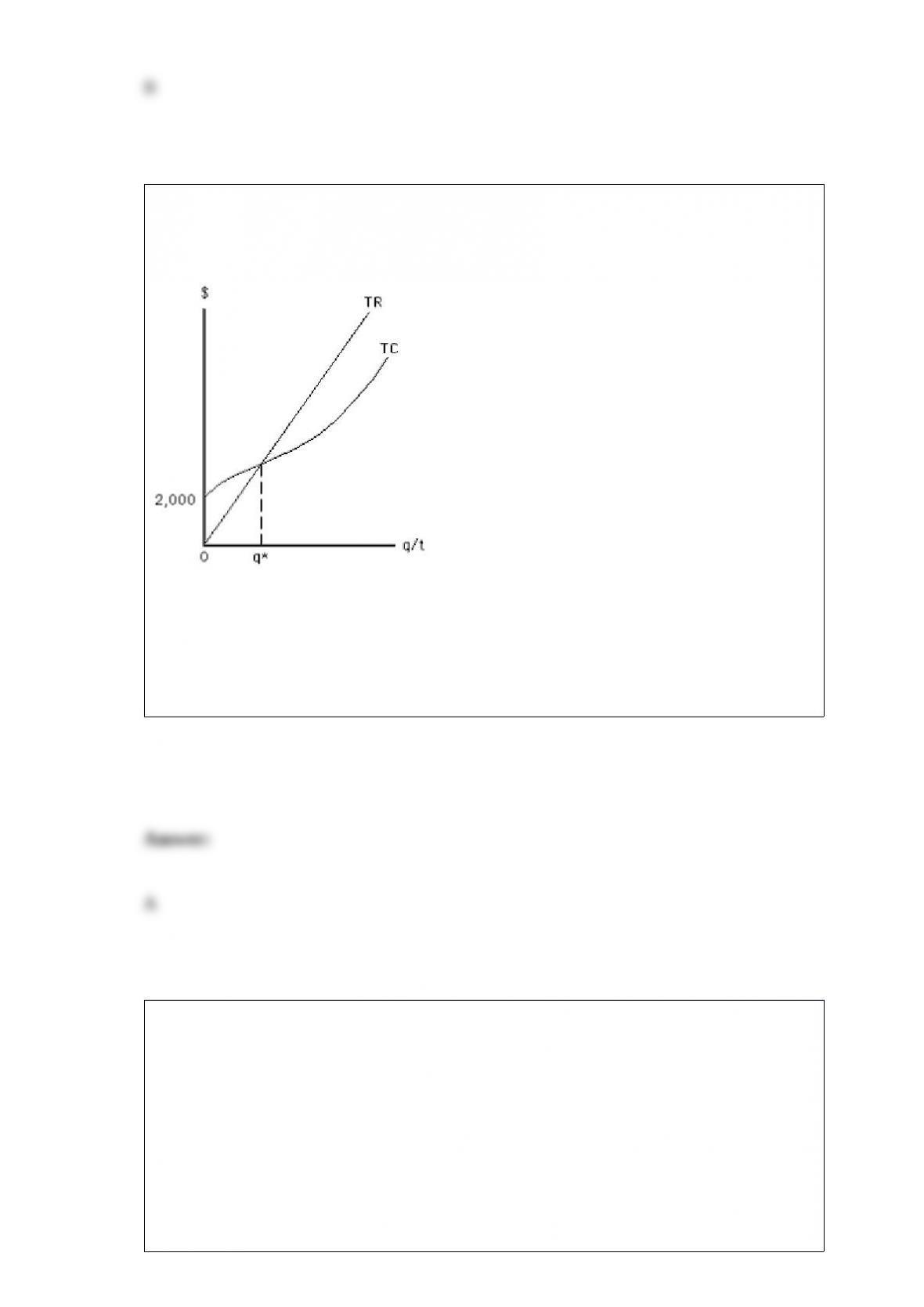
Exhibit 8-12
If the market price rises, the total revenue (TR) curve in Exhibit 8-12 will
a. rotate upward and become steeper
b. shift to the right
c. rotate downward and become steeper
d. not be affected
e. shift to the left
An outward shift of the production possibilities frontier
a. reflects economic stability
b. reflects economic growth
c. reflects economic decline
d. does not relate to the state of the economy

e. is always a parallel shift
Over the last few years, demand for DVDs has increased, and yet their equilibrium
price has fallen. Which of the following best explains this situation?
a. When the price falls, the quantity supplied increases.
b. There has been a shortage of DVDs.
c. The supply of DVDs must have decreased.
d. The demand curve for DVDs slopes upward, so an increase in demand leads to a
lower price.
e. The supply of DVDs must have increased more than the demand for DVDs increased.
The assumption of rational self-interest means that economic decision makers
a. have no concern for the welfare of others
b. consider the welfare of others to be more important than their own happiness
c. know with certainty which choice will have the best result
d. make reasonable decisions based on their expectations of results
e. do not make incorrect decisions or bad choices

The average total cost curve and the average variable cost curve
a. are closer together as output increases, with average variable cost reaching its
minimum level first
b. are closer together as output increases, with average total cost reaching its minimum
level first
c. are farther apart as output increases, with average variable cost reaching its minimum
level first
d. are farther apart as output increases, with average total cost reaching its minimum
level first
e. are parallel to each other, and reach their minimum levels at the same rate of output
Exhibit 7-17
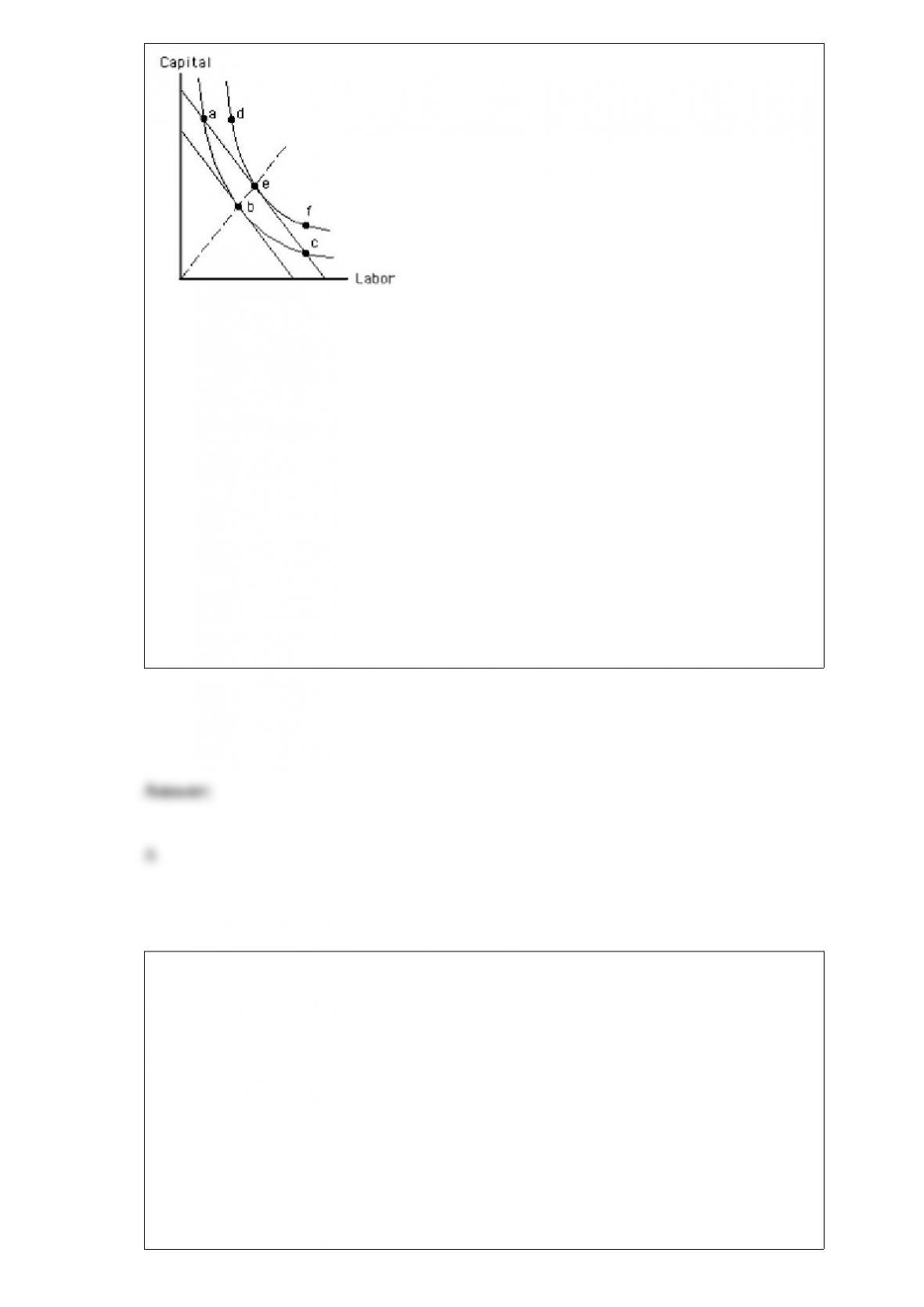
Which of the following is true of Exhibit 7-17?
a. Points a, b, and c all represent the same level of output, which is less output than at
points d, e, and f.
b. Points a, b, and c represent the same level of output, which is higher than that at
points d, e, and f.
c. Points a, c, and e represent the same level of output, which is lower than that at point
b.
d. Points a, c, and e represent the same level of output, which is higher than that at point
b.
e. Point d represents a level of output higher than any other point on the graph.
If an industrial union is able to negotiate a wage above the market-clearing wage,
employment in the industry will
a. increase
b. decrease
c. increase, if the union can restrict the supply of labor
d. increase, if the union can increase the supply of labor
e. decrease due to the strike-breaking activity of the firm

The demand curve for a good that has many perfect substitutes in consumption is likely
to be
a. upward sloping
b. steep
c. highly inelastic
d. horizontal
e. vertical
If price increases from $45 to $55, the market quantity supplied increases from 20 units
per week to 30 units per week. The price elasticity of supply is
a. 1/2 = 0.5
b. 1.0
c. 11/6 = 1.8333
d. 9/4 = 2.25
e. 2.0

Rational ignorance helps explain why
a. legislators often trade votes on key issues to produce positive-sum games between
them
b. legislators usually disregard the desires of those constituencies that cannot influence
their chances for reelection
c. voters spend considerable time and effort to gather information to protect themselves
against legislators with hidden agendas
d. it is rational for legislators to ignore the wishes and desires of all of their constituents
e. voters may choose to remain ignorant of issues when there are large costs associated
with becoming informed
Which of the following is an example of a local monopoly?
a. a restaurant at a rural crossroads
b. Alcoa during the 19th century
c. De Beers Consolidated Mines
d. AT&T
e. U.S. Postal Service

In the United States since World War II, there has been
a. a dramatic increase in the population living in rural areas
b. a decline in the number of women in the labor force
c. a decrease in the opportunity cost of working in the home
d. more specialization of production within households
e. a dramatic increase in the number of married women in the labor force
Which of the following is most likely to be a fixed resource for the Speedy Word
Processing and Rsum Company?
a. floppy disks
b. typists
c. computer terminals
d. electricity
e. paper
On a graph, the origin represents
a. the dependent variable
b. the variable that is the primary source of causation
c. a caption or explanatory description of the symbols, colors, and measurements used
on the graph
d. the point at which the values of both variables are zero
e. ancestry
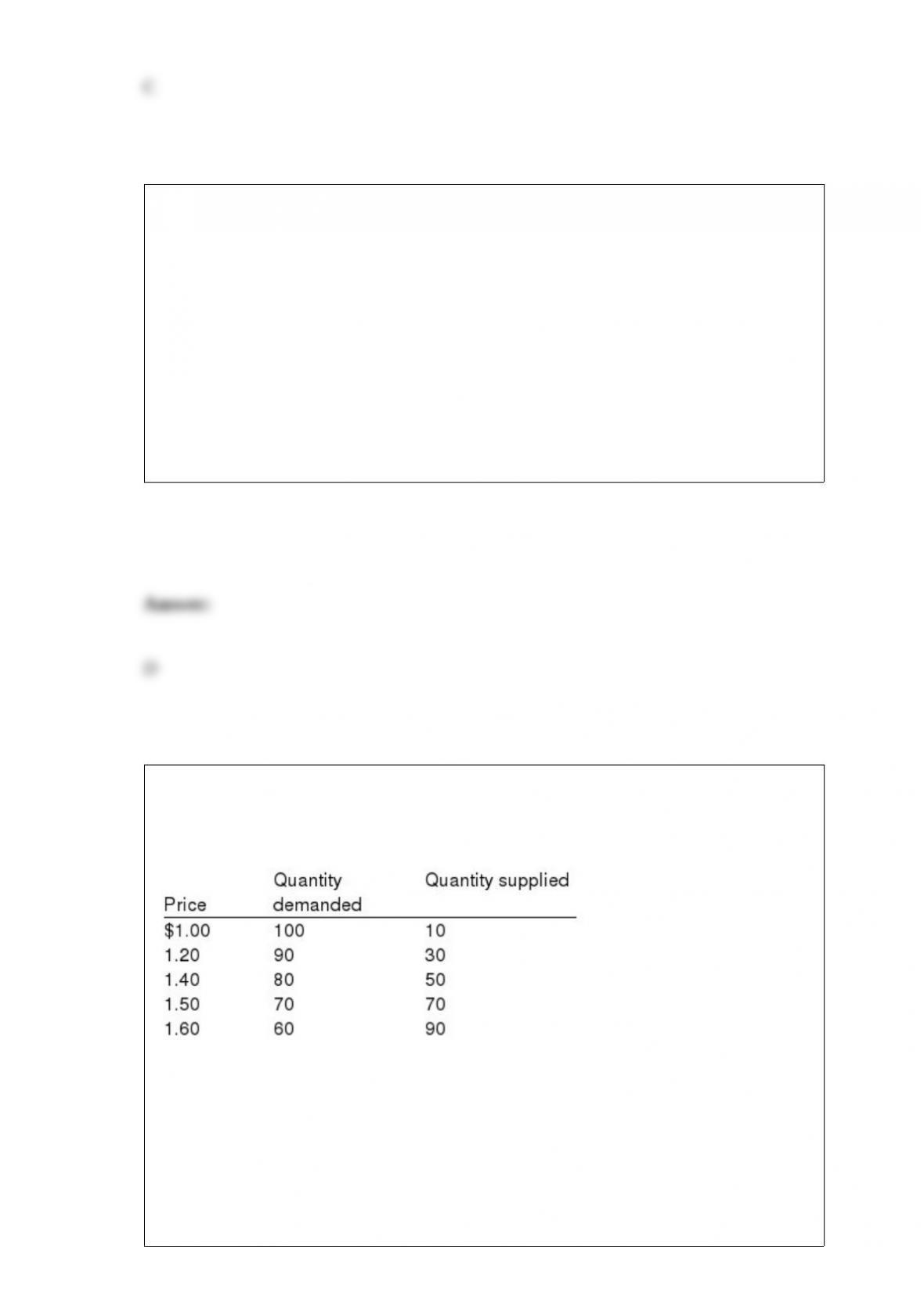
Exhibit 4-3
If the price of the good described in Exhibit 4-3 is $1.50, then
a. there is a shortage
b. there is a surplus
c. the market is in equilibrium
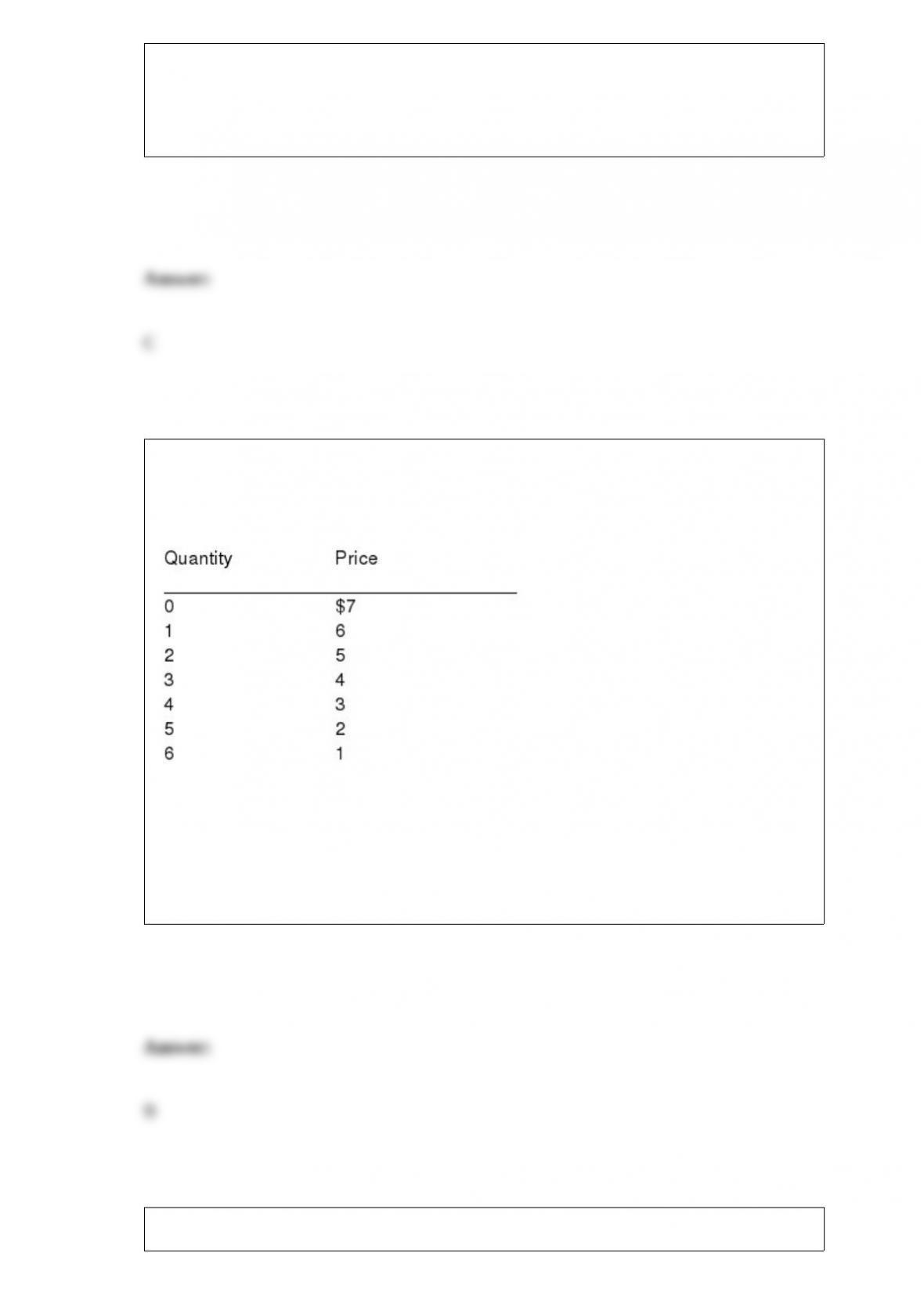
d. the quantity supplied is 30 units
e. the quantity demanded is 30 units
Exhibit 9-2
In Exhibit 9-2, the average revenue of the fourth unit is
a. $12
b. $3
c. $4
d. -$4
e. $0
If 14 workers produce a total of 25 cabinets and 15 workers produce a total of 30

cabinets,
a. the marginal product of the fifteenth worker is 2 cabinets
b. the marginal product of the fifteenth worker is 5 cabinets
c. the marginal product of the fifteenth worker is 30 cabinets
d. the marginal product of the fifteenth worker is $5
e. diminishing returns begins with the fifteenth worker
The balance of payments summarizes the transactions that occur during a given time
period between
a. the government of one country and the government of another country
b. the national government and local governments in the same country
c. individuals, firms, and government of one country and individuals, firms, and
governments throughout the rest of the world
d. individuals, firms, and governments of two countries
e. non-government residents (individuals and firms) of two countries
Suppose that a price-discriminating monopolist divides its market into two segments.
The firm will charge the lower price in the market segment where consumers
a. have relatively less elastic demand
b. have relatively more elastic demand
c. attach a higher marginal value to each unit of the good
d. have perfectly inelastic demand
e. attach higher average value to units of the good