
Monopolistic competition is different from perfect competition because monopolistic
competitors produce
a. a homogeneous product
b. a homogeneous but unique product
c. identical products
d. differentiated products
e. products similar to those produced by a monopoly
A good or service is considered scarce if
a. any quantity of it can be consumed at a zero price
b. the amount people desire exceeds the amount available at a zero price
c. the amount people desire exceeds the amount available at any price
d. the amount people desire is less than the amount available at any price
e. the amount people desire is less than the amount available at a zero price
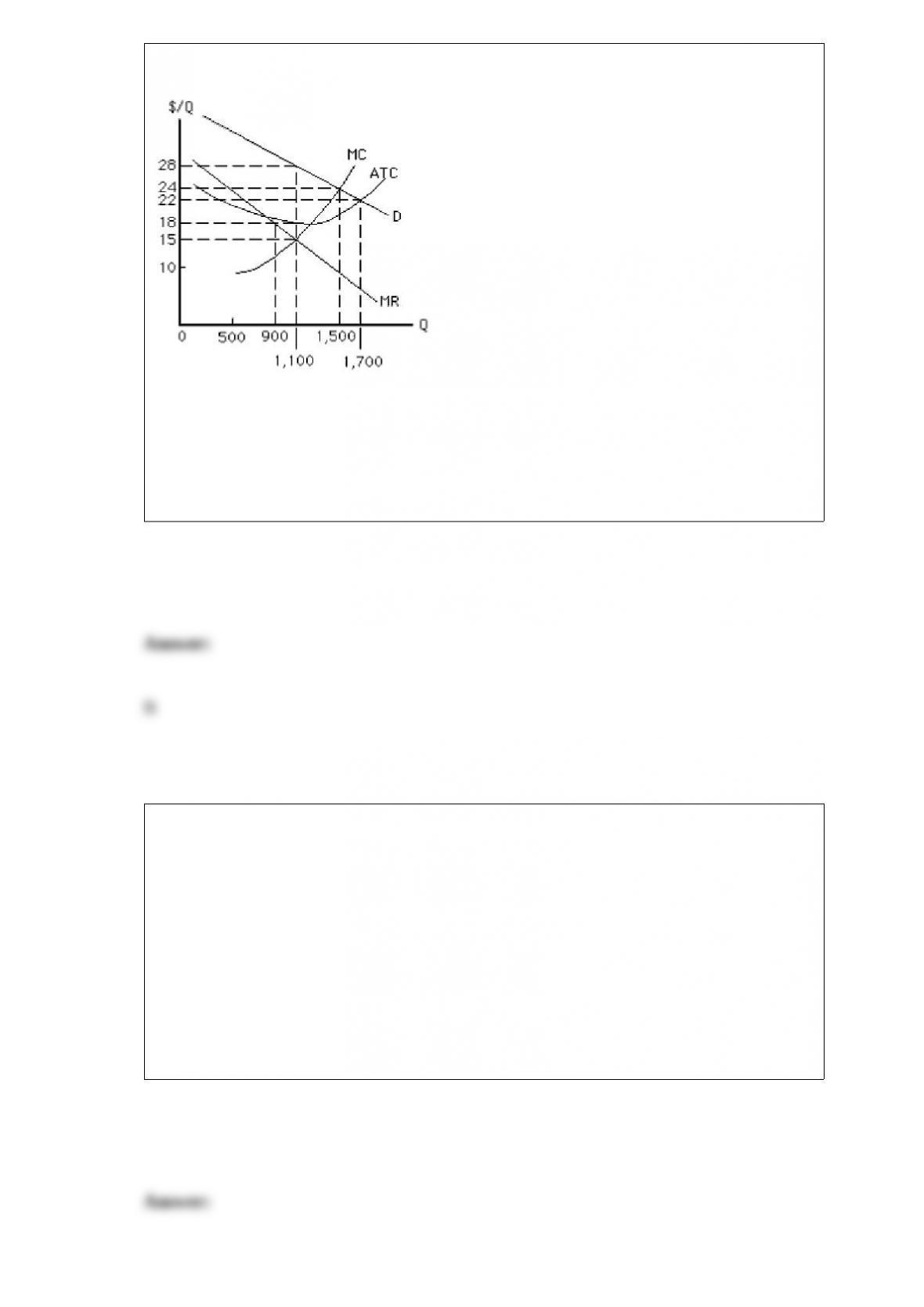
Exhibit 9-5
The nondiscriminating monopolist in Exhibit 9-5 will produce where
a. MR = 0
b. MR = MC
c. MC < MR
d. MC = ATC
e. D = MC
The solution of a game is dependent upon
a. predicted response of competitors
b. the existence of a perfectly inelastic demand curve
c. costs of production being constant
d. economies of scale in production
e. marginal revenue being equal to marginal cost

If the same basket of goods costs $400 in the United States and 200 pounds in Britain,
then according to the purchasing power parity theory,
a. goods and services must cost half as much in Britain as in the U.S.
b. the exchange rate should approach $2/pound
c. the exchange rate should approach $0.50/pound
d. goods and services must cost twice as much in Britain as in the U.S.
e. we cannot say anything about prices in the two countries unless we know the
exchange rate
A consumer allocates income between clams and mussels. If clams are a normal good,
then when the price of clams rises, the consumer will definitely buy
a. more clams and more mussels
b. fewer clams and fewer mussels
c. more clams and fewer mussels
d. fewer clams and more mussels
e. fewer clams, but the effect of the price change on purchases of mussels cannot be
predicted
A government-imposed price floor above the market price of milk would increase
consumers’ expenditures on milk only if
a. demand is elastic
b. supply is inelastic
c. demand falls
d. demand is inelastic
e. supply is unit elastic
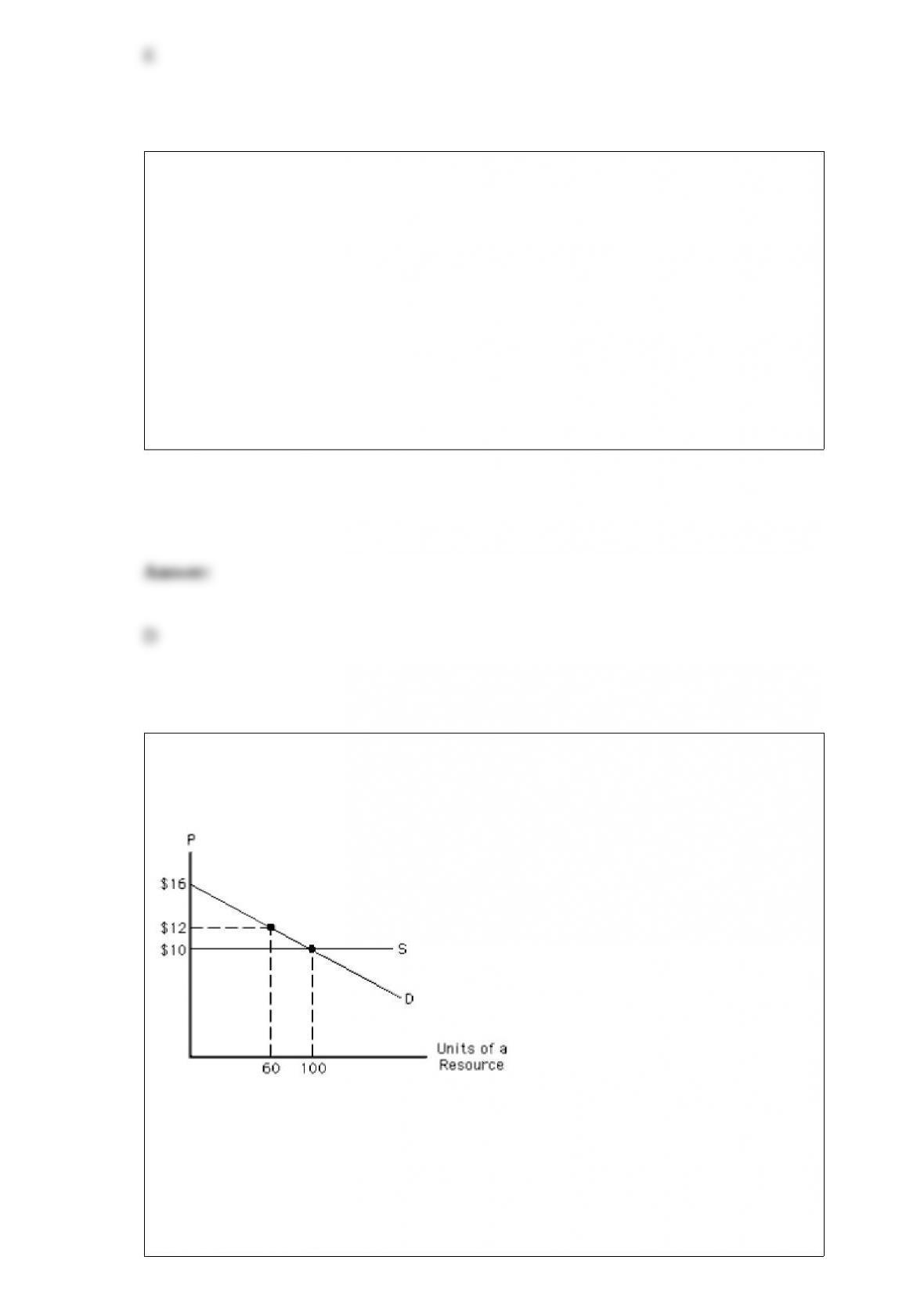
Exhibit 11-5
In Exhibit 11-5, economic rent in equilibrium equals
a. $0
b. $120
c. $1,000
d. $300
e. $1,300
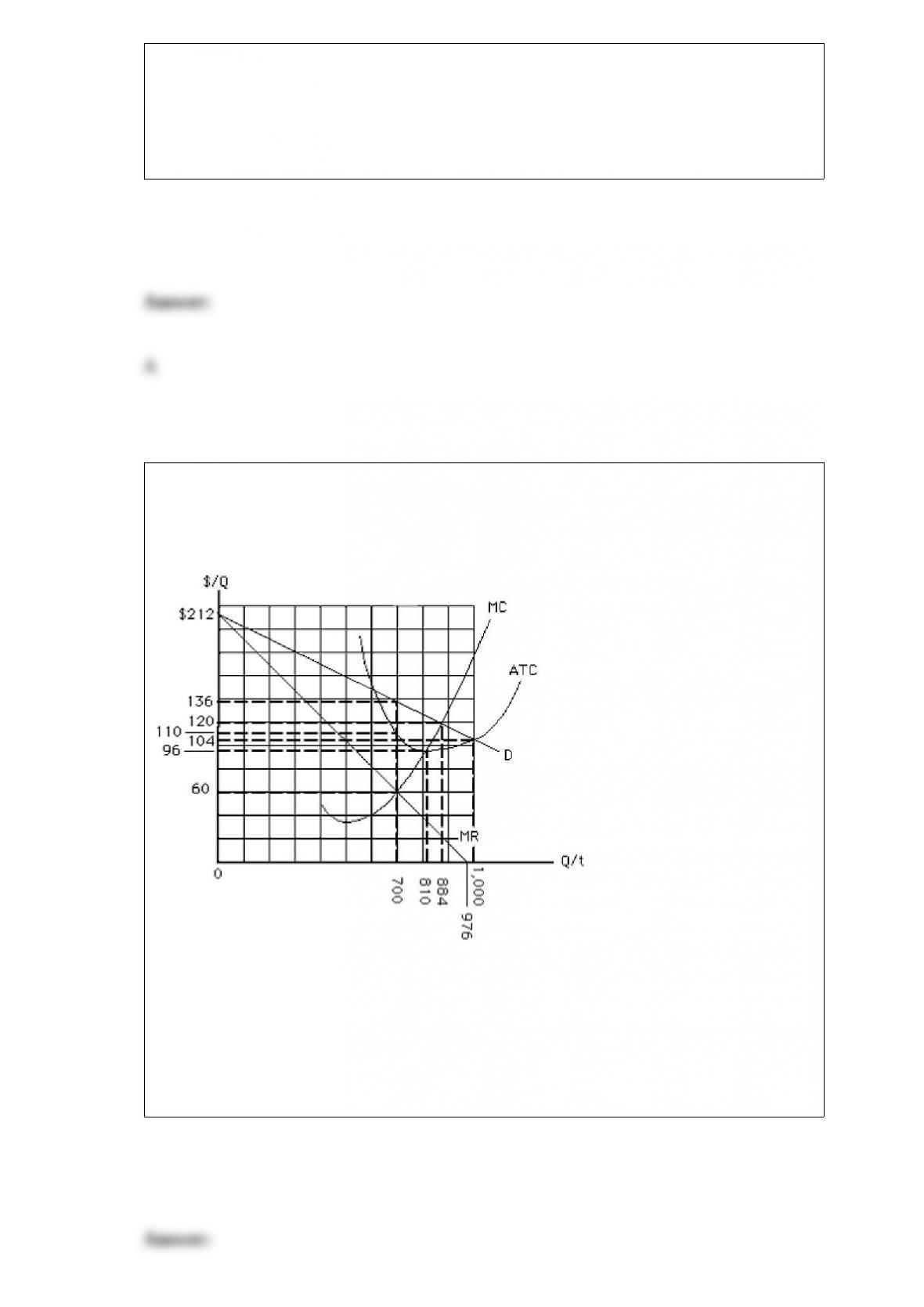
Exhibit 9-11
Maximum profit for the profit-maximizing (nondiscriminating) monopoly in Exhibit
9-11 will be
a. $95,200
b. $84,000
c. $53,200
d. $42,000
e. $18,200

The marginal cost curve intersects the average variable cost curve (AVC)
a. only when the AVC is rising
b. at the AVC curve’s maximum point
c. at the AVC curve’s minimum point
d. only when the AVC is sloping downward
e. when the AVC intersects the fixed cost curve
If the production of a sofa requires the purchase of 3 types of inputs and the production
of a harp requires the purchase of 30 types of inputs,
a. the harp-producing firm will buy the sofa-producing firm
b. the sofa-producing firm will buy the harp-producing firm
c. harp production is more likely to be done by firms than sofa production is
d. sofa production is more likely to be done by firms than harp production is
e. both harp and sofa production will always be done by firms because there is more
than one input involved in each

The resource identified as land would include
a. the effort of farmers
b. the mules that Amish farmers use to work the fields
c. the barn that a farmer houses her dairy cattle in
d. the worlds forests
e. the cattle that a dairy farmer owns
One thing that is not true about cooperatives is that they
a. put out raw materials, like wool and cotton, to rural households that turn it into
finished products
b. pool resources to buy and sell more efficiently
c. try to minimize costs
d. operate with limited liability of members
e. enjoy tax-exempt status
According to the search model, the marginal cost of acquiring information about a
product
a. is greater for a doctor than a nurse’s aide
b. is the same for high-income consumers as for low-income consumers
c. is greater for expensive items than for cheap items
d. is greater for cheap items than for expensive items
e. diminishes as more information is acquired
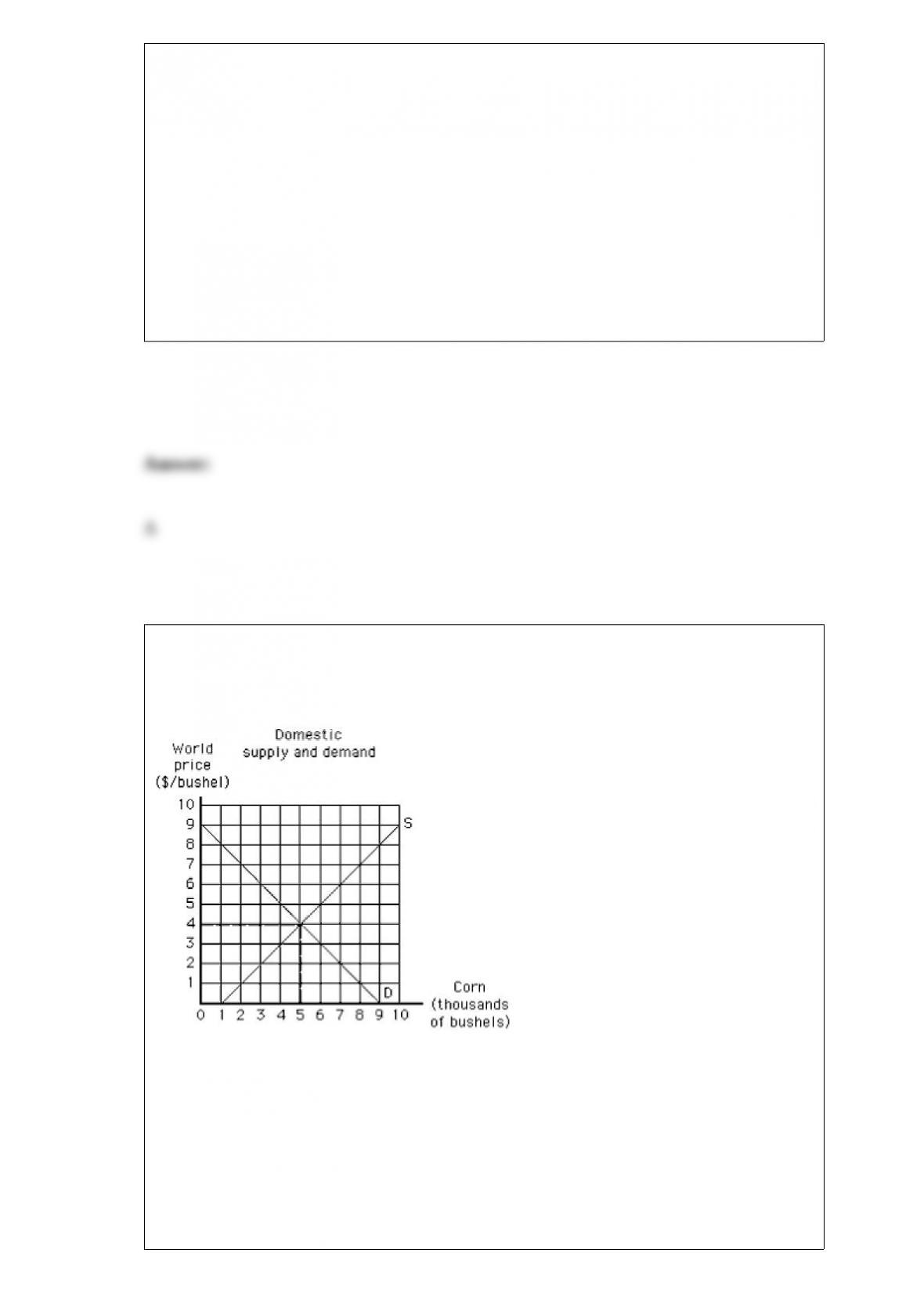
Exhibit 19-3
In Exhibit 19-3, if the world price of corn is $6 and there are no trade restrictions, the
United States will
a. produce 7,000, consume 3,000, and import 4,000 bushels of corn
b. have an excess demand for corn
c. be a net importer of corn
d. not produce any corn
e. consume only a portion of what is produced
The demand curve facing a monopolist is perfectly elastic.
a. True
b. False
Exhibit 6-11
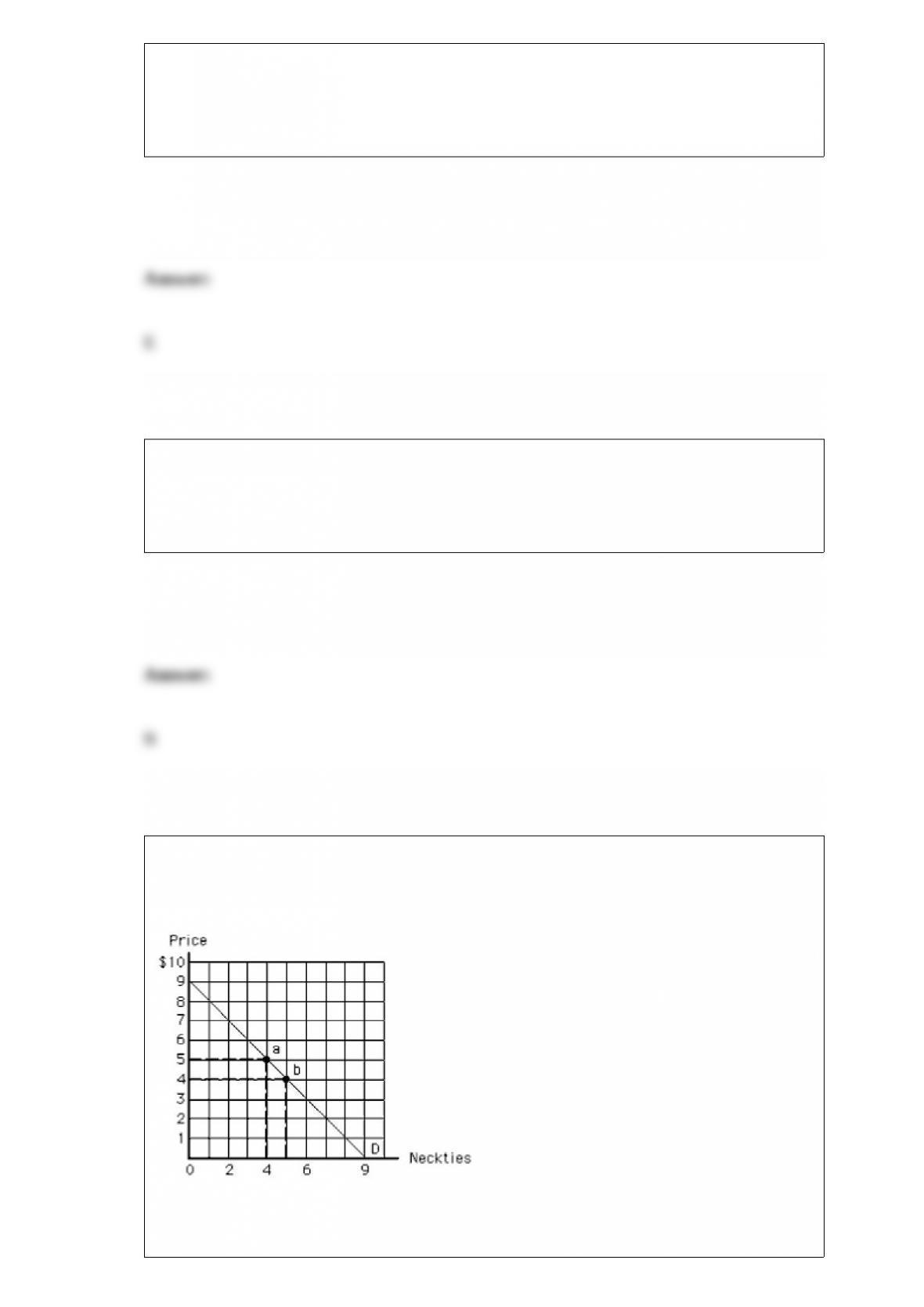
At point a in Exhibit 6-11, total expenditure on neckties is
a. $5
b. $9
c. $20
d. $26
e. $45
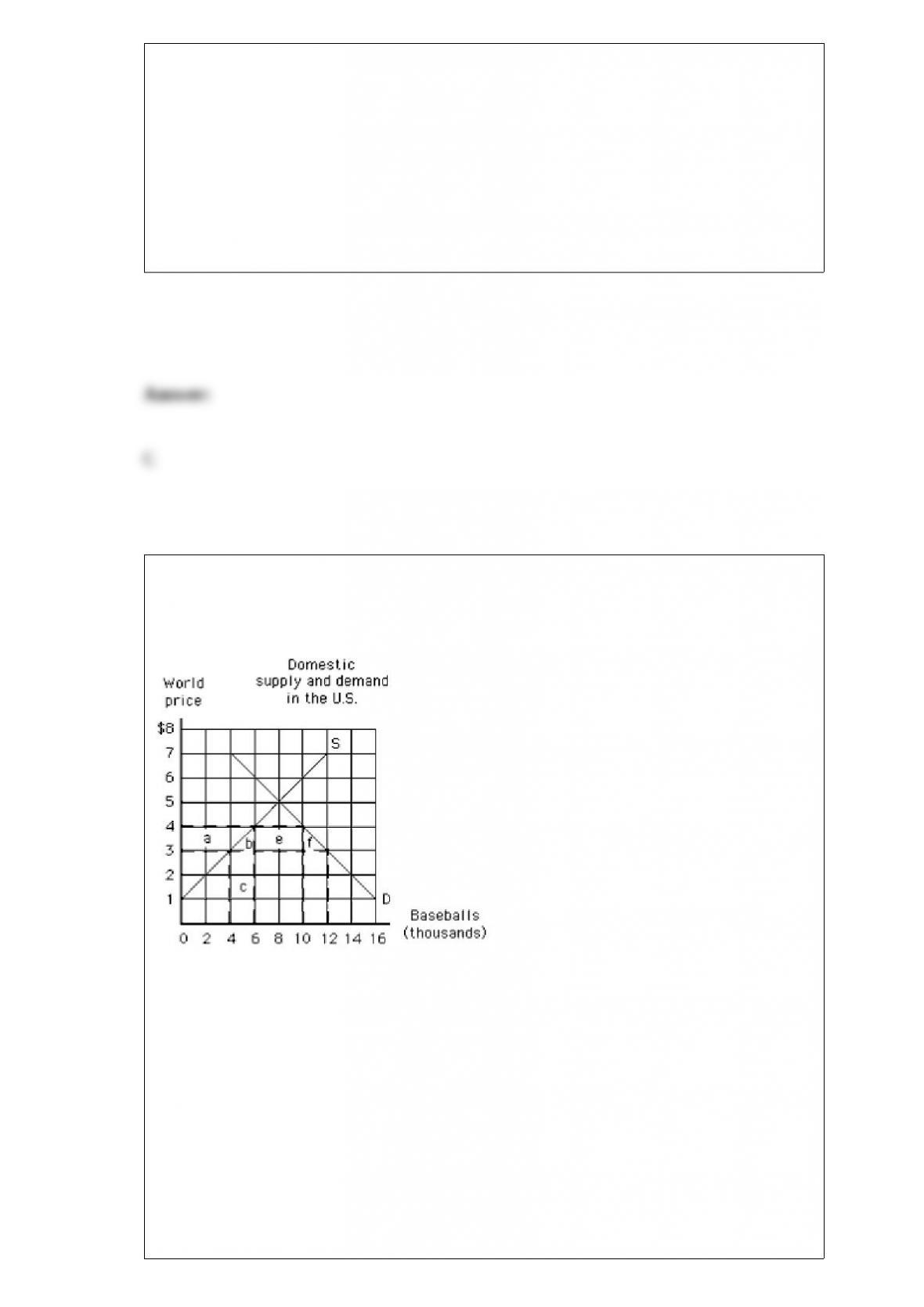
Exhibit 19-6
In Exhibit 19-6, the world price of a baseball is $3. With free trade, how many baseballs
will the United States import?
a. 4,000
b. 6,000
c. 8,000
d. 10,000
e. 12,000

If leisure is a normal good, then a decrease in income __________ the time allocated to
__________.
a. decreases; market work
b. decreases; leisure
c. decreases; nonmarket work
d. increases; leisure
e. increases; market work, nonmarket work, and leisure time
When a start-up company meets with success and the entrepreneur needs to achieve
economies of scale, it would not make economic sense to consider an IPO.
a. True
b. False

A given sum of money received each year for a specific number of years is called a(n)
a. bond
b. perpetuity
c. debt
d. discount
e. annuity
The smaller the quantity and quality of complementary resources used in production,
a. the greater the demand for labor
b. the greater the marginal resource cost of labor
c. the lower the marginal resource cost of labor
d. the lower the marginal productivity of labor
e. the greater the marginal productivity of labor
A lobbyist for the coal industry asks Congress to limit environmental constraints on
coal-burning plants. This is an example of
a. the median-voter model

b. rent seeking
c. perfect competition
d. monopoly
e. public-interest legislation
If people have a positive rate of time preference, they
a. must be rewarded for saving
b. are willing to pay more for a good that saves them money if they hold on to it a long
time
c. prefer to consume in the future when things are cheaper
d. prefer time deposits to savings accounts
e. prefer leisure over labor
A craft union is a union composed of all the workers at a single firm.
a. True
b. False

The term opportunity cost suggests that
a. in any exchange situation where one person gains, someone else must lose
b. not all individuals make the most of life’s opportunities
c. executives do not always recognize opportunities for profit as quickly as they should
d. the only factor that is important in decision making is cost
e. because goods are scarce, in order to get some good you must give up some other
good in return
Price fixing is illegal in the United States.
a. True
b. False
When quantity demanded of a good is less than the quantity supplied at the prevailing
market price,
a. the market is in equilibrium
b. the price of the good tends to rise
c. the price of the good tends to fall
d. the demand curve shifts rightward until the surplus is eliminated
e. the supply curve shifts leftward until the shortage is eliminated
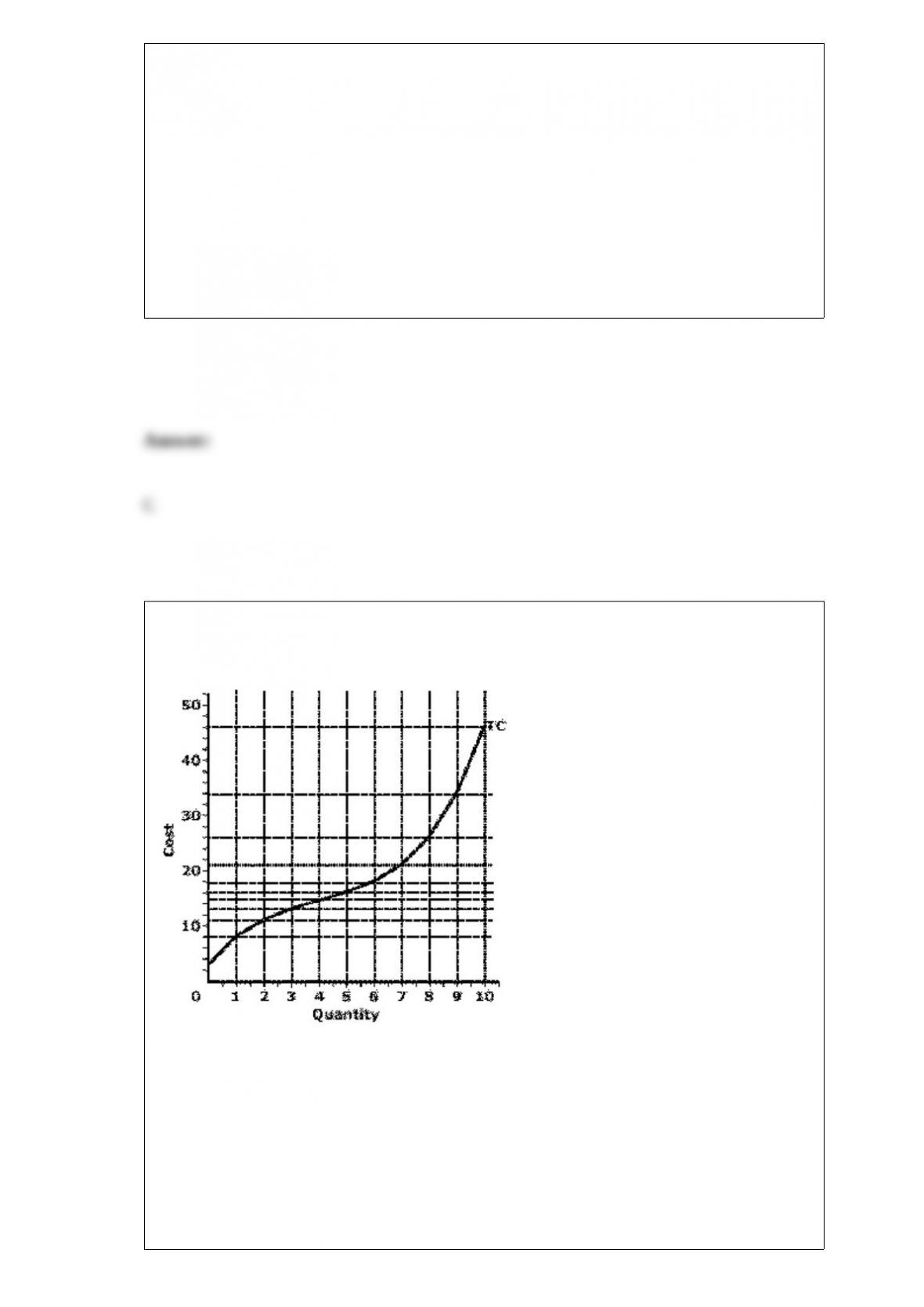
Exhibit 7-14 Total Cost Curve
In Exhibit 7-14, what is the average cost when producing 10 units of output?
a. $0
b. $2.00
c. $4.00

d. $4.60
e. cannot be determined from the total cost curve
Consumer Reports magazine benefits consumers by
a. increasing the marginal benefit of information
b. reducing the marginal benefit of information
c. reducing the marginal cost of information
d. increasing the marginal cost of information
e. showing which products are in vogue
Robert Iwasaki lives next door to a toxic waste landfill. Katie Cooley lives five miles
downstream from a steel plant that dumps waste into Mill Creek. Which person is more
likely to press public officials for a cleaner environment?
a. Katie
b. Robert
c. neither

d. both equally
e. Economics cannot answer this question
What part of federal government spending has grown the most rapidly in recent years?
a. national defense
b. welfare
c. interest on the national debt
d. social security and Medicare
e. all other forms of federal government spending
Which of the following characteristics does perfect competition share with
monopolistic competition?
a. price-taking firms
b. zero long-run economic profit
c. homogeneous product
d. some barriers to entry

e. economies of scale in production