
Some economic studies have shown that mandatory seat belt laws do not lead to a
reduction in traffic fatalities.
a. True
b. False
If a positive externality exists, __________ for the socially optimal output to be
reached.
a. supply needs to decrease
b. demand needs to increase
c. demand needs to decrease
d. a and c
e. none of the above
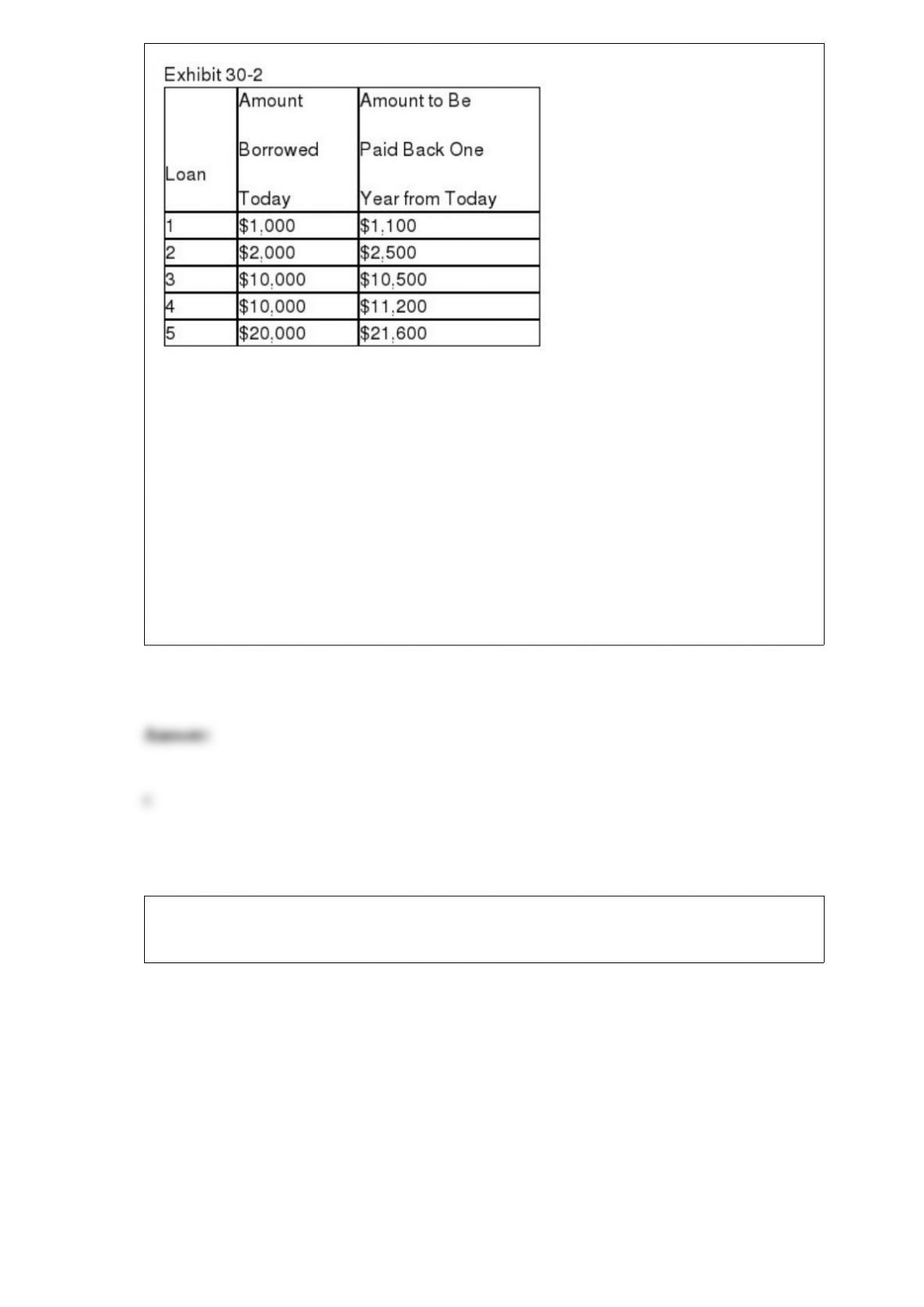
The interest and interest rate for loan 5 are, respectively,
a. $21,600 and 8.0 percent.
b. $21,600 and 10.8 percent.
c. $1,600 and 8.0 percent.
d. $1,600 and 10.8 percent.
e. none of the above
Exhibit 22-3
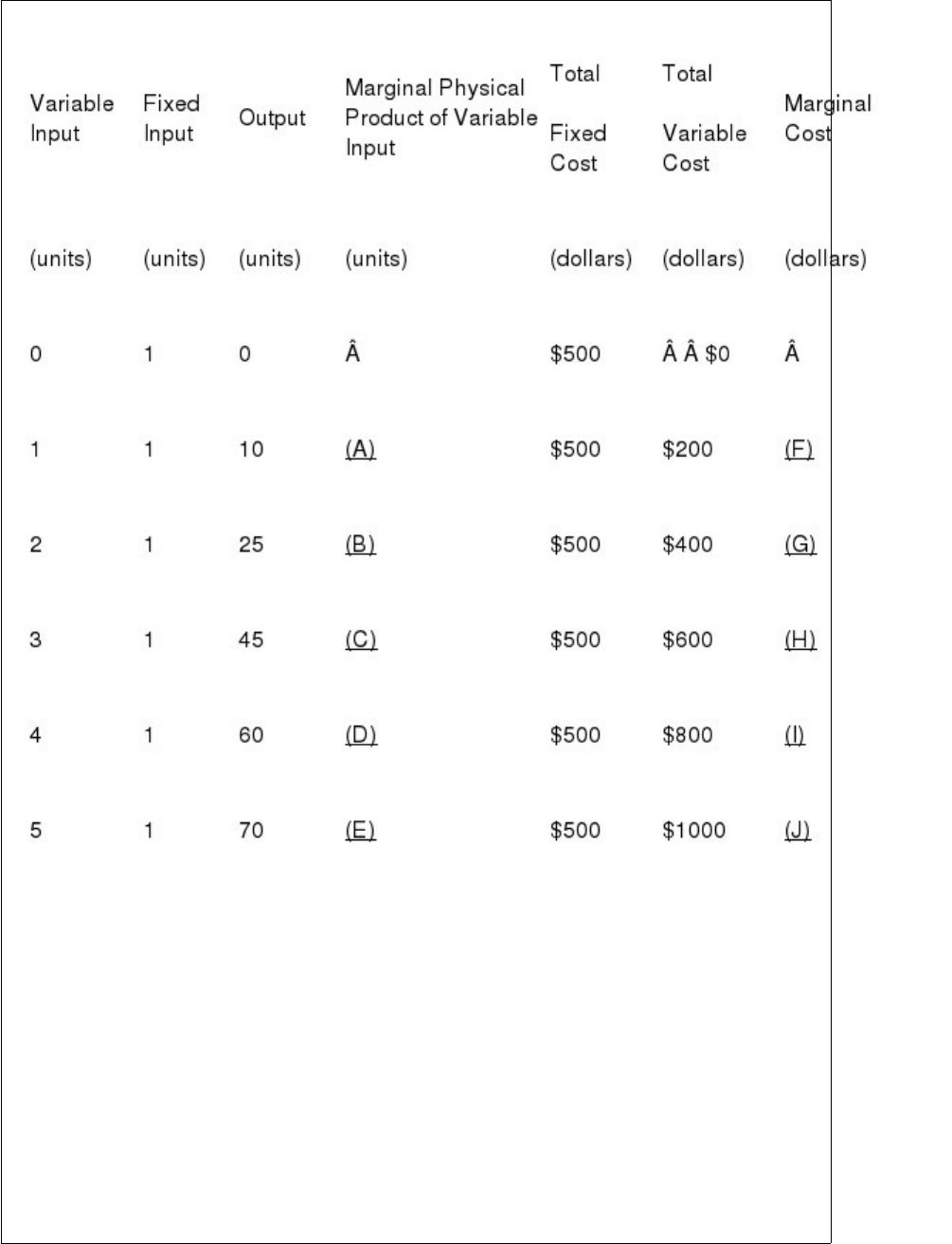
The marginal physical product figures in blanks (D) and (E) are, respectively,
a. 10 and 10.
b. 10 and 15.
c. 15 and 20.
d. 20 and 15.
e. 15 and 10.
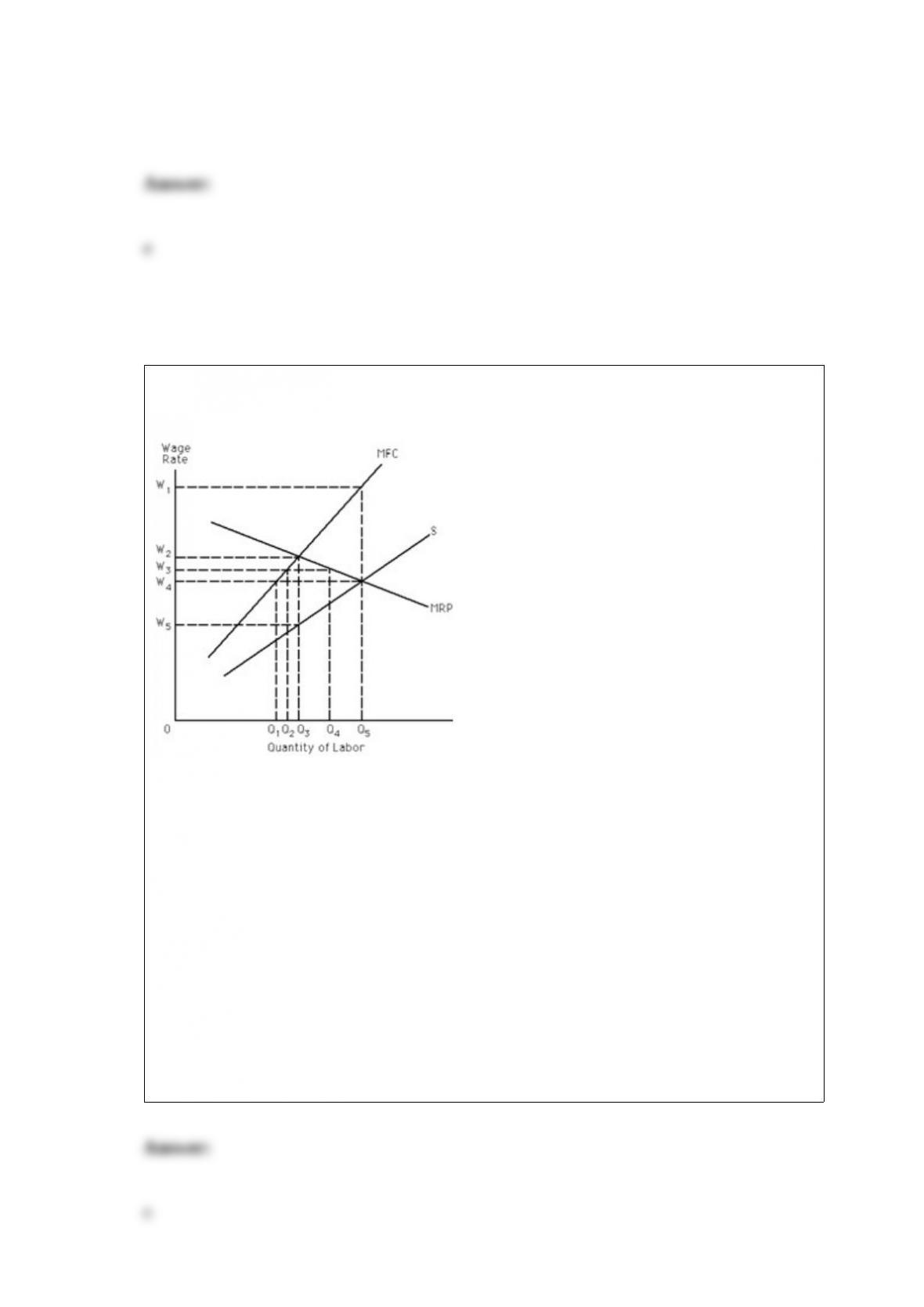
Exhibit 28-8
In the absence of collective bargaining, what wage rate would the profit-maximizing
monoposonist pay?
a. W1
b. W2
c. W3
d. W4
e. W5

Which of the following is not a condition of long-run competitive equilibrium?
a. Economic profits are zero.
b. Marginal revenue is greater than marginal cost.
c. Price is equal to marginal cost.
d. Firms do not have an incentive to change plant size.
e. none of the above
The concept that relates how much one variable changes as another variable changes is
a. slope.
b. line.
c. curve.
d. graph.
Exhibit 2-5

“In order to produce one more television set, we must forfeit the production of one fax
machine.” This statement describes a movement from
a. point C to point D.
b. point D to point E.
c. point E to point F.
d. point E to point D.
e. point D to point C.
The minimum wage is a good example of a price floor.
a. True
b. False
Consumer equilibrium exists when an individual
a. can be made better off by buying more of a normal good and less of an inferior good.

b. is receiving the same total utility from each of the goods he or she purchases.
c. is receiving the same marginal utility from each of the goods he or she purchases.
d. has the same MU/P ratio for each of the goods he or she purchases.
e. none of the above
The demand curve for loanable funds is
a. upward sloping, indicating that lower interest rates are associated with a lower
demand for loanable funds.
b. downward sloping, indicating that businesses will increase their demand at lower
interest rates, but that consumers will probably decrease the supply of loanable funds at
lower interest rates.
c. downward sloping, indicating that both businesses and consumers will increase the
quantity demanded of loanable funds as the interest rate decreases.
d. horizontal at the equilibrium interest rate.