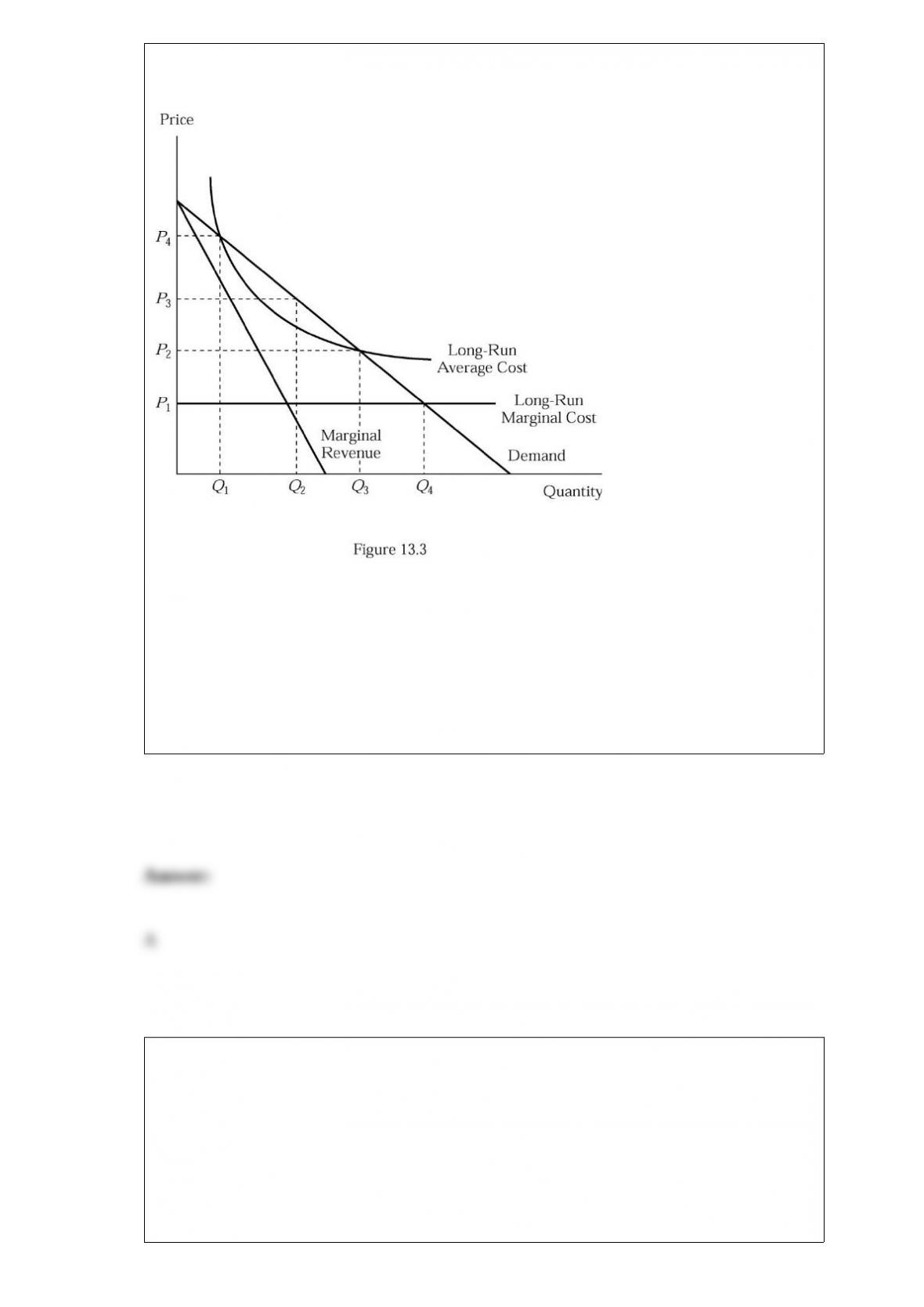
With average cost pricing the firm in Figure 13.3 would be:
A) making a zero economic profit.
B) losing money.
C) making a positive economic profit.
D) shut down.
Joe runs a restaurant. He pays his employees $200,000 per year. His ingredients cost
him $50,000 per year. Prior to running his restaurant, Joe was a lawyer earning
$150,000 per year. What would economists say is Joe’s cost of running the restaurant?
A) $150,000
B) $200,000
C) $250,000
D) $400,000
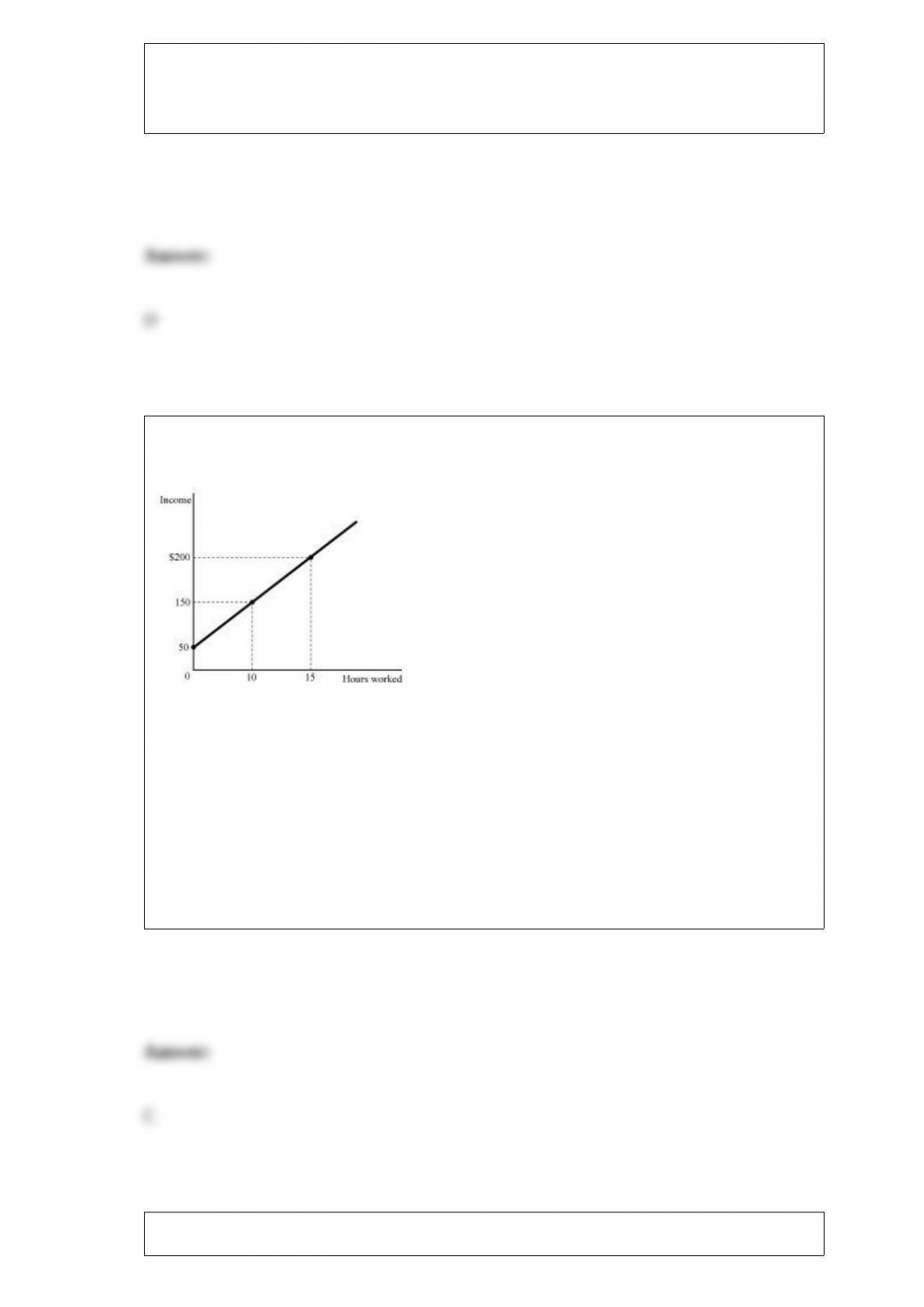
Refer to Figure 1.1. If income at zero hours worked increases in Figure 1.1, then the
relationship:
Figure 1.1
A) becomes flatter.
B) becomes steeper.
C) shifts upward and to the left.
D) shifts down and to the right.
In the used pick-up truck market:
A) some of the predictions of the lemons model are observed some of the time.
B) the lemons model accurately describes the market.
C) none of the predictions of the lemons model are observed.
D) there is no asymmetric information, and so the lemons model does not apply.
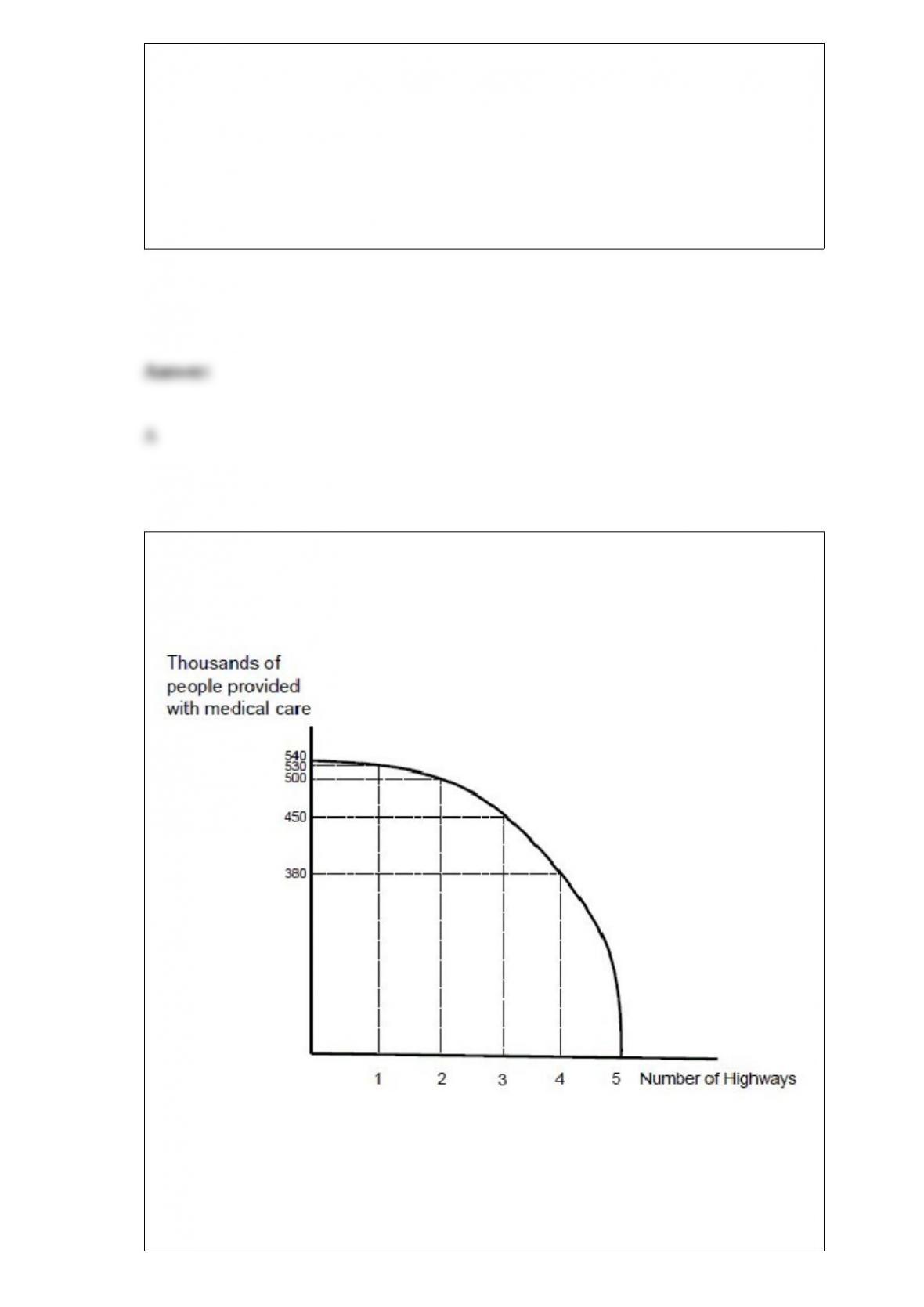
Figure 2.2 presents a production possibilities curve for a country that can either produce
highways or provide people with medical care in a given year. The opportunity cost of
the second new highway built in a year is:
Figure 2.2
A) 30,000 people provided with medical care.
B) 40,000 people provided with medical care.
C) 50,000 people provided with medical care.
D) 500,000 people provided with medical care.
Bananas and apples are substitutes. When the price of bananas falls, the equilibrium
quantity of apples will ________ and the equilibrium price of apples will ________.
A) rise; rise
B) rise; fall
C) fall; rise
D) fall; fall
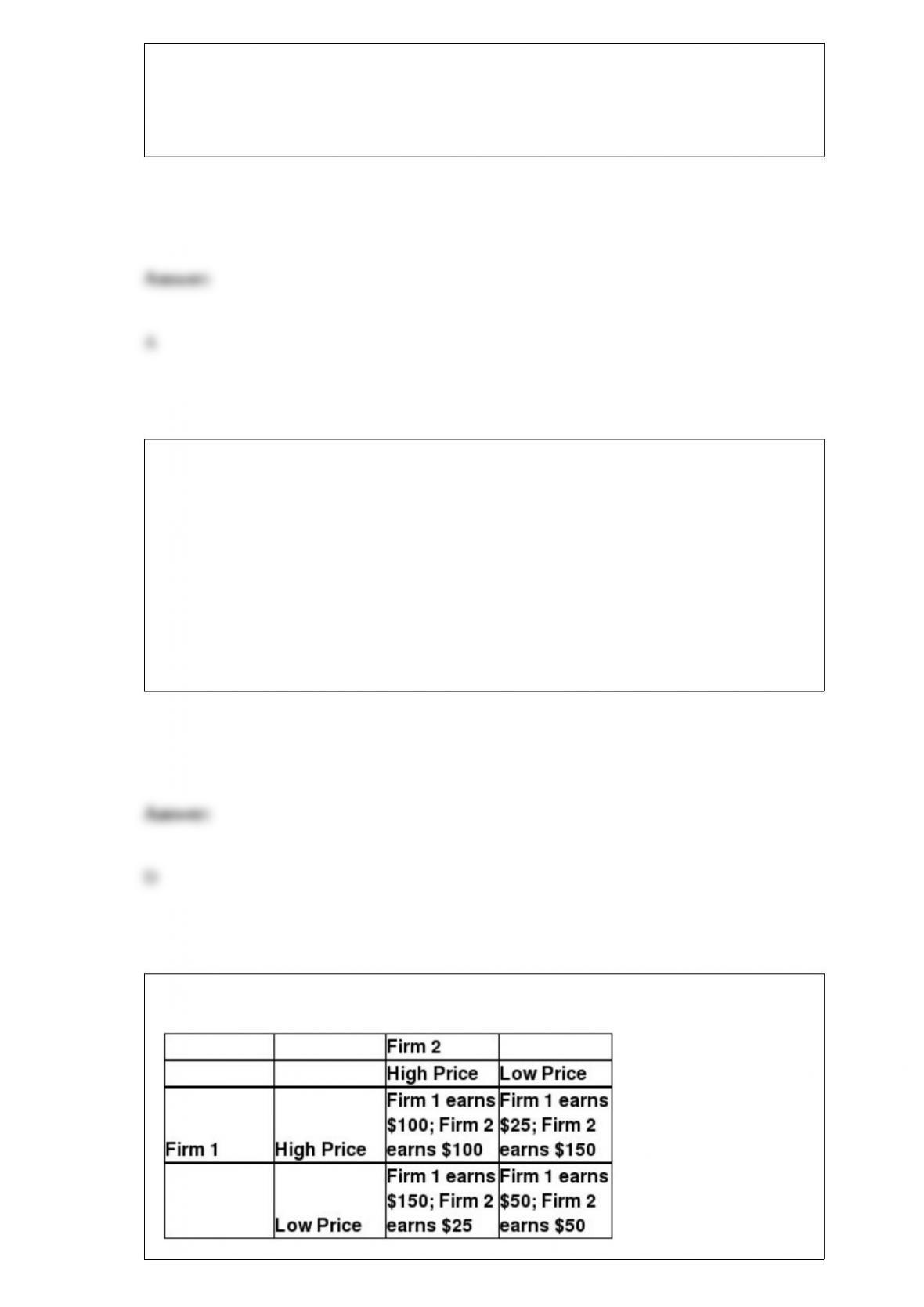
The Nash Equilibrium in the game shown in Table 12.2 is the cell in which:

Table 12.2
A) both firms choose a low price.
B) both firms choose a high price.
C) Firm 1 chooses a low price and Firm 2 chooses a high price.
D) Firm 2 chooses a low price and Firm 1 chooses a high price.
A horizontal merger:
A) occurs when two firms that produce similar products combine their operations.
B) will never be opposed by the U.S. government but a vertical merger will.
C) always results in a loss of efficiency in a market.
D) involves two firms at different stages of the production process.
You are responsible for purchasing 20 used computers for your company. Red brand
computers costs $1,250 and Green brand computers cost $1,800. Based on experience,
you believe that 60% of Red Brand computers are lemons (low quality) while 20% of
green brand computers are lemons (low quality). You are willing to pay $1,000 for a
known lemon and $2,000 for a known plum. Which brand do you purchase?
A) red
B) green
C) indifferent between brands
D) don’t buy either brand
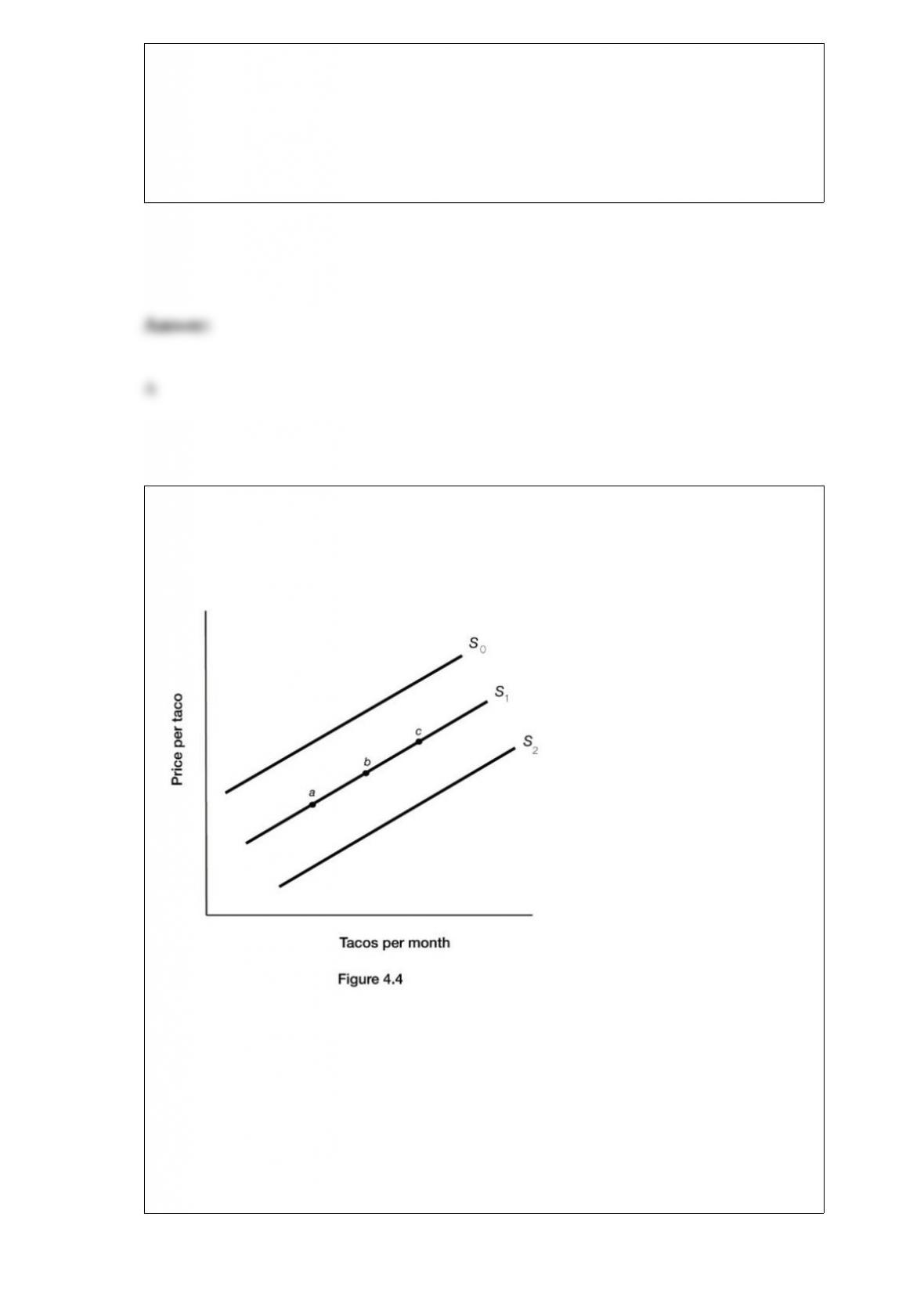
Figure 4.4 illustrates the supply of tacos. If the government offered a subsidy to
Mexican restaurants for each taco they produce, this would most likely cause a
movement from:
A) point a to point c.
B) point c to point b.
C) S2 to S1.
D) S0 to S1.
When a monopolist sells two units of output its total revenues are $100. When the
monopolist sells three units of output, its price per unit is $35. The monopolist’s
marginal revenue from selling the third unit of output is:
A) $5.
B) $33.33.
C) $35.
D) $105.
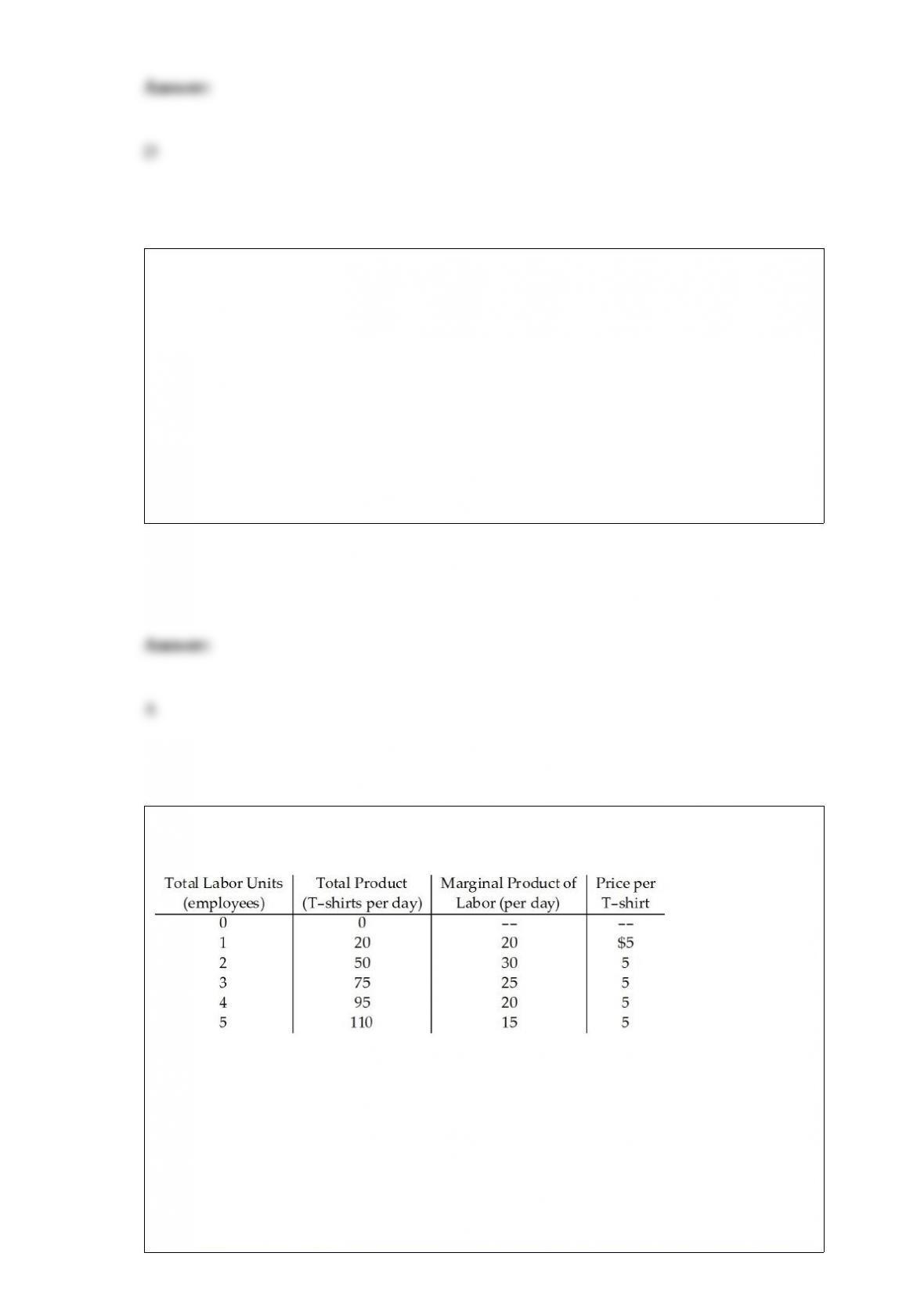
Refer to Table 17.2. The maximum wage per day that this profit-maximizing T-shirt
manufacturer would be willing to pay to hire three workers per day is:
Table 17.2
A) $15.
B) $75.
C) $125.
D) $200.
An arrangement that allows buyers and sellers to exchange things is called:
A) a contract.
B) a market.
C) money.
D) efficient.
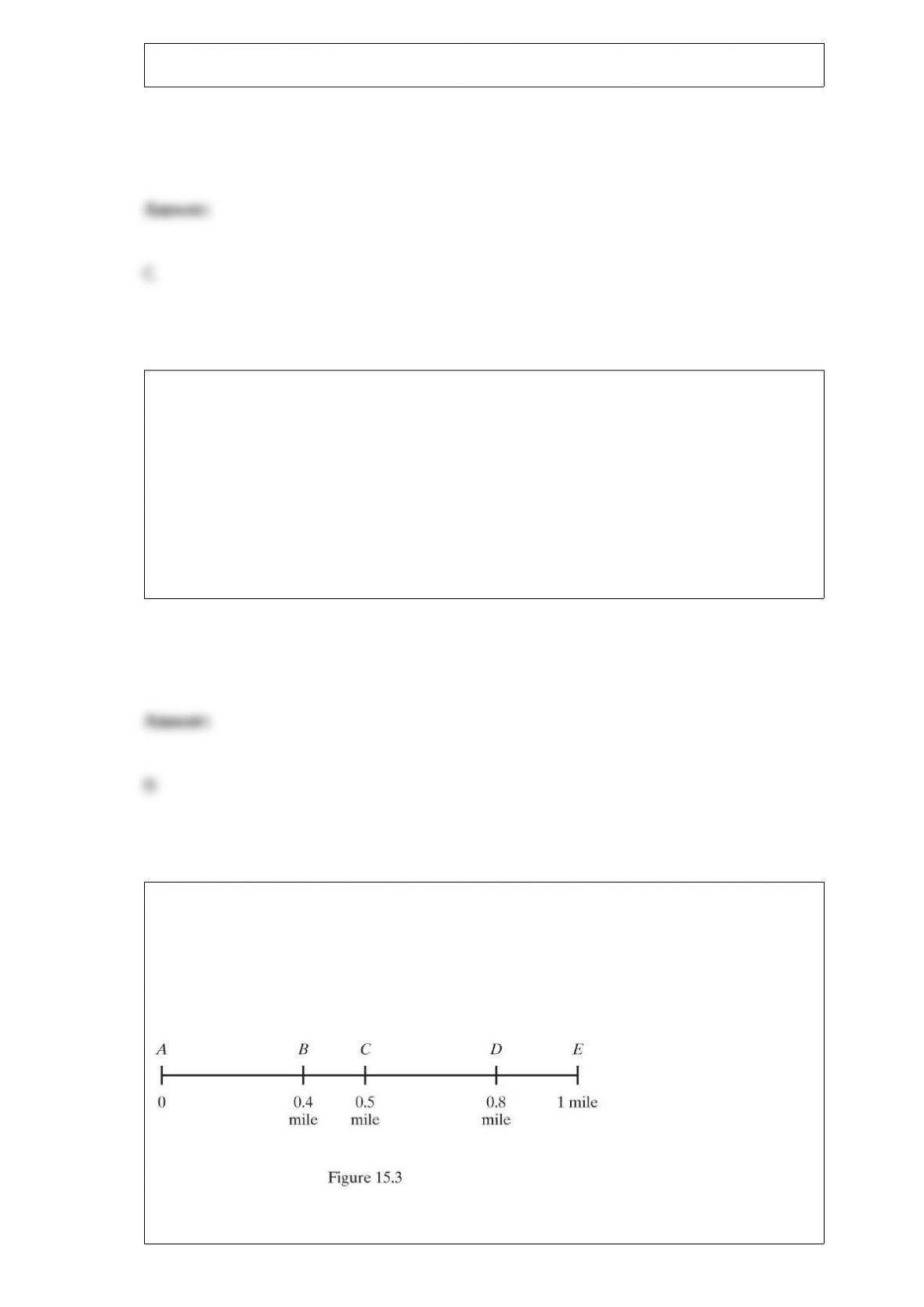
Figure 15.3 depicts a one-mile stretch of beach with 100 swimmers distributed evenly
along the beach. There are two ice cream vendors – 1 and 2 – on the beach selling an
identical product. Assume that each swimmer buys only one ice cream cone and that
they prefer to buy ice cream from the nearer vendor. If vendor 1 is at B while vendor 2
is at D, vendor 1 will sell ________ ice cream cones while vendor 2 sells ________ ice
cream cones.
A) 40; 60

B) 45; 55
C) 55; 45
D) 60; 40
The amount of searching for low prices depends on:
A) the range of prices of the product.
B) the opportunity cost of searching for the product.
C) the price of the product.
D) all of the above
Figure 6.7 shows the supply and demand curves for human kidneys. If the government
set the price of a kidney at $5,000, then:
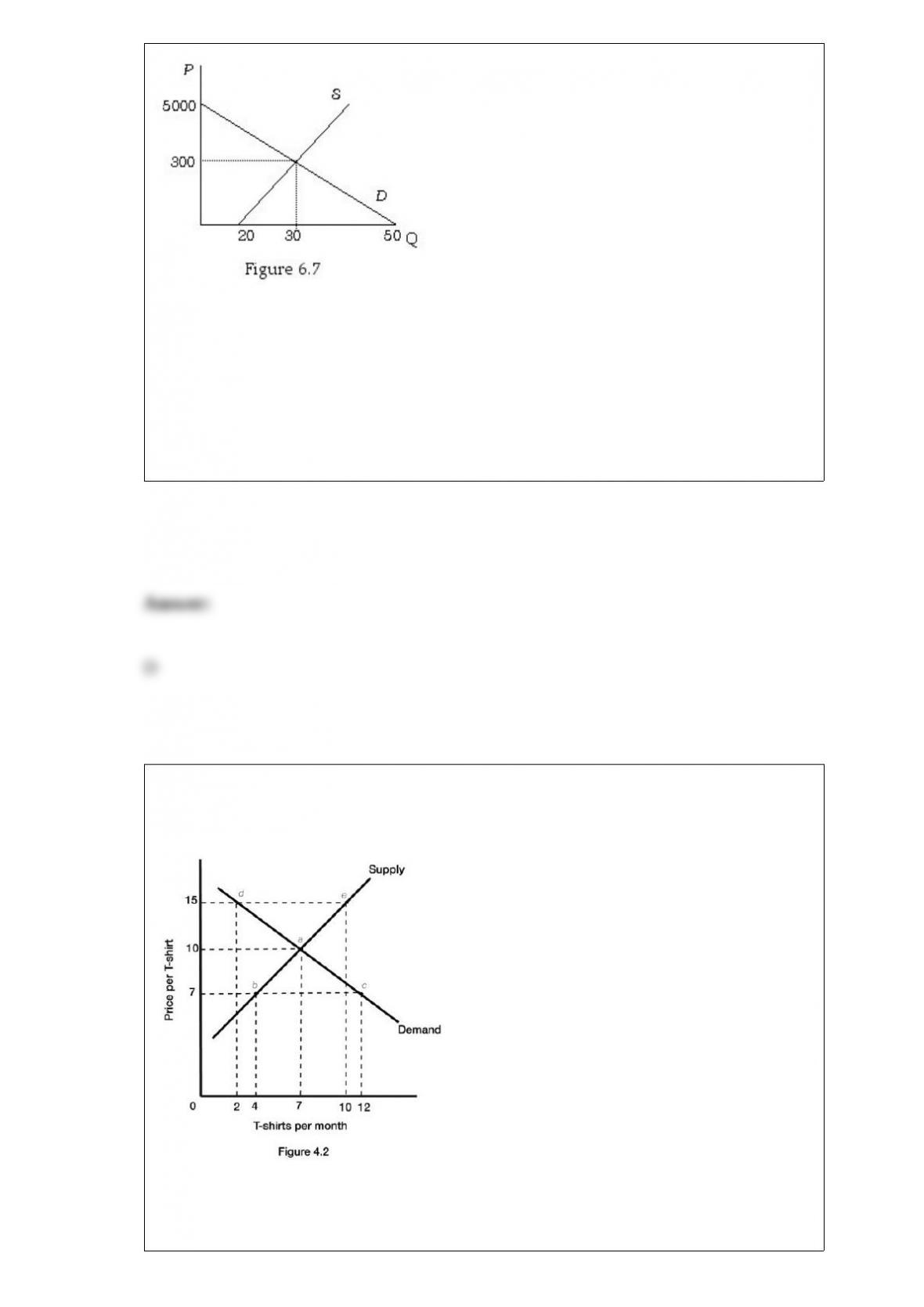
A) 50 kidneys would be purchased.
B) 300 kidneys would be purchased.
C) 5000 kidneys would be purchased.
D) 0 kidneys would be purchased.
Figure 4.2 illustrates the supply and demand for t-shirts. If the actual price of t-shirts is
$10, we would expect that:
A) demand will decrease until quantity demanded equals quantity supplied.

B) supply will increase until quantity demanded equals quantity supplied.
C) price will increase until quantity demanded equals quantity supplied.
D) there will be no change in the price since the market is in equilibrium.
Suppose that the equilibrium rent for apartments in San Francisco is $1200 per month.
If the City of San Francisco legislates that apartment owners cannot charge rent higher
than $1000, then the apartment market in San Francisco will experience:
A) an equilibrium.
B) a shortage.
C) an excess supply.
D) an increase in supply.
Costs increase with output in an increasing-cost industry because:
A) input prices increase as the industry competes for scarce resources.
B) firms may be forced to use less productive inputs.
C) the firms become monopolies.
D) Both A and B are correct.

The price at which a consumer is indifferent about additional search for a lower price is
a:
A) marginal price.
B) reservation price.
C) discovered price.
D) best-guess price.
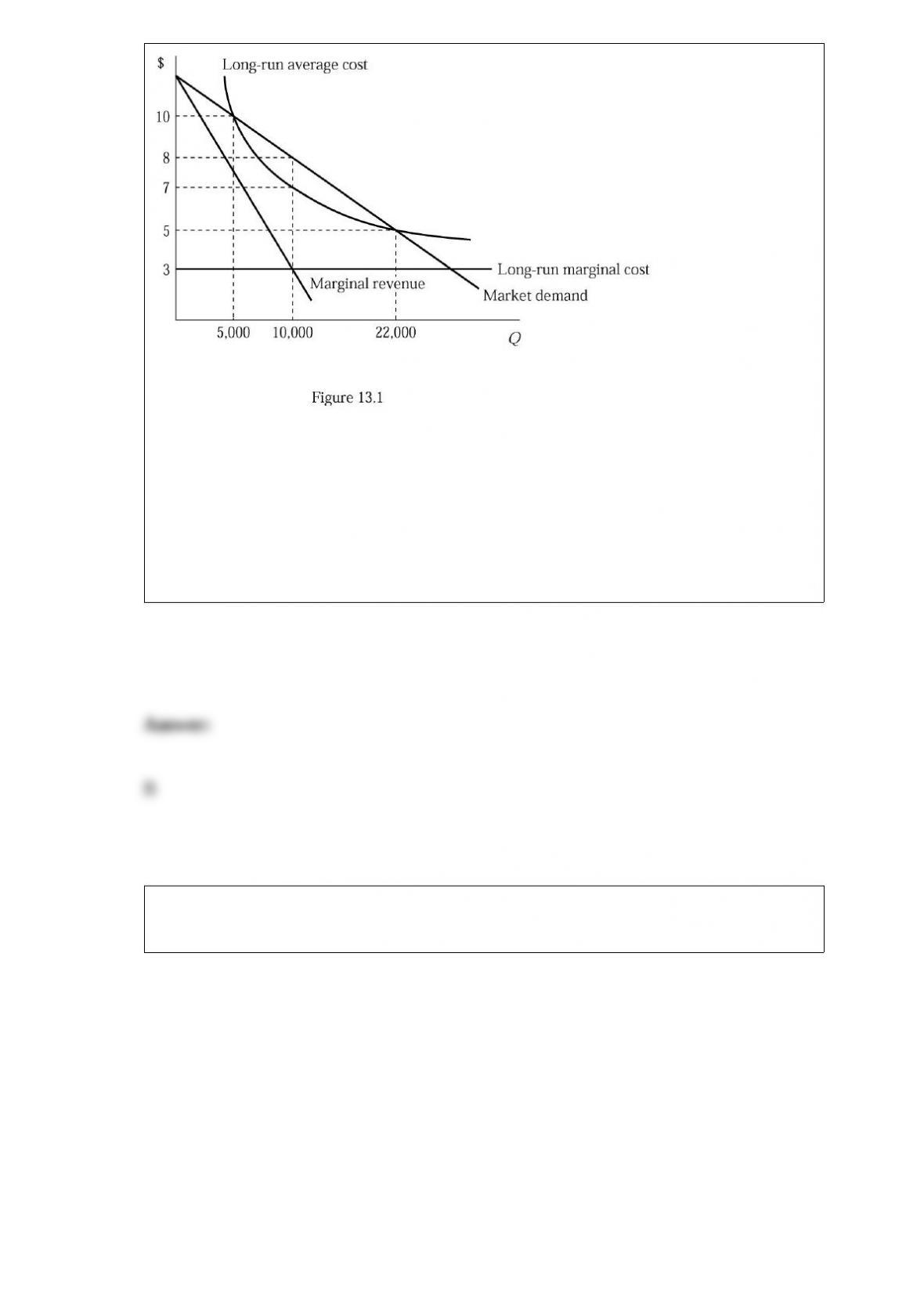
Figure 13.1 shows a demand and costs of an unregulated monopoly. At the profit
maximization output, the firm earns a profit of:
A) $0.
B) $10,000.
C) $50,000.
D) $80,000.
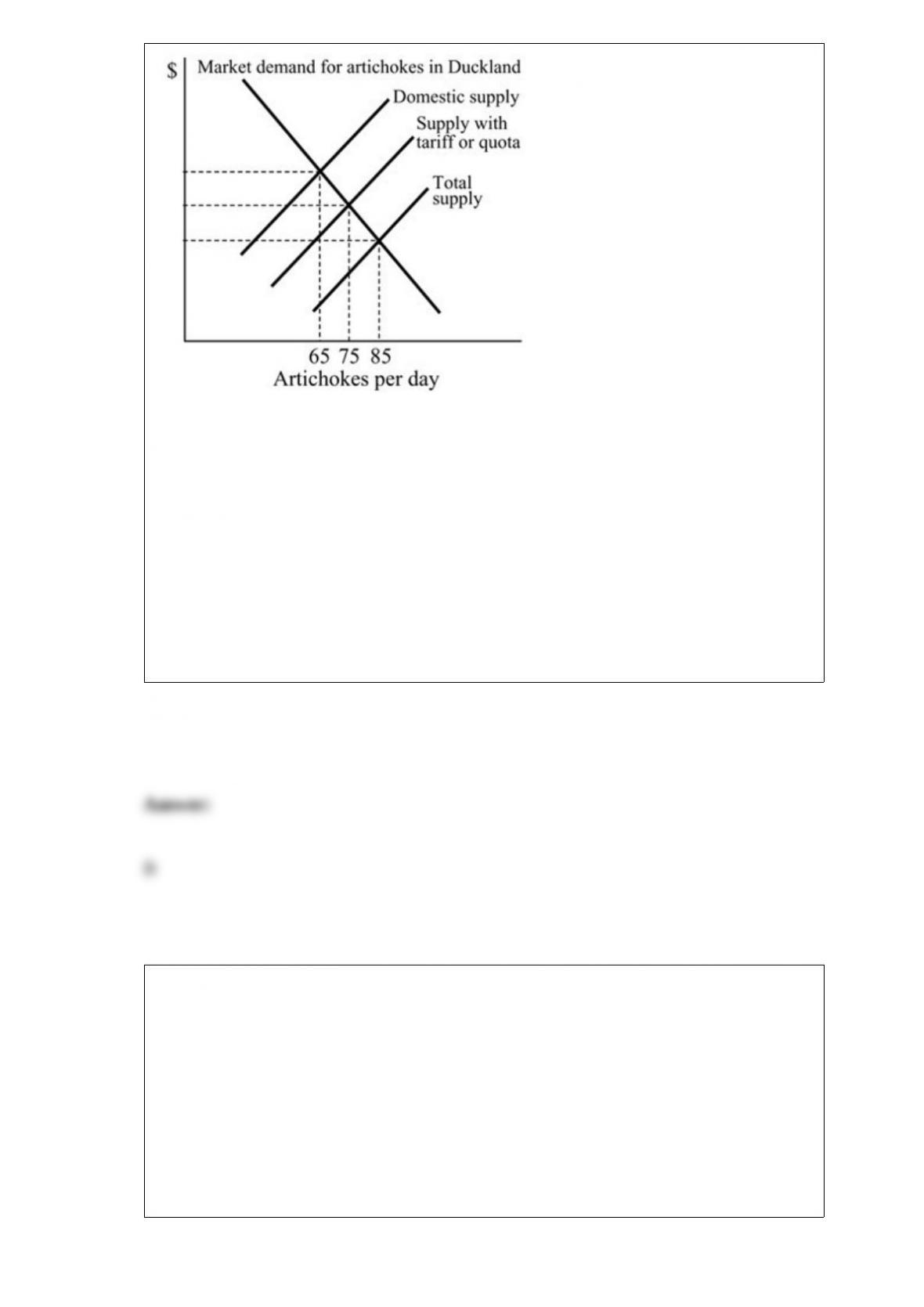
Figure 18.4
Refer to Figure 18.4. With a tariff or quota, what is the equilibrium quantity of
artichokes in Duckland?
A) 85
B) 75
C) 65
D) 30
Outsourcing allows a company to take advantage of the ________ of other countries,
and in doing so it can produce its products at a lower cost.
A) comparative advantages
B) diminishing returns
C) trade imbalances
D) market failures

When there is a change in the quantity demanded it means that the:
A) hours the customer can buy products each day have increased.
B) number of products in inventory have increased.
C) quantity a consumer is willing to buy changes when the price changes.
D) selling price of the products has not changed.
Suppose your bank pays you 6% interest per year on your savings account, so that $100
grows to $106 over a one-year period. If prices increase by 3% per year over that time,
approximately how much real value do you gain by keeping $100 in the bank for a
year?
A) $0
B) $1
C) $3
D) $4

Humans do a ________ job imagining the strength of future gut feelings, and do a
________ job imagining the gut-feeling benefits of future consumption.
A) good; good
B) good; poor
C) poor; good
D) poor; poor
Suppose you have 2 goods, X and Y. If the price of X increases and you buy more Y,
then X and Y are:
A) substitutes.
B) normal goods.
C) complements.
D) inferior goods.

The budget set is:
A) all the points on the budget line.
B) the area below the budget line.
C) the endpoints of the budget line.
D) all the points on the budget line and the area to the left of the budget line.
Suppose that Joyce has a monthly fixed income of $ 2000 and has $100 of her income
allocated to buy shoes and pants. Suppose that there is a decrease in the price for shoes
but not in the price for pants, this will:
A) shift the budget line parallel to the left.
B) shift the budget line parallel to the right.
C) change the slope of the budget line.
D) not affect the budget line because income remains constant.
Refer to Figure 18.3. In autarky, the maximum amount of scooters that Livonia can
produce is:
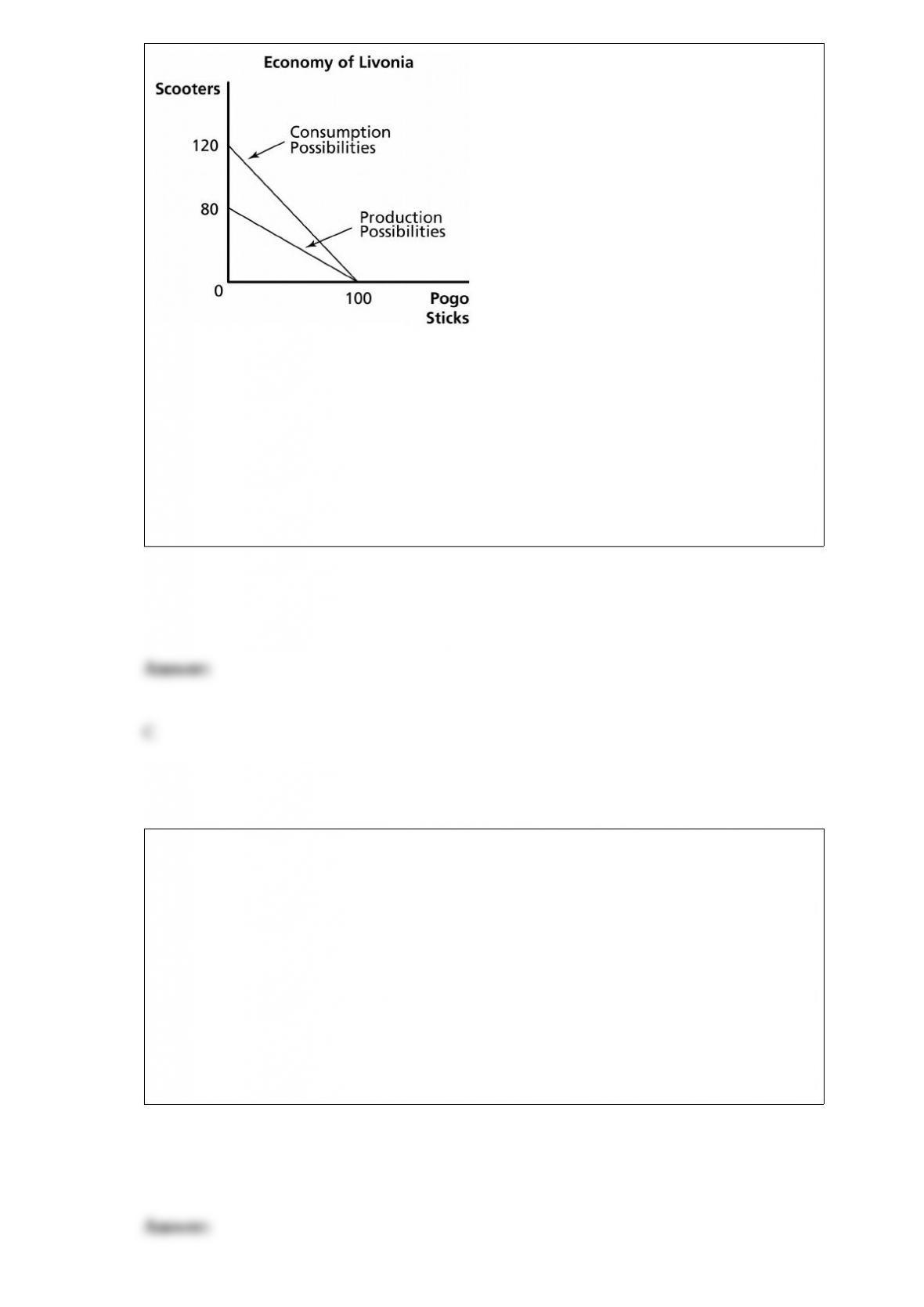
Figure 18.3
A) 120.
B) 100.
C) 80.
D) 40.
If the government imposes a maximum price in a market that is below the equilibrium
price:
A) total surplus in the market increases.
B) total surplus in the market decreases.
C) total surplus in the market does not change.
D) total surplus may increase or decrease, depending on whether costs are increasing or
decreasing in production.
Which of the following is an example of a normative question?
A) How will an increase in the inheritance tax affect tax revenues?
B) What fraction of an income tax cut will be spent on imported goods?
C) Should Florida implement a state income tax to reduce its deficit?
D) How will an increase in unemployment benefits affect the unemployment rate?
Poverty rates among the elderly are:
A) much lower than poverty rates among children.
B) higher than the poverty rates among children.
C) approximately the same as the poverty rates among children.
D) rising more rapidly than the poverty rates among children.