
Which of the following would be typically classified as a public good?
A) postal delivery
B) national defense
C) toll roads
D) college education
Tie-in sales:
A) are legal under the Clayton Act.
B) are the same as predatory pricing.
C) were banned under the Hart-Scott-Rodino Act.
D) are contracts that prevent purchasing one good without purchasing another.
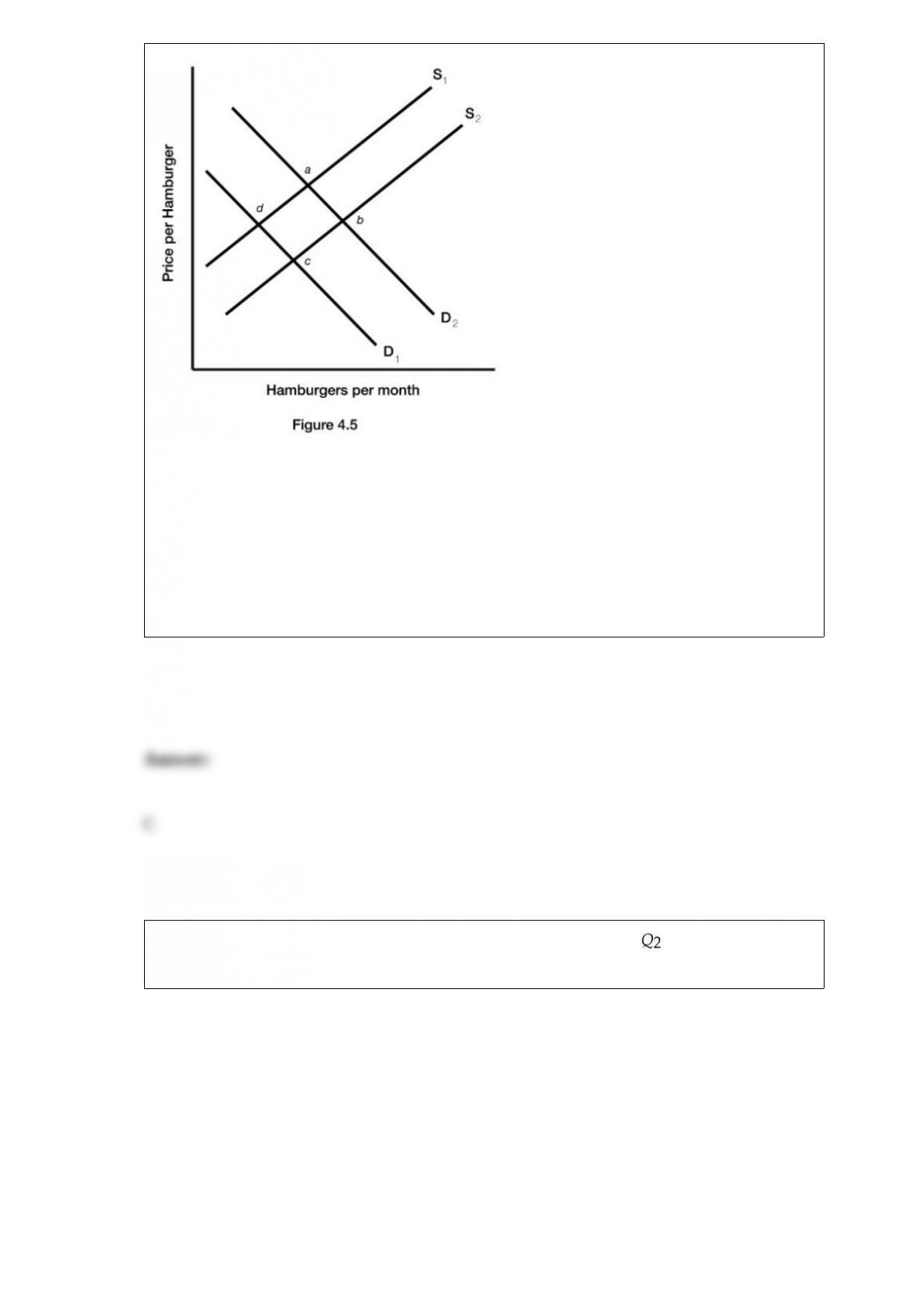
Figure 4.5 illustrates a set of supply and demand curves for hamburgers. An increase in
demand and an increase in quantity supplied are represented by a movement from:
A) point b to point a.
B) point c to point d.
C) point d to point a.
D) point b to point d.
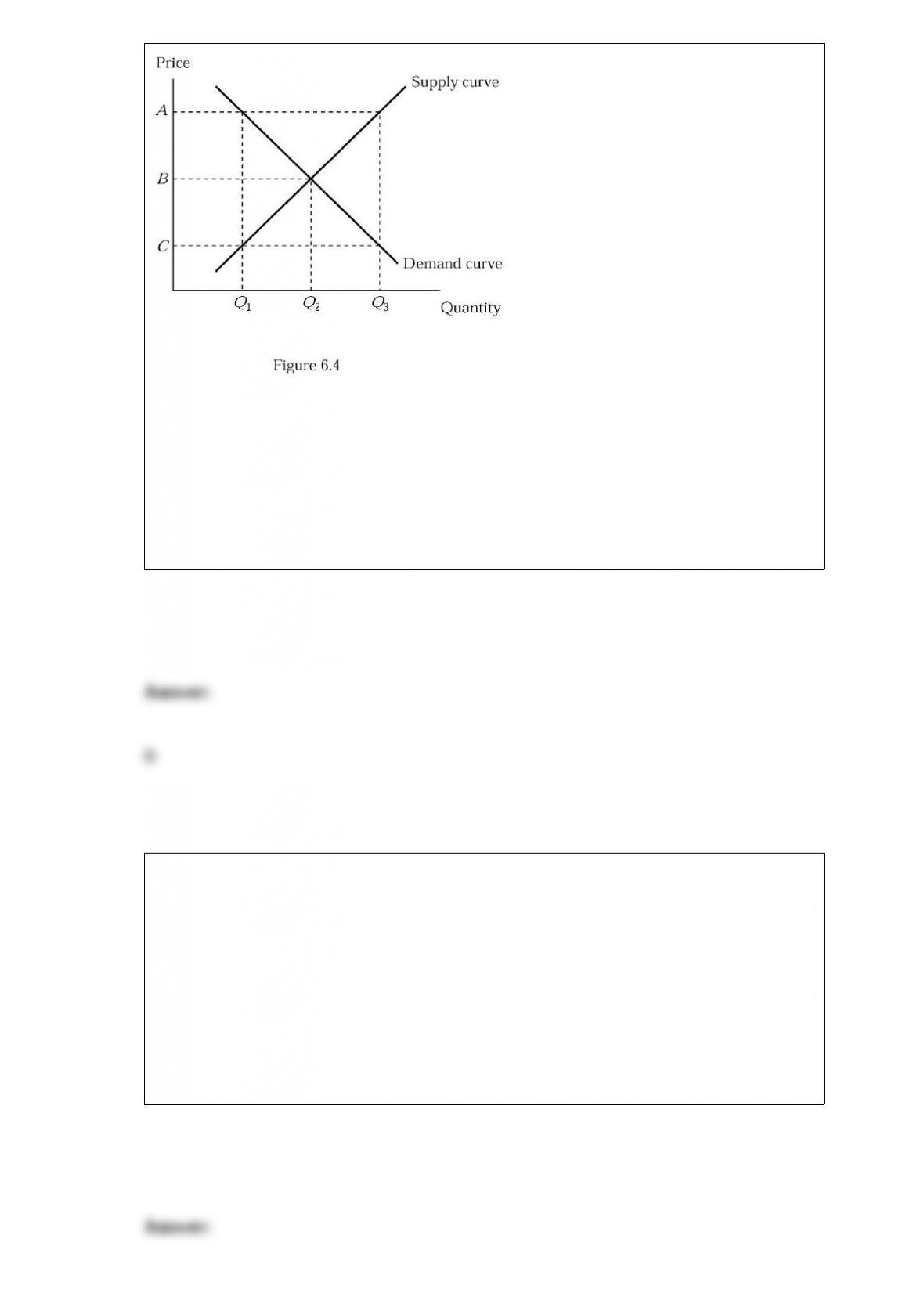
Refer to Figure 6.4. Suppose that the current price is set at B and units of a good are
traded. Which of the following statements is INCORRECT?
A) The quantity demanded is equal to the quantity supplied.
B) Total surplus is not maximized.
C) A buyer’s willingness to pay equals a seller’s willingness to accept.
D) The trade of a good at the current price is efficient.
Suppose that a minimum wage is set that is higher than wages for retail workers. This is
________ news for shoppers and ________ retail workers.
A) bad; good news for some, but not all
B) bad; good news for all
C) good; good news for some but not all
D) good; good news for all

Recall the application about idle capital and short-run marginal cost with a firm that
simply digs holes and has a fixed amount of capital (10 standard shovels) and can vary
the number of workers, Why is the marginal cost constant for the first 10 units of
output?
A) The average total cost is falling.
B) The firm does not experience diminishing returns.
C) The average total cost is raising.
D) none of the above
A product produced in a foreign country and purchased by residents of the home
country is:
A) an export.
B) an import.
C) savings.
D) investment.
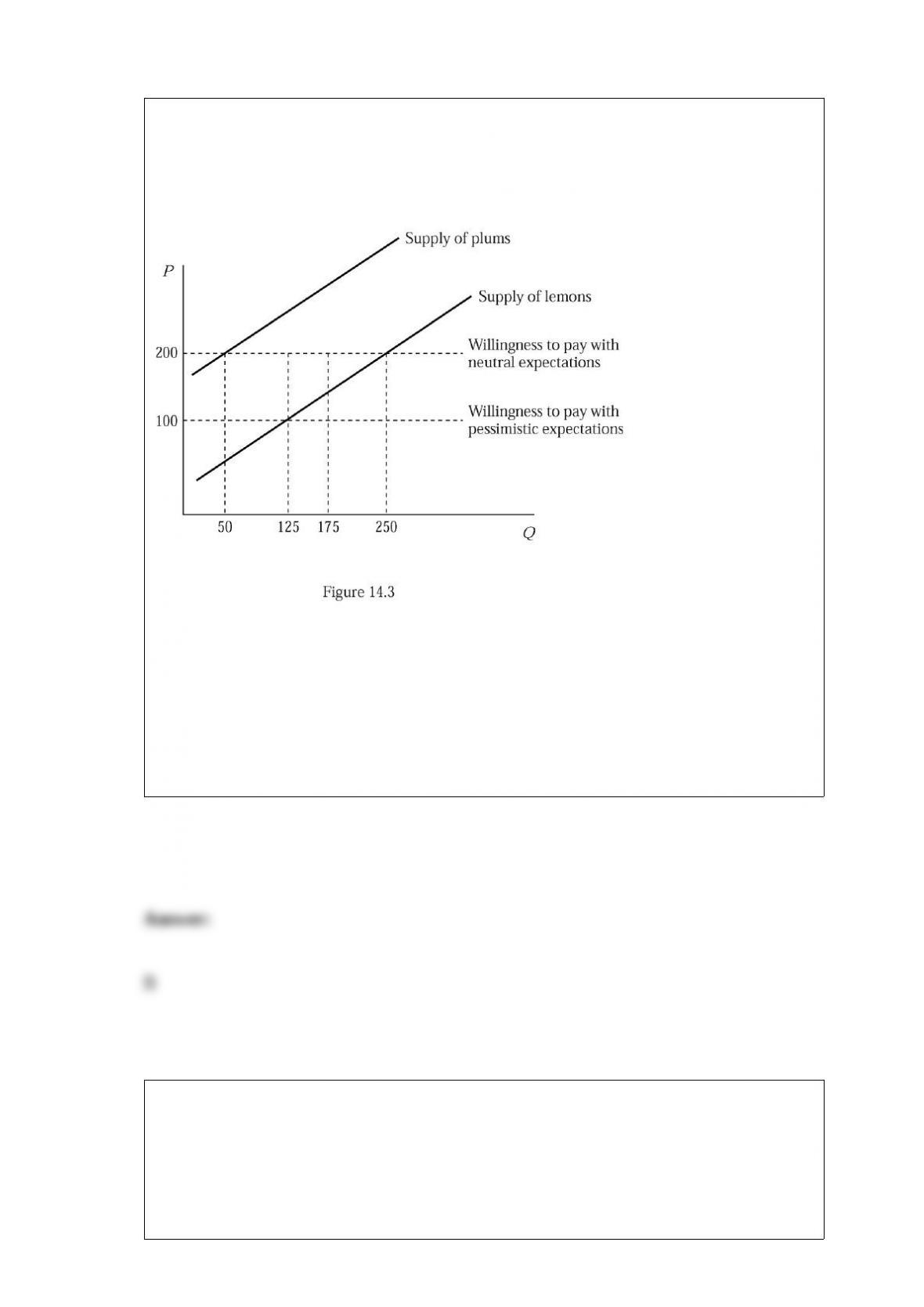
Figure 14.3 represents the market for used refrigerators. Suppose buyers are willing to
pay $300 for a plum (high-quality) used refrigerator and $100 for a lemon (low-quality)
used refrigerator. If buyers believe that 50% of the used refrigerators in the market are
lemons (low quality), how much will they be willing to pay for a used refrigerator?
A) $100
B) $200
C) $250
D) $300
The principle that individuals and firms pick the activity level where the incremental
benefit of that activity equals the incremental cost of that activity is known as the:
A) marginal principle.
B) principle of opportunity cost.

C) principle of diminishing returns.
D) spillover principle.
Suppose in the city of Smugsburg, DVD rental stores operate in a monopolistically
competitive market. If the price of DVD rentals in Smugsburg is currently equal to $5
per tape and the average cost of renting videos is $1 per DVD, in the long run we
expect the price of renting DVDs to:
A) increase.
B) stay the same.
C) decrease, and the average cost of producing DVD rentals to increase.
D) decrease, and the average cost of producing DVD rentals to decrease.
Which of the following is NOT an antitrust policy used by the government?
A) regulating business practices
B) blocking mergers
C) arranging a group of trustees
D) breaking up monopolies

From the Application, we can infer that the wine lakes will disappear if:
A) the government set the price at the equilibrium.
B) the government set minimum prices below the equilibrium.
C) the government set maximum prices above the equilibrium.
D) All of the above are correct.
If France can produce grapes at a higher opportunity cost than any other nation, France
is said to have a(n) ________ in the production of grapes.
A) autarky
B) absolute advantage
C) comparative disadvantage
D) comparative advantage

Which of the following is a macroeconomic question?
A) Will a constitutional amendment to balance the federal budget lead to good
economic policy?
B) Should a firm decide to enter a particular market?
C) Should the government prevent the merger of two large firms?
D) All of the above are macroeconomic questions.
As output increases, average fixed costs:
A) decrease.
B) initially decrease and then increase.
C) remain constant.
D) increase.
A perfectly competitive industry is in long-run equilibrium. If demand for the product
decreases, we can expect the price of the good to:
A) rise at first and then fall.

B) fall at first and then rise.
C) rise and remain at the higher price.
D) fall and remain at the lower price.
Angelina, age seven, decides to dress up like Princess Fiona for Halloween. What is the
opportunity cost of her decision?
A) the cost of the costume
B) the fact that she can’t dress up like Dora the Explorer, her second choice
C) zero, because seven-year-olds don’t have opportunity costs
D) the cost of the Lady Gaga costume which she did not want
Compared to the typical high-school graduate, the typical college graduate has greater
human capital and thus more options for both low-skill and high-skill jobs. This is
called:
A) the signaling effect of a college education.
B) the learning effect of a college education.
C) the discriminatory effect of a college education

D) all of the above
To assess the benefit of a product never consumed, the brain bases its benefit valuation
on:
A) chance.
B) past experiences with similar products.
C) the cost of the product.
D) The brain cannot value the benefit of a product never consumed.
An export is a product:
A) produced in and purchased by residents of the home country.
B) produced in and sold to the residents of a foreign country.
C) produced in the home country and sold in another country.
D) produced in a foreign country and purchased by the residents of the home country.

A private good is a good that:
A) is consumed by a single person or household.
B) cannot be used by private citizens.
C) cannot result in external benefits or costs to those who don’t consume.
D) is available for everyone to consume, regardless of who pays.
If the demand for a product in an increasing cost perfectly competitive industry
increases, we would expect that price in the long run would ________ and the number
of firms in the market would ________.
A) decrease; decrease
B) increase; increase
C) decrease; increase
D) increase; decrease

Which of the following trade policies will prevent a foreign supplier to sell even one
unit of the good in the domestic market?
A) import ban
B) import quota
C) voluntary export restraint
D) import tariffs
When a second firm enters a monopolist’s market:
A) the former monopolist’s average cost decreases as its output level decreases.
B) the demand curve the former monopolist faces shifts to the left.
C) the market price rises as the average cost increases.
D) none of the above
Dan is trying to sell a high-quality used desktop computer, but all potential buyers are
not willing to pay the price that Dan wants. This is likely due to a (an) ________
problem.
A) moral hazard
B) disutility
C) adverse selection
D) price discrimination
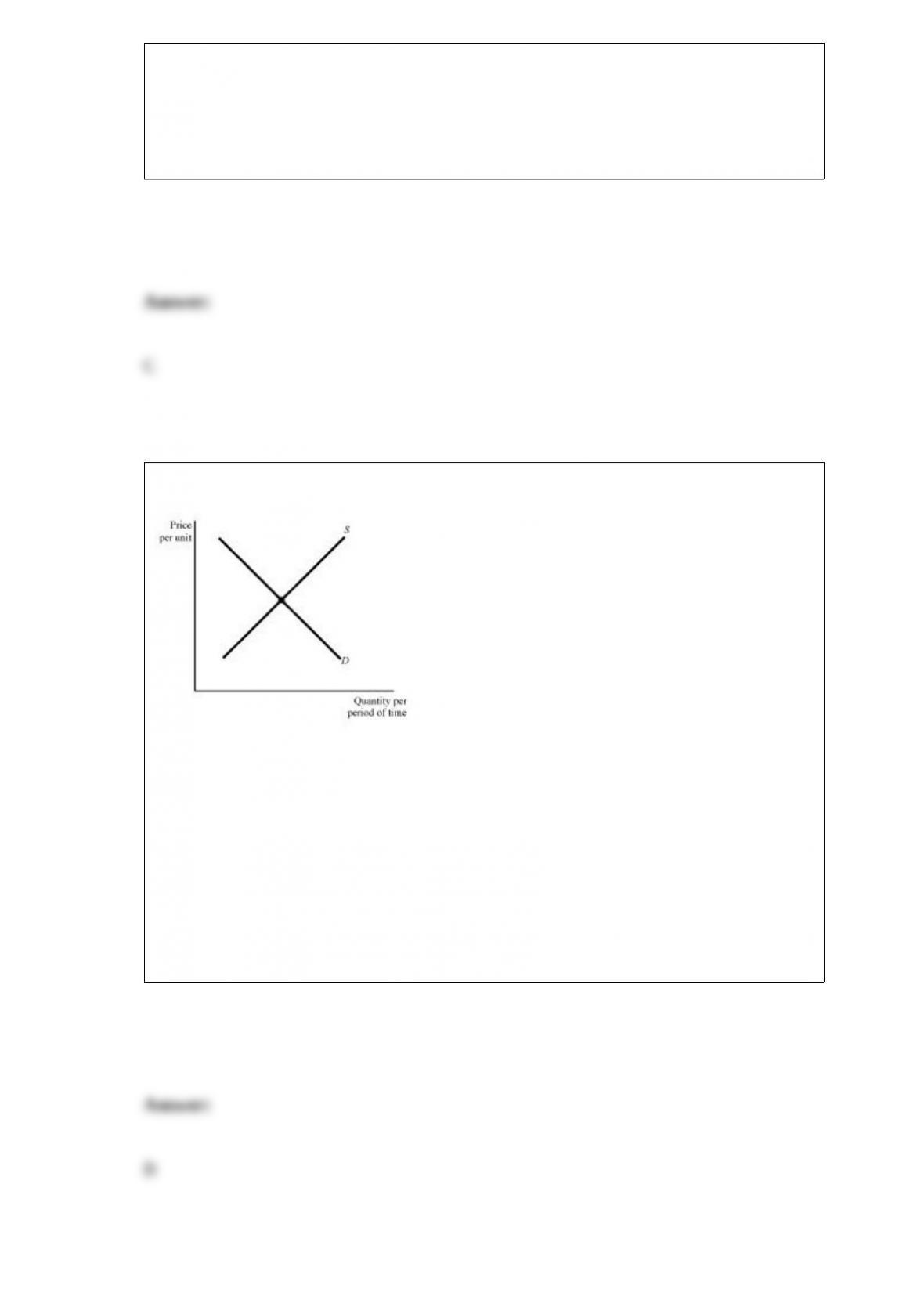
If demand decreases and supply increases in Figure 4.7, then the equilibrium:
Figure 4.7
A) price rises.
B) price falls.
C) quantity rises.
D) quantity falls.

Five years ago Tammy always took a big envelope full of coupons to the grocery store.
Now she has a child in pre-school, she rarely brings coupons. Which of the following is
NOT a possible explanation of this change in her behavior?
A) Fewer coupons appear in the newspapers than five years ago.
B) The opportunity cost of clipping coupons has risen above their monetary value.
C) Grocery prices have decreased.
D) The opportunity cost of grocery shopping has decreased.
According to the special-interest theory of government, government officials and
policymakers:
A) are assumed to maximize the social good.
B) tend to listen to small groups of people who contribute money to their political
campaigns.
C) manage resources to maximize efficiency.
D) have a strong incentive to ensure that society’s members equally benefit from a
project.
If the government intervenes in the market, while the market meets the efficiency
conditions. Then the government:
A) promotes more efficiency.
B) causes inefficiency.
C) reduces the consumer surplus only.
D) reduces the producer surplus only.
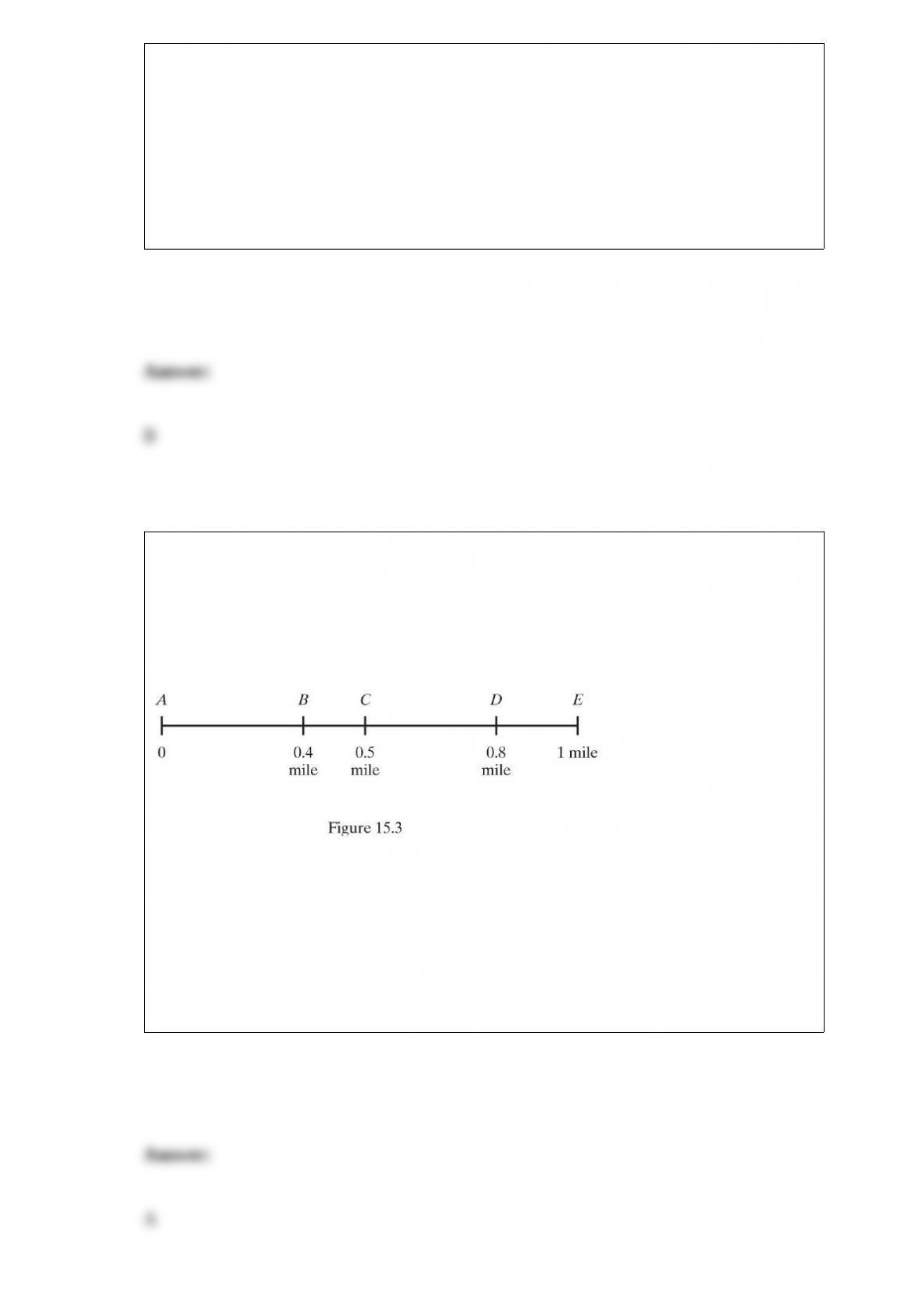
Figure 15.3 depicts a one-mile stretch of beach with 100 swimmers distributed evenly
along the beach. There are two ice cream vendors – 1 and 2 – on the beach selling an
identical product. Assume that each swimmer buys only one ice cream cone and that
they prefer to buy ice cream from the nearer vendor. If vendor 1 is at A while vendor 2
is at D, vendor 1 will sell ________ ice cream cones while vendor 2 sells ________ ice
cream cones.
A) 40; 60
B) 45; 55
C) 55; 45
D) 60; 40
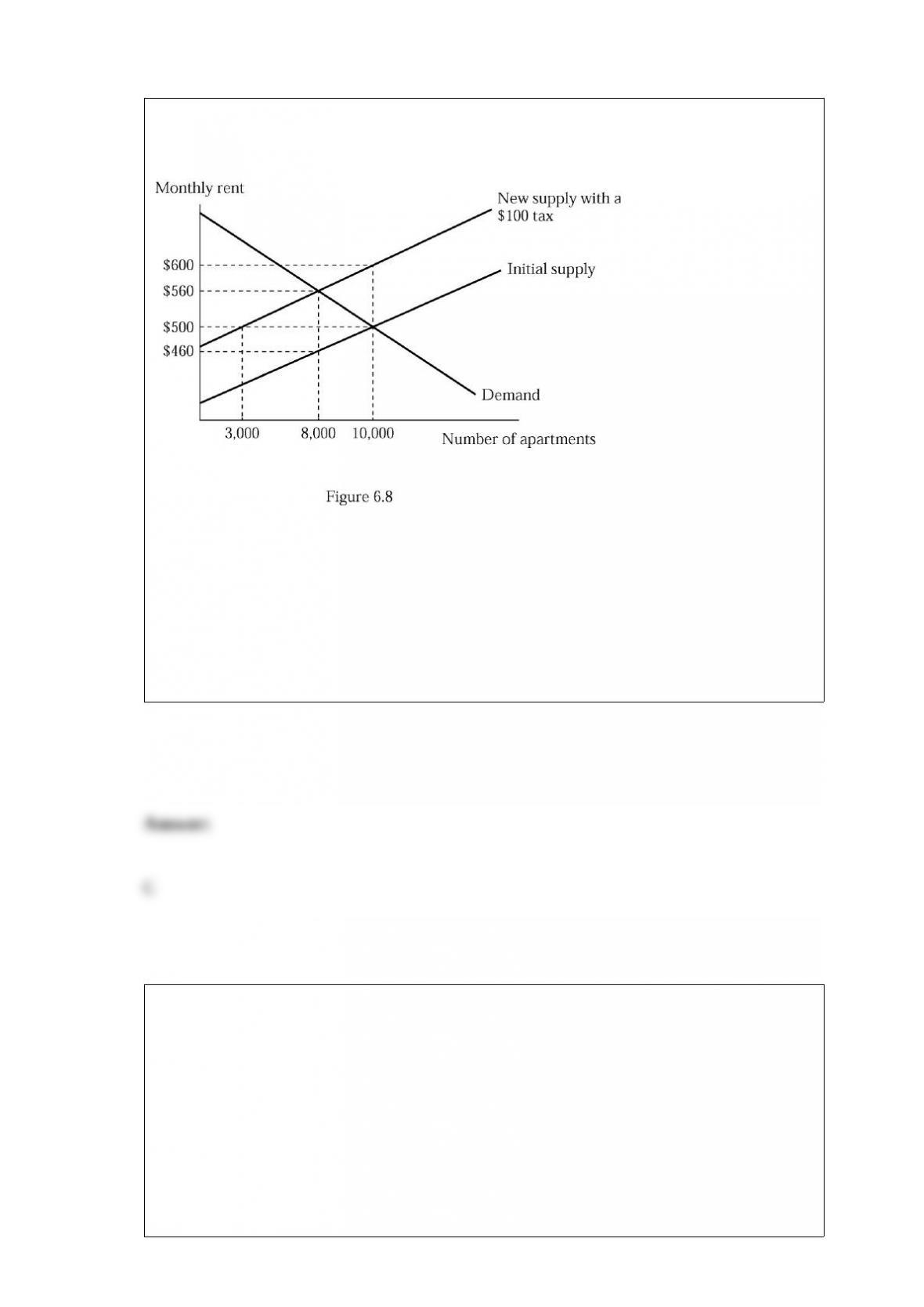
Refer to Figure 6.8. If your city imposes a tax of $100 per apartment, new monthly rent
consumers pay is:
A) $460.
B) $500.
C) $560.
D) $600.
If the government imposes a price ceiling that is below the equilibrium price, then the
market will experience:
A) an equilibrium.
B) a shortage.
C) an excess supply.
D) no scarcity.