In which of the following monetary aggregates are Treasury Bills included?
a. M1 only
b. M2 only
c. both M1 and M2
d. neither M1 nor M2
Game theory is based on the idea that each participant makes decisions based on how
she believes the competition will react.
a. True
b. False
A company draws its total cost curve and total revenue curve on the same graph. If the
firm wishes to maximize profits, it will select the output at which the
a. vertical distance between the two curves is greatest.
b. total cost curve cuts the total revenue curve.
c. horizontal distance between the two curves is greatest.
d. slope of the total revenue curve is greatest.

Supply-side tax cuts are more likely to have the intended beneficial effect on
a. budget deficits.
b. consumer spending.
c. investment spending.
d. net exports.
The budget deficit is the amount by which a government’s expenditures exceed its
receipts.
a. True
b. False

A cost curve drawn with years on the horizontal axis and costs per unit on the vertical
axis would be a(n)
a. analytical cost curve.
b. long-run cost curve.
c. historical cost curve.
d. theoretical cost curve.
Which of the following will lower interest rates in the short run?
a. an increase in reserve requirements
b. open market sales by the Fed
c. a decrease in real GDP
d. an increase in the price level
Pure monopoly is able to exist because the firm’s product is better than the substitutes
that are available in the market.
a. True
b. False
Overall, professional securities analysts have a 75% success rate in predicting winning
stocks.
a. True
b. False
As of 2013, annual imports to the U.S. were approximately ____ and annual exports
from the U.S. were approximately ____.
a. $0.6 trillion; $1.5 trillion
b. $2.2 trillion; $0.7 trillion
c. $2.7 trillion; $2.3 trillion
d. $1.5 trillion; $2.0 trillion
e. $2.0 trillion; $2.0 trillion
In an economic system with privately owned, profit-maximizing banks, there will
always be a difference between
a. private profits and social profits.
b. bank profits and other corporate profits.
c. bank profits and macroeconomic objectives.
d. bank profits and government profits.
In perfect competition, a firm’s marginal revenue equals the price of the product.
a. True
b. False
Which of the following individuals would most likely favor an increase in government
spending, as opposed to a tax cut, as the basis for expansionary fiscal policy?
a. “There must be a constant philosophical prejudice against any intervention by the
state into our lives, for by definition such intervention abridges liberty.”-William Simon
b. “The bastards [read politicians] can’t spend what they don’t have.”-Howard Jarvis
c. “The family that takes its mauve and cerise, air-conditioned, power-steered,
power-braked automobile through cities that are badly paved, made hideous by litter,
[and] blighted buildings…to picnic beside a polluted stream amid the stench of refuse
may properly reflect on the curious unevenness of their blessings.”-J.K. Galbraith
d. “Public expenditures are made for the primary benefit of the middle class and
financed with taxes on the poor and rich.”-Director’s Law
Opportunity cost is the value of the next best alternative that is given up.
a. True
b. False
To economists, investment means buying stocks and bonds.
a. True
b. False
Many regulated industries are not pure monopolies.
a. True
b. False
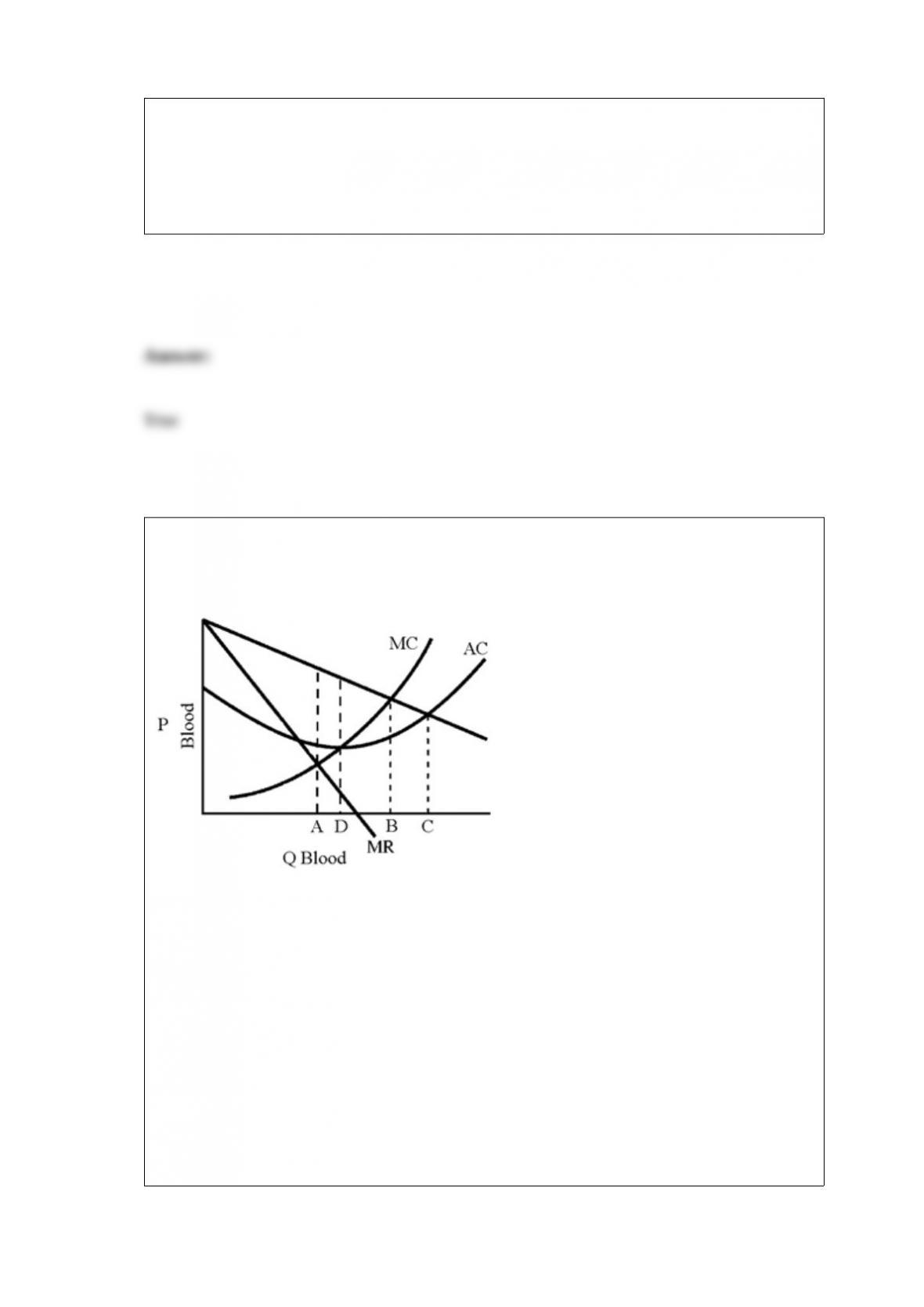
Figure 11-1
The Red Cross is virtually the only operator of blood banks in the United States. In
Figure 11-1 are the demand and cost curves facing the Red Cross blood bank. If the Red
Cross were to set price and quantity at the level that it would obtain in the long run in a
competitive industry, how much blood would it sell?
a. OA
b. OB
c. OD
d. OC
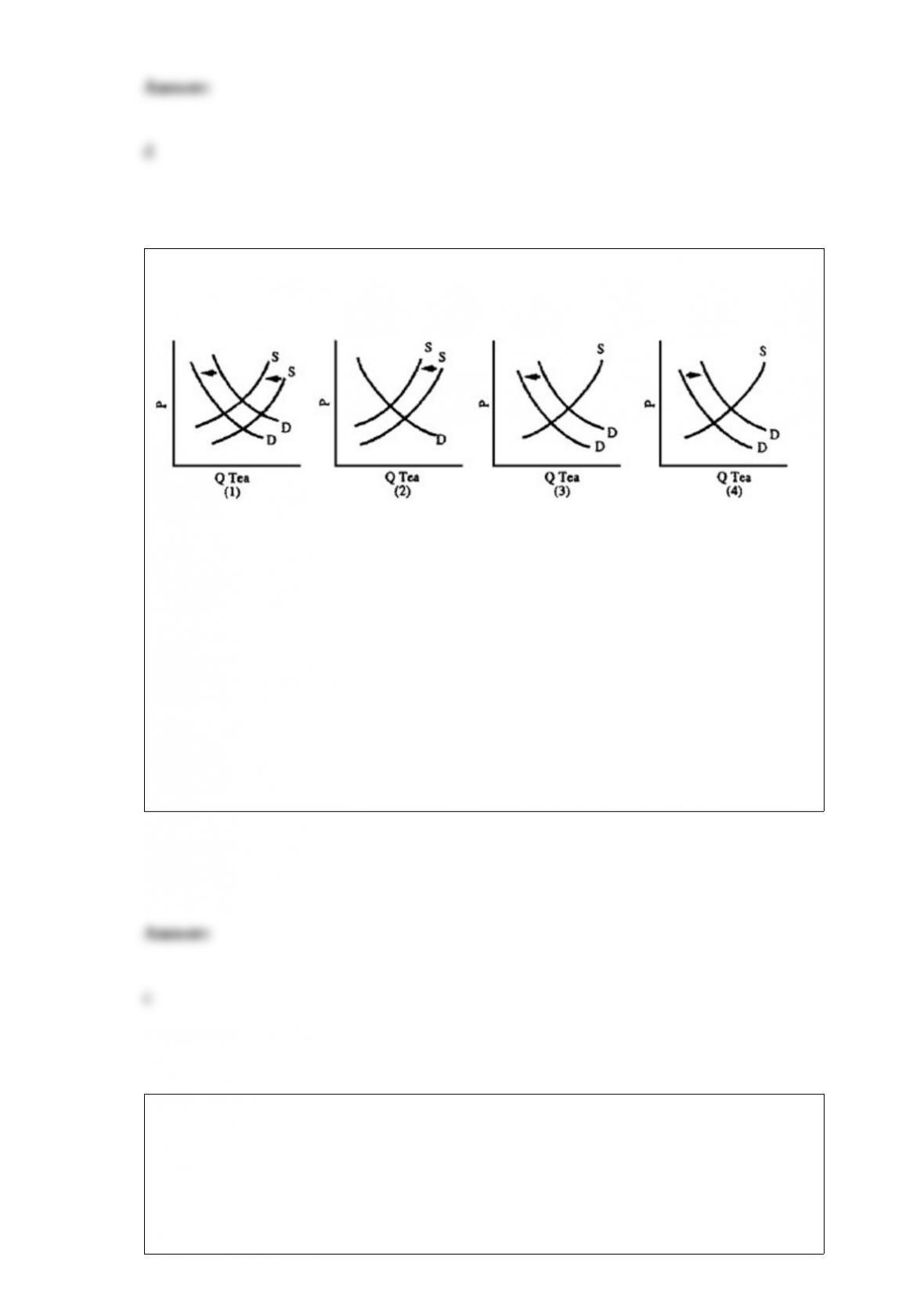
Figure 4-11
The Russian government has restricted sugar availability to reduce the supply of illegal
liquor (sugar is used to increase alcohol content). Russians also like to sweeten their tea
with jam, another sugar product. Which graph in Figure 4-11 depicts the impact of
sugar rationing on the Russian tea market?
a. 1
b. 2
c. 3
d. 4
If the unemployed were hired, they would have the monies to purchase goods which
would otherwise be unsold.
a. True
b. False
A budget surplus is defined as the amount that the
a. government owes to lenders at any moment in time.
b. government spends in any time period.
c. government’s expenditures exceed receipts in any time period.
d. government’s receipts exceed expenditures in any time period.
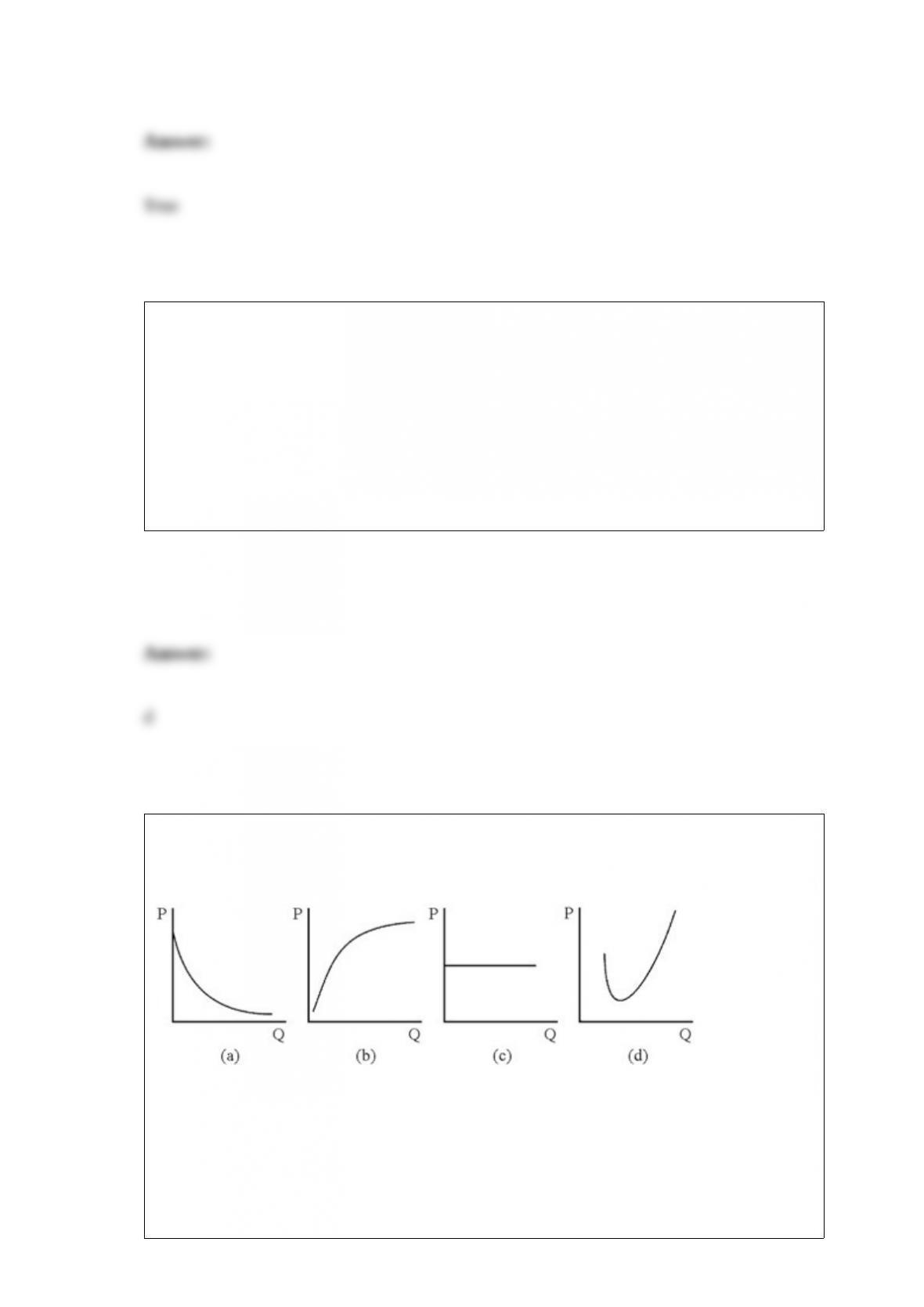
Figure 7-5
Which of the curves in Figure 7-5 could be a firm’s average fixed cost curve?
a. (a)
b. (b)
c. (c)
d. (d)
A bank run involves a large inflow of money into commercial banks.
a. True
b. False
The U.S. trade deficit is made possible, in part, because of foreigners’ demand for U.S.
financial assets.
a. True
b. False
If the marginal net utility of beer is negative, the consumer should buy more beer in
order to increase the total utility.
a. True
b. False
Firms are encouraged by the profit motive to use inputs efficiently.
a. True
b. False
Suppose that in 2015 you paid $150,000 for a house that was built in 2005 and sold that
year for $210,000. The amount this transaction would add to the GDP in 2015 is
a. $0.
b. $60,000.
c. $210,000.
d. −$60,000
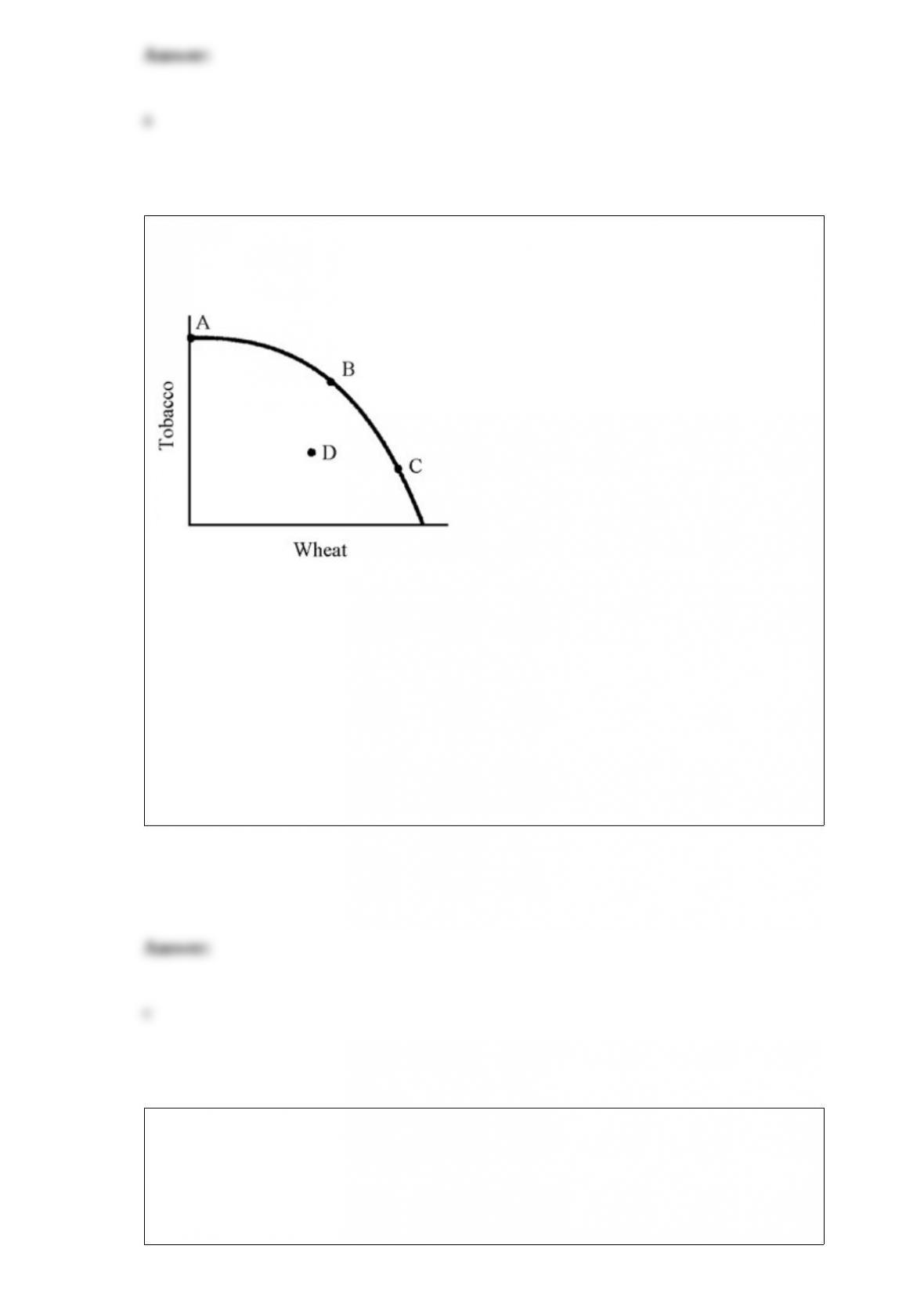
Figure 14-2
As we move down the production possibilities schedule in Figure 14-2, each successive
point is
a. less efficient.
b. more efficient.
c. equally efficient.
d. more or less efficient; we cannot tell which.
In an open economy net exports must always be positive.
a. True
b. False

If a ton of steel sells for $15,000 and a car made from a ton of steel sells for $30,000,
then if all markets are perfectly competitive, how many cars can be made from the last
ton of steel used by a profit-maximizing firm?
a. 1/3 car
b. 1/2 car
c. 1 car
d. 1.5 cars
As a knowledgeable investor in 2007, you should have realized that as interest rates
fell, bond prices would
a. also fall.
b. rise.
c. become more volatile, like stock prices.
d. fall but not by as much as stock prices.
Inventories are goods that can be considered as “purchased” by
a. the firms that produce them.
b. the consumers that ultimately buy them.
c. the government since they are tax deductible.
d. no one since they are not counted as part of GDP.
If prices rise, then persons living on fixed incomes will
a. see their real incomes falling.
b. see the purchasing power of their savings fall.
c. need to spend more to maintain their standard of living.
d. All of the above are true.
Marginal profit is the slope of the total profit curve.
a. True
b. False
Until 1983, almost all U.S. national debt stemmed from financing wars or from the loss
tax revenues that accompany recession.
a. True
b. False