1) A likely example of substitute goods for most people would be
a.tables and chairs.
b.bicycles and helmets.
c.apple juice and orange juice.
d.coffee and sugar.
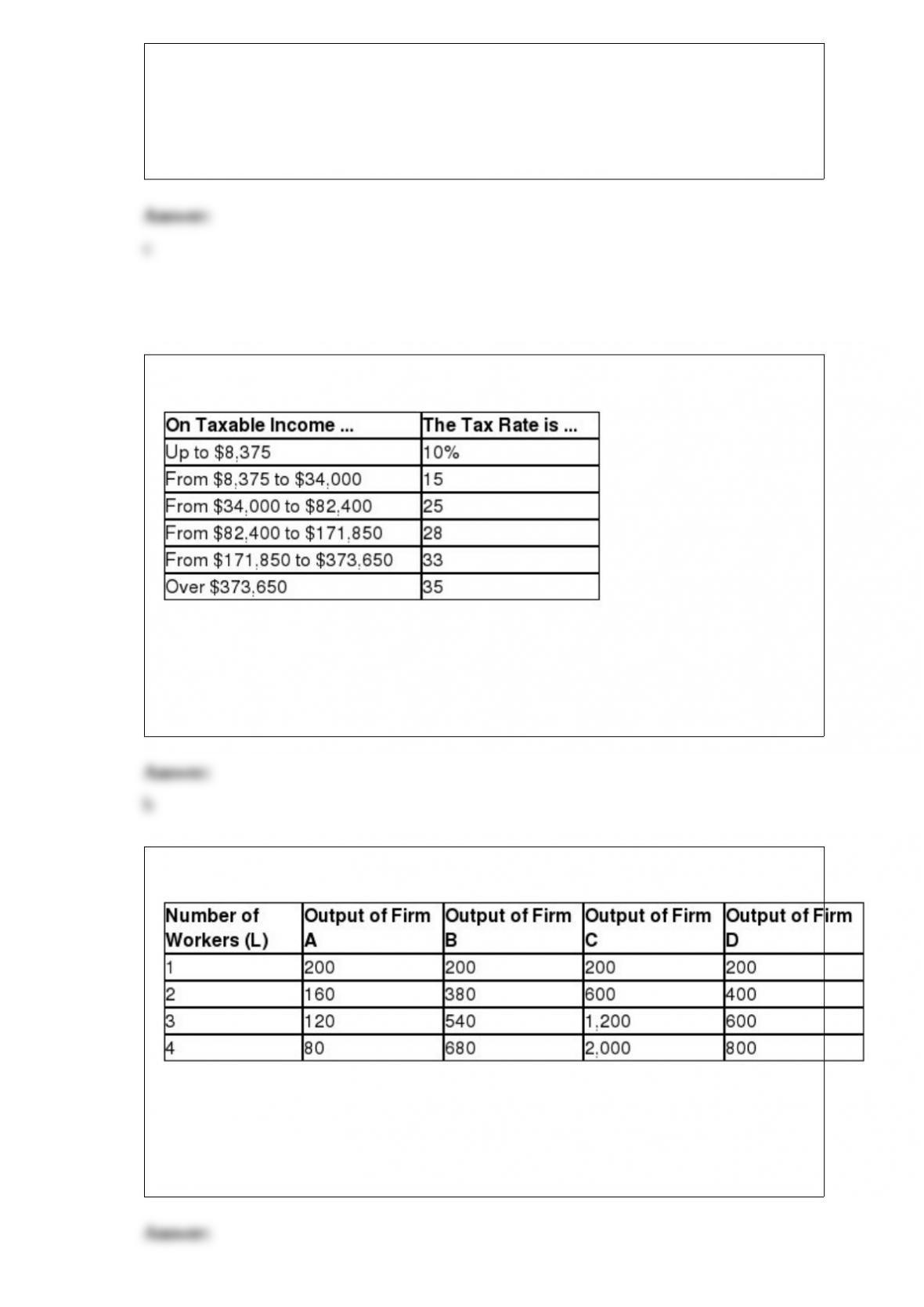
2) Table 12-10
If Jace has $33,000 in taxable income, his marginal tax rate is
a. 10%.
b.15%.
c.25%.
d.28%.
3) Table 18-3
Refer to Table 18-3. For Firm A, the marginal product of labor is
a.increasing.
b.constant.
c.decreasing.
d.negative.

4) Suppose that the market for labor is initially in equilibrium. An increase in
immigration will cause the equilibrium wage
a.and the equilibrium quantity of labor to rise.
b.and the equilibrium quantity of labor to fall.
c.to rise and the equilibrium quantity of labor to fall.
d.to fall and the equilibrium quantity of labor to rise.
5) With the resources it has, an economy can produce at any point on or outside the
production possibilities frontier, but it cannot produce at points inside the frontier.
a.True
b.False
6) If a country’s domestic price of a good is lower than the world price, then that
country has a comparative advantage in producing that good.
a.True
b.False
7) Assume that the government proposes a negative income tax that calculates the taxes
owed as follows: taxes owed equal 30% of income less $12,000. A family that earns an
income of $40,000 will
a.neither pay taxes nor receive an income subsidy.
b.receive an income subsidy of $3,600.
c.pay $3,600 in taxes.
d.pay $12,000 in taxes.
8) The equilibrium price is the same as the market-clearing price.
a.True
b.False

9) One thing that both critics of advertising and defenders of advertising agree on is that
advertising fosters competition.
a.True
b.False
10) Human capital is
a.a stock of equipment and structures.
b.the result of investments workers make in themselves such as on-the-job training.
c.a difference in wages that arises to offset the nonmonetary characteristics of different
jobs.
d.inversely related to the supply of workers.
11) Figure 21-25
The figure pertains to a particular consumer. On the axes, X represents the quantity of
good X and Y represents the quantity of good Y.
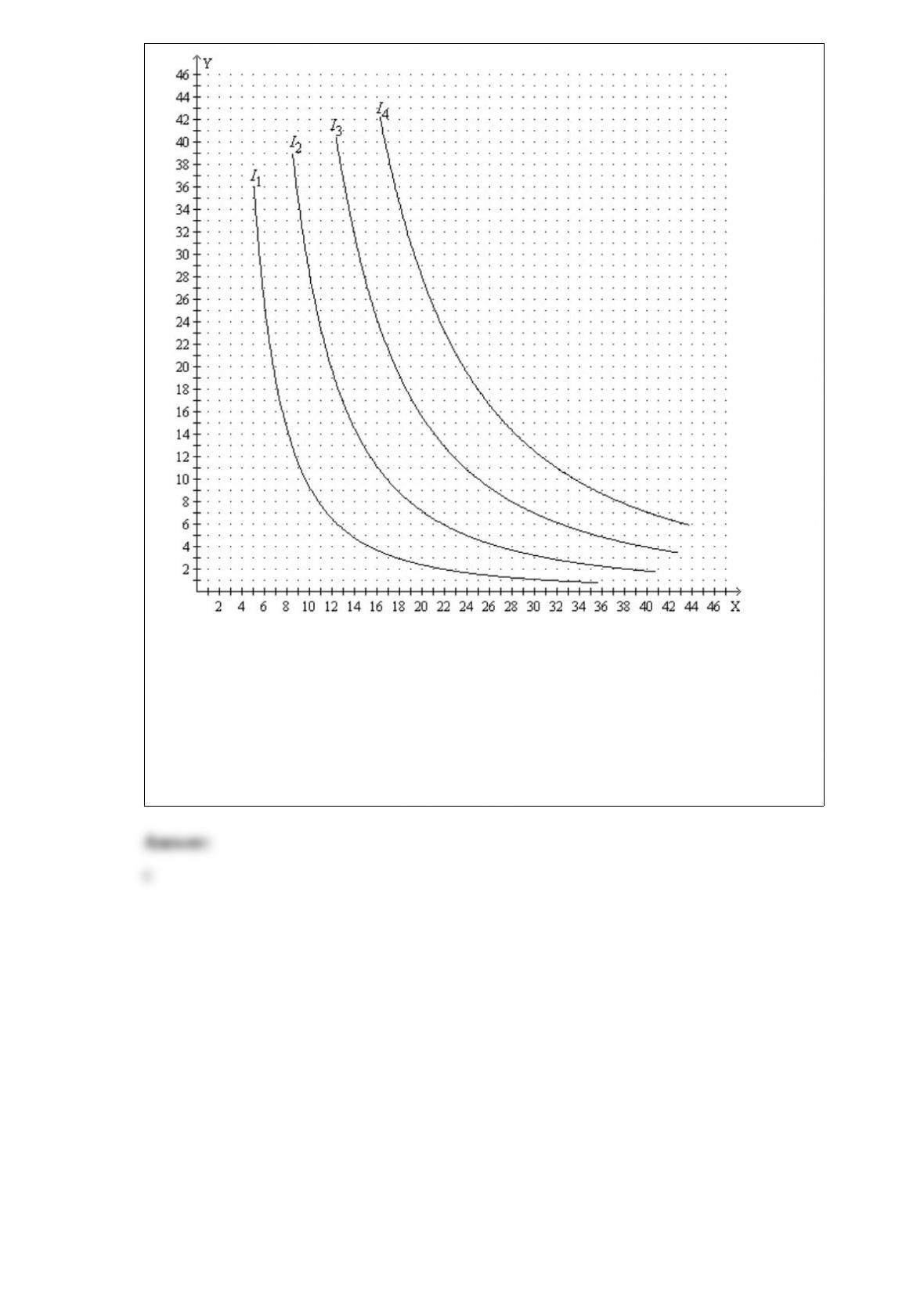
Refer to Figure 21-25. Suppose the price of good X is $8, the price of good Y is $10,
and the consumer’s income
is $360. Then the consumer’s optimal choice is to buy
a.15 units of good X and 24 units of good Y.
b.20 units of good X and 20 units of good Y.
c.30 units of good X and 12 units of good Y.
d.40 units of good X and 4 units of good Y.