
If the long-run average total cost curve is downward-sloping, then the firm is
experiencing decreasing returns to scale.
Answer:
If consumers paid the full price of medical services instead of using health insurance
and third-party payers to cover part of the cost, the quantity of medical services
provided would increase.
Answer:
If inflation falls from 11% to 5%, there is deflation.
Answer:
When there is a negative externality, the competitive output is more than the
economically efficient output level.
Answer:

The total amount of consumer surplus in a market is equal to the area below the demand
curve.
Answer:
The overall mortality rate in the United States has remained fairly constant for the past
30 years.
Answer:
Technological change allows the economy to produce more output with the same
amount of capital and labor.
Answer:
In the United States in 2011, over 90 percent of people without health insurance were
below the age of 34.
Answer:

An increase in the price level in the United States will reduce imports and increase
exports.
Answer:
All economic questions arise from the fact that resources are scarce.
Answer:
Economist Robert Higgs showed that World War II brought great increase in the
number of consumer goods available to the typical person.
Answer:
The social benefit of a given level of a public good is the vertical sum of all private
benefits for that level.
Answer:

A decrease in the labor force shifts the production possibility frontier inwards over
time.
Answer:
According to the benefits-received principle, those who receive the benefits from a
government program should pay the taxes that support the program.
Answer:
When aggregate expenditure = GDP,
A) macroeconomic equilibrium occurs.
B) the federal budget is balanced.
C) net exports equal zero.
D) saving equals zero.
Answer:
Suppose the demand curve for a product is represented by a typical downward-sloping
curve. Now suppose the demand for this product increases. Which of the following
statements accurately predicts the resulting increase in price?
A) The more elastic the supply curve, the greater the price increase.
B) The more elastic the supply curve, the smaller the price increase.
C) The increase in price is not affected by the elasticity of the supply curve.
D) There will be no increase in price if the supply curve is perfectly inelastic.
Answer:
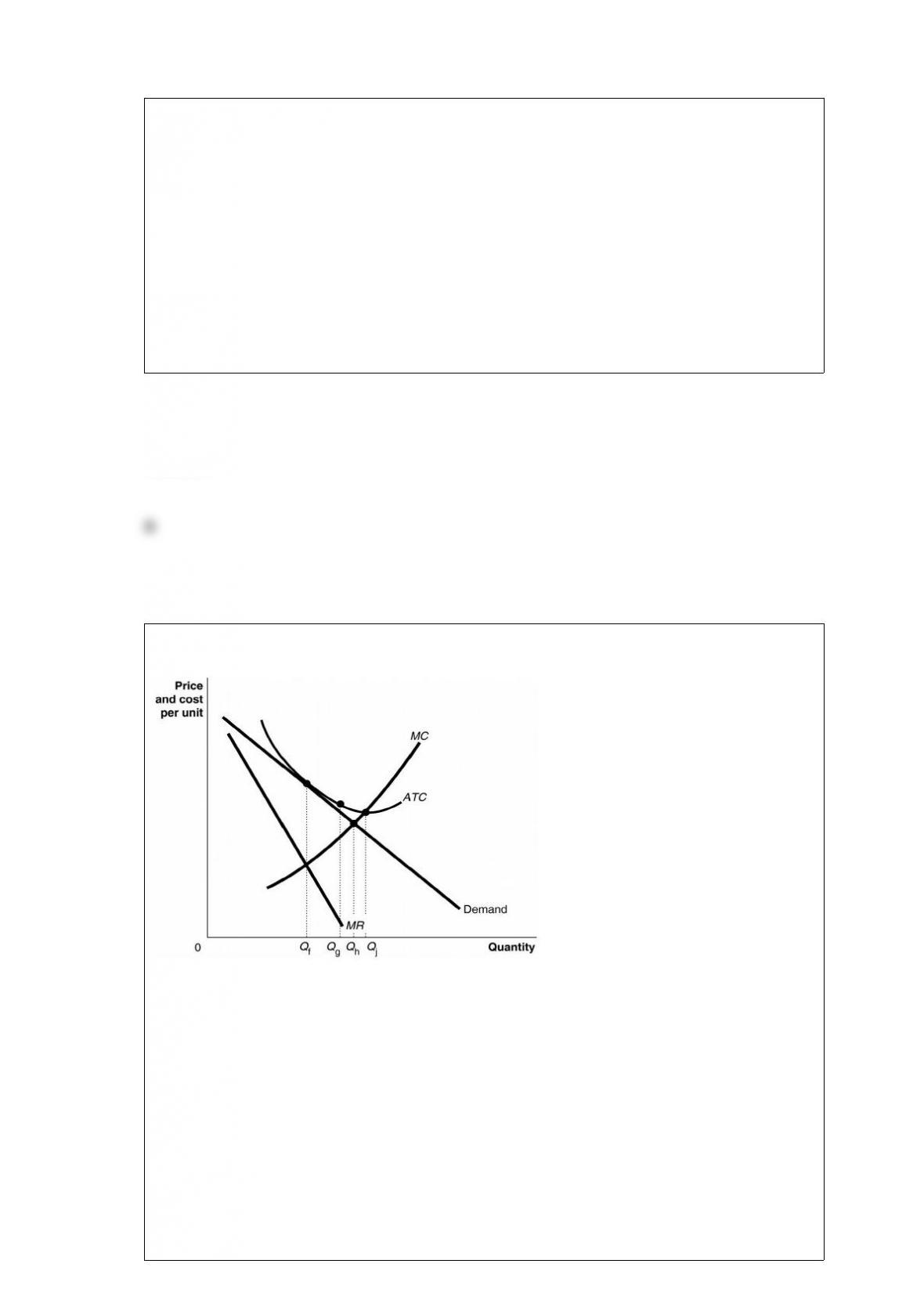
Figure 13-17
Suppose the firm is currently producing Qf units. What happens if it increases its output
to Qgunits?
A) Its average cost of production will fall and its profit will rise.
B) It will be taking advantage of economies of scale and will be able to lower the price
of its product.
C) It will move from a zero profit situation to a profit situation
D) It will move from a zero profit situation to a loss situation

Answer:
Foreign investment can give a low-income country
A) access to funds for investment and access to technology.
B) the means to slow down growth.
C) a path to dependency and low growth.
D) no hope to break the vicious cycle of poverty.
Answer:
The law of diminishing marginal returns states
A) that at some point, adding more of a fixed input to a given amount of variable inputs
will cause the marginal product of the variable input to decline.
B) that at some point, adding more of a variable input to a given amount of a fixed input
will cause the marginal product of the variable input to decline.
C) that in the presence of a fixed factor, at some point average product of labor starts to
fall as more and more variable inputs are added.
D) average total costs of production initially fall and after some point starts to rise at a
decreasing rate as output increases.
Answer:
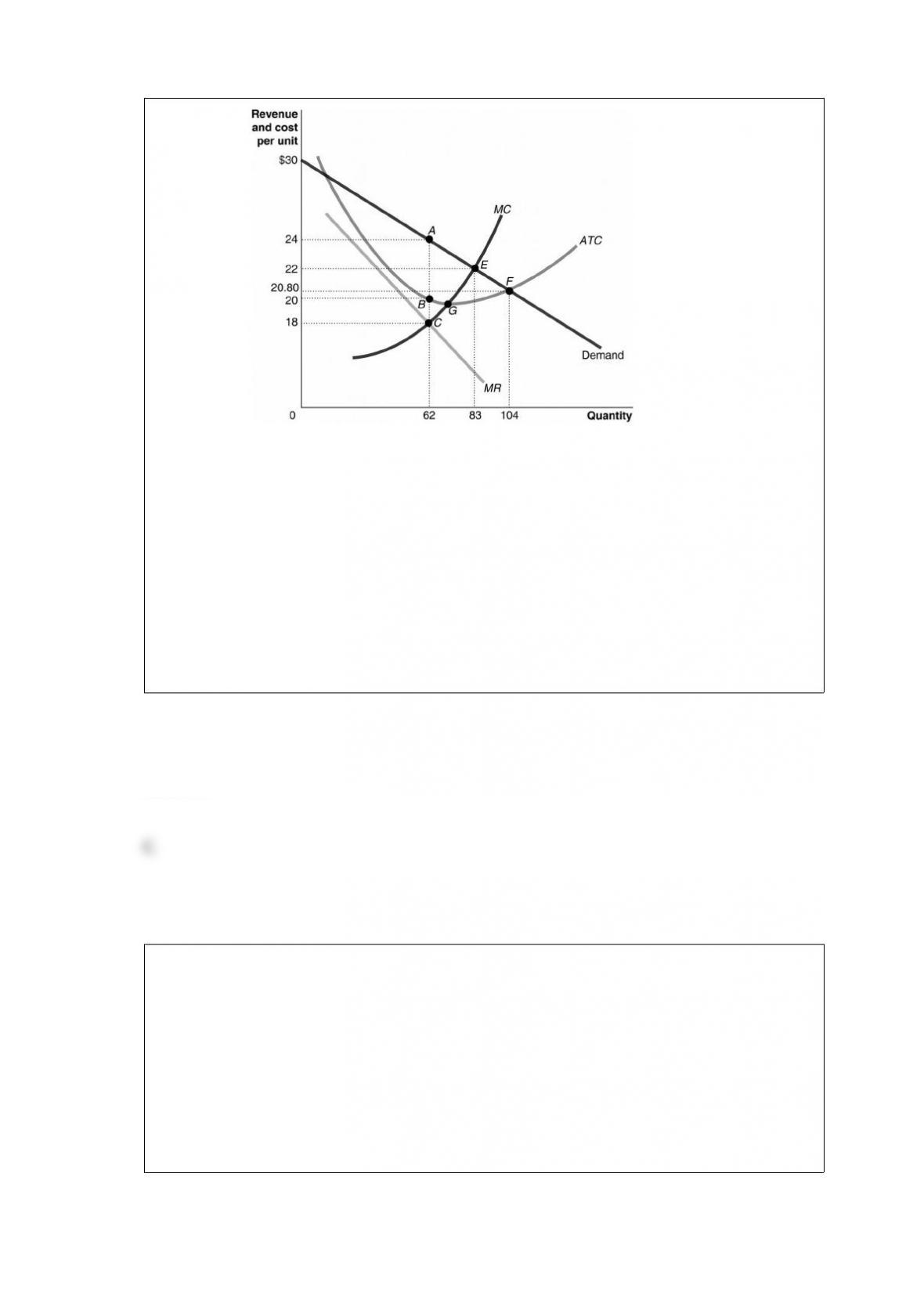
Figure 15-6 Figure 15-6 shows the
cost and demand curves for a monopolist.
The monopolist earns a profit of
A) $0.
B) $170.
C) $248.
D) $372.
Answer:
Not enforcing property rights in an economy will
A) cause the market system to work efficiently.
B) not change the level of investment.
C) lower the level of investment.
D) raise the level of investment.
Answer:
One would speak of a movement along a supply curve for a good, rather than a change
in supply, if
A) the cost of producing the good changes.
B) supplier expectations about future prices change.
C) the price of the good changes.
D) prices of substitutes in production change.
Answer:
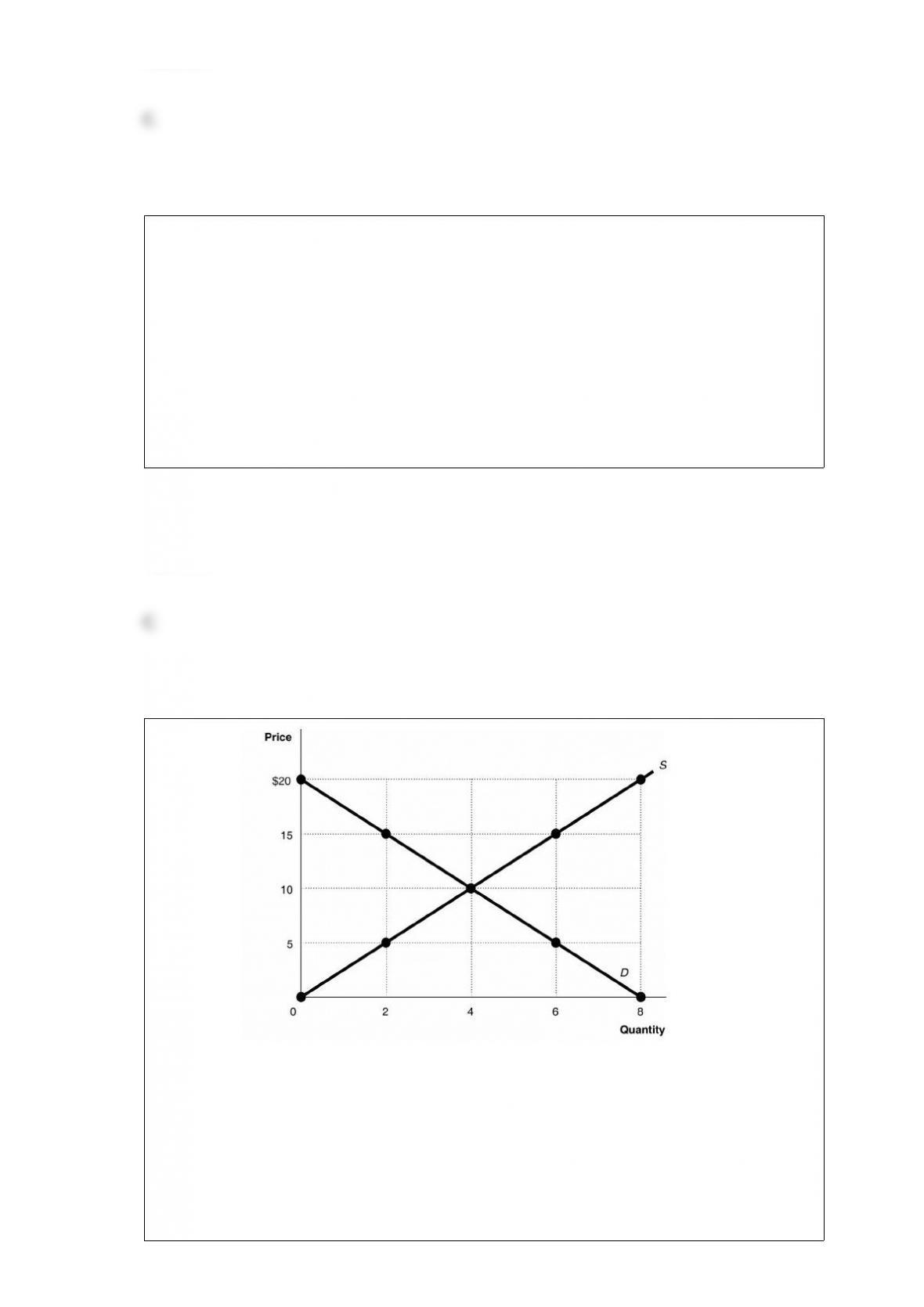
Figure 3-5
In a free market such as that depicted above, a shortage is eliminated by
A) a price increase, increasing the supply and decreasing the demand.
B) a price decrease, decreasing the supply and increasing the demand.
C) a price decrease, decreasing the quantity supplied and increasing the quantity

demanded.
D) a price increase, increasing the quantity supplied and decreasing the quantity
demanded.
Answer:
Average total cost is equal to
A) average fixed cost minus average variable cost.
B) total cost divided by the level of output.
C) marginal cost plus variable cost.
D) total cost divided by the number of workers.
Answer:
Last week, 13 Mexican pesos could purchase one U.S. dollar. This week, it takes 11
Mexican pesos to purchase one U.S. dollar. This change in the value of the dollar will
________ exports from the United States to Mexico and ________ U.S. aggregate
demand.
A) increase; increase
B) decrease; decrease
C) increase; decrease
D) decrease; increase
Answer:
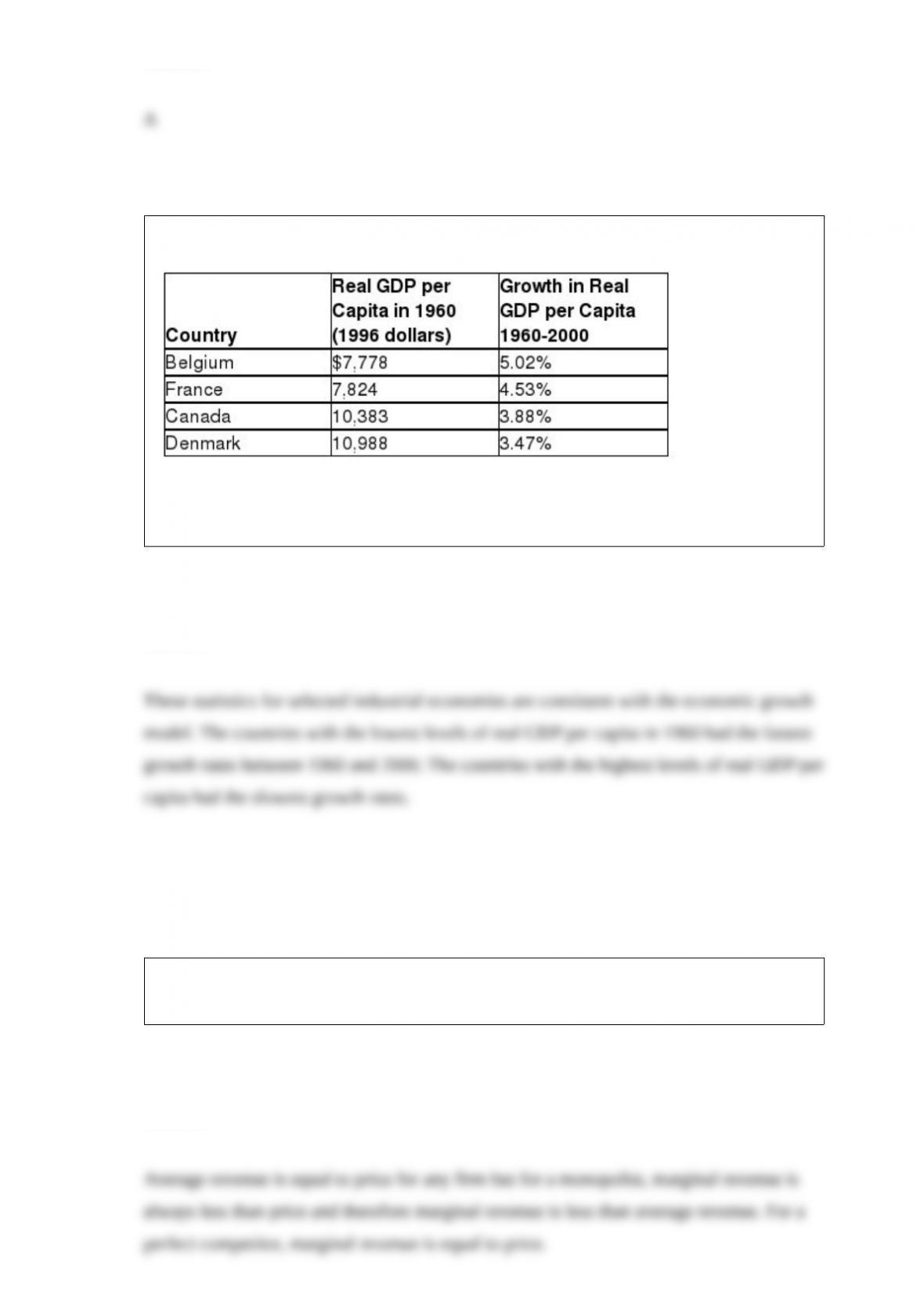
Table 22-5
Consider the statistics in the table above in describing the industrialized countries.Are
these consistent with the economic growth model? Briefly explain.
Answer:
What is the relationship between marginal revenue and average revenue for a
monopolist and is it the same for a perfect competitor?
Answer:
Use the formula for the GDP deflator to explain how it is affected by an increase in
prices in the economy. If the value of the deflator equals 100, what does that tell you
about that year with respect to the base year?
Answer:
Explain the difference between a normal good and an inferior good.
Answer:
Consider the market for wheat which is a perfectly competitive market. Is the market
demand curve the same as the demand curve facing an individual producer? If not,
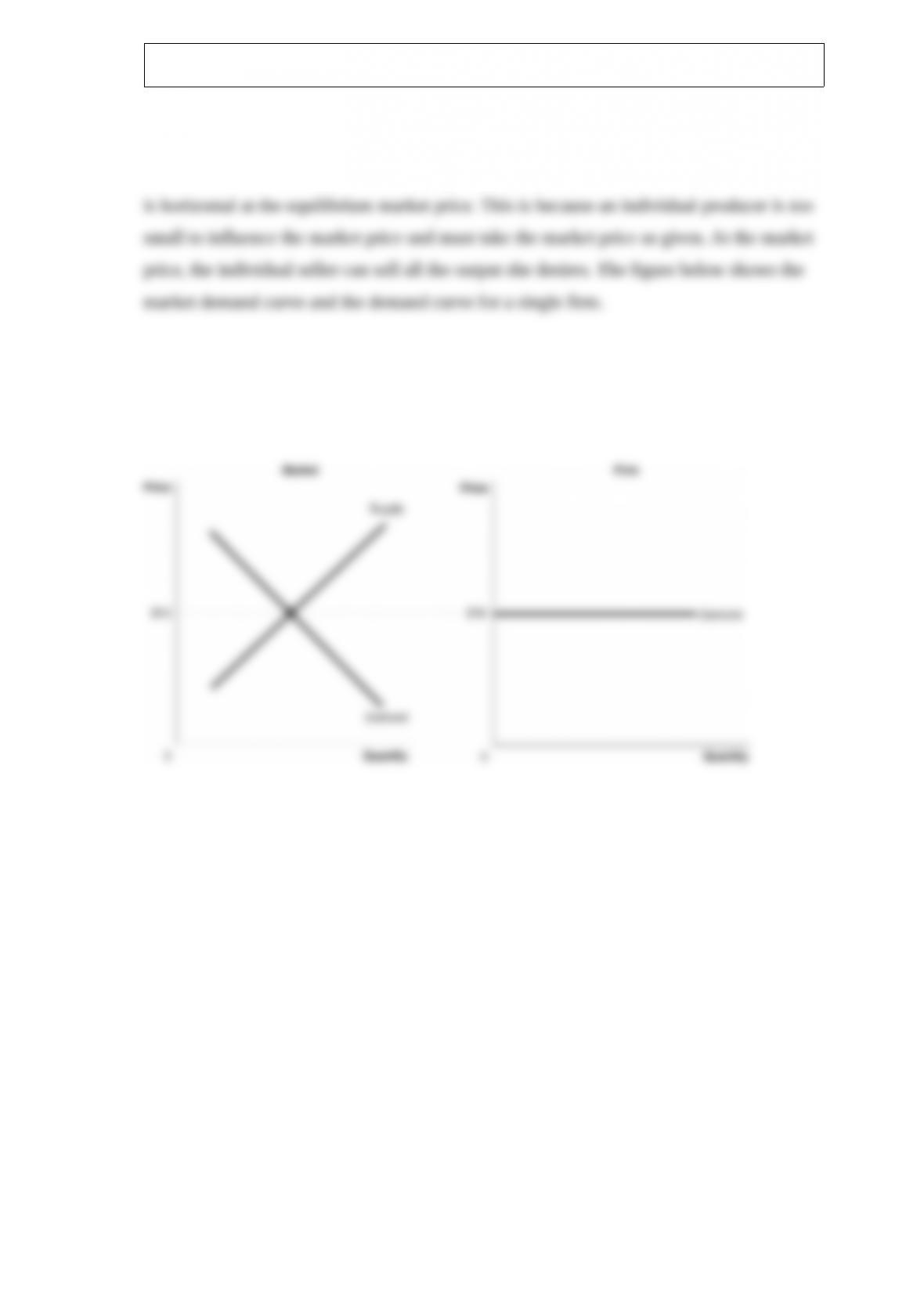
explain how and why they are different? Illustrate your answer graphically.
Answer: