Firms that emit toxins into the air:
a. underproduce because the private cost of production exceeds the social cost.
b. overproduce because the social cost of production exceeds the private cost.
c. produce the same as nonpolluting firms.
d. produce at the socially optimal amount.
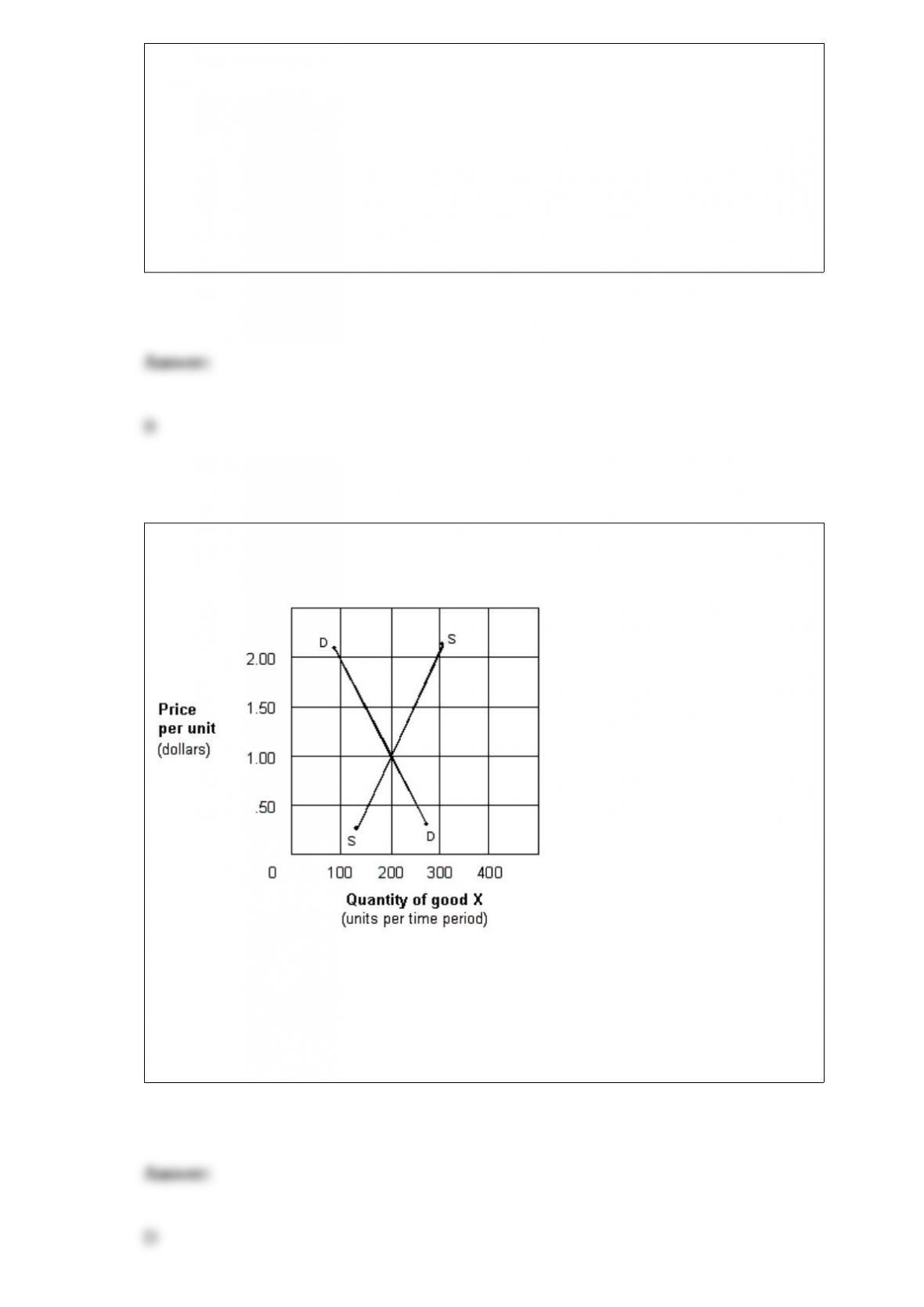
Exhibit 3-15 Supply and demand curves for good X
In the market shown in Exhibit 3-15, the equilibrium price and quantity of good X are:
a. $0.50, 250. c. $2.00, 100.
b. $2.00, 300. d. $1.00, 200.

Because monopolists are protected by high barriers to entry, they:
a. may be able to earn long-run economic profits.
b. will not minimize the per-unit cost of producing their output.
c. will price their product at the highest possible price.
d. seek economic profit; however, they are not able to earn it in the long run.
If water is essential for life, while diamonds are not, then why is water cheaper than
diamonds?
a. Because most people would rather die with a big diamond ring than live without one.
b. Because the total utility generated by diamonds is larger than the total utility
generated by water.
c. Because most people do not understand their total need for water.
d. Because water is abundant, the marginal utility of water is low, and price reflects
marginal utility, not total utility.
Which of the following describes a tying contract?
a. The seller of one product requires the buyer to purchase some other product(s).
b. One firm buys the stock of a competing firm.
c. The directors of one company serve on the board of directors of another company in
the same industry.
d. An agreement between a manufacturer and a retailer based on the condition that the

retailer is not to carry any rival products of the manufacturer.
A local Krispy Kreme doughnut shop reduced the price of its doughnuts from $4 per
dozen to $3.50 per dozen, and as a result, the daily sales increased from 300 to 400
dozen. This indicates that the price elasticity of demand for the doughnuts was:
a. elastic.
b. inelastic.
c. of unitary elasticity.
d. indeterminate; more information is needed to determine the price elasticity of
demand.
The term ‘socialism’ refers to which of the following?
a. A religion centered on community interaction.
b. An economic system characterized by private ownership of resources, and
decentralized market allocation.
c. An economic system characterized by government ownership of resources and
centralized allocation.
d. None of the above answers are correct.
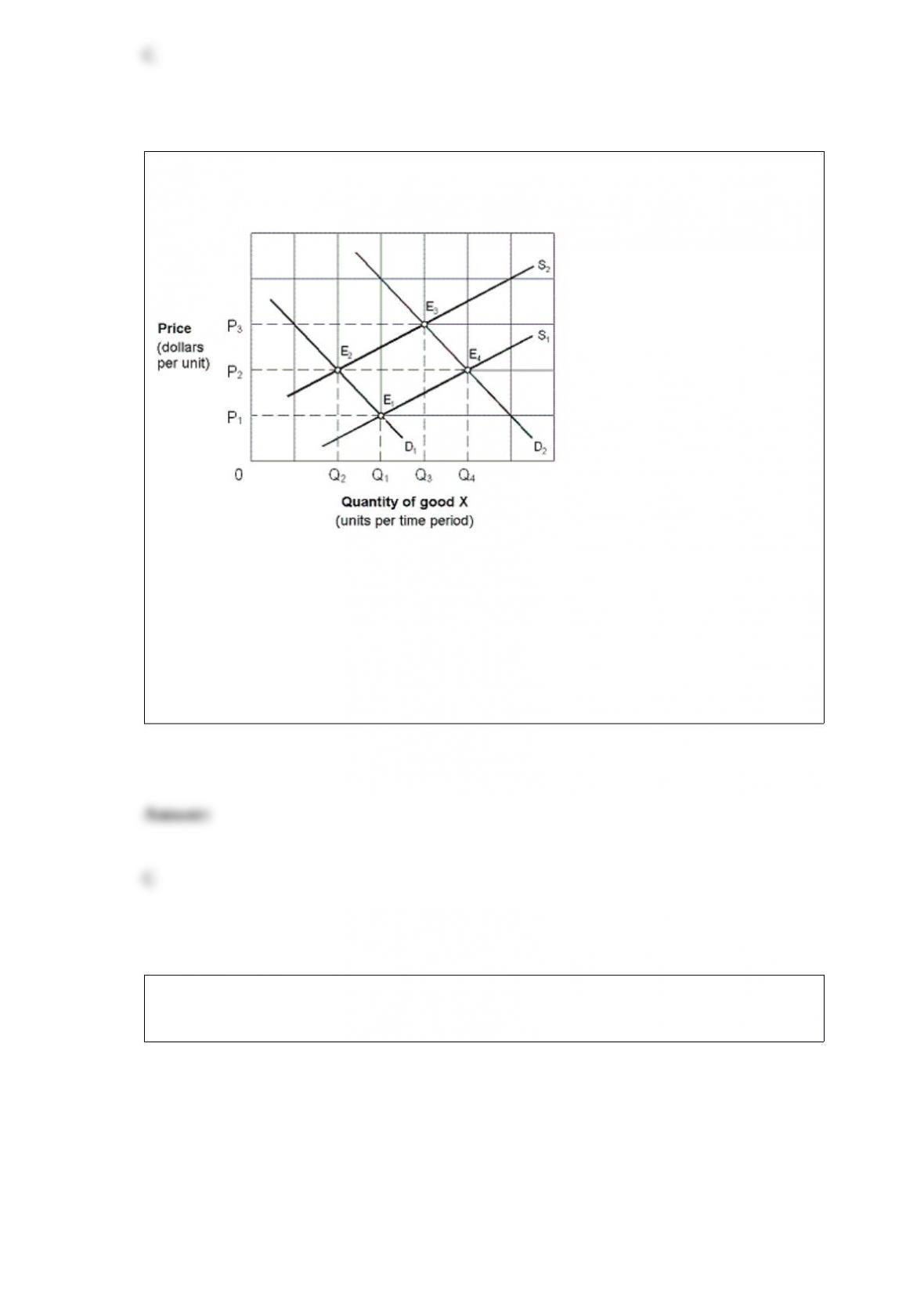
Exhibit 4-3 Supply and demand curves
Beginning from an equilibrium at point E2 in Exhibit 4-3, an increase in demand for
good X, other things being equal, would move the equilibrium point to:
a. E1. c. E3.
b. E2. d. E4.
Exhibit 8-3 Cost per unit curves
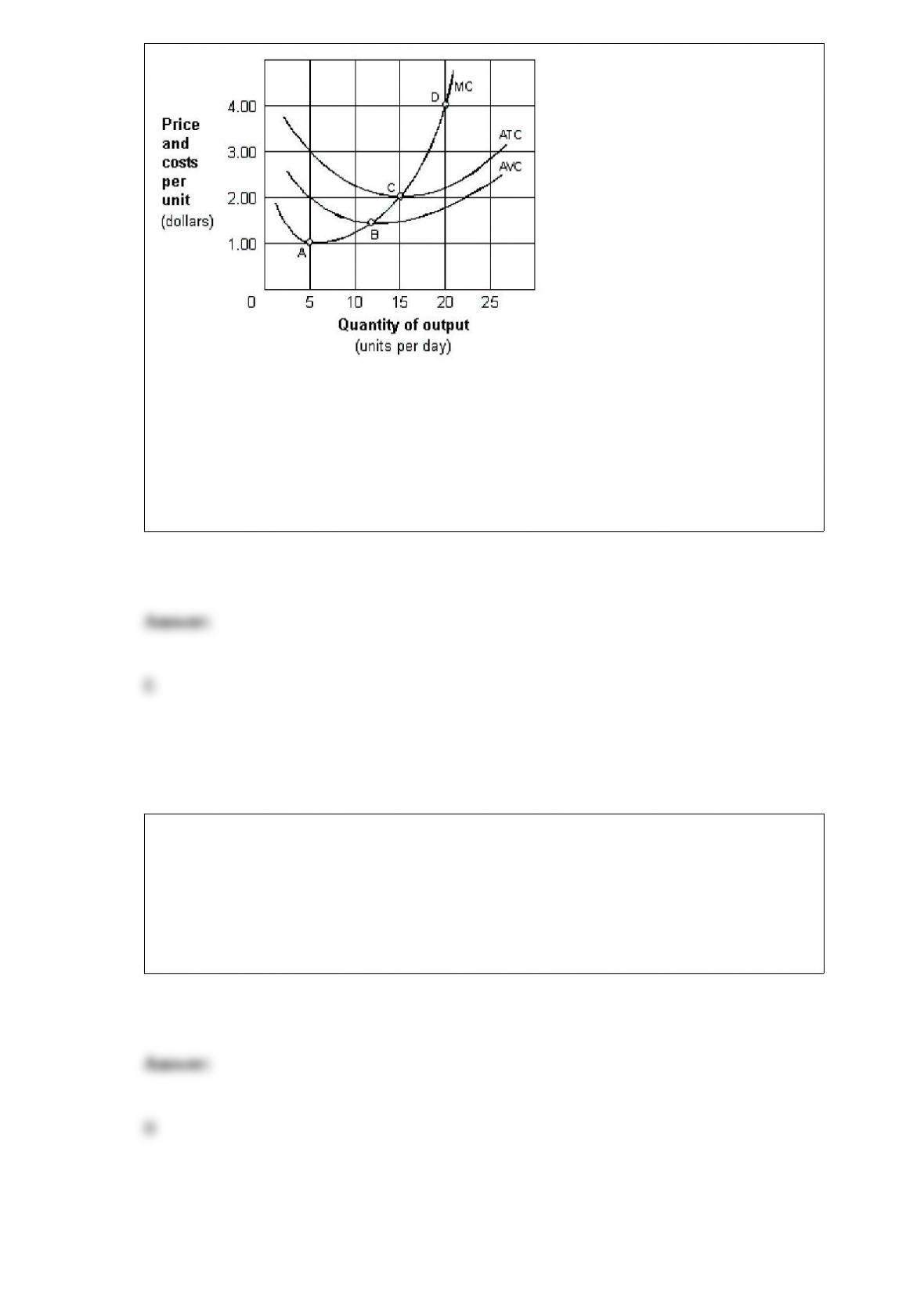
As shown in Exhibit 8-3, the price at which the firm earns zero economic profit in the
short-run is:
a. $1.00 per unit.
b. $1.50 per unit.
c. $4.00 per unit.
d. more than $2.00 per unit.
e. $2.00 per unit.
If the government wants to raise tax revenue and shift most of the tax burden to the
consumers, it would impose a tax on a good with a:
a. flat (elastic) demand curve and a steep (inelastic) supply curve.
b. steep (inelastic) demand curve and a flat (elastic) supply curve.
c. steep (inelastic) demand curve and steep (inelastic) demand curve.
d. flat (elastic) demand curve and a flat (elastic) supply curve.

As a fishing firm hires its first, second, and third workers, it could find that marginal
product actually rises. The reason for this is:
a. diminishing returns have set in.
b. the division of labor creates greater productivity.
c. the firm has hired another boat.
d. all tasks are shared by all workers.
e. less qualified workers are becoming available.
Other things equal, assume consumer demand for children’s toys increases. The result is
a(n):
a. rightward shift in the market demand for labor curve in the toy industry.
b. increase in the marginal revenue product of firms in the toy industry.
c. increase in derived demand for workers in the toy industry.
d. all of these.
The monopolistic competition market structure is characterized by:
a. few firms and similar products.
b. many firms and differentiated products.
c. many firms and a homogeneous product.
d. few firms and a homogeneous product.

Which of the following would not cause a shift in the supply curve for a good?
a. An increase in demand for that good.
b. An increase in the cost of labor used to produce that good.
c. A change in the cost of raw materials used to produce that good.
d. A decrease in the cost of machinery used to produce that good.
If the quantity of rental units increases by 10 percent when the monthly rental price
doubles, the supply of rental units, other factors held constant, is:
a. elastic. c. perfectly elastic.
b. inelastic. d. perfectly inelastic.
Exhibit 1A-4 Straight line

In Exhibit 1A-4, as X increases along the horizontal axis, corresponding to points A-D
on the line, the Y value remains unchanged at 40 units. The relationship between the X
and Y variables is:
a. direct. c. independent.
b. inverse. d. undefined.
Which nation achieved the ideal communist society as described by Marx?
a. Castro’s Cuba.
b. Mao’s China.
c. Stalin’s Soviet Union.
d. No nation has achieved Marx’s vision of communist society.

For a monopolist to practice price discrimination, one necessary condition is that the
product offered for sale must be:
a. high quality.
b. expensive.
c. cheap.
d. impossible or difficult to resell.
The poorest 20 percent of the U.S. population received approximately ____ of total
income.
a. 5 percent
b. 10 percent
c. 15 percent
d. 20 percent
A market demand curve:
a. is the sum of the demand curves of all the individuals in a particular market.
b. is determined by the demand of those who purchase in quantity.
c. is always horizontal.
d. cannot be estimated.
e. never includes demand by the government.

Make a case for income inequality.
A monopolist will be able to earn positive pure economic profits regardless of the price
elasticity of demand.
The main purpose of the International Monetary Fund is to manage and distribute U.S.
foreign aid.

The Ceteris paribus assumption is important when building economic models.
Justin Field just stopped at the Exxon station on the way to campus and bought four
Butterfinger candy bars, two 20-ounce bottles of grape-watermelon Snapple, and 10
gallons of gas. His marginal-utility-to-price ratios are 3.21 for the Butterfingers, 8 for
the Snapples, and 5.7 for the gas. Explain why this set of purchases did not maximize
Ryan’s utility and how could he have increased his utility.
Most LDCs face the problems of low population growth and excessive saving.

Discuss the three basic types of economic systems.
A graph is one method of expressing a model.
If a firm buys the assets of a firm with cash, it may be in violation of the
Celler-Kefauver Act.