
The world price of a good is
a. the price paid by consumers in all nations
b. the price at which it is traded internationally
c. the price paid in U.S. dollars
d. the price paid in foreign currency
e. the terms of trade for each nation
As a monopolist increases the quantity of output produced, what happens to price (P)
and marginal revenue (MR)?
a. both P and MR remain constant
b. P is constant, but MR decreases
c. P decreases, but MR is constant
d. both P and MR decrease, but P falls faster than MR
e. both P and MR decrease, but MR falls faster than P
Cell phone companies offer pricing plan alternatives in order to convert some
a. consumer surplus into profit
b. producer surplus into profit

c. economic profit into normal profit
d. profit into consumer surplus
e. consumer surplus into deadweight loss
Bureaus are
a. special-interest groups that try to influence legislators
b. government agencies that implement legislation
c. competing-interest groups that battle federal agencies
d. collections of legislators who actively engage in logrolling
e. a means of enforcing the median voter model in the decision-making process
Which of the following would not limit the extent of a firm’s vertical integration?
a. the managers’ bounded rationality
b. a large minimum efficient scale of producing inputs relative to the firm’s input
requirements
c. the fact that the quality of inputs is easily determined at the time of purchase

d. many interchangeable suppliers of the firm’s inputs
e. high transaction costs of contracting with resource suppliers
Which of the following countries is not in the poorest-billion category?
a. Bolivia
b. Cambodia
c. Vietnam
d. Myanmar
e. Yemen
Which of the following union tactics, if successful, would increase wages and create a
surplus of labor?
a. collective bargaining to fix the wage above the competitive level
b. decreasing the marginal revenue product of the union workers
c. increasing the demand for union-made products
d. restricting the supply of nonunion products that compete with union-made products

e. increasing labor productivity by minimizing conflicts and resolving differences
between labor and management
Which of the following practices is not prohibited by the Clayton Act?
a. merger through the acquisition of assets, which substantially lessens competition
b. price discrimination that substantially lessens competition
c. tying contracts that substantially lessen competition
d. exclusive dealing that substantially lessens competition
e. interlocking directorates that substantially lessen competition
Which of the following prevents potential competitors from entering a monopolist’s
market?
a. legal restrictions
b. diseconomies of scale
c. product differentiation
d. stable market demand
e. rising marginal cost
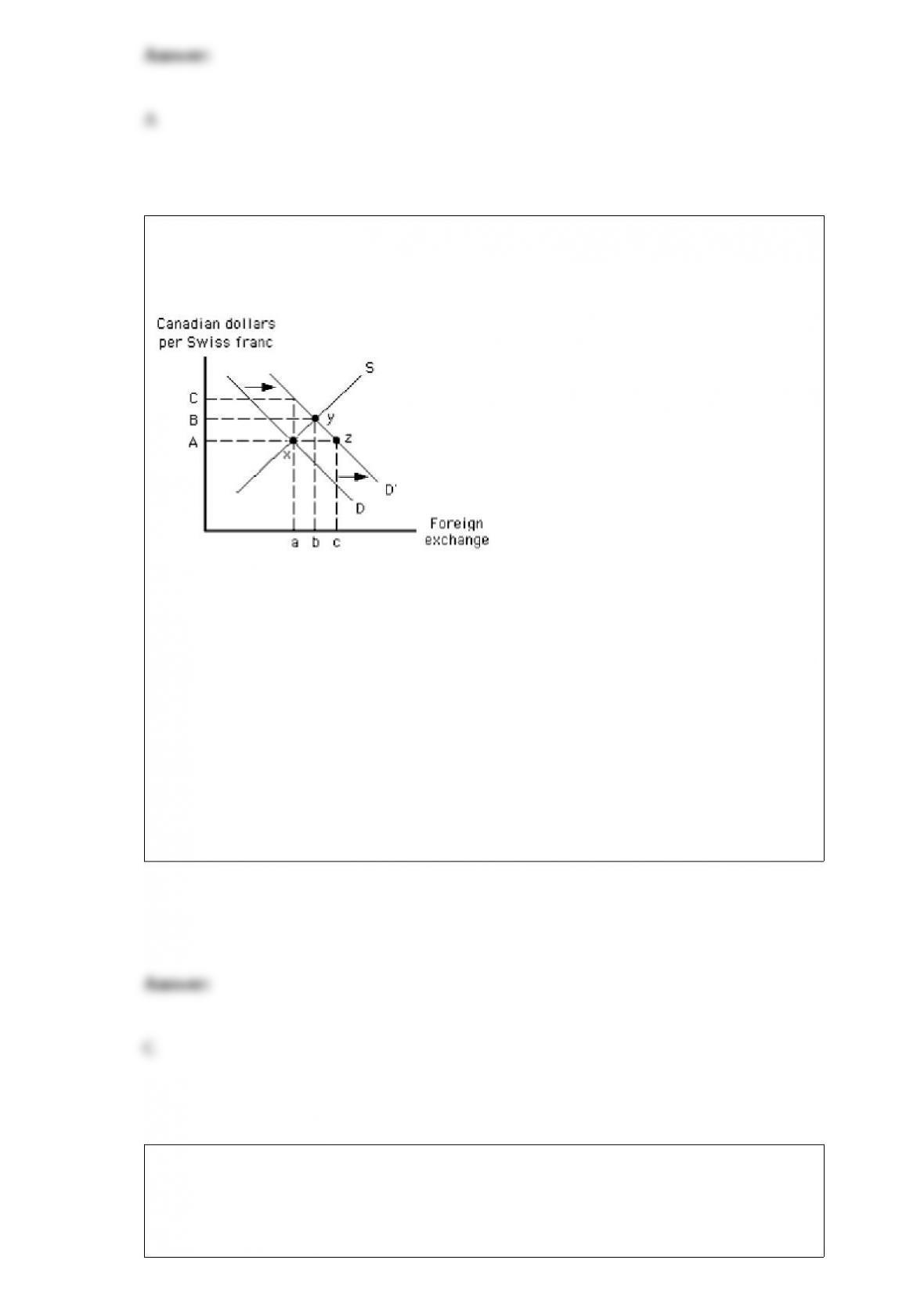
Exhibit 20-4
If Switzerland were trying to peg its exchange rate at A, in response to the shift in
demand from D to D’ shown in Exhibit 20-4, it would try to
a. shift the demand curve to the right to establish equilibrium at point x
b. shift the supply curve to the left to establish equilibrium at point x
c. shift the supply curve to the right to establish equilibrium at point z
d. support the new equilibrium at point y
e. move down along its supply curve to intersect the old demand curve at point x
The most recent data indicates households in the top fifth of the income distribution
earn as much income as the bottom four fifths combined.
a. True

b. False
When industrial unions negotiate with an entire industry, wage gains come at the cost of
a. longer working hours
b. worse working conditions
c. reduced total employment
d. worse products
e. longer hours
The marginal rate of substitution indicates
a. how much of one good a consumer is willing to give up to get one more unit of
another good while remaining equally satisfied
b. how much of a good a consumer can receive for $1 while remaining equally satisfied
c. the tendency of a consumer to substitute lower-priced goods for a good whose price
has increased
d. the limits of utility analysis
e. the basis of consumer surplus
The price charged by a perfectly competitive firm is determined by
a. each individual firm
b. a group of firms acting together as a cartel
c. market demand and market supply
d. the firm’s total costs alone
e. the firm’s average variable cost
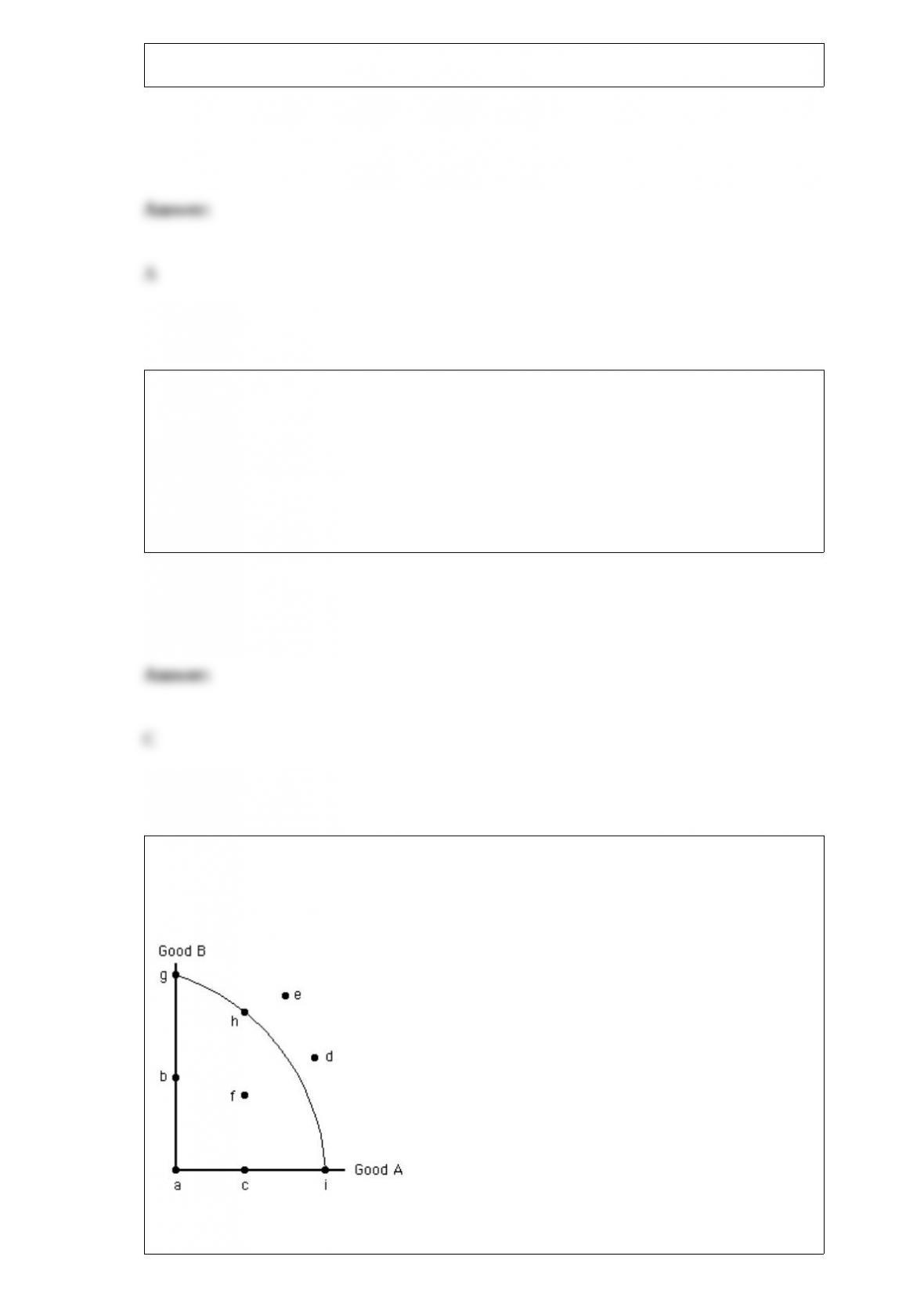
Exhibit 2-4
In Exhibit 2-4, if all the economy’s resources are used efficiently to produce good B,

then the economy is at point
a. g
b. b
c. h
d. i
e. e
The government’s court case against Microsoft is an example of
a. predatory pricing
b. antitrust enforcement
c. economic regulation
d. social regulation
e. the regulatory dilemma
Suppose Bank-in-the-Box is a monopolist in its market area. If the market wage rate of
bank tellers rises, the bank will
a. maintain price and suffer losses
b. raise price and earn greater profit
c. raise price but earn less profit
d. lower price to boost sales
e. shut down if AVC is less than price
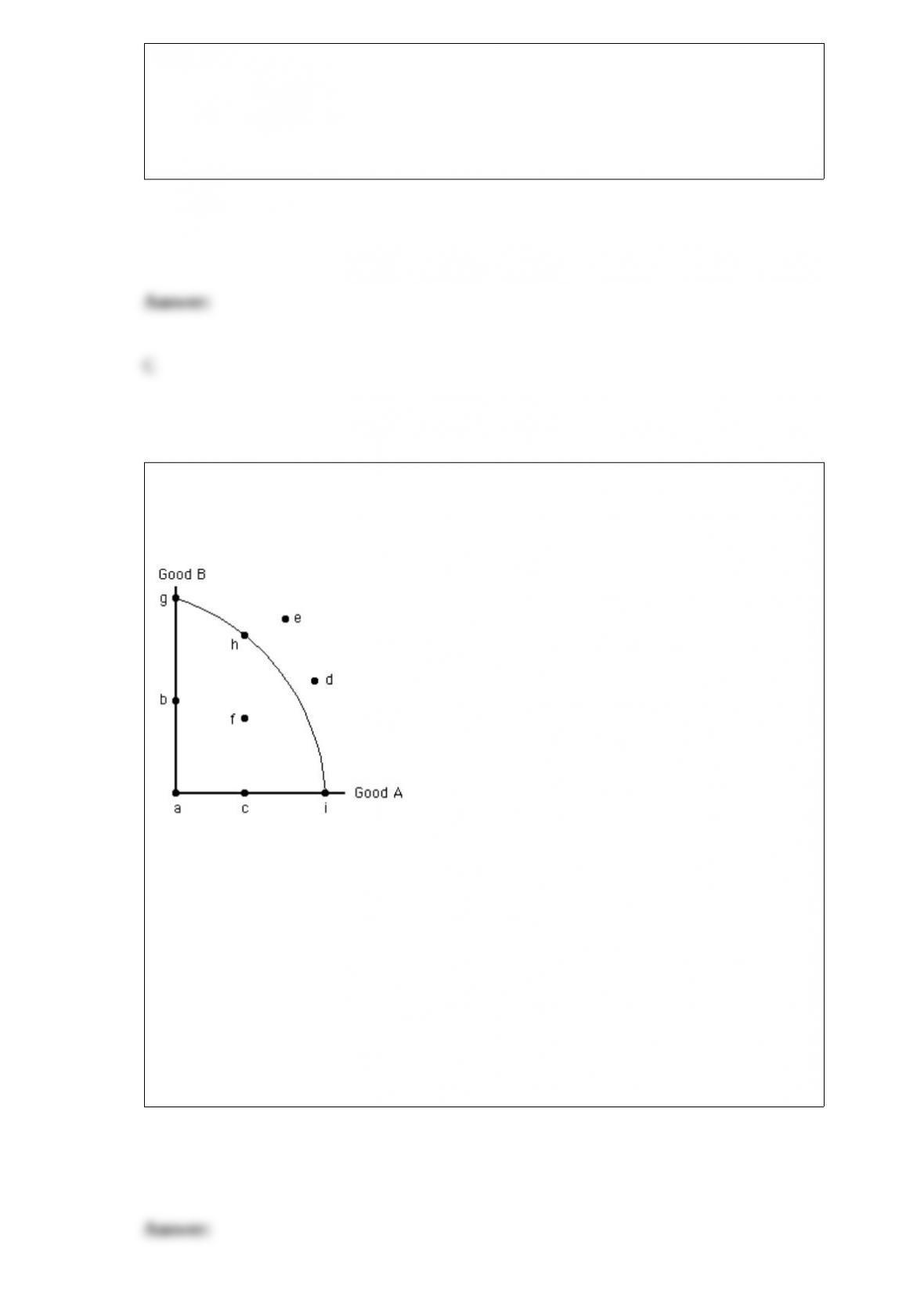
Exhibit 2-6
In moving from point f to point g in Exhibit 2-6, the
a. production of B increases without a change in the production of A
b. production of A increases without a change in the production of B
c. production of both A and B increase
d. production of both A and B decrease
e. production of B increases and production of A decreases
Which of the following is the best example of the ownership of the resource called
entrepreneurship
a. John Smith’s ownership of 10 shares of a manufacturer of farm tractors
b. Pogo O”Reilly’s ownership of 10 shares of a natural gas extraction company
c. Helen Restock’s ownership of a $10,000 savings bond
d. Abe Hawthorne’s college degree in marketing
e. Ann Stump’s creative, risk-taking personality
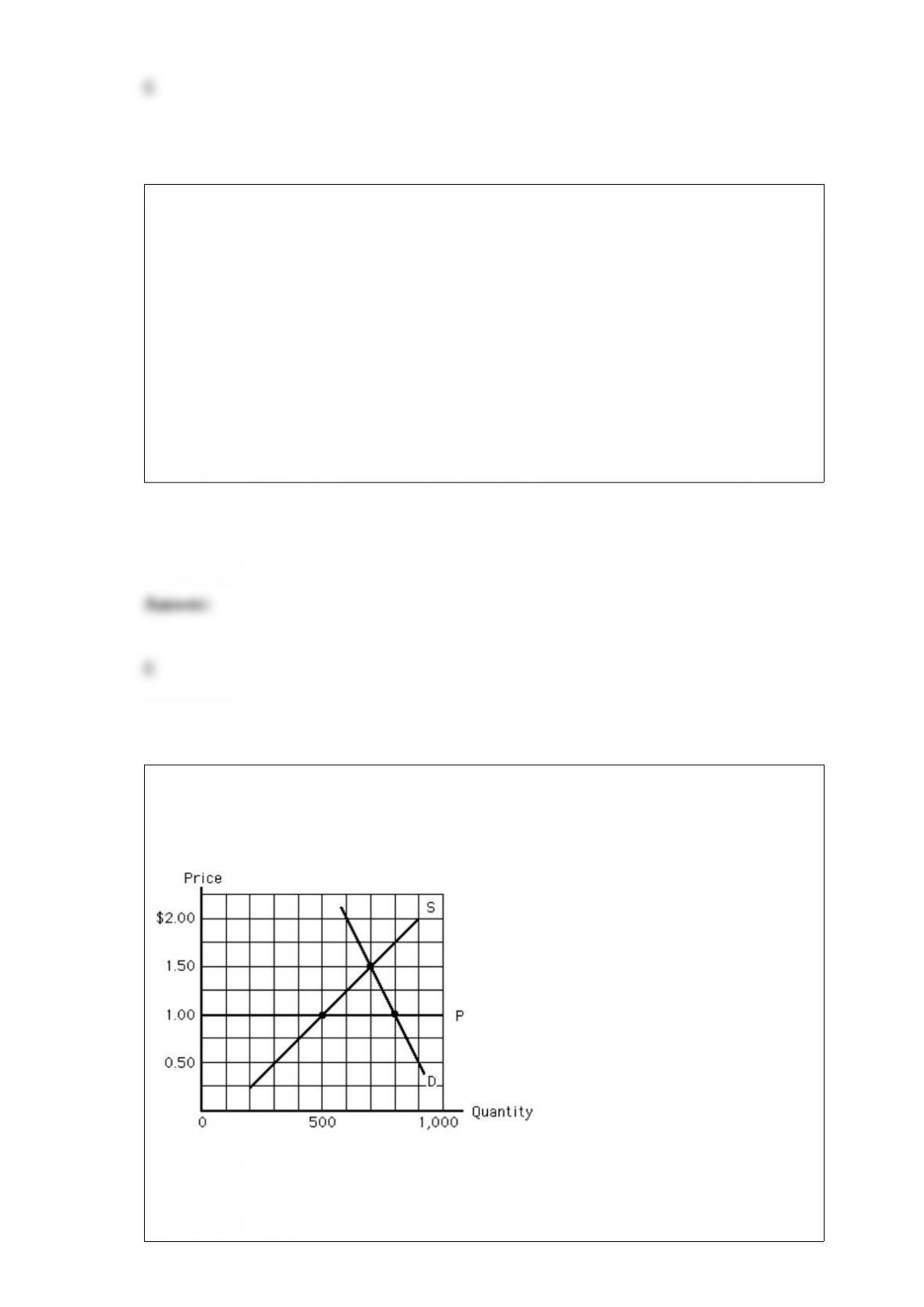
Exhibit 4-7
In Exhibit 4-7, which of the following is true at the price ceiling, P?
a. The excess quantity supplied equals 300 gallons.
b. The excess quantity demanded equals 300 gallons.
c. The excess quantity supplied equals 500 gallons.
d. The excess quantity demanded equals 800 gallons.
e. Sales will be equal to 800 gallons.
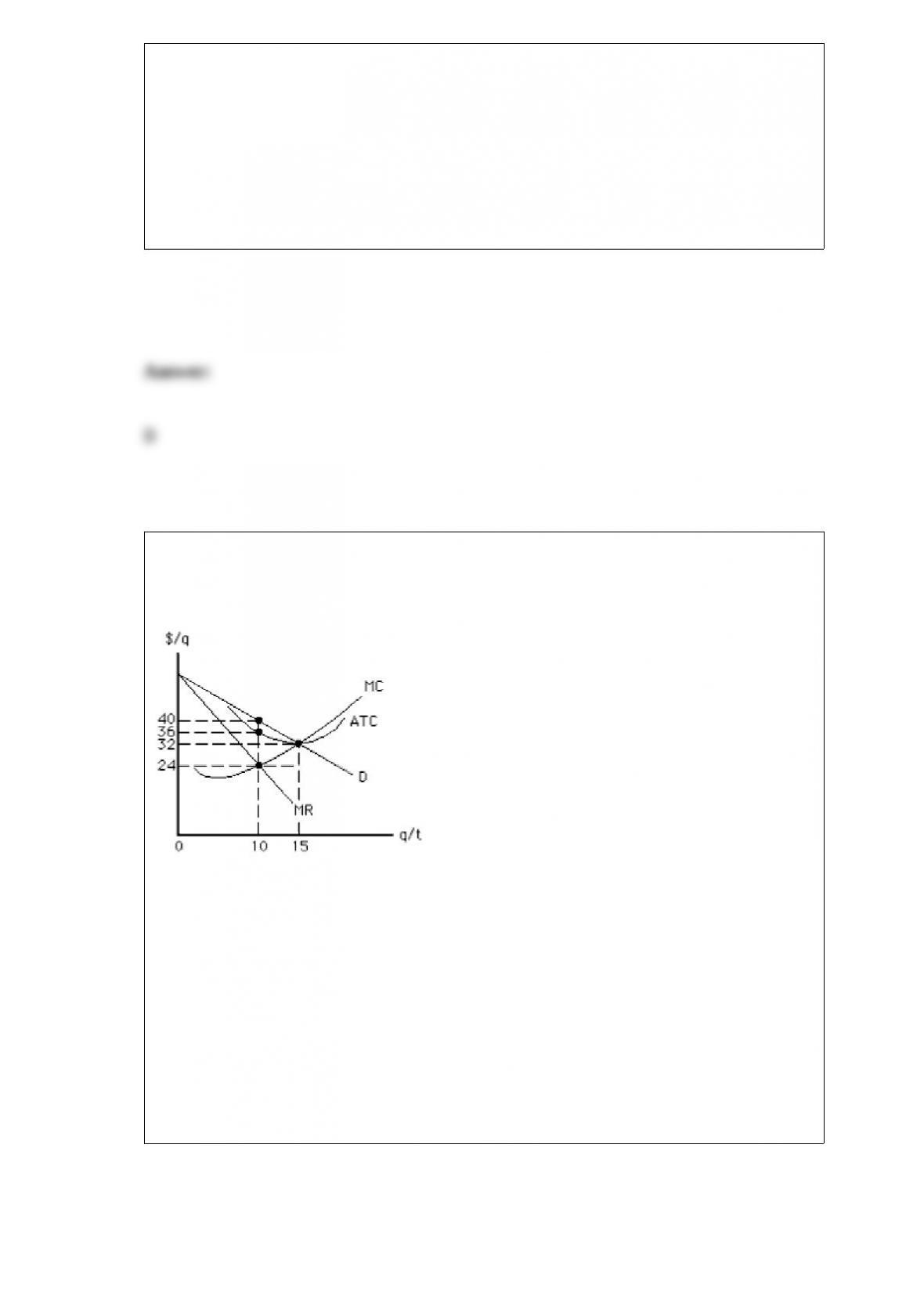
Exhibit 10-4
For the situation depicted in Exhibit 10-4, what will happen in the long-run?
a. New technology will lower average total costs and increase profits for the firm.
b. Firms will exit this market causing economic profit to increase.
c. Product differentiation will lead to an increase in profitablility.
d. New firms will enter the market driving economic profit to zero.
e. Nothing, the situation will remain the same.

Most U.S. imports are
a. manufactured goods
b. agricultural services
c. petroleum and related products
d. minerals such as bauxite and nickel
e. military goods
Which of the following is not a criticism of monopolies?
a. They restrict output.
b. They set price above the perfectly competitive level.
c. They tend to be less innovative than firms in a competitive market.
d. They exert a disproportionate amount of political influence.
e. They reduce allocative efficiency through perfect price discrimination.

If tuna in the sea are open-access resources, they will be used until the marginal value
of additional use equals
a. the marginal product of the resource
b. the marginal revenue of the resource
c. infinity
d. negative infinity
e. zero
If labor is measured along the horizontal axis, capital is measured along the vertical
axis, W equals the wage rate, and R equals the cost of capital, the slope of an isocost
line is
a. W + R
b. W – R
c. -W/R
d. -R/W
e. R – W
Suppose Ernie gives up his job as financial advisor for P.E.T.S., at which he earned
$30,000 per year, to open up a store selling spot remover to Dalmatians. He invested
$10,000 in the store, which had been in savings earning 5 percent interest. This year’s
revenues in the new business were $50,000, and explicit costs were $10,000. Calculate
Ernie’s economic profit.
a. $10,000
b. $50,000
c. $20,000
d. $40,000
e. $9,500
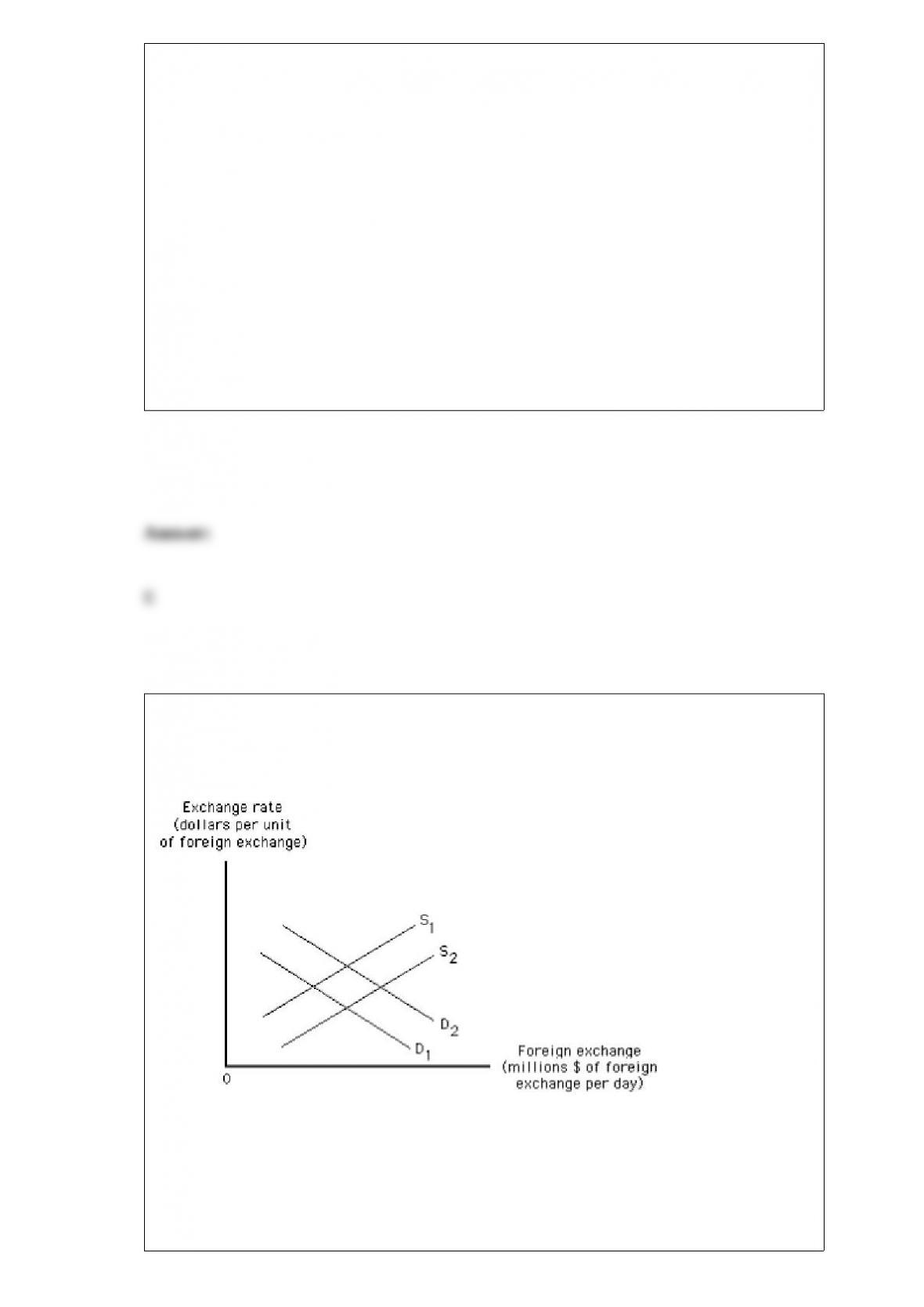
Exhibit 20-5
Suppose that British incomes rise relative to incomes in the United States. Then, in
Exhibit 20-5
a. the demand curve will shift from D1 to D2

b. the demand curve will shift from D2 to D1
c. the supply curve will shift from S1 to S2
d. the supply curve will shift from S2 to S1
e. neither the demand for nor the supply curve will shift
Speculators profit by taking risks, while the actions of arbitrageurs involve no risk.
a. True
b. False
A young chef is considering opening his own sushi bar. To do so, he would have to quit
his current job, which pays $20,000 a year, and take over a store building he owns and
currently rents for $6,000 a year. His expenses at the sushi bar would be $50,000 for
food and $2,000 for gas and electricity. What is the minimum revenue he must earn per
year in order for it to be worth his while to open his sushi bar?
a. $26,000
b. $66,000
c. $78,000

d. $52,000
e. $72,000
Which of the following could explain a decrease in the demand for labor in a particular
job?
a. additional training that increases the productivity of each unit of labor in this market
b. an increase in the amount of risk associated with this job
c. a decrease in the amount of risk associated with this job
d. an improvement in the working conditions associated with this job
e. a decrease in the productivity of each unit of labor in this market
Exhibit 13-10
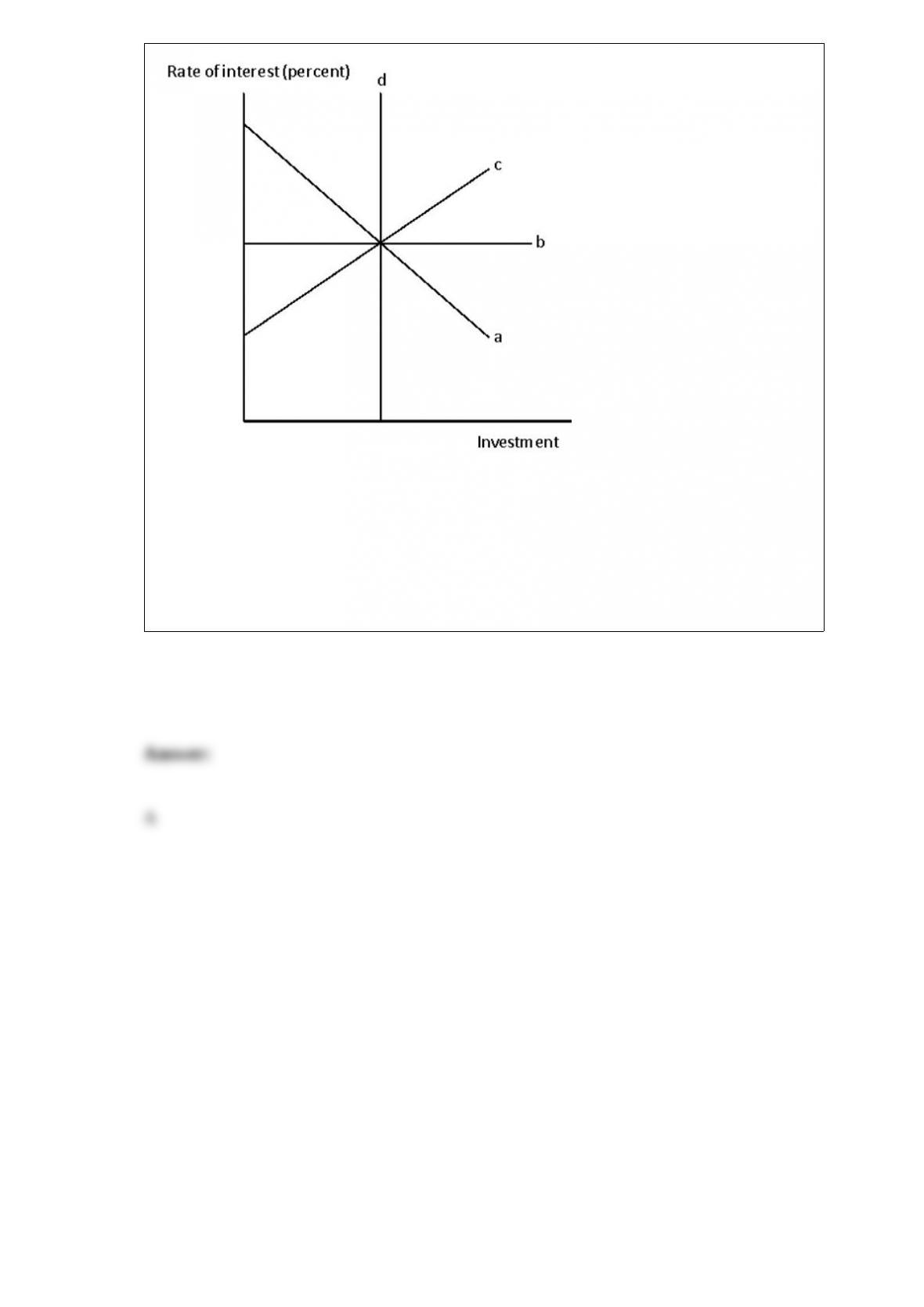
Consider Exhibit 13-10. Which of the lines represents the pattern of the expected rate of
return on investment for most firms?
a. a
b. b
c. c
d. d
e. none of the lines