1) resources are efficiently allocated when production occurs where:
a.marginal cost equals average variable cost.
b.price is equal to average revenue.
c.price is equal to marginal cost.
d.price is equal to average variable cost.
2) other things equal, the greater the degree of complementarity between potential
immigrants and native-born workers, the:
a.lower the optimal quantity of immigrants.
b.lower the marginal benefit of additional immigrants.
c.greater the marginal cost of additional immigrants.
d.greater the optimal quantity of immigrants.
3) the marginal revenue curve of a purely competitive firm:
a.lies below the firm’s demand curve.
b.increases at an increasing rate as output expands.
c.is horizontal at the market price.
d.is downsloping because price must be reduced to sell more output.
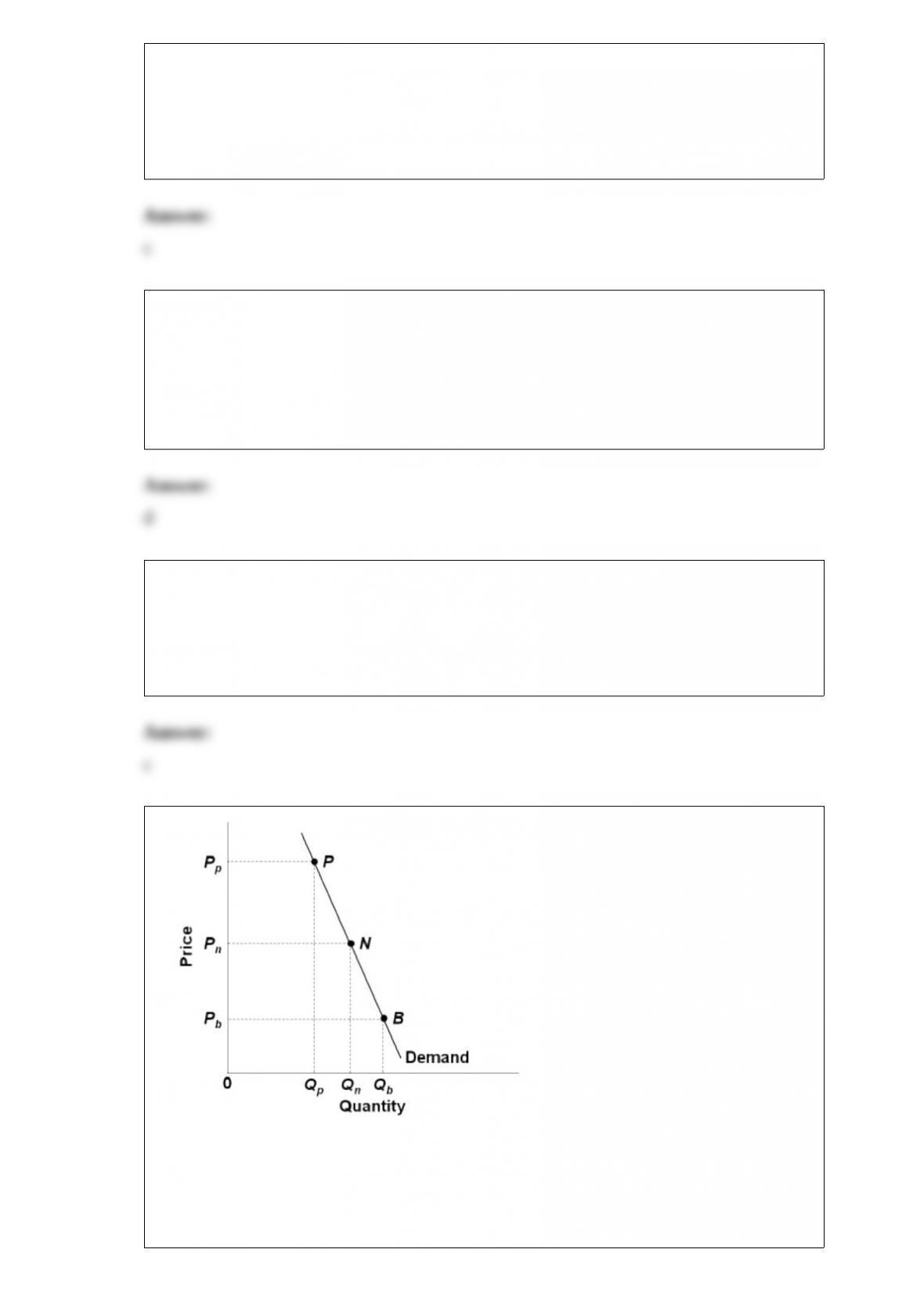
4)
Refer to the above diagram. If output changes from a poor crop, Qp, to a bumper crop,
Qb:
A.farm incomes will decrease.
B.farm incomes will increase.
C.price and quantity will both increase.
D.farm incomes may either rise or fail.
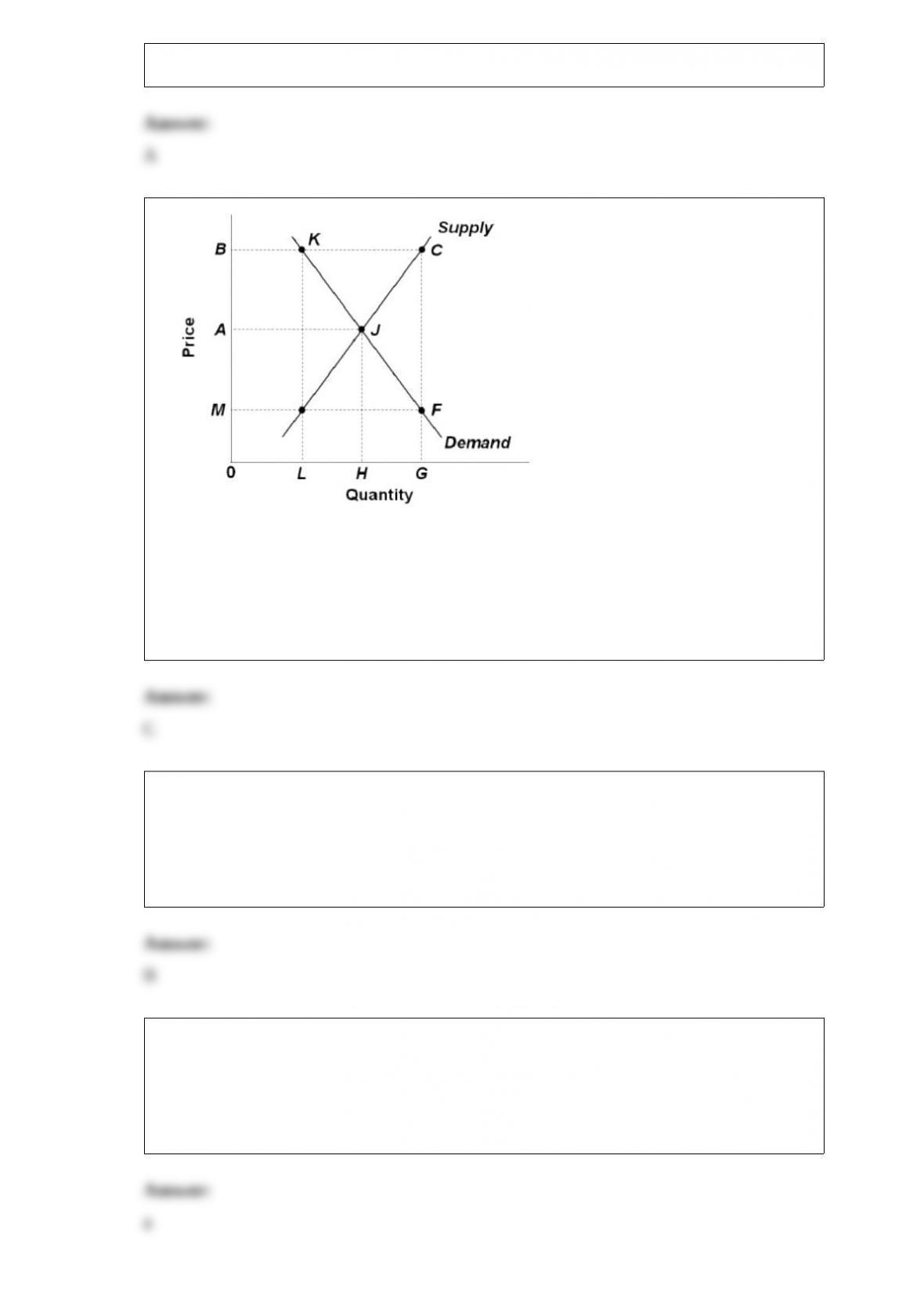
5)
Refer to the above diagram for the corn market. As a consequence of a price support of
B, consumers will:
A.increase their purchases of the product.
B.pay a lower price, M rather than A, for the product.
C.pay a higher price, B rather than A, for the product.
D.pay a higher price, A rather than M, for the product.
6) Real wages in the United States in the long run:
A.show no discernible relationship to output per worker.
B.have increased at about the same rate as increases in output per worker.
C.have increased slower than increases in output per worker.
D.have increased faster than increases in output per worker.
7) the supply curve of antique reproductions is:
a.relatively elastic.
b.relatively inelastic.
c.perfectly inelastic.
d.unit elastic.
8) The Gini ratio:
A.measures the relative extent of poverty in a nation.
B.compares the income of persons, households, or households at the 90th percentile of
the income distribution to the income at the 10th percentile.
C.is a numerical measure of the overall dispersion of income in a nation.
D.is found by dividing the entire area below and to the right of the diagonal in the
Lorenz diagram by the area between the diagonal and Lorenz curve.
9) an industry comprised of 40 firms, none of which has more than 3 percent of the total
market for a differentiated product is an example of:
a.monopolistic competition.
b.oligopoly.
c.pure monopoly.
d.pure competition.
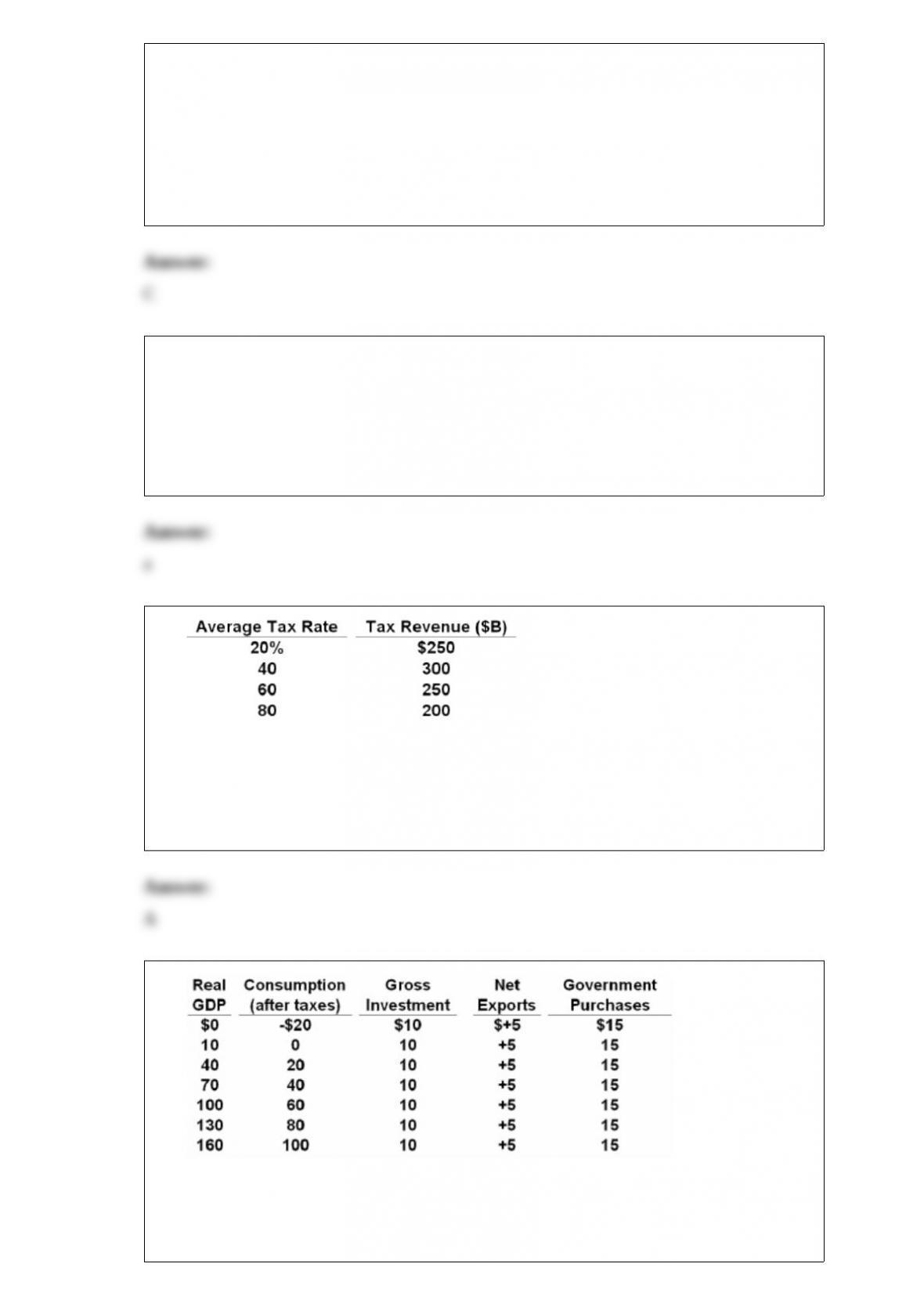
10)
If graphed, the relationship shown above would depict this economy’s:
A.Laffer Curve.
B.Lorenz Curve.
C.Tax Freedom Curve.
D.Phillips Curve.
11)
Refer to the above table. The after-tax MPC in the economy shown is:
A..5.
B..67.
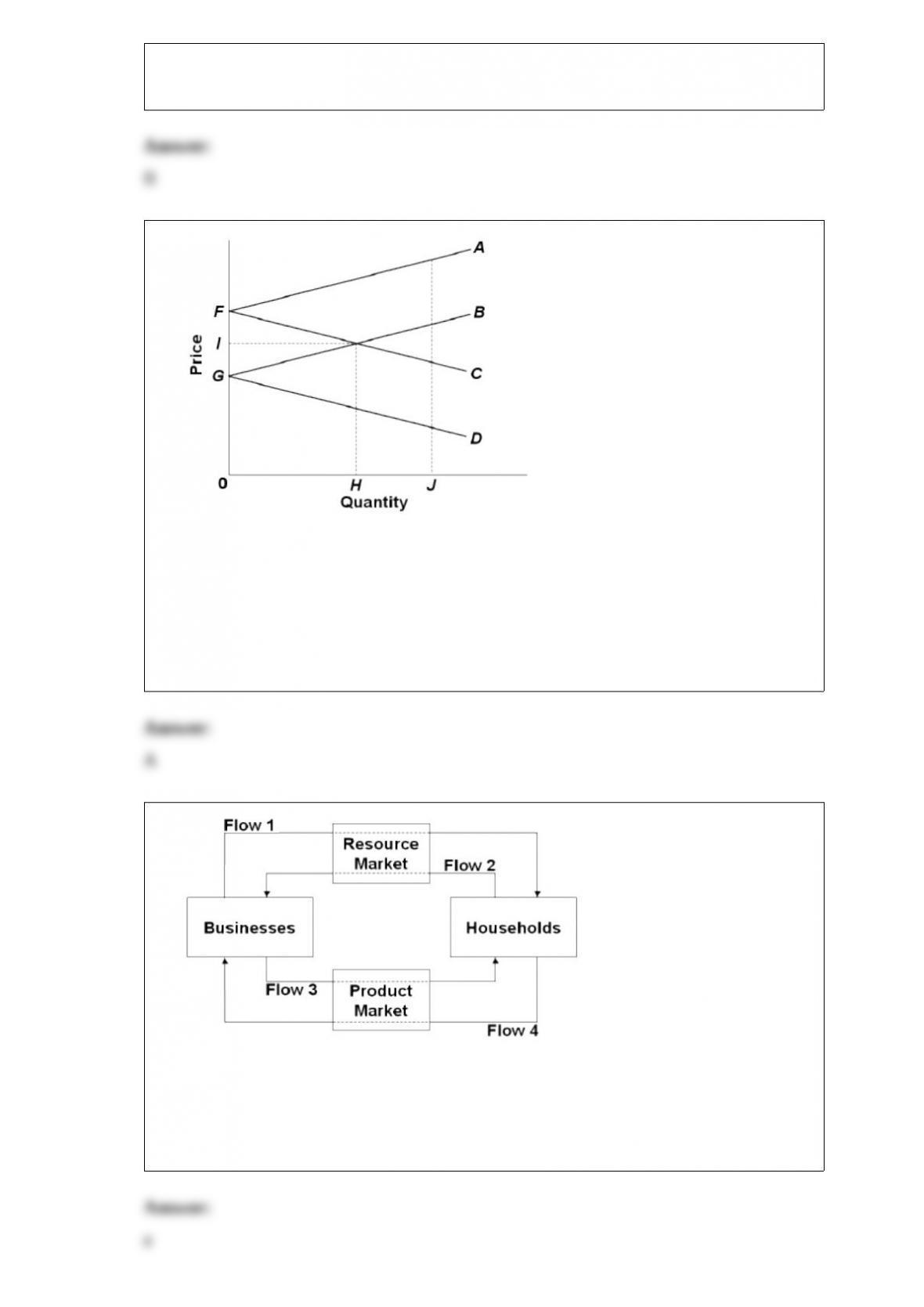
C..75.
D..8.
12)
Refer to the above diagram pertaining to two nations and a specific product. The
equilibrium level of exports and imports occurs at:
A.H, where GB and FC intersect
B.J, where the vertical distance between A and B just equals the vertical distance
between C and D
C.world price level F
D.world price level G
13)
refer to the above diagram. flow (1) represents:
a.wage, rent, interest, and profit income.
b.land, labor, capital, and entrepreneurial ability.
c.goods and services.
d.consumer expenditures.
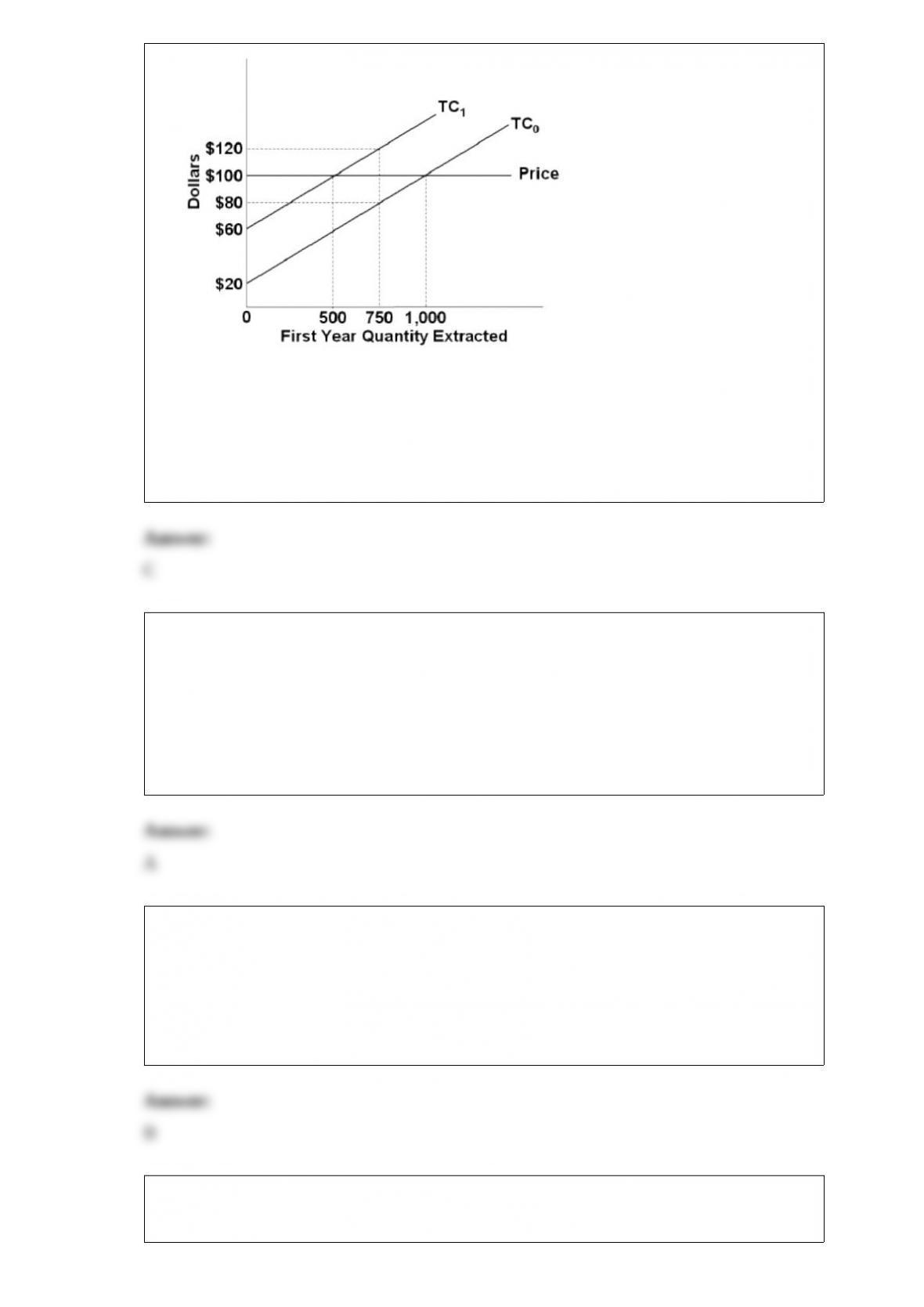
14)
Refer to the diagram above, assuming that the firm represented is operating on curve
TC0. How much will the firm extract this year?
A.500.
B.750.
C.1,000.
D.It cannot be determined with the information given.
15) Suppose in some economy there are 100 million workers; 2 million of those
workers work in mining, and 1 million of the miners belong to unions. The rate of
unionization in mining is:
A.50 percent.
B.2 percent.
C.1 percent.
D.20 percent.
16) A market in which the entire demand for a good or service can be satisfied at the
least cost by a single firm is a:
A.horizontal market.
B.natural monopoly.
C.contestable market.
D.perfect market.
17) the h1-b provision of immigration law:
a.allows 65,000 high-skilled workers in specialty occupations to enter and work in the

united states for six years.
b.raised u.s. annual immigration quotas from 500,000 to 700,000.
c.established a lottery for the admission of diversity immigrants into the united states.
d.provided amnesty to over one million illegal immigrants in 1989-1991, allowing them
to become legal citizens of the united states.
18) which of the following institutional arrangements is most likely to promote growth?
a.patents and copyrights that expire quickly and are loosely enforced.
b.strong government control over resource allocation decisions.
c.unrestricted trade between nations.
d.all of these.
19) Which of the following statements is correct?
A.Built-in stability only partially offsets fluctuations in economic activity.
B.Built-in stability works in halting inflation, but it cannot alleviate unemployment.
C.Built-in stability can be relied on to eliminate completely any fluctuation in economic
activity.
D.Built-in stability has eliminated the need for discretionary fiscal policy.