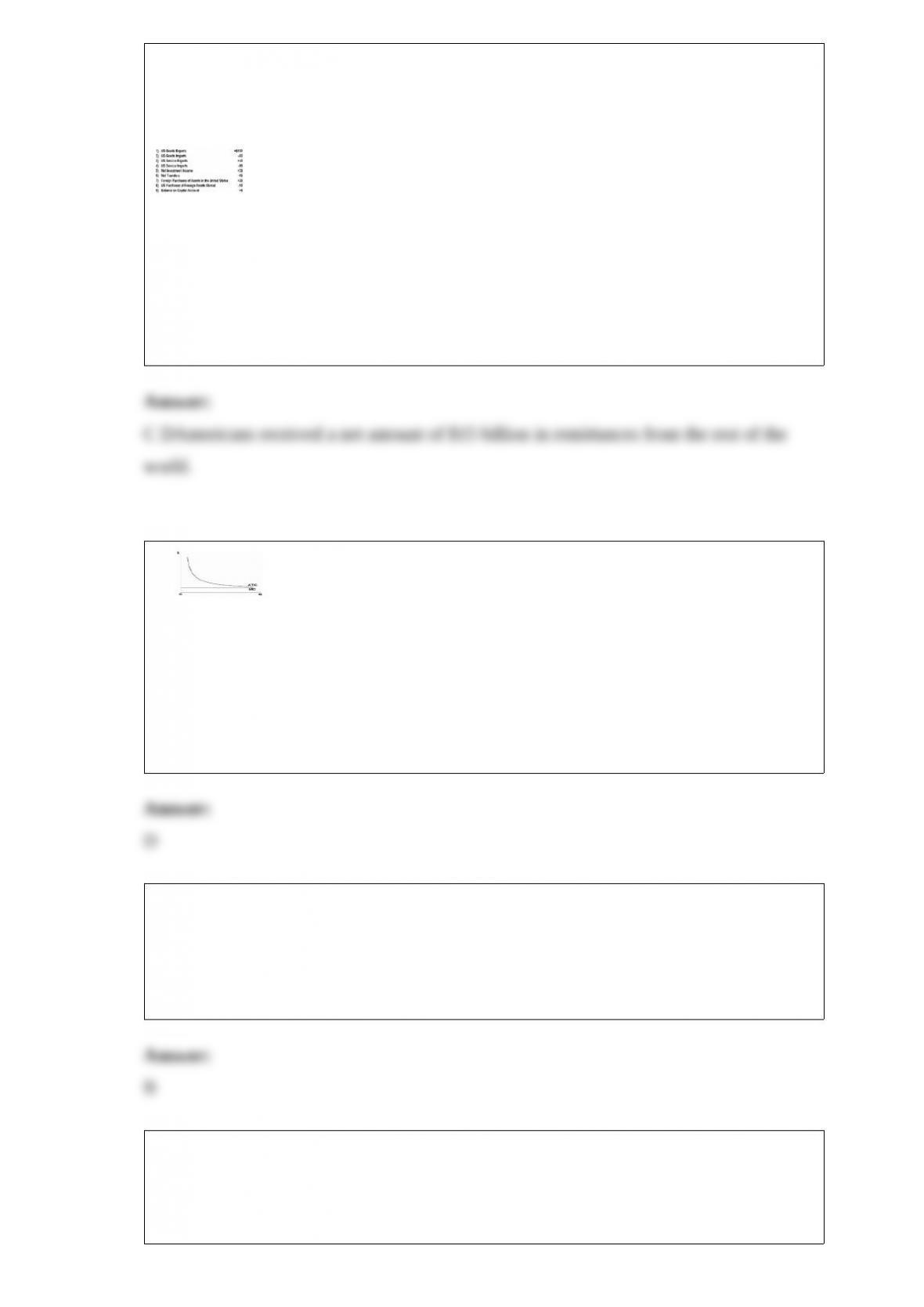
1) The following table contains hypothetical data for the 2012 U.S. balance of
payments. Answer the question on the basis of this information. All figures are in
billions of dollars.
Refer to the given data. Item (6) indicates that:
A.the United States used $15 billion of its international monetary reserves to balance its
international payments.
B.the United States provided $15 billion of foreign aid to developing nations.
C.Americans provided a net amount of $15 billion in remittances to the rest of the
world.
2)
A firm that has the long-run cost curves shown in the graph above would be able to do
or have the following, except:
A.Exploit economies of scale
B.Have an entry barrier protecting it from new entrants into the market
C.Serve an increasing share of the market at lower and lower unit costs
D.Attain lower unit costs by reducing its output level
3) The output of MP3 players should be:
A.reduced if marginal benefits exceed marginal costs.
B.reduced if marginal costs exceed marginal benefits.
C.increased if marginal costs exceed marginal benefits.
D.reduced to zero if their unit costs exceed the unit costs of alternative products.
4) Assume that a consumer spends a given budget on only two goods, and that the
prices of the two goods are constant. The budget line in this case would:
A.Definitely be a straight downward-sloping line
B.Possibly be a straight upward-sloping line
C.Be a curved graph bowed outwards
D.Be a curved bell-shaped graph
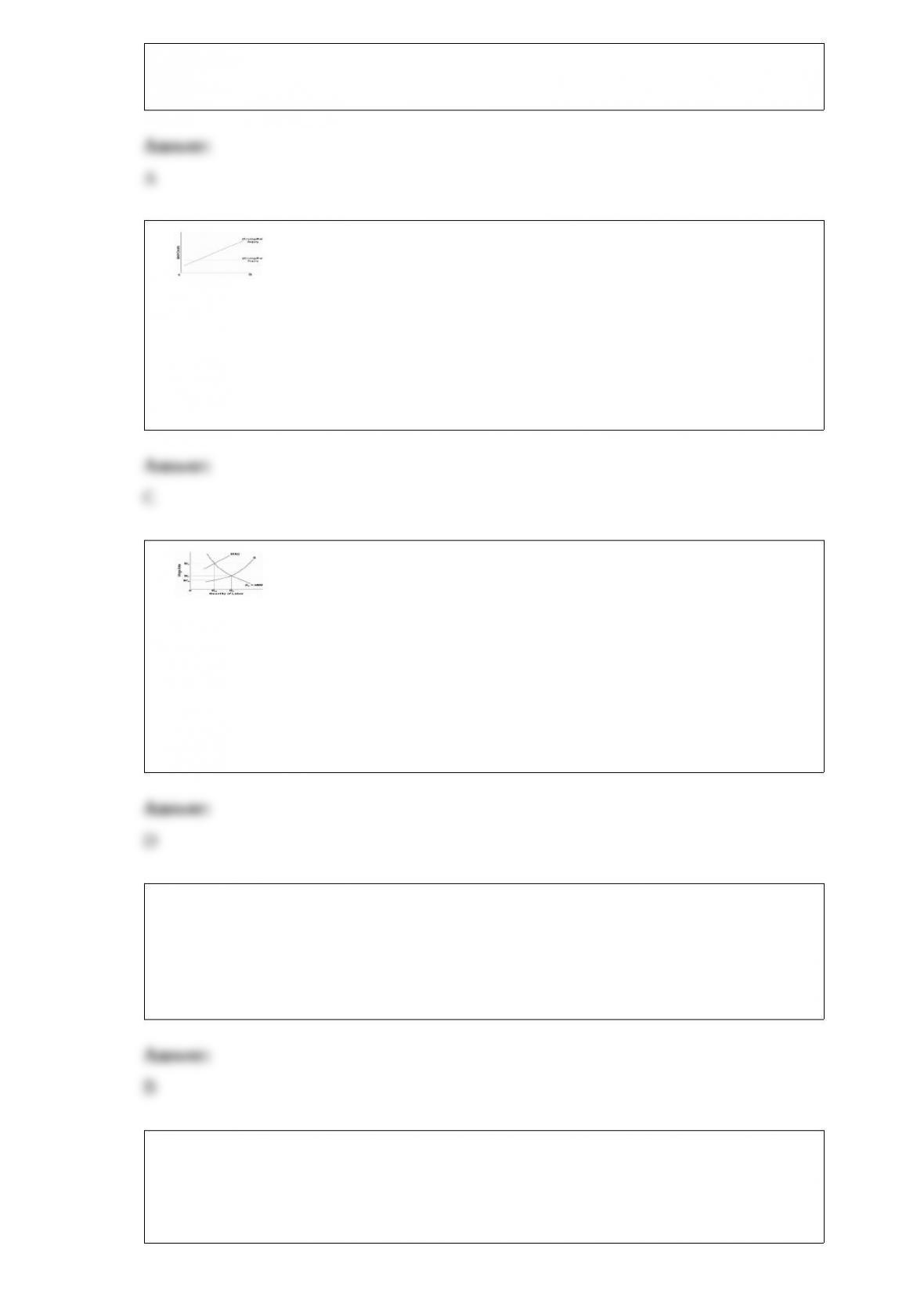
5)
Refer to the diagram. Line (1) reflects the long-run supply curve for:
A.a constant-cost industry.
B.a decreasing-cost industry.
C.an increasing-cost industry.
D.a technologically progressive industry.
6)
Refer to the above graph. If a monopsonist bargains with an inclusive union, as shown,
the wage rate will be:
A.Wc
B.Wu
C.Wm
D.Indeterminate in the graph
7) Which of the following is a characteristic of pure monopoly?
A.Close substitute products.
B.Barriers to entry.
C.The absence of market power.
D.”Price taking.”
8) Ticket scalping is likely to:
A.produce a less interested audience.
B.reduce the well-being of ticket sellers.
C.reduce the well-being of ticket buyers.
D.produce a more interested audience.
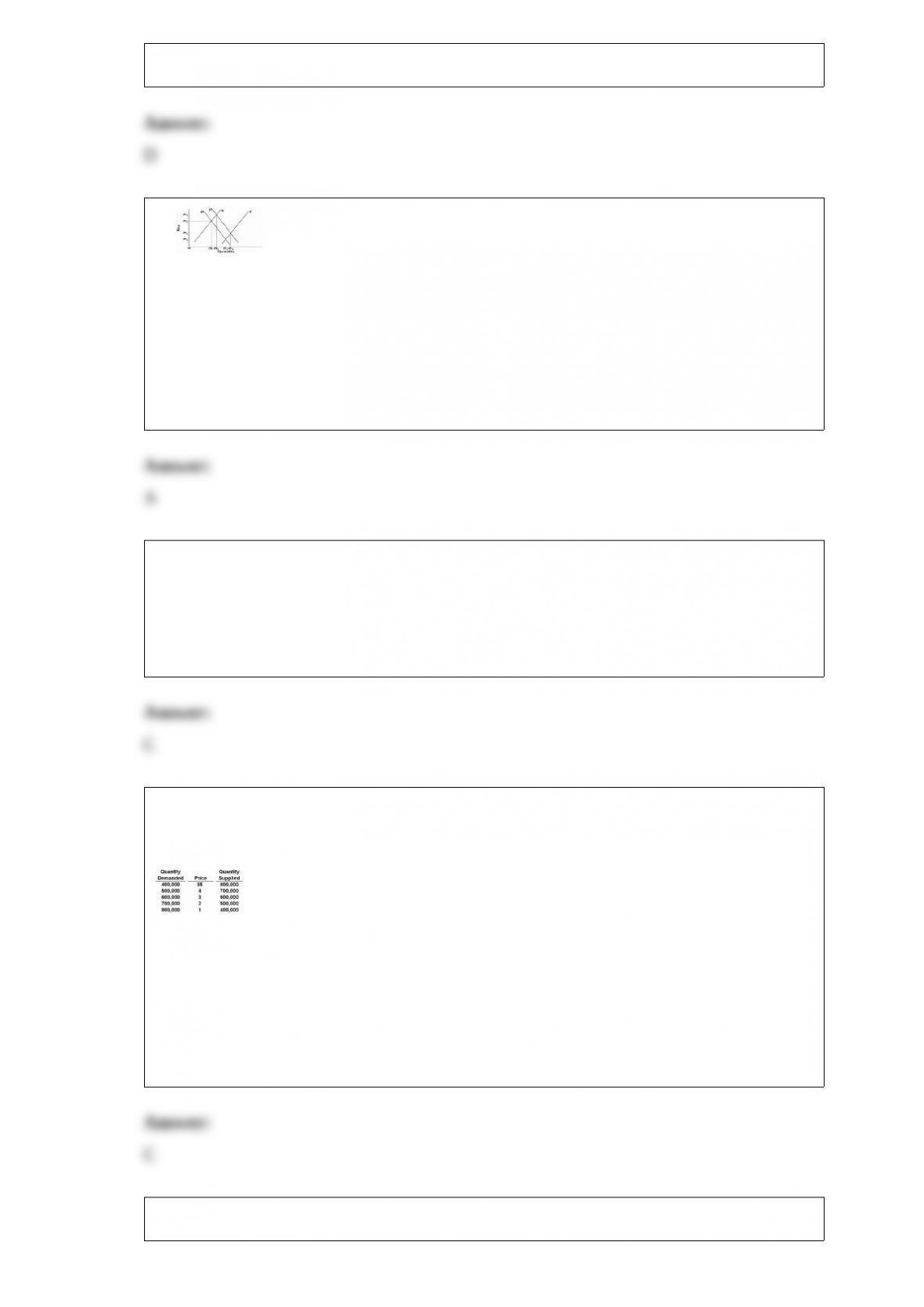
9)
The problem faced by farms in the long run as portrayed in the diagram would involve
price and quantity changes from:
A.P2 to P3 and Q1 to Q4.
B.P1 to P4 and Q1 to Q4.
C.P2 to P1 and Q1 to Q2.
D.P4 to P1 and Q4 to Q1.
10) If the demand for an agricultural product is inelastic, a bumper crop will:
A.raise price and decrease total revenues.
B.raise price and increase total revenues.
C.lower price and decrease total revenues.
D.lower price and increase total revenues.
11) The following table applies to a purely competitive industry composed of 100
identical firms.
Refer to the table. At the equilibrium price, each of the 100 firms in this industry will
produce:
A.600,000 units of output.
B.60,000 units of output.
C.6,000 units of output.
D.600 units of output.
12) The slope of a line parallel to the vertical axis is:

A.zero.
B.one.
C.infinite.
D.one-half.