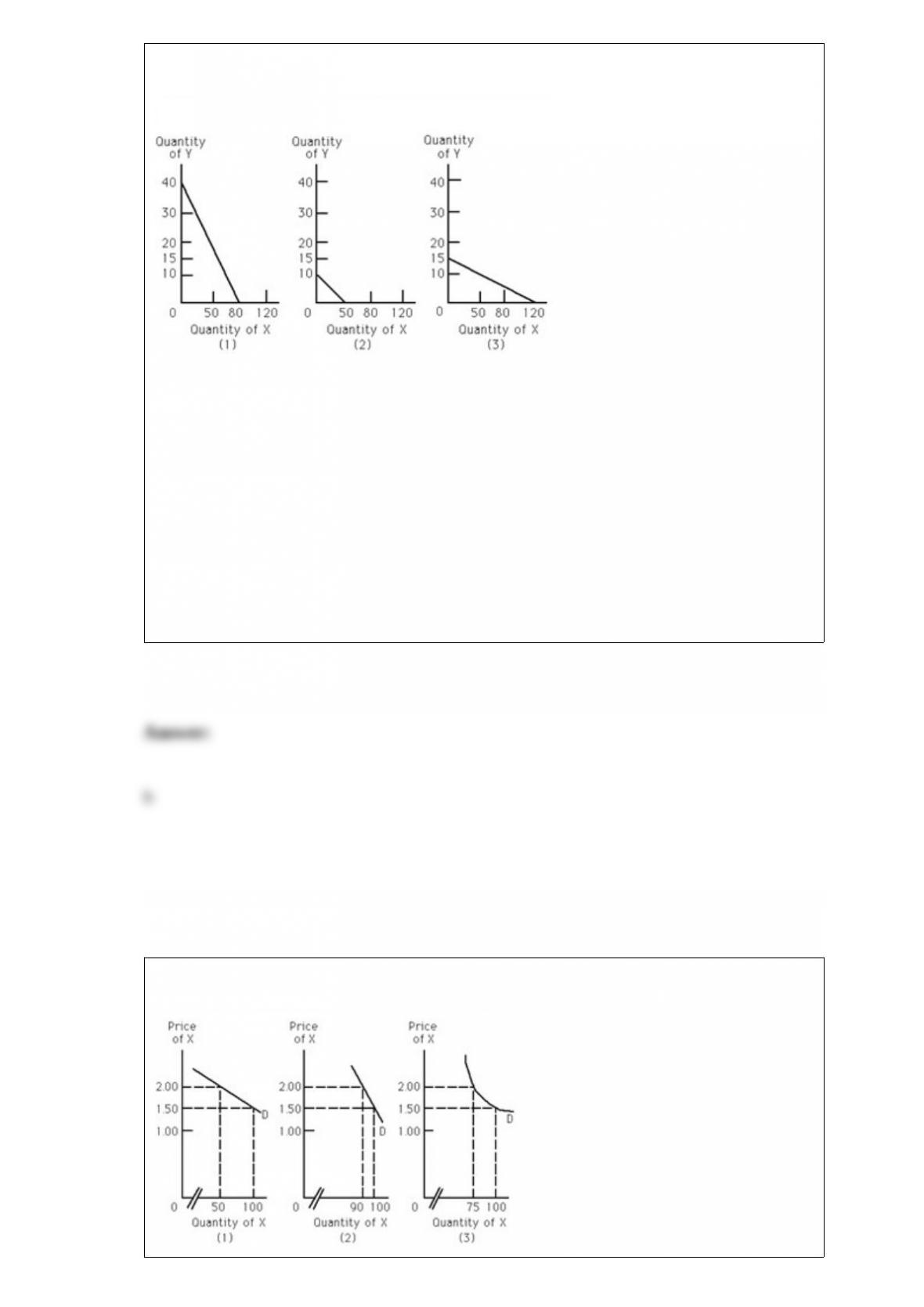
Exhibit 21-7
For graph (1), if the price of X is $20, the price of Y is
a. $10.
b. $40.
c. $80.
d. $100.
e. $160.
Exhibit 20-5

For graph (1), what is the price elasticity of demand going between $2.00 and $1.50?
a. 0.02
b. 0.43
c. 2.33
d. 42.8
A person buys a newly issued bond that matures in 10 years with a face value of
$10,000 and a coupon rate of 4%. How much money will the bondholder receive in the
tenth year?
a. $10,040.
b. $10,400.
c. $10,000.
d. $40.
e. $400.
Exhibit 39-4
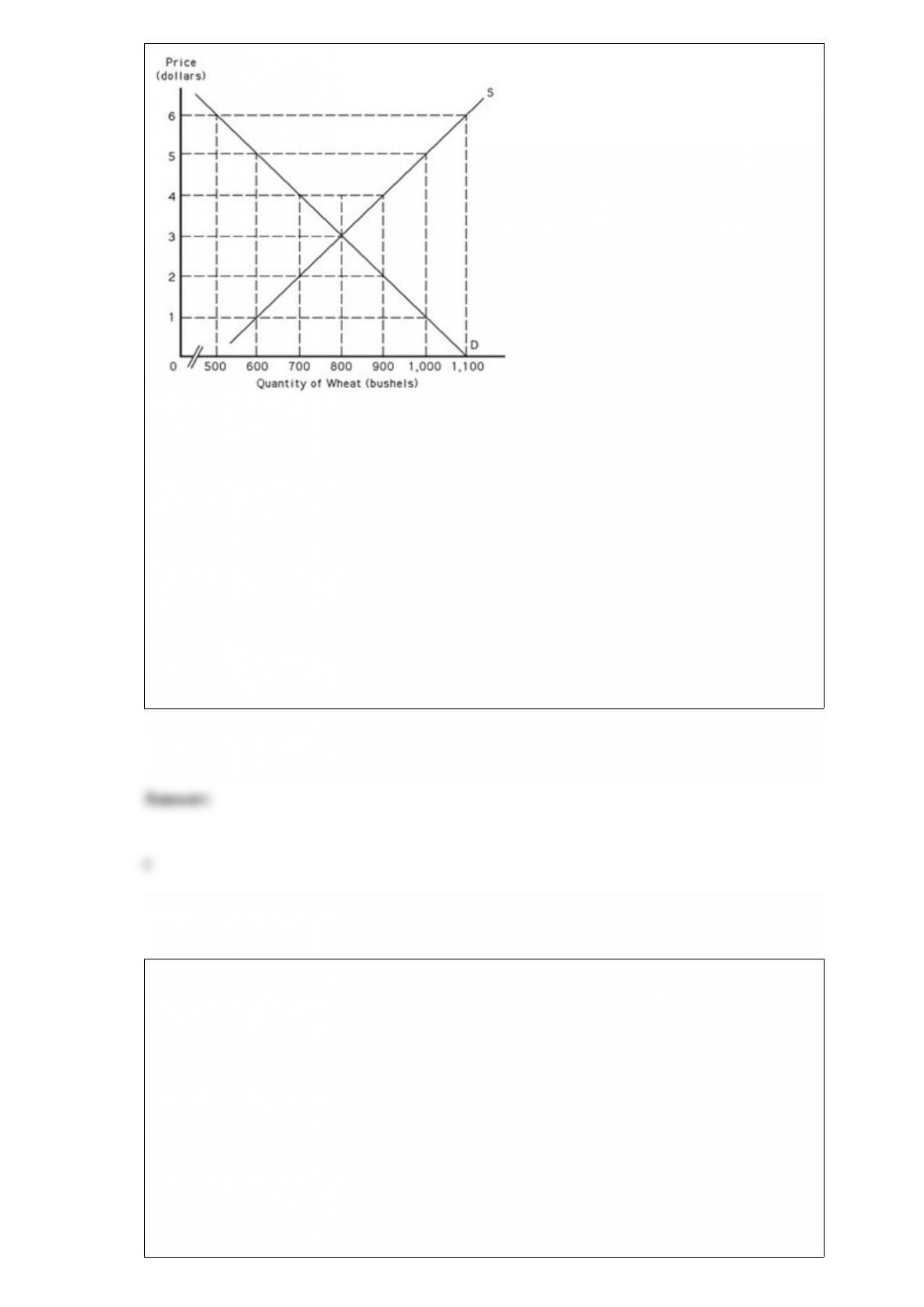
At the competitive equilibrium price and quantity, the total revenue of wheat farmers
will be
a. $1,400.
b. $1,800.
c. $2,400.
d. $2,800.
e. $5,000.
Which of the following statements is true?
a. Concentration ratios take into account competition from substitute goods.
b. The four-firm concentration ratio is likely to be larger than the eight-firm
concentration ratio.
c. There are assumed to be insignificant barriers to entry in the theory of oligopoly.
d. A designer label on a pair of jeans is a way of differentiating one seller’s jeans from
another seller’s jeans.

e. all the above
Refer to Exhibit 31-5.If a positive externality exists then the socially optimal output is
a. Q1.
b. Q2.
c. Q1 – Q2.
d. Q2 – Q1.
Productive inefficiency implies that
a. it is possible to obtain gains in one area without losses in another.
b. it is impossible to obtain gains in one area without losses in another.
c. there are too many resources.
d. there are too few resources.
e. none of the above

“Screening” is the process used by
a. employers to increase the probability of choosing good employees based on certain
criteria.
b. tax evaluators to make sure that business firms pay the amount of taxes they owe.
c. employees to try to get their wages up.
d. employers to spy on their competitors.
e. none of the above
If for a firm MRP > MFC, then the firm
a. is maximizing profits and should continue producing its current output.
b. is minimizing factor costs and therefore is maximizing profits.
c. should produce more output by increasing the quantity of factors employed.
d. should produce less output by decreasing the quantity of factors employed.
Exhibit 20-3
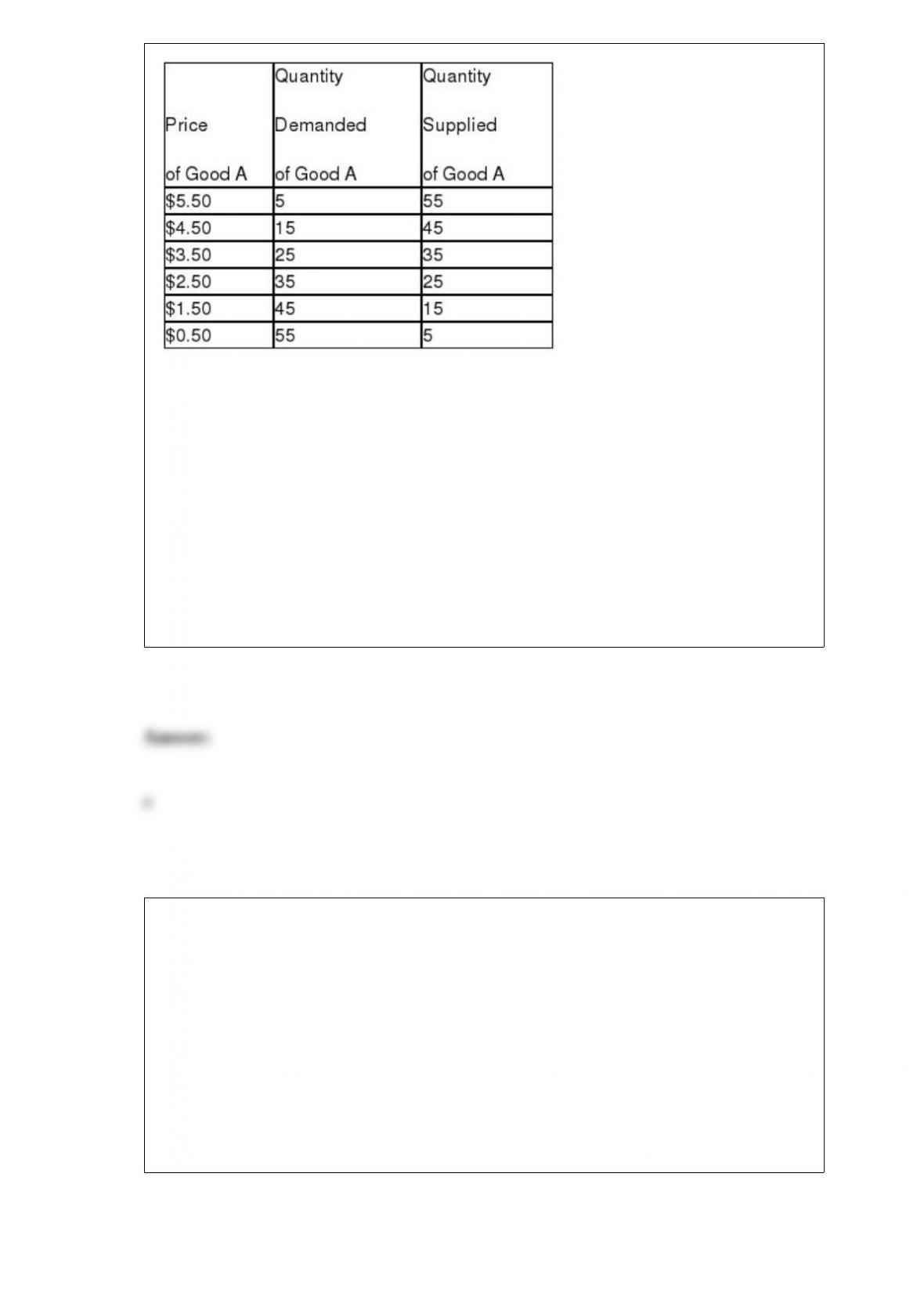
When price decreases from $5.50 to $4.50, the price elasticity of demand is
a. 0.2.
b. 0.5.
c. 1.0.
d. 2.0.
e. 5.0.
Asymmetric information exists when
a. both parties to an exchange have all relevant facts about that exchange.
b. a good that is either nonrivalrous or nonexcludable is being sold on a market.
c. the two parties to an exchange differ in what they know about the good being
exchanged.
d. neither party to an exchange is knowledgeable about the quality of the good being
exchanged.
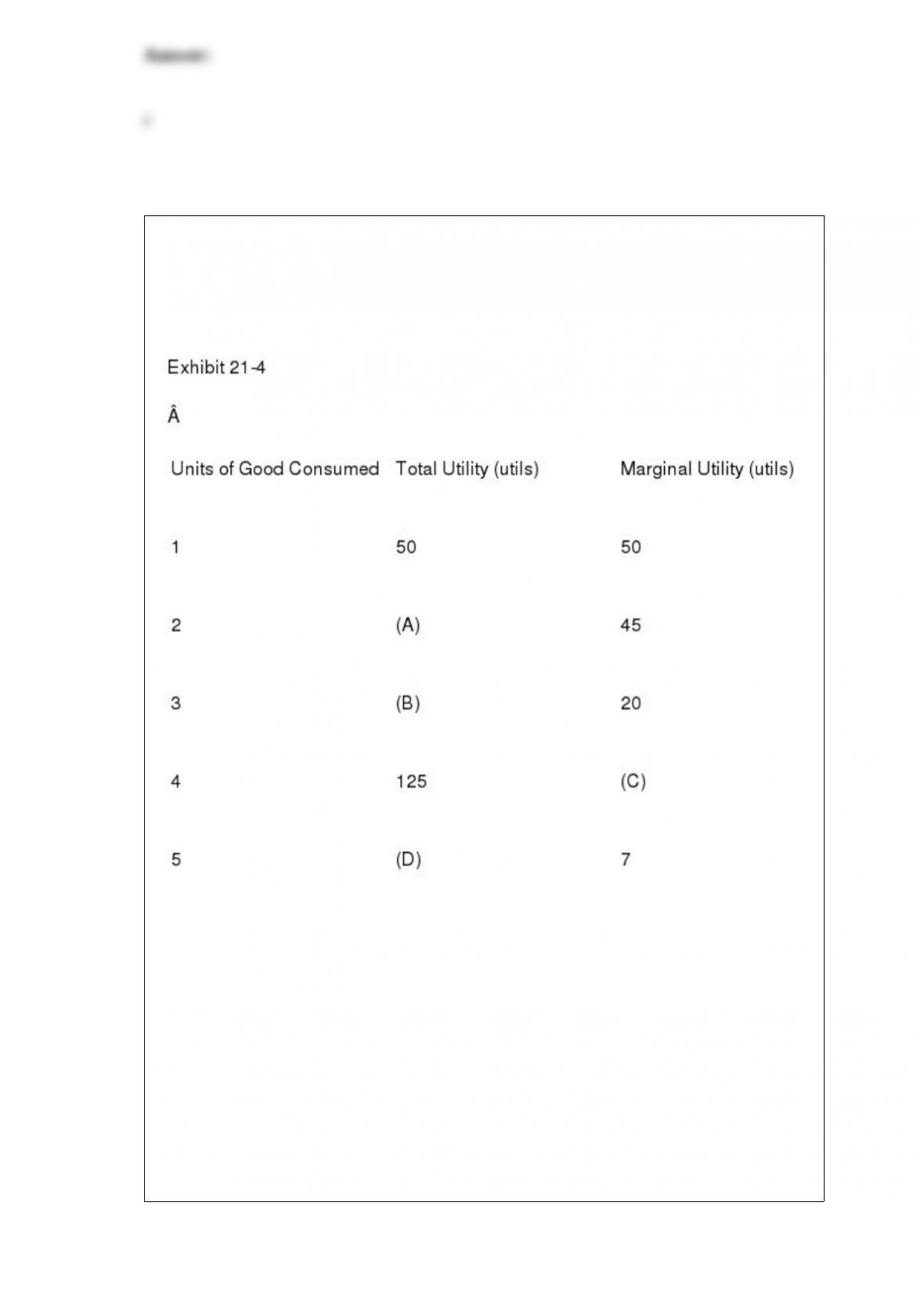
What value goes in blank (B)?
a. 115
b. 150
c. 45
d. 100
e. There is not enough information to answer this question.

Some pollution may be preferable to zero pollution because
a. attempting to decrease the level of pollution to zero may cause significant losses in
society’s welfare.
b. we really do not have that much pollution.
c. the nation’s citizens are against government’s involvement in solving the pollution
problem.
d. no form of regulation that has been shown to be effective at solving the pollution
problem.
Which of these goods may be considered rivalrous in consumption and nonexcludable?
a. wilderness areas
b. national defense
c. broadcast television reception
d. fire insurance
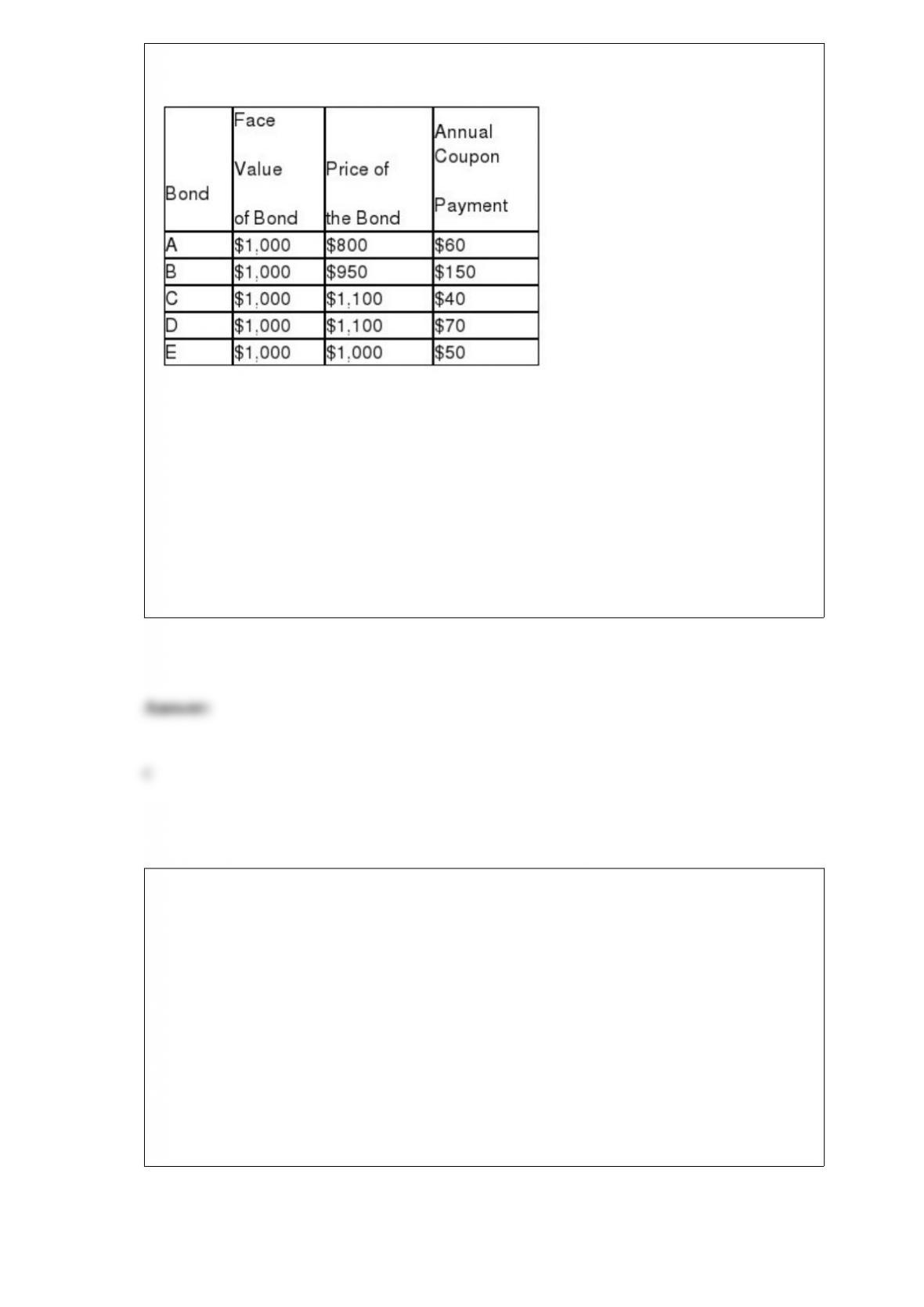
Exhibit 38-1
The yield on bond D is approximately
a. 11 percent.
b. 3 percent.
c. 6.4 percent.
d. 0.064 percent
The act of selling goods abroad at a price below their cost and below the price charged
in the domestic market is called
a. dumping.
b. slumping.
c. export manipulation.
d. constraining.
e. none of the above

On an aggregate level, free trade produces a net __________ and restricted trade
produces a net __________.
a. loss; loss also
b. benefit; benefit also
c. benefit; loss
d. loss; benefit
Increased productivity in the agricultural sector has __________ the output and
__________ the prices of agricultural goods.
a. increased; reduced
b. increased; increased
c. decreased; reduced
d. decreased; increased
e. had no impact on; had no impact on

Which of the following is not a realistic scenario faced by government regulators of a
natural monopoly?
a. The monopolist may have an incentive to prevent the regulators from learning the
true costs of production.
b. The monopolist may want to give the regulators information on the costs of
production but may not have it to give.
c. The regulators may not care whether the monopolist gives them the true costs of
production.
d. Any cost information that is given to the regulators may be outdated by the time the
regulators act on it.
e. All of the above are realistic.