
________ describes the relationship between consumption spending and disposable
income.
A) Household wealth
B) The liquidity trap
C) The consumption function
D) The paradox of thrift
A cash withdrawal from the banking system
A) decreases reserves.
B) decreases deposits.
C) decreases excess reserves.
D) All of the above are correct.
If a corporate bond with a face value of $2,000 pays yearly coupon payments of $50,
what is the coupon rate?
A) 2.5%
B) 4%
C) 25%
D) 40%
The United States abandoned the Bretton Woods system of exchange rates in
A) the 1920s.
B) the 1940s.
C) the 1970s.
D) the 1990s.
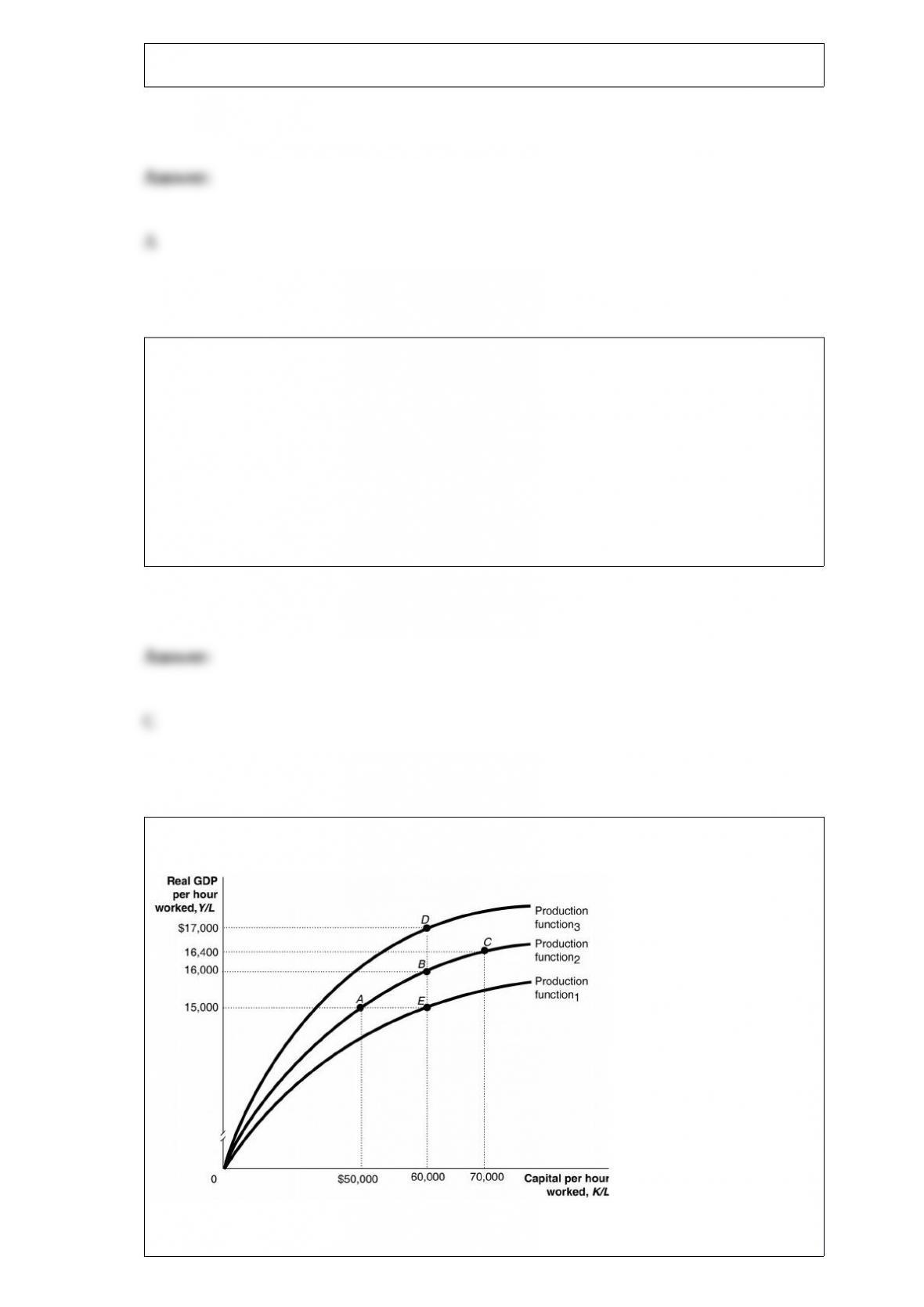
Figure 11-4
Refer to Figure 11-4. Which of the following combinations of points illustrates changes
in the Soviet Union’s economy from 1950 to 1980?

A) E to B
B) B to D
C) B to E
D) A to B to C
Which of the following would you expect to decrease both interest rates and exchange
rates? (Assume exchange rates are stated in terms of foreign currency per domestic
currency.)
A) contractionary monetary policy
B) expansionary monetary policy
C) contractionary fiscal policy
D) Both B and C will decrease both interest rates and exchange rates.
The ________ system of currency exchange was set up in 1944.
A) gold standard
B) Bretton Woods
C) managed float
D) flexible
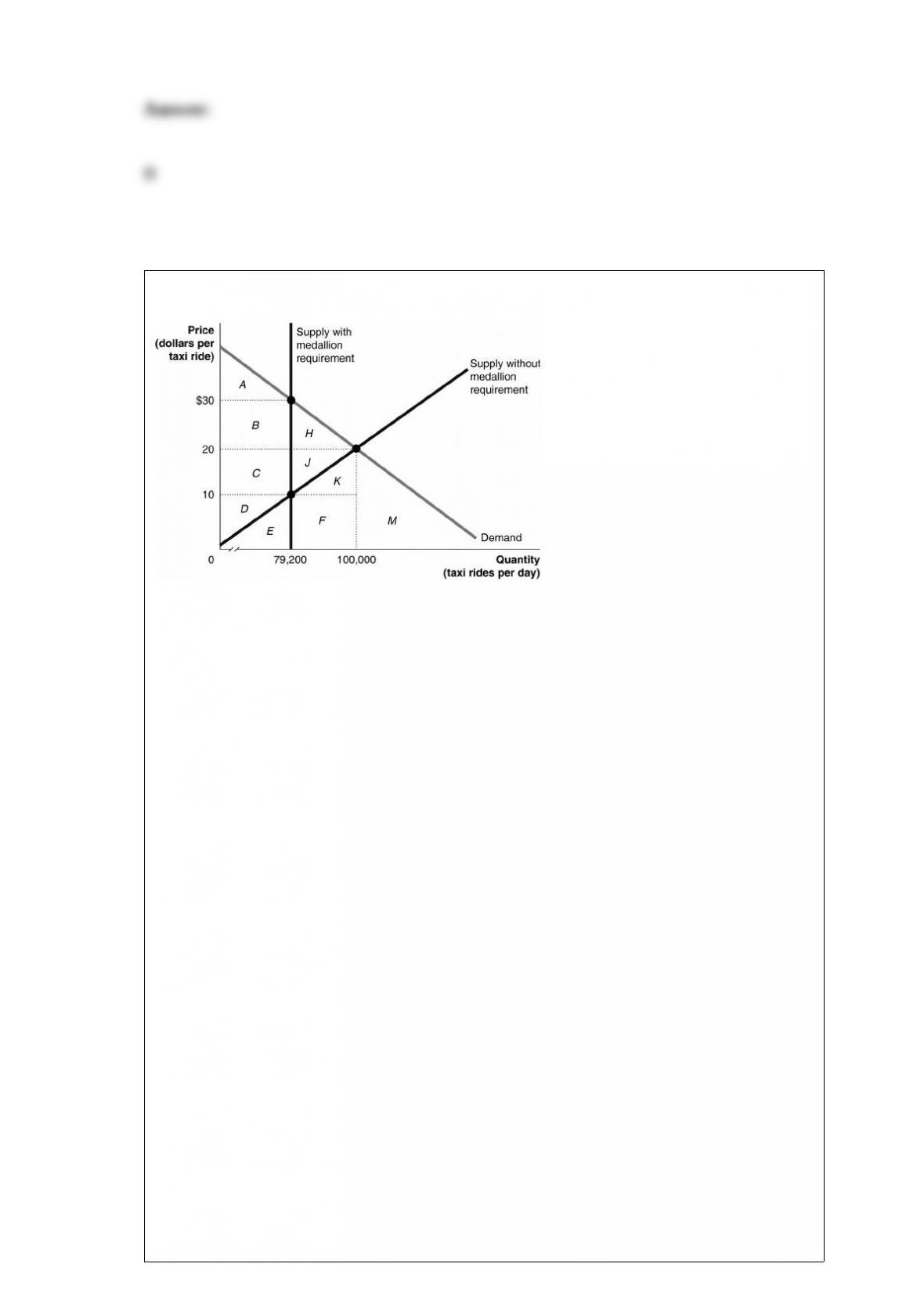
Figure 4-8
Figure 4-8 shows the market for taxi rides. The following question(s) are based on this
figure.
Refer to Figure 4-8. To legally drive a taxicab in New York City, you must have a
medallion issued by the city government. Assume that only 13,200 medallions have
been issued. Let’s also assume this puts an absolute limit on the number of taxi rides
that can be supplied in New York City on any day, because no one breaks the law by
driving a taxi without a medallion. Assume as well that each taxi provides 6 trips per
day. In that case, the quantity supplied of taxi rides is 79,200 (or 6 rides per taxi x
13,200 taxis). This is shown in the diagram with a vertical line at this quantity. Assume
that there are no government controls on the prices that drivers can charge for rides.
a. What would the equilibrium price and quantity be in this market if there were no
medallion requirement?
b. If there were no medallion requirement, indicate the area that represents consumer
surplus.
c. If there were no medallion requirement, indicate the area that represents producer
surplus.
d. If there were no medallion requirement, indicate the area that represents economic
surplus.
e. What are the price and quantity with the medallion requirement?
f. With a medallion requirement in place, what area represents consumer surplus?
g. With a medallion requirement in place, what area represents producer surplus?
h. With a medallion requirement in place, what area represents the deadweight loss?
i. Based on your answers to parts (c) and (g), are taxicab drivers better off with the
medallion requirement for taxicabs than without?
j. Are consumers better off with or without the medallion requirement for taxicabs?
Figure 13-1
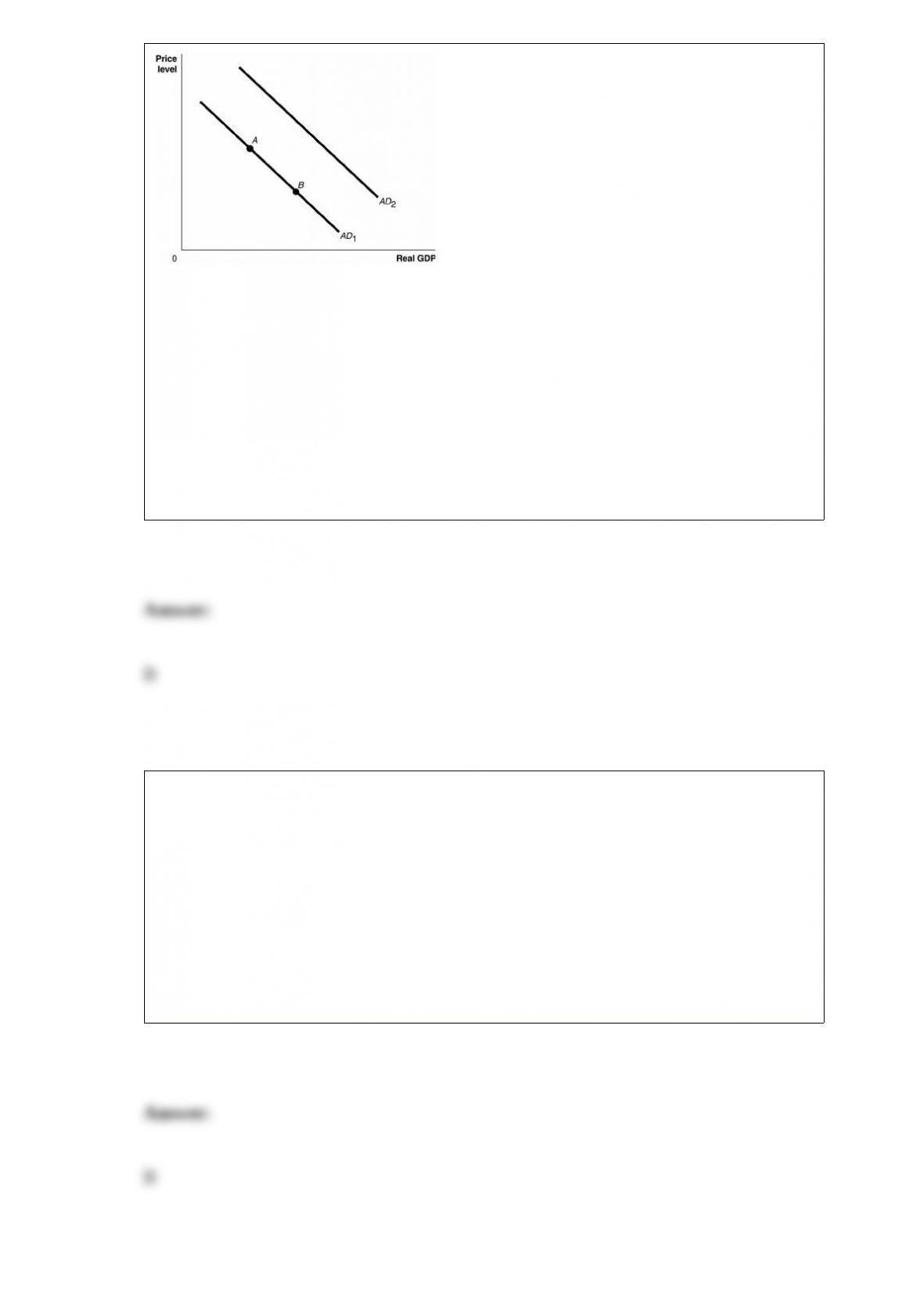
Refer to Figure 13-1. Ceteris paribus, an increase in personal income taxes would be
represented by a movement from
A) AD1 to AD2.
B) AD2 to AD1.
C) point A to point B.
D) point B to point A.
If disposable income falls by $50 billion and consumption falls by $40 billion, then the
slope of the consumption function is
A) 1.20.
B) 0.80.
C) 0.70.
D) 0.10.

The supply of loanable funds has a ________ slope because the greater the interest rate,
the ________ the reward to saving, and the ________ the quantity of loanable funds
supplied.
A) positive; lesser; lesser
B) positive; greater; lesser
C) negative; lesser; greater
D) positive; greater; greater
When aggregate expenditure is less than GDP, which of the following is true?
A) There was an unplanned increase in inventories.
B) Firms spent more on capital goods than they anticipated.
C) Households bought more new homes than they anticipated.
D) All of the above must be true when aggregate expenditure is less than GDP.
Consumption spending is $4.5 billion, gross private domestic investment is $3 billion,
and government expenditures are $2 billion. If GDP is $14 billion, which of the
following could be true regarding exports and imports in the economy?
A) Exports are $4.5 billion, and imports are $2 billion.
B) Exports are $6 billion, and imports are $8.5 billion.
C) Exports are $9 billion, and imports are $6 billion.
D) Exports are $15 billion, and imports are $10.5 billion.
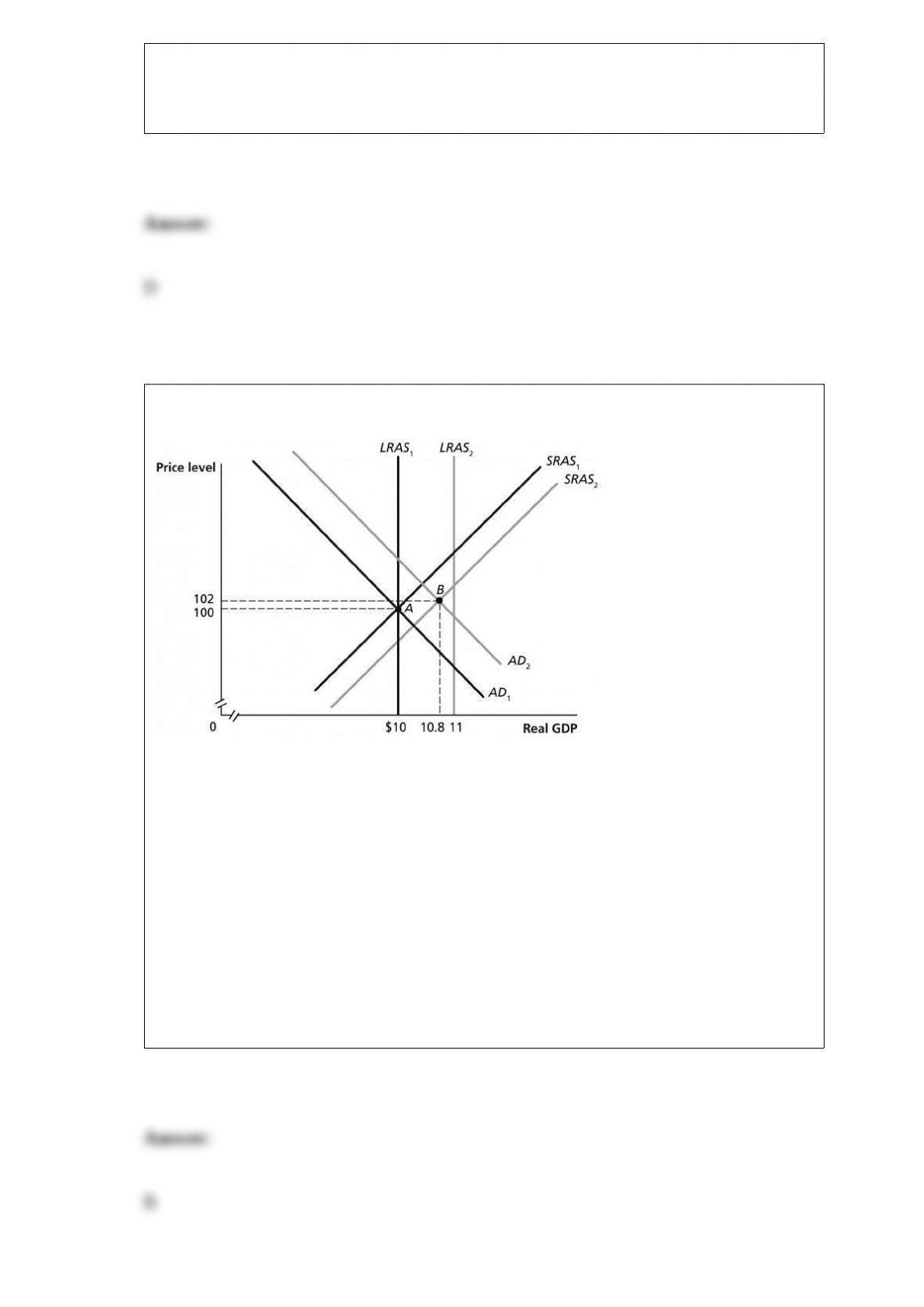
Figure 16-5
Refer to Figure 16-5. In the dynamic model of AD–AS in the figure above, if the
economy is at point A in year 1 and is expected to go to point B in year 2, Congress and
the president would most likely
A) decrease government spending.
B) increase government spending.
C) increase oil prices.
D) increase taxes.
E) lower interest rates.
Which of the following would cause the short-run aggregate supply curve to shift to the
left?
A) an increase in the price level
B) an increase in inflation expectations
C) a technological advance
D) a decrease in interest rates
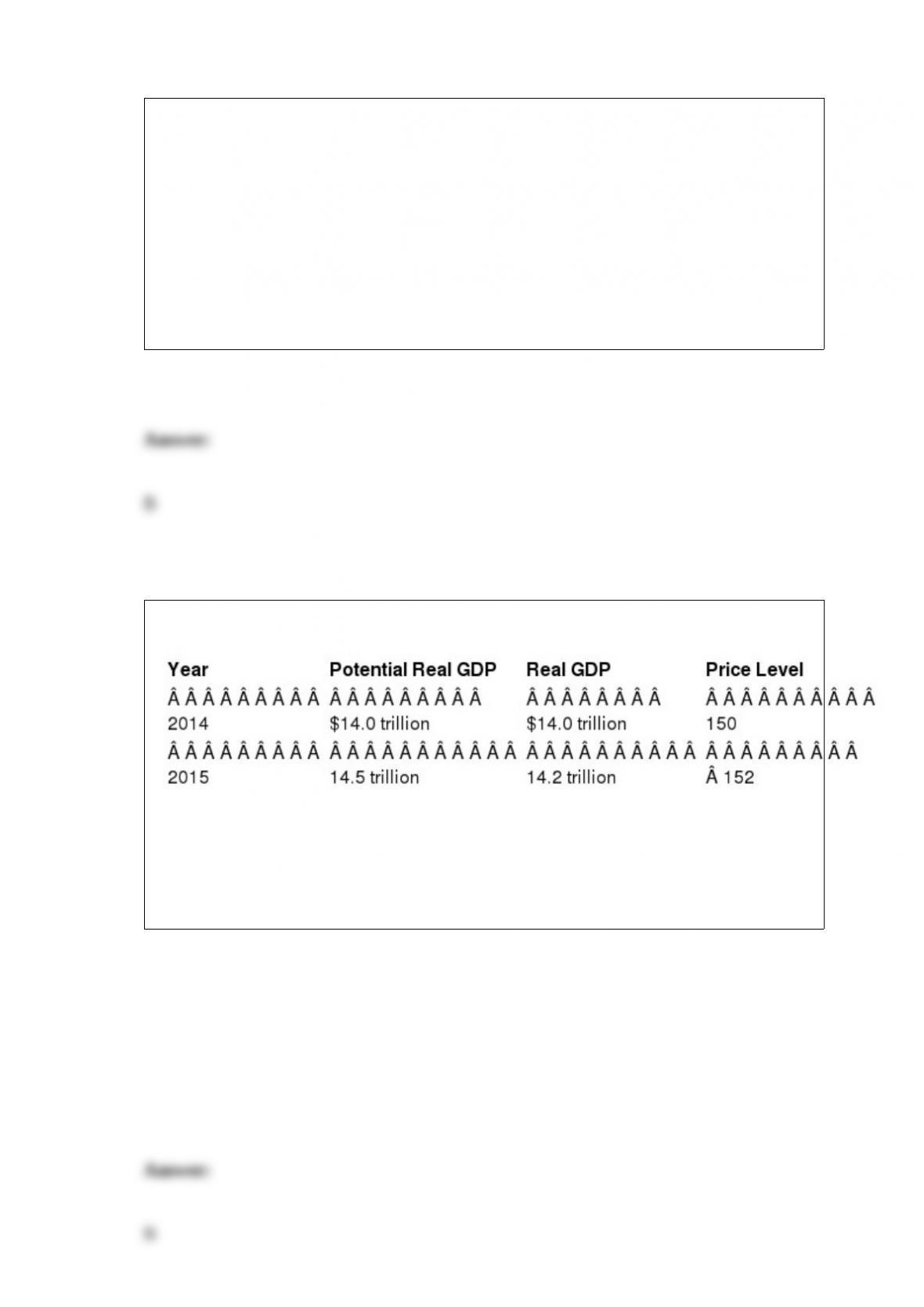
Table 15-2
Refer to Table 15-2. Consider the hypothetical information in the table above for
potential real GDP, real GDP and the price level in 2014 and in 2015 if the Federal
Reserve does not use monetary policy. If the Fed uses monetary policy successfully to
keep real GDP at its potential level in 2015, which of the following will be higher than
if the Fed had taken no action?
1. A) real GDP and the unemployment rate
2. B) real GDP and the inflation rate
3. C) real GDP and potential GDP
4. D) potential GDP and the inflation rate