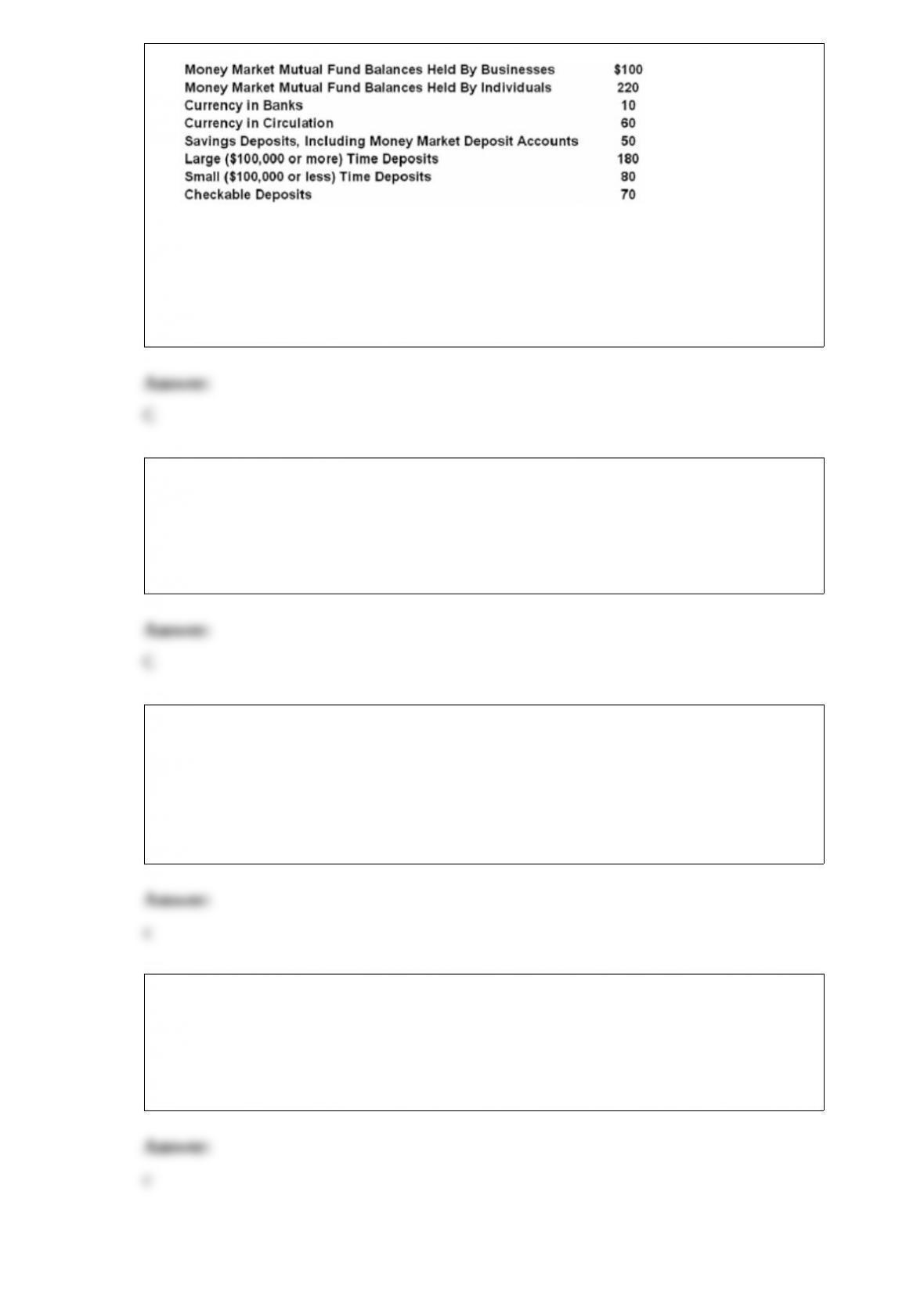
1)
Refer to the above information. Money supply M1 for this economy is:
A.$60.
B.$70.
C.$130.
D.$140.
2) The bank panics of 1930-1933:
A.resulted in the passage of the Smoot-Hawley Act.
B.boosted the nation’s money supply, causing inflation.
C.directly resulted in the Federal insured deposit program.
D.caused a significant outflow of gold from the United States.
3) an unregulated pure monopolist will maximize profits by producing that output at
which:
a.p = mc.
b.p = atc.
c.mr = mc.
d.mc = ac.
4) in an economy experiencing a declining production capacity:
a.the nation’s stock of capital goods is expanding.
b.net exports are necessarily zero.
c.depreciation exceeds gross investment.
d.ndp exceeds gdp.
5) The amount of land covered by forests is:
A.declining in all nations.
B.increasing in all nations.
C.increasing in places like the U.S. and Western Europe, while declining in countries in
South and Central America.
D.declining in places like the U.S. and Western Europe, while increasing in countries in
South and Central America.
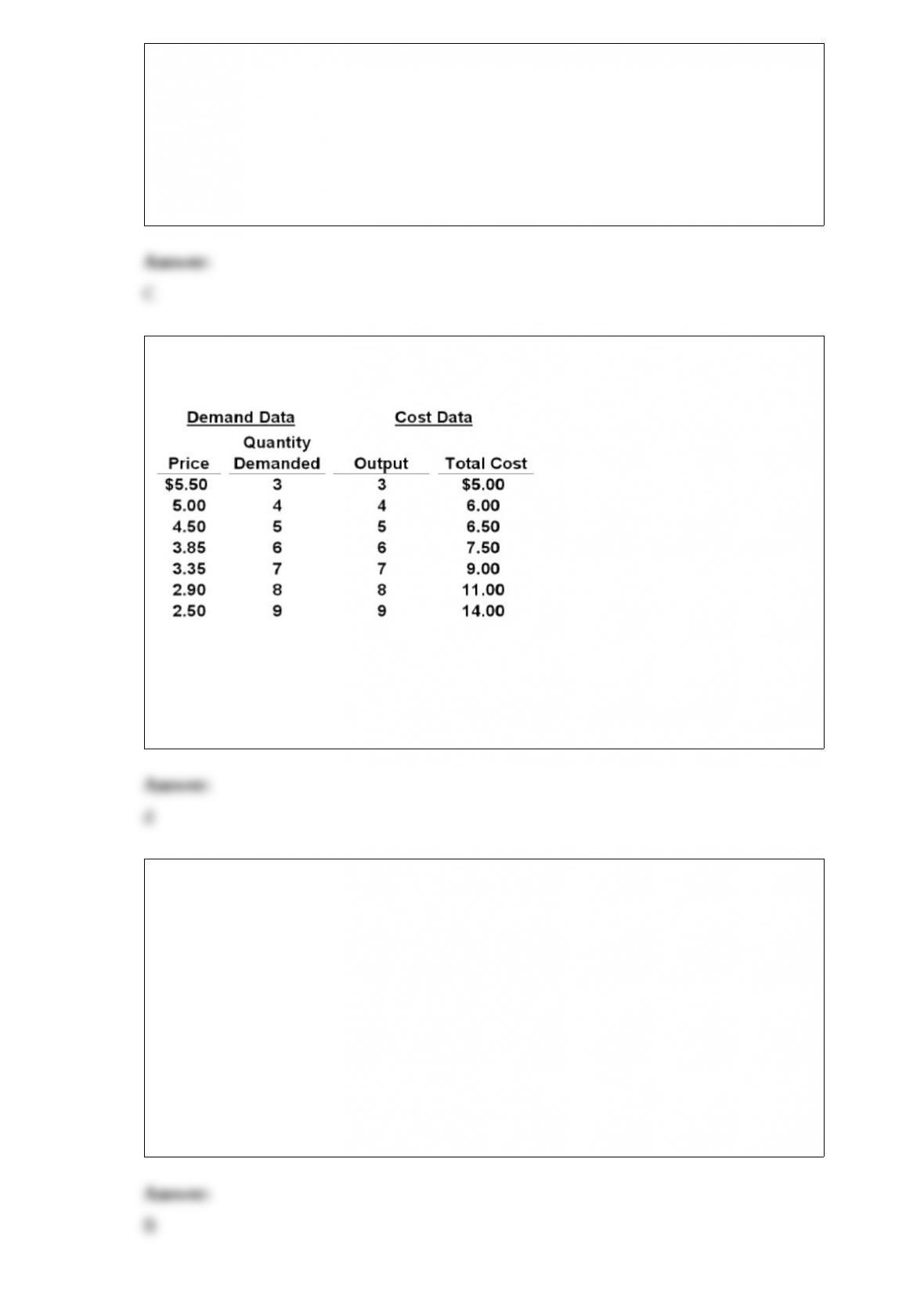
6) the following demand and cost data for a pure monopolist:
refer to the above data. the profit-maximizing level of output will be:
a.4 units.
b.7 units.
c.6 units.
d.5 units.
7) The following information for a hypothetical economy. All values are in nominal
terms.
M = $100
V = 2
Ca = $160
Xn = $10
G = $10
Refer to the above information. Nominal GDP is:
A.$100.
B.$200.
C.$180.
D.$50.

8) Public choice theorists hold that politicians will:
A.favor programs entailing immediate and clear-cut costs and vaguely defined or
deferred benefits.
B.follow policies leading to an optimal allocation of resources between public and
private sectors.
C.favor programs entailing immediate and clear-cut benefits and vaguely defined or
deferred costs.
D.objectively weigh the costs and benefits of various government programs and vote
accordingly.
9) if a firm’s demand for labor is elastic, a union-negotiated wage increase will:
a.necessarily be inflationary.
b.cause the firm’s total payroll to increase.
c.cause the firm’s total payroll to decline.
d.cause a shortage of labor.
10) kelly works at an ice cream shop and observes that the number of people buying ice
cream varies greatly from day to day. for a couple of weeks she has recorded the
number of people at the shop each day, as well as the daily temperature. if kelly is using
the scientific method to better understand ice cream buying habits, her next step is to:
a.conclude definitively that people buy more ice cream when the temperature rises.
b.state her findings as a well-tested economic principle.
c.use the observed data to form a hypothesis about ice cream buying behavior.
d.throw out the data if it does not show a perfect relationship between buying habits and
the other information she has collected.
11) (Advanced analysis) Answer the next question(s) on the basis of the following
consumption and investment data for a private closed economy. Figures are in billions
of dollars.
C = 60 + .6Y
I = I0 = 30
Refer to the above data. The equilibrium level of income (Y ) is:
A.360.
B.225.
C.200.
D.135.

12) assume that a 3 percent increase in income in the economy produces a 1 percent
decline in the quantity demanded of good x. the coefficient of income elasticity of
demand for good x is:
a.negative and therefore x is an inferior good.
b.negative and therefore x is a normal good.
c.positive and therefore x is an inferior good.
d.positive and therefore x is a normal good.
13) a nondiscriminating monopolist:
a.will never produce in the output range where marginal revenue is positive.
b.will never produce in the output range where demand is inelastic.
c.will never produce in the output range where demand is elastic.
d.may produce where demand is either elastic or inelastic, depending on the level of
production costs.
14) the latest, on-going international round of trade negotiations is called the:
a.bangkok round.
b.doha round.
c.seattle round.
d.stockholm round.
15) (Consider This) In the market for superstars:
A.earnings reflect pricing power rather than marginal revenue product.
B.small differences in talent get magnified into huge differences in pay.
C.entry and exit rarely occur.
D.product demand is typically highly elastic.
16) which of the following is correct?
a.total output = labor productivity/worker-hours
b.labor productivity = worker-hours/total output
c.total output = worker-hours labor productivity
d.worker-hours = labor productivity total output
17) Commercial banks monetize claims when they:
A.collect checks through the Federal Reserve System.
B.make loans to the public.
C.accept repayment of outstanding loans.
D.borrow from the Federal Reserve Banks.
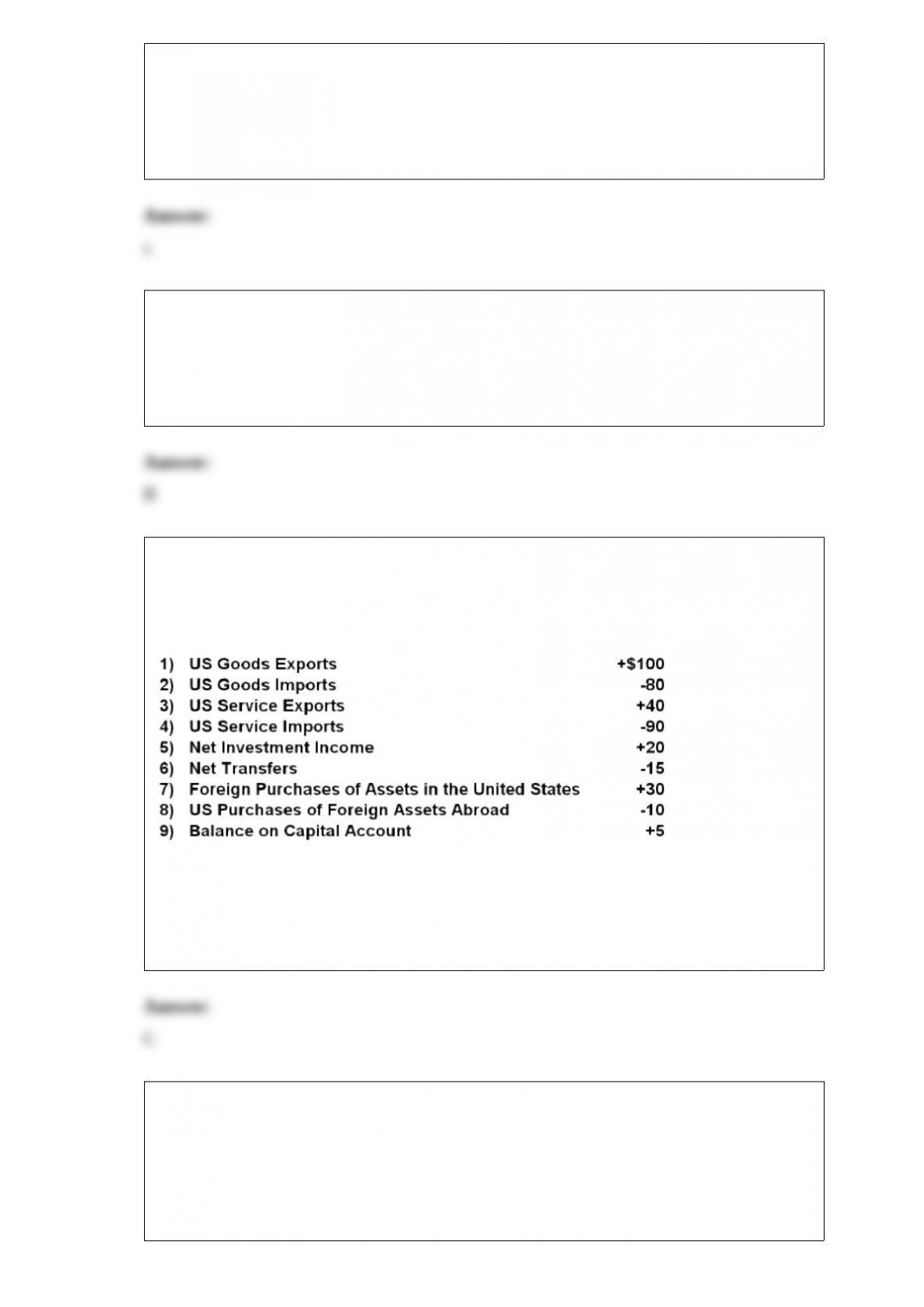
18) The following table contains hypothetical data for the 2010 U.S. balance of
payments. Answer the next question(s) on the basis of this information. All figures are
in billions of dollars.
Refer to the above data. The United States’ balance of capital and financial account is a:
A.surplus of $5.
B.deficit of $10.
C.surplus of $25.
D.deficit of $5.
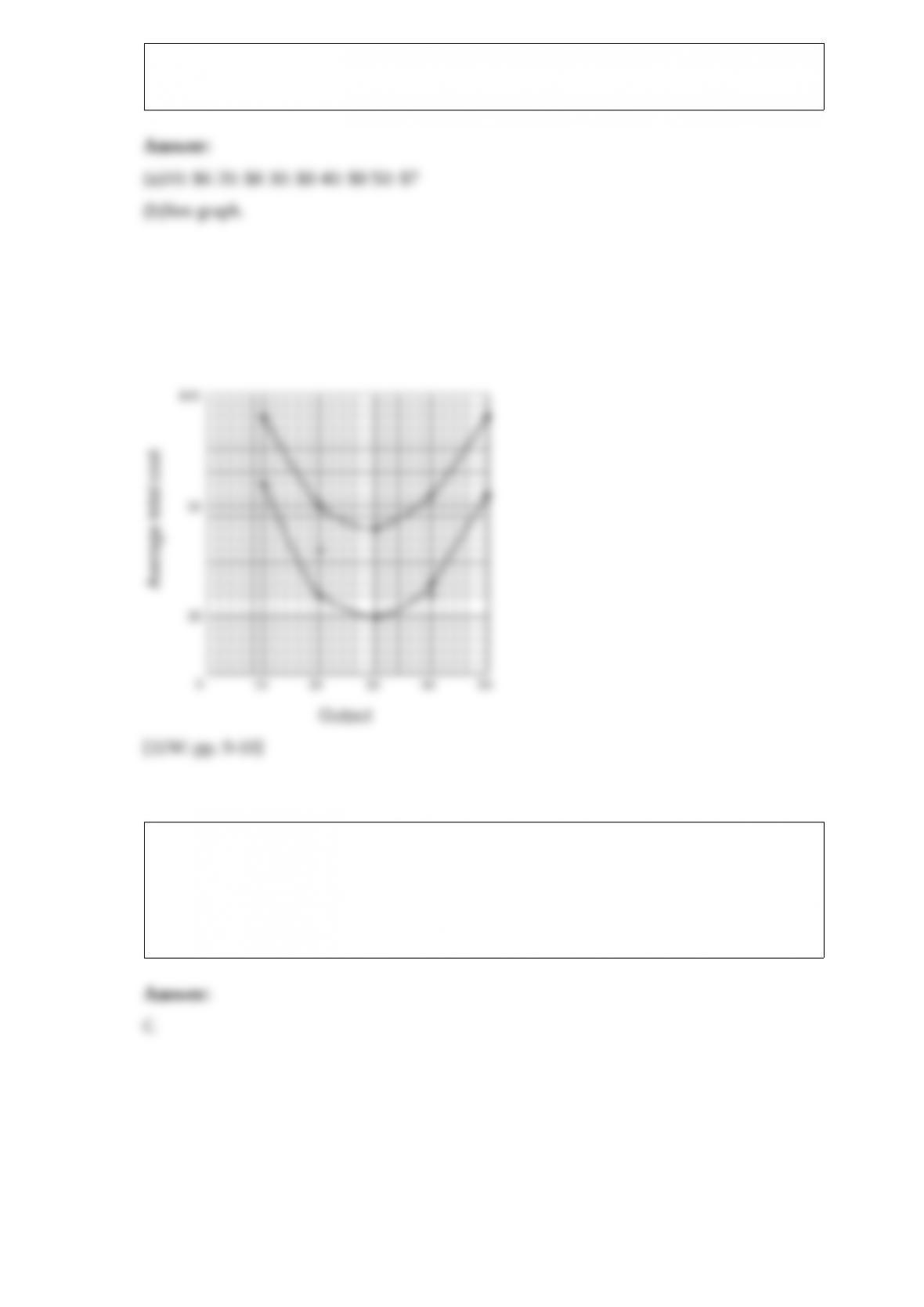
19) Below are two average total cost schedules for a firm. The first schedule (ATC1)
shows the cost of producing the product at five levels of output before a new
innovation. The second schedule (ATC2) shows the average total cost at the five output
levels after the innovation. What was the reduction in average total cost at each of the
five levels of output as a result of the innovation?
(a)What was the reduction in average total cost at each of the five levels of output as a
result of the innovation?
(b)Plot the average cost curves for the schedules on the graph below.
20) The critical feature of a monopsonistic labor market is that the employer:
A.has a perfectly elastic demand curve for labor.
B.can hire any number of workers it chooses at the going wage rate.
C.faces an upsloping labor supply curve.
D.faces a perfectly inelastic labor supply curve.