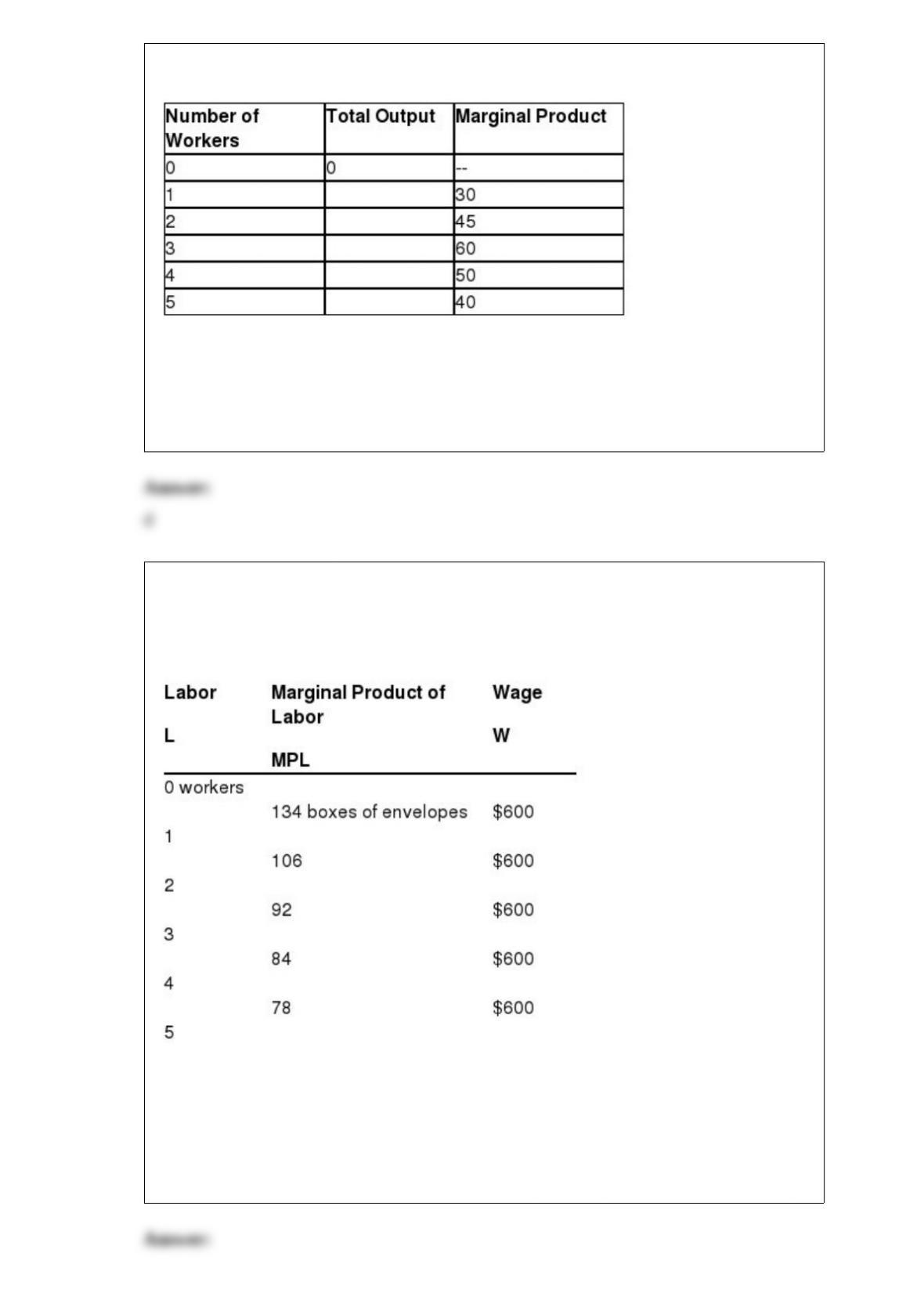
1) Table 13-1
What is total output when 3 workers are hired?
a.15
b.60
c.105
d.135
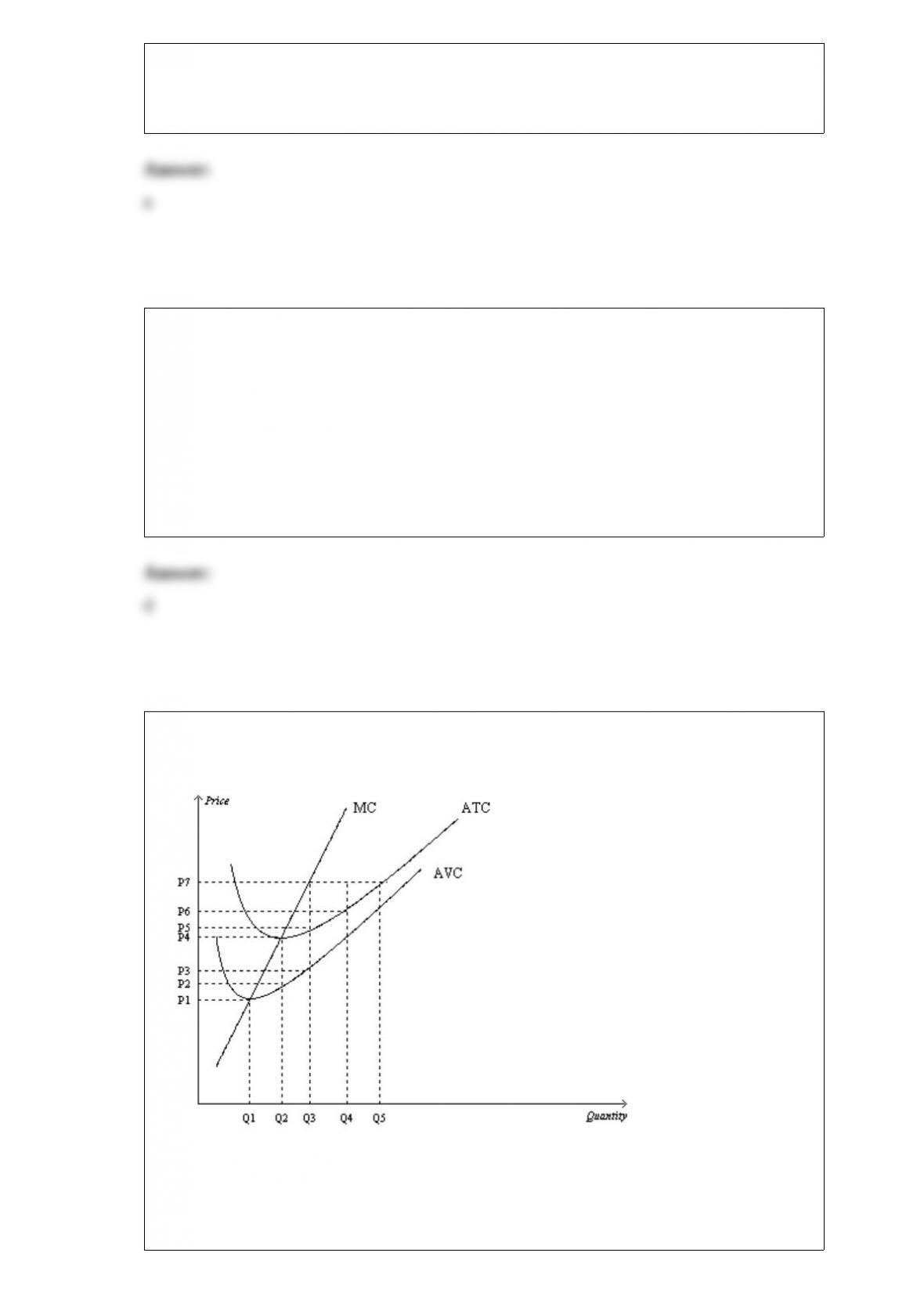
2) Table 18-12
The table displays data for a small, competitive, profit-maximizing firm that produces
and sells envelopes. The time frame is one week.
Refer to Table 18-12. Suppose the firm sells each box of envelopes that it produces for
$6. What is the marginal profit of the fourth worker?
a.$-132
b.$-96
c.$132
d.$504

3) A profit-maximizing firm in a monopolistically competitive market differs from a
firm in a perfectly competitive market because the firm in the monopolistically
competitive market
a.chooses its profit-maximizing quantity where marginal revenue equals marginal cost.
b.sells its product in a highly-concentrated market.
c.faces a downward-sloping demand curve for its product.
d.can earn profits in the long run.
4) If one were to consider a university as a business, the computers in the computer labs
would be regarded by economists as
a.technology flows.
b.mechanization flows.
c.part of the university’s stock of capital.
d.a flow of services from the university’s stock of capital.
5) When an economist points out that you and millions of other people are
interdependent, he or she is referring to the fact that we all
a.rely upon the government to provide us with the basic necessities of life.
b.rely upon one another for the goods and services we consume.
c.have similar tastes and abilities.
d.are concerned about one another’s wellbeing.
6) Which of the following is likely to have the most price elastic demand?
a.dental floss
b.milk
c.salt
d.diamond earrings
7) The Laffer curve relates
a.the tax rate to tax revenue raised by the tax.
b.the tax rate to the deadweight loss of the tax.
c.the price elasticity of supply to the deadweight loss of the tax.
d.government welfare payments to the birth rate.
8) Suppose Rebecca needs a dog sitter so that she can travel to her sister’s wedding.
Rebecca values dog sitting for the weekend at $200. Susan is willing to dog sit for
Rebecca so long as she receives at least $150. Rebecca and Susan agree on a price of
$175. Suppose the government imposes a tax of $10 on dog sitting. The tax has made
Rebecca and Susan worse off by a total of
a.$50.
b.$40.
c.$20.
d.$10.
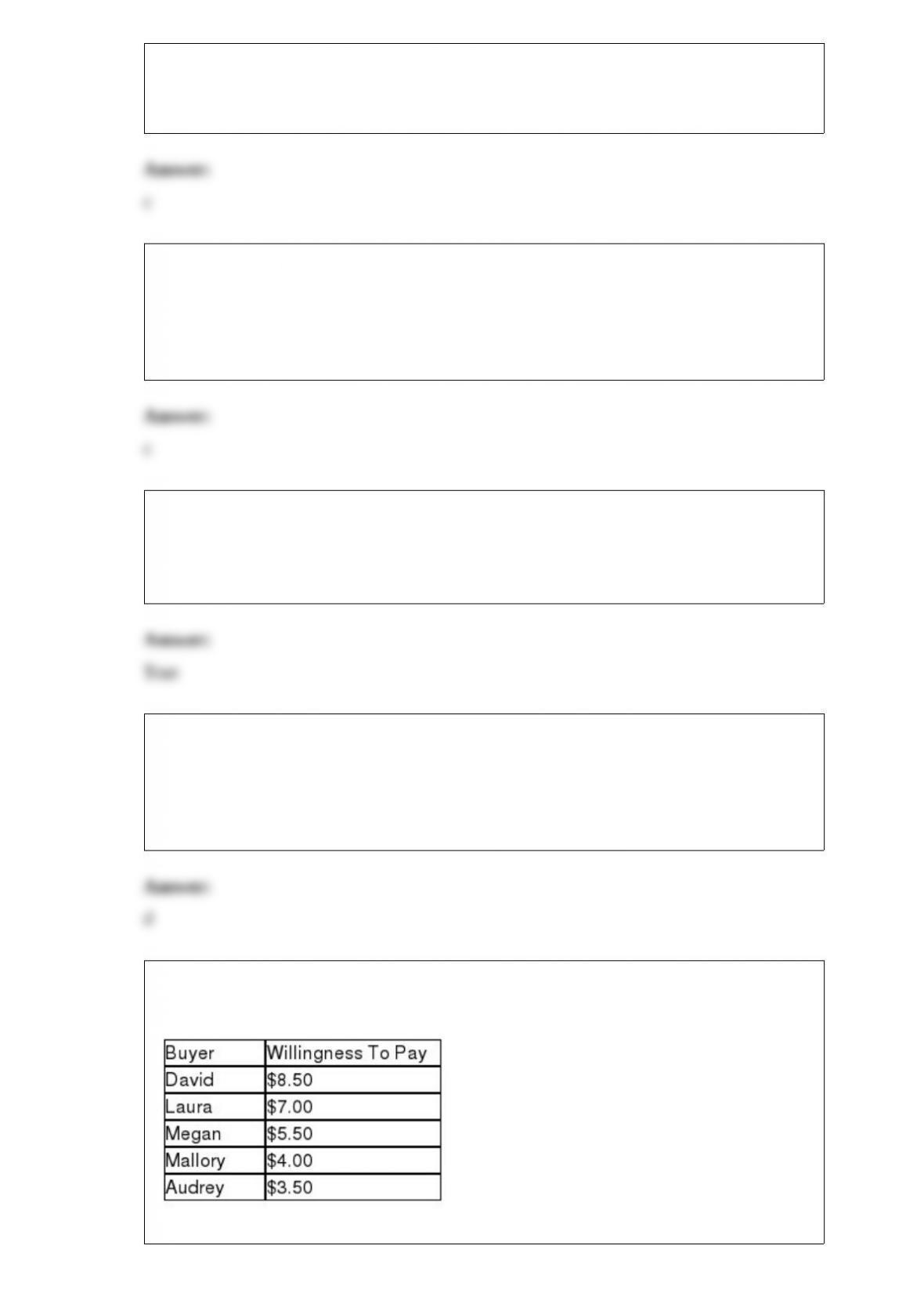
9) Figure 14-5
Suppose a firm operating in a competitive market has the following cost curves:
When market price is P7, a profit-maximizing firm‘s short-run profits can be
represented by the area
a.P7 x Q5.
b.P7 x Q3.
c. (P7 – P5) x Q3.
d. We are unable to determine the firm‘s profits because the quantity that the firm would
produce is not labeled on the graph.
10) A shortage exists in a market if
a.there is an excess supply of the good.
b.quantity supplied exceeds quantity demanded.
c.the current price is below its equilibrium price.
d.All of the above are correct.
11) For a profit-maximizing firm in a monopolistically competitive market, when price
is equal to average total cost, price must lie above marginal cost.
a.True
b.False
12) If a decrease in income increases the demand for a good, then the good is a(n)
a.substitute good.
b.complementary good.
c.normal good.
d.inferior good.
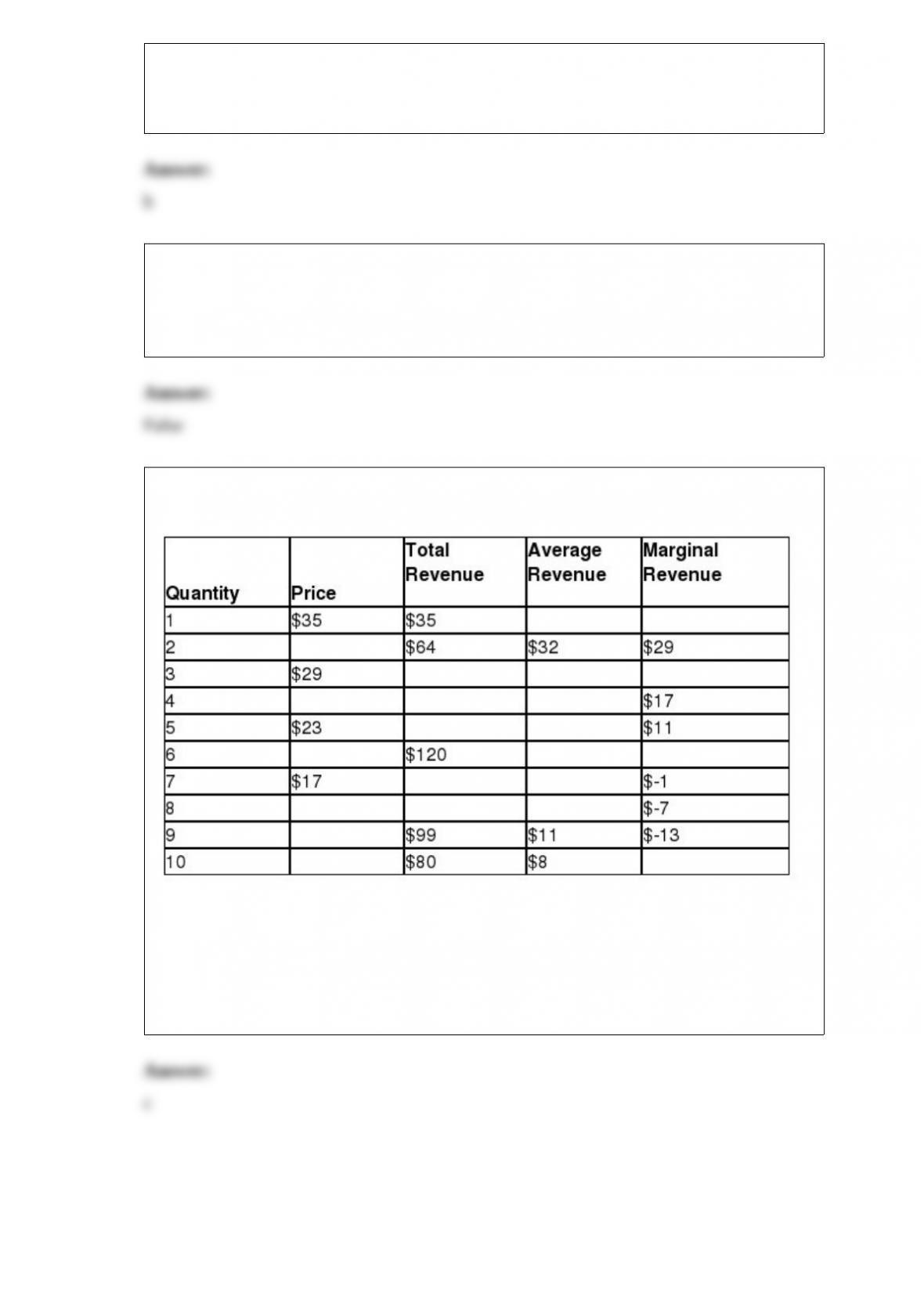
13) Table 7-2
This table refers to five possible buyers’ willingness to pay for a case of Vanilla Coke.
If the market price is $5.50, the consumer surplus in the market will be a. $3.00.
b. $4.50.
c. $15.50.
d. $21.00.
14) One person’s use of common resources does not reduce the enjoyment other people
receive from the resource.
a.True
b.False
15) Table 15-1
If the monopolist wants to maximize its revenue, how many units of its product should
it sell?
a.4
b.5
c.6
d.8