
Article Summary. A growing number of U.S. citizens are going to other countries
for elective surgery procedures. Improved quality and significant cost savings
abroad have attracted an increasing number of what are being referred to as
American medical tourists, especially those who either do not have insurance or
whose insurance does not cover the desired procedure. As few as five years ago,
Americans tended to travel to countries such as Thailand or Mexico for the
procedures, but many are now choosing to go to Europe, where governments and
hospitals are now publicizing these services. Many of the procedures being done
overseas are joint replacement, and partly in response to the number of patients
going abroad for these procedures, programs are being developed to reduce the
cost of these surgeries in the United States.
Source: Elizabeth Rosenthal, “The Growing Popularity of Having Surgery
Overseas,” New York Times, August 6, 2013.
If European governments and hospitals continue to publicize their existing services to
American medical tourists and more Americans consider joint-replacement surgery to
improve their quality of life, what will happen in the market for joint-replacement
surgery as a result of these two factors?
A) Demand will increase, but these two factors will not shift the supply curve.
B) Supply will increase, but these two factors will not shift the demand curve.
C) Demand and supply will both increase.
D) Demand will increase and supply will decrease.
Most employees ________ pay taxes on the value of health insurance provided by
employers, and most people ________ get a tax break when buying individual health
insurance policies.
A) do; do
B) do; do not
C) do not; do
D) do not; do not
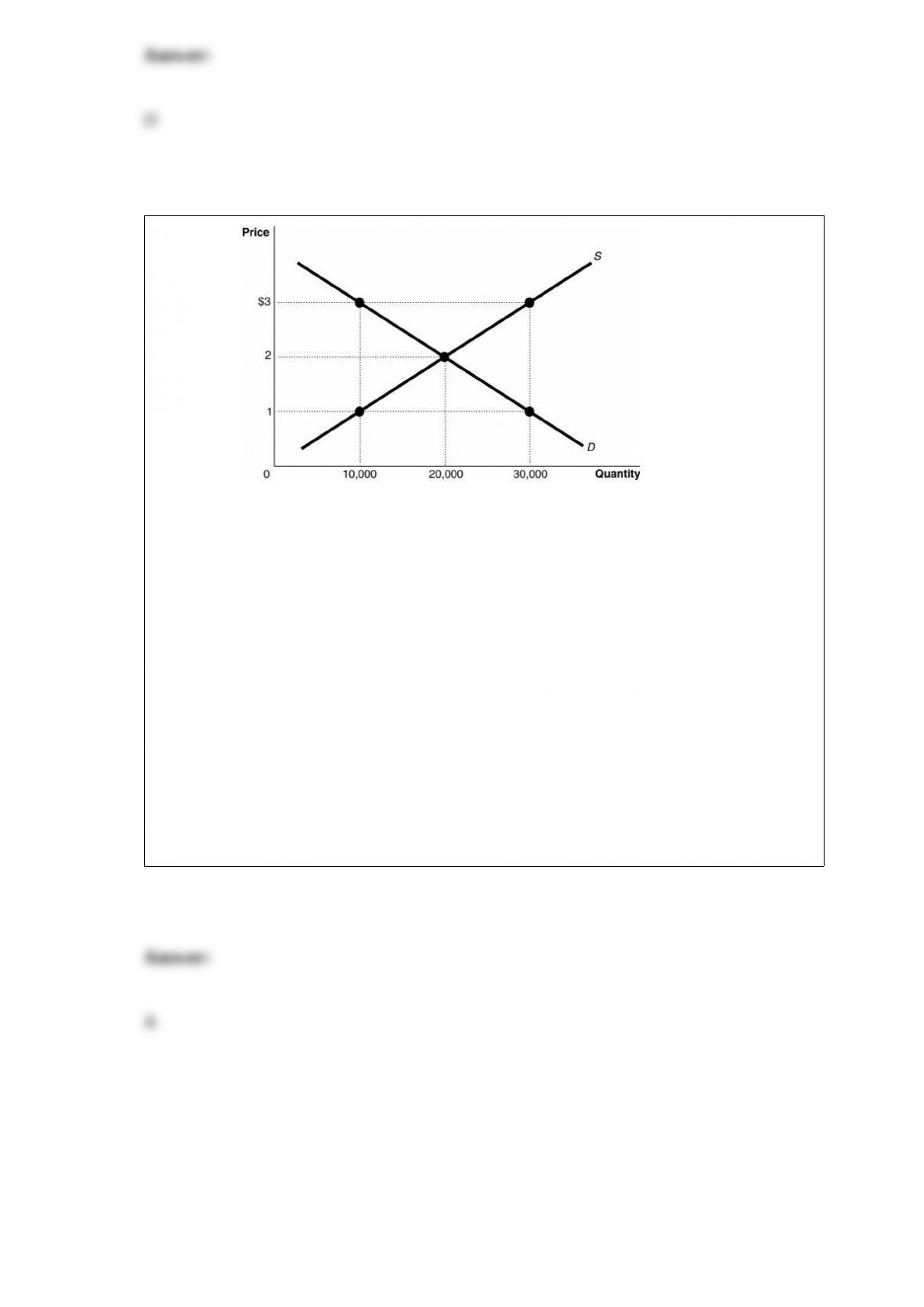
Figure 4-7
The figure above represents the market for iced tea. Assume that this is a competitive
market. If the price of iced tea is $1, what changes in the market would result in an
economically efficient output?
A) The price would increase, the quantity supplied would increase, and the quantity
demanded would decrease.
B) The quantity supplied would increase, the quantity demanded would decrease, and
the equilibrium price would increase.
C) The price would increase, the demand would increase, and the supply would
decrease.
D) The price would increase, quantity demanded would increase, and quantity supplied
would decrease.
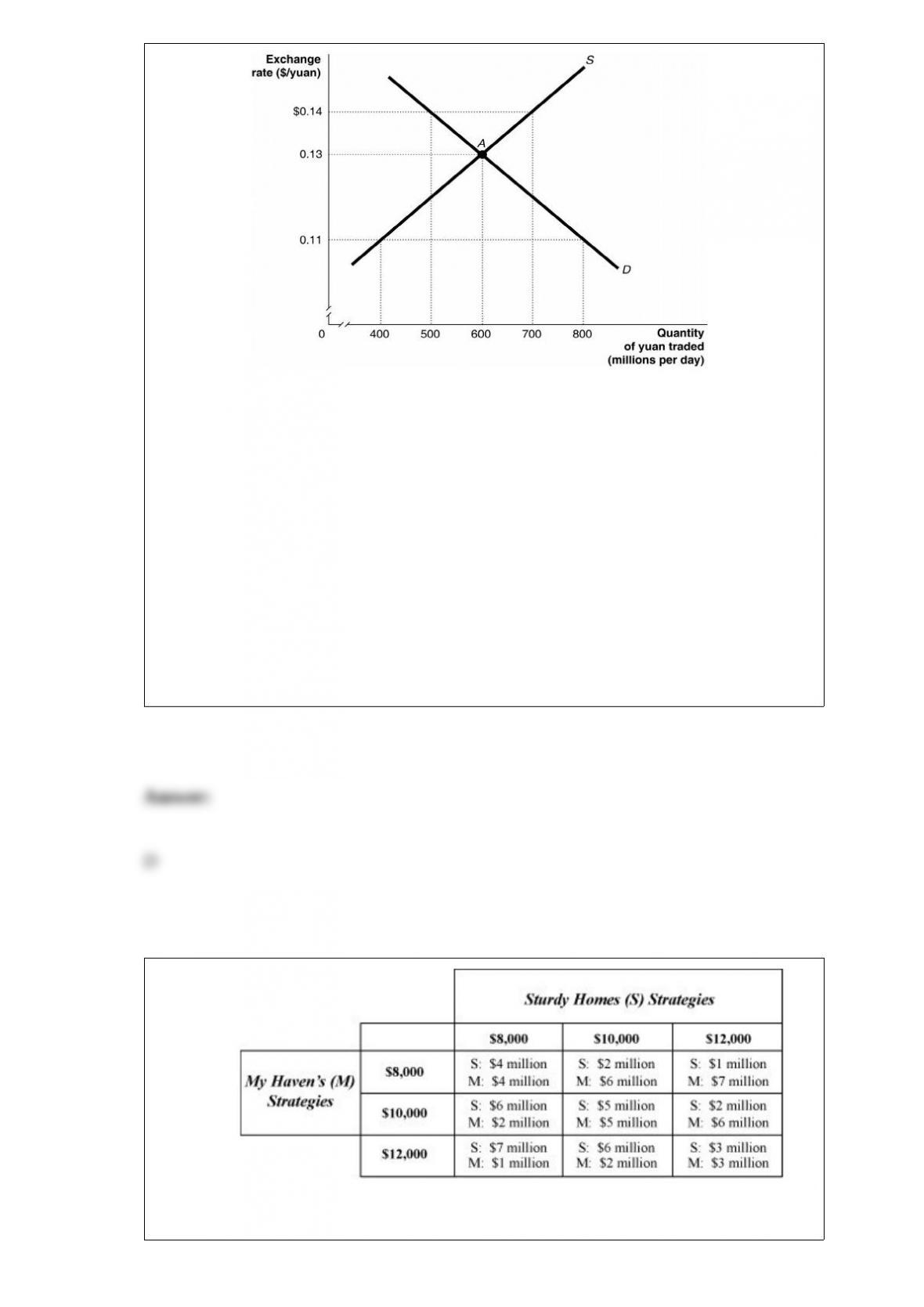
Figure 19-5
Suppose the Chinese government decides to abandon pegging the yuan to the dollar at a
rate which undervalues the yuan. Using the figure above, the equilibrium exchange rate
would be ________ and Chinese exports to the United States would ________ in price.
A) $0.11/yuan; decrease
B) $0.11/yuan; increase
C) $0.14/yuan; increase
D) $0.13/yuan; increase
E) $0.13/yuan; decrease
Table 14-6
There are two mobile home manufacturers in Nevada, Sturdy Homes (S) and My Haven
(M). Sturdy Homes has been in the market for a long time and must now compete with

newcomer, My Haven. Suppose that Sturdy Homes believes that My Haven will match
any price it sets. Use Table 14-6 to answer the following question and assume
throughout that Sturdy Homes believes that My Haven will match any price it sets.
What price will Sturdy Homes charge and what profit does Sturdy Homes expect to
make?
A) Price = $8,000; expected profit = $7 million
B) Price = $8,000; expected profit = $4 million
C) Price = $10,000; expected profit = $5 million
D) Price = $12,000; expected profit = $3 million
Using a broader measure of the unemployment rate where discouraged workers and
part-time workers who wished to work full time were counted as unemployed, the BLS
estimates the unemployment rate in September 2011 would have ________ compared
to the measured unemployment rate.
A) increased by more than 7 percentage points
B) more than doubled
C) decreased by less than 1 percentage point
D) barely changed

Table 19-12
Consider the following data on nominal GDP and real GDP (values are in billions of
dollars): The base year used in calculating real GDP is
A) 2008.
B) 2009.
C) 2010.
D) 2011.
German luxury car exports were hurt in 2009 as a result of the recession. How would
this decrease in exports have affected Germany’s aggregate demand curve?
A) The aggregate demand curve would have shifted to the right.
B) The aggregate demand curve would not have shifted, but there would have been a
movement up the aggregate demand curve.
C) The aggregate demand curve would not have shifted, but there would have been a
movement down the aggregate demand curve.
D) The aggregate demand curve would have shifted to the left.
An equilibrium in a game in which players pursue their own self-interest is called
A) a Nash equilibrium.
B) a cooperative equilibrium.
C) a noncooperative equilibrium.
D) a prisoner’s dilemma.
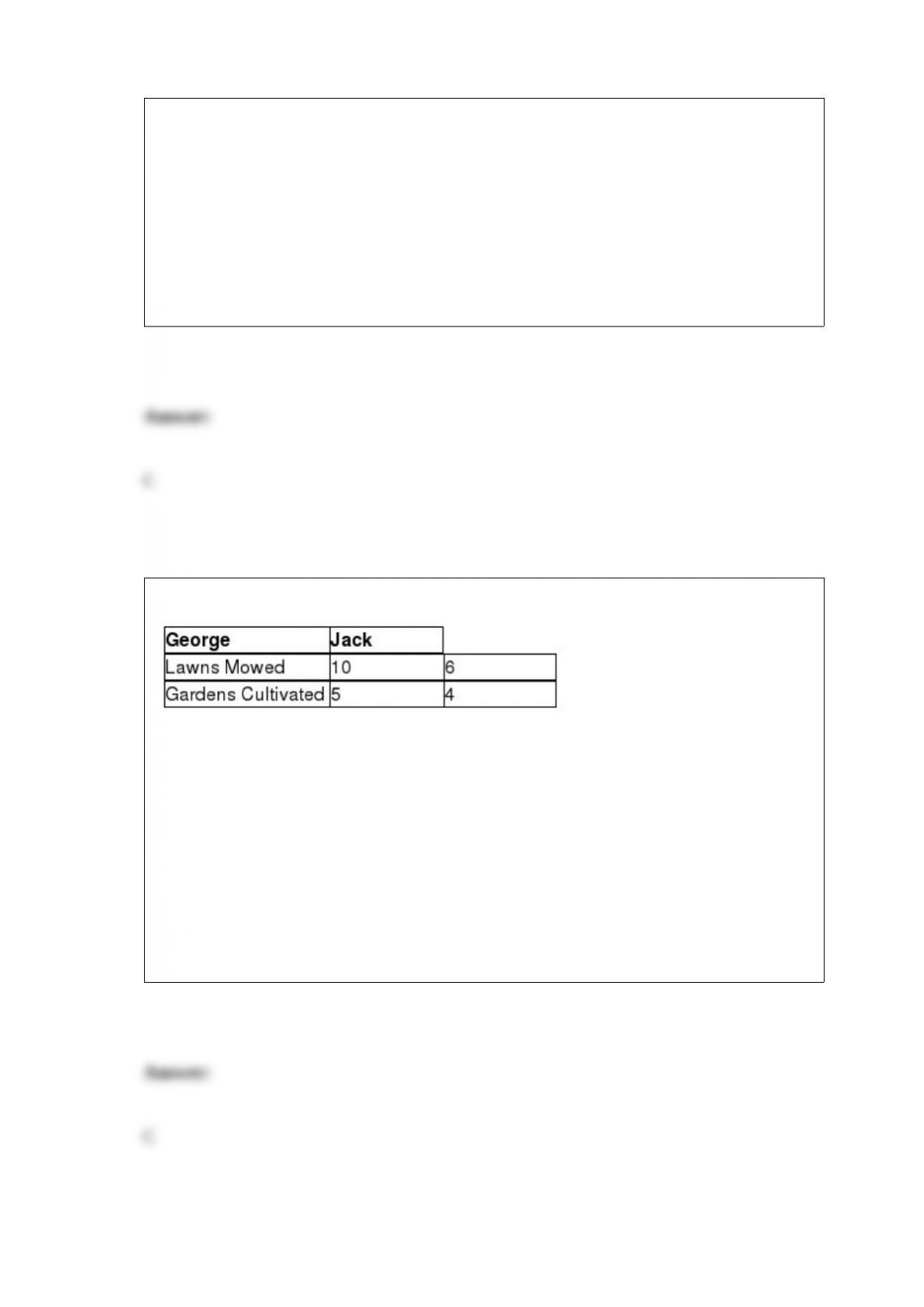
Table 2-15
Table 2-15 shows the output per day of two gardeners, George and Jack. They can
either devote their time to mowing lawns or cultivating gardens. What is Jack’s
opportunity cost of mowing a lawn?
A) half a garden cultivated
B) two lawns mowed
C) two-thirds of a garden cultivated
D) one and a half lawns mowed
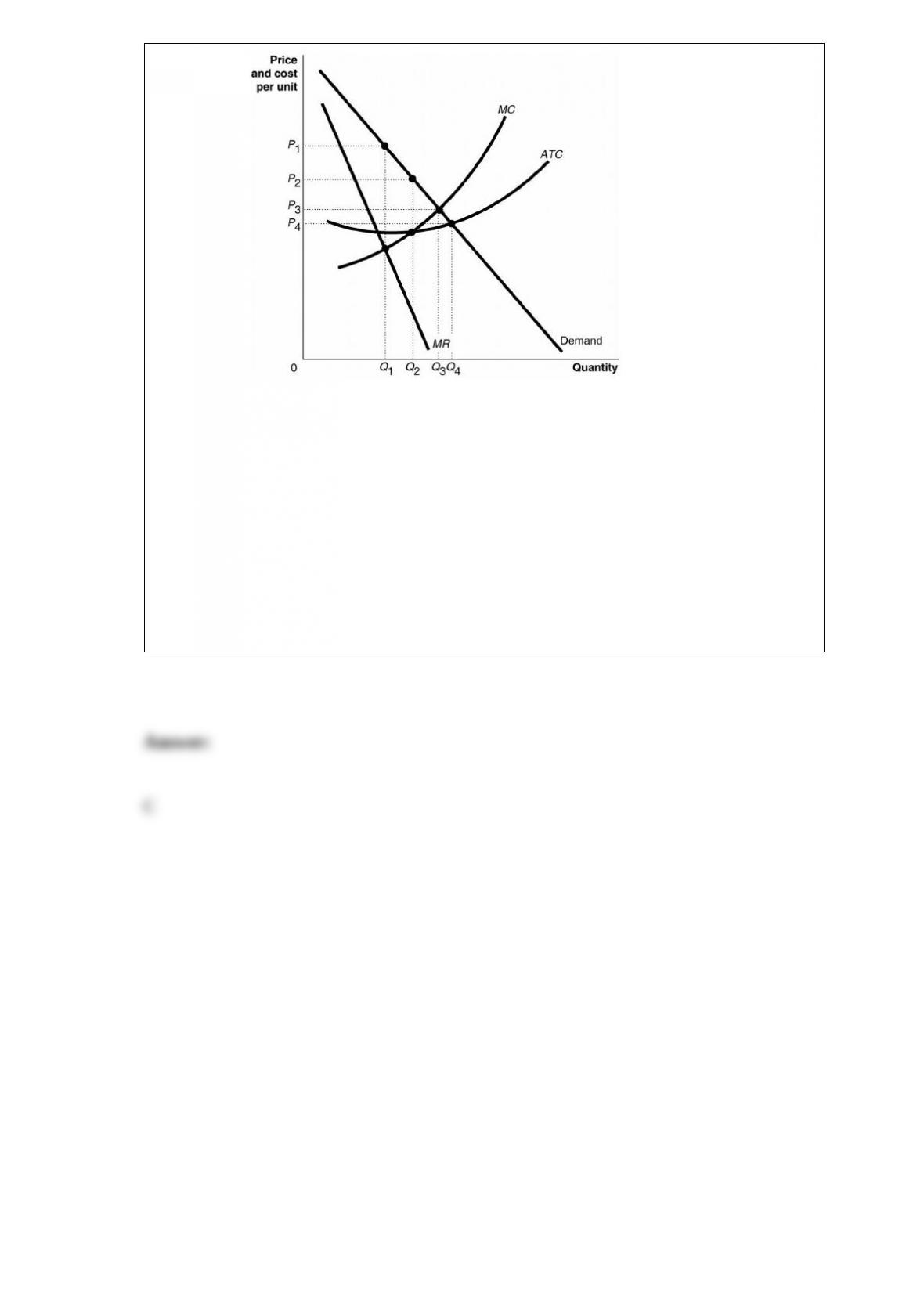
Figure 16-1
With perfect price discrimination, the firm will produce and sell
A) Q1 units.
B) Q2 units.
C) Q3 units.
D) Q4 units.