1) specialized production and international trade increase a nation’s productivity and
increase the availability of goods and services.
2) A nation’s export supply curve is downsloping and its import demand curve is
upsloping.
3) proponents of economic growth claim that rising living standards can lead to
environmental improvements as people can afford to care more about the environment.
4) A curve showing the quintile distribution of a nation’s income is called the Gini
Curve.
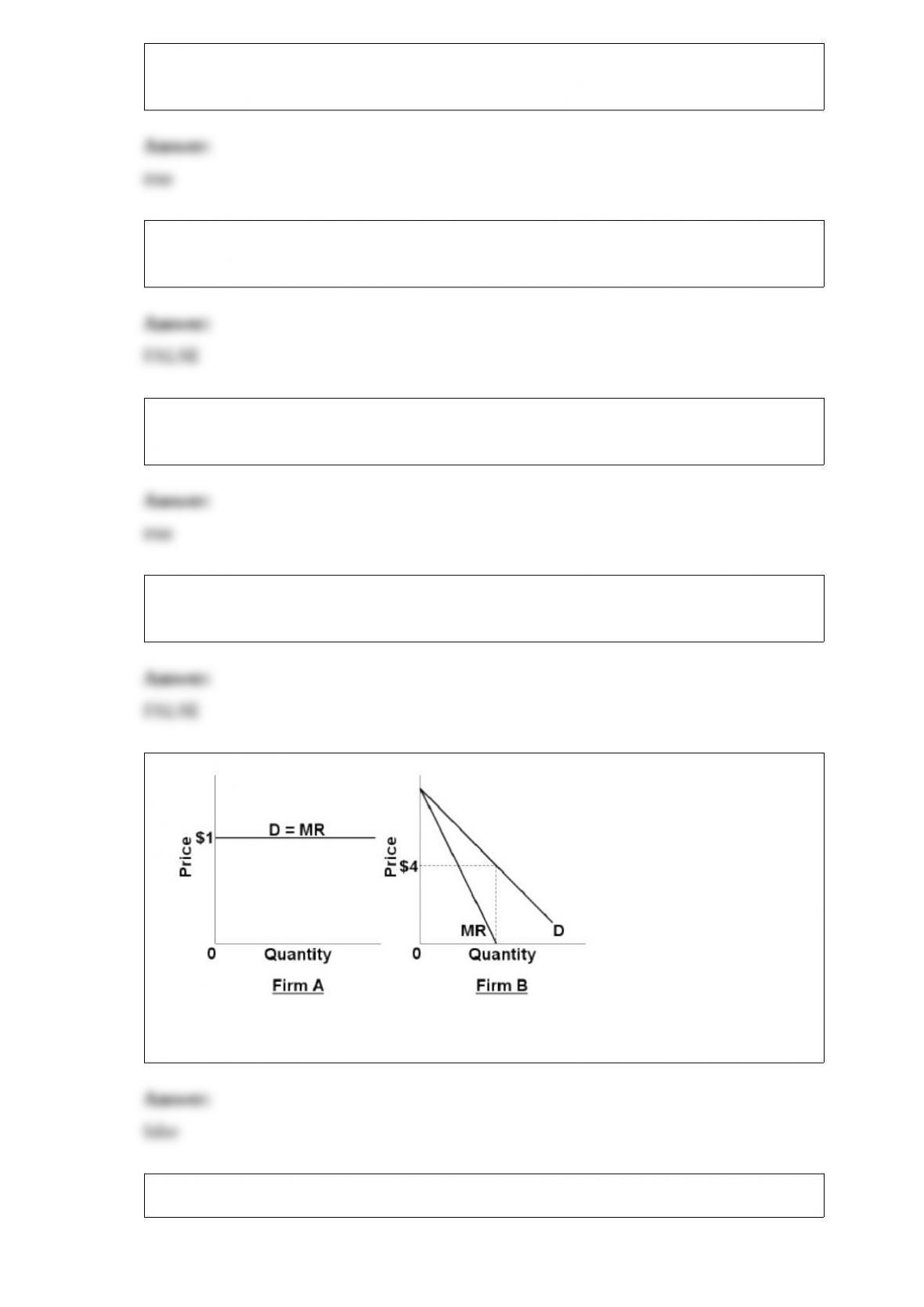
5)
refer to the above diagrams. both firms are selling their products in purely competitive
markets.
6) Fiscal policy is mainly undertaken by the Federal Reserve.

7) marginal analysis means that decision-makers compare the extra benefits with the
extra costs of a specific choice.
8) There is no evidence that unions are able to increase wage rates above those that the
market would otherwise provide.
9) The U.S. Justice Department, the Federal Trade Commission, state attorneys general,
and injured private parties can independently file charges against firms under the
Sherman Act.
10) The efficiency loss of a tax is the tax revenue collected by government minus the
value of the public goods financed through the tax.
11) A shift in the Phillips Curve to the left will improve the inflation-unemployment
choices available to society.
12) A nation’s infrastructure refers to:
A.its ability to realize economies of scale.
B.its stock of technological knowledge.
C.public capital goods such as highways and utilities.
D.the productivity of its labor force.
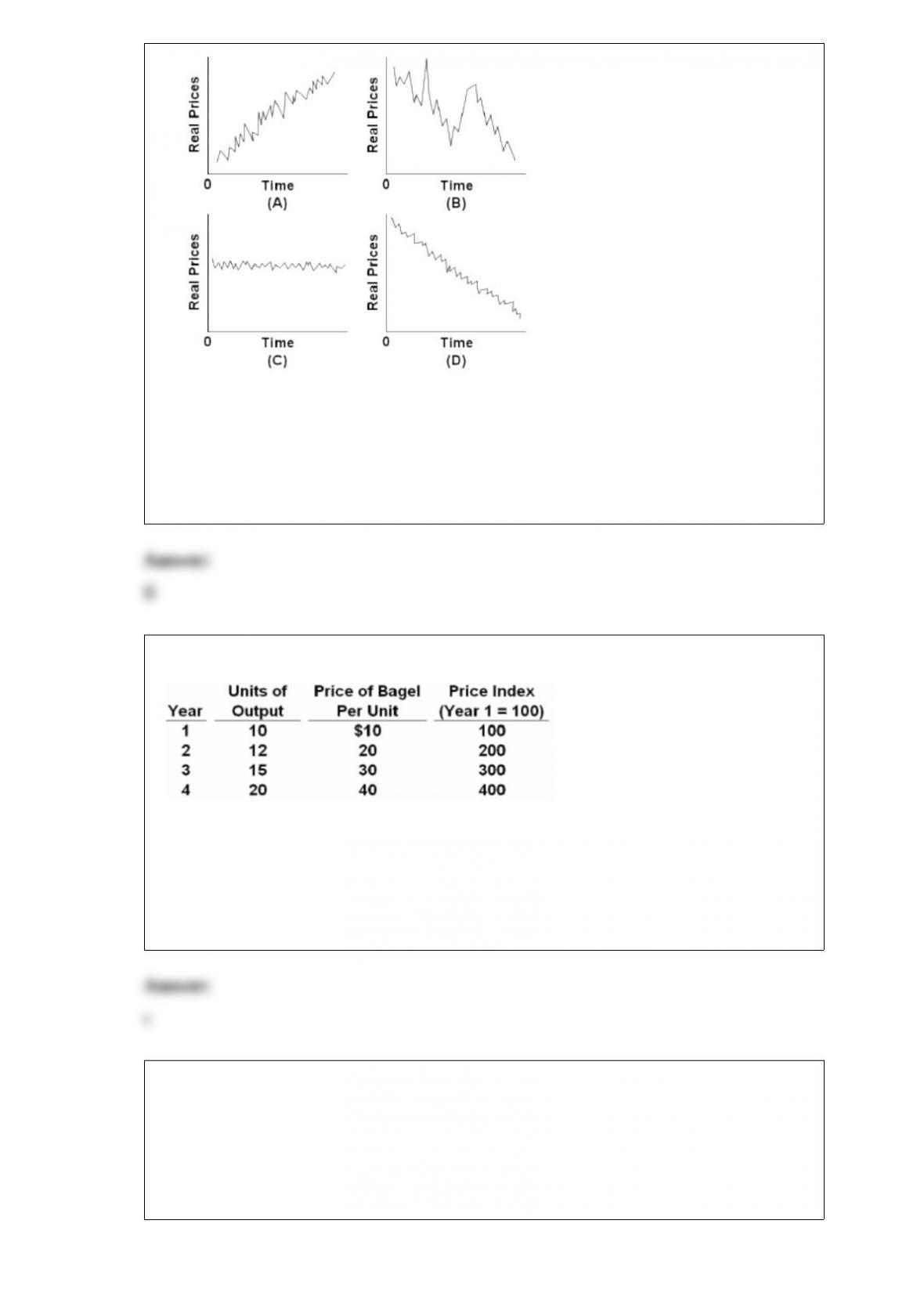
13)
Which of the above diagrams best describes the long-run path of real
(inflation-adjusted) farm prices?
A.A
B.B
C.C
D.D
14) use the following table for a hypothetical single-product economy.
refer to the above data. real gdp in year 4 is:
a.$320.
b.$450.
c.$200.
d.$800.
15) (Last Word) In The General Theory of Employment, Interest, and Money:
A.Adam Smith stated his idea of the invisible hand.
B.Thorstein Veblen poked fun at the leisure class.
C.John Maynard Keynes attacked the classical economist’s contention that recession or
depression will automatically cure itself.
D.J. B. Say developed “Say’s law.”
16) the marginal benefit curve is:
a.upsloping because of increasing marginal opportunity costs.
b.upsloping because successive units of a specific product yield less and less extra
benefit.
c.downsloping because of increasing marginal opportunity costs.
d.downsloping because successive units of a specific product yield less and less extra
benefit.
17) According to the textbook, trade wars and trade boycotts are much like:
A.”killing two birds with the same stone.”
B.”closing the barn door after the horses have left.”
C.’shooting yourself in the foot.”
D.”making a mountain out of a molehill.”
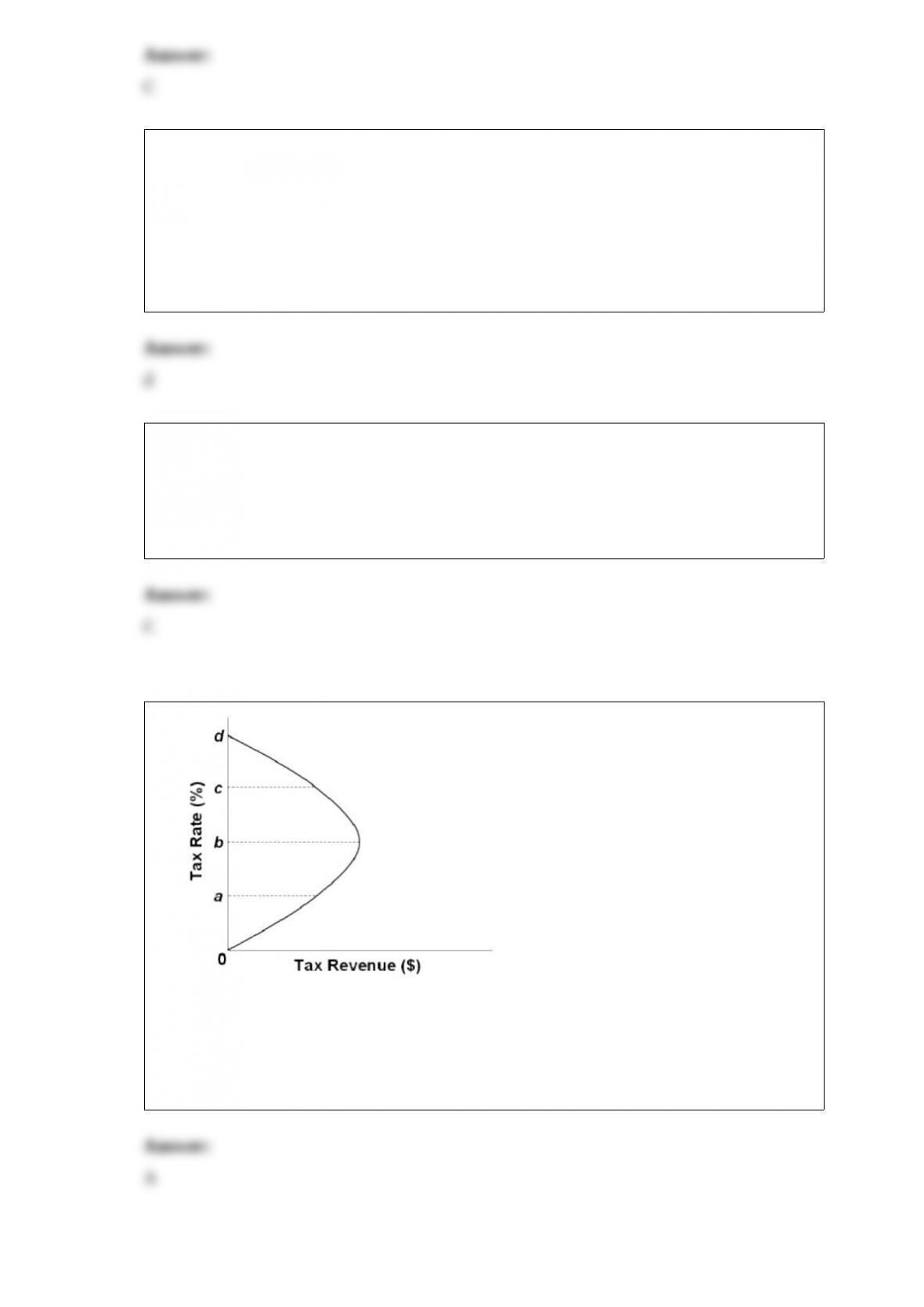
18)
In the above curve, a decline in the tax rate from c to b would:
A.greatly increase tax revenue.
B.greatly decrease tax revenue.
C.leave tax revenue about the same as before.
D.shift the curve to the left.
19) In which of the following situations for a private closed economy will the level of
GDP expand?
A.when planned investment exceeds saving
B.when planned investment exceeds consumption
C.when saving exceeds consumption
D.when consumption exceeds investment
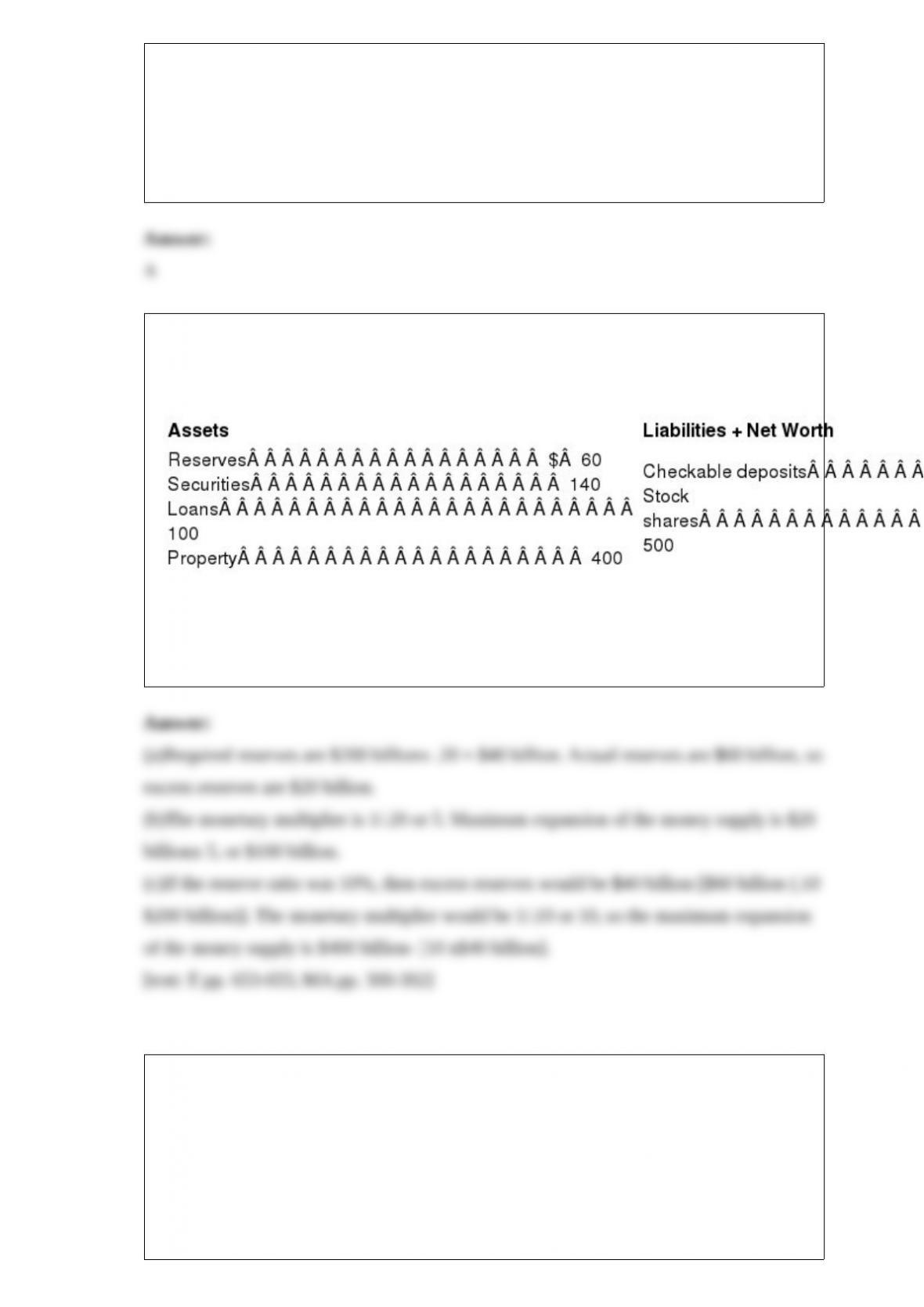
20) Answer the next questions based on the following consolidated balance sheet for the
commercial banking system. Assume the required reserve ratio is 20%. All figures are
in billions of dollars.
(a)What is the amount of excess reserves in this commercial banking system?
(b)What is the maximum amount that the money supply can be expanded?
(c)If the reserve ratio fell to 10%, what is now the maximum amount that the money
supply can be expanded?
21) accounting profits are typically:
a.greater than economic profits because the former do not take explicit costs into
account.
b.equal to economic profits because accounting costs include all opportunity costs.
c.smaller than economic profits because the former do not take implicit costs into
account.
d.greater than economic profits because the former do not take implicit costs into
account.
22) if two variables are inversely related, then as the value of one variable:
a.increases, the value of the other may either increase or decrease.
b.decreases, the value of the other decreases.
c.increases, the value of the other decreases.
d.increases, the value of the other increases.
23) Individual commercial banks are limited in their ability to create money by lending
because:
A.lending is likely to result in the loss of reserves to other banks.
B.only the Treasury and the Federal Reserve Banks are authorized to create new money.
C.the Board of Governors prohibits bank lending when the result is an expansion of the
money supply.
D.banking is a highly competitive industry.
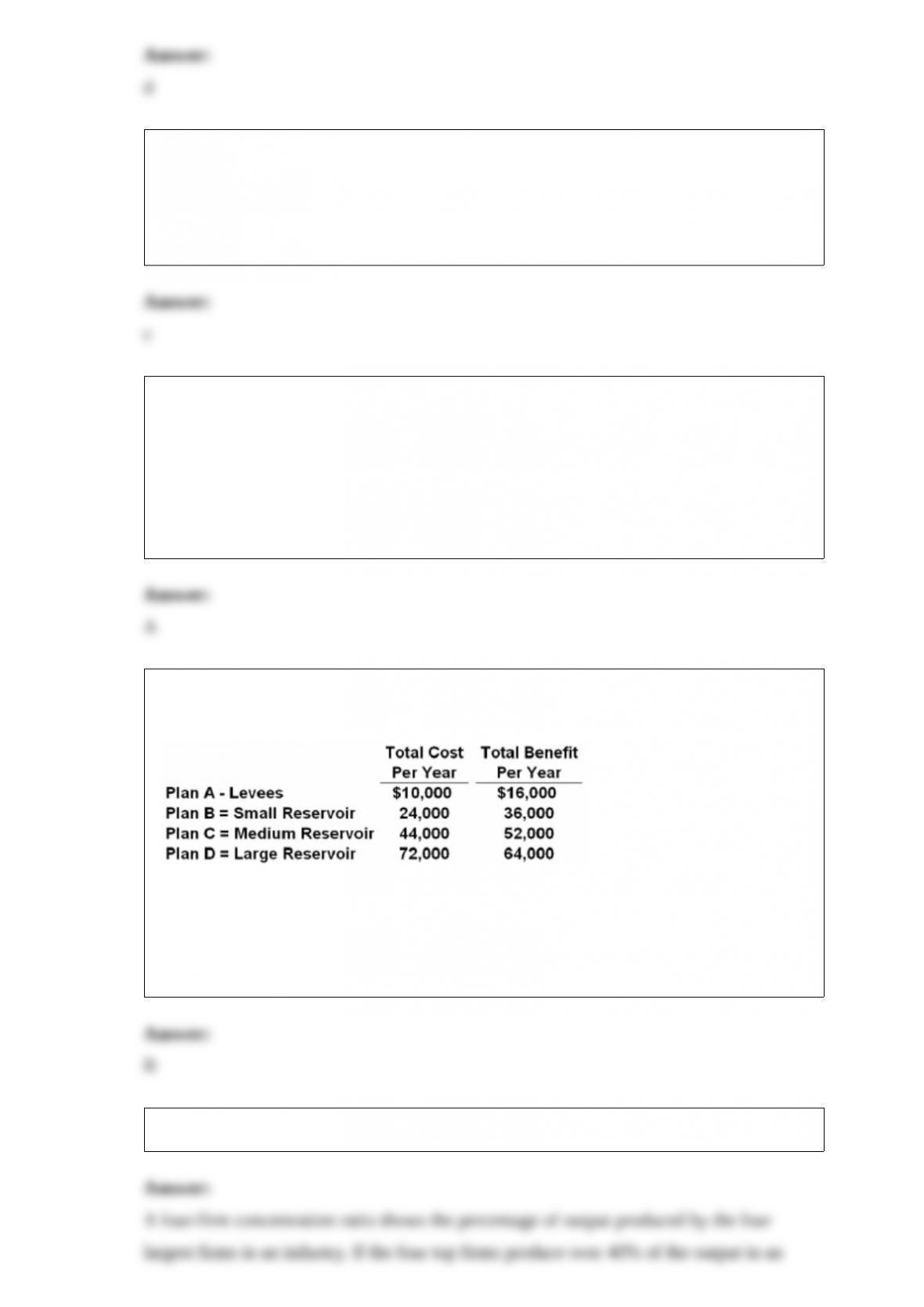
24) The following data are for a series of increasingly extensive flood control projects:
Refer to the above data. For Plan D marginal costs and marginal benefits are:
A.$72,000 and $64,000 respectively.
B.$28,000 and $12,000 respectively.
C.$24,000 and $18,000 respectively.
D.$16,000 and $28,000 respectively.
25) What are the shortcomings or limitations of the four-firm concentration ratios?
26) Comment on the statement: Increasing government spending is preferred to a cut in
taxes when the U.S. government seeks to fight a recession.
27) How can the aggregate demand curve be derived from the aggregate expenditures
model?

28) What is disinflation? Give examples of it.
29) Under what conditions will a purely competitive firm realize an economic profit?
Give a response from a marginal revenue and marginal cost perspective and from a total
revenue and total cost perspective.
30) State the predictions about world population growth offered by demographers and
explain the basis on which they are made.
31) What is the basic difference between the short run and long run as these terms relate
to macroeconomics? Why does this difference occur?
32) (Last Word) Give three examples of government failure in the news.
33) How will a change in productivity change the demand for a resource? What three
factors will affect productivity?