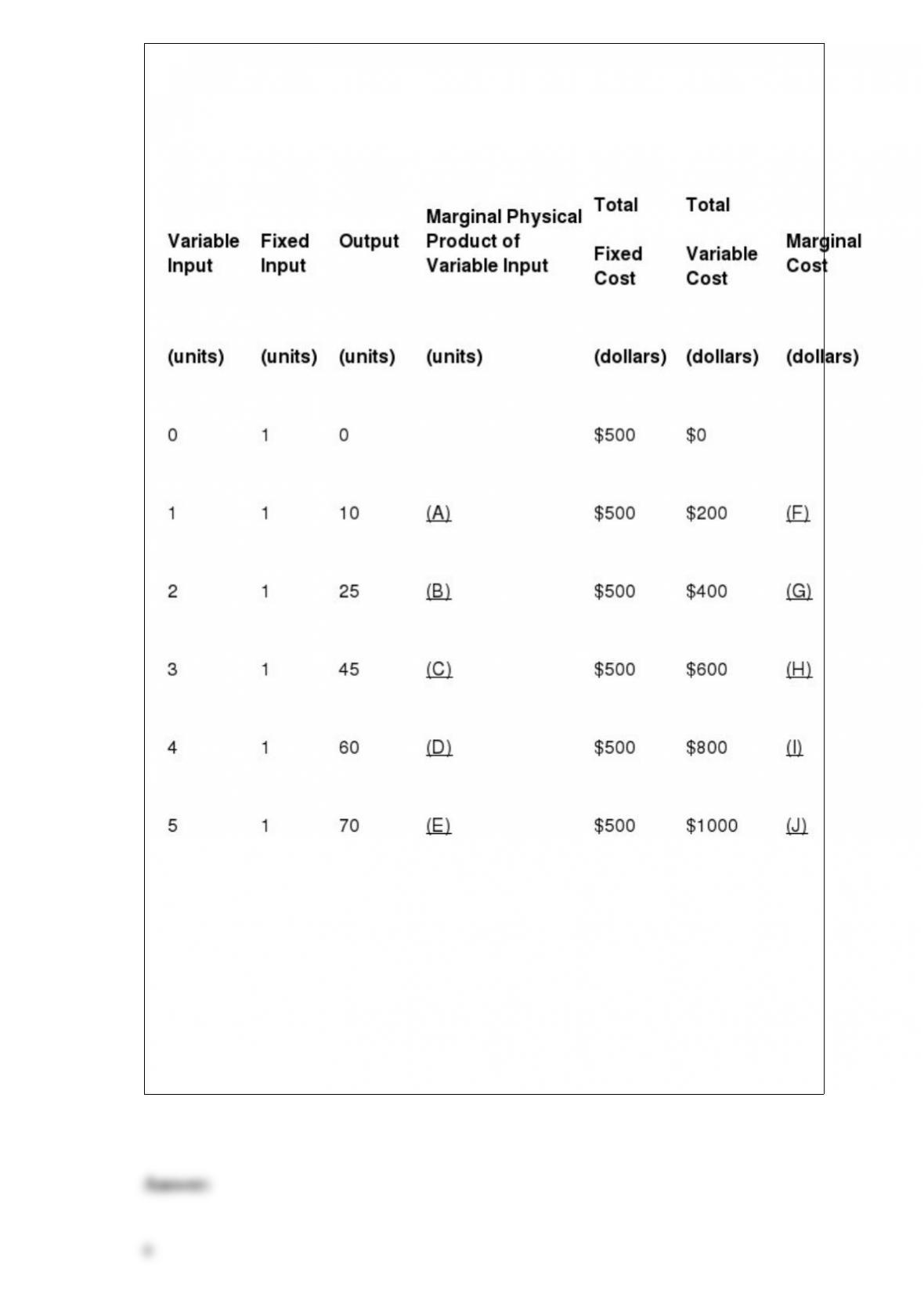
Refer to Exhibit 22-3. The total cost of producing 45 units of output is
Exhibit 22-3
a. $1,100.
b. $950.
c. $1,050.
d. $900.
e. $1,000.
If income rises, the budget constraint
a. moves inward toward the origin.
b. moves outward away from the origin.
c. does not move.
d. moves farther down the vertical axis.
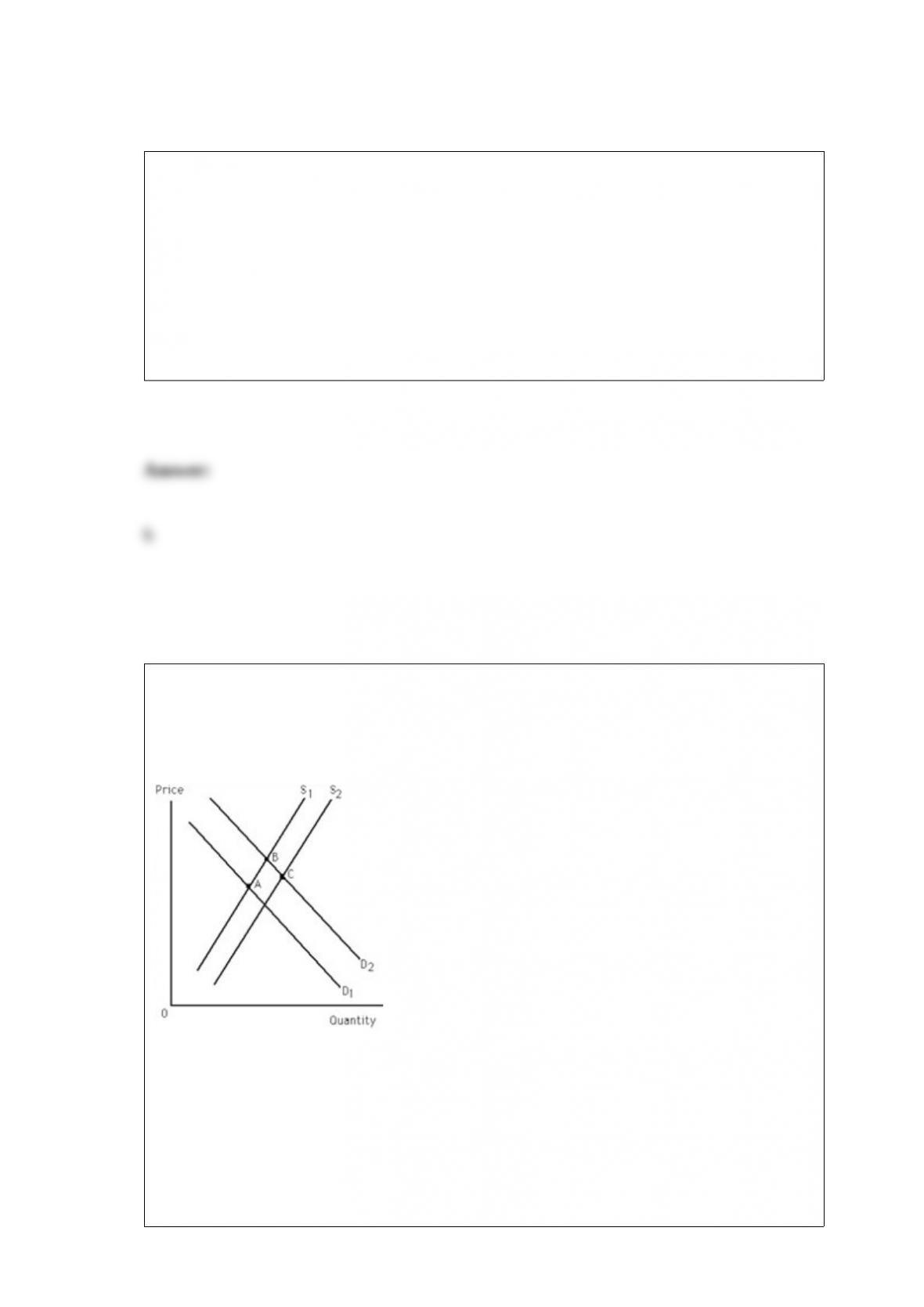
Refer to Exhibit 3-2. Suppose equilibrium is at point B. Something then changes and
equilibrium becomes point C. Which of the following is consistent with the change in
equilibrium from point B to C (assuming that good X is a normal good)?
Exhibit 3-2
Good X a. There was an increase in resource prices and income stayed constant.
b. There was a decrease in resource prices and income stayed constant.
c. There was an increase in resource prices and income decreased.
d. There was an increase in resource prices and income increased.

Under the target price program,
a. the government ends up buying the surplus product that results.
b. taxpayers pay the difference between the price consumers pay and the target price.
c. deficiency payments are made to both rich and poor farmers.
d. the surplus that results is sometimes dumped or otherwise wasted.
e. b and c
Demand refers to
a. how much of a good people are willing and able to buy at a particular price.
b. the different quantities of a good people are willing and able to buy at different
prices.
c. the different quantities of a good people are willing and able to buy at a particular
price.
d. how much of a good people are willing to buy at different prices.
e. none of the above

As the price of a product rises the product will become more elastic in demand,
assuming that the demand curve for the product is a downward-sloping straight line.
a. True
b. False
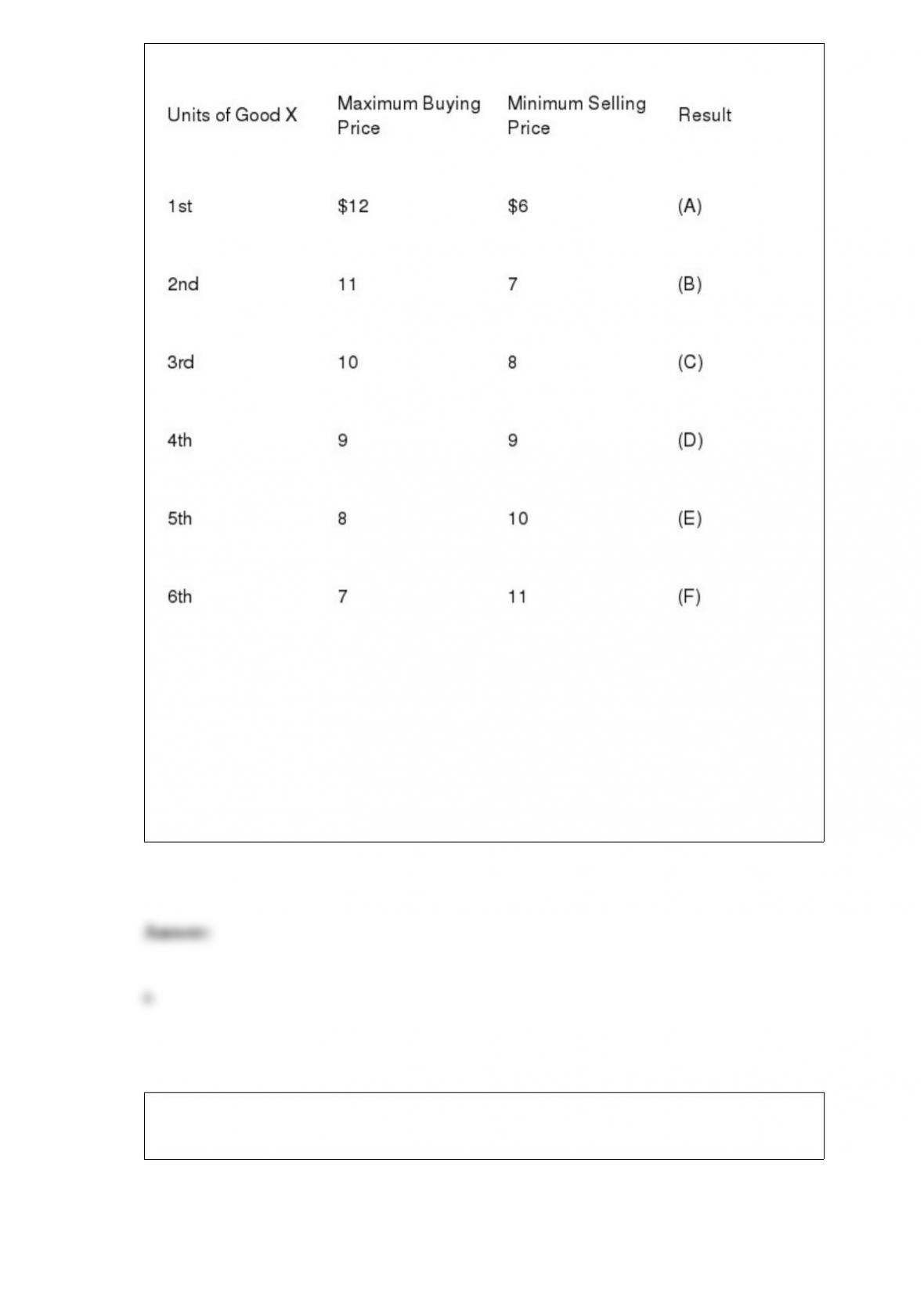
Refer to Exhibit 3-11.Fill in blanks (A) and (B) respectively with “Exchange” or “No
Exchange” to indicate whether or not exchange would take place at the given prices.
Exhibit 3-11
a. Exchange; Exchange
b. Exchange; No Exchange
c. No Exchange; Exchange
d. No Exchange; No Exchange
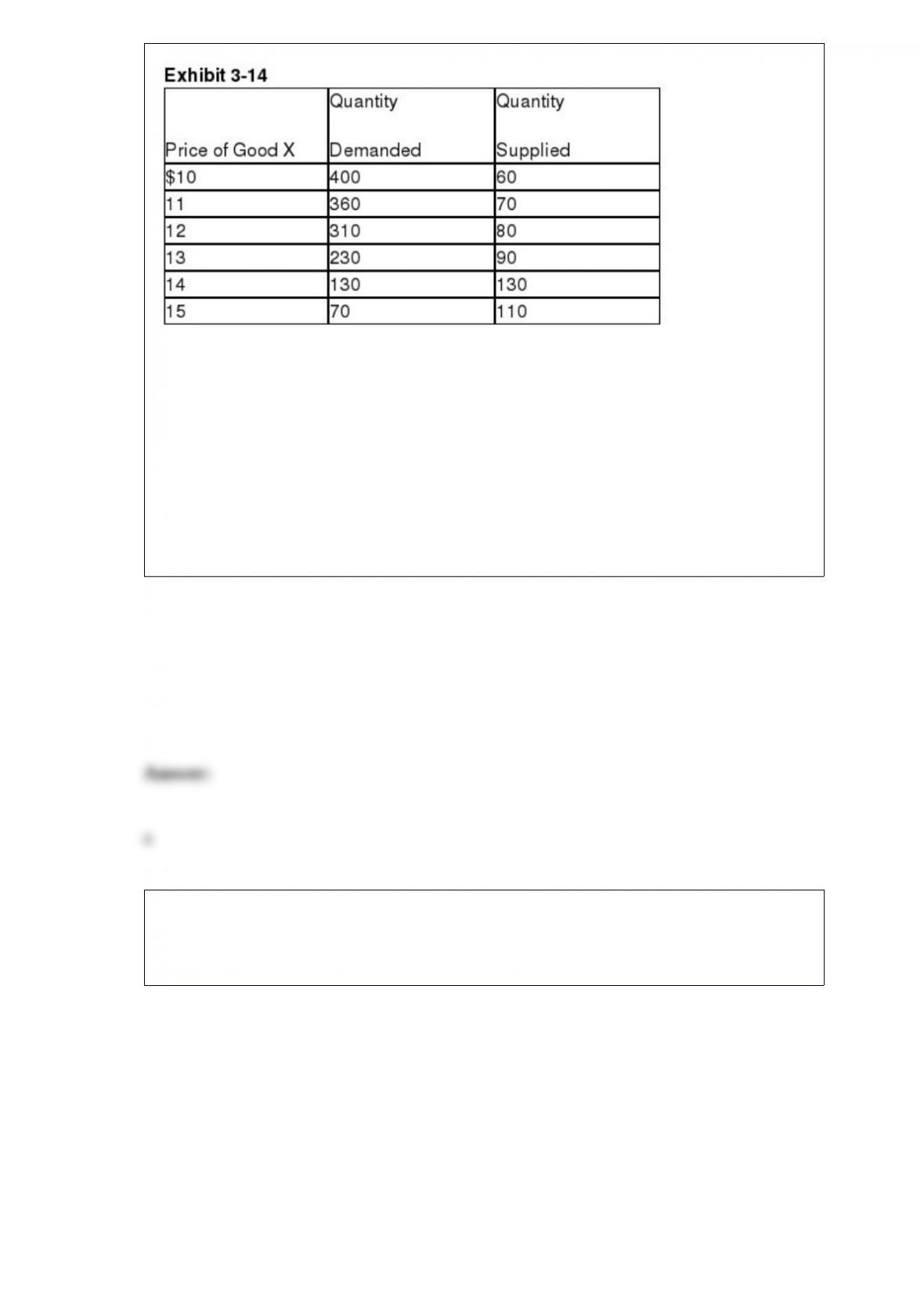
Refer to Exhibit 3-14.At a price of $13, there is a ____________ unit____________ of
good X.
a. 140; shortage
b. 160; shortage
c. 140; surplus
d. 20; surplus
e. 100; surplus
Refer to Exhibit 39-1. At a support price of PT, private sector spending on this good
equals
Exhibit 39-1
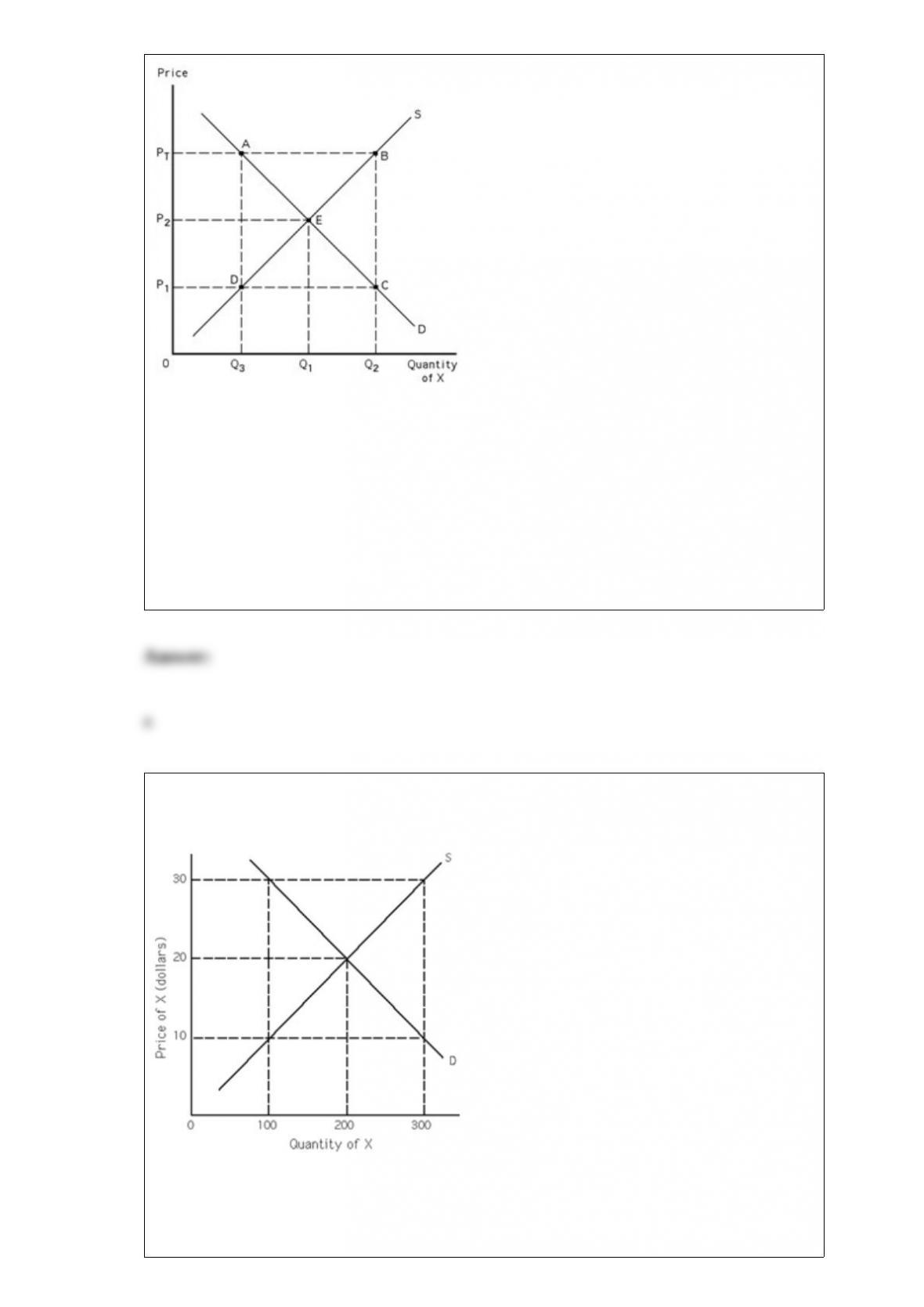
a. PT x Q3.
b. PT x Q2.
c. P1 x Q3.
d. P1 x Q2.
Refer to Exhibit 3-10. $20 is the
Exhibit 3-10
a. equilibrium price.
b. market-clearing price.
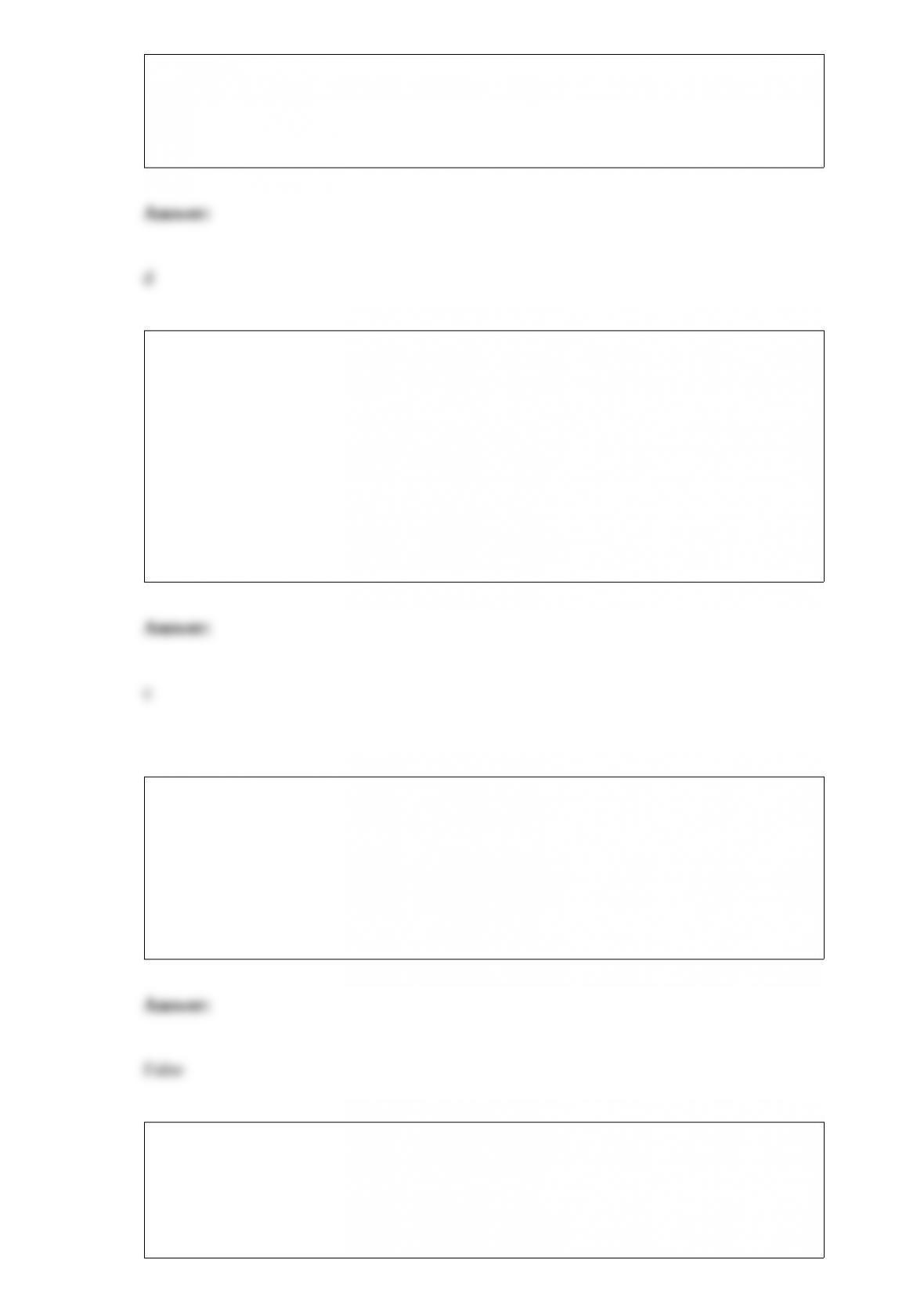
c. price at which there is neither a surplus nor a shortage.
d. all of the above
The reason the change in total cost divided by the change in output is equal to the
change in total variable cost divided by the change in output, is because
a. total variable cost rises as output rises.
b. of the law of diminishing marginal returns.
c. total fixed cost does not change as output changes.
d. total cost does not change as output changes.
When a market is in disequilibrium, such as when the quantity supplied of a good is
greater than the quantity demanded of that good, the price of the good will rise, ceteris
paribus.
a. True
b. False
If new legislation allowed patients to sue their health-maintenance organization (HMO),
we would expect the supply curve for HMO-provided health care to shift to the left and
the price of such coverage to rise.
a. True

b. False
If demand is __________, price and total revenue are __________ related; if demand is
__________, price and total revenue are directly related.
a. elastic; inversely; inelastic
b. inelastic; inversely; elastic
c. unit elastic; not; elastic
d. inelastic; inversely; unit elastic
e. none of the above
Some economists refer to a monopsony as a
a. factor price taker.
b. factor buyer.
c. buyer’s monopoly.
d. single-price monopolist.
e. Economists don’t refer to a monopsony as anything other than a monopsony.

The purchasing power parity theory predicts better in the __________ run, and when
there __________ in inflation rates across countries.
a. long; is little difference
b. short; are large differences
c. long; are large differences
d. short; is little difference
The PPF between goods X and Y will be a downward-sloping
a. straight line if increasing opportunity costs exist.
b. straight line if decreasing opportunity costs exist.
c. curve that is bowed outward if increasing opportunity costs exist.
d. curve that is bowed outward if constant opportunity costs exist.
Refer to Exhibit 34-11. PW is the price that exists in the market before a tariff is
imposed and PW + T is the price that exists in the market after a tariff is imposed. As a
result of the tariff, producers’ surplus __________ by the area __________.
Exhibit 34-11
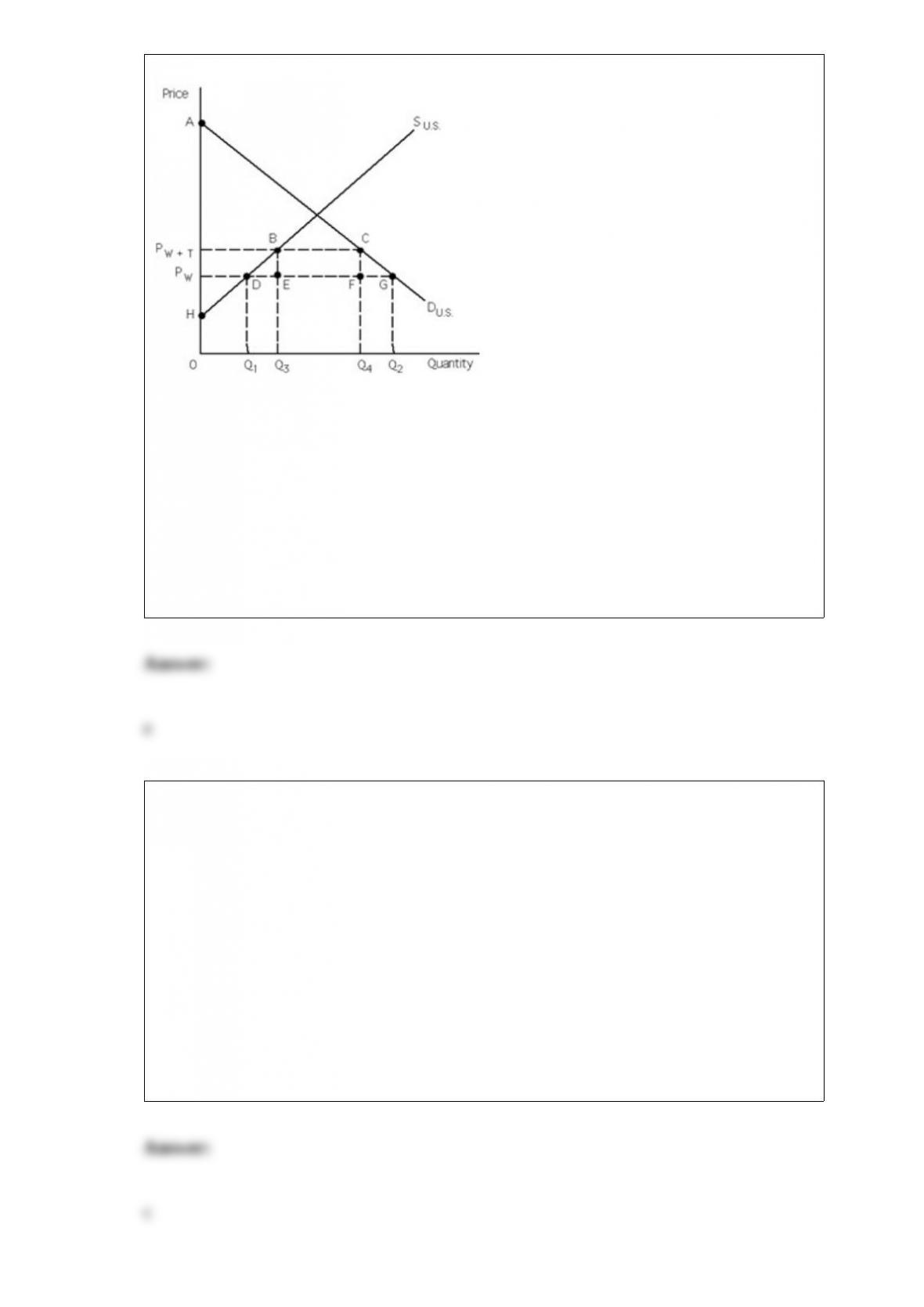
a. rises; EBCF
b. falls; DBE
c. rises; FCG
d. falls; DBCG
e. none of the above
To know whether the dollar is overvalued, we need to know
a. what foreign currency the dollar is being compared with.
b. the real interest rate in the United States and the real interest rate in whatever
country’s currency the dollar is being compared with.
c. the equilibrium exchange rate between the dollar and the foreign currency the dollar
is being compared with.
d. whether Federal Reserve monetary policy is expansionary or contractionary.
e. There is not enough information to answer the question.
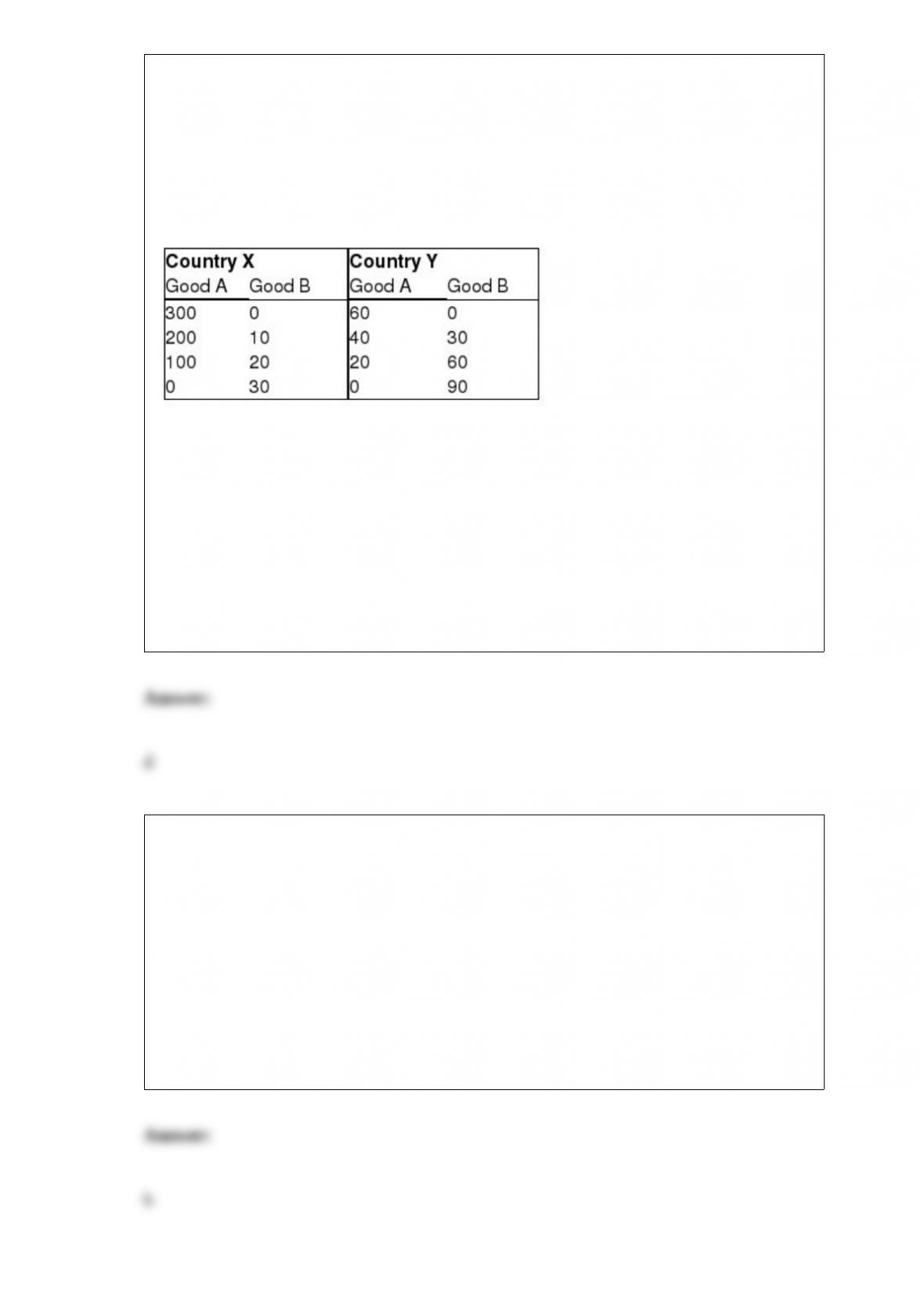
Refer to Exhibit 34-9. In the no specialization-no trade case, suppose country X
produces and consumes 100 units of good A and 20 units of good B. Country Y
produces and consumes 20 units of good A and 60 units of good B. If the two countries
specialize and trade, and the actual amounts traded are 125 units of good A for 25 units
of good B, how many more units of good A will country Y consume by specializing and
trading?
Exhibit 34-9
a. 125
b. 20
c. 15
d. 105
e. 50
The bigger the shortage of a good or service, the ____________ the seller of the good
or service will be to an individual customer _________.(We are assuming here that the
shortage cannot, for legal reasons, be alleviated through a rise in price.)
a. more polite; without having sales adversely affected
b. ruder; without having sales adversely affect
c. more polite; even though sales will be adversely affected
d. ruder; even though sales will be adversely affected
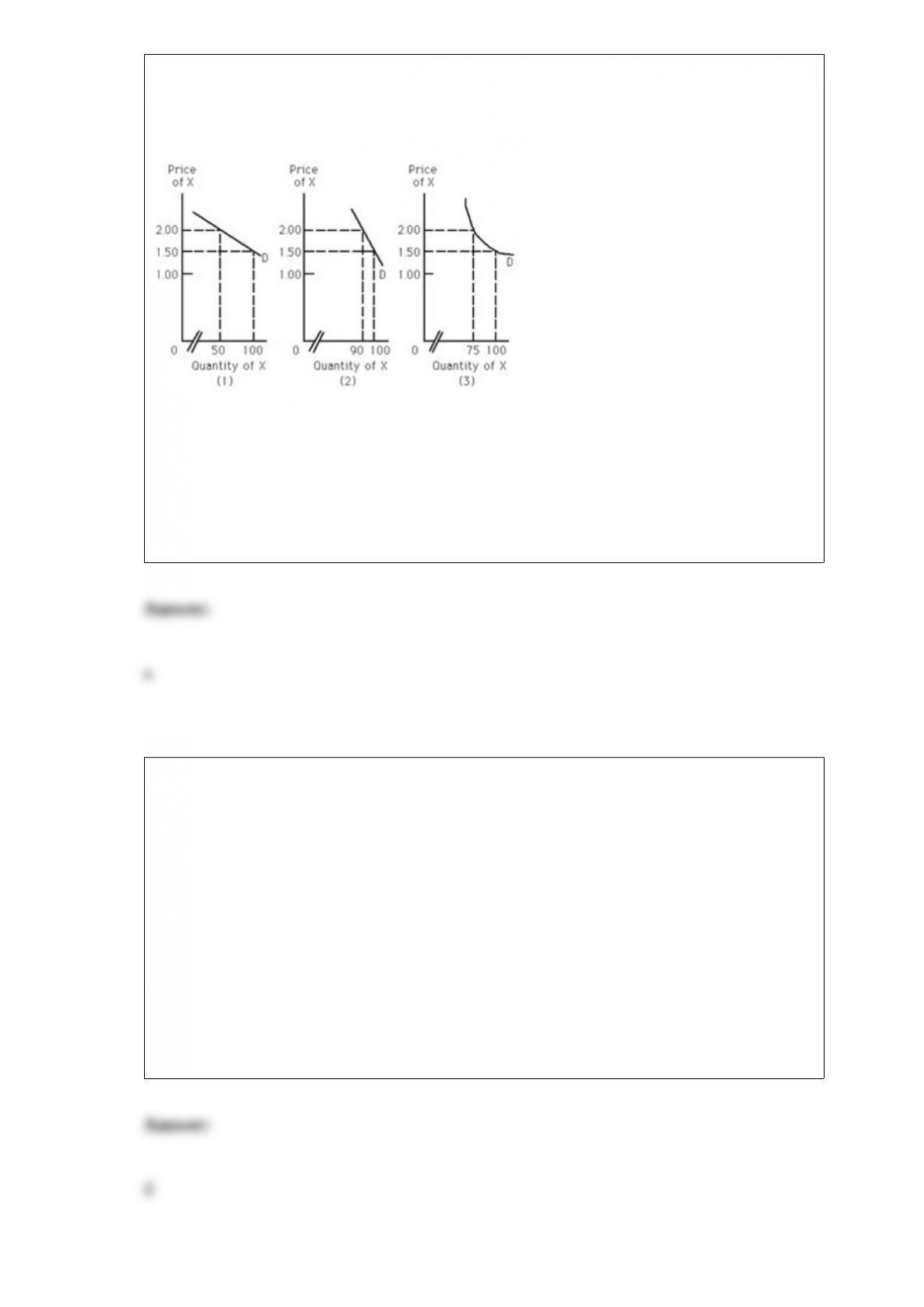
Refer to Exhibit 20-5. For graph (3), what is the price elasticity of demand going
between $2.00 and $1.50?
Exhibit 20-5
a. 1.0
b. 0
c. 50.0
d. 0.02
There is a flexible exchange rate system and only two countries in the world, the United
States and Mexico. An increase in income growth in Mexico relative to income growth
in the United States will cause the
a. dollar to appreciate.
b. peso to depreciate.
c. dollar to depreciate.
d. a and b
e. There is not enough information to answer the question.
What relationship exists between marginal factor cost (MFC) and wage for a
monopsony firm?Explain why this is so.
List and describe the two major jobs performed by price.
Explain the differences between a corporate bond, a municipal bond, and a Treasury
bond.Which of these would be the least risky investment, and why?
What condition is necessary for a price ceiling to have an impact on a market? Describe
at least three of the effects that a price ceiling can have on a market.Give a hypothetical
numerical example to help support your answer.
Explain how and why price elasticity of demand changes as a product is defined more
narrowly or more broadly.Cite an example to help support your answer.
Maria and Lourdes work for the same company. If Maria earns more than Lourdes, is
this evidence of wage discrimination?Explain your answer.
What does price elasticity of supply measure?Explain the relationship that exists
between price elasticity of supply and the length of time sellers have to adjust to the
price change.