The market for smart phones has grown rapidly over the past few years, due in part to
the overwhelming success of the Apple iPhone. Following the successful launch of the
iPhone in 2007, companies such as Samsung, HTC, and LG have all introduced
products to compete with the iPhone. The smart phones introduced to compete with the
iPhone would be considered
A) complements to the iPhone.
B) substitutes for the iPhone.
C) inferior goods compared to the iPhone.
D) normal goods compared to the iPhone.
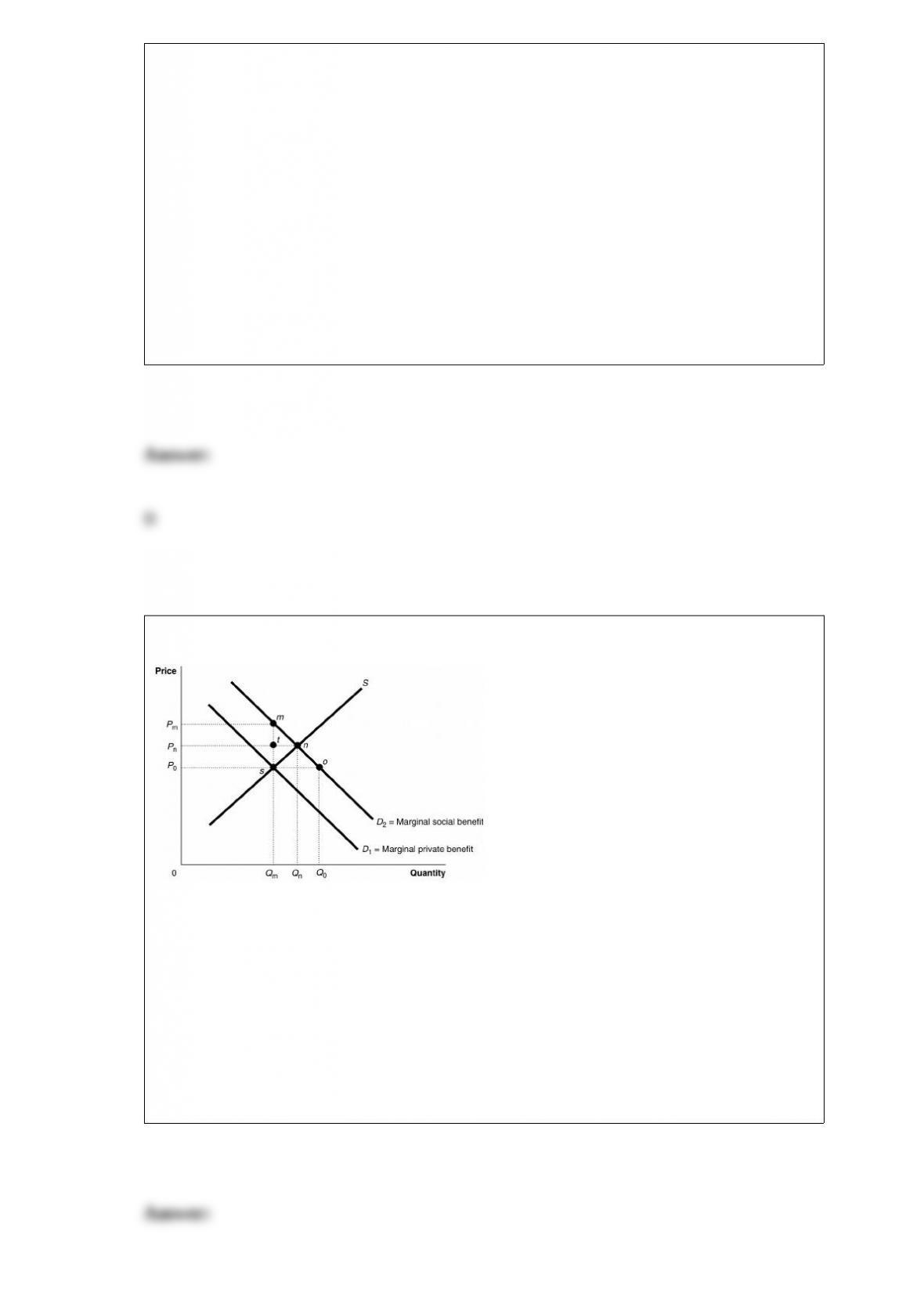
Figure 5-3
The deadweight loss due to the externality is represented by the area
A) mso.
B) msn.
C) nso.
D) mtn.

The money demand curve has a negative slope because
A) lower interest rates cause households and firms to switch from money to financial
assets.
B) lower interest rates cause households and firms to switch from financial assets to
money.
C) lower interest rates cause households and firms to switch from money to stocks.
D) lower interest rates cause households and firms to switch from money to bonds.
Which of the following is not true about the composition of GDP in 2012?
A) The majority of consumer spending is on durable goods.
B) Purchases made by state and local governments are greater than purchases made by
the federal government.
C) Imports are greater than exports.
D) Business fixed investment is the largest component of investment.
Which of the following offers the best reason why restaurants are not considered to be
perfectly competitive firms?
A) Restaurants do not sell identical products.
B) Restaurants compete in small market areas – neighborhoods and cities – rather than
in regional or national markets. Therefore, restaurants are not small relative to their
market size.
C) Restaurants usually have entry barriers in the form of zoning restrictions and health
regulations.
D) Restaurants have significant liability costs that perfectly competitive firms do not
have; for example, customers may sue if they suffer from food poisoning.
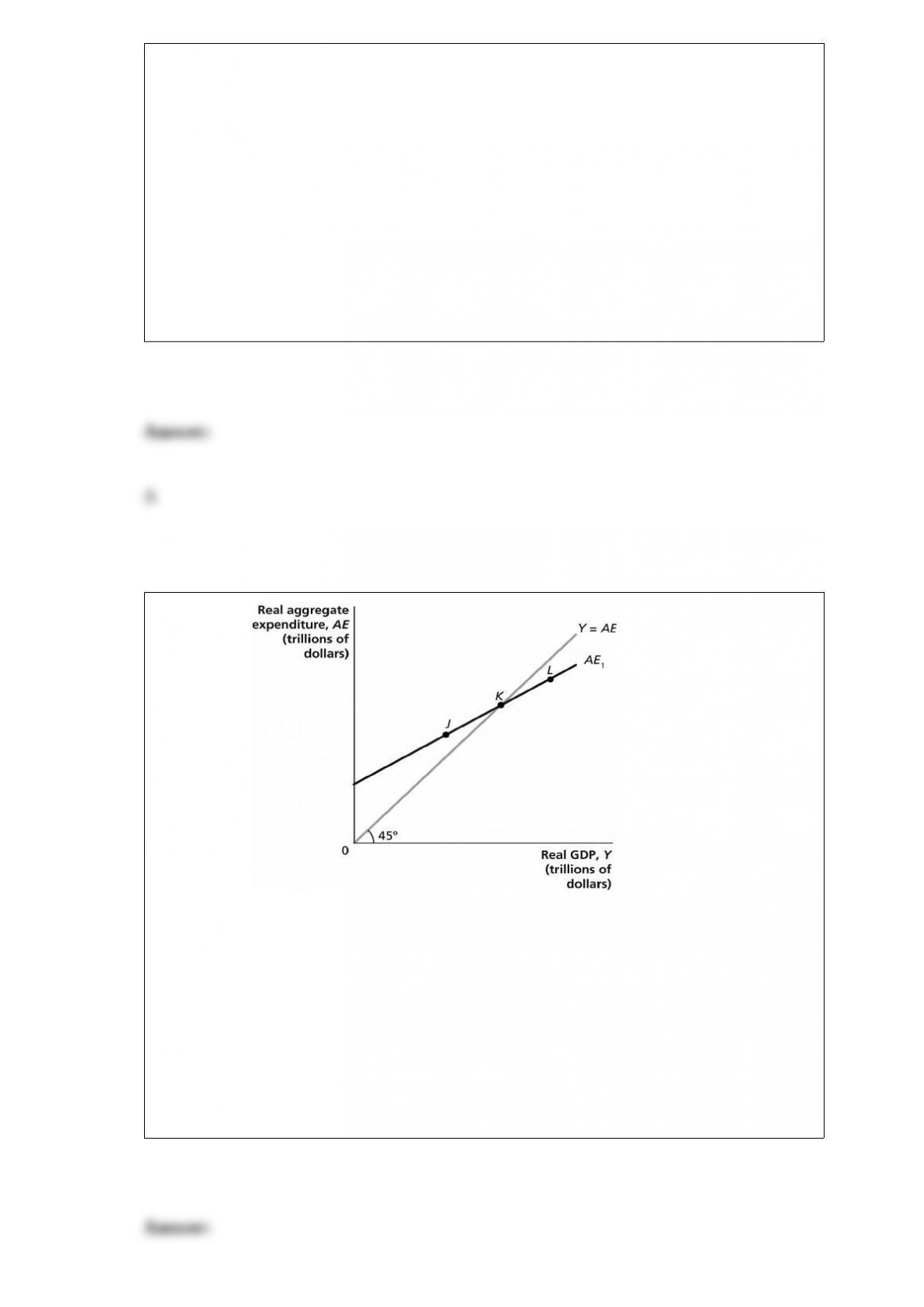
Figure 23-1
At point L in the figure above, which of the following is true?
A) Aggregate expenditure is greater than GDP.
B) The economy has achieved macroeconomic equilibrium.
C) Actual inventories are greater than planned inventories.
D) GDP will be increasing.

The PPI is the
A) price parity index.
B) prime producer index.
C) producer price index.
D) production performance indicator.
Under Alan Greenspan, the Fed strived to hit its goals of price stability and high
employment through
A) setting targets for the federal funds rate of interest.
B) setting targets for rates of growth in the M1 and M2 money supplies.
C) practicing discretionary monetary policy, reacting to counter-changes in the level of
unemployment during recessions and booms.
D) strict adherence to rules based strategies.
The law of demand implies, holding everything else constant, that
A) as the price of bagels increases, the quantity of bagels demanded will decrease.
B) as the price of bagels increases, the demand for bagels will decrease.
C) as the price of bagels increases, the quantity of bagels demanded will increase.
D) as the price of bagels increases, the demand for bagels will increase.
Gold is an example of
A) commodity money.
B) fiat money.
C) barter money.
D) M1.