1) If the demand for movies increases at the same time as the movie industry adopts
labor-saving technology for producing movies, the equilibrium price for movies will
increase, but the effect on the equilibrium quantity of movies is ambiguous.
a.True
b.False
2) Which is the most accurate statement about trade?
a.Trade can make every nation better off.
b.Trade makes some nations better off and others worse off.
c.Trading for a good can make a nation better off only if the nation cannot produce that
good itself.
d.Trade helps rich nations and hurts poor nations.
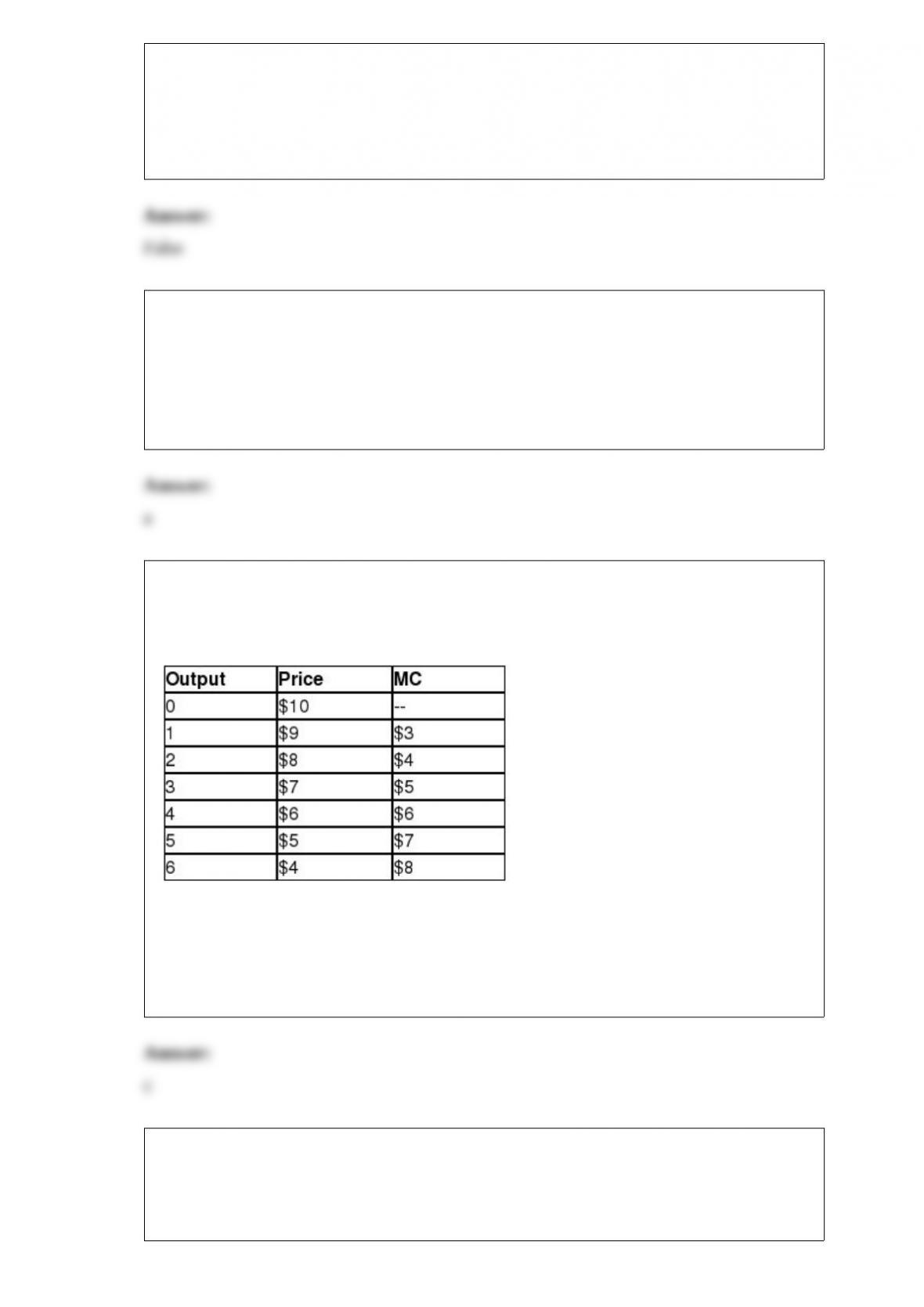
3) Table 15-11
The following table shows quantity, price, and marginal cost information for a
monopoly:
What would be the firm’s marginal revenue at the profitmaximizing level of output?
a.$7
b.$6
c.$5
d.$1
4) Scenario 14-4
The information below applies to a competitive firm that sells its output for $40 per
unit.
– When the firm produces and sells 150 units of output, its average total cost is $24.50.
– When the firm produces and sells 151 units of output, its average total cost is $24.55.
Suppose the firm is producing 150 units of output and its fixed cost is $975. Then its
variable cost amounts to
a. $2,360.25.
b. $2,500.00.
c. $2,612.75.
d. $2,700.00.
5) Some goods can be produced at low cost only if they are produced in large
quantities. This phenomenon is called
a.marginal cost of production.
b.marginal benefit of size.
c.economies of scale.
d.economies of production.
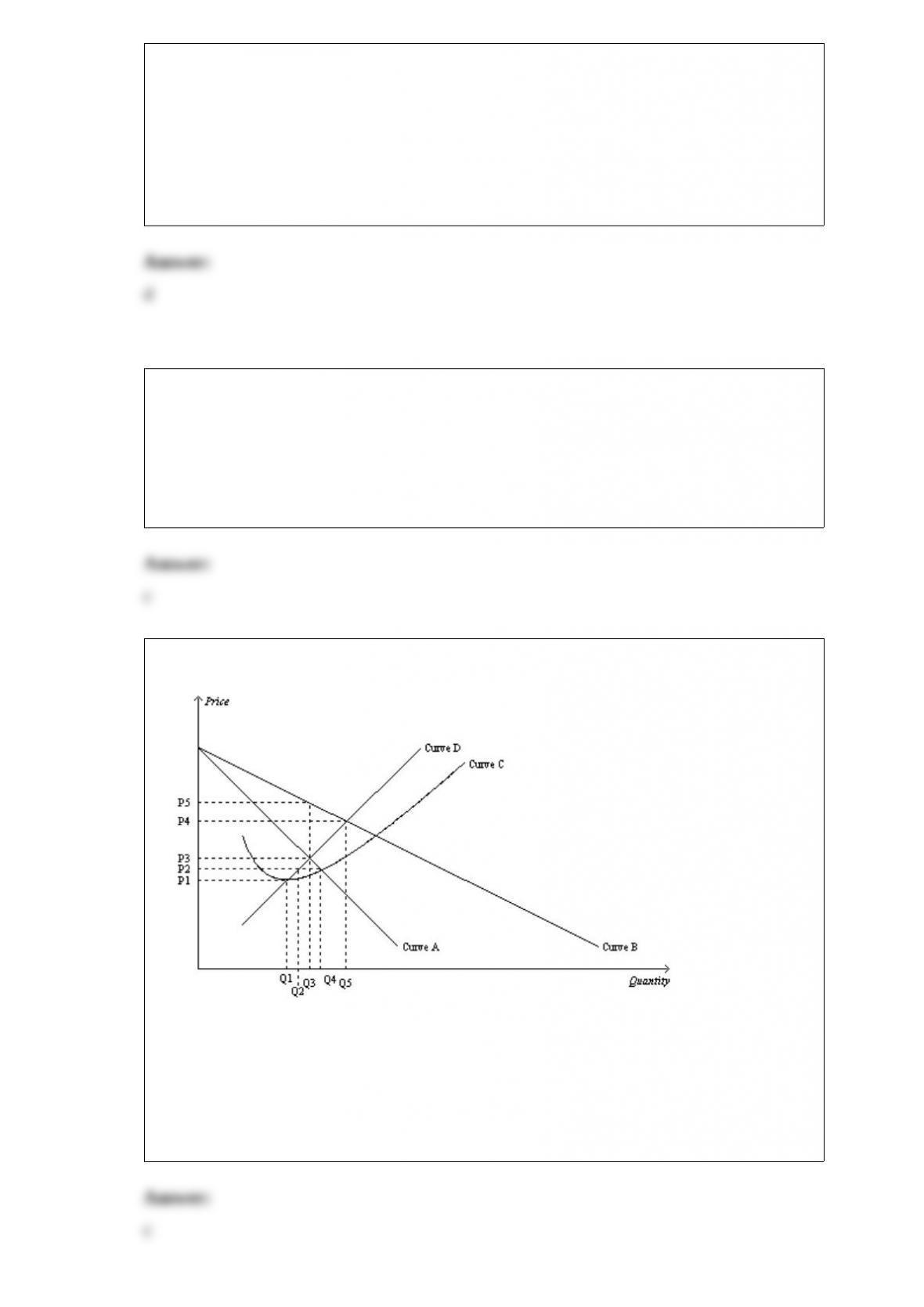
6) Figure 15-4
If the monopoly firm wants to maximize its profit, it should operate at a level of output
equal to
a.Q1
b.Q2
c.Q3
d.Q4
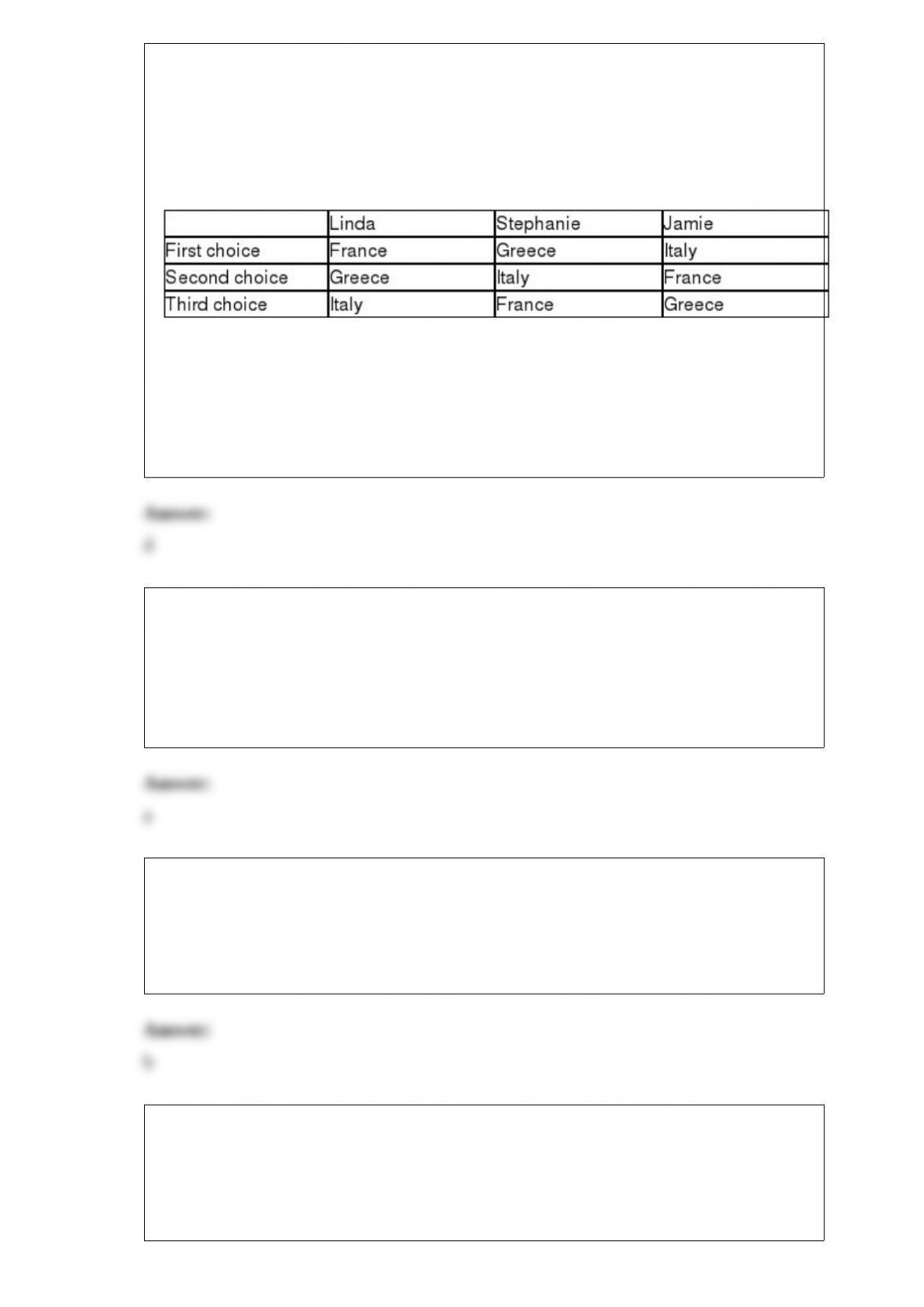
7) Table 22-1
Three friends — Linda, Stephanie, and Jamie — are deciding where to go together for
vacation. They all agree that they should go to one of three places: France, Greece, or
Italy. They also agree that they will have two pairwise votes to determine where to go
on vacation, with the majority determining the outcome on each vote. The first, second,
and third choices for each person are as indicated in the table below.
Refer to Table 22-1. If the first vote pits France against Italy and the second vote pits
Greece against the winner of the first vote, then the outcome is as follows:
a.France wins the first vote and Greece wins the second vote, so they go to Greece.
b.France wins the first vote and France wins the second vote, so they go to France.
c.Italy wins the first vote and Italy wins the second vote, so they go to Italy.
d.Italy wins the first vote and Greece wins the second vote, so they go to Greece.
8) Suppose that the market for labor is initially in equilibrium. If the firm employs
labor-augmenting technology, the equilibrium wage
a.and the equilibrium quantity of labor will rise.
b.and the equilibrium quantity of labor will fall.
c.will rise, and the equilibrium quantity of labor will fall.
d.will fall, and the equilibrium quantity of labor will rise.
9) If one firm left a duopoly market where the firms did not cooperate then
a.price and quantity would rise
b.price would rise and quantity would fall.
c.quantity would rise and price would fall.
d.quantity and price would fall.
10) Scenario 12-4
A taxpayer faces the following tax rates on her income: 20 percent of the first $40,000
of her income; 30 percent of all her income above $40,000.
At what level of income would the taxpayer’s marginal tax rate be 30 percent and her
average tax rate be 25 percent?
a. $42,000
b. $57,000
c. $60,000
d. $80,000
11) Suppose the government used the following formula to compute a family’s tax
liability: Taxes owed = 28% of income – $8,000. How much would a family have to
earn to owe $0 in taxes?
a.$8,000
b.$16,283
c.$28,571
d.$30,694
12) Why do elephants face the threat of extinction while cows do not?
a.Cattle are a valuable source of income for many people, while elephants have no
market value.
b.There is a high demand for products that come from cows, whereas there is no
demand for products that come from elephants.
c.There are still lots of cattle that roam free, while all elephants live in zoos.
d.Cattle are owned by ranchers, while elephants are owned by no one.
13) When a country allows trade and becomes an exporter of a good,
a.consumer surplus and producer surplus both increase.
b.consumer surplus and producer surplus both decrease.
c.consumer surplus increases and producer surplus decreases.
d.consumer surplus decreases and producer surplus increases.
14) Is national defense excludable? Is it rival in consumption? How do we classify
national defense in terms of the four types of goods?
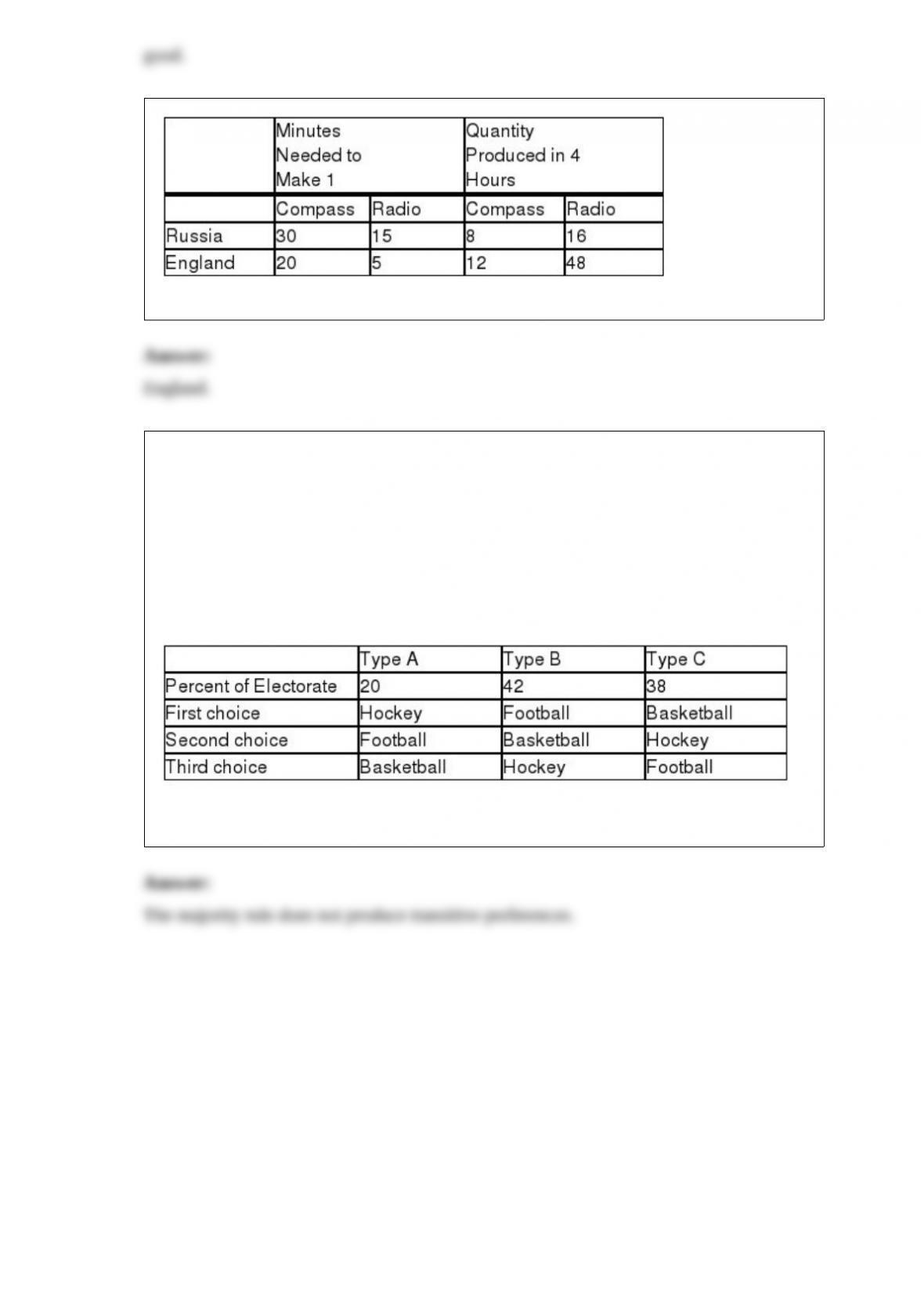
15) Which country has a comparative advantage in producing radios?
16) Table 22-24
The citizens of Mayville are having a severe budget shortage and are faced with
eliminating athletics from the town high school. The town administrator has determined
that the town can afford to maintain one sport. Exactly one of the three choices will
prevail, and the choice will be made by way of pairwise voting, with the majority
determining the outcome on each vote. The preferences of the voters are summarized in
the table below.
Voter Type
Refer to Table 22-24. Explain why the Condorcet paradox applies to this voting
situation.
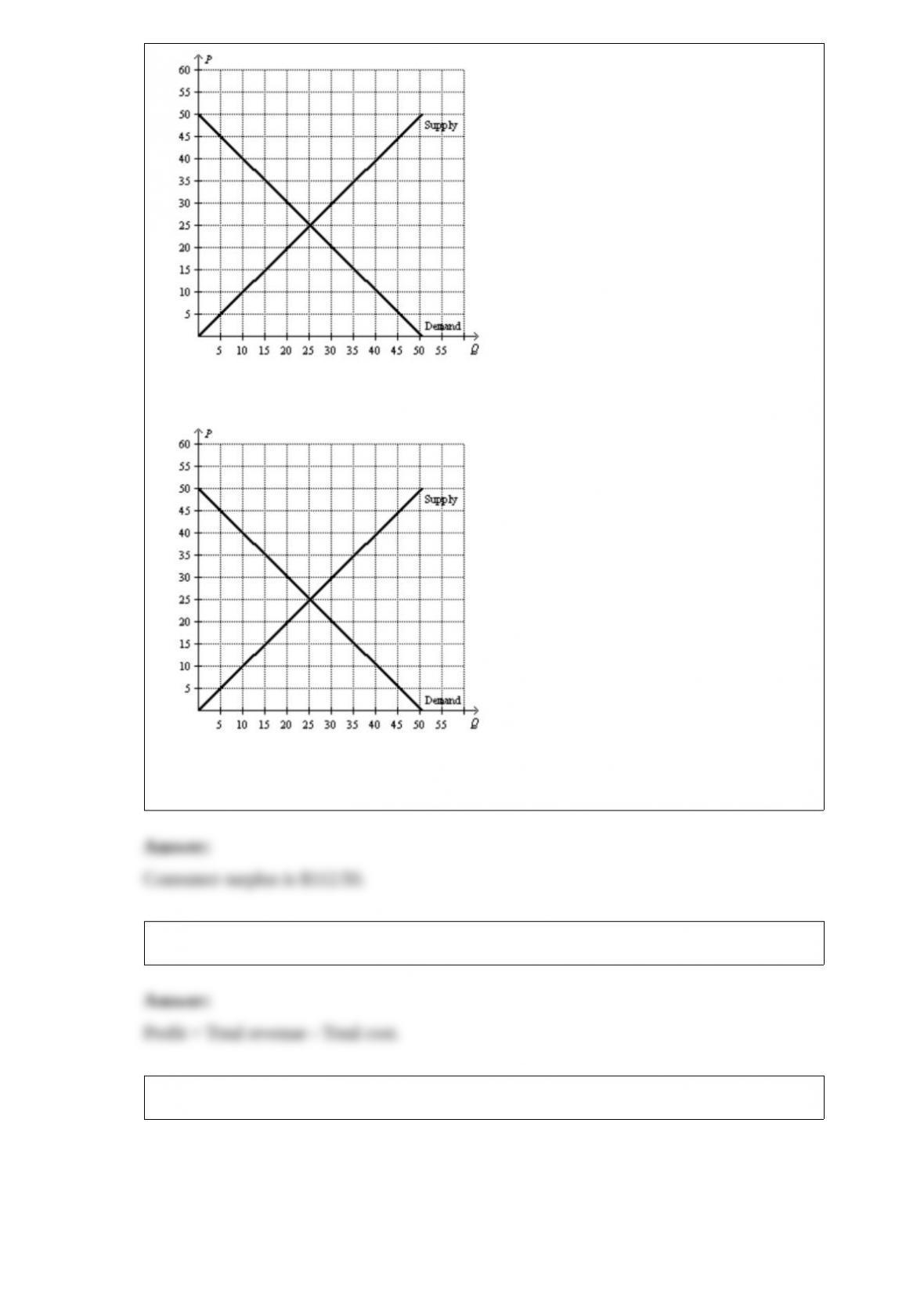
17) Figure 7-32
Refer to Figure 7-32. If the government imposed a price floor at $35 in this market,
how much is consumer surplus?
18) Define profit.
19) Greg’s Production Possibilities
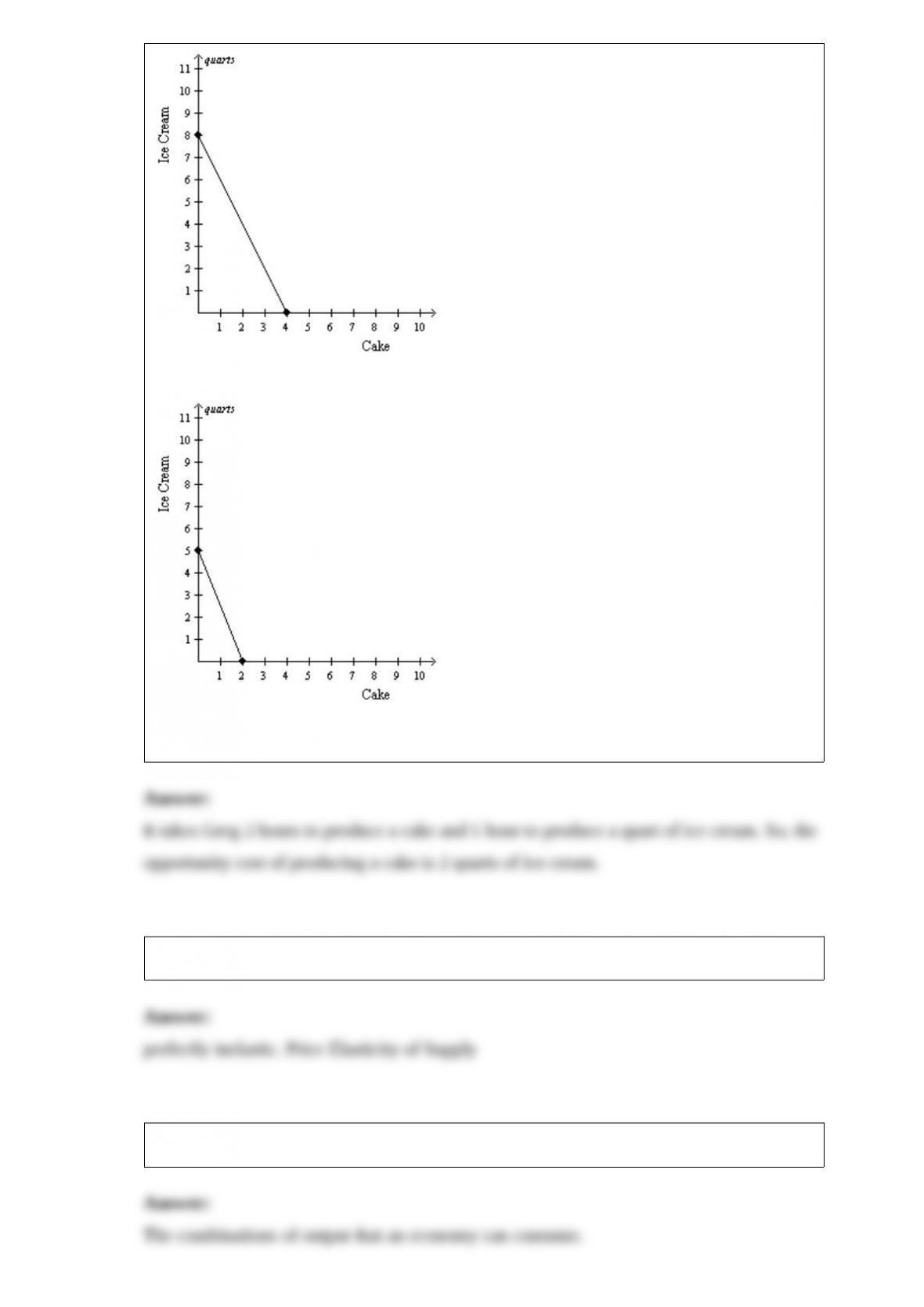
Catherine’s Production Possibilities
What is Greg’s opportunity cost of producing cake? Explain how you derived your
answer.
20) If the quantity supplied is exactly the same regardless of the price, supply is
21) What does a consumption possibilities frontier represent?