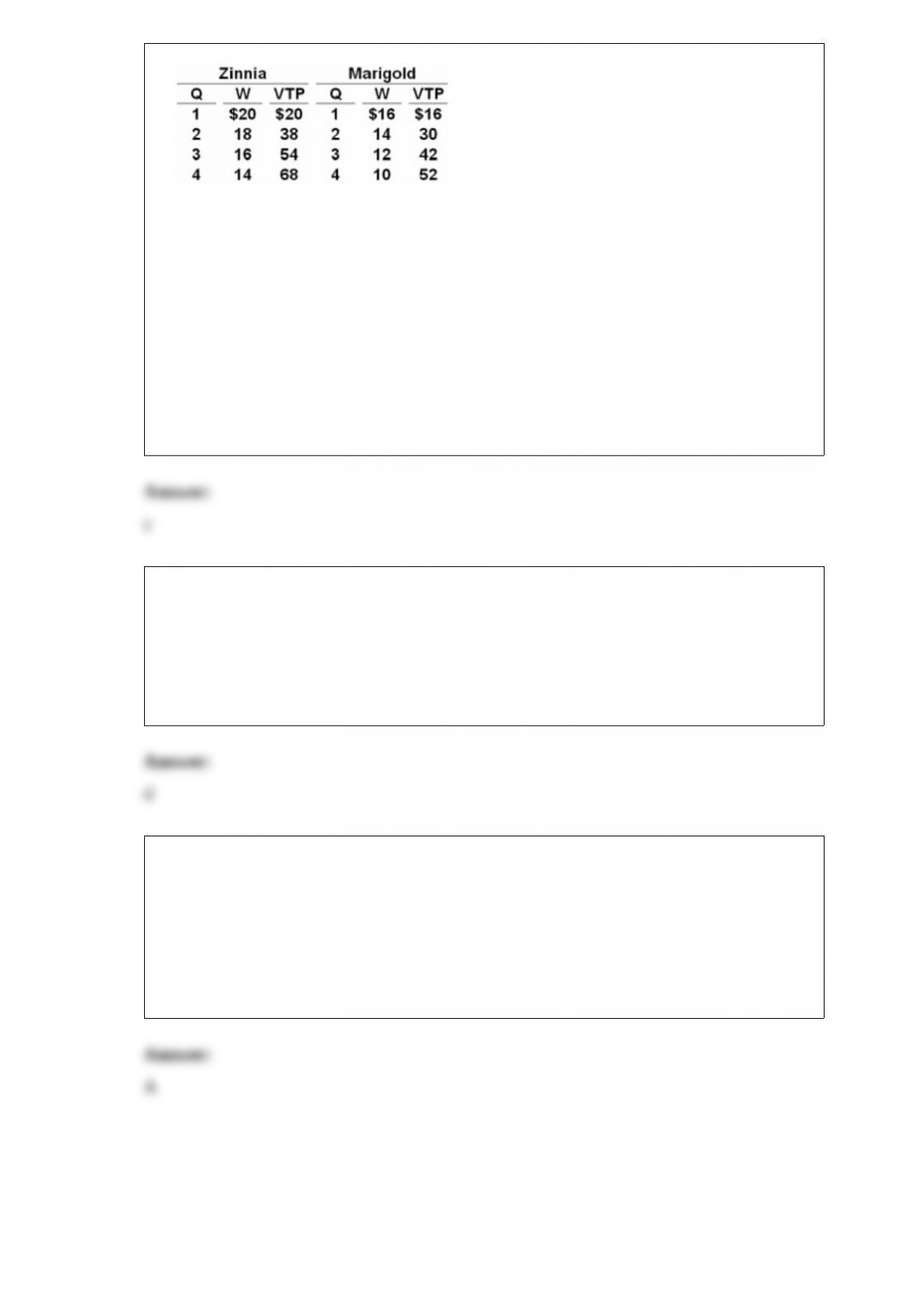
1)
symbols: q = number of workers demanded; w = wage rate; and vtp = value of the
cumulative total product (output) of the particular number of workers.
assumptions: (1) the current wage in zinnia is $20 and the current wage in marigold is
$12; (2) full employment exists in both countries.
refer to the above data, symbols, and assumptions. if migration is costless and
unimpeded:
a.no migration will occur.
b.migration will cause the wage in marigold to fall.
c.2 workers will move from marigold to zinnia.
d.4 workers will move from marigold to zinnia.
2) government may lessen income inequality by:
a.providing transfer payments to the poor.
b.directly modifying market prices as, for example, by establishing a legal minimum
wage.
c.using the tax system to tax the wealthy relatively more heavily than the poor.
d.doing all of these.
3) Long-run real wages in the United States have:
A.risen, because growth in the demand for labor has exceeded growth in the supply of
labor.
B.risen, because the supply of labor has fallen over time.
C.fallen, because growth in the supply of labor has exceeded growth in the demand for
labor.
D.fallen, because the demand for labor has fallen over time.
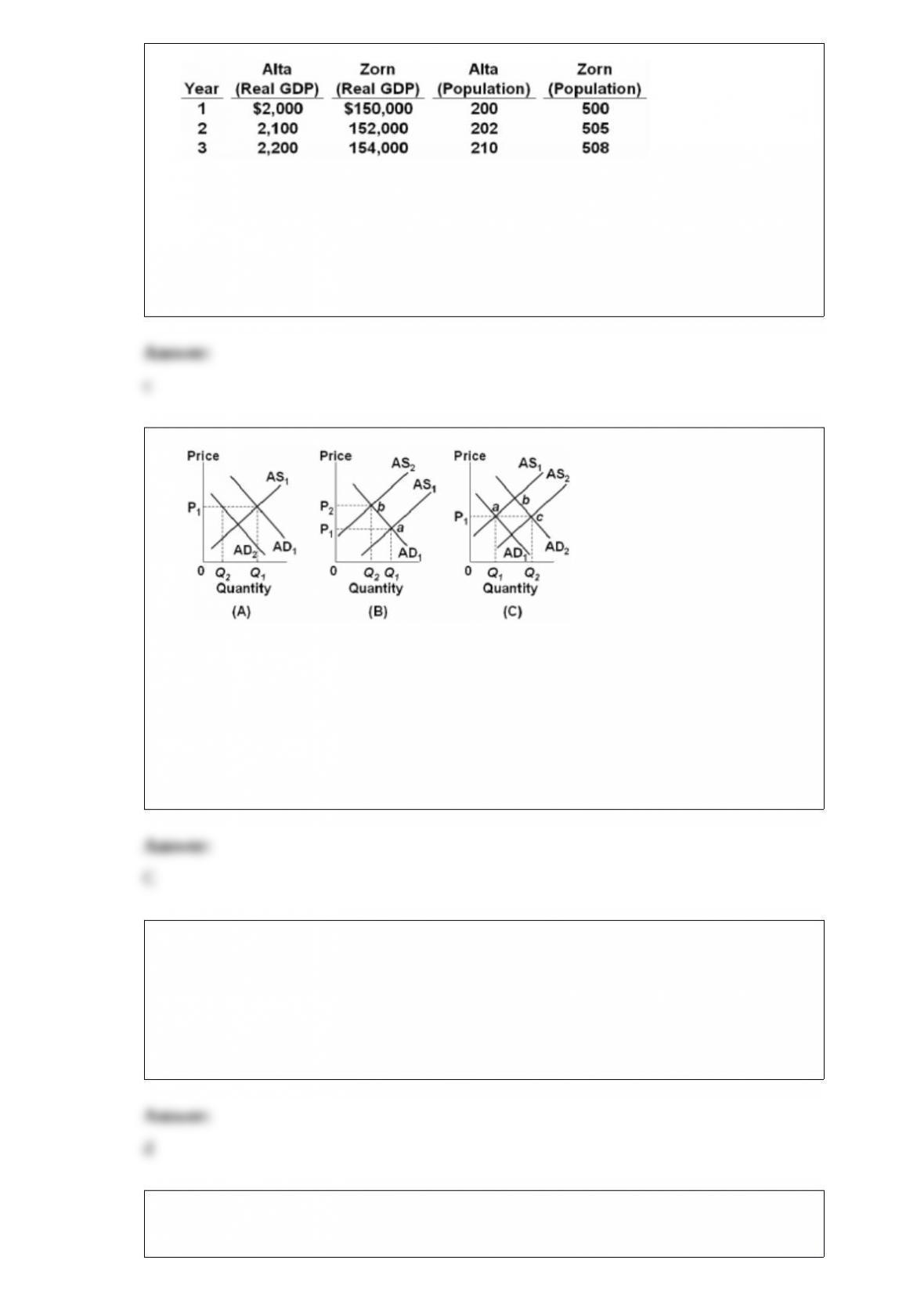
4)
refer to the above table. between years 1 and 2, real gdp grew by __________ percent
in alta:
a.3
b.4
c.5
d.10
5)
Refer to the above diagrams, in which AD1 and AS1 are the “before” curves and AD2
and AS2 are the “after” curves. Other things equal, a decrease in resource prices is
depicted by:
A.panel (A) only.
B.panel (B) only.
C.panel (C) only.
D.panels (B) and (C).
6) scholarly estimates of the effects of immigration on the average american wage range
from:
a.minus 5 to minus 2 percent.
b.plus 2 to plus 3 percent.
c.minus 5 to plus 3 percent.
d.minus 3 to plus 2 percent.
7) a price floor means that:
a.inflation is severe in this particular market.
b.sellers are artificially restricting supply to raise price.
c.government is imposing a maximum legal price that is typically below the equilibrium
price.
d.government is imposing a minimum legal price that is typically above the equilibrium
price.
8) approximately what percentage of u.s. consumer spending was for durable goods in
2007?
a.11%
b.24%
c.29%
d.60%
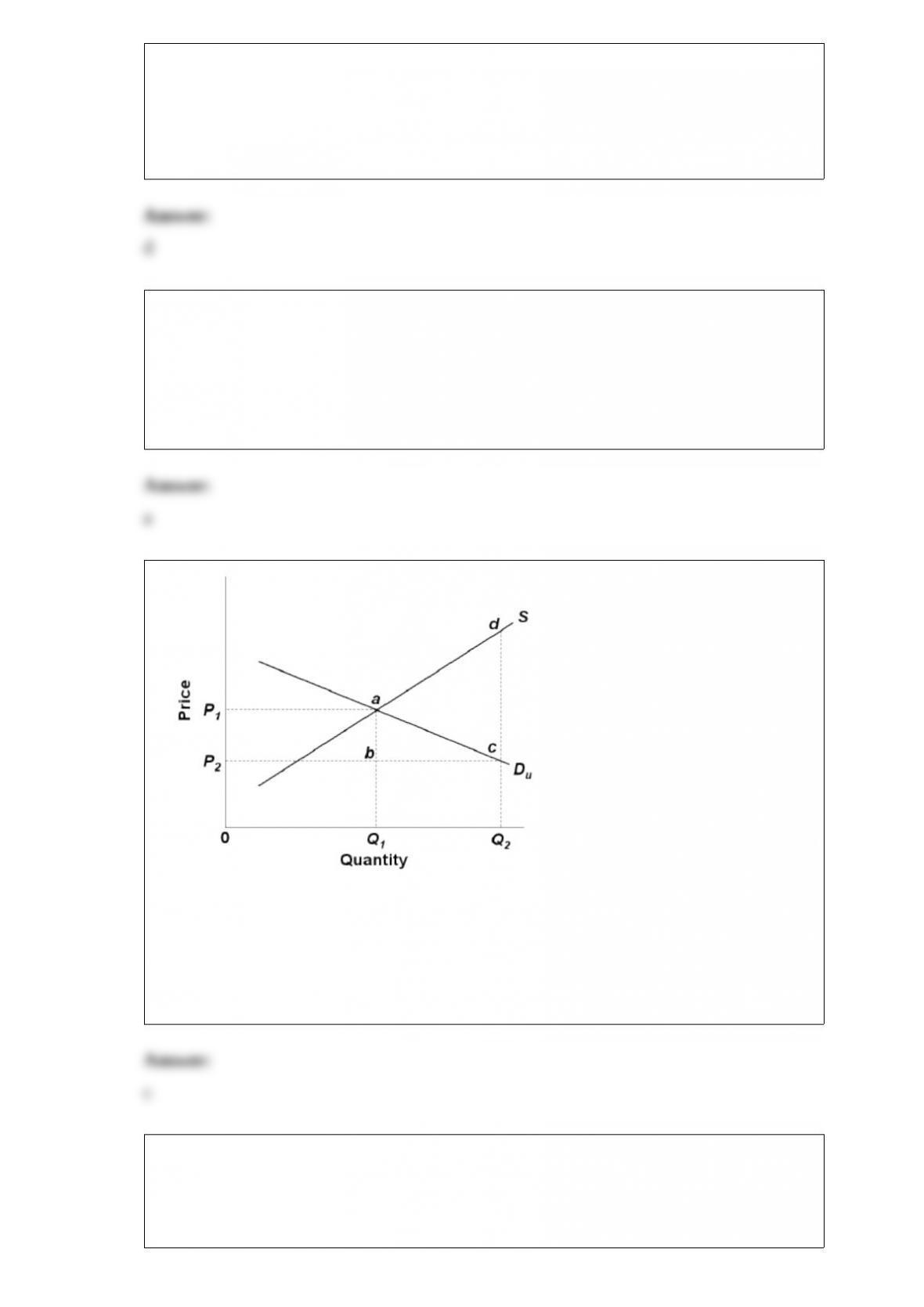
9)
refer to the above demand and supply diagram that relates to the health care market. the
efficiency loss caused by the availability of health insurance is shown by area:
a.p1abp2.
b.abc.
c.adc.
d.q1acq2.
10) the competitive market system:
a.encourages innovation because government provides tax breaks and subsidies to those
who develop new products or new productive techniques.
b.discourages innovation because it is difficult to acquire additional capital in the form
of new machinery and equipment.
c.discourages innovation because firms want to get all the profits possible from existing
machinery and equipment.
d.encourages innovation because successful innovators are rewarded with economic
profits.
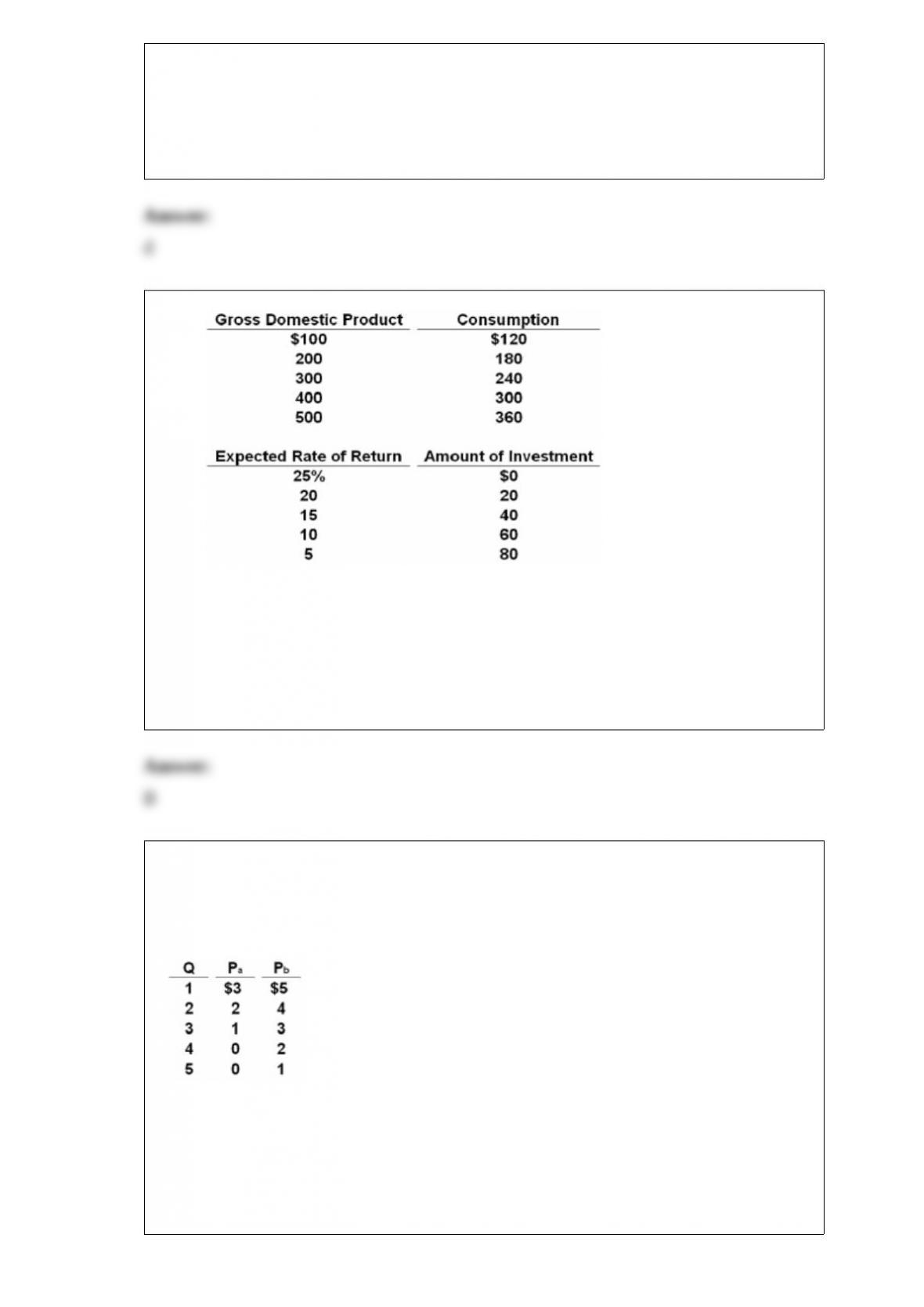
11)
Refer to the above information. If the real interest rate is 20 percent, the equilibrium
GDP will be:
A.$100.
B.$200.
C.$300.
D.$400.
12) Pa and Pb are the prices that individuals A and B are willing to pay for the last unit
of a public good, rather than do without it. These people are the only two members of
society.
Refer to the above data. Suppose government has already produced 4 units of this
public good. The amount individual B is willing voluntarily to pay for the 4th unit is:
A.$14.
B.$5.
C.$2.
D.$0.

13) the majority of personal consumption expenditures go to purchase:
a.nondurable goods.
b.durable goods.
c.capital goods.
d.services.