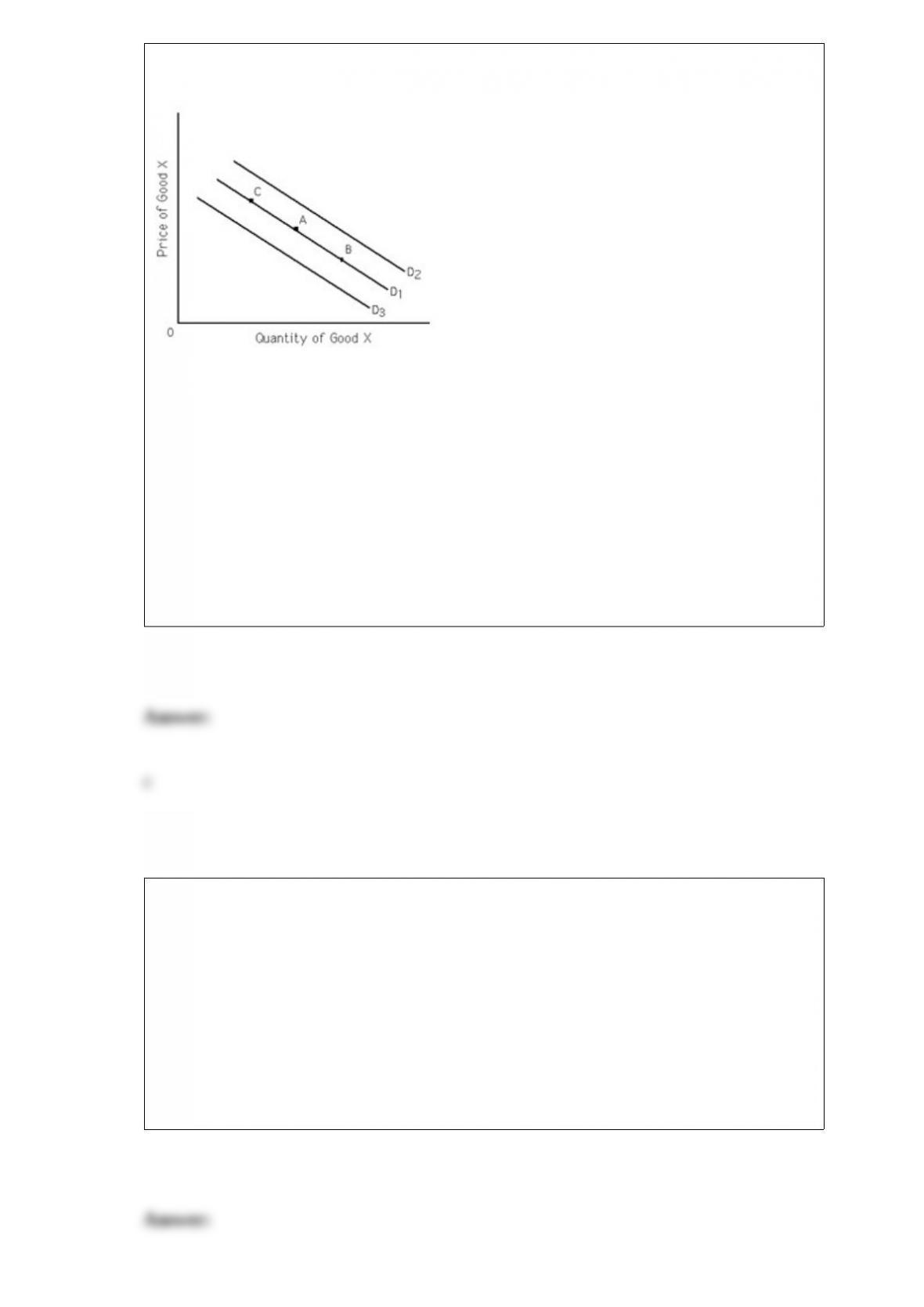
Exhibit 3-6
If D1 is the relevant demand curve, a decrease in the price of good X may cause
a. demand to shift from D1 to D2.
b. demand to shift from D1 to D3.
c. a movement along D1 from point A to point B.
d. a movement along D1 from point A to point C.
Public franchises, patents, and government licenses are examples of __________
barriers to entry.
a. social
b. legal
c. cultural
d. geographic
If a 5 percent reduction in the price of a commodity results in a 3 percent increase in the
quantity demanded, demand is said to be
a. perfectly elastic.
b. elastic.
c. unit elastic.
d. inelastic.
e. perfectly inelastic.
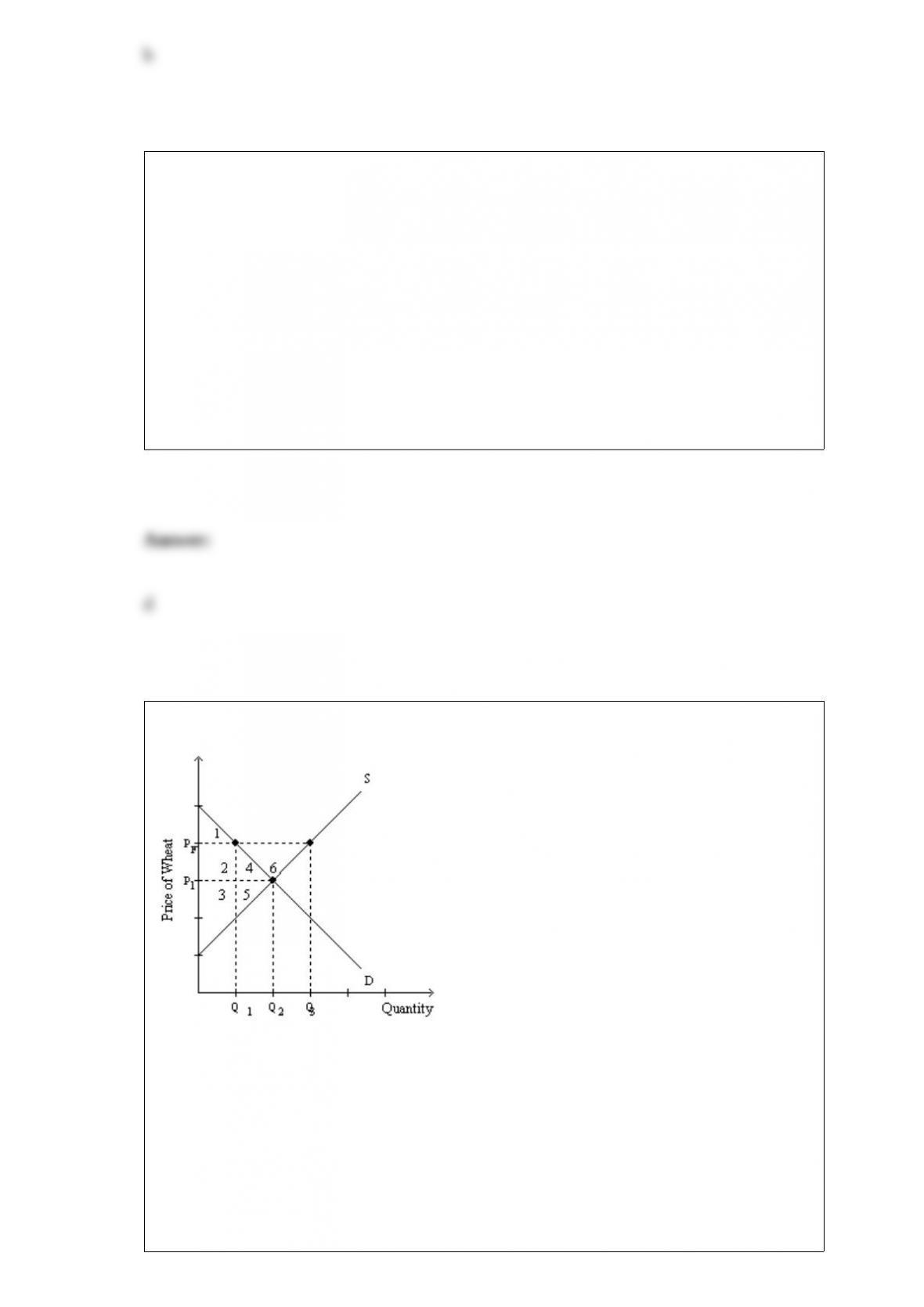
Exhibit 4-8
Suppose that wheat producerslobby the government for a price floor and receive
one.This price floor is set at PF.What is the quantity of wheat purchased at PF?
a. Q1
b. Q2
c. Q3
d. Q2 – Q1
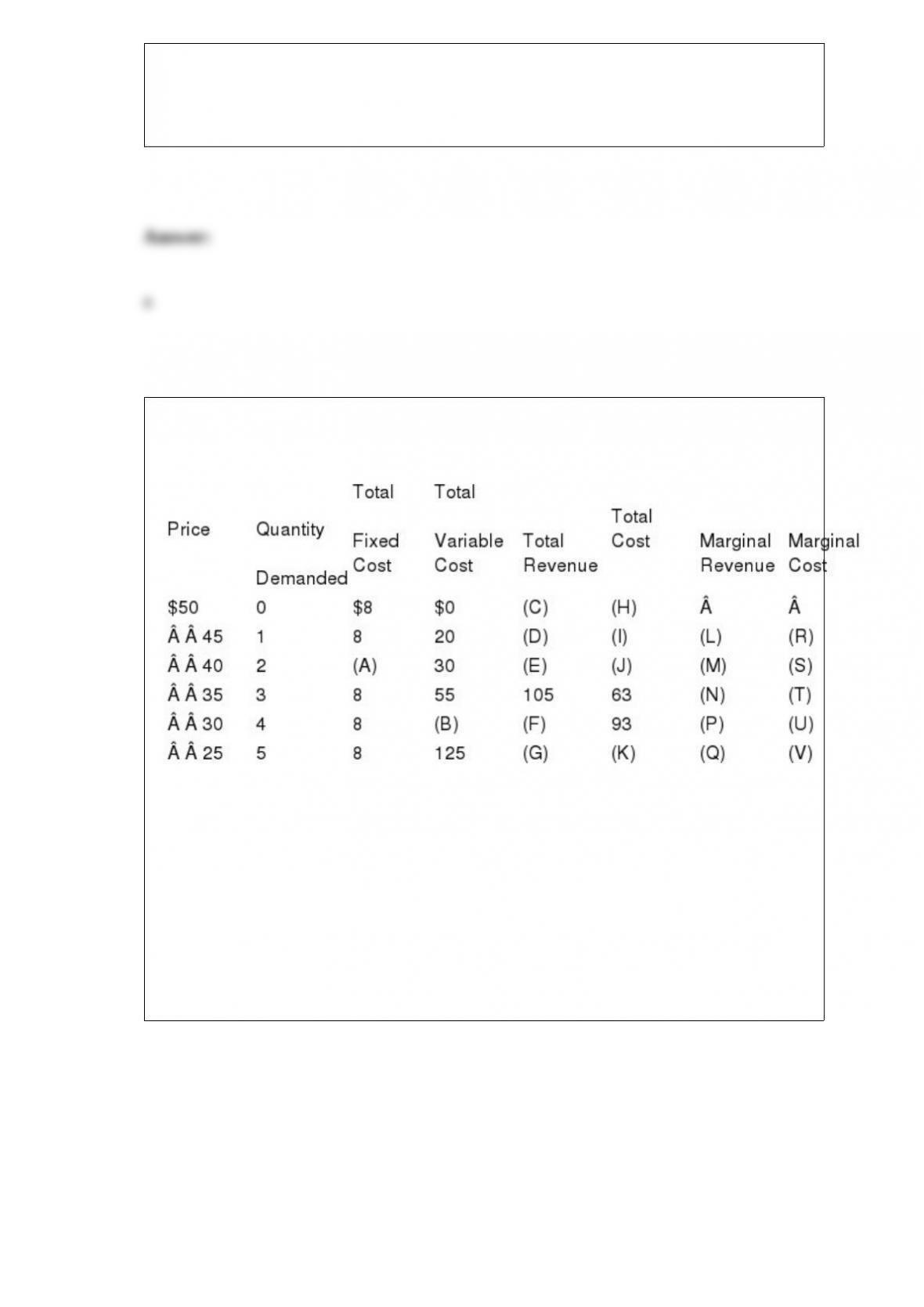
Exhibit 24-4
What dollar amounts go in blanks (P), (Q), (R), and (S), respectively?
a. $90;$80; $53.33; and $60
b. $10; $0; $28; and $19
c. $15; $5; $20; and $10
d. $75; $45; $33.33; and $32.50

Economists use the terms neutral good and normal good interchangeably.
a. True
b. False
Suppose that a tariff is imposed on imported cheese. This will have the effect of
__________ the quantity consumed of cheese, __________ consumers’ surplus, and
__________ the government’s tariff revenues.
a. increasing; increasing; increasing
b. decreasing; decreasing; increasing
c. increasing; decreasing; decreasing
d. decreasing; increasing; increasing
e. decreasing; increasing; decreasing
If an economist says “the higher the price of oranges, the fewer oranges individuals will
buy, ceteris paribus,” this means that
a. individuals don’t like high-priced oranges.
b. as the price of oranges rises, individuals’ preferences change and they no longer like
oranges as much as they once did.
c. as the price of oranges rises, individuals’ preferences do not change, nor does
anything else, but individuals buy fewer oranges in response to the higher price of
oranges.
d. the higher the price of oranges, the fewer oranges individuals will buy, assuming that
people have economic motives.
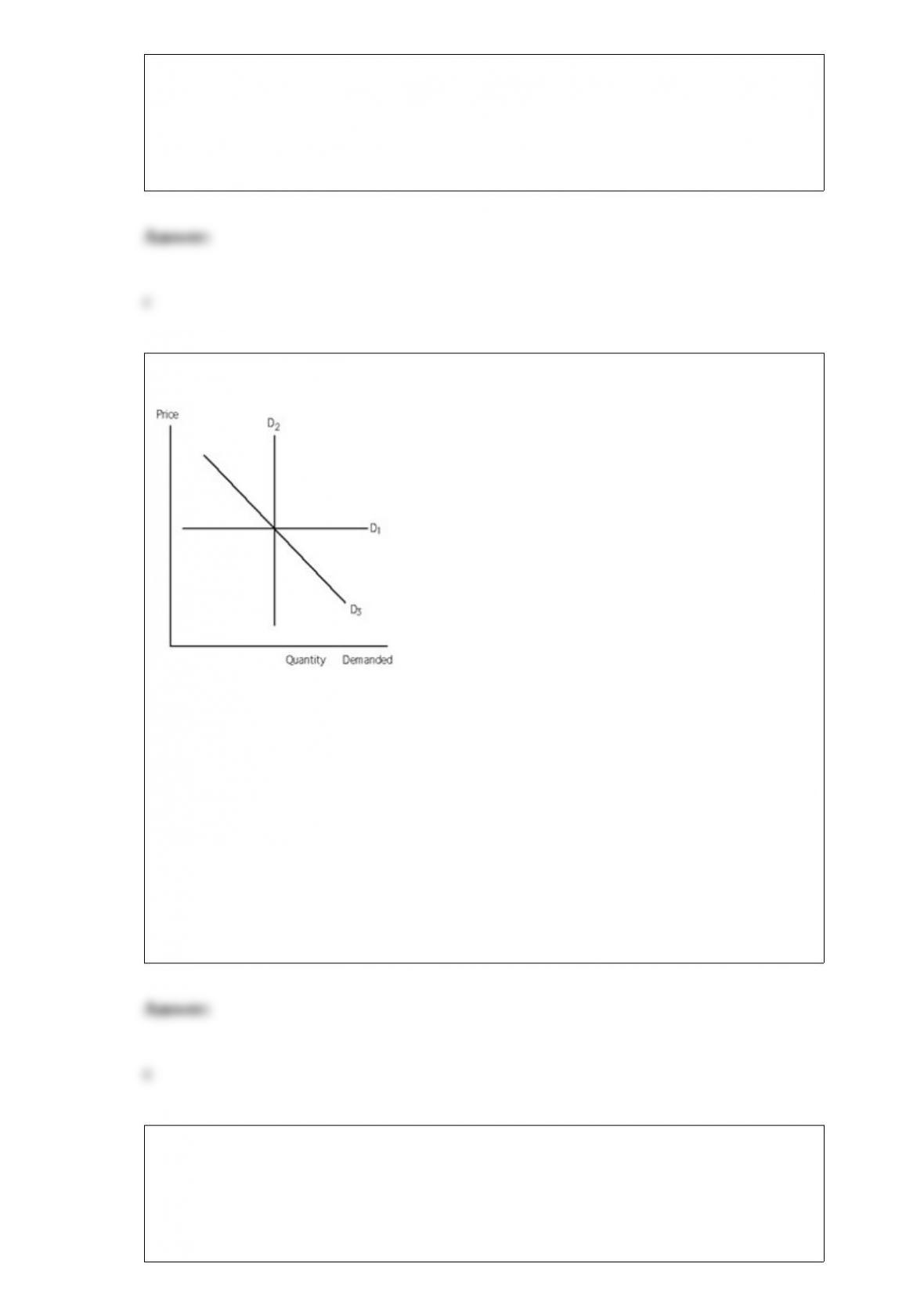
Exhibit 20-1
The demand for the good represented by demand curve D2 is
a. inelastic.
b. elastic.
c. unit elastic.
d. perfectly elastic.
e. perfectly inelastic.
In the prisoner’s dilemma setting for stealing and producing, both participants end up
__________, which turns out to be ________________________ stolen.The
government _________ make both participants better off by changing the payoff
matrix.

a. stealing; better for them than if they had both not; can
b. stealing; worse for them than if they had both not; can
c. not stealing; better for them than if they had both; cannot
d. not stealing; worse for them than if they had both; cannot
Empirical research has shown that immediately upon deregulation of the airline
industry,
a. airlines spent less time and money on aircraft maintenance.
b. airline safety decreased.
c. airline fares decreased.
d. all of the above
The Clayton Act of 1914
a. made conspiracy in the restraint of trade illegal.
b. made price discrimination, exclusive dealing, tying contracts, and the acquisition of
competing companies’ stock illegal when they ‘substantially lessen competition or tend
to create a monopoly.”
c. declared “unfair methods of competition in commerce” illegal.
d. attempted to decrease the failure rate of small businesses by protecting them from the
competition of large and growing chain stores.
e. banned anticompetitive mergers that occurred as a result of one company acquiring
the physical assets of another company.

Implicit in the solution to the diamond-water paradox is the idea that prices reflect
__________ utility instead of __________ utility.
a. marginal; total
b. total; marginal
c. average; total
d. total; average
e. none of the above
Suppose iceberg lettuce has an income elasticity of demand of 0.35. A 10 percent
increase in income causes the quantity demanded of iceberg lettuce to
_______________ by ______________ percent.
a. rise; 3.5
b. rise; 28.57
c. fall; 28.57
d. fall; 3.5