
If the market price is below the equilibrium price, then:
a. a surplus of product will result.
b. the quantity supplied will exceed the quantity demanded.
c. the market supply curve will shift to the right.
d. the quantity demanded will exceed the quantity supplied.
e. the market demand curve will shift to the left.
A firm’s demand for labor depends on, in part, the demand for the firm’s product. To
summarize this idea, economists say that the demand for labor is:
a. derived demand.
b. marginal demand.
c. secondary demand.
d. monopsonistic demand.
A grocery store cannot sell Campbell Soup if it also sells other brands of soup. This is
an example of:
a. resale price maintenance. c. a tying agreement.
b. territorial restrictions. d. exclusive dealing.
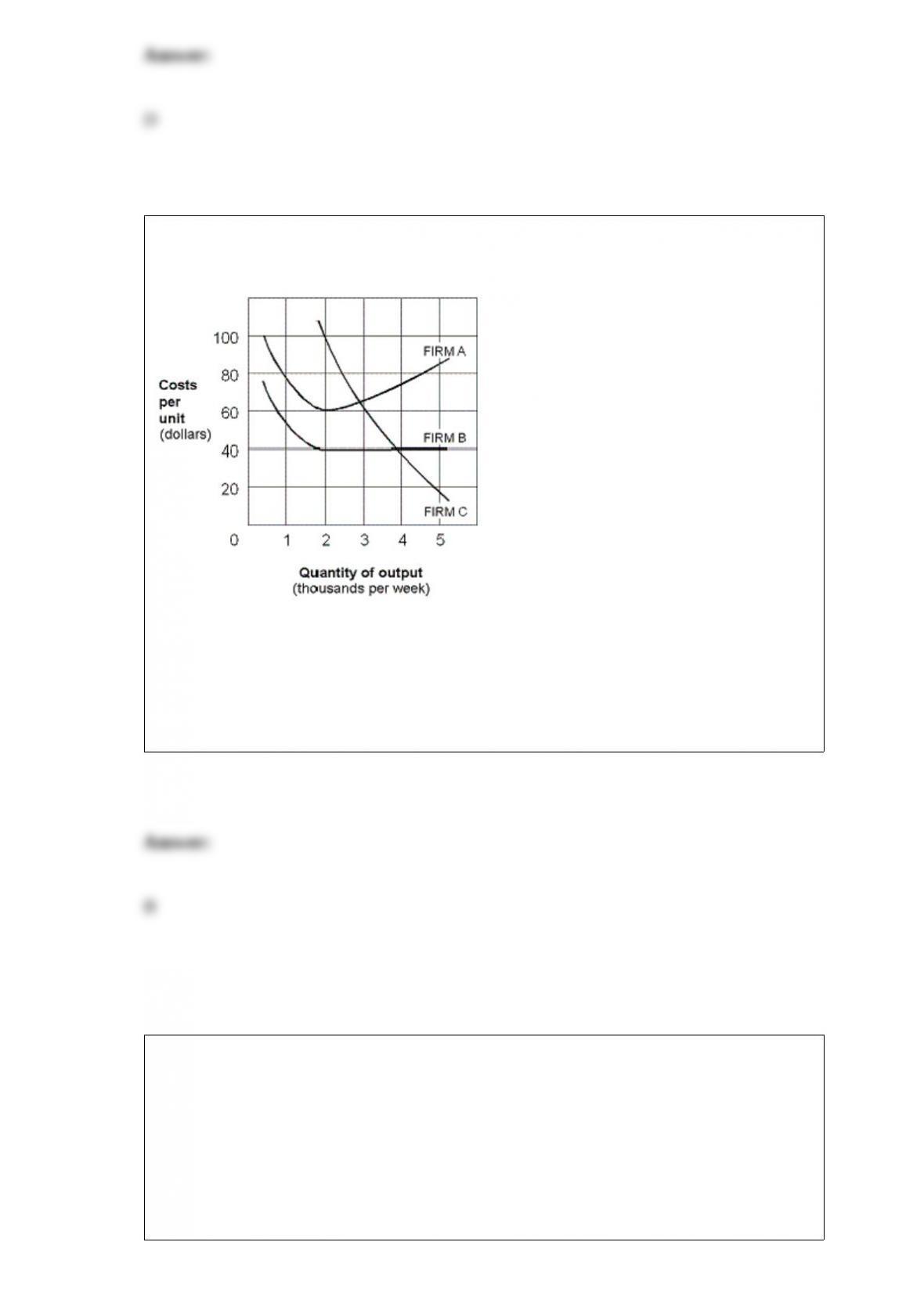
Exhibit 7-16 Long-run average cost curves
In Exhibit 7-16, which firm’s long-run average cost curve experiences constant returns
to scale?
a. Firm A.
b. Firm B.
c. Firm C.
d. Firms A and C.
If an excise tax is placed on a product that has a perfectly inelastic demand, then:
a. the entire tax will be paid by the consumer.
b. the entire tax will be paid by the producer.
c. the consumer and producer will each pay a share of the tax.

d. the incidence of the tax cannot be determined unless we know the coefficient of price
elasticity of supply.
e. the tax is progressive.
Pete throws leftover bread onto his front lawn because he enjoys watching the pigeons
feeding. His neighbor John is not happy about the pigeons, since they leave a mess on
his property. This is an example of:
a. a negative externality.
b. a public good.
c. privatization.
d. third-party benefits.
e. well-defined property rights.
If a demand curve for a good were completely vertical, it would be considered:
a. perfectly elastic. c. of unitary elasticity.
b. perfectly inelastic. d. relatively inelastic.
As new firms enter a monopolistic competitive industry, it can be expected that:
a. market price will increase.
b. the output of existing firms will increase.
c. profits of existing firms will increase.
d. market demand should decrease.
e. profits of existing firms will decrease.
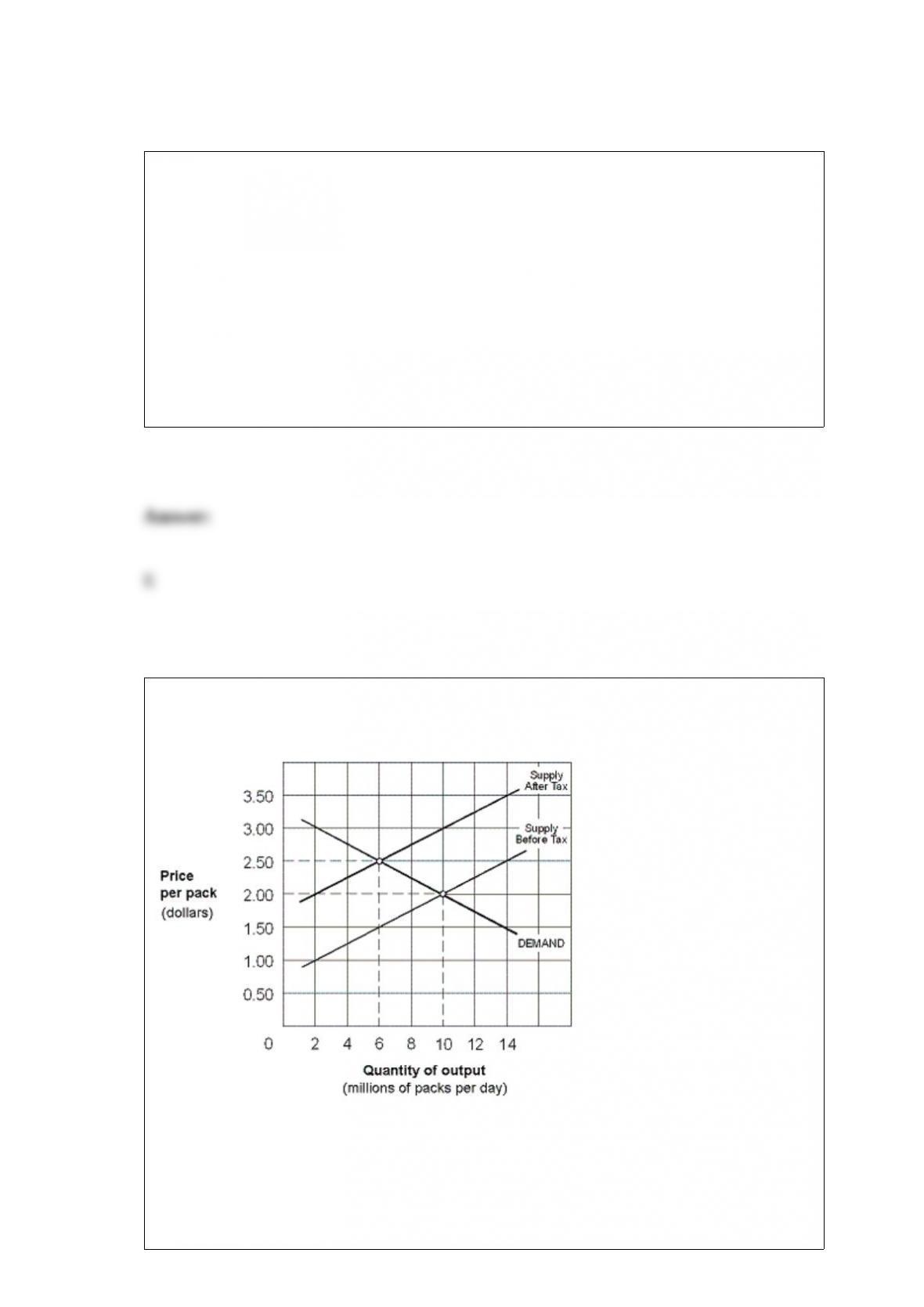
Exhibit 5-10 Supply and demand curves for cigarettes
As shown in Exhibit 5-10, assume the government places a $1 per pack sales tax on
cigarettes. The percentage of the burden of taxation paid by consumers of a pack of
cigarettes is:
a. zero. c. 50 percent.

b. 25 percent. d. 100 percent.
Which of the following is closest to the definition of capital?
a. c and e.
b. c and d.
c. Tools, equipment, means of transportation
d. Factories and machinery.
e. Borrowed money.
Adam Smith, in his book, The Wealth of Nations, advocated:
a. socialism.
b. an economy guided by an “invisible hand.”
c. government control of the “invisible hand.”
d. the adoption of mercantilism.

Economists view pollution as an economic problem that arises because:
a. private enterprise always minimizes the amount of pollution produced.
b. profitable firms rarely pollute.
c. as the economy grows, the level of pollution declines.
d. firms that pollute do not pay the full social cost of producing their output.
Suppose a publisher faces the following costs of producing 10,000 newspapers each
month: $5,500 cost of labor; $2,200 monthly mortgage payment; $250 cost of
electricity to run the printing presses; $800 for ink and paper; and $200 in city property
taxes (based on the value of the building and land). Its total variable costs are:
a. $8,950.
b. $8,750.
c. $6,550.
d. $6,300.
e. $5,500.
Exhibit 8-18 A typical firm in a perfectly competitive market
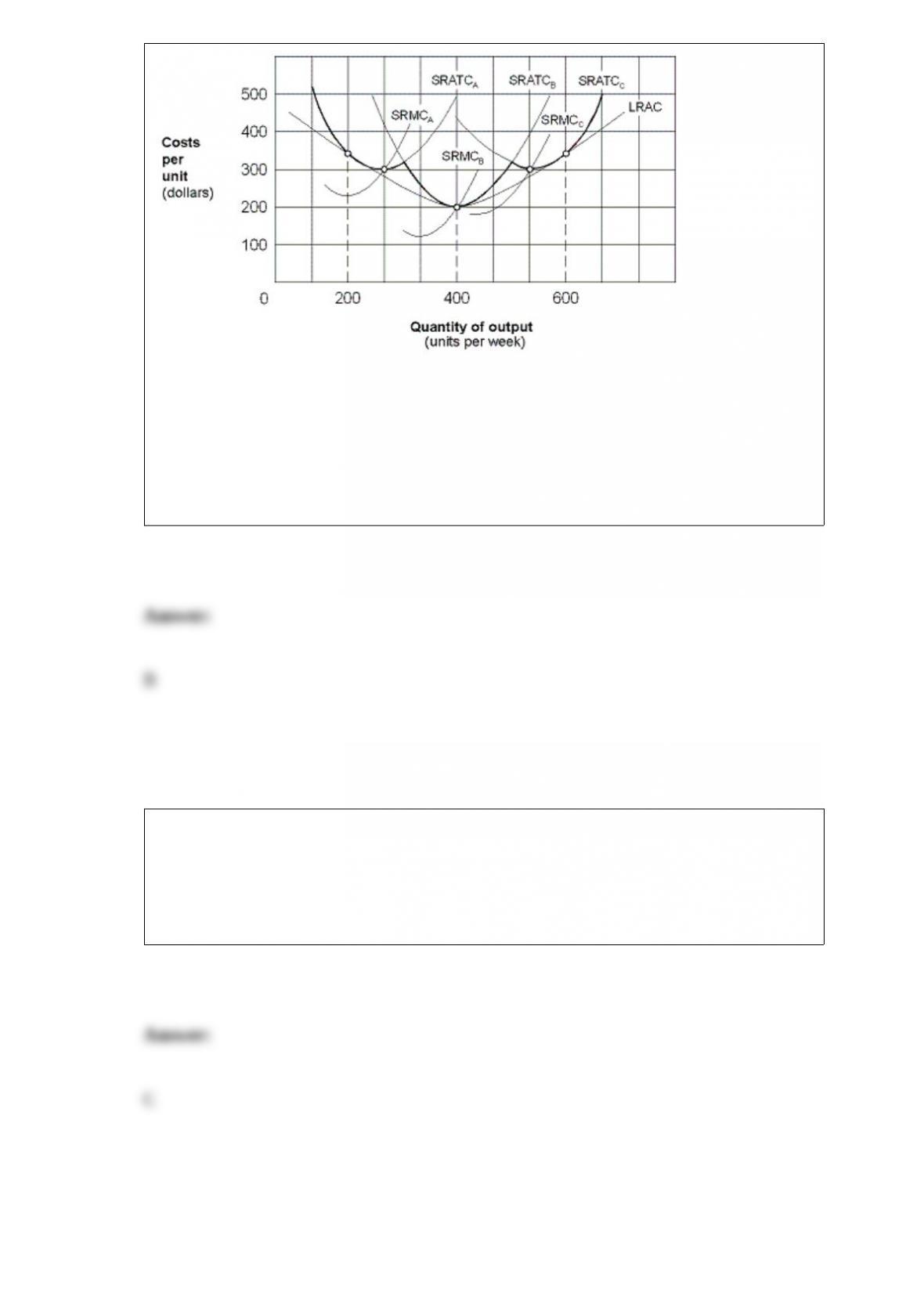
In Exhibit 8-18, assume the perfectly competitive firm is in long-run equilibrium and
there is an increase in demand. As a result, the firm in the short run will increase output
along its:
a. short-run average total cost curve B.
b. short-run marginal cost curve B.
c. long-run average cost curve.
d. none of these because the firm shuts down.
Which of the following government programs provides recipients with in-kind benefits?
a. Temporary Assistance to Needy Families (TANF).
b. Social Security.
c. The food stamp program.
d. Unemployment compensation.

The income elasticity of demand for shoes is estimated to be 1.50. We can conclude that
shoes:
a. have a relatively steep demand curve. c. are a normal good.
b. have a relatively flat demand curve d. are an inferior good.
Which of the following societies is the most likely to have a traditional economy?
a. The United States.
b. The Inuit (native people of Northern Canada).
c. Cuba under Castro’s rule.
d. Modern-day Hong Kong.
While waiting in line to buy one cheeseburger for $1.50 and a medium drink for $1.00,
Sally notices that she could get a value meal that contains both the cheeseburger and
medium drink and also a medium order of fries for $2.75. She thinks to herself, “Is it
worth the extra 25 cents to get the medium fries?” To an economist, Sally’s decision is
an example of:
a. marginal analysis.
b. basing decisions on total, rather than marginal, value.
c. an unintended consequence.
d. the fallacy of composition.

Tombstones are produced in a monopolistic competitive market. One producer, Rolling
Stones, sells 20 tombstones a week at a price of $500 each. Its average total cost is
$600. From this information, we can tell:
a. new tombstone firms will want to enter.
b. this producer is losing $2,000 a week.
c. this producer is making an economic profit of $400.
d. this producer is setting MR = MC.
e. this producer should increase production.
Suppose that when output is 20, marginal cost is $20, and average total cost is $30.
Then which of the following is most likely to be true?
a. Average total cost is declining.
b. Average total cost is constant.
c. Average total cost is rising.
d. Average total cost is less than average fixed cost.

Which of the following is a difference between a monopolist and a firm in perfect
competition?
a. The marginal revenue curve is downward-sloping.
b. Marginal revenue equals price.
c. Economic profits are zero in the long-run.
d. The marginal revenue curve lies above the demand curve.
The basic characteristics of a pure capitalist system include the private ownership of the
means of production and economic activity being coordinated through a system of
markets and prices.
For an inferior good, the income elasticity of demand is negative.
Demand curves slope downward to the right.

Price floors typically improve market efficiency.
The statement “Cutting government spending is the best way to boost consumer
confidence” is an example of normative economics.
A country with a high GDP per capita is classified as an industrially advanced country
(IAC).
According to the income effect, lower prices give people more purchasing power with
which to increase the quantity demanded of goods.

Opportunity cost is the best alternative sacrificed for a chosen alternative.
GDP per capita is about 10 times higher in industrially advanced countries (IACs) than
in the poorer less-developed countries (LDCs).