In 1935, the U.S. Patent and Trademark Office issued Parker Brothers a trademark on
the
use of the name Monopoly for a board game. Hasbro bought Parker Brothers in 1991.
Which of the following statements is true regarding the trademark on the name
Monopoly for a board game?
A) The original trademark expired well before Hasbro bought Parker Brothers, so they
never had a trademark on Monopoly.
B) Trademarks never expire, so Hasbro continues to have a trademark on the name
Monopoly.
C) The trademark expired in 2011, 20 years after Hasbro’s purchase of Parker Brothers.
D) The trademark expired in 1955, 20 years after the trademark was issued to Parker
Brothers.
Adverse selection in the market for health insurance arises because
A) many insurance companies care more about profits than they do about providing
services for their customers in the event of illness.
B) the federal government intervenes in insurance markets by controlling prices and
reimbursement policies.
C) insurance companies are not allowed to charge premiums that are high enough to
insure against “worst-case” illness.
D) buyers of insurance know more than insurance companies about the likelihood of an
illness for which buyers want insurance.

Table 15-3
Harvey Morris bought dishes and pitchers made of blue glass during the Great
Depression at a flea market. He later resold these items on eBay. The profits Harvey
earned from these sales are
A) subject to a retail profits tax.
B) are not economic profits because Harvey did not add value to the items but took
advantage of the buyers who were not aware of how much Harvey paid for the items.
C) the result of arbitrage.
D) accounting profits but not economic profits.
Figure 19-1
Which of the following would cause the change depicted in the figure above?
A) U.S. productivity falls relative to European productivity.
B) Americans increase their preferences for goods produced in the EU relative to
American goods.
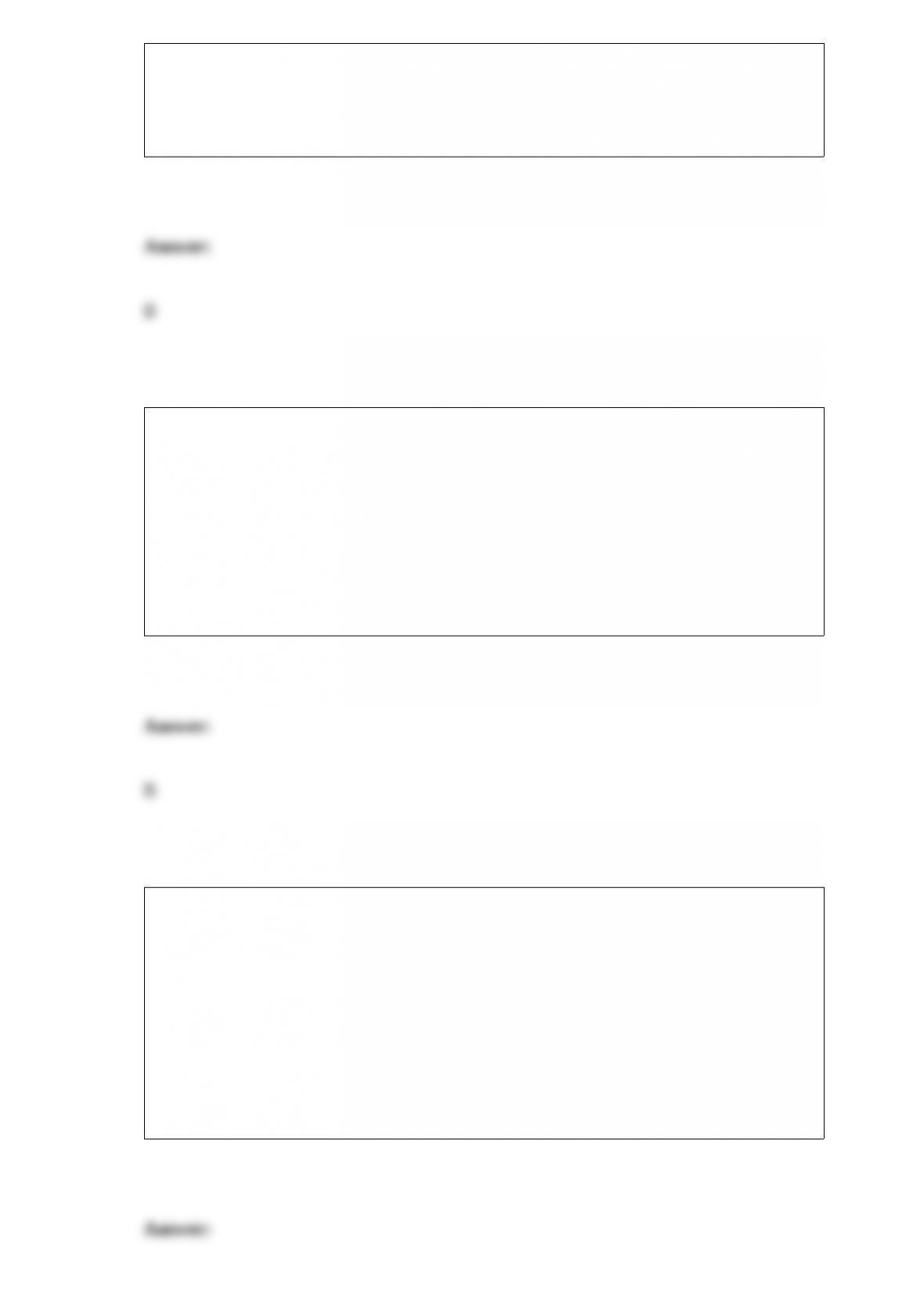
C) The European Union increases its quotas on Italian wine.
D) The price level of goods produced in the EU decreases relative to the price level of
goods produced in the United States.
The long-run aggregate supply curve shows the relationship between
A) short-run aggregate supply and short-run aggregate demand.
B) the price level and quantity of real GDP supplied.
C) the real interest rate and the nominal interest rate.
D) the quantity of real GDP supplied and the quantity of nominal GDP supplied.
If the price of gasoline increases, what will be the impact in the market for public
transportation?
A) The demand curve for public transportation shifts to the right.
B) The quantity of public transportation demanded increases.
C) The demand curve for public transportation shifts to the left.
D) The quantity of public transportation demanded decreases.
Which of the following would be considered an implicit cost of operating a business?
A) advertising expenses
B) wages paid to workers
C) a normal rate of return for investors
D) any explicit cost
Wilbur Rickhiser, a financial advisor, recently told one of his clients: “The biggest
mistake you can make is to hold onto a stock for too long in order to avoid a loss. Let’s
say you bought a stock for $50 per share but that six months later the price fell to $40
after a poor earnings report. Many of my clients in this situation will hold the stock,
hoping the price will later rise above $50. In most cases like this the price does not rise
and may even fall. You must know when to cut your losses.” Which of the following is
the best explanation for Rickhiser’s advice?
A) People sometimes buy stocks because other people are buying them or they want to
appear to be fashionable.
B) People sometimes make mistakes when they buy stocks because of the endowment
effect.
C) People sometimes make mistakes when they buy stocks or when they buy goods and
services: they ignore the monetary opportunity costs of their choices.
D) People often fail to ignore the sunk costs of their decisions. The cost of the stock
bought at $50 per share is a sunk cost.
Today, Walt Disney World charges different customers different prices for admission.
This pricing strategy is called
A) arbitrage.
B) odd pricing.
C) cost-price pricing.
D) price discrimination.
The rule of 70 states that
A) it takes an economy 70 years to double its real GDP.
B) the number of years it takes an economy to double in size is 70 divided by the
growth rate.
C) the number of years it takes an economy to double in size is the growth rate times
70.
D) the number of years it takes an economy to double in size is the growth rate divided
by 70.
Which of the following is not a characteristic of oligopoly?
A) the ability to influence price
B) a small number of firms
C) low barriers to entry
D) interdependent firms
When a credit card company offers different services with its card, like travel insurance
for air travel tickets purchased with the credit card or product insurance for items
purchased with the card, the credit card company is trying to
A) create a barrier to entry for competing firms.
B) create a perfectly competitive market in which to sell its credit card.
C) convince customers that its card has greater value than those offered by rival firms.
D) shift the demand curve for competing firms to the right.
If you own a $1,000 face value bond with one year remaining to maturity and a five
percent coupon rate and new bonds are paying 12 percent, what is the most you can get
for your old bond?
A) $1,120
B) $1,000
C) $937.50
D) impossible to determine without additional information
Because of asymmetric information, most used cars that are offered for sale will be sold
for prices that are greater than their true value. Because of this fact, the used car market
falls victim to
A) the free rider problem.
B) deadweight loss and economic inefficiency.
C) a surplus of used cars.
D) adverse selection.
Firms in Thailand that had ________ while the baht was pegged to the dollar faced
interest payments that were higher than they had planned once the Thai government
abandoned the peg because the baht had been pegged ________ the equilibrium
exchange rate for the baht.
A) borrowed dollars; above
B) borrowed baht; above
C) borrowed dollars; below
D) borrowed baht; below
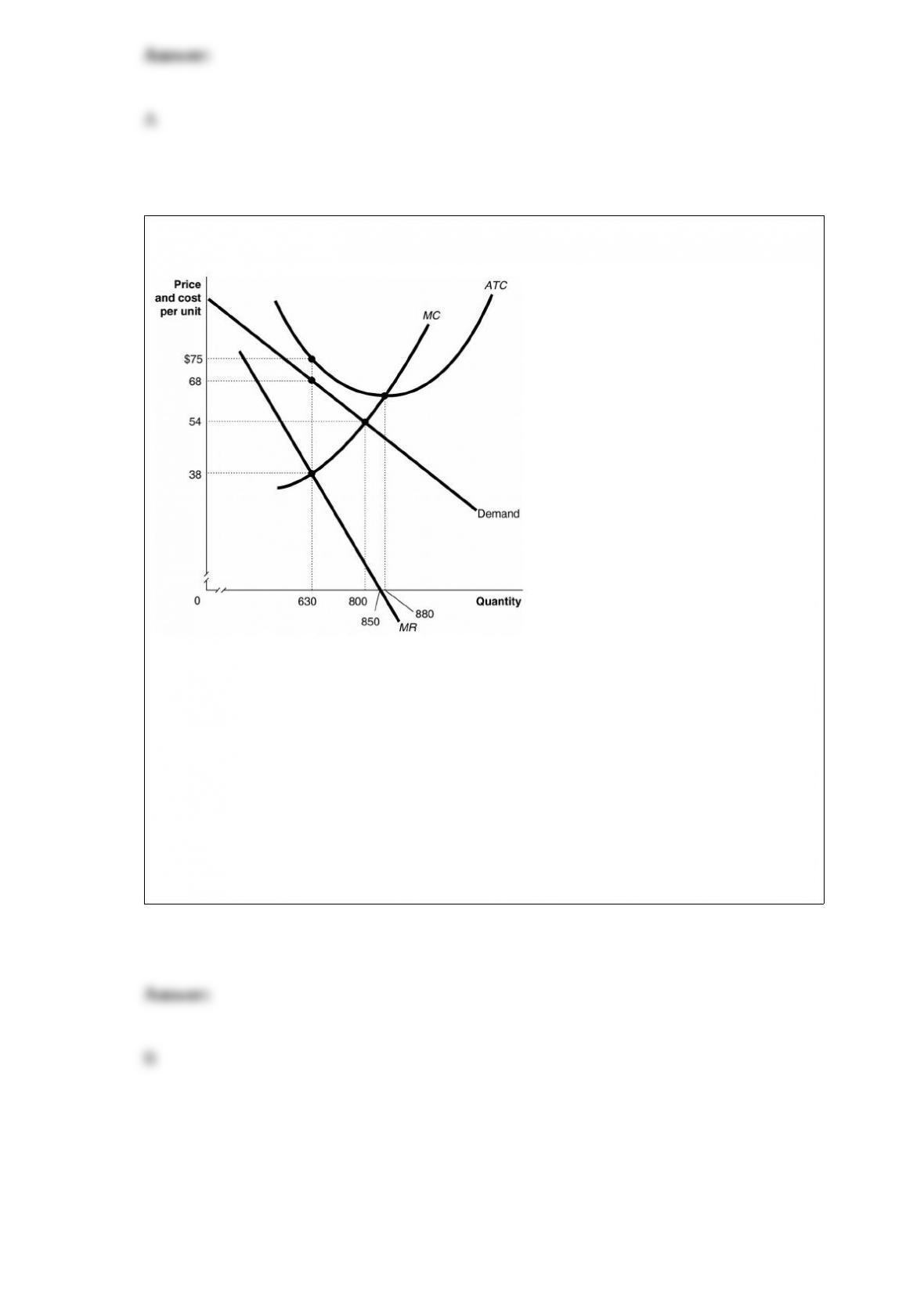
Figure 15-3
Figure 15-3 above shows the demand
and cost curves facing a monopolist.
What happens to the monopolist represented in the diagram in the long run?
A) It will raise its price at least until it breaks even.
B) If the cost and demand curves remain the same, it will exit the market.
C) The government will subsidize the monopoly to enable it to break even.
D) It will be forced out of business by more efficient producers.