1) As of 2008, the world’s population is approximately:
A.6.6 billion.
B.4.2 billion.
C.10.8 billion.
D.2 trillion.
2) suppose you find that the price of your product is less than minimum avc. you
should:
a.minimize your losses by producing where p = mc.
b.maximize your profits by producing where p = mc.
c.close down because, by producing, your losses will exceed your total fixed costs.
d.close down because total revenue exceeds total variable cost.
3)
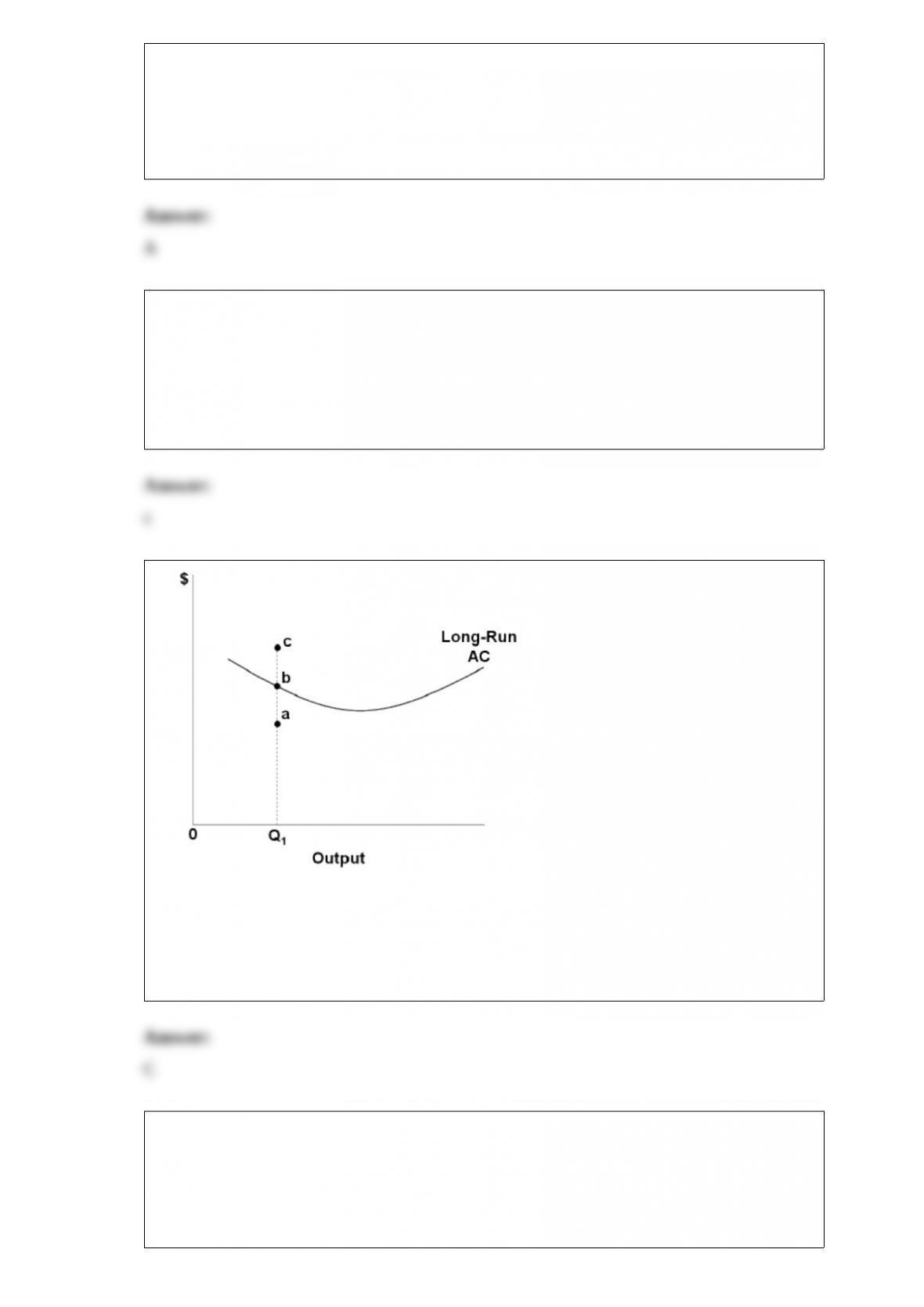
Refer to the above diagram. If a firm produces output Q1 at a unit cost of c, then the:
A.firm is operating in a purely competitive industry.
B.firm is maximizing profits.
C.marginal product per dollar’s worth of each resource employed is not the same.
D.firm is fulfilling the least-cost rule in employing resources.
4) which of the following is a consequence of rent controls established to keep housing
affordable for the poor?
a.less rental housing is available as prospective landlords find it unprofitable to rent at
restricted prices.
b.the quality of rental housing declines as landlords lack the funds and incentive to
maintain properties.
c.apartment buildings are torn down in favor of office buildings, shopping malls, and
other buildings where rents are not controlled.
d.all of the above are consequences of rent controls.
5) as of 1998, living standards in the united states were nearly ______ times higher than
those in africa.
a.3
b.8
c.14
d.20
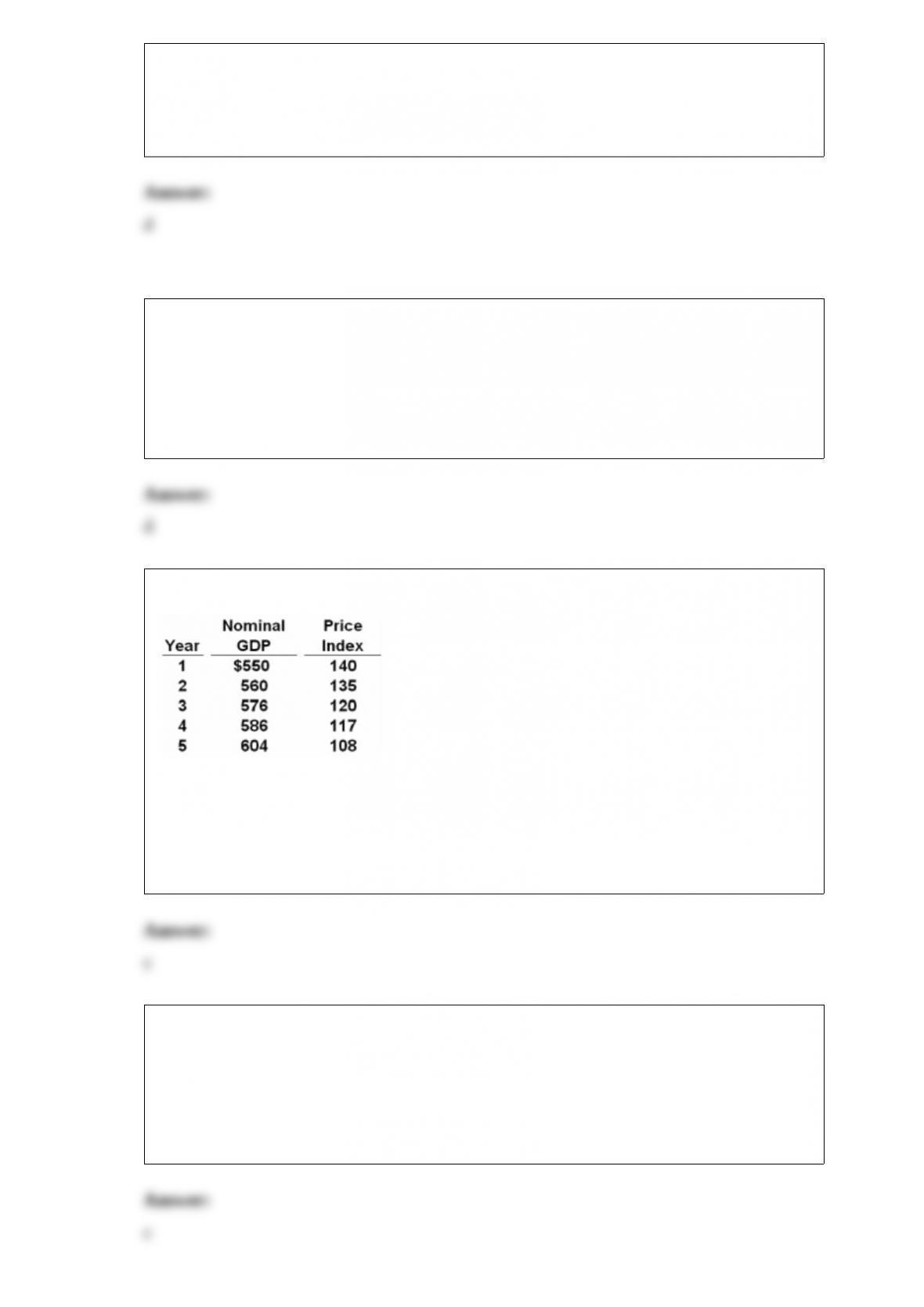
6) answer the next question(s) on the basis of the following information:
in the economy above:
a.the price level is rising faster than nominal gdp.
b.nominal and real gdp are growing at the same rate.
c.the growth of nominal gdp understates the growth of real gdp.
d.the growth of nominal gdp overstates the growth of real gdp.
7) patents give pharmaceutical companies exclusive rights to produce and sell the
patented medications:
a.forever.
b.for a maximum of 12 years.
c.for a maximum of 20 years.
d.until someone is able to invent a generic equivalent.
8)
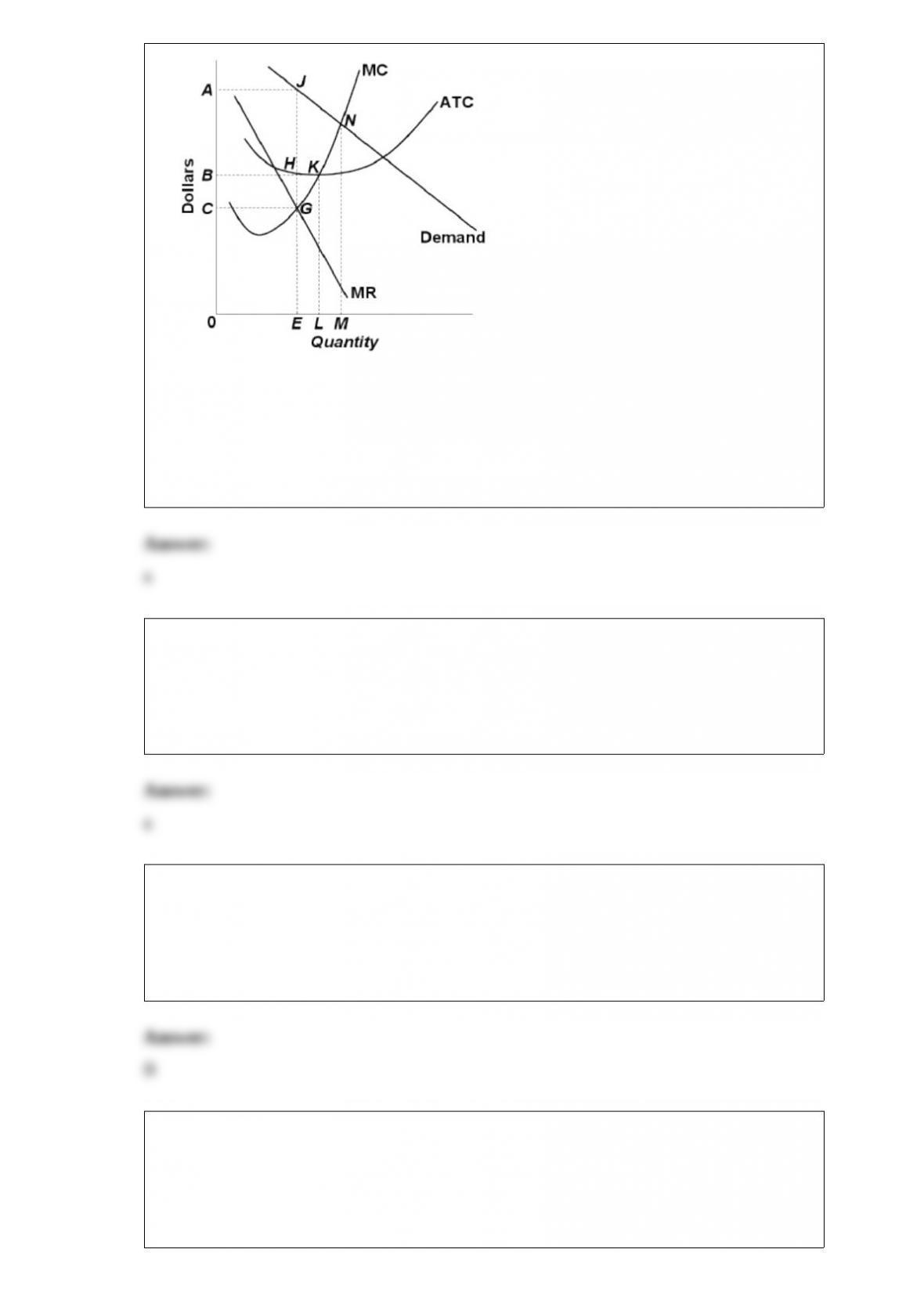
refer to the above diagram. at the profit-maximizing level of output, the firm will
realize:
a.an economic profit of abhj
b.an economic profit of acgj
c.a loss of gh per unit
d.a loss of jh per unit
9) (consider this) the feudal practice of clipping coins illustrates the idea of:
a.taxation through inflation.
b.good money driving out bad money.
c.the derived demand for resources.
d.cost-push inflation.
10) Currency (paper money plus coins) constitutes about:
A.81 percent of the U.S. M1 money supply.
B.56 percent of the U.S. M1 money supply.
C.46 percent of the U.S. M1 money supply.
D.11 percent of the U.S. M1 money supply.
11) suppose the price elasticity of demand for bread is 0.20. if the price of bread falls by
10 percent, the quantity demanded will increase by:
a.2 percent and total expenditures on bread will rise.
b.2 percent and total expenditures on bread will fall.
c.20 percent and total expenditures on bread will fall.
d.20 percent and total expenditures on bread will rise.
12) the formula for cross elasticity of demand is percentage change in:
a.quantity demanded of x/percentage change in price of x.
b.quantity demanded of x/percentage change in income.
c.quantity demanded of x/percentage change in price of y.
d.price of x/percentage change in quantity demanded of y.
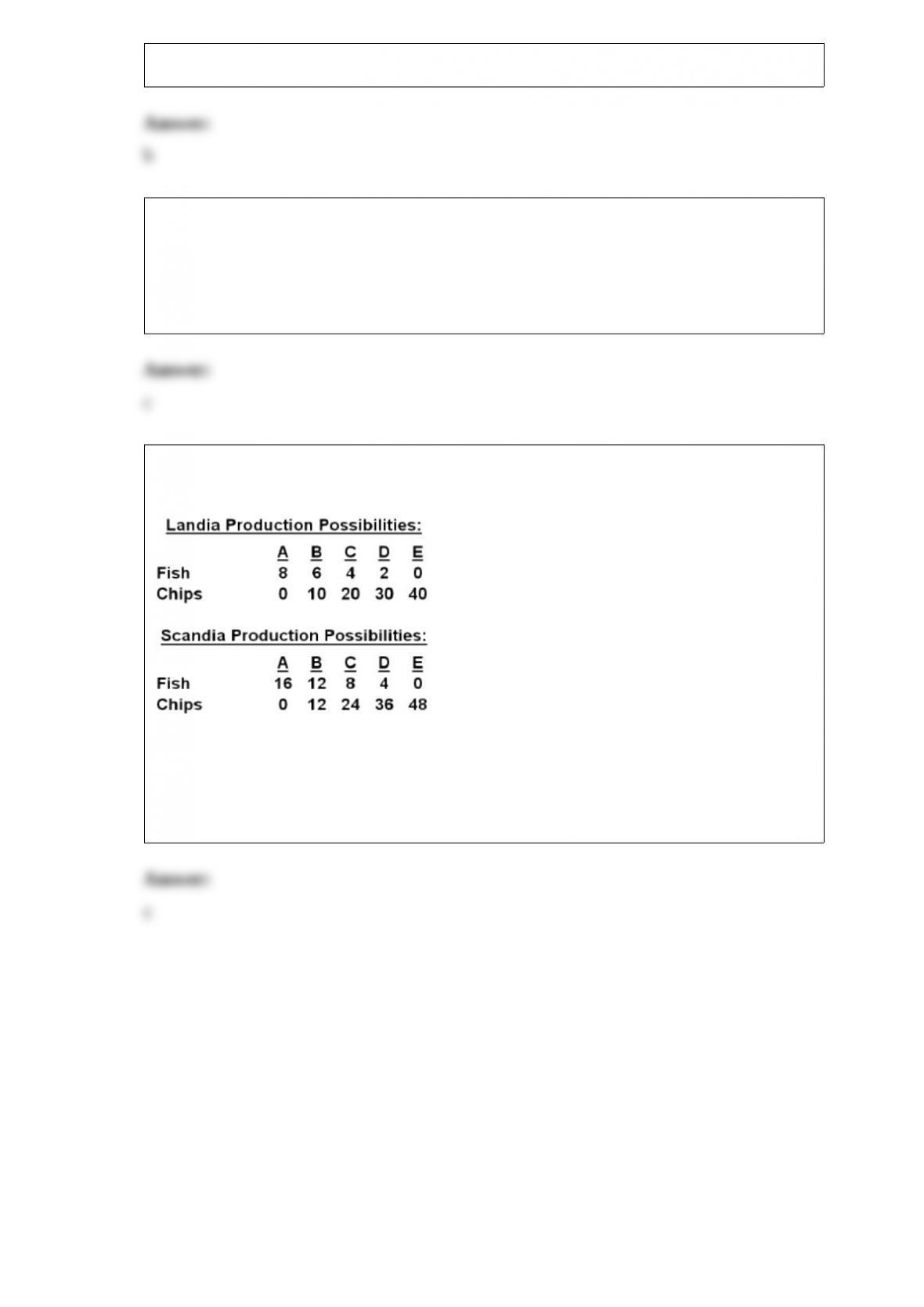
13) the following production possibilities data for landia and scandia:
refer to the above data. the domestic opportunity cost of 1 fish in scandia is:
a.12 chips.
b.4 chips.
c.3 chips.
d.1 chip.
14)
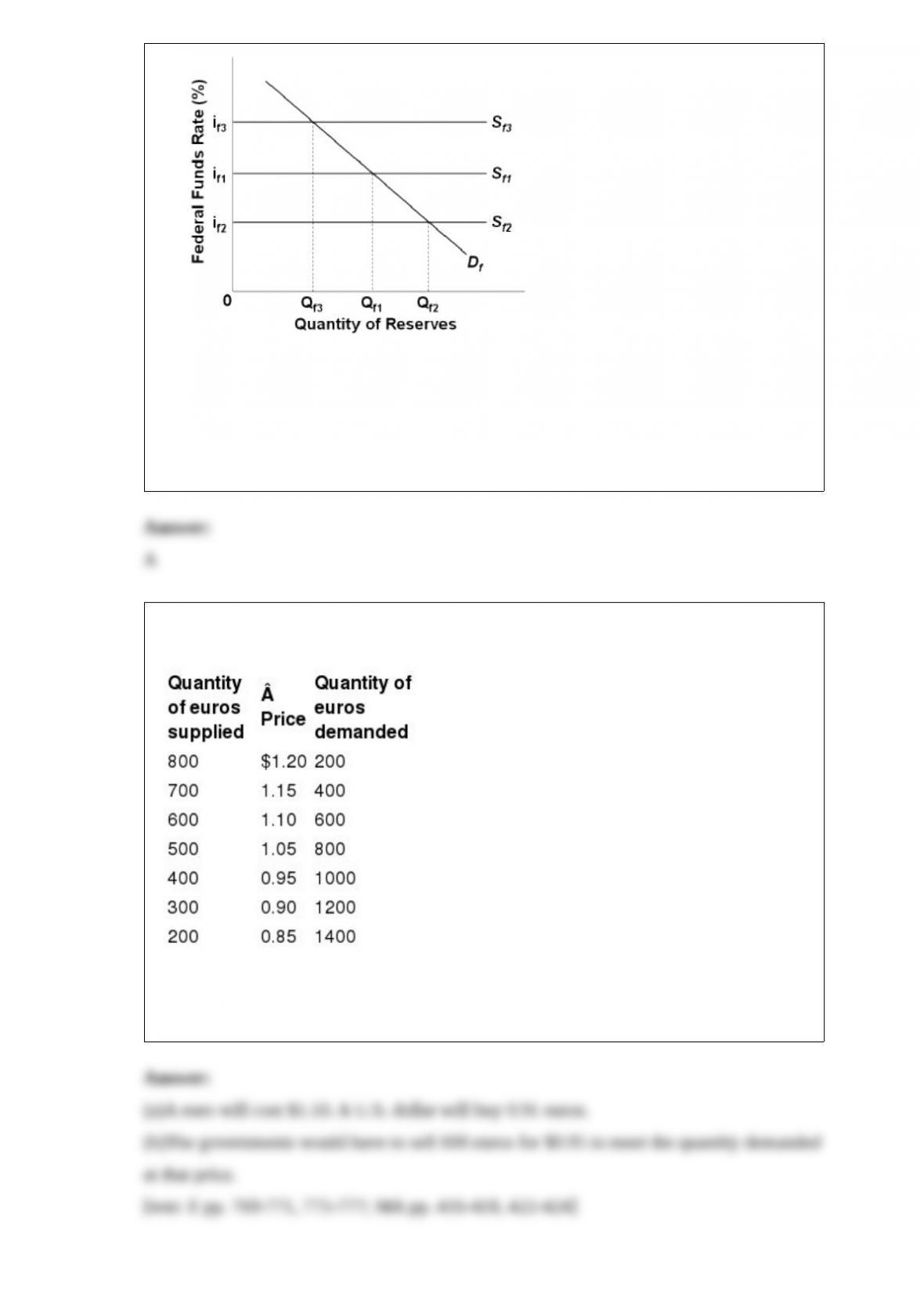
Refer to the above diagram for the Federal funds market. An expansionary monetary
policy would be shown by:
A.a shift from Sf3 to Sf2.
B.a shift from Sf1 to Sf3.
C.a rightward shift of Df.
D.a leftward shift of Df.
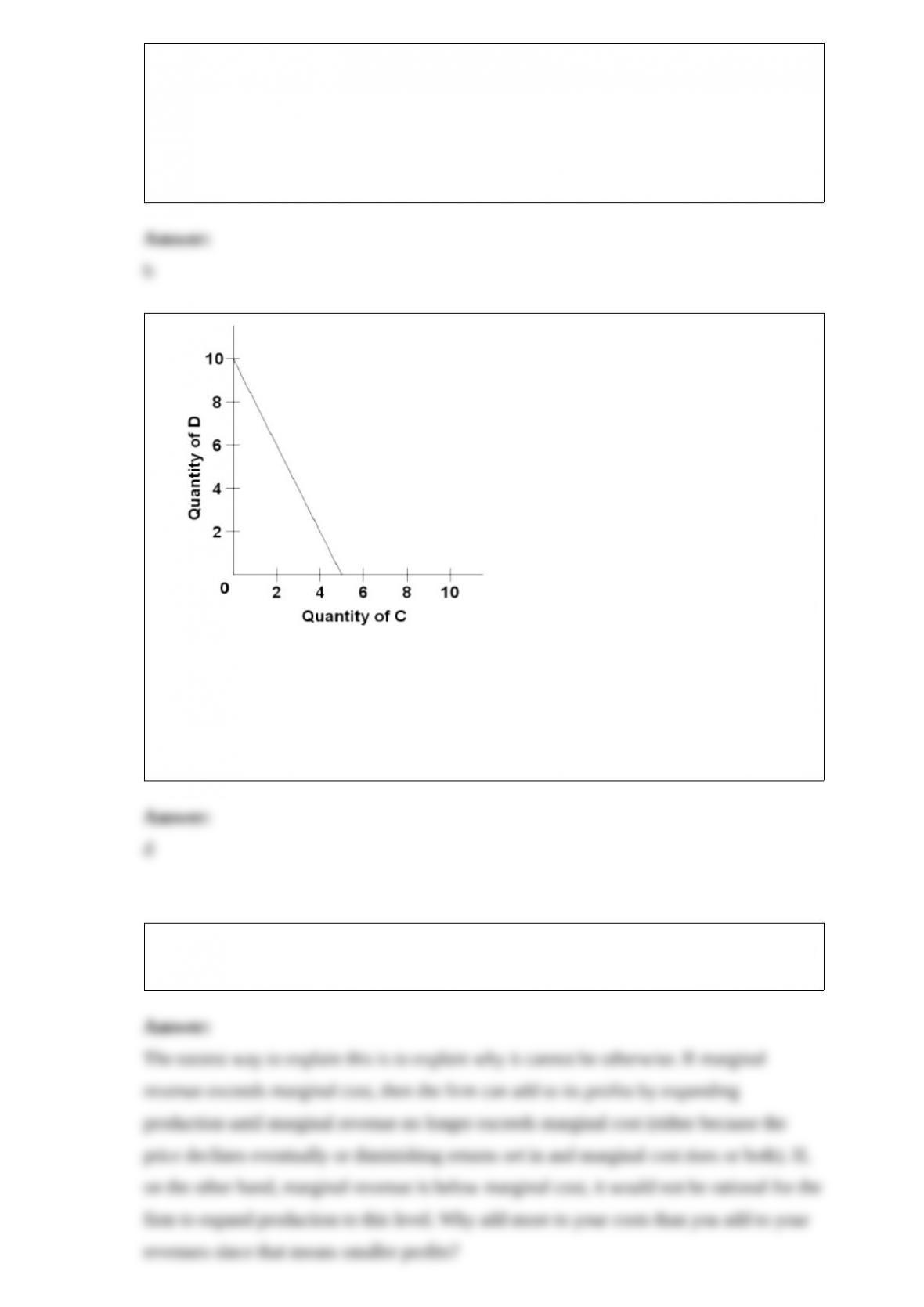
15) In the table below are the supply and demand schedules for euros.
(a)What will be the rate of exchange for the euro and for the U.S. dollar?
(b)What would happen if the U.S. and European governments wanted to fix or peg the
price of a euro at $0.95?
16) in which of the following market structures is there clear-cut mutual
interdependence with respect to price-output policies?
a.pure monopoly
b.oligopoly
c.monopolistic competition
d.pure competition
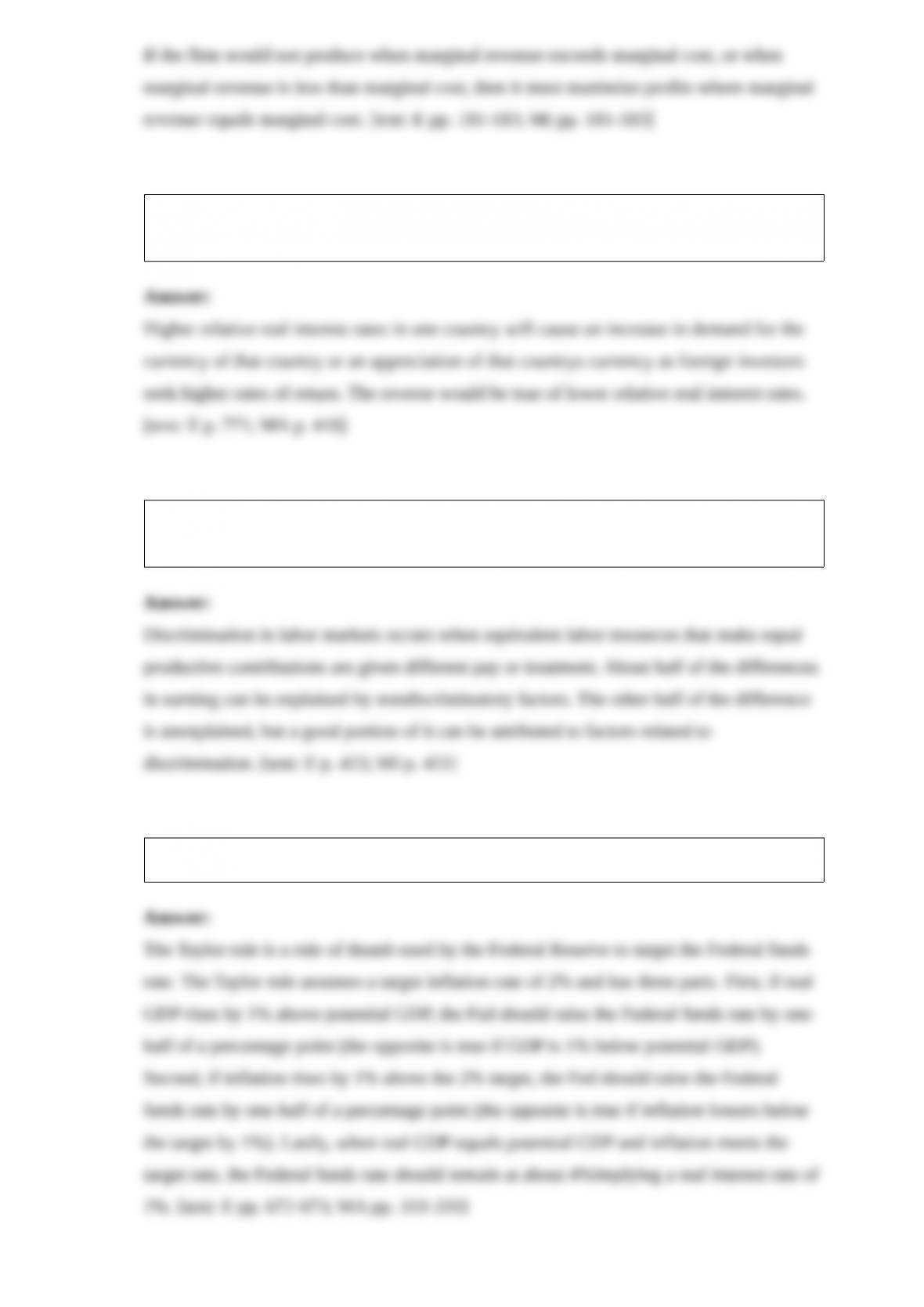
17)
refer to the budget line shown in the diagram above. if the consumer’s money income is
$20, the:
a.prices of c and d cannot be determined.
b.price of c is $2 and the price of d is $4.
c.consumer can obtain a combination of 5 units of both c and d.
d.price of c is $4 and the price of d is $2.
18) Why is the level of output at which marginal revenue equals marginal cost the
profit-maximizing output?
19) Explain how changes in relative real interest rates affect the value of a nations
currency.
20) Define labor market discrimination. How much of the differences in the earnings of
workers are explained by discrimination?
21) Define the Taylor rule.
22) What countries rank as the lowest and highest risk countries according to the
international country risk guide? What types of risks are included in this measure?
23) Suppose a market basket of goods costs $2000 in the United States and 1500. What
is the purchasing power parity rate? Suppose the purchasing power parity rate was $1 =
1. What would one expect the dollar and the euro to do?
24) What is the difference between a change in resource demand and a change in the
quantity of a resource demanded? What factors contribute to a change in resource
demand or a change in the quantity of a resource demanded?
25) David Beckham, a prominent soccer player, is considering signing on for another
two years with his current soccer club. The team managers, however, face a salary cap
of $60 million for their team and have already contracted players for a total of $53
million. Beckham, used to earning $12 million a year, has been offered to play for $7
million this year and $16 million in his second year. The current interest rate is 6.5%.
Should he agree to the contract?
26) Prepare a list of events that would shift the aggregate supply curve leftward.
27) Adam Smith once wrote: What is prudence in the conduct of every private family
can scarce be folly in that of a great kingdom. Evaluate in terms of the national debt.