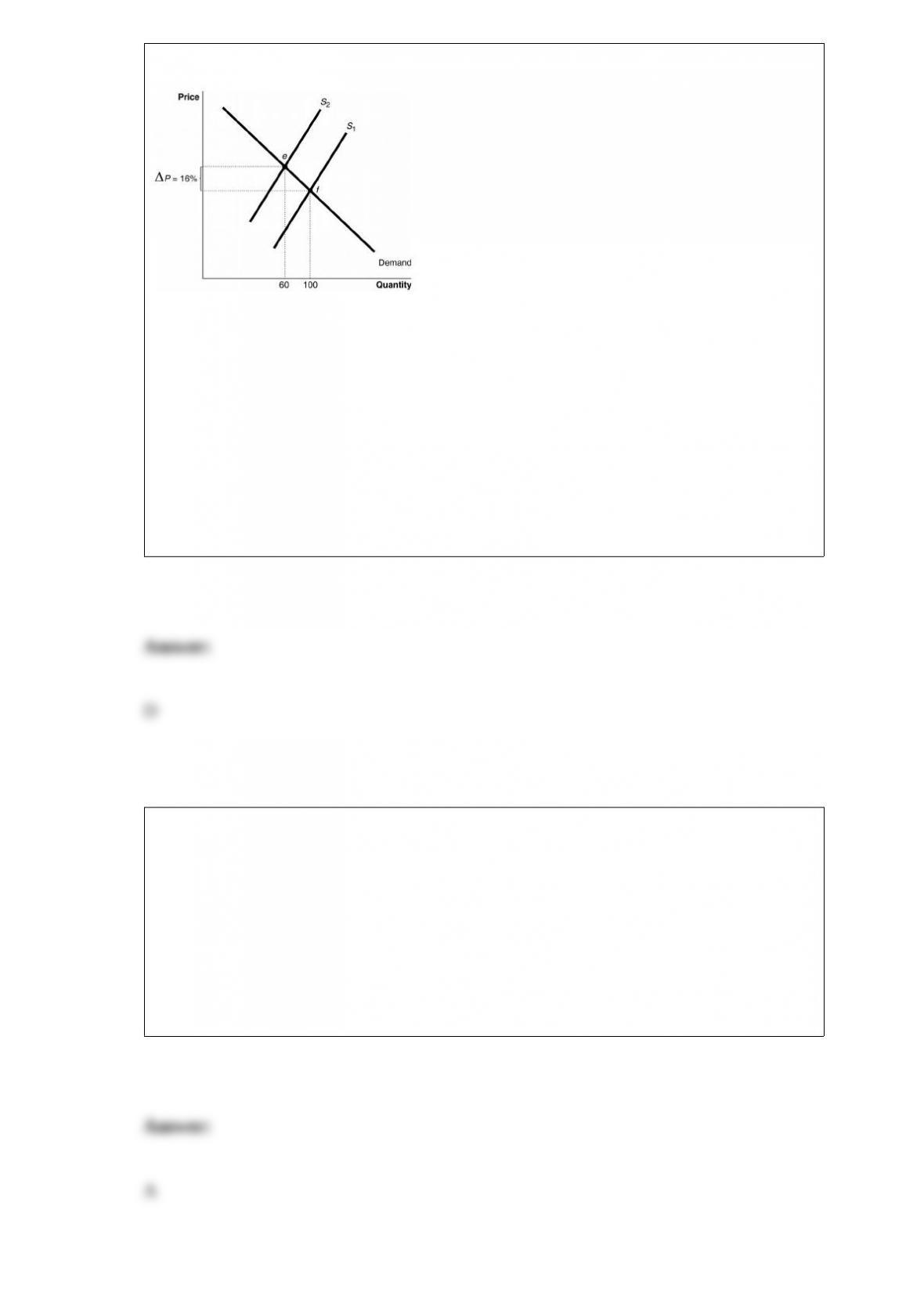
Figure 6-3
Using the midpoint formula, calculate the absolute value of the price elasticity of
demand between e and f.
A) 0.32
B) 0.4
C) 2.5
D) 3.125
A decrease in ________ can put your job at risk if aggregate expenditures fall.
A) consumer confidence
B) the natural rate of unemployment
C) the inflation rate
D) the length of a business cycle
Suppose thatAmerican firms claim that protectionism in Canada is on the rise as the
Canadian government attempts to protect its infant industries. This protectionism will
cause the greatest harm to
A) Canadian manufacturers.
B) the Canadian government.
C) manufacturers who export to Canada.
D) Canadian consumers.
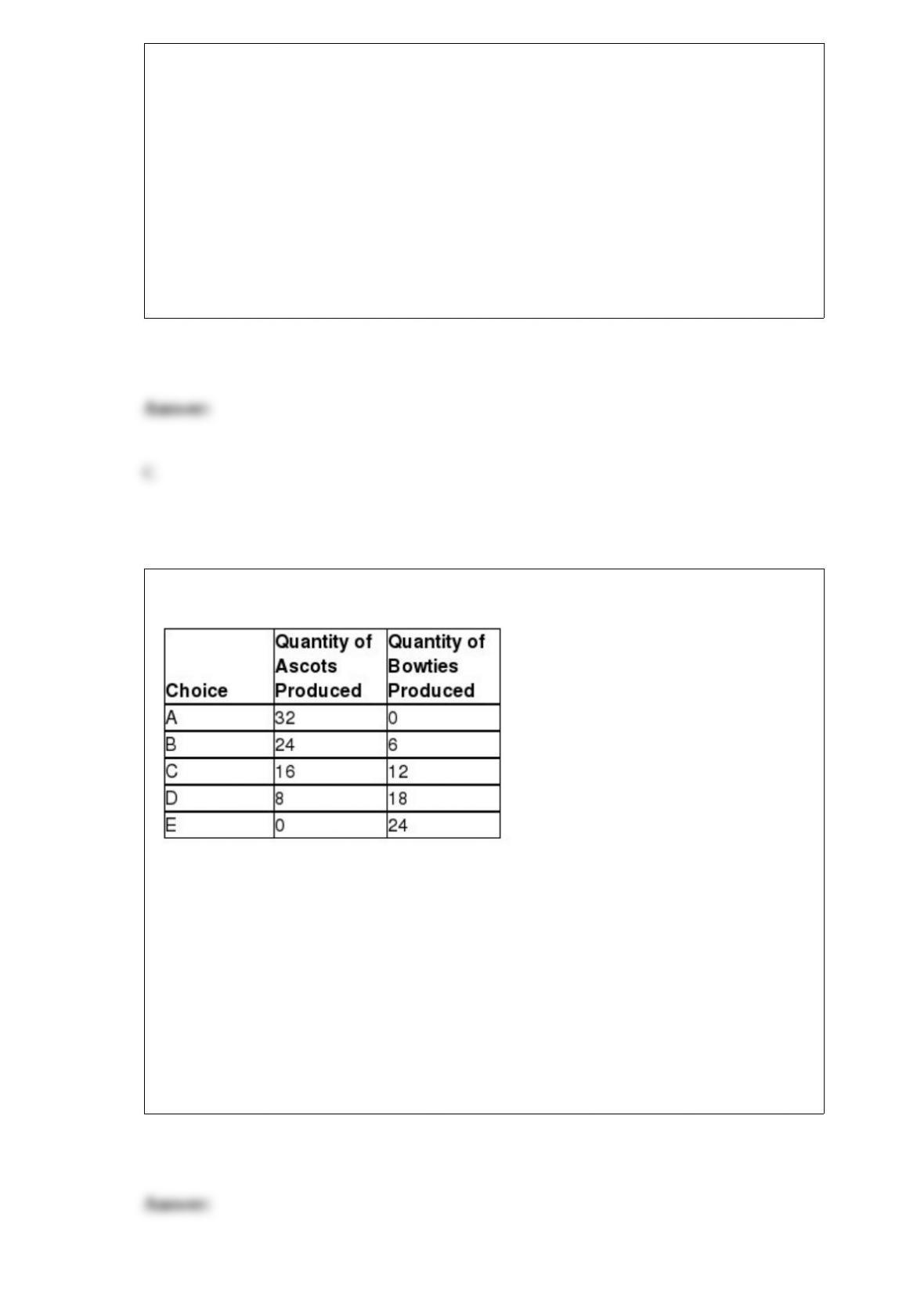
Table 2-2 Production choices for Nadia’s Neckware
Assume Nadia’s Neckware only produces ascots and bowties. A combination of 8 ascots
and 18 bowties would appear
A) along Nadia’s production possibilities frontier.
B) inside Nadia’s production possibilities frontier.
C) outside Nadia’s production possibilities frontier.
D) at the horizontal intercept of Nadia’s production possibilities frontier.

Cutting taxes
A) will lower disposable income and lower spending.
B) will raise disposable income and lower spending.
C) will lower disposable income and raise spending.
D) will raise disposable income and raise spending.
The current account deficits incurred by the United States in the 1990s and early 2000s
were caused, in the opinion of many economists, by
A) federal budget deficits.
B) “flight to quality” as foreign investors favored U.S. investments.
C) a sharp decline in private saving.
D) Both B and C are correct.
Consider two industries, industry Q and industry Z. In industry Q there are 10
companies, each with a market share of 10% of total sales. In industry Z, there are eight
companies. One company has a 65% market share and each of the other seven firms has
a market share of 5%.
a. Calculate the four-firm concentration ratio for each industry.
b. Calculate the Herfindahl-Hirschman Index (HHI) for each industry.
c. What do the values of the two concentration measures imply about the degree of
market power in the two industries?
An increase in the value of the U.S. dollar relative to the Japanese yen would be
________ for Japanese owners of U.S. houses who wish to sell those houses, and
________ for Japanese manufacturers operating factories in the United States that
export their products back to Japan.
A) good news; good news
B) good news; bad news
C) bad news; good news
D) bad news; bad news

The Gini coefficient is measured by
A) summing up the cumulative income percentages on the Lorenz curve.
B) summing up the total income earned by the population and dividing by the size of
the population.
C) using the formula: area between perfect inequality and Lorenz curve · area between
the line of perfect equality to the Lorenz curve.
D) using the formula: area between the line of perfect equality and the Lorenz curve ·
the area under the line of perfect equality.
The experience of Paul Volcker’s fight against inflation during the late 1970s and early
1980s indicates that firms and workers
A) had adaptive expectations.
B) had rational expectations and that they trusted Fed announcements.
C) preferred high unemployment to high inflation.
D) Both A and B are correct answers.
Suppose that a price-discriminating producer divides its market into two segments. If
the firm sells its product at a price of $34 in the market segment with relatively
less-elastic customer demand, the price in the market segment with more-elastic
customer demand will be
A) greater than $34.
B) less than $34.
C) less than marginal revenue in that market segment.
D) equal to marginal revenue in that market segment.
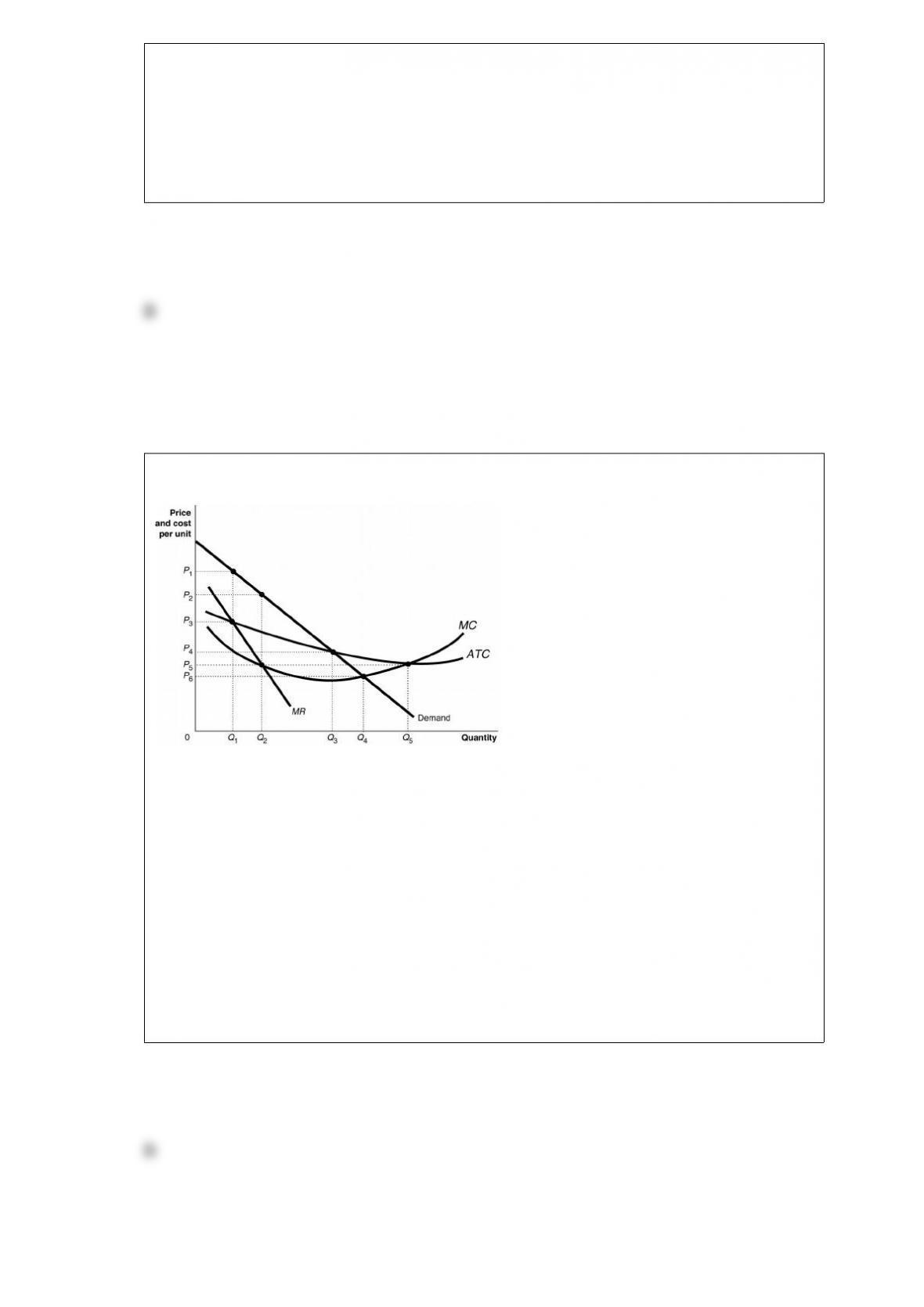
Figure 15-16
Figure 15-16 shows the market demand
and cost curves facing a natural monopoly. In the absence of any government
regulation, the profit-maximizing owners of this firm will produce ________ units and
charge a price of ________.
A) Q0 units; P0
B) Q1 units; P1
C) Q1 units; P4
D) Q3 units; P3
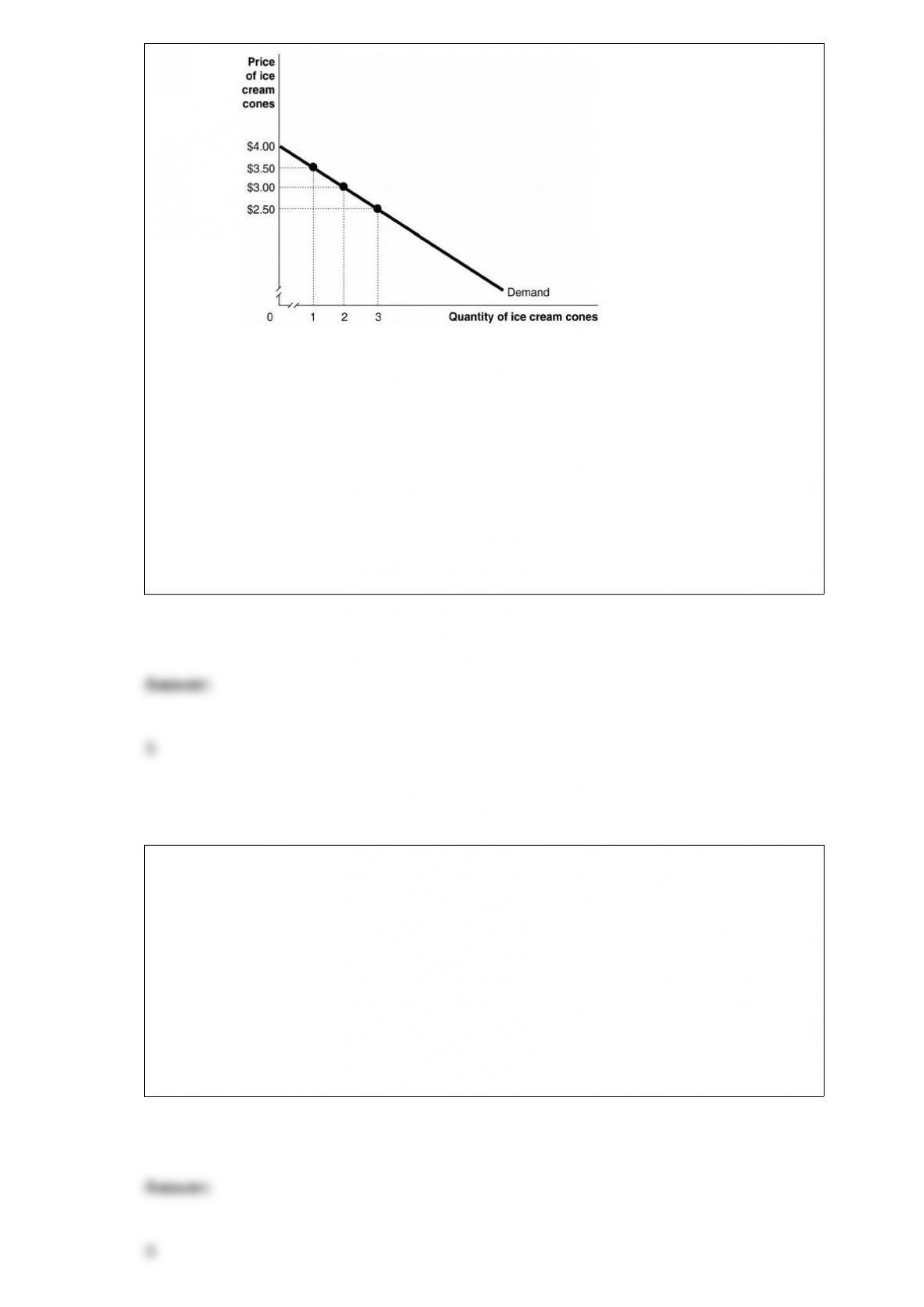
Figure 4-3 Figure 4-3 shows Kendra’s
demand curve for ice-cream cones.
If the market price is $3.50, what is the consumer surplus on the first ice cream cone?
A) $0
B) $0.50
C) $3.50
D) $9.00
The Congressional Budget Office estimates that the Patient Protection and Affordable
Care Act (ACA) will increase government spending
A) by just under $1 trillion over 10 years.
B) by more than the additional taxes and fees enacted under the law will bring in.
C) by less than $50 billion over the next decade.
D) by more than $20 trillion dollars over the next 5 years.
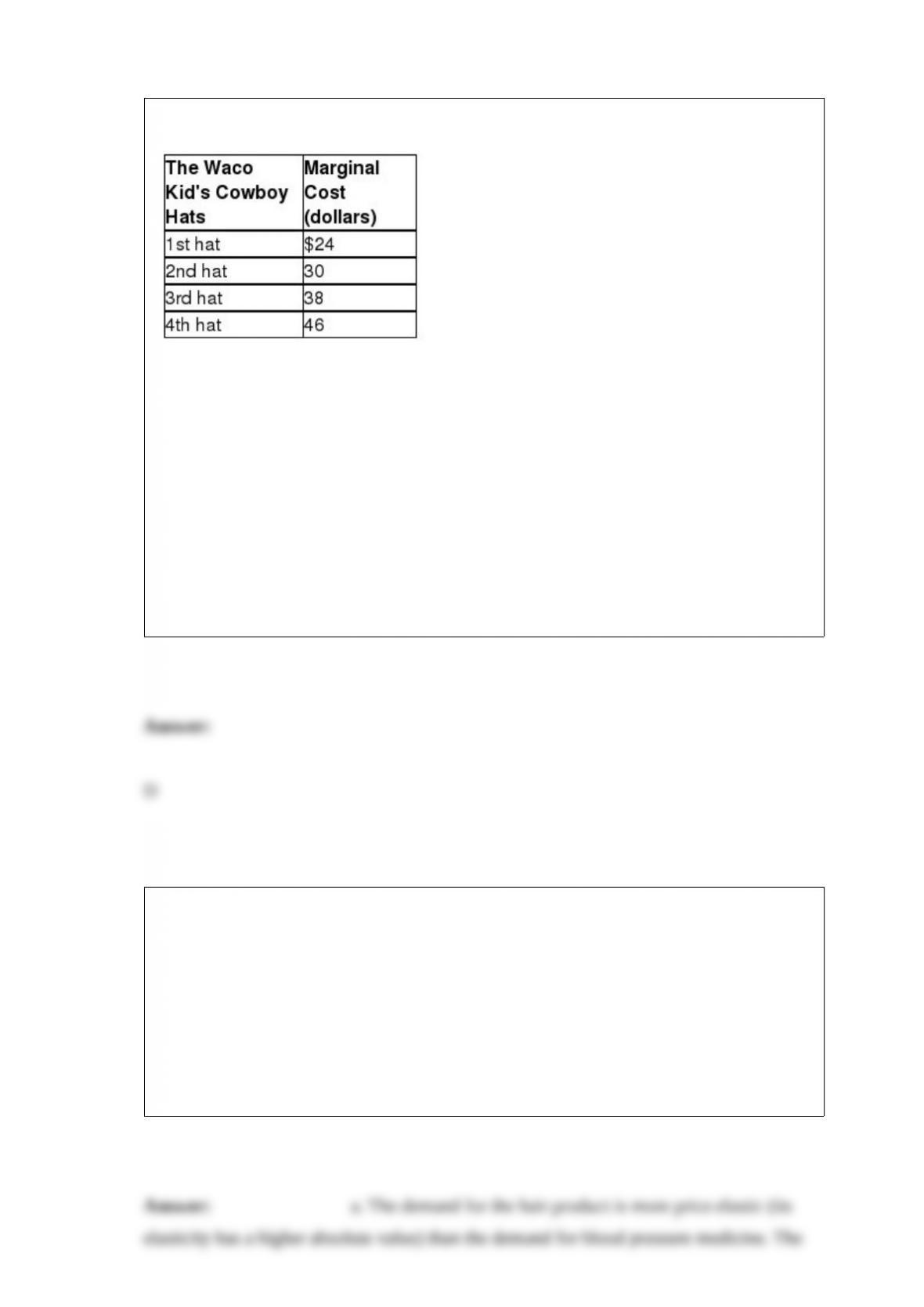
Table 4-3
The table above lists the marginal cost of cowboy hats by The Waco Kid, a firm that
specializes in producing western wear. If the market price of cowboy hats is $50, how
many hats will be produced?
A) 0
B) 1
C) 2
D) 4
For each pair of items below determine which product would have the higher price
elasticity of demand (in absolute value).
a. Blood pressure medicine for someone who has high blood pressure and the purchase
of Clairol hair coloring product.
b. A new Ford Fusion or a tank of gas for your current car.
c. A Seiko watch or watches in general.