A movement downward and to the right along a demand curve is called a(n)
a. increase in demand.
b. decrease in demand.
c. decrease in quantity demanded.
d. increase in quantity demanded.
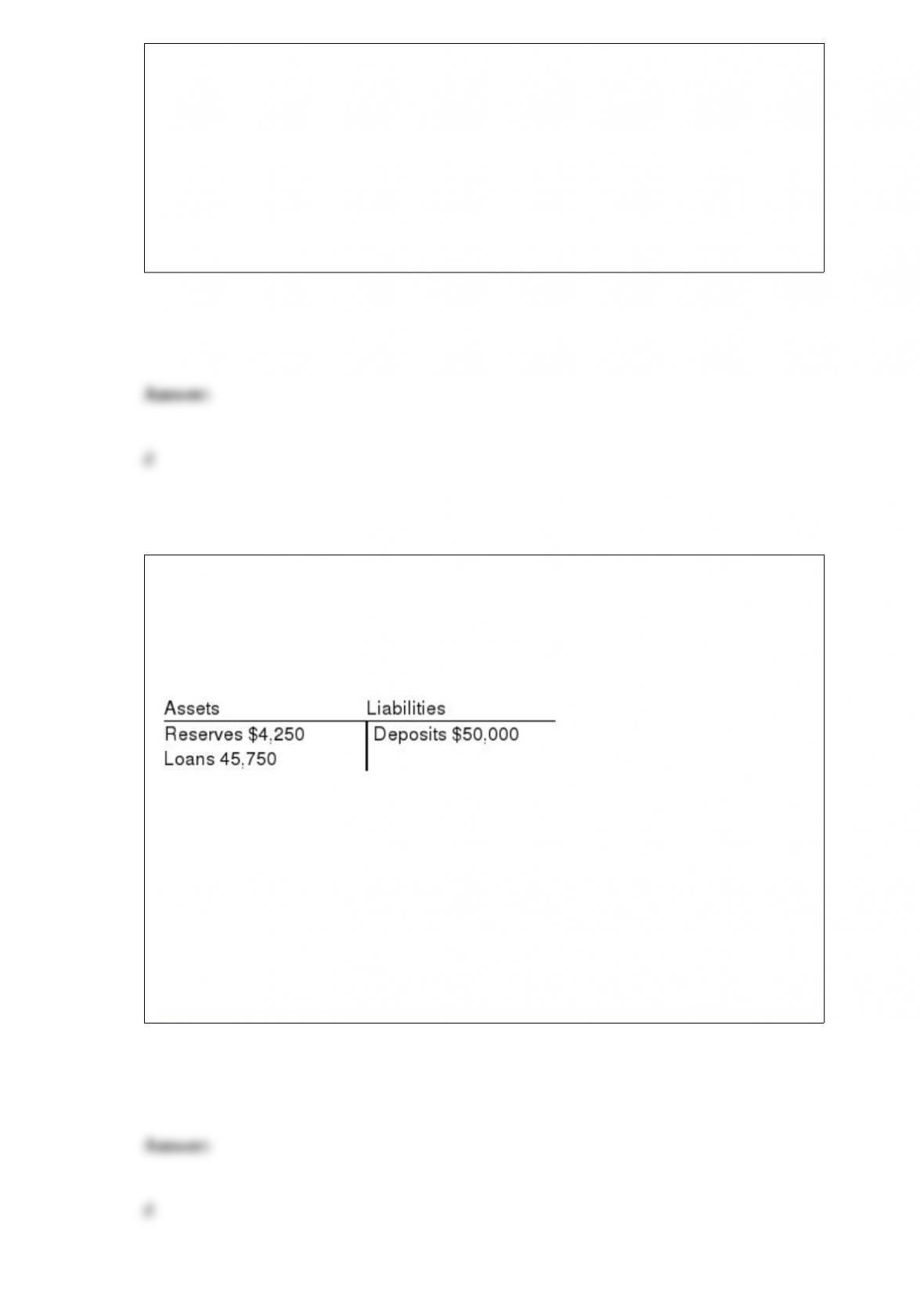
Table29-3.An economy starts with $50,000 in currency. All of this currency is
deposited into a single bank, and the bank then makes loans totaling $45,750. The
T-account of the bank is shown below.
RefetoTable29-3.If all banks in the economy have the same reserve ratio as this bank,
then the value of the economy’s money multiplier is
a. 9.33.
b. 1.09.
c. 10.76.
d. 11.76.

Which of the following would shift long-run aggregate supply to the right?
a. increased immigration from abroad
b. a decrease in the price of an imported natural resource
c. opening the economy to international trade
d. All of the above are correct.
The primary difference between commodity money and fiat money is that
a. commodity money is a medium of exchange but fiat money is not.
b. fiat money is a medium of exchange but commodity money is not.
c. commodity money has intrinsic value but fiat money does not.
d. fiat money has intrinsic value but commodity money does not.
Figure 34-8
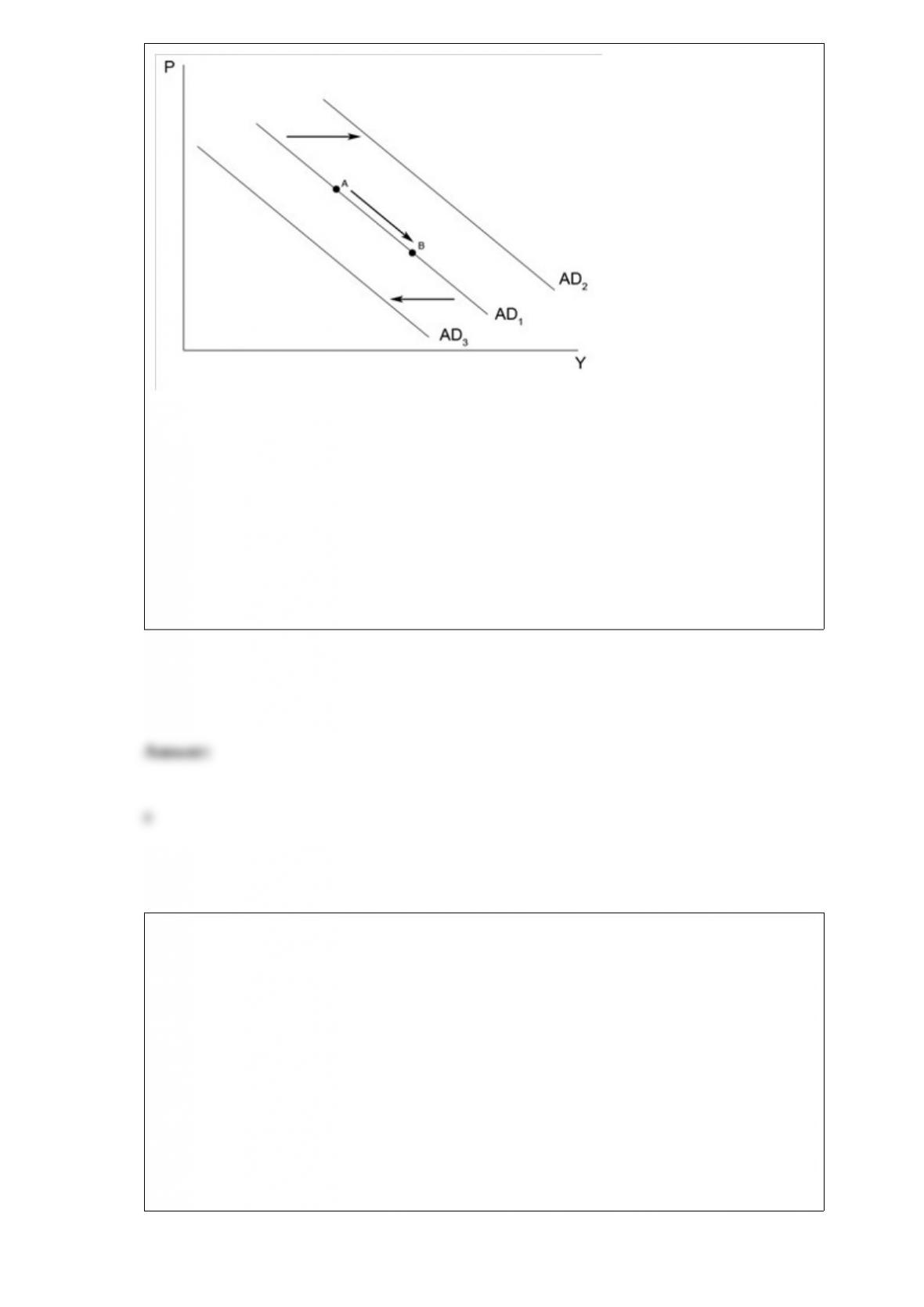
RefertoFigure34-8. An increase in government purchases will
a. shift aggregate demand from AD1to AD2.
b. shift aggregate demand from AD1to AD3.
c. cause movement from point A to point B along AD1.
d. have no effect on aggregate demand.
Which of the following does the U.S. president appoint and the U.S. Senate confirm?
a. members of the Board of Governors and regional Federal Reserve Bank Presidents.
b. members of the Board of Governors but not the regional Federal Reserve Bank
Presidents.
c. the regional Federal Reserve Bank Presidents, but not members of the Board of
Governors.
d. neither members of the Board of Governors nor regional Federal Reserve Bank
Presidents.

According to 2012 data on the U.S. population, which of the following groups of
teenagers (ages 16-19) had the highest labor-force participation rate?
a. white males
b. white females
c. black males
d. black females
Unions contribute to
a. structural unemployment but not the natural rate of unemployment.
b. the natural rate of unemployment but not structural unemployment.
c. both structural unemployment and the natural rate of unemployment.
d. neither structural unemployment nor the natural rate of unemployment.

The Bureau of Labor Statistics defines discouraged workers as marginally attached
workers who have given a job- market related reason for not currently looking for a job.
a. True
b. False
According to the definitions of national saving and private saving, if Y, C, and
Gremained the same, an increase in taxes would
a. raise both national saving and private saving.
b. raise national saving and reduce private saving.
c. leave national saving and private saving unchanged.
d. leave national saving unchanged and reduce private saving.
Suppose that bartenders and waiters have no unions. Now suppose that bartenders form
a union. What does this do the labor supply and wages of waiters?
a. Both labor supply and wages increase.
b. Labor supply increases, and wages decrease.
c. Labor supply decreases, and wages increase.

d. Both labor supply and wages decrease.
Which of the following shifts the long-run aggregate supply curve to the right?
a. both an increase in the capital stock and technological improvements
b. an increase in the capital stock but not technological improvements
c. an increase in the capital stock but not technological improvements
d. neither an increase in the capital stock nor an technological improvements
The inflation rate is defined as the
a. price level in an economy.
b. change in the price level from one period to the next.
c. percentage change in the price level from the previous period.
d. price level minus the price level from the previous period.

A form of government spending that is not made in exchange for a currently produced
good or service is called
a. a transfer payment.
b. consumption.
c. investment.
d. None of the above is correct.
Which of the following is notincluded in either M1 or M2?
a. money market deposit accounts
b. large time deposit
c. demand deposits
d. money market mutual funds
Which of the following best describes the response of output as time passes to an
increase in the saving rate?
a. The growth rate of output does not change.
b. The growth rate of output increases and gets even larger as time passes.
c. The growth rate of output increases and does not change as time passes.
d. The growth rate of output increases, but diminishes to its former level as time passes.
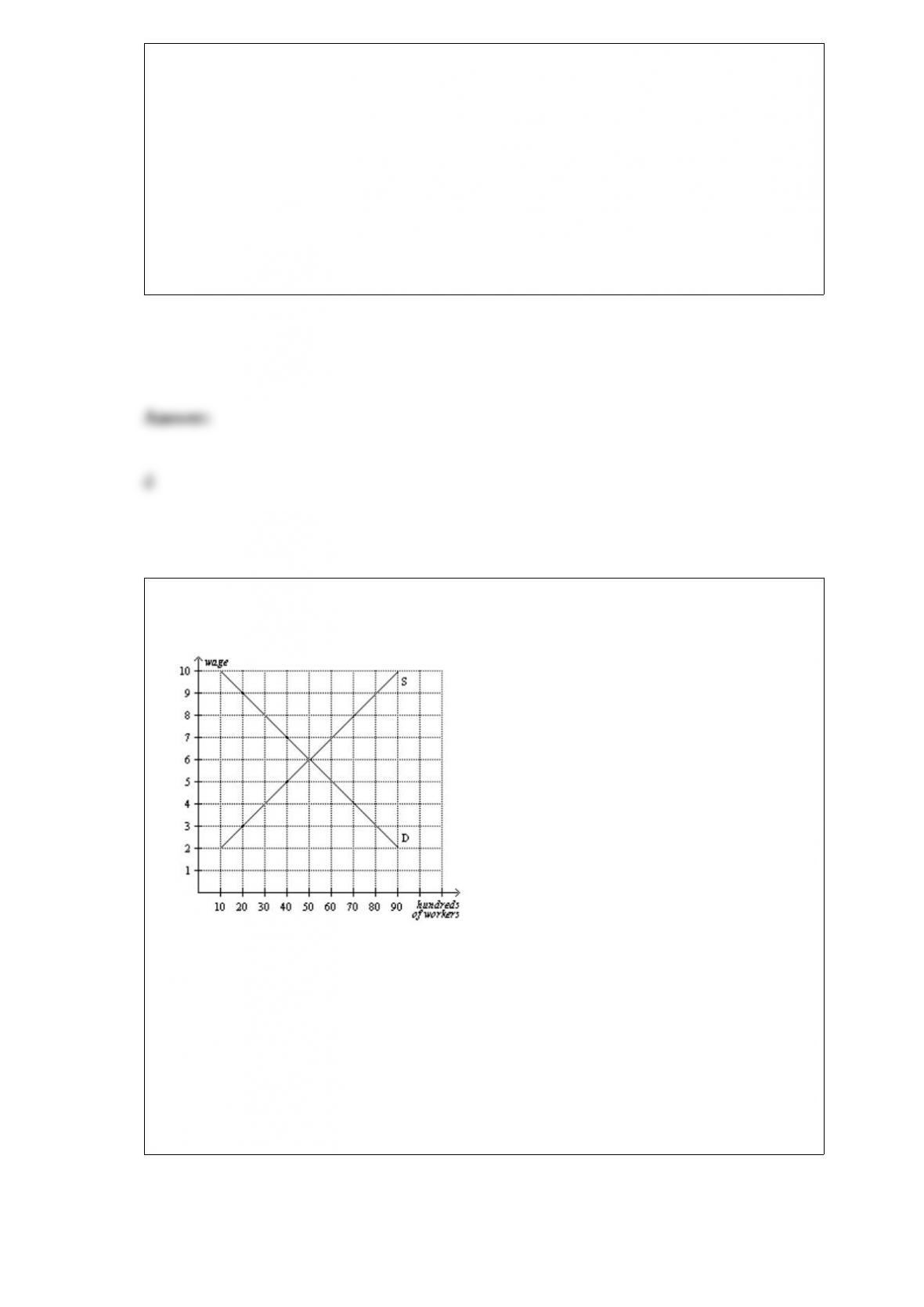
Figure 28-3
RefetoFigure28-3.At the equilibrium wage, how many workers are unemployed?
a. 0
b. 4,000
c. 5,000
d. 8,000
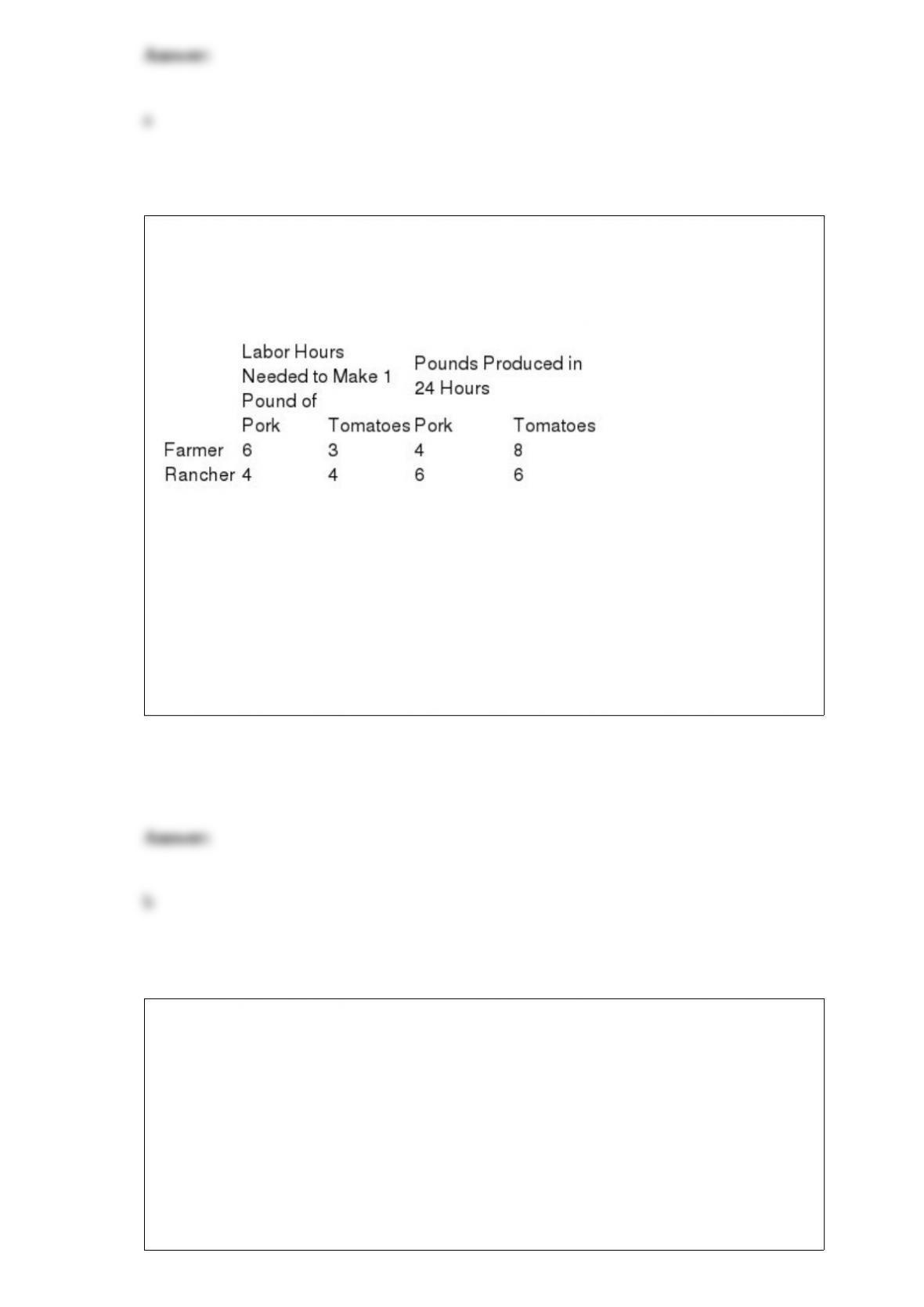
Table 3-23
Assume that the farmer and the rancher can switch between producing pork and
producing tomatoes at a constant rate.
RefertoTable3-23.The farmer has a comparative advantage in the production of
a. pork.
b. tomatoes.
c. both goods.
d. neither good.
Suppose that monetary neutrality and the Fisher effect both hold. An increase in the
money supply growth rate increases
a. the inflation rate and real interest rates.
b. the inflation rate, but not real interest rates.
c. real interest rates, but not the inflation rate.
d. neither the inflation rate nor real interest rates.

One reason economies always experience some unemployment is job search.
a. True
b. False
Suppose you are deciding whether or not to buy a particular bond for $5,980.17. If you
buy the bond and hold it for 5 years, then at that time you will receive a payment of
$10,000. You will buy the bond today if the interest rate is
a. no less than 9.48 percent.
b. no greater than 9.48 percent.
c. no less than 10.83 percent.
d. no greater than 10.83 percent.

According to the assumptions of the quantity theory of money, if the money supply
decreases by 7 percent, then
a. nominal and real GDP would fall by 7 percent.
b. nominal GDP would fall by 7 percent; real GDP would be unchanged.
c. nominal GDP would be unchanged; real GDP would fall by 7 percent.
d. neither nominal GDP nor real GDP would change.
The most important reason for the slope of the aggregate-demand curve is that as the
price level
a. increases, interest rates increase, and investment decreases.
b. increases, interest rates decrease, and investment increases.
c. decreases, interest rates increase, and investment increases.
d. decreases, interest rates decrease, and investment decreases.
If U.S. citizens decide to save a larger fraction of their incomes, the real interest rate
a. decreases, the real exchange rate of the dollar depreciates, and U.S. net capital
outflow increases.

b. decreases, the real exchange rate of the dollar appreciates, and U.S. net capital
outflow decreases.
c. increases, the real exchange rate of the dollar appreciates, and U.S. net capital
outflow decreases.
d. increases, the real exchange rate of the dollar depreciates, and U.S. net capital
outflow increases.
When the price level increases, the real value of people’s money holdings
a. falls, so they buy more.
b. falls, so they buy less.
c. rises, so they buy more.
d. rises, so they buy less.
Managed funds
a. typically have a higher rate of return and higher costs than index funds.
b. typically have a higher rate of return and lower costs than index funds.
c. typically have a lower rate of return and higher costs than index funds.

d. typically have a lower rate of return and lower costs than index funds.
Suppose there were a large decline in net exports. If the Fed wanted to stabilize output,
it could
a. buy bonds to raise interest rates.
b. buy bonds to lower interest rates.
c. sell bonds to raise interest rates.
d. sell bonds to lower interest rates.
Suppose the real exchange rate is 1.25 pounds of bananas in Guatemala per pound of
bananas in the U.S. If a pound of bananas in the U.S. costs $.50, and the exchange rate
is 10 Guatemalan Quetzals per dollar, what is the price of bananas in Guatemala?
a. 2.50 Quetzals per pound
b. 4.00 Quetzals per pound
c. 5.75 Quetzals per pound
d. 6.25 Quetzals per pound

If a country raises its budget deficit, then net capital outflow
a. rises, so the supply of its currency shifts right in the market for foreign-currency
exchange.
b. rises, so the demand for its currency shifts right in the market for foreign-currency
exchange.
c. falls, so the supply of its currency shifts left in the market for foreign-currency
exchange.
d. falls, so the demand for its currency shifts right in the market for foreign-currency
exchange.
The United Kingdom is
a. an advanced economy, and over the past century its rate of economic growth has been
higher than that of the United States.
b. an advanced economy, and over the past century its rate of economic growth has
been lower than that of the United States.
c. a middle-income country, and over the past century its rate of economic growth has
been higher than that of the United States.
d. a middle-income country, and over the past century its rate of economic growth has
been lower than that of the United States.

Almost half of all spells of unemployment end when the unemployed person leaves the
labor force.
a. True
b. False
Disinflatiois a
a. reduction in the price level, whereas deflatiois a reduction in the rate of inflation.
b. reduction in the rate of inflation, whereas deflatiois a reduction in the price level.
c. slow reduction in the price level, whereas deflatiois a rapid reduction in the price
level.
d. rapid reduction in the price level, whereas deflatiois a slow reduction in the price
level.

Economists may disagree about the validity of alternative positive theories about how
the world works.
a. True
b. False
Part of the argument against deficits is that they
a. increase interest rates and investment.
b. increase interest rates and decrease investment.
c. decrease interest rates and investment.
d. decrease interest rates and increase investment.