The problem with using voluntary contributions to support a public good is known as
the ________ problem.
A) user
B) utility
C) free-rider
D) external cost
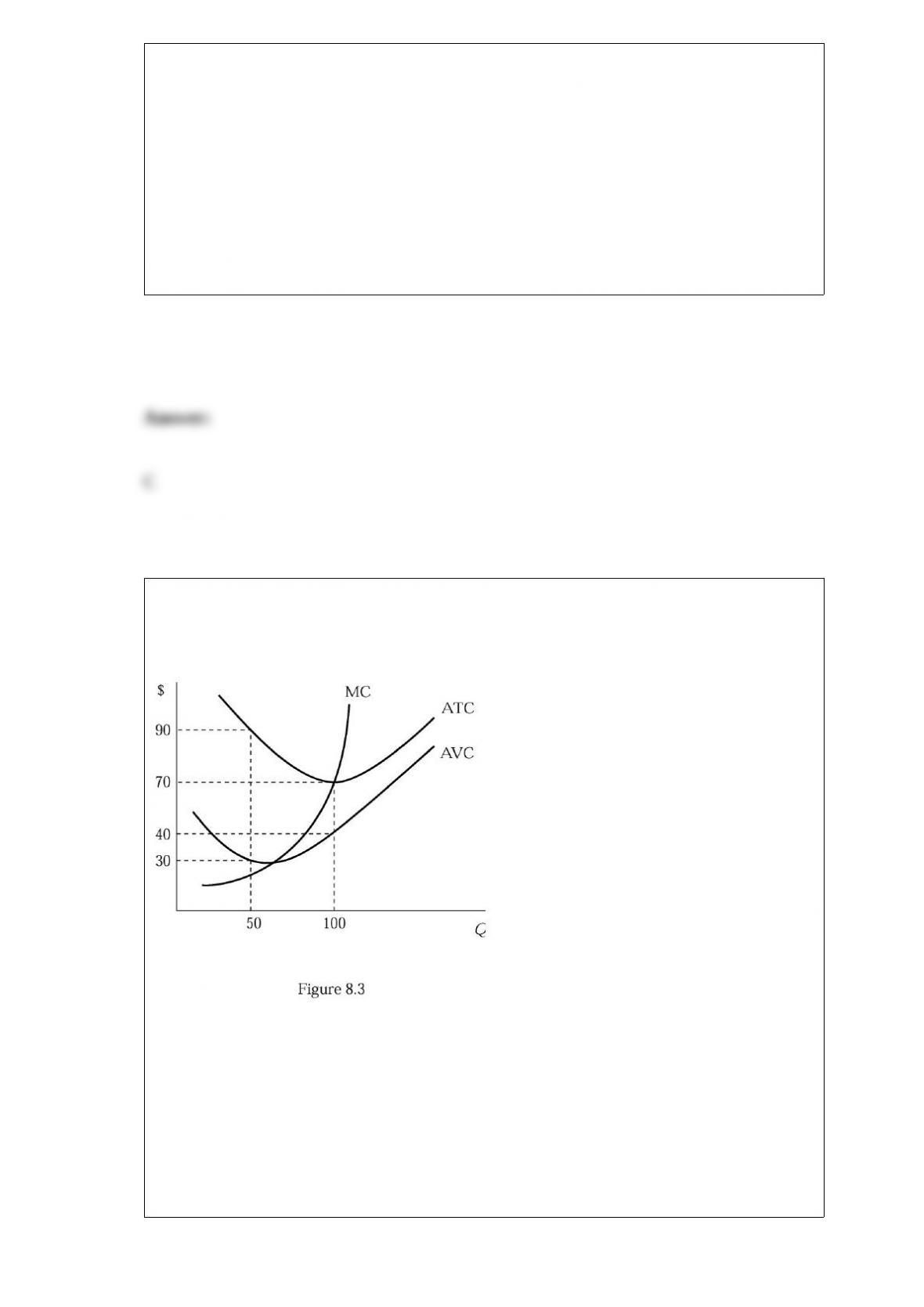
Figure 8.3 shows a firm’s marginal cost, average total cost, and average variable cost
curves. For an output level greater than Q=100, the average total cost curve is
upward-sloping because:
A) decreasing average fixed cost outweighs increasing average variable cost.
B) diminishing returns are not severe enough to outweigh decreasing average fixed
cost.
C) increasing average variable cost outweighs decreasing average fixed cost.
D) marginal cost is increasing.

Suppose that your tuition to attend college is $14,000 per year and you spend $5,000
per year on room and board. If you were working full time, you could earn $26,000 per
year. What is your opportunity cost of attending college?
A) $19,000
B) $31,000
C) $40,000
D) $45,000
When a firm is awarded a patent, it is given monopoly rights to the production of that
product for ________ years.
A) 10
B) 20
C) 30
D) 50

A possible reason to impose a protectionist policy such as a tariff is to:
A) increase the welfare of domestic consumers.
B) slow domestic production.
C) aid other nations in developing their own industries.
D) protect domestic workers from foreign competition.
The budget line will shift parallel to the left if:
A) income increases.
B) income decreases.
C) the price of the good on the vertical axis increases.
D) the price of the good on the vertical axis decreases.
In Table 14.1, Market 1 would be in equilibrium if buyers believed lemons accounted
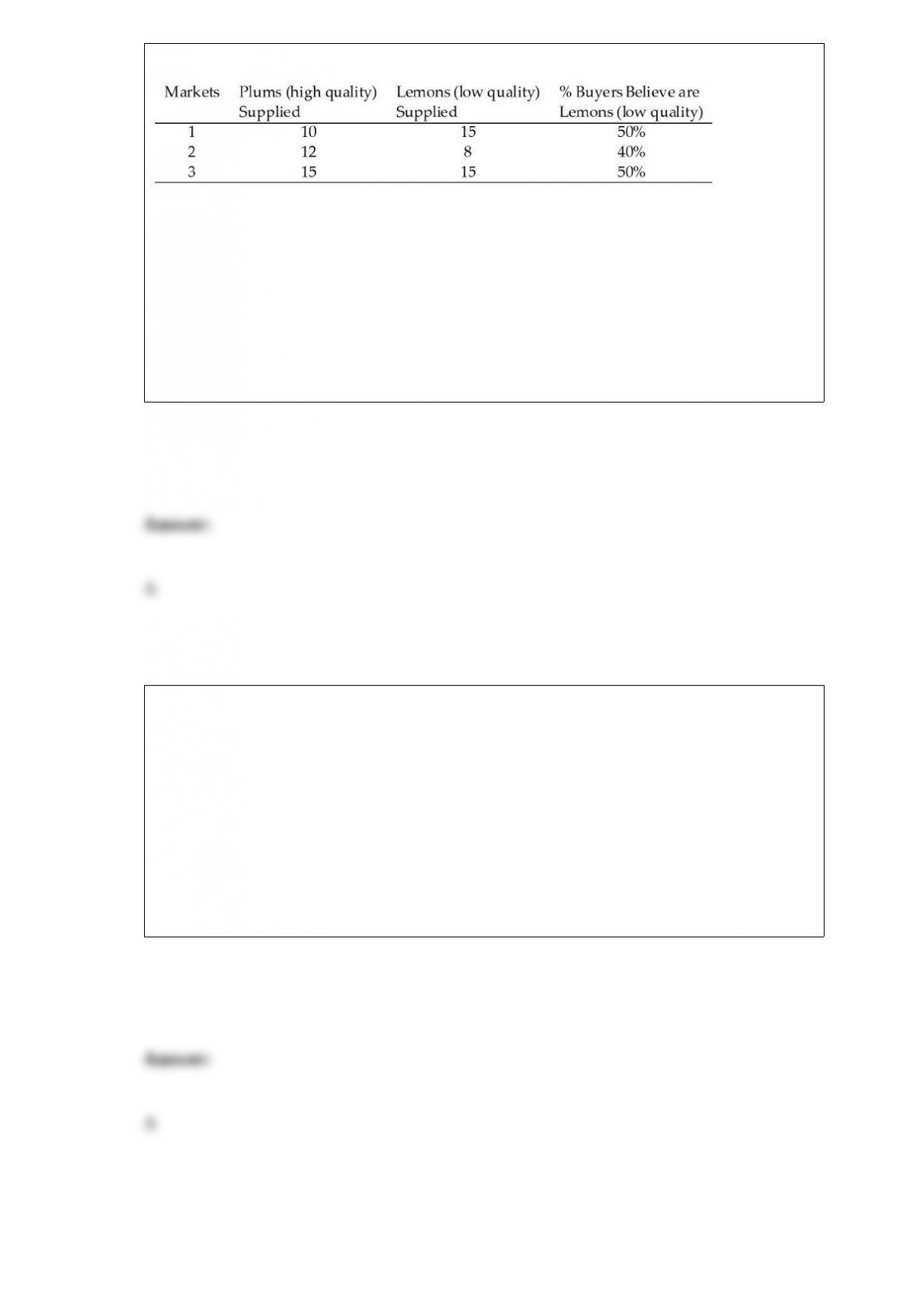
for:
Table 14.1
A) 60% of the market.
B) 55% of the market.
C) 45% of the market.
D) 40% of the market.
If leisure is a normal good, as the price of leisure increases the quantity of leisure
demanded ________ and the demand for leisure ________.
A) falls; increases
B) falls; is not affected
C) remains the same; decreases
D) increases; is not affected

In the Application, what should we observe before we can undoubtedly attribute the
lower drug prices to an increase in supply?
A) an increase in the equilibrium quantity
B) a shortage
C) a decrease in the equilibrium quantity
D) a surplus
In a monopolistically competitive market, if price is greater than average cost:
A) firms will enter.
B) firms will exit.
C) there will be no change in the number of firms.
D) the market is in long-run equilibrium.
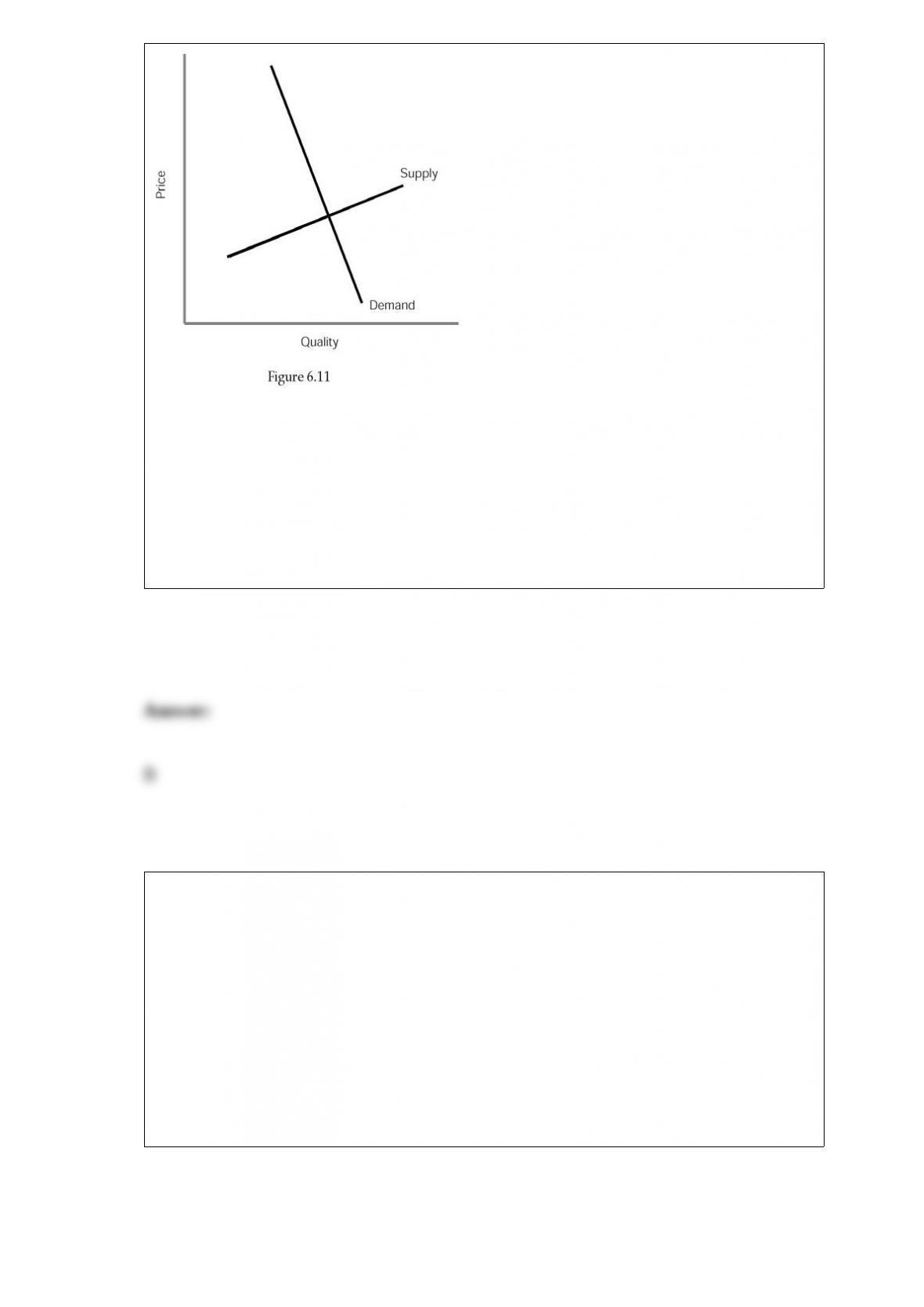
Refer to Figure 6.11. If a tax is imposed on the market in Figure 6.11, ________ will
bear a smaller share of the tax.
A) the consumers
B) the producers
C) the government
D) no one
If the tariffs on the textiles, apparel items and footwear mentioned in the Application
were replaced by equivalent voluntary export restraints (VERs), low-income consumers
would probably:
A) be better off.
B) be worse off.
C) be no better nor worse off.
D) not be subject to the VERs.

Suppose two power plants pollute a river and both firms operate under a system of
marketable pollution permits. If it costs Firm A $90 to reduce pollution by 800 units per
day, and Firm B can reduce costs by $115 by increasing pollution by 800 units per day:
A) the firms cannot gain by trading the right to pollute.
B) both firms can benefit if Firm A trades the right to increase pollution by 800 units to
Firm B for $70.
C) both firms can benefit if Firm B trades the right to increase pollution by 800 units to
Firm A for $120.
D) both firms can benefit if Firm A trades the right to increase pollution by 800 units to
Firm B for $100.
Recall the application about the response to lower taxes in French restaurants. If the
quantity of meals sold will increase due to the lower prices, a tax cut will:
A) have a positive effect on consumers and restaurant owners.
B) be paid exclusively by the restaurant owners.
C) decrease the competitiveness in the restaurant industry.
D) be paid exclusively by the customers.
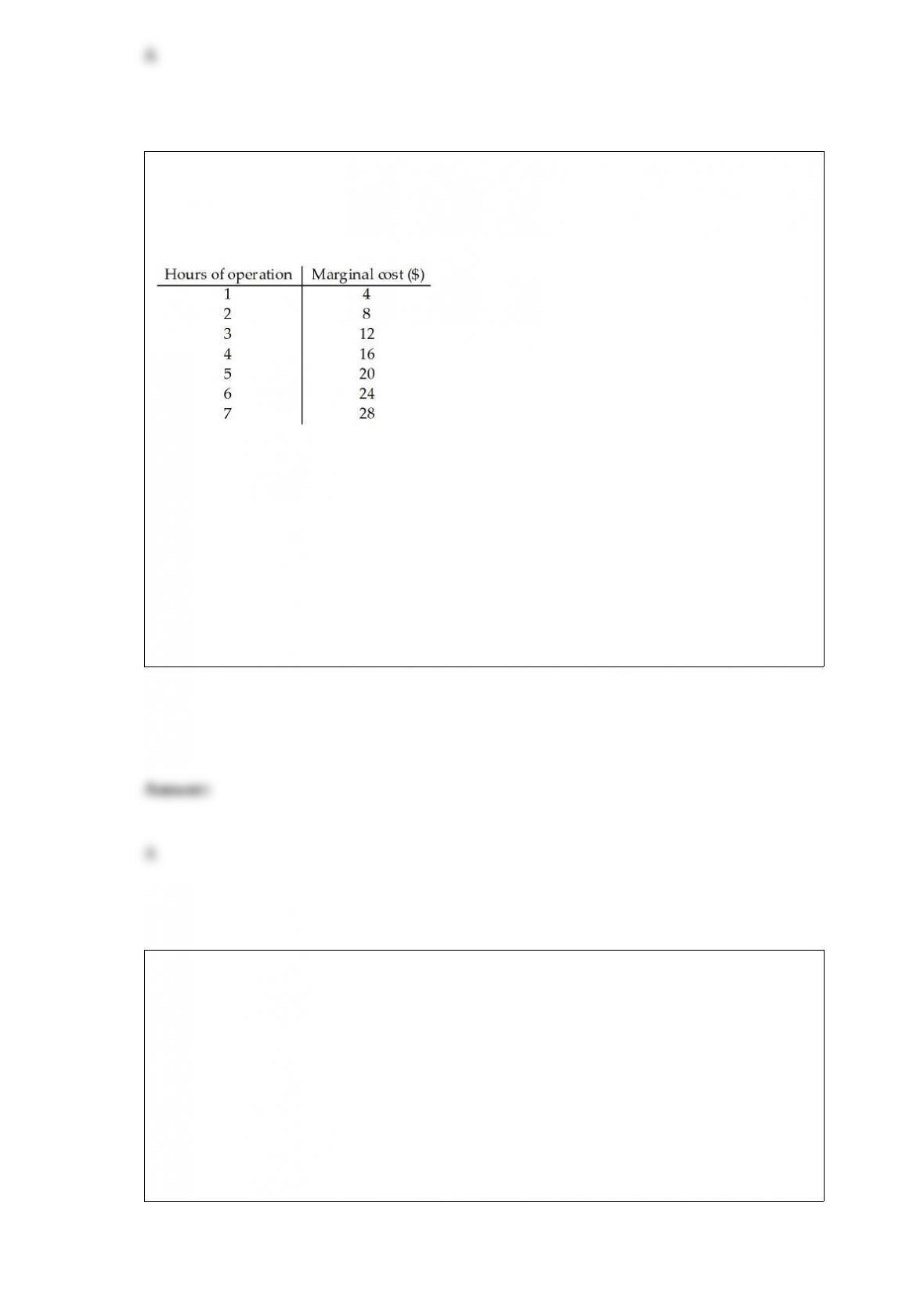
Julianne runs a business and needs to decide how many hours to stay open. Table 2.2
illustrates her marginal costs of staying open for each additional hour. Suppose that we
observe Julianne staying open 2 hours per day. If she is following the marginal
principle, what must her marginal benefit be?
Table 2.2
A) $8
B) $12
C) $20
D) $22
Suppose all firms in an industry are earning positive economic profit. We would expect
to find that in the future:
A) the market price will fall.
B) the market supply curve will shift to the left.
C) there will be no further entry or exit.
D) the market demand curve will shift to the right.

If the worker’s costs of the training necessary to perform a job increase, labor ________
shifts ________.
A) demand; left
B) demand; right
C) supply; left
D) supply; right
Which type of profit maximizing firm will choose to produce where marginal revenue
equals marginal cost?
A) perfect competition
B) perfect competition and monopolistic competition
C) monopolistic competition
D) all types of firms

If Maria gets 80 utils from consuming five cookies, 100 utils from consuming six
cookies and 120 utils from consuming seven cookies, then Maria’s marginal utility from
the sixth cookie is:
A) 100 utils.
B) 80 utils.
C) 40 utils.
D) 20 utils.
Product differentiation is beneficial because it:
A) ensures larger companies can grow while smaller companies fail.
B) allows the economy to satisfy a wide range of tastes and preferences.
C) reduces competition in the market.
D) all of the above
Consider two people involved in a marriage or relationship. If, when one person is
caught cheating on their agreement, the other cheats once or goes on a one time
spending spree, then they are using a:

A) tit-for-tat strategy.
B) grim trigger strategy.
C) dominant strategy.
D) predatory strategy.
Monopolistic competition is NOT characterized by:
A) slightly different products.
B) many sellers.
C) firms with no control over price.
D) no barriers to entry.
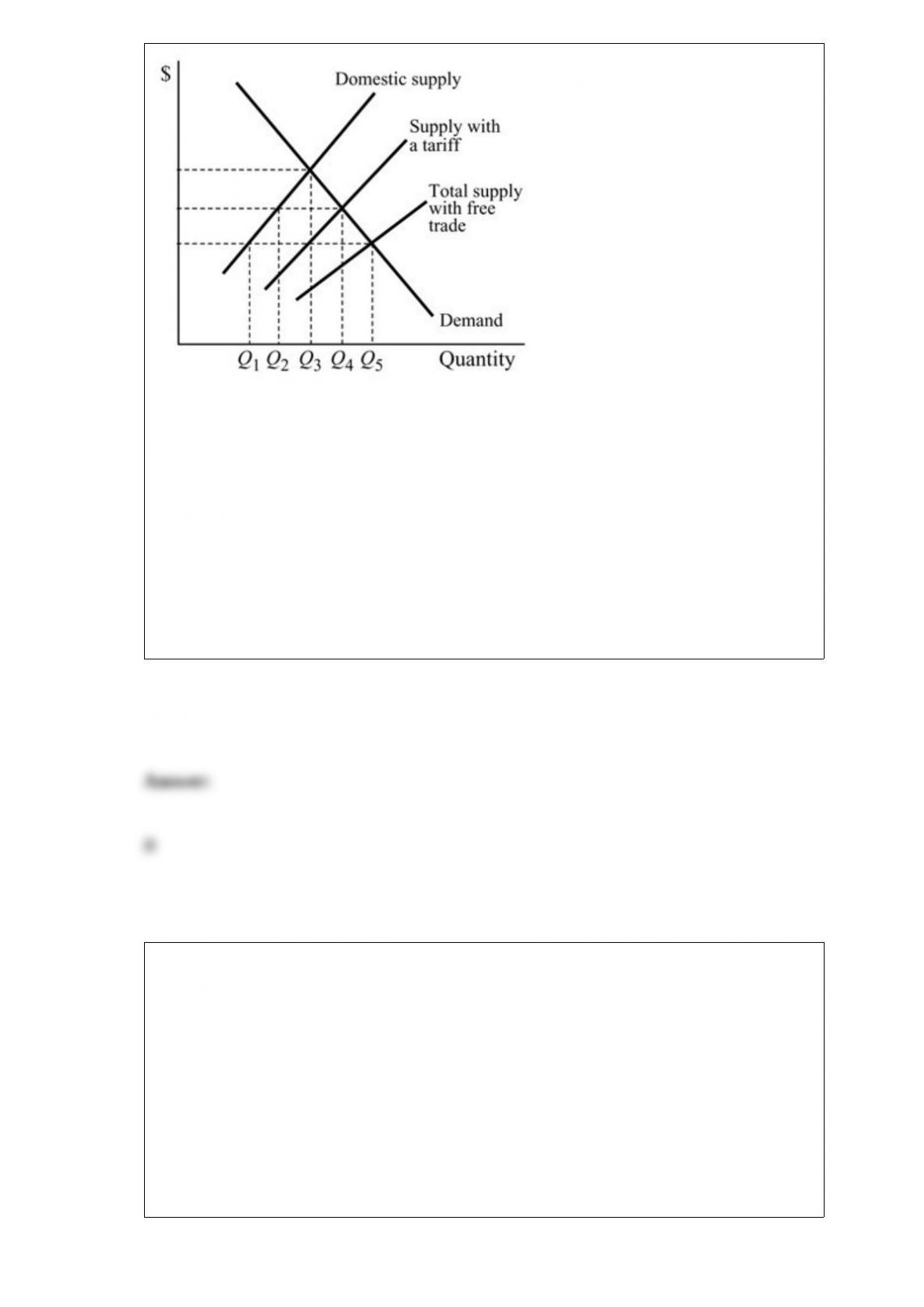
Figure 18.5
For the good in Figure 18.5,with the tariff, the people in the country will produce:
A) Q1.
B) Q2.
C) Q4.
D) Q5.
Consider a labor market in equilibrium. If the demand curve shifts to the left while the
supply curve shifts to the left, then the number of workers hired in the market will
________.
A) increase
B) decrease
C) remain unchanged
D) either increase or decrease or remain unchanged

Recall the Application about the 1998 merger between Penzoil and Quaker State to
answer the following question(s). The merger resulted in a company with a market
share of 38 percent: 29 percent from Penzoil and 9 percent from Quaker State.
Recall the Application. A recent study concluded that following the merger between
Penzoil and Quaker State, the new company ________ the price of Penzoil products
and ________ the price of Quaker State products.
A) increased; increased
B) decreased; increased
C) increased; did not change
D) did not change; increased
What is the total revenue of a shoe company equal to?
A) income minus explicit and implicit costs
B) the change in quantity sold divided by the change in price
C) price of shoes times quantity sold
D) elasticity of demand divided by percentage change in quantity
A specialized worker does not spend time switching from one task to another. This is
called:
A) continuity.
B) innovation.
C) functionality.
D) repetition.
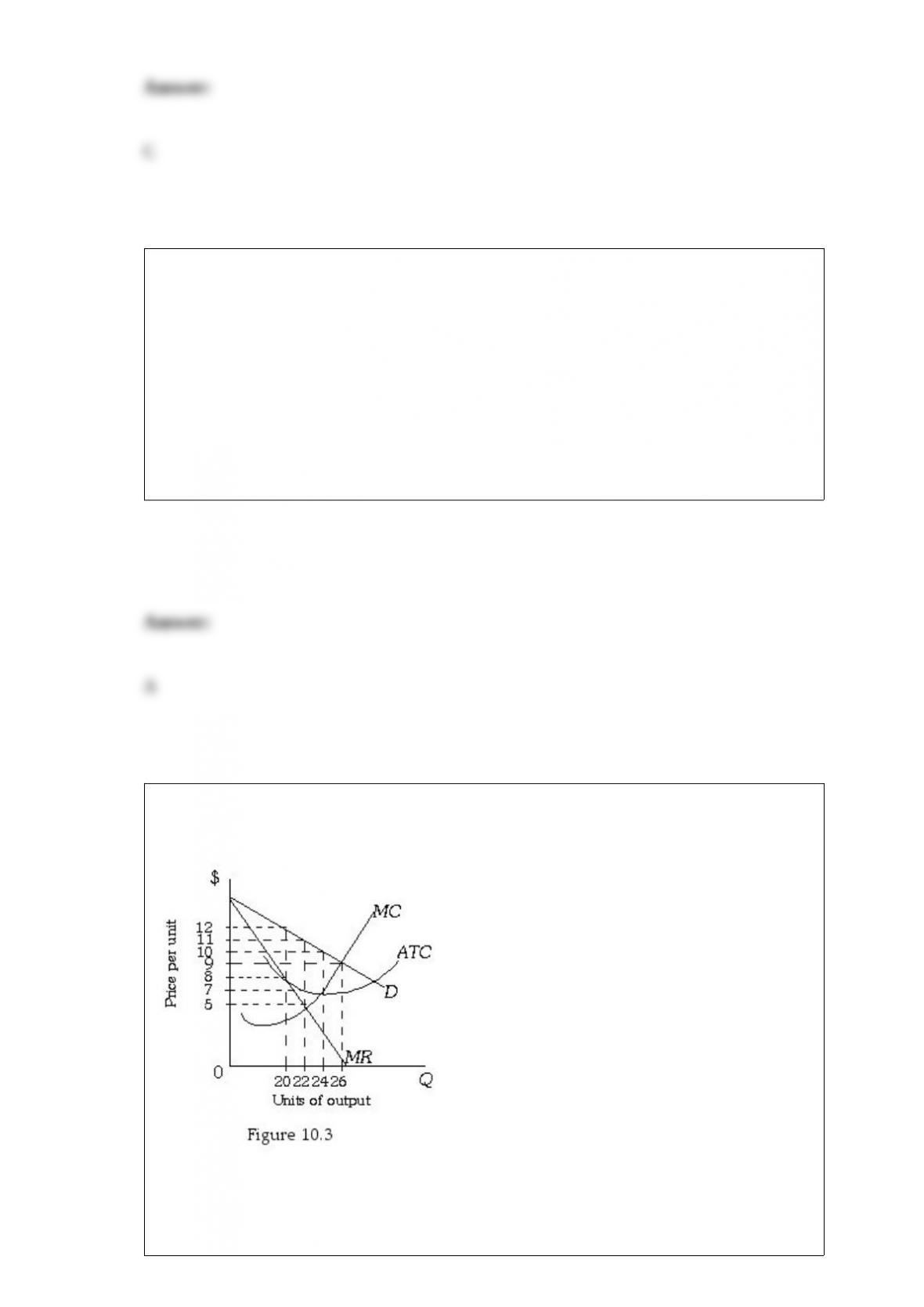
Refer to Figure 10.3. The profit-maximizing level of output for this monopolist is
________ units of output.
A) 20
B) 22
C) 24
D) 26
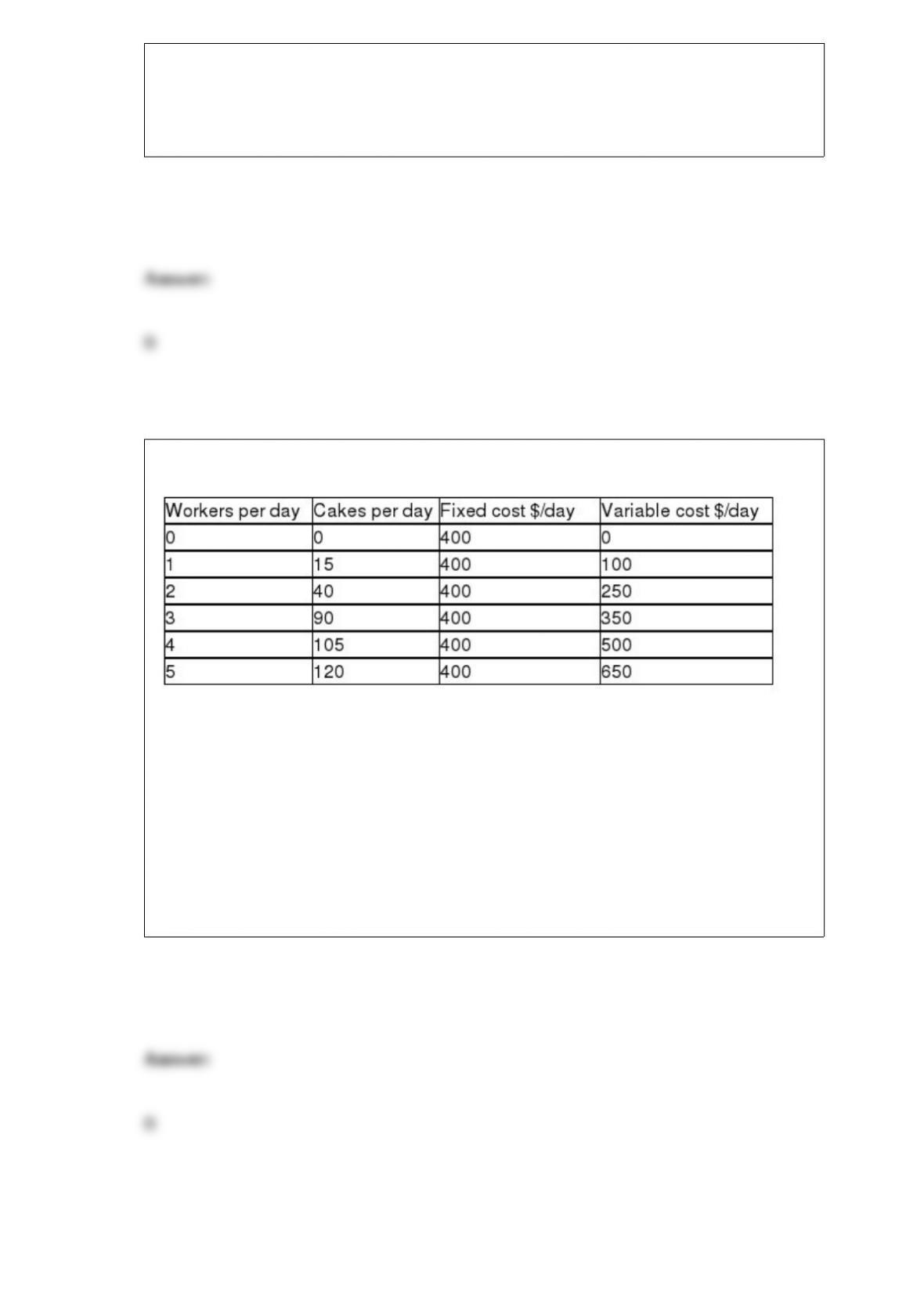
Refer to Table 8.4. When the fifth worker is employed, the marginal cost is:
Table 8.4
A) $150.
B) $100.
C) $15.
D) $10.

In order to engage in price discrimination, a monopolist has to be able to determine that
there are different groups of consumers that have different ________ for the product.
A) income elasticities of demand
B) price elasticities of demand
C) cross elasticities of demand
D) All of the above are correct.
Suppose that the income elasticity of demand for frozen dinners is negative. Other
things being equal, which of the following statements is INCORRECT?
A) Frozen dinners are an inferior good.
B) The quantity demanded of frozen dinners increases as a consumer’s income declines.
C) There exists a negative relationship between income and the demand for frozen
dinners.
D) The share of income spent on good X must decrease as a consumer’s income
decreases.
If the price elasticity of demand for water is inelastic, which of the following could be a
possible value of the elasticity?

A) 2
B) 1
C) 0.5
D) all of the above
Saving time by driving faster is an example of a ________ of driving faster. Increasing
the severity of injuries from a potential accident due to driving faster is a(n) ________
of driving faster.
A) nominal cost; real cost
B) marginal cost; nominal cost
C) marginal benefit; marginal cost
D) normative benefit; opportunity cost
Suppose that the elasticity of demand for a product is 0.5. What will happen to total
revenue as a firm increases the price?
A) Total revenue will increase.
B) Total revenue will decrease.

C) Total revenue will stay the same.
D) Cannot be determined from the information provided.