
The ability to shift a tax burden depends on the relative elasticities of demand and
supply for the taxed commodity.
a. True
b. False
Politicians always agree with economists about the most efficient way of doing things.
a. True
b. False
In the negative income tax framework, a break-even point of $16,000 and a tax rate of
25 percent imply a guarantee of which of the following figures?
a. $4,000
b. $8,000
c. $12,000
d. $16,000

The relationship between the price level and the quantity of real GDP supplied is
a. full employment output.
b. inflationary or recessionary gap.
c. aggregate supply.
d. supply-side equilibrium.
Under laissez faire, the force that drives the economy toward an efficient outcome is
a. central planning.
b. majority voting.
c. the pursuit of self-interest.
d. altruism.

A firm operating at MC = MR must be making a profit.
a. True
b. False
If nominal wages increase at the same rate as inflation, then the aggregate supply curve
will be a horizontal line.
a. True
b. False
The division of labor usually refers to splitting
a. the three coordination decisions among different sets of planners.
b. the parts of a complex task among different workers.
c. the production of consumption goods and capital goods among different workers.
d. political leaders into radical and conservative camps each year.

The relationship between industrial capacity percentage and
a. the unemployment rate is indirect.
b. the unemployment rate is direct.
c. real GDP is indirect.
d. nominal GDP is indirect.
Labor productivity rises as the amount of capital available to workers increases.
a. True
b. False
One of the most significant developments in labor supply in recent times is the increase
in the labor force participation of married women.
a. True
b. False
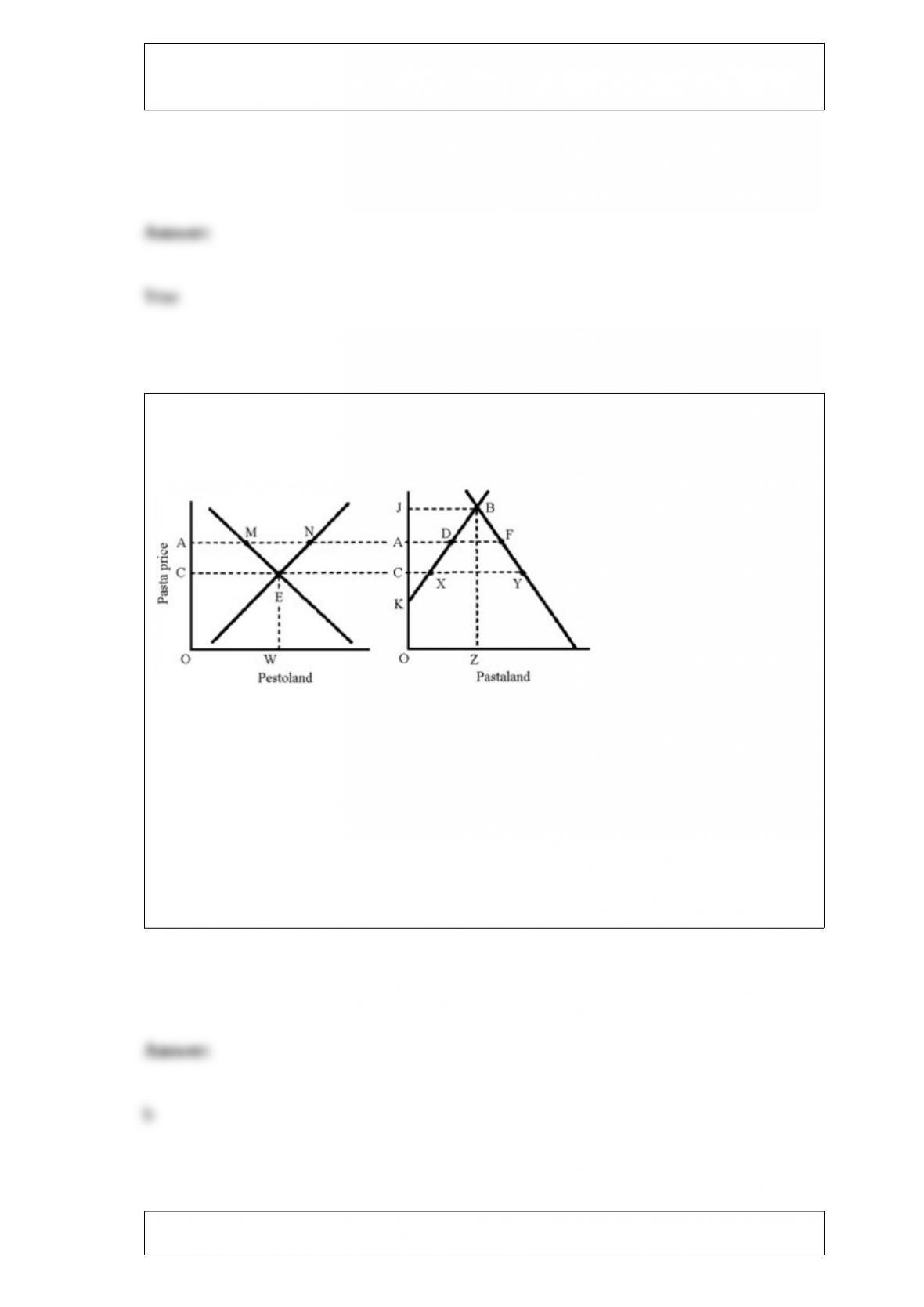
Figure 22-9
In Figure 22-9, at price OC
a. quantity supplied of pasta exceeds quantity demanded so price will fall.
b. quantity demanded for pasta exceeds quantity supplied so price will rise.
c. exports of pasta equal XY.
d. imports of pasta equal XY.
If California were a separate economy, it would be the ____ largest economy on earth.

a. second
b. third
c. fifth
d. eighth
All decisions involve opportunity cost.
a. True
b. False
After the transaction in Table 13-1 is completed, what happens to actual reserves,
required reserves, and excess reserves? Assume the required reserve ratio is 25 percent.
a. Actual reserves increase by $10 million, required reserves increase $2.5 million, and
excess reserves increase by $7.5 million.
b. Actual reserves decrease by $10 million, required reserves decrease $2.5 million, and
excess reserves decrease by $7.5 million.
c. Actual reserves increase by $10 million, required reserves are unchanged, and excess
reserves increase by $10 million.

d. Actual reserves decrease by $10 million, required reserves decrease by $10 million,
and excess reserves are unchanged.
The typical American family spends about ____ percent of its budget on goods, and the
remainder on services.
a. 22
b. 34
c. 68
d. 74
Specialization is the concept of devoting resources to the production of only a small
number of goods and services.
a. True
b. False

Economists consider rent seeking activity to be highly productive.
a. True
b. False
If in a given market of more than one producer, there were to exist for a long interval of
time a positive gap between price and average cost (P > AC), this would suggest that
a. there are many sellers in the industry.
b. there exists an oligopoly or cartel in the industry.
c. this is a contestable market.
d. the firm cannot be a monopolistic competitor.
A firm has positive fixed cost and positive variable cost. At its current level of output,
marginal cost equals average cost. The firm must
a. not be producing at its profit-maximizing level of output.

b. be producing the quantity that minimizes average cost.
c. be operating at a point at which total variable cost equals total fixed cost.
d. be earning negative profit.
The quantity of newspapers sold will decline if
a. newsprint becomes more expensive.
b. the printers’ union makes wage concessions.
c. prices are reduced.
d. magazine prices rise.
Generally speaking, markets do a(n) ____ job of reconciling the demands of fairness
and efficiency.
a. excellent
b. above-average
c. average
d. poor

Proponents of Fed independence maintain that
a. independence helps ensure low unemployment rates.
b. money is too important to be left to the bankers.
c. independence permits objective decisions not based on politics.
d. only the Federal Reserve knows how to act wisely.
How does the United States compare to other advanced, industrialized economies on
the issue of openness?
a. It is completely closed.
b. It is one of the less open of them.
c. It is about average in openness.
d. It is one of the more open of them.
e. It is the most open of them.

A typical supply curve has
a. slope equal to zero.
b. slope equal to infinity.
c. negative slope.
d. positive slope.
e. constant slope.
Imagine that the state legislature raises the tax on gasoline by 10 cents/gallon. What
most likely happens next?
a. Service station operators pass along the tax to you, adding the 10 cents to the price of
a gallon of gas.
b. Service station operators grumble, but pay the tax without passing the cost along to
you.
c. Service station operators pass along as much of the tax to you as they can, probably
about 6 cents/gallon.
d. None of these choices.

At equilibrium, quantity demanded equals quantity supplied.
a. True
b. False
Programs that reduce the incentive to work make income redistribution inefficient.
a. True
b. False
Exhibit 4-1
The following are the equations for the supply and demand curves in the market for
weezils:
Demand: Qd = 20 − 2P
Supply: Qs = 5 + 3P
where Qd is the quantity demanded, Qs is the quantity supplied, and P is the price per

weezil in dollars.
Refer to Exhibit 4-1. According to the data given, when the market is in Equilibrium,
how many weezils are sold?
a. 3
b. 5
c. 11
d. 14
If a commodity’s price is above its marginal cost, the market will tend to produce too
much of the good.
a. True
b. False
Figure 10-4
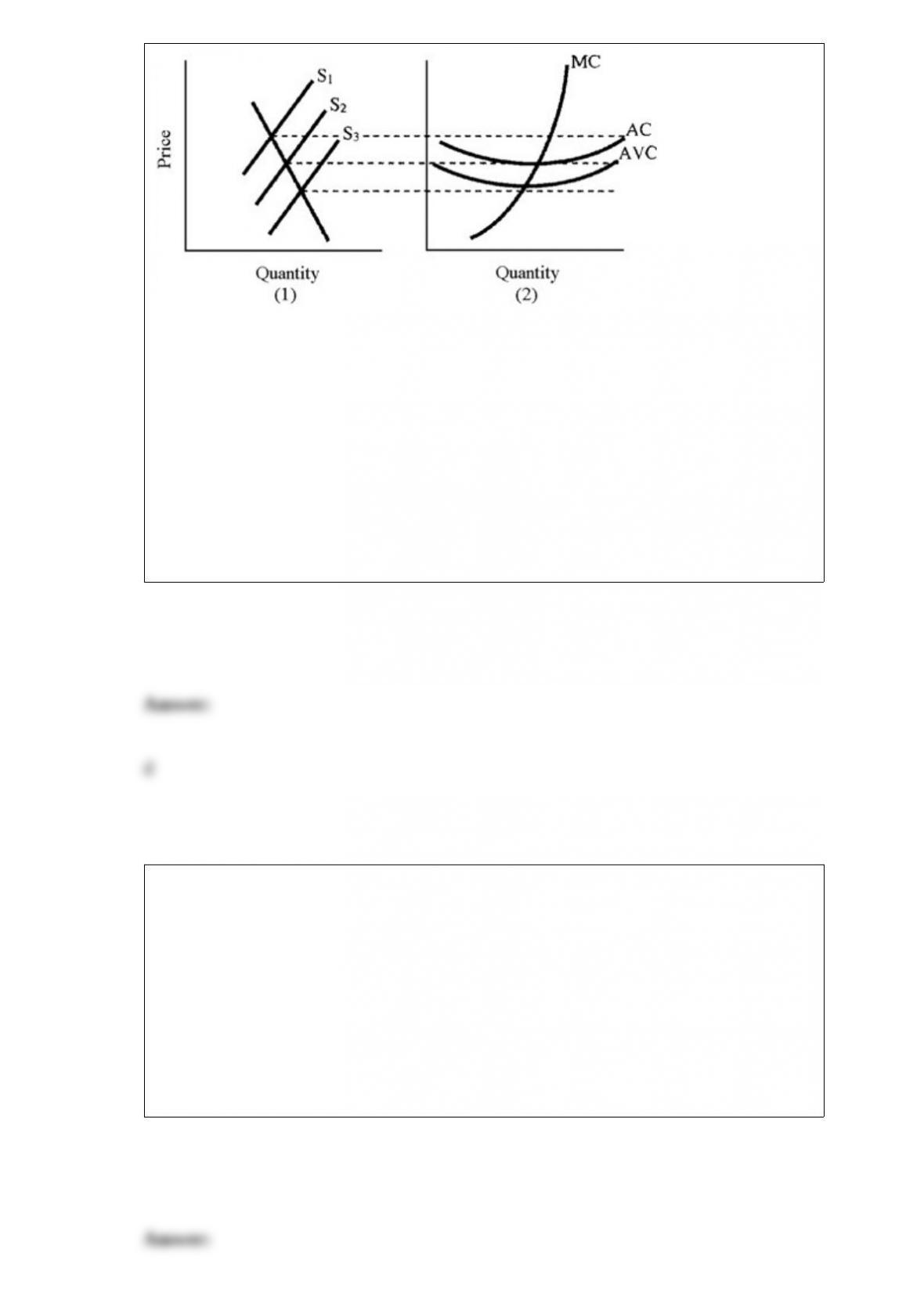
Figure 10-4 shows the industry’s supply and demand curves in panel (1) and the cost
curves of a firm in the industry in panel (2). At S1, the firm is
a. preparing to shut down.
b. incurring losses.
c. earning zero economic profits.
d. earning economic profit greater than zero.
Which one of the following policies might the Fed initiate if it wanted to increase the
money supply?
a. sell government securities
b. increase the reserve requirement
c. increase the discount rate
d. decrease the reserve requirement

Development assistance is designed to spur population growth in poor countries.
a. True
b. False