1)
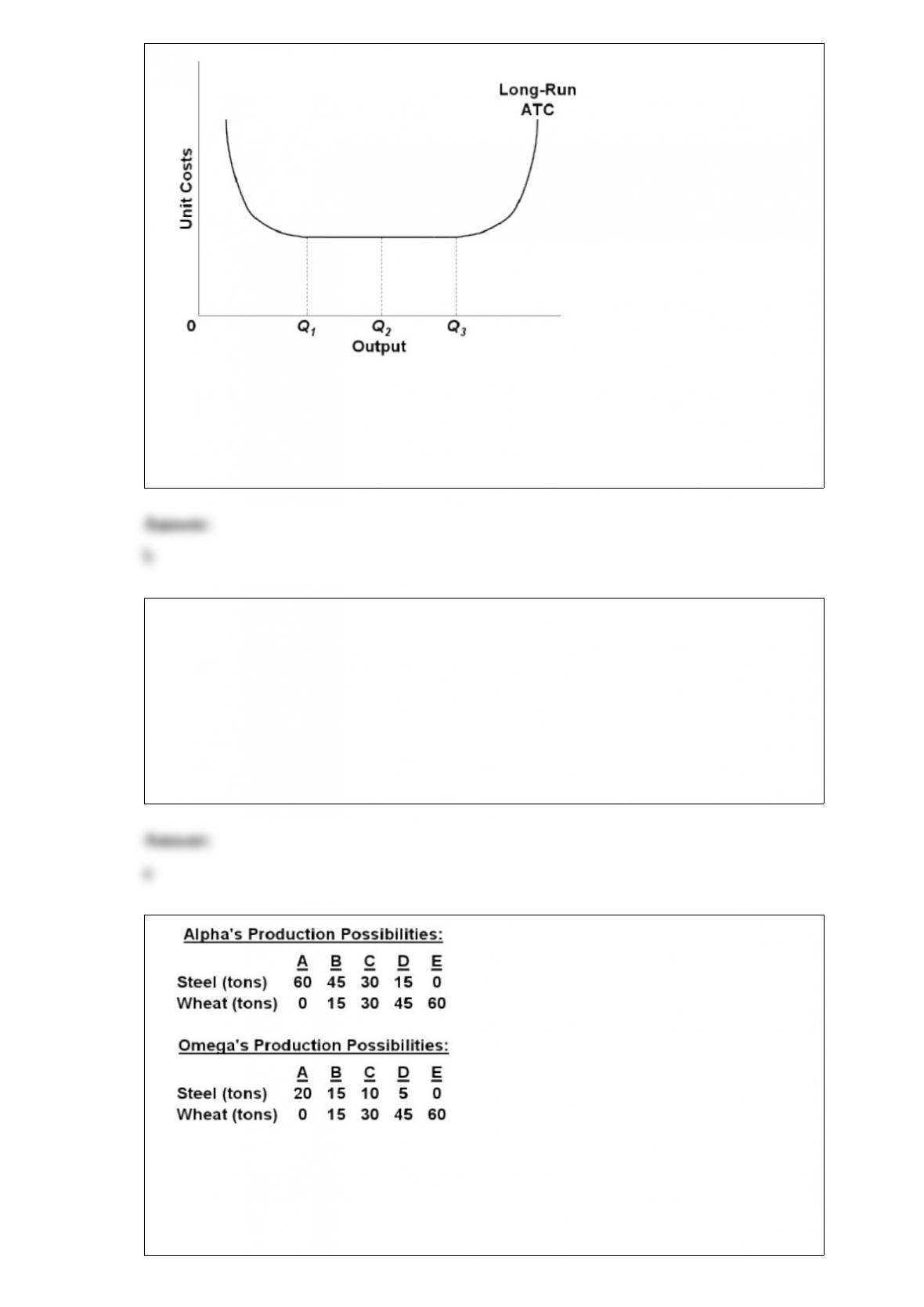
refer to the above diagram. constant returns to scale:
a.occur over the 0q1 range of output.
b.occur over the q1q3 range of output.
c.begin at output q3.
d.are in evidence at all output levels.
2) college students living off-campus frequently consume large amounts of ramen
noodles and boxed macaroni and cheese. when they finish school and start their careers,
their consumption of both goods frequently declines. this suggests that ramen noodles
and boxed macaroni and cheese are:
a.inferior goods.
b.normal goods.
c.complementary goods.
d.substitute goods.
3)
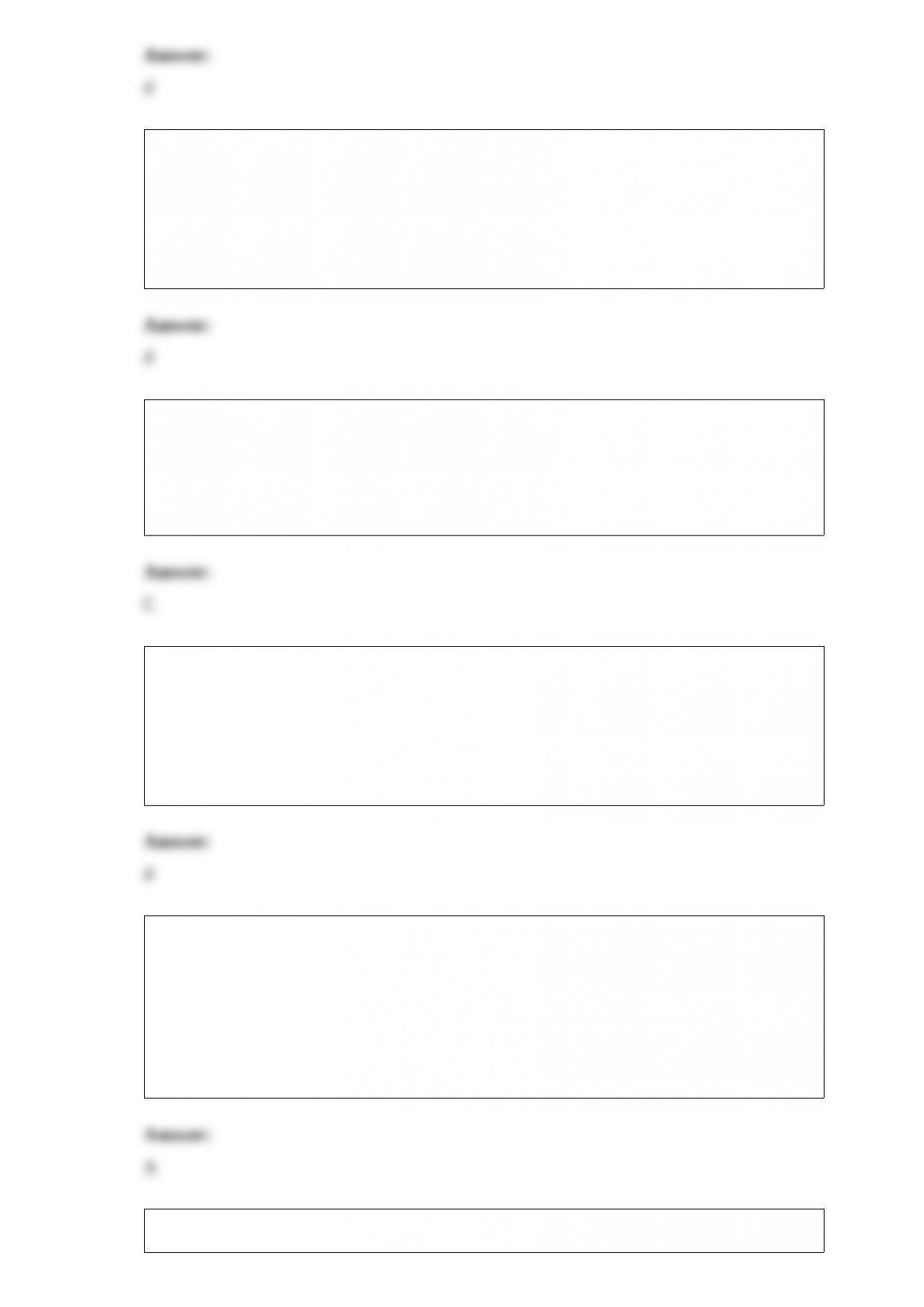
refer to the above data. alpha is a(n):
a.increasing cost economy, whereas omega is a constant cost economy.
b.constant cost economy, whereas omega is an increasing cost economy.
c.increasing cost economy, as is omega.
d.constant cost economy, as is omega.
4) the marginal rate of substitution measures the:
a.magnitude of the substitution effect.
b.total utility received by a consumer when equilibrium is achieved.
c.extra utility that a consumer derives from successive units of a product.
d.consumer’s willingness to substitute one product for another so that total utility will
remain constant.
5) In January 2008, the supply of money (M1) in the United States was about:
A.$247 billion.
B.$1600 billion.
C.$1365 billion.
D.$7499 billion.
6) over time, the equilibrium price of a gigabyte of computer memory has fallen while
the equilibrium quantity purchased has increased. based on this we can conclude that:
a.decreases in the demand for computer memory have exceeded increases in supply.
b.decreases in the supply of computer memory have exceeded increases in demand.
c.increases in the demand for computer memory have exceeded increases in supply.
d.increases in the supply of computer memory have exceeded increases in demand.
7) In a sporting good store, you can buy the equipment you want and forgo the rest. But
in an election you “buy” the entire range of the candidate’s positions, including some
you may not agree with. This difference:
A.reflects limited and bundled choices in the public sector.
B.describes the paradox of voting.
C.describes the principal-agent problem in the public sector.
D.creates bureaucratic inefficiency in the public sector.
8) Under an agency shop agreement, firms can hire:
A.only union workers.
B.nonunion workers, but these workers must join the union within a specified period,
say, 30 days.
C.nonunion workers, but these workers must join the union within a specified period,
pay union dues, or donate an equivalent amount to charity.
D.only nonunion workers.
9) Suppose that the level of GDP increased by $100 billion in a private closed economy
where the marginal propensity to consume is 0.5. Aggregate expenditures must have
increased by:
A.$100 billion.
B.$50 billion.
C.$500 billion.
D.$5 billion.
10)
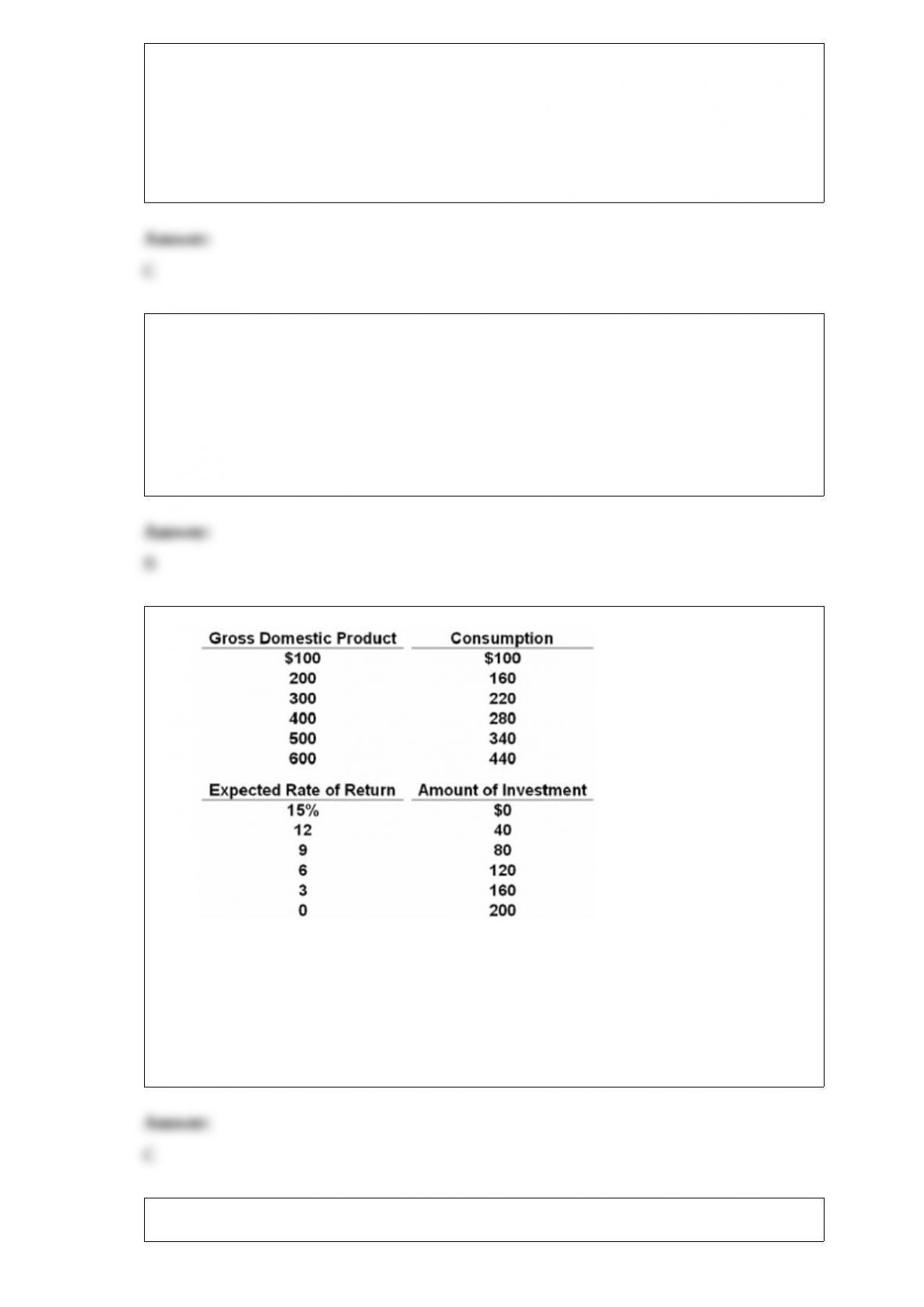
Refer to the above information. In this economy a 3 percentage point decrease in the
interest rate will:
A.increase equilibrium GDP by $200.
B.increase equilibrium GDP by $50.
C.increase equilibrium GDP by $100.
D.decrease equilibrium GDP by $50.
11) Which of the following is not a DVC policy that might increase DVC economic

growth?
A.encouraging direct foreign investment
B.opening economics to world trade
C.establishing independent central banks
D.encouraging emigration of highly skilled workers
12) When the reserve requirement is increased:
A.required reserves are changed into excess reserves.
B.the excess reserves of member banks are increased.
C.a single commercial bank can no longer lend dollar-for-dollar with its excess
reserves.
D.the excess reserves of member banks are reduced.