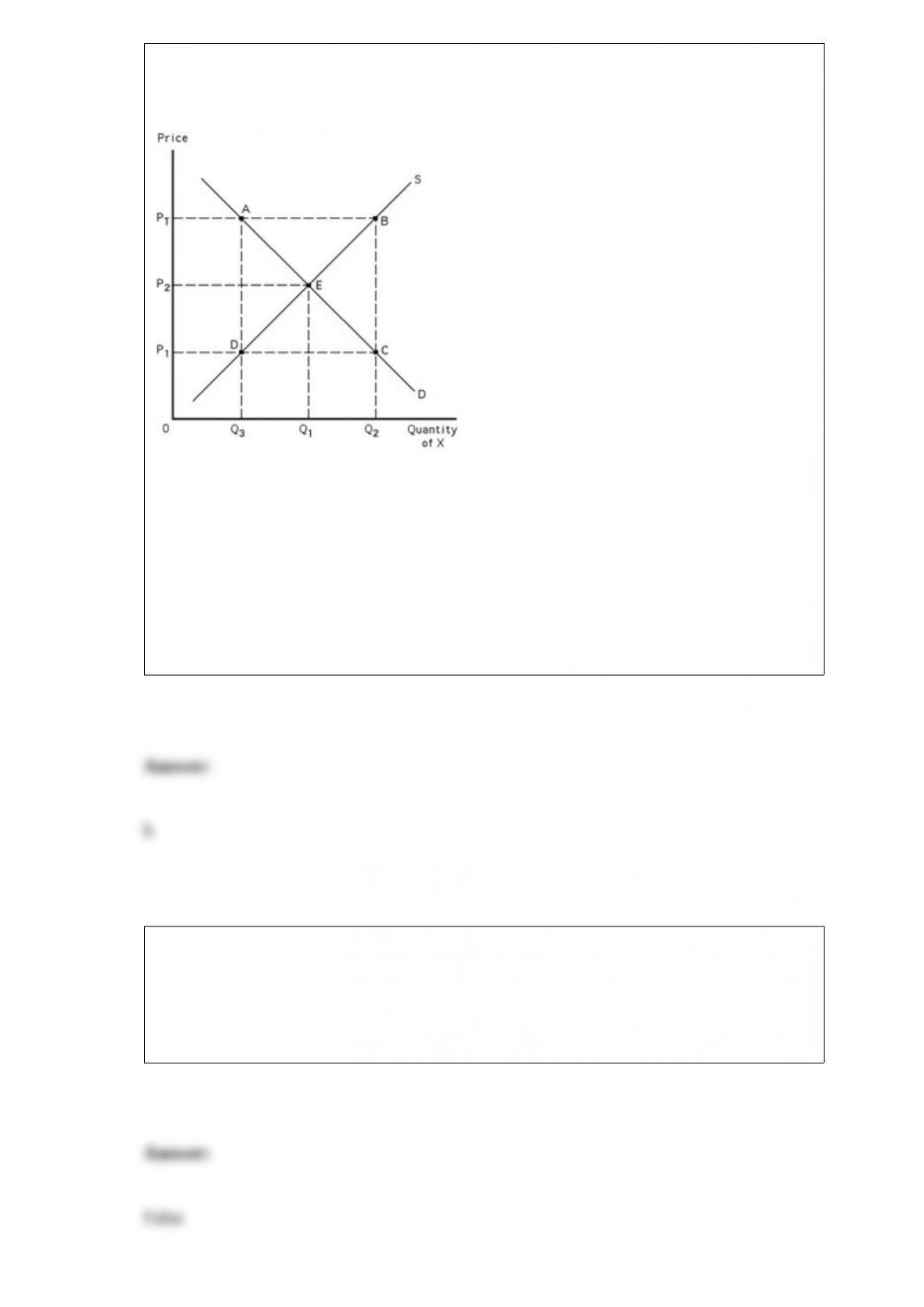
Refer to Exhibit 39-1. Given the target price PT, what is the quantity supplied?
Exhibit 39-1
a. Q1
b. Q2
c. Q3
d. Q3 – Q1
A bear market is one in which prices are expected to rise.
a. True
b. False

A person goes into a store and buys a computer for $1,210. In this case, price is acting
as a
a. resource.
b. good.
c. rationing device.
d. capital instrument.
e. factor of production.
Minimum efficient scale refers to the output level where short-run average total cost is
lowest.
a. True
b. False
The perfectly competitive firm’s short-run supply curve is that portion of its MC curve
that lies above its AFC curve.
a. True
b. False
The primary characteristic of a public good is that it is nonrivalrous in consumption.
a. True
b. False
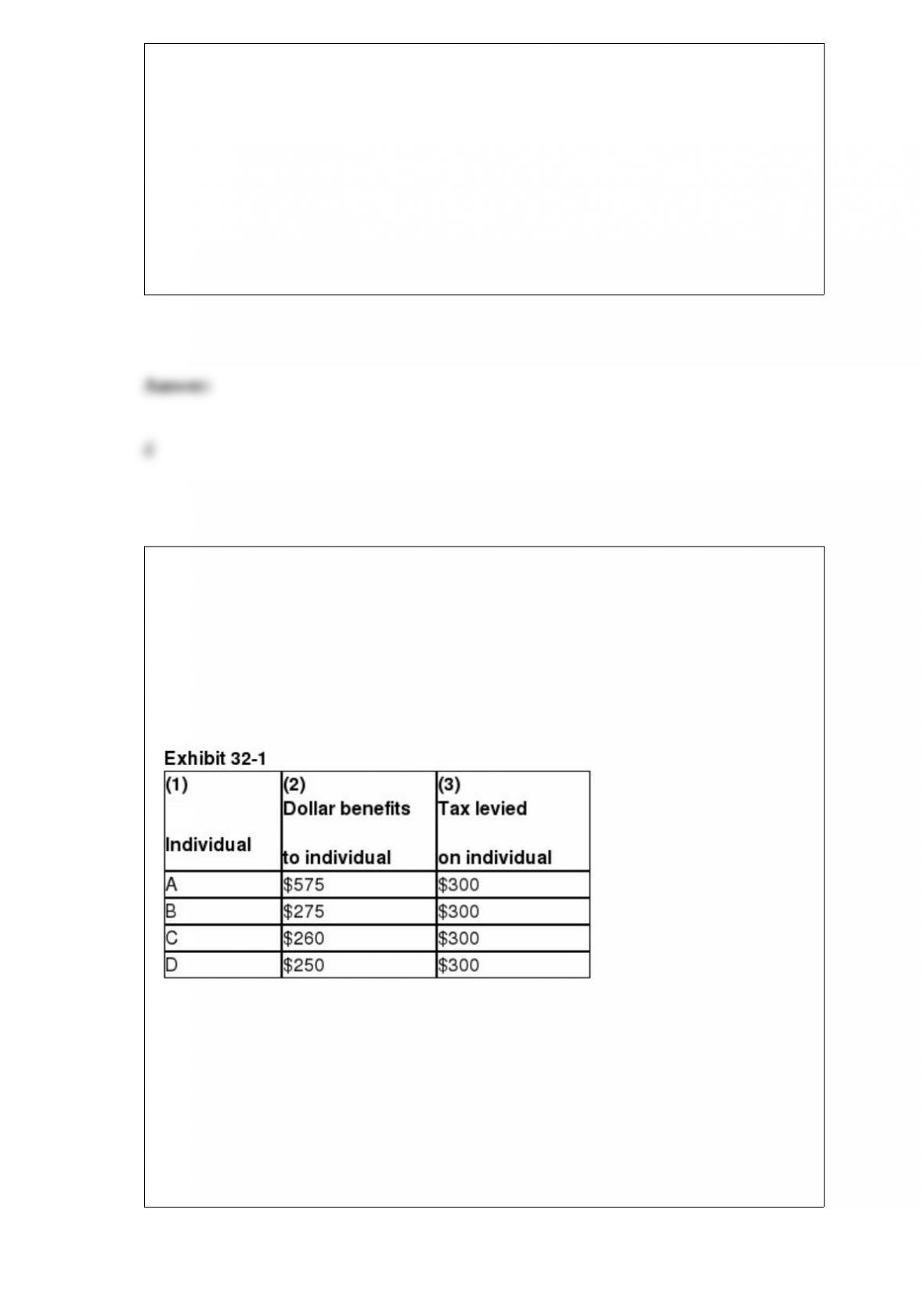
Refer to Exhibit 1-4.If the student whose marginal benefits and costs of good health are
noted in this table, how many units of good health should the student obtain in order to
maximize her net benefits of good health?
Exhibit 1-4
a. 2 units
b. 3 units
c. 4 units
d. 5 units
e. 6 units
Refer to Exhibit 32-1. The exhibit shows the breakdown of benefits and costs for a
four-person town of a proposed $1,200 purchase of books for the public library. How
will each of the four persons, A-D, vote? (The first answer in the list is how person A
would vote, the second is how person B would vote, and so on, so that “for” indicates
that the individual would be in favor of having the additional books purchased by the
library.)
a. for; for; for; for
b. against; for; against; against
c. for; against; against; against
d. for; against; for; for
e. none of the above

Which of the following statements is true?
a. The lower transaction costs are, the more likely individuals will solve negative
externality problems through a voluntary exchange.
b. The higher transaction costs are, the more likely individuals will solve negative
externality problems through a voluntary exchange.
c. Coase agrees with Pigou that taxing those activities associated with negative
externalities is a good idea.
d. a and c
e. none of the above
In a perfectly competitive industry, do higher wages for labor union members diminish
profits?
a. Yes, in the short run, but not in the long run in which some firms exit the industry
because of higher costs.
b. Yes, in the long run, but not in the short run because profits are always fixed in the
short run.
c. No, higher wage costs can affect profits only if they affect labor productivity and this
doesn’t happen.
d. No, because higher labor costs usually bring more firms into the industry and this
effect dampens price rises.

If two firms that form a cartel agreement are in a prisoner’s dilemma game, then
a. both firms will have an incentive to break the agreement.
b. only one firm will have an incentive to break the agreement.
c. both firms will be better off if they hold to the agreement than if they break it.
d. a and c
e. b and c
In 2000, farmers in the United States represented approximately what percentage of the
population?
a. 8 percent
b. 25 percent
c. 1 percent
d. 5 percent

If I have the only telephone in town, it is essentially worthless. Then other people in
town get telephones and I can call them. The value of my telephone rises as more and
more of the town installs phones. This makes the telephone a(n) __________ good.
a. Internet
b. intermediary
c. network
d. connectivity
Individual income is equal to labor income less income taxes.
a. True
b. False
If all firms in an industry sell their product for the same price it is a result of
a. collusion.
b. perfect competition.
c. a government law that specifies all firms must charge the same price.
d. a or b
e. There is not enough information to answer the question.
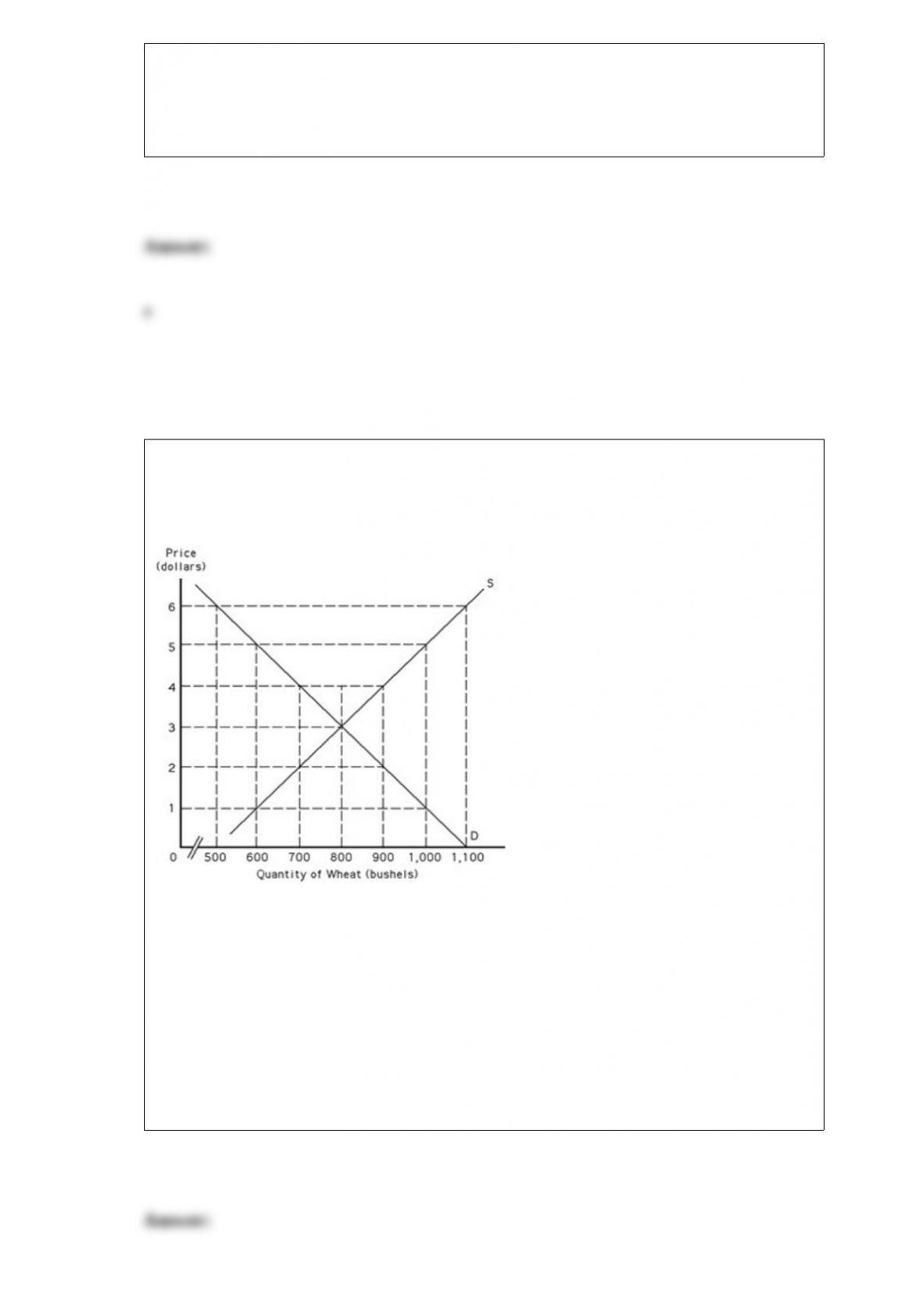
Refer to Exhibit 39-4. The price elasticity of demand for wheat between the prices of $3
and $4 is
Exhibit 39-4
a. equal to 1.
b. less than 1.
c. greater than 1.
d. equal to 100.
e. c and d

Suppose the local pharmacy charges lower prices to senior citizens than it charges to
younger customers.The pharmacy is practicing
a. perfect price discrimination.
b. second-degree price discrimination.
c. arbitrage.
d. third-degree price discrimination.
e. non-cost discrimination.
The Herfindahl index
a. measures the degree of concentration in an industry.
b. is the square of the sum of the market shares of each firm in the industry.
c. is not subject to any of the criticisms of the concentration ratios.
d. a and b
e. all of the above
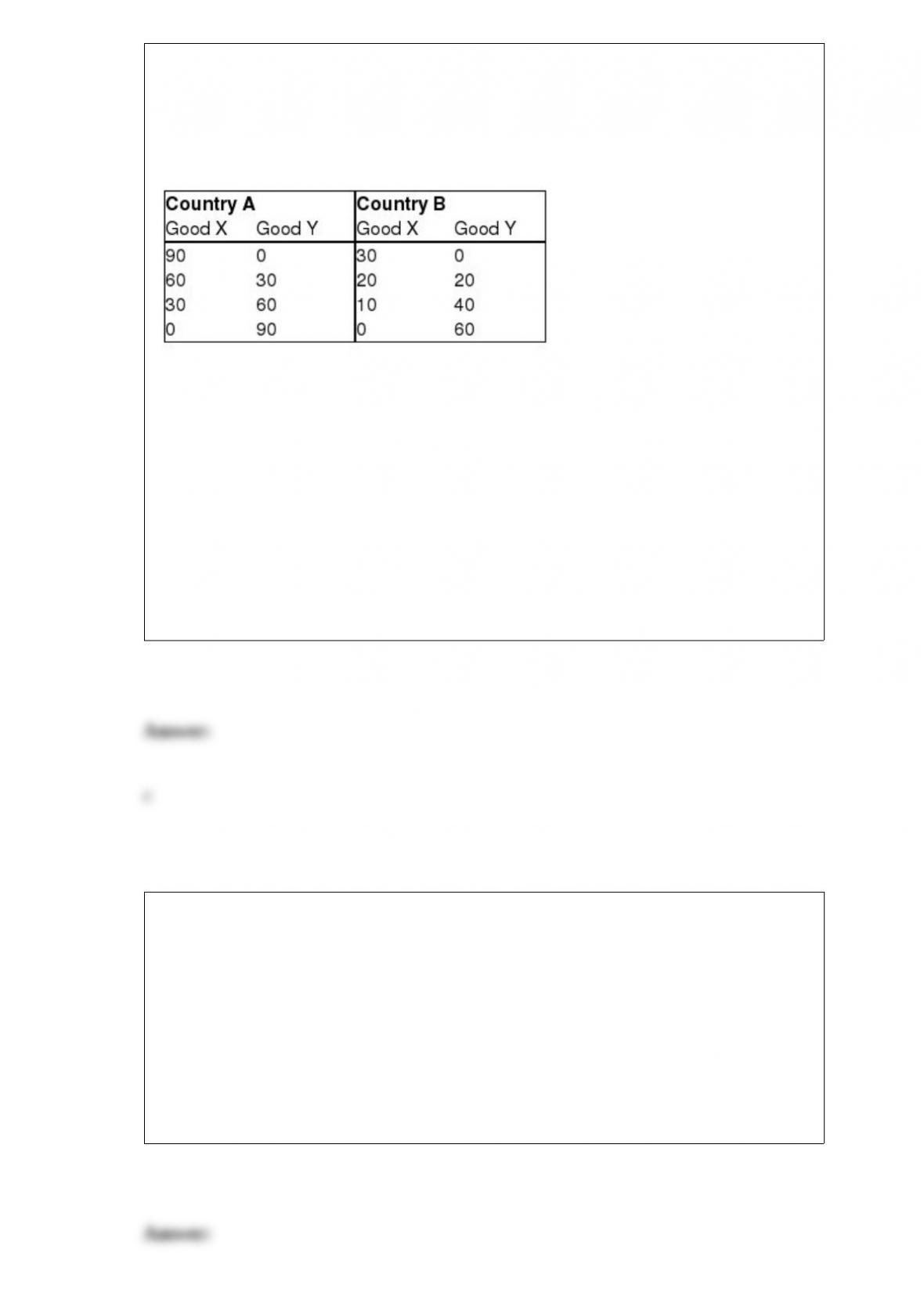
Refer to Exhibit 34-1. If country A is to specialize in the production of one of the two
goods (and then trade that good with Country B), which good should it be and why? If
Country B is to specialize in the production of one of the two goods (and then trade that
good to with Country A), which good should it be and why?
Exhibit 34-1
a. Good X for Country A because it is the higher opportunity cost producer of good X;
good Y for Country B because it is the higher opportunity cost producer of good Y.
b. Good Y for Country A because it is the lower opportunity cost producer of good Y;
good X for Country B because it is the lower opportunity cost producer of good X.
c. Good X for Country A because it is the lower opportunity cost producer of good X;
good Y for Country B because it is the lower opportunity cost producer of good Y.
d. Good Y for Country A because it is the higher opportunity cost producer of good Y;
good X for Country B because it is the higher opportunity cost producer of good X.
The present value of $3,000 one year in the future at a 3.5 percent interest rate is
approximately
a. $4,045
b. $1,859.
c. $3,105.
d. $2,899.

If it is discovered that using drugs enhances a person’s chance of contracting a lethal
disease, the cost of using drugs
a. increases.
b. decreases.
c. is not affected.
d. is irrelevant, since they are illegal anyway.
As long as the demand curve lies above the marginal revenue curve for a monopolist, it
will charge a price for its product that is
a. above total cost.
b. below marginal cost.
c. above marginal cost.
d. above average total cost.
e. c and d
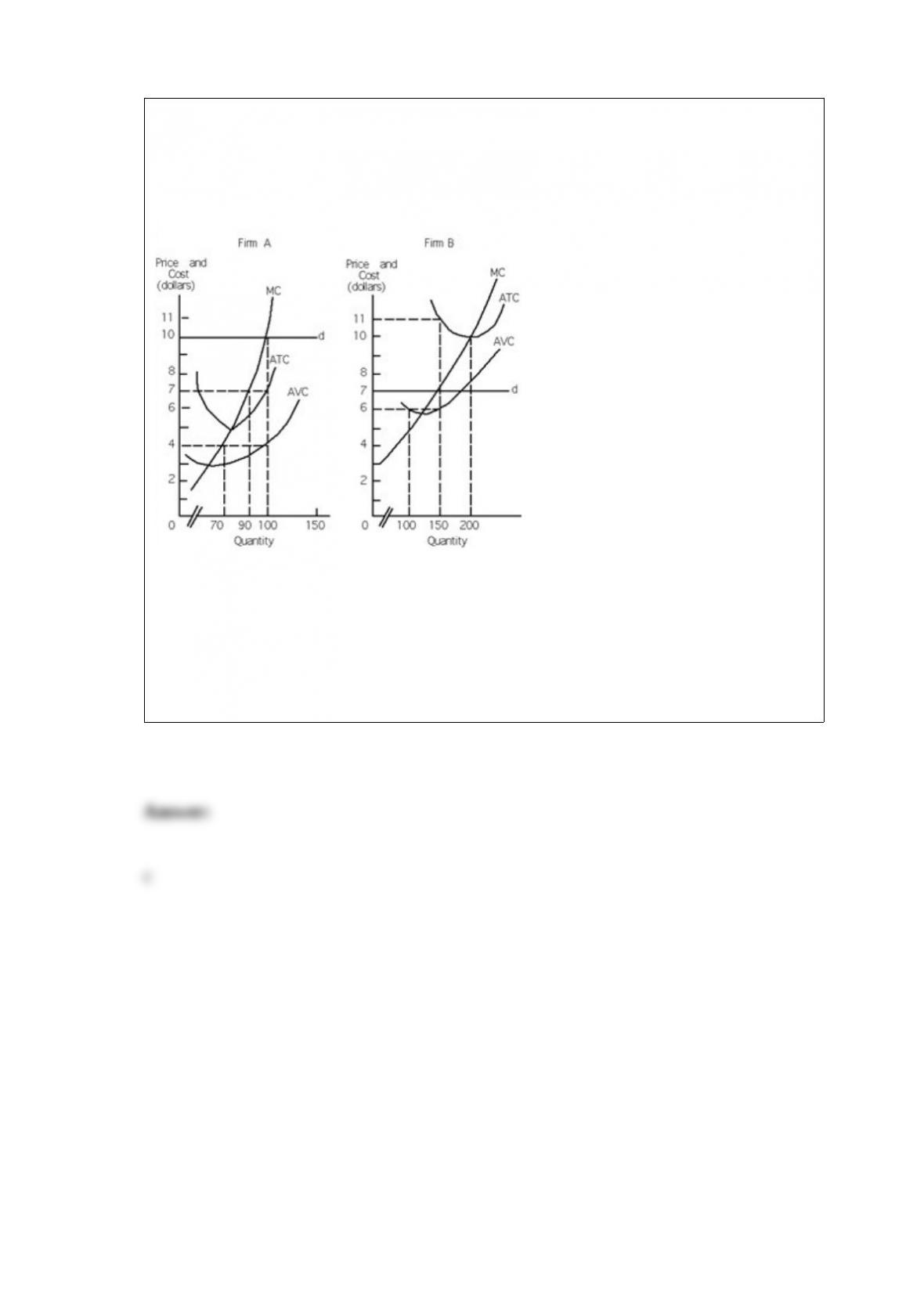
Refer to Exhibit 23-8. What is the total cost of firm B at the profit-maximizing (or
loss-minimizing) level of production?
Exhibit 23-8
a. $11
b. $750
c. $1,650
d. $400