
Which of the following products has elastic demand?
A) water
B) coffee
C) cars
D) all ice cream
As firms enter a monopolistically competitive market in the long run:
A) price increases, the market quantity demanded increases, and the quantity supplied
by an individual firm increases.
B) price decreases, the market quantity demanded increases, and the quantity supplied
by an individual firm decreases.
C) price decreases, but firm profits increase as average costs decrease.
D) price increases and firm profits increase.
Table 8.3 presents the cost schedule for Candy’s Cakes. If Candy produces one cake,
Candy’s total variable costs are:
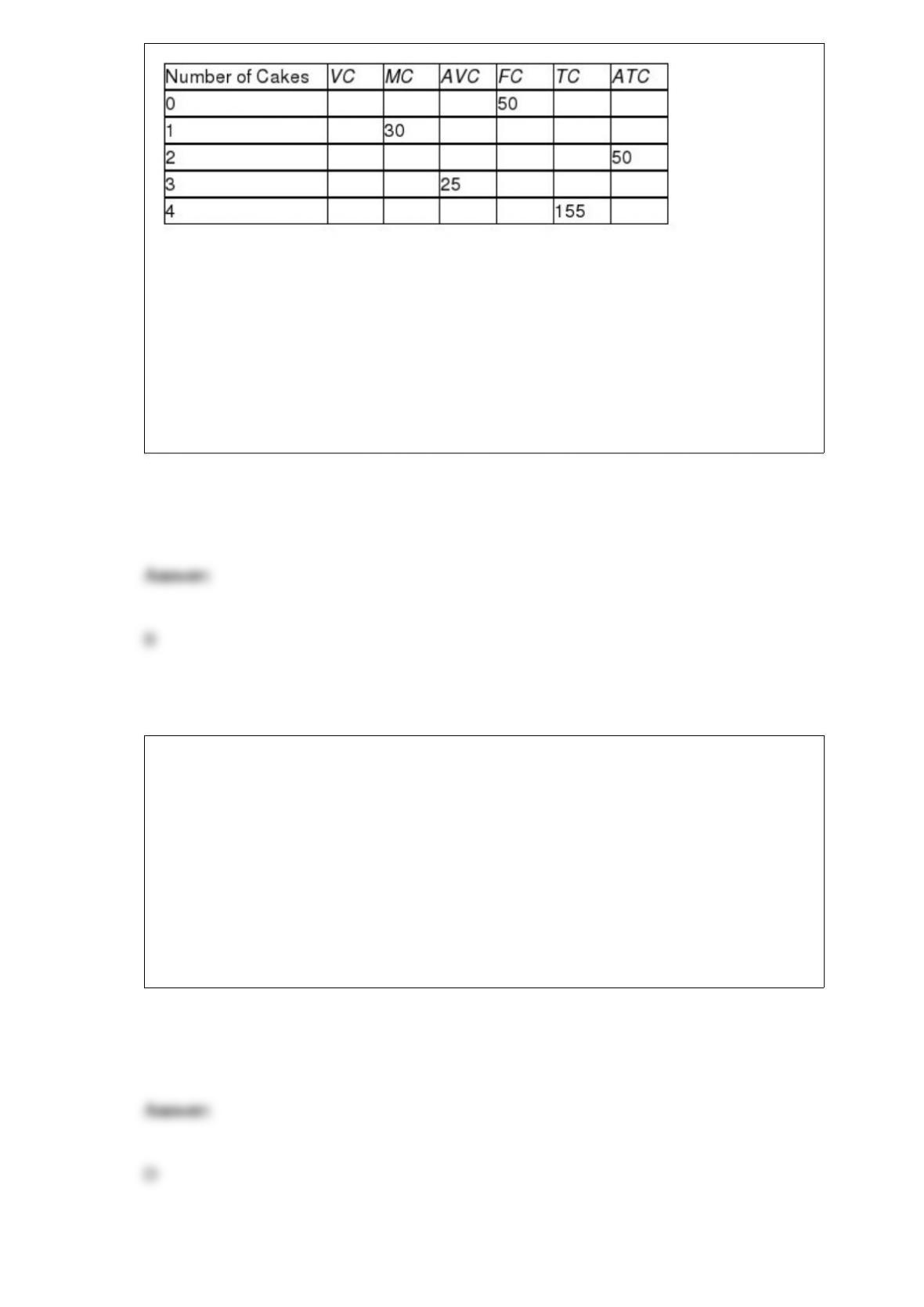
Table 8.3
A) $0.
B) $30.
C) $50.
D) $80.
If there is an advancement in the technology used to produce a product, what is the
likely effect it may have on the supply?
A) The company would not change its manufacturing.
B) More people would be needed to produce the product.
C) It would decrease the supply.
D) It would increase the supply.
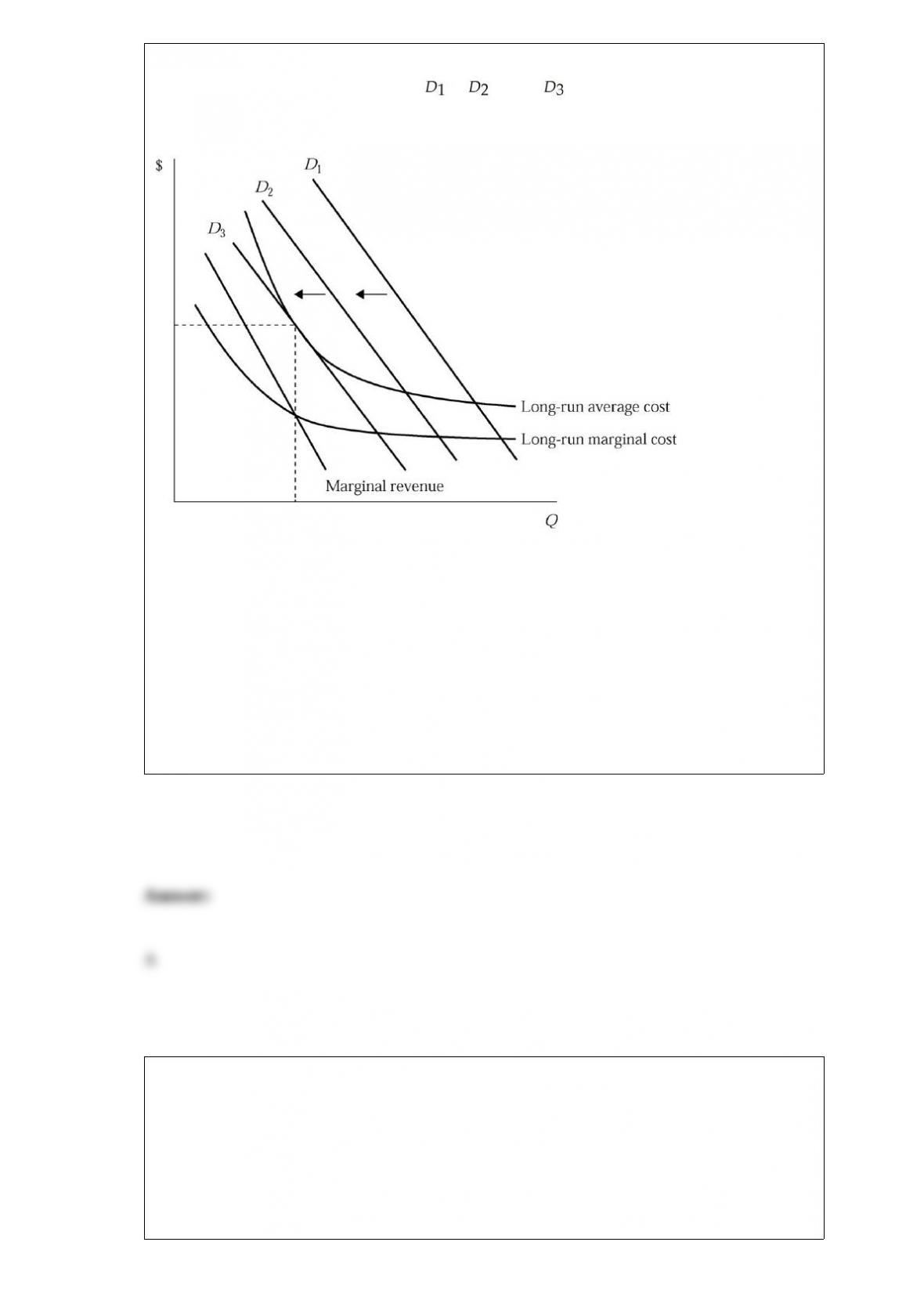
Figure 11.3 shows demands and costs for a monopolistically competitive firm. When
the firm’s demand curve shifts from to and to , in the long run we would
expect:
Figure 11.3
A) the firm to earn a zero economic profit.
B) the firm to charge a price equal to its marginal cost.
C) the firm to increase its output level.
D) the firm to produce at the lowest average cost.
“How many iPhones will Apple, Inc. sell this year?” is:
A) a microeconomic question.
B) both a microeconomic and macroeconomic question.
C) a macroeconomic question.
D) neither a microeconomic nor a macroeconomic question.
Which of the following is a microeconomic question?
A) Should companies pay for employees’ health insurance?
B) Why do some countries have higher economic growth rates than other countries?
C) Should Congress and the president take action to reduce the unemployment rate?
D) Should the Fed attempt to influence the interest rate to control potential inflation?
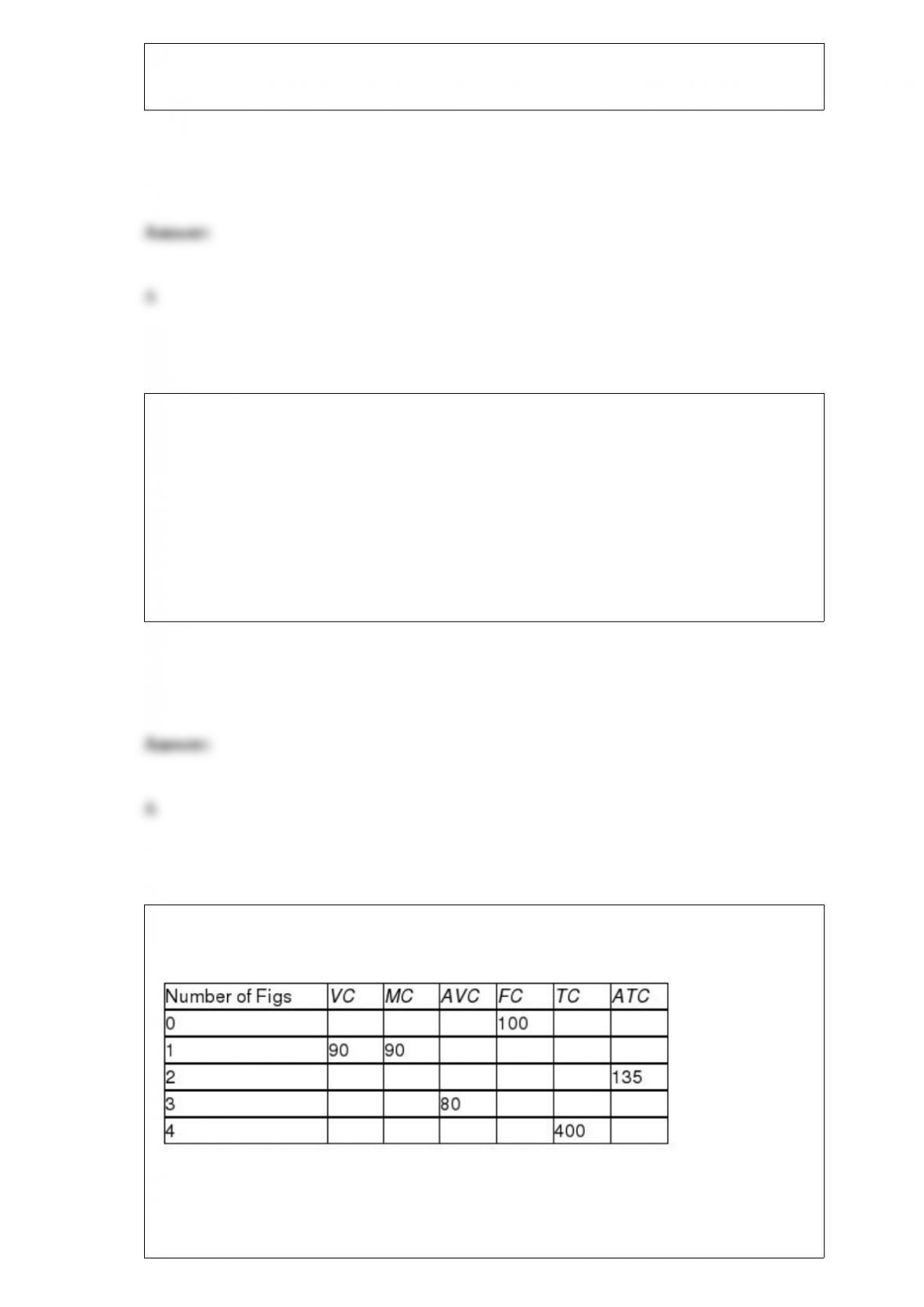
Table 8.4 presents the cost schedule for David’s Figs. If David produces zero figs,
David’s total costs are:
Table 8.4
A) $0.

B) $90.
C) $100.
D) $130.
Recall the Application about the supply of shipping services to answer the
following question(s).
Recall the Application. The short-run supply curve for shipping services is:
A) positively sloped.
B) negatively sloped.
C) perfectly vertical.
D) perfectly horizontal.
When a local casino spends millions in TV ads convincing town residents to reject
another casino’s bid to operate in the area, the most that the casino would be willing to
spend is:
A) the producer surplus gained by being a monopoly.
B) the consumer surplus gained by being a monopoly.
C) deadweight loss.
D) total economic surplus.
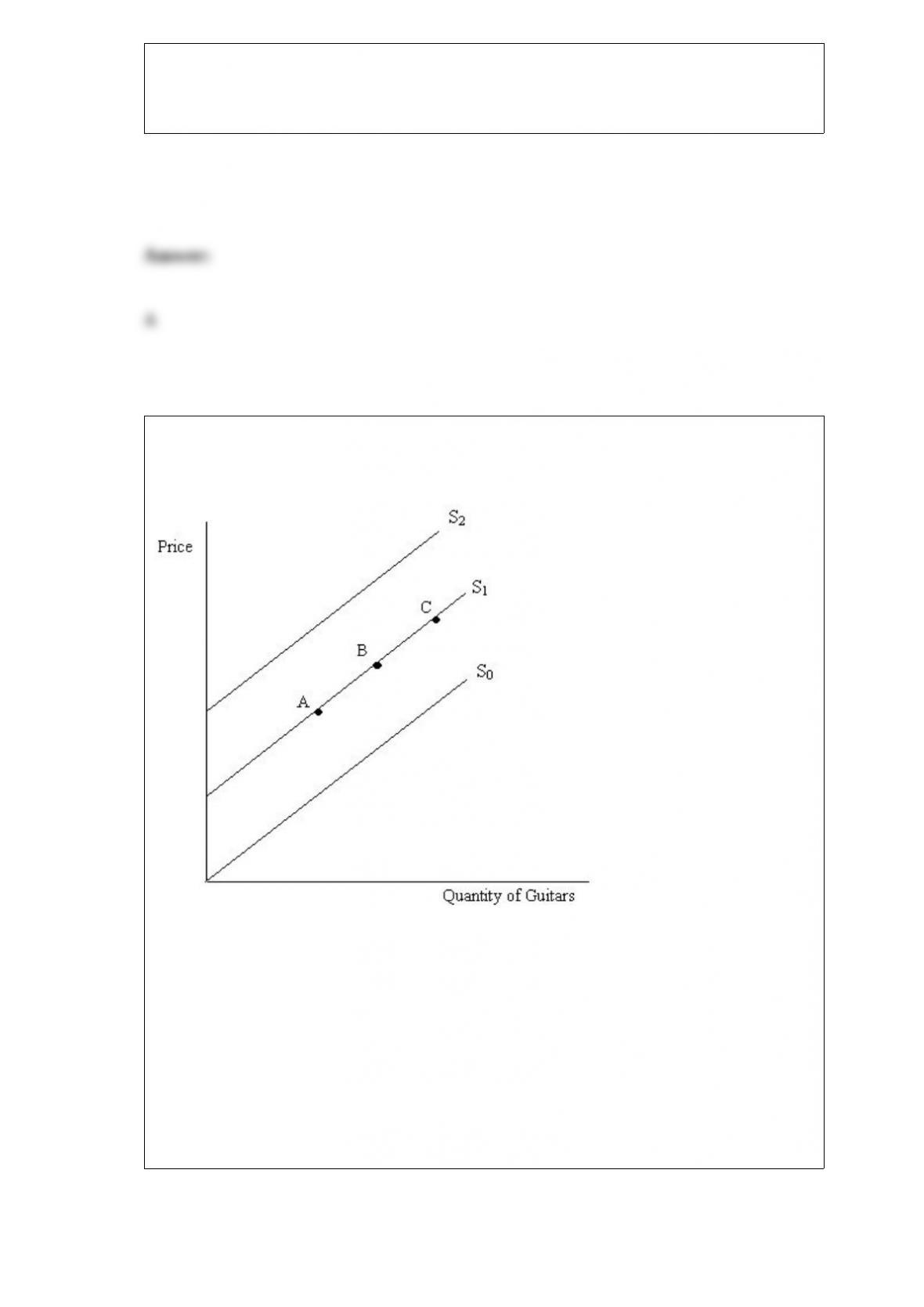
Figure 4.5 illustrates the supply of guitars. An increase in the supply of guitars is
represented by a movement from:
Figure 4.5
A) point B to point C.
B) point B to point A.
C) S1 to S0.
D) S1 to S2.

Which of the following is true in the long run for both monopoly and perfectly
competitive industries?
A) There are low barriers to entry.
B) Firms can earn positive economic profits in the long run.
C) Firms produce at levels that are economically efficient.
D) Firms will go out of business if they cannot charge a price that is at least equal to
average total cost.
Which of the following is the least likely example of asymmetric information?
A) an insurance company and a client who just obtained a driver license
B) a seller of used cars and a prospective customer
C) a seller of fresh fruit and a buyer
D) a retailer of Music CDs and a buyer
When the price of a good changes, the substitution effect and the income effect:
A) work in the same direction.
B) work in opposite directions.
C) cause the demand curve to slope upward.
D) are irrelevant.
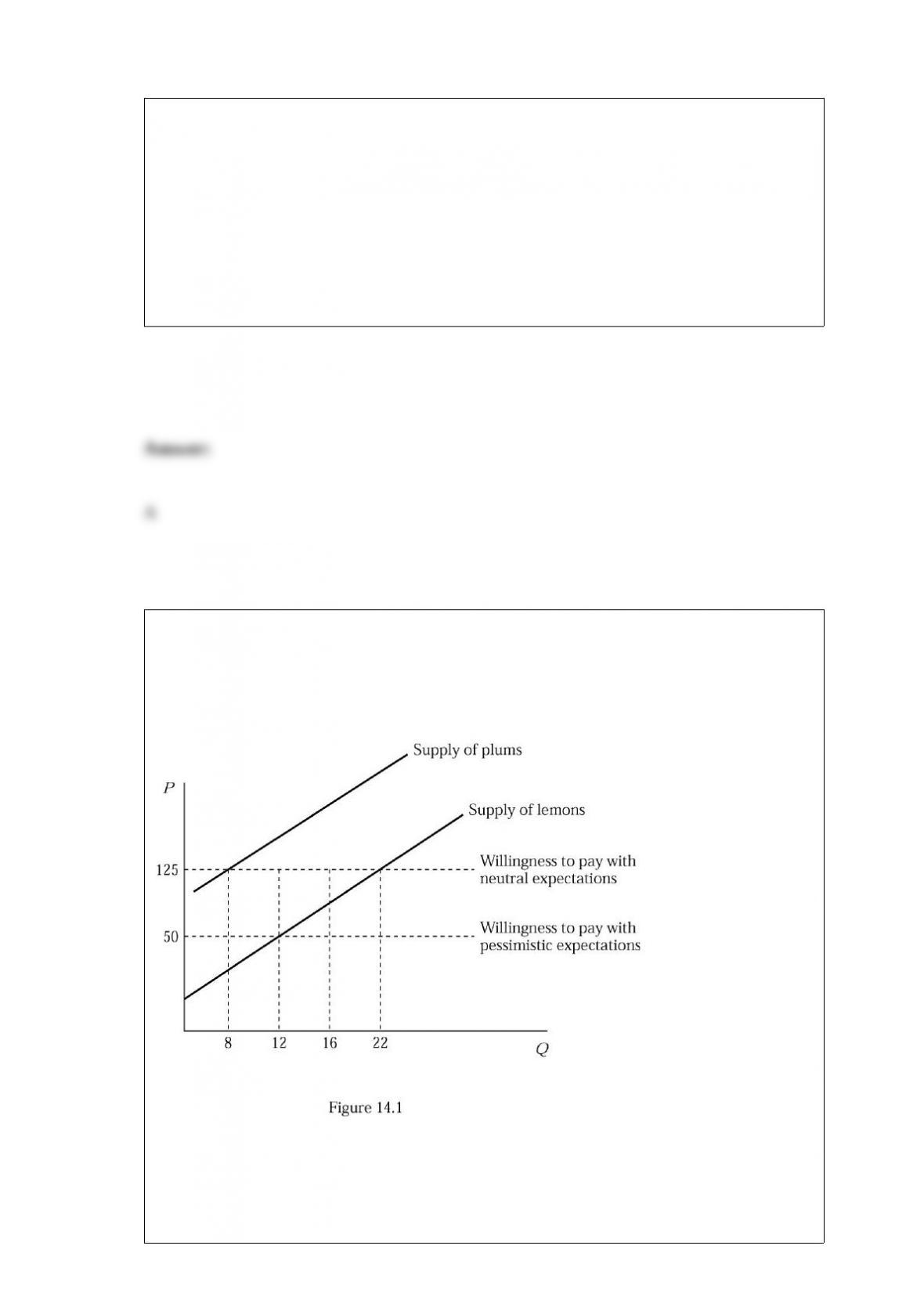
Figure 14.1 represents the market for used bikes. Suppose buyers are willing to pay
$200 for a plum (high-quality) used bike and $50 for a lemon (low-quality) used bike.
If buyers believe that 50% of used bikes in the market are lemons (low quality), what
fraction of used bikes sold will actually be plums (high quality)?
A) 8/30
B) 22/30

C) 8/22
D) 30/30
Total cost of production is the sum of total variable cost and total fixed cost. If the total
fixed cost alone decreases:
A) the average total cost curve shifts upward at all output levels.
B) the marginal cost curve shifts downward at all output levels.
C) the vertical distance between the average total cost curve and the average variable
cost curve decreases at all output levels.
D) the average variable cost curve shifts downward at all output levels.
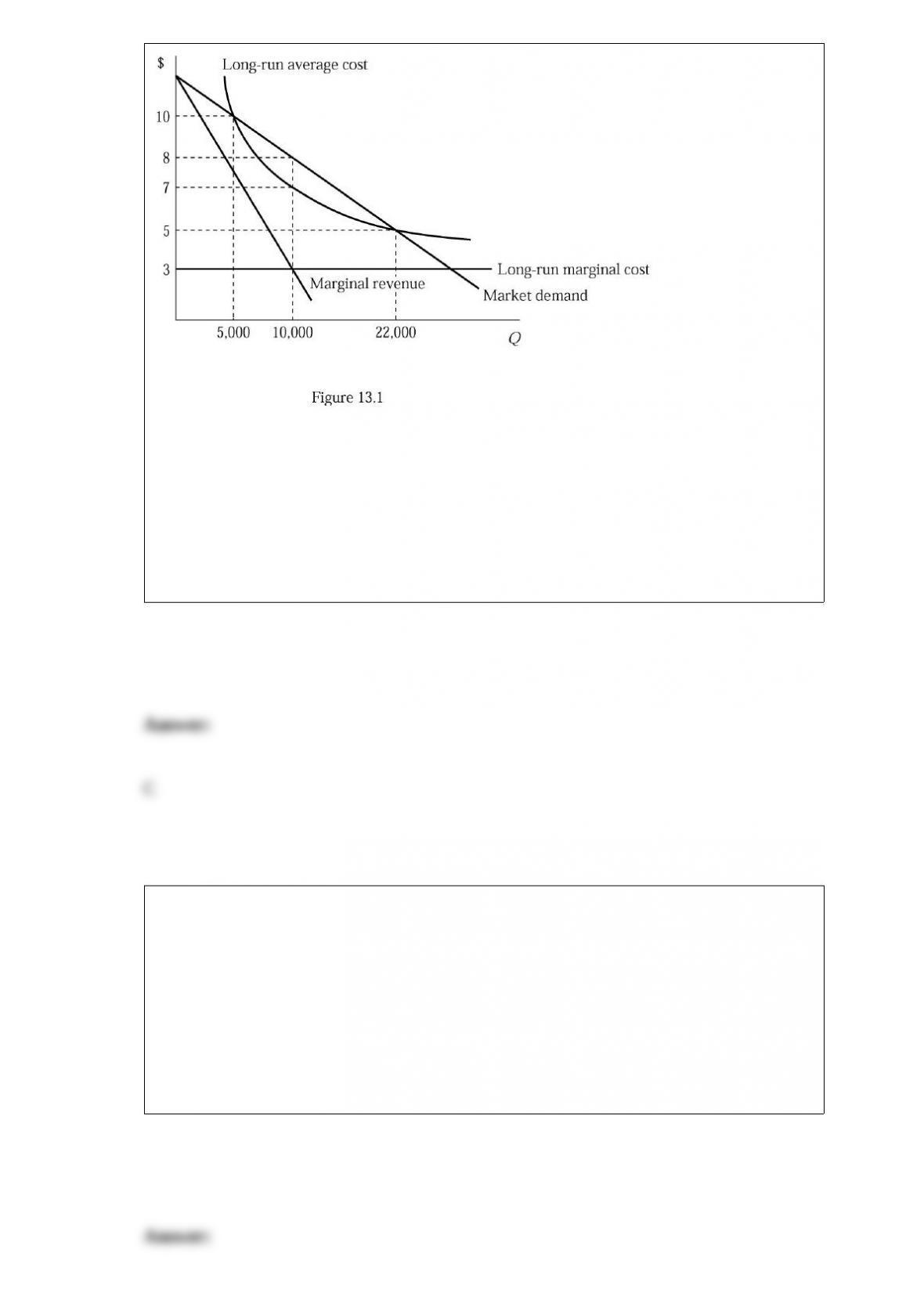
Figure 13.1 shows a demand and costs of an unregulated monopoly. The negatively
sloped long-run average cost curve reflects that:
A) the firm’s total cost of production decreases as its output increases.
B) the firm’s profit increases as its output increases.
C) there exist large economies of scale in production.
D) All of the above are correct.
When a tax is levied on a good or service, the following will happen:
A) the quantity of the good sold will not change.
B) neither the price nor the quantity of the good sold will change.
C) the price of the good sold will not change.
D) the price and the quantity of the good sold will change.

Additional Application
Prior to 2001 Canada annually exported billions of board feet of lumber to the U.S.
tariff-free. The two countries had followed an agreement in which there would be no
restrictions on the lumber from Canadian companies. In March 2001 the agreement
ended and in 2002 the U.S. imposed tariffs and duties on imported Canadian lumber.
What were the effects of these changes and who gained and who lost?
The forestry workers of Canada were hurt. About 15,000 workers lost their jobs in
British Columbia and many Canadian towns suffered from the loss of income from
lumber sales and related industries. Exports to the U.S. fell from 14.7 billion board feet
in 2000 to 20.9 million board feet in 2004. When the lumber prices rose in the U.S., the
costs of production for home building firms increased.
The U.S. government has realized $3.5 billion from the tariffs and that is sitting in the
Treasury awaiting resolution of legal disputes. Lumber companies in the U.S. have seen
their prices rise with less competition.
James Thayer, “Soft Wood, Hard Dispute,” The Weekly Standard, November 18, 2005.
Online
According to this application about the U.S. imposing tariffs on lumber from Canada,
the effects of the U.S. tariffs will ________ the price of lumber in the U.S. and
________ the quantity of imports from Canada.
A) increase; decrease
B) decrease; decrease
C) increase; increase
D) decrease; increase
When the price of pens went from $1 to $1.50, the quantity demanded of pencils
changed from 50 to 75 a day. The cross-price elasticity of demand for pencils (using the
initial value formula) is:
A) 1.
B) 0.4.
C) 0.2.
D) -0.2.
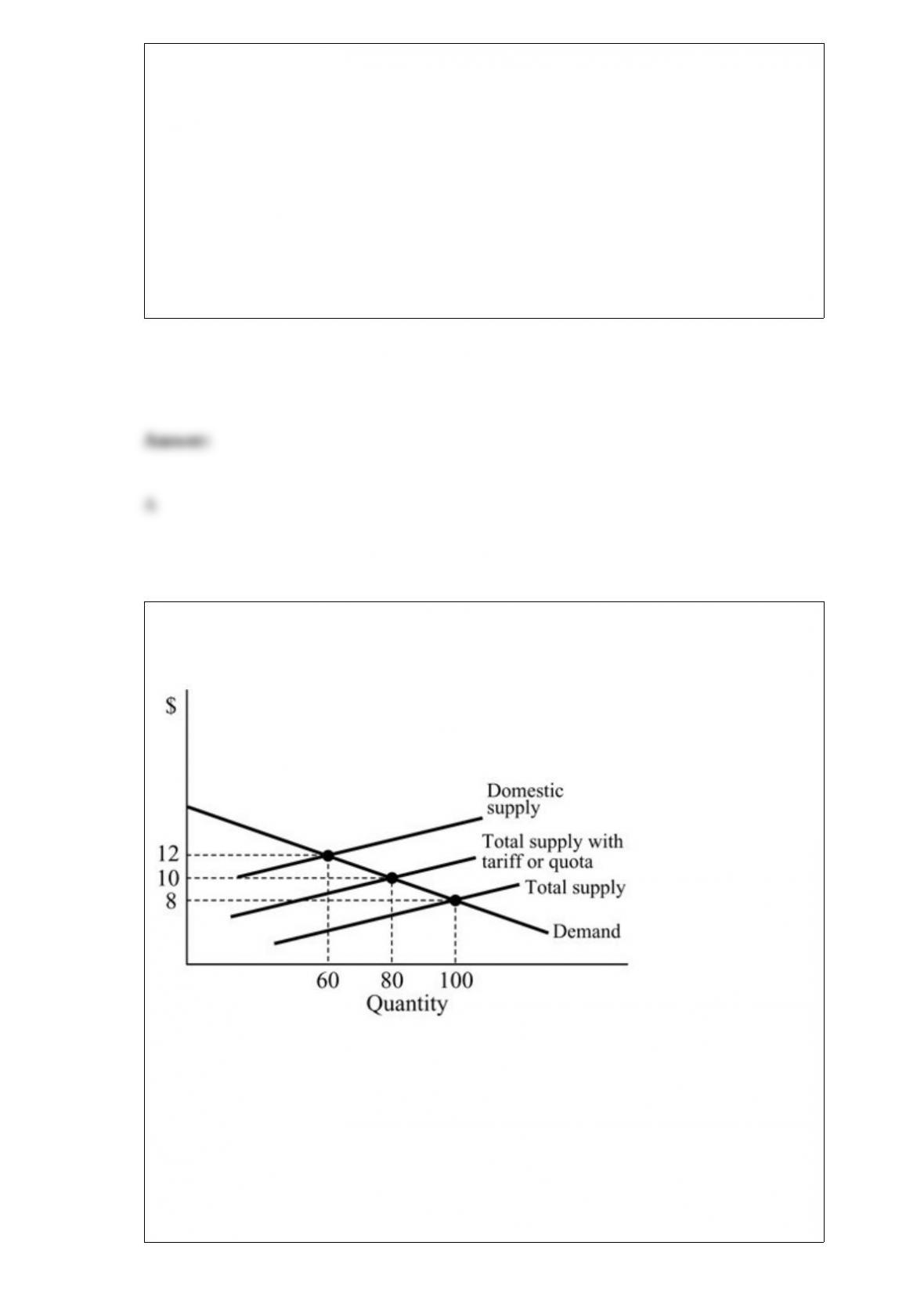
Figure 18.3
Refer to Figure 18.3. With an import ban, the equilibrium price is:
A) $0.
B) $12.
C) $10.
D) $8.
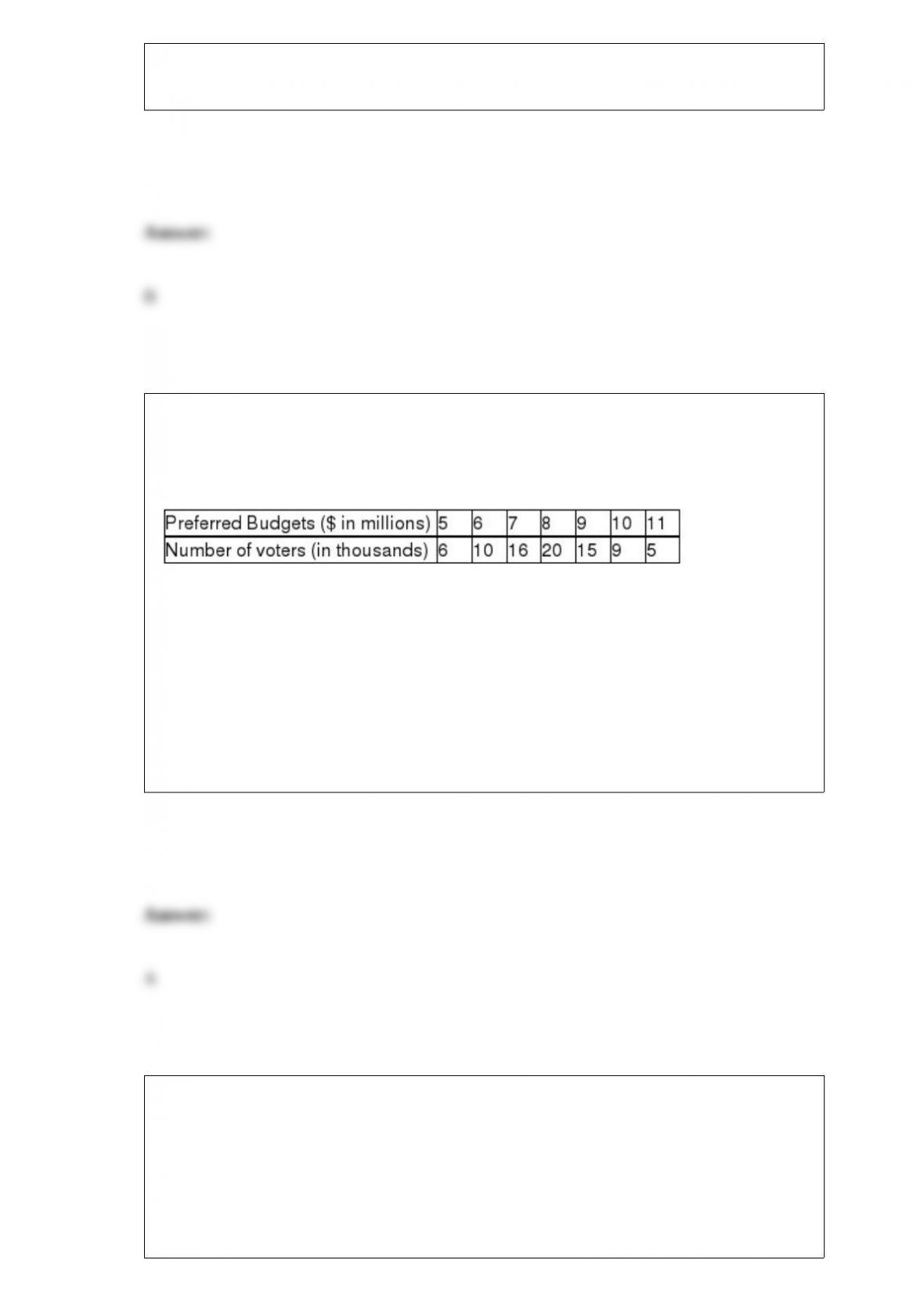
Table 15.2 shows the preferred budget for a new civic center and the number of voters
in a community who prefer that budget. Suppose that Jay initially proposed $6 million
while David proposed $10 million. Given the distribution of voters’ preferences, Jay can
increase his chance of being elected by proposing:
Table 15.2
A) a greater budget toward the median budget.
B) a greater budget than $10 million.
C) a smaller budget than $6 million.
D) none of the above
The decision to smoke cigarettes is subject to present bias because there is a temporal
mismatch between ________ and ________.
A) the present benefit; the present cost
B) the present benefit; the future cost

C) the future benefit; the present cost
D) the future benefit; the future cost
For a monopolist, marginal revenue ________ for all units of output except the first
unit.
A) is greater than the price of output
B) is less than the price of output
C) is equal to the price of output
D) may be either greater than or less than the price of output
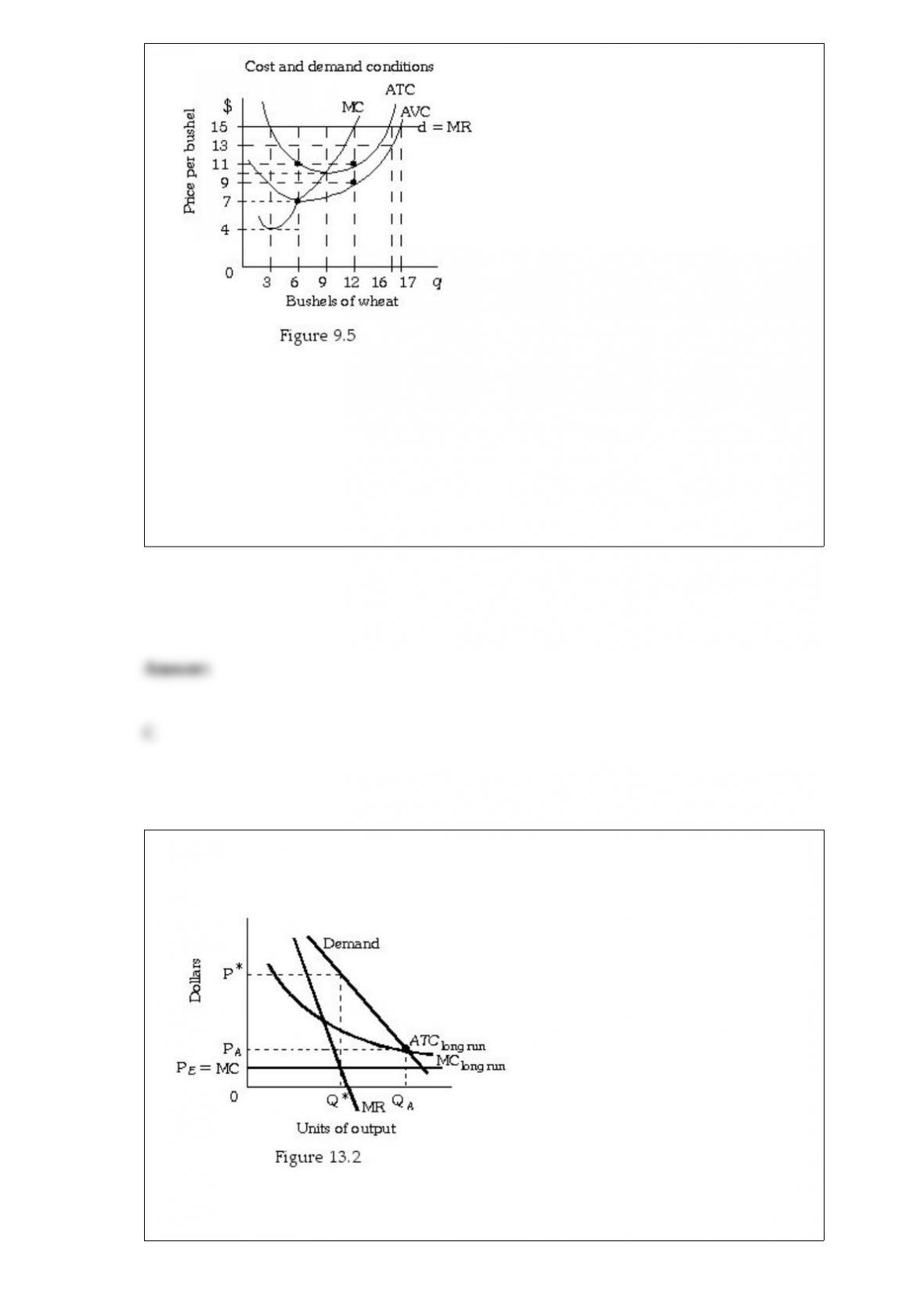
Refer to Figure 9.5. If this farmer is maximizing his profits, his total variable cost is:
A) $24.
B) $42.
C) $108.
D) $255.
Refer to Figure 13.2. If the government sought to regulate the firm and allowed it to
earn only zero economic profit, the government should set:
A) P = MC.
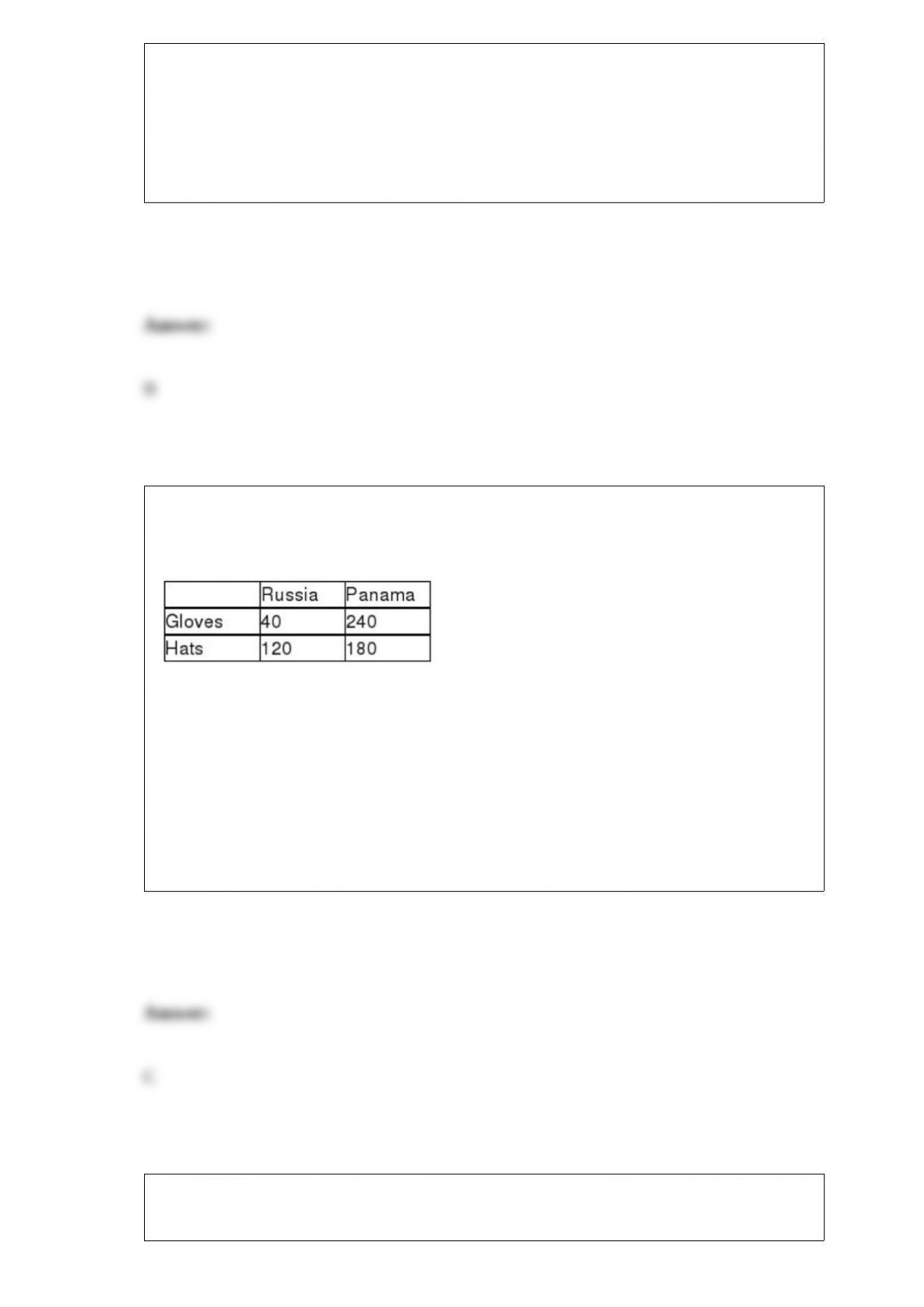
B) P = ATC.
C) MR = MC.
D) MR = ATC.
Refer to Table 18.1. The opportunity cost of a glove in Russia is:
Daily Output of Russia and Panama
Table 18.1
A) 1/8 of a hat.
B) 1/3 of a hat.
C) 3 hats.
D) 8 hats.
Which of the following would NOT be considered price discrimination?

A) charging more money for long distance calls during business hours than on
weekends
B) giving students a discount on ski lift tickets
C) charging higher rates for oil delivery to people who live farther from your business
D) charging less money to wash a large luxury car than a small economy car
Suppose your firm is operating in a perfectly competitive market, and that the minimum
average variable cost of producing your good is $30. If the price of the good is $32,
your firm should:
A) not produce anything since the price is above the minimum of average variable cost.
B) not consider price when determining the amount to sell.
C) supply the amount of the good where the marginal cost of production is equal to $32.
D) supply the amount of the good where the marginal cost of production is $30.
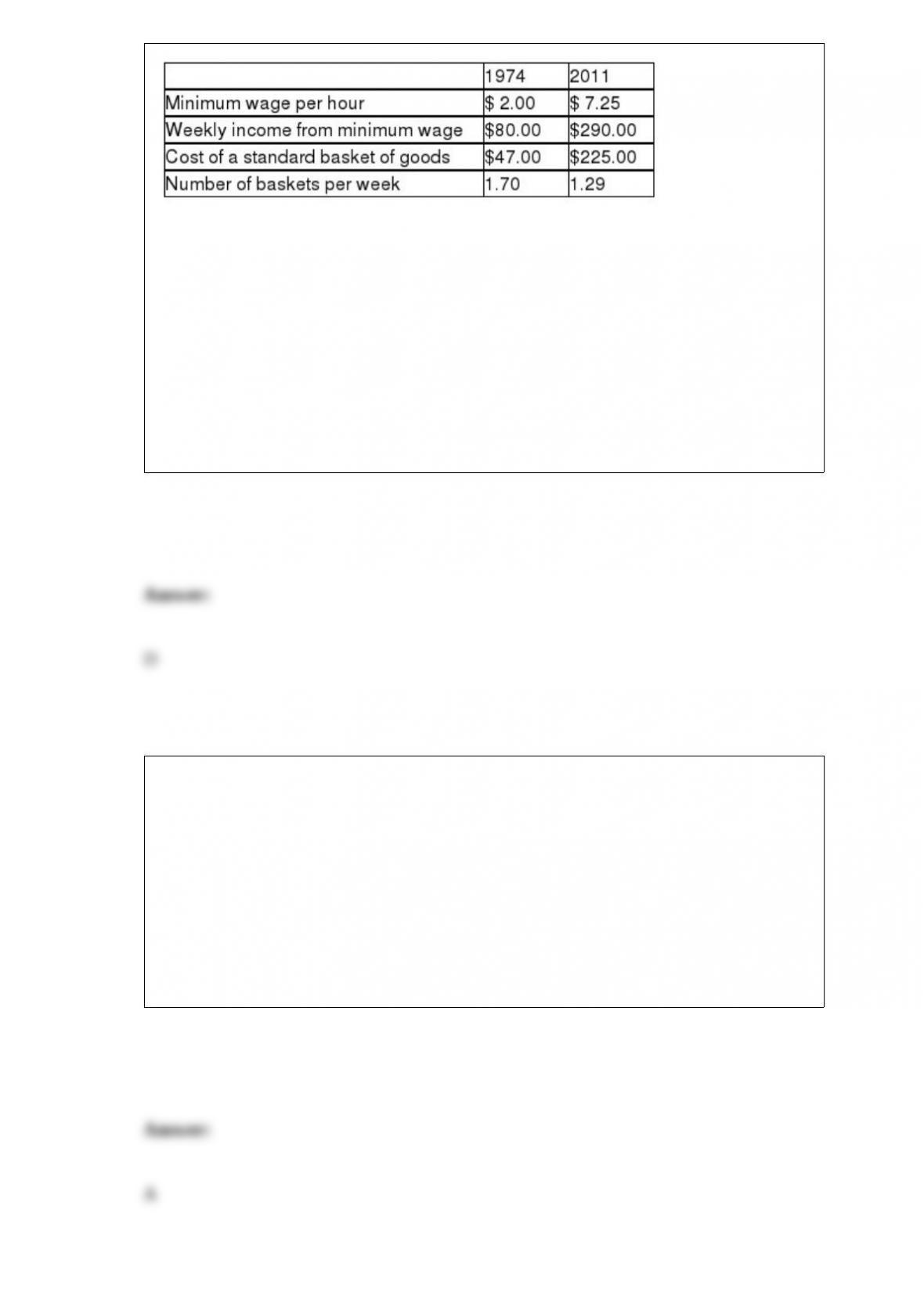
Table 2.5
The nominal value of the minimum wage in 2011 was:
A) $2.00 per hour.
B) $3.63 per hour.
C) $5.62 per hour.
D) $7.25 per hour.
Which of the following is TRUE about education?
A) Education is a private good with external benefits like improved civic
responsibilities.
B) Education is a public good and improves workplace performance.
C) Education is a public good that decreases government activities.
D) Education is a private good that only benefits the student.

The Sherman Act of 1890:
A) made it illegal to engage in practices that resulted in restraint of trade.
B) outlawed tying contracts.
C) outlawed stock-purchase mergers that would substantially reduce competition.
D) prohibited selling products at “unreasonably low prices” with the intent of reducing
competition.
If the hourly wage rate is above the equilibrium wage, then:
A) there is a surplus of labor.
B) the quantity of labor demanded is equal to the quantity of labor supplied.
C) the demand for labor will fall and the supply of labor will rise.
D) the quantity of labor demanded will be greater than the quantity of labor supplied.
Recall the Application about federal quality standards in the market for kiwifruit
to answer the following question(s).
Recall the Application. Why were there so many “lemon” kiwifruit in the U.S. market?
How is a system of marketable pollution permits set up?
What is a cartel?
What is producer surplus?
Alan and Bob have the same marginal productivity of labor. Yet, Alan’s wage rate is
much higher than Bob’s. How can this be?
What is means testing?
Explain how accounting rules have been beneficial for markets.
You have just graduated from college and are buying a brand new car. There are two on
the lot: a green one and a blue one. Both have the same features for the same price. Is
there a potential asymmetric information problem?
What is the opportunity cost of your college degree?
What is the opportunity cost of your college degree?
What is the substitution effect for leisure demand?
Why does monopoly necessarily reduce consumer surplus compared to perfect
competition?

Why does the government grant patents universally rather than just to those products
that would not be developed without a patent?
Jimmy was working for an accounting firm earning $30,000 per year. He has $100,000
in an investment account earning 10% per year. If he decided to invest the $100,000 in
a new business and quit his job to work full-time at this new business, what is his
implicit cost of this new business?
When does voluntary exchange take place?

Comment on the following statement: “Diminishing marginal utility implies that total
utility will fall when an additional unit of a good is consumed.”
What is an import?