Suppose a Starbucks tall latte cost $4.00 in the United States and 3.20 euros in the Euro
area. Also, suppose a McDonald’s Big Mac costs $3.50 in the United States and 2.45
euros in Euro area. If the nominal exchange rate is .80 euros per dollar, which goods
have prices that are consistent with purchasing power parity?
a. Both the tall latte and the Big Mac.
b. Neither the tall latte nor the Big Mac.
c. The tall latte but not the Big Mac.
d. The Big Mac but not the tall latte.
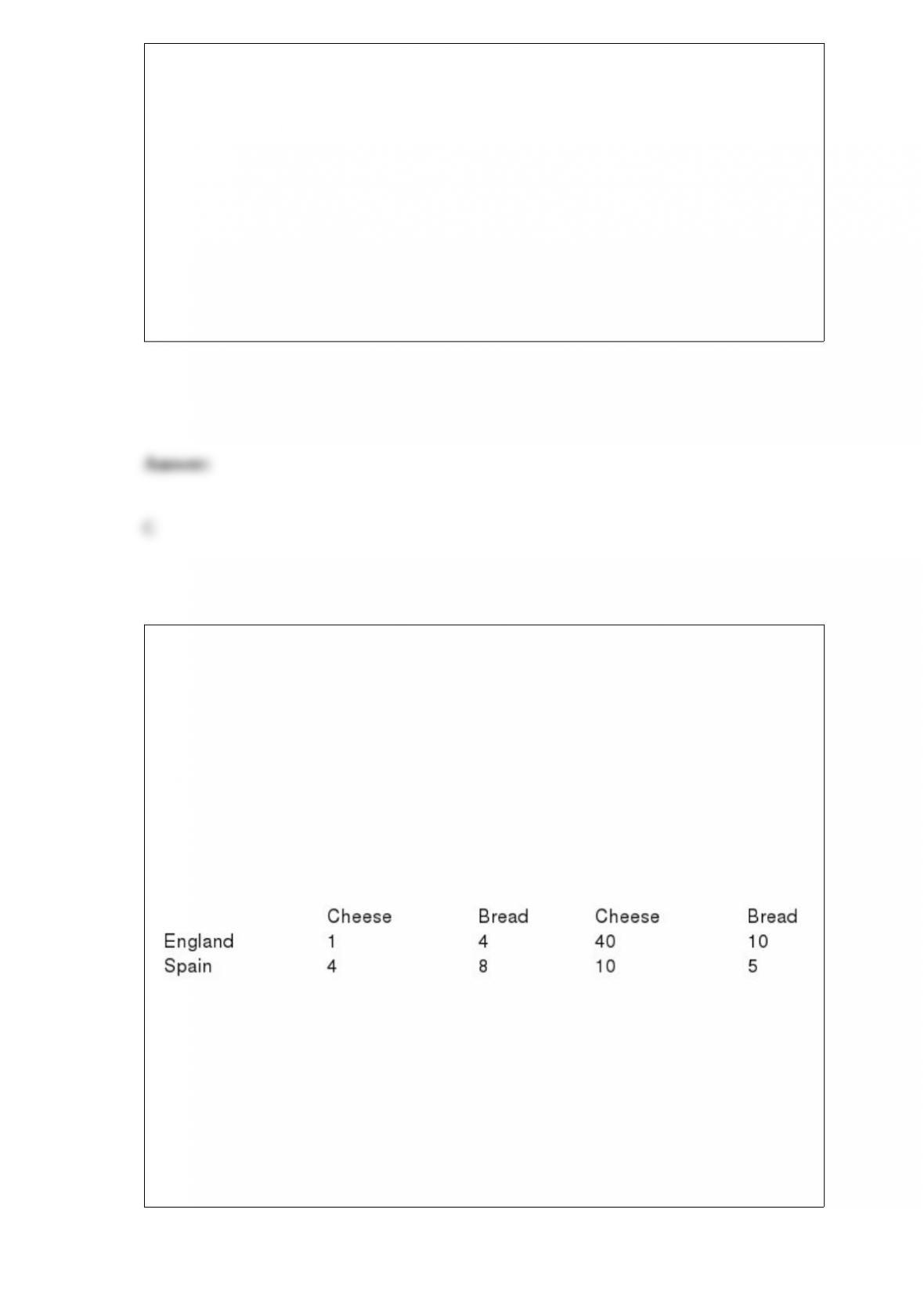
Table 3-5
Assume that England and Spain can switch between producing cheese and producing
bread at a constant rate.
Labor Hours Needed
to Make 1 Unit of Number of Units
Produced in 40 Hours
Refer to Table 3-5. The opportunity cost of 1 unit of bread for Spain is
a. 1/2 unit of cheese.
b. 1/2 hour of labor.
c. 2 units of cheese.
d. 8 hours of labor.

If the money multiplier decreased from 20 to 12.5, then
a. the Fed increased the reserve ratio from 5 percent to 8 percent.
b. the Fed increased the fed funds rate from 5 percent to 8 percent..
c. the Fed decreased the reserve ratio from 8 percent to 5 percent.
d. the Fed decreased the fed funds rate from 8 percent to 5 percent.
Figure 7-11
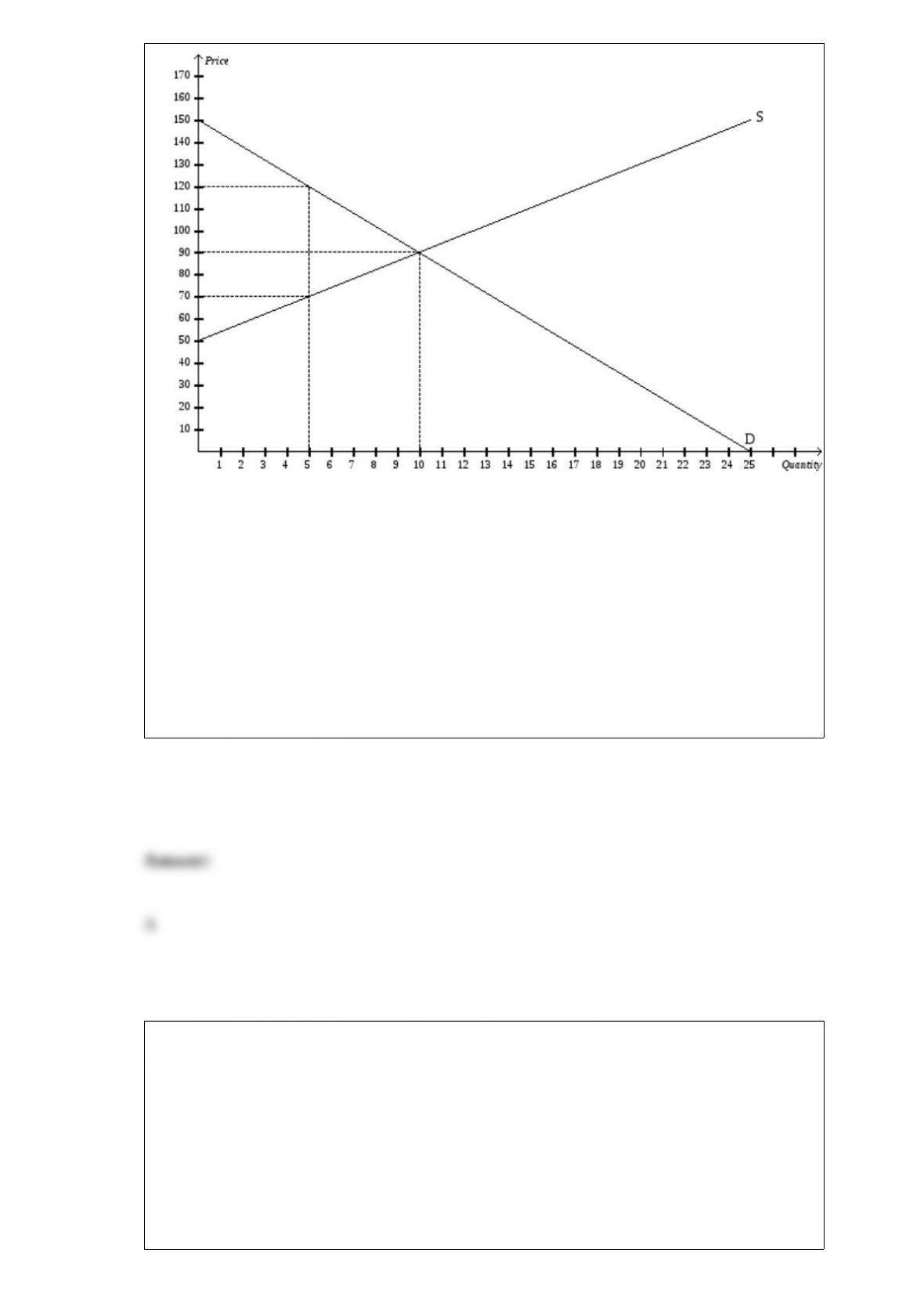
Refer to Figure 7-11. If the government imposes a price ceiling of $70 in this market,
then the new producer surplus will be
a. $50.
b. $100.
c. $175.
d. $350.
The country of Wiknam has net capital outflow of $1,000, government purchases of
$5,000 and consumption of $20,000. Which of the following is correct?
a. If its domestic investment is $1,000, its GDP is $26,000.
b. If its domestic investment is $2,000, its GDP is $28,000.
c. If its domestic investment is $5,000, its GDP is $29,000.

d. None of the above are correct.
In the market for widgets, the supply curve is the typical upward-sloping straight line,
and the demand curve is the typical downward-sloping straight line. The equilibrium
quantity in the market for widgets is 250 per month when there is no tax. Then a tax of
$6 per widget is imposed. As a result, the government is able to raise $750 per month in
tax revenue. We can conclude that the after-tax quantity of widgets is
a. 75 per month.
b. 100 per month.
c. 125 per month.
d. 150 per month.
In a market economy,
a. households decide which firms to work for and what to buy with their incomes.
b. firms decide whom to hire and what to make.
c. a central planner makes decisions about production and consumption.
d. Both a and b are correct.
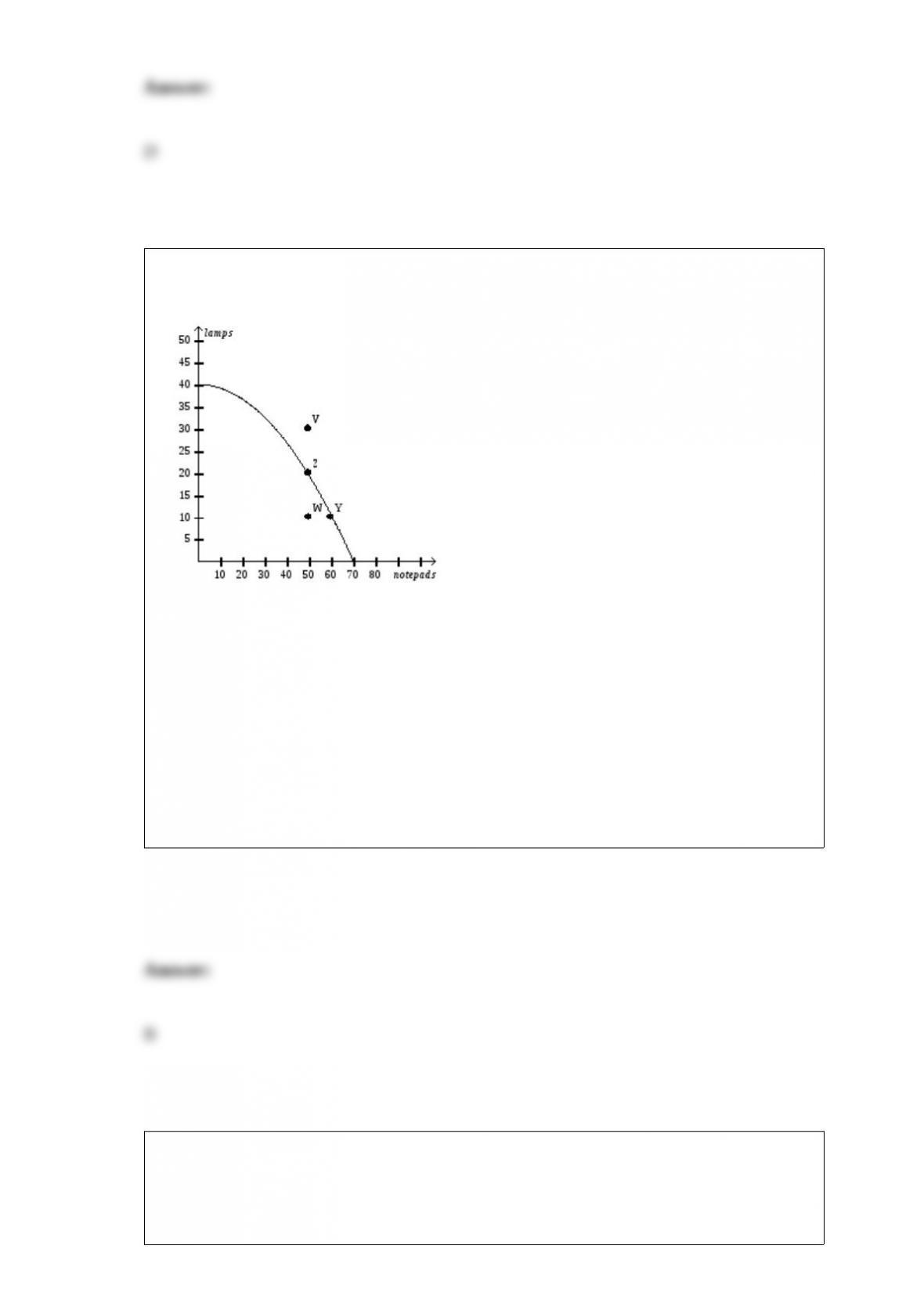
Figure 2-4
Refer to Figure 2-4. The opportunity cost of this economy moving from point Z to
point Y is
a. 0 lamps.
b. 10 lamps.
c. 10 notepads.
d. 20 lamps.
Prime Minister Emma Bigshot urges passage of a bill to reduce unemployment benefits
from very generous levels in her country. She also urges her country’s central bank to
raise the rate at which the money supply is increasing. In the long run which, if either,
of these policies will reduce the unemployment rate?

a. both reducing the generosity of unemployment benefits and raising the rate at which
the money supply is increasing
b. reducing the generosity of unemployment benefits but not raising the rate at which
the money supply is increasing
c. raising the rate at which the money supply is increasing, but not reducing the
generosity of unemployment benefits
d. neither reducing the generosity of unemployment benefits nor raising the rate at
which the money supply is increasing
Which of the following statements is correct?
a. Both liquidity preference theory and classical theory assume the interest rate adjusts
to bring the money market into equilibrium.
b. Both liquidity preference theory and classical theory assume the price level adjusts to
bring the money market into equilibrium.
c. Liquidity preference theory assumes the interest rate adjusts to bring the money
market into equilibrium; classical theory assumes the price level adjusts to bring the
money market into equilibrium.
d. Liquidity preference theory assumes the price level adjusts to bring the money
market into equilibrium; classical theory assumes the interest rate adjusts to bring the
money market into equilibrium.
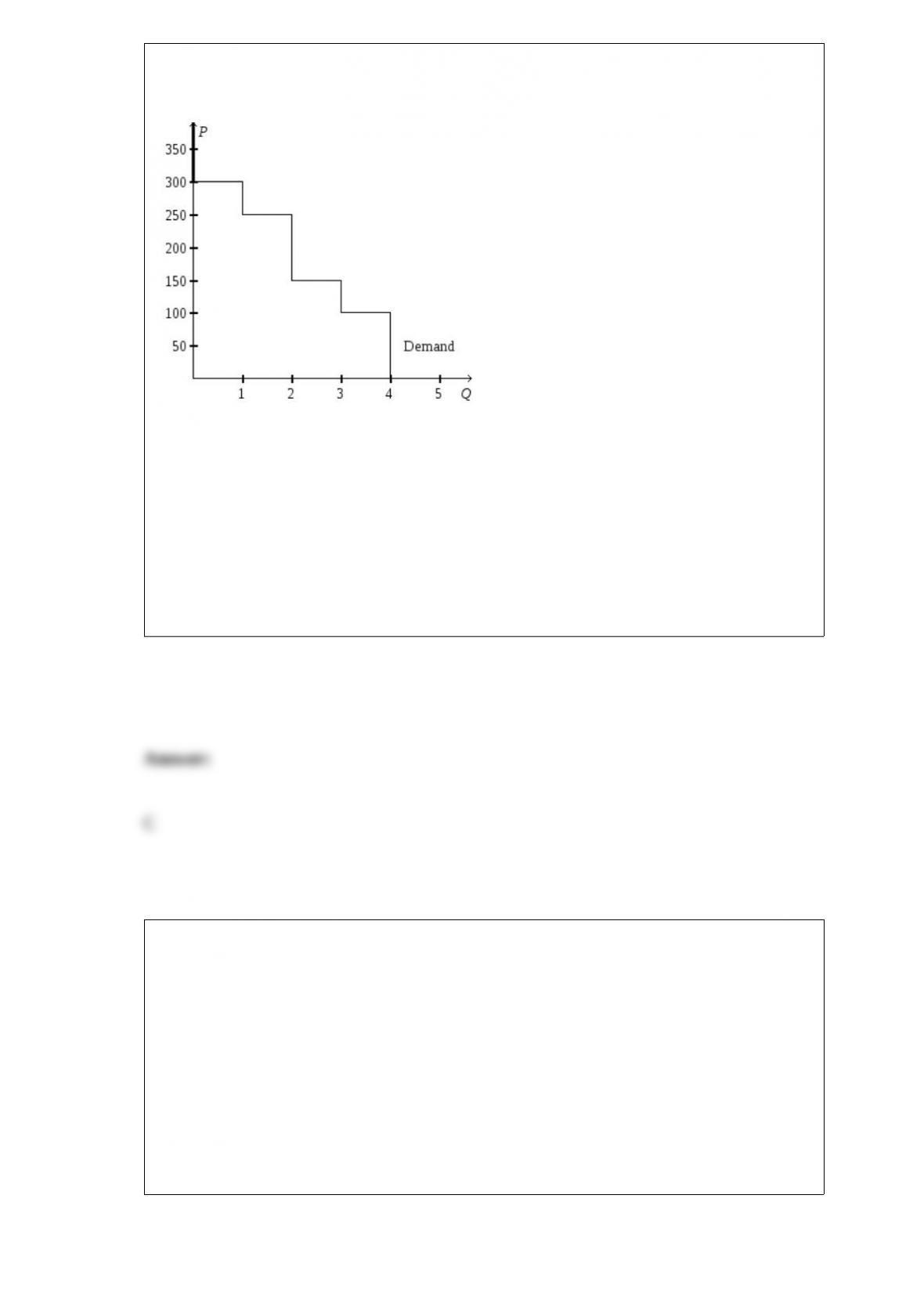
Figure 7-1
Refer to Figure 7-1. If the price of the good is $50, then consumer surplus amounts to
a. $400.
b. $500.
c. $600.
d. $750.
In the economy of Ukzten in 2010, exports were $200, GDP was $2000, government
purchases were $300, imports were $130, and investment was $400. What was Ukzten’s
consumption in 2010?
a. $970
b. $1230
c. $1370
d. $1630

In a closed economy, if Y, C, and T remained the same, an increase in G would reduce
a. private saving and public saving.
b. private saving but not public saving.
c. public saving but not private saving.
d. neither private nor public saving.
Raisin bran and milk are complementary goods. A decrease in the price of raisins will
a. increase consumer surplus in the market for raisin bran and decrease producer surplus
in the market for milk.
b. increase consumer surplus in the market for raisin bran and increase producer surplus
in the market for milk.
c. decrease consumer surplus in the market for raisin bran and increase producer surplus
in the market for milk.
d. decrease consumer surplus in the market for raisin bran and decrease producer
surplus in the market for milk.
An opponent of monetary policy decisions by rule would point to which of the
following as support of his case?
a. time inconsistency of policy
b. flexibility to confront unforeseen circumstances
c. political business cycle
d. the ability to craft rules that account for all possible contingencies in advance
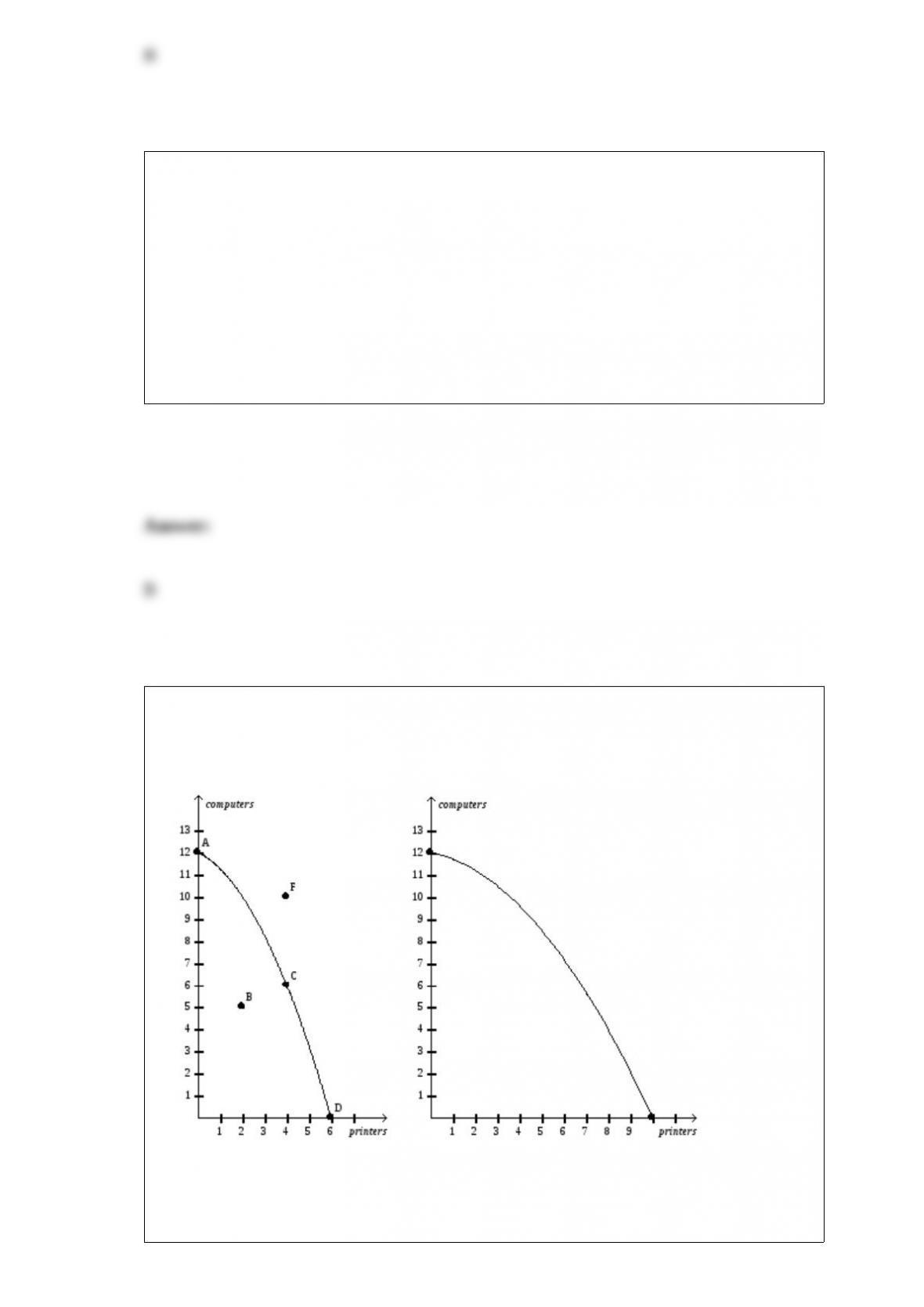
Figure 2-9
Panel (a) Panel (b)
Refer to Figure 2-9, Panel (a) and Panel (b). Which of the following is not a result of
the shift of the economy’s production possibilities frontier from Panel (a) to Panel (b)?

a. the tradeoff between the production of printers and computers changes
b. production of 2 printers and 5 computers becomes efficient
c. production of 6 printers and 7 computers becomes possible
d. the opportunity cost of a computer is higher at all levels of computer production
The essence of science is
a. the laboratory experiment.
b. the scientific method.
c. the study of nature, but not the study of society.
d. All of the above are correct.
Which of these activities will most likely result in an external benefit?
a. A college student buys a deck of cards to play solitaire in her dorm room.
b. An elderly woman plants a flower garden on the vacant lot next to her house.
c. An executive purchases a book to read on a business trip.
d. A ten-year-old uses his allowance to buy new Nike shoes.
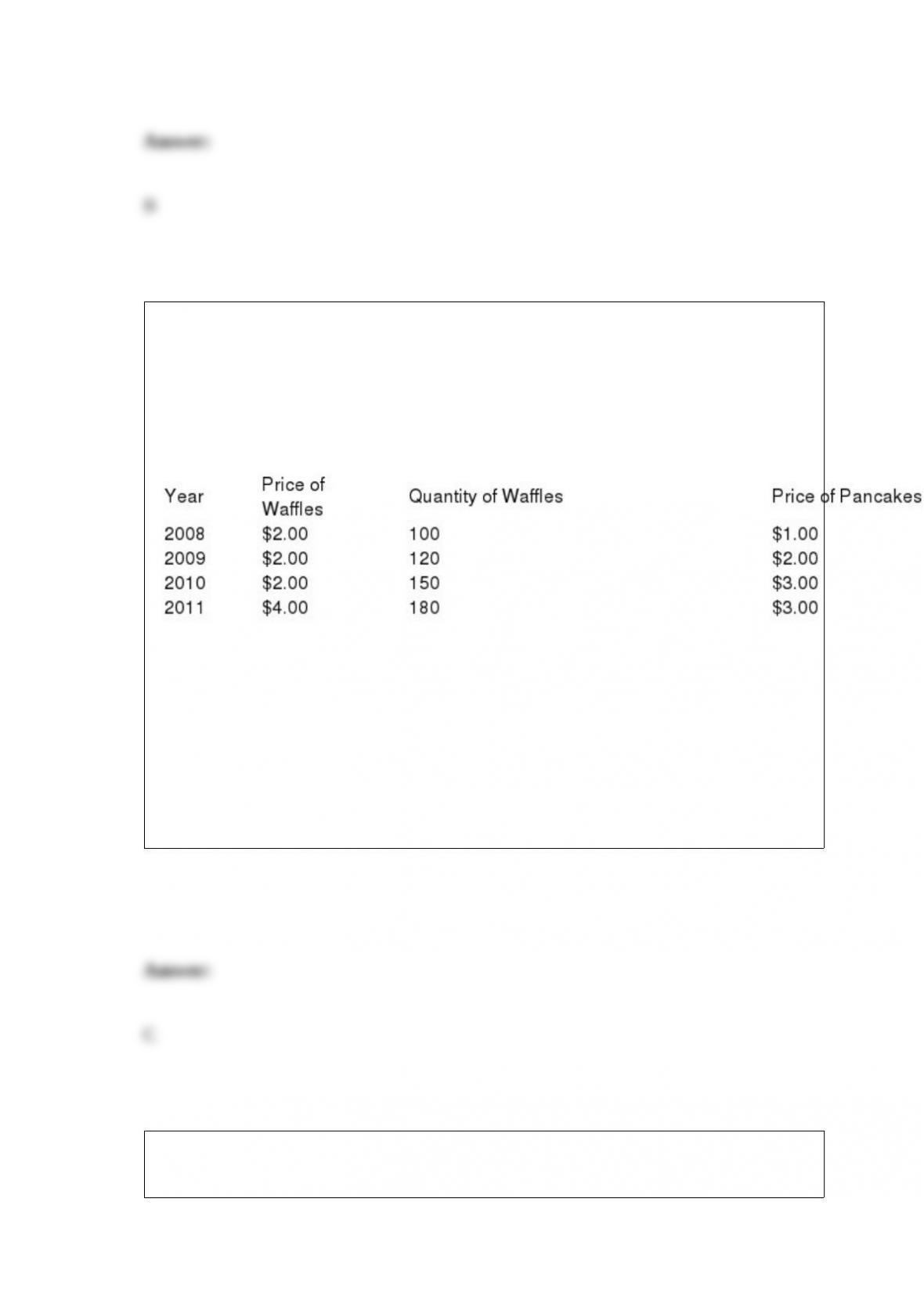
Table 10-6
The table below contains data for the country of Batterland, which produces only
waffles and pancakes. The base year is 2009.
Prices and Quantities
Refer to Table 10-6. This country’s inflation rate from 2008 to 2009 was
a. -25%.
b. 25%.
c. 33.3%.
d. 100%.
Figure 9-7. The figure applies to the nation of Wales and the good is cheese.
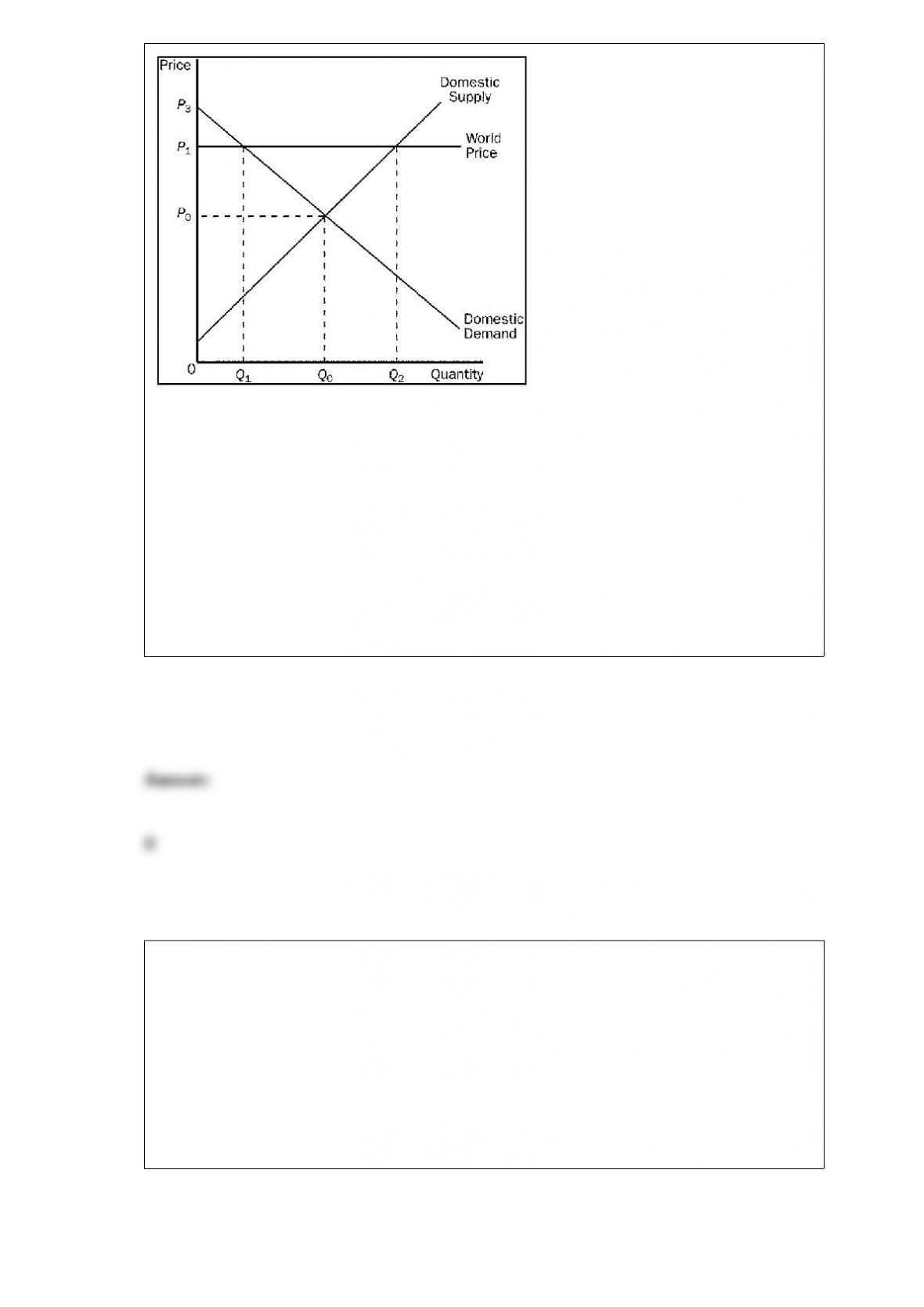
Refer to Figure 9-7. With trade, the Welsh price of cheese and the Welsh quantity of
cheese demanded are
a. P1 and Q2.
b. P1 and Q1.
c. P0 and Q0.
d. P3 and Q1.
The price elasticity of supply measures how much
a. the quantity supplied responds to changes in input prices.
b. the quantity supplied responds to changes in the price of the good.
c. the price of the good responds to changes in supply.
d. sellers respond to changes in technology.
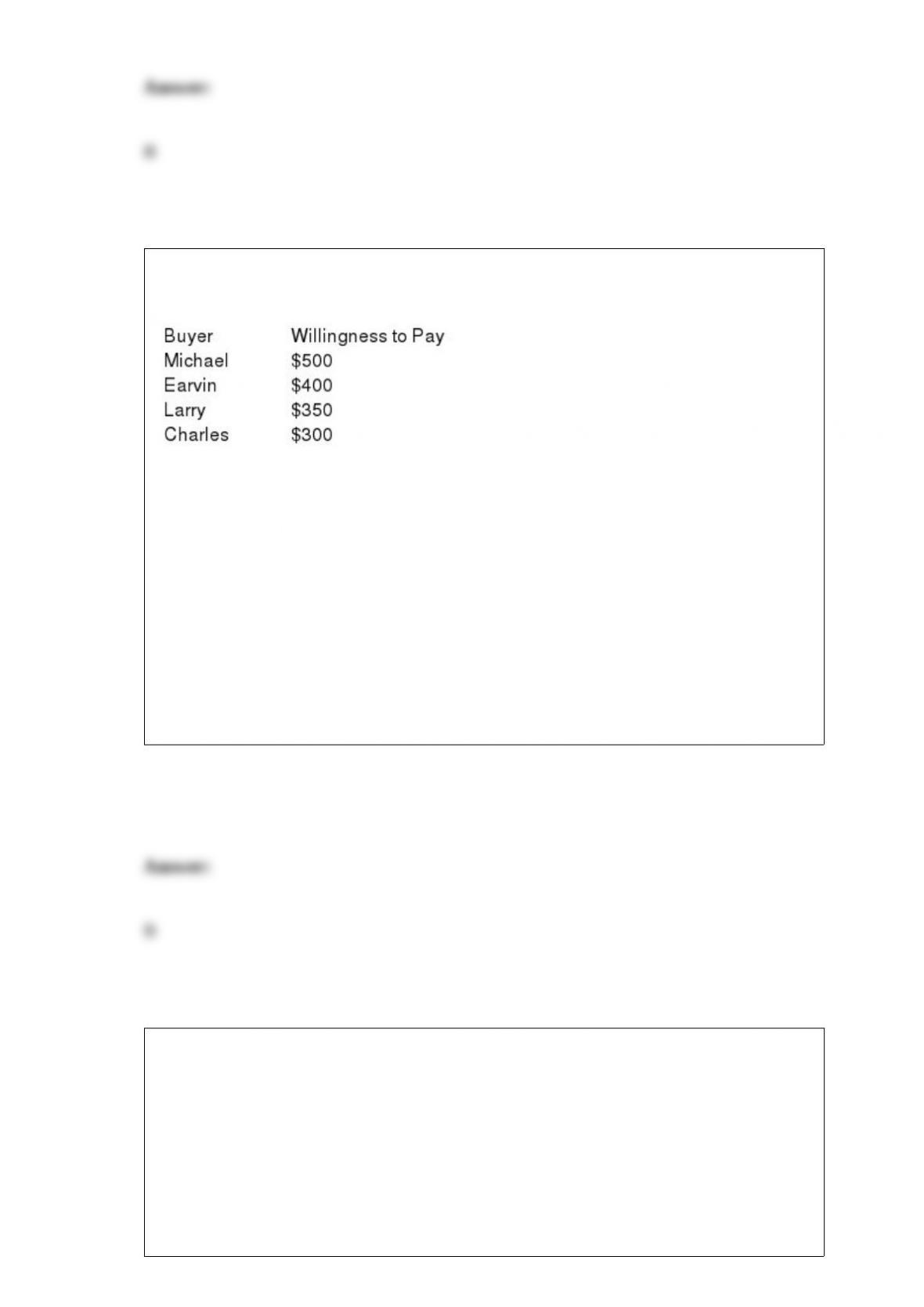
Table 7-6
Refer to Table 7-6. You have an extra ticket to the Midwest Regional Sweet 16 game in
the men’s NCAA basketball tournament. The table shows the willingness to pay of the
four potential buyers in the market for a ticket to the game. You hold an auction to sell
the ticket. Who makes the winning bid, and what does he offer to pay for the ticket?
a. Michael; $501
b. Michael; more than $400 but less than or equal to $500
c. Earvin; $400
d. Earvin; more than $350 but less than or equal to $400
If the CPI was 108.00 in 1942 and is 336.96 today, then $10 in 1942 purchased the
same amount of goods and services as
a. $2.57 purchases today.
b. $28.89 purchases today.
c. $31.20 purchases today.

d. $38.89 purchases today.
Aggregate demand shifts right if at a given price level
a. net exports rise and shifts left if the money supply increases.
b. net exports rise and shifts right if the money supply increases.
c. net exports fall and shifts left if the money supply increases.
d. net exports fall and shifts right if the money supply increases.
Which of the following is a correct statement about production possibilities frontiers?
a. An economy can produce only on the production possibilities frontier.
b. An economy can produce at any point inside or outside a production possibilities
frontier.
c. An economy can produce at any point on or inside the production possibilities
frontier, but not outside the frontier.
d. An economy can produce at any point inside the production possibilities frontier, but
not on or outside the frontier.

According to liquidity preference theory, equilibrium in the money market is achieved
by adjustments in
a. the price level.
b. the interest rate.
c. the exchange rate.
d. real wealth.
Which of the following will cause a decrease in consumer surplus?
a. an increase in the number of sellers of the good
b. a decrease in the production cost of the good
c. sellers expect the price of the good to be lower next month
d. the imposition of a binding price floor in the market

Gasoline is considered a final good if it is sold by a
a. gasoline station to a bus company that operates a bus route between San Francisco
and Los Angeles.
b. pipeline operator to a gasoline station in San Francisco.
c. gasoline station to a motorist in Los Angeles.
d. All of the above are correct.
Retained earnings is income that
a. households retain after paying taxes.
b. businesses retain after paying taxes.
c. corporations have earned but have not used to invest in plant, equipment, and
inventories.
d. corporations have earned but have not paid out to their owners.
Economic models
a. cannot be useful if they are based on false assumptions.
b. were once thought to be useful, but that is no longer true.
c. must incorporate all aspects of the economy if they are to be useful.
d. can be useful, even if they are not particularly realistic.
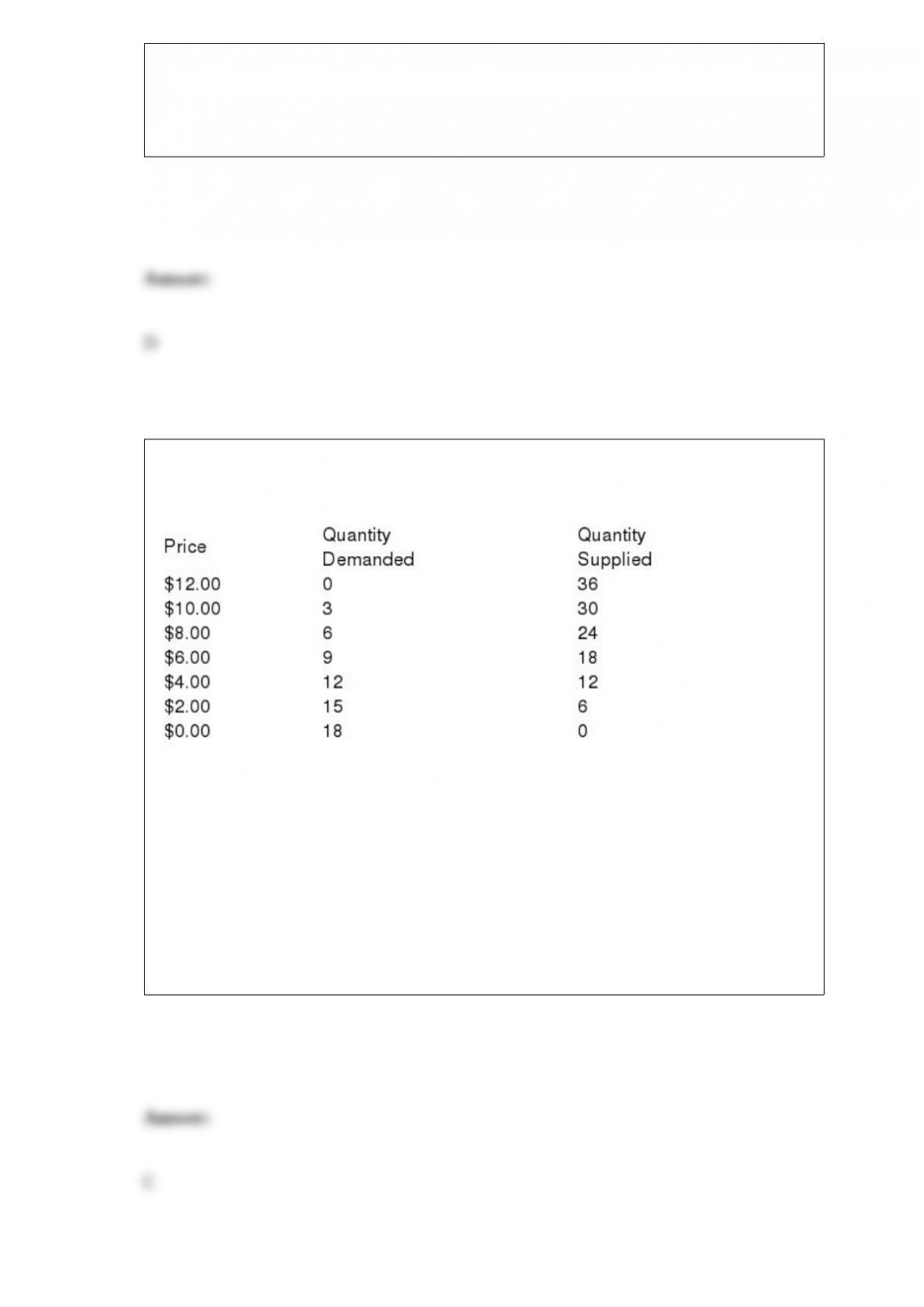
Table 7-11
Refer to Table 7-11. Both the demand curve and the supply curve are straight lines. If
the price is $4 but only 6 units are bought and sold, consumer surplus will be
a. $21.
b. $28.
c. $36.
d. $42.
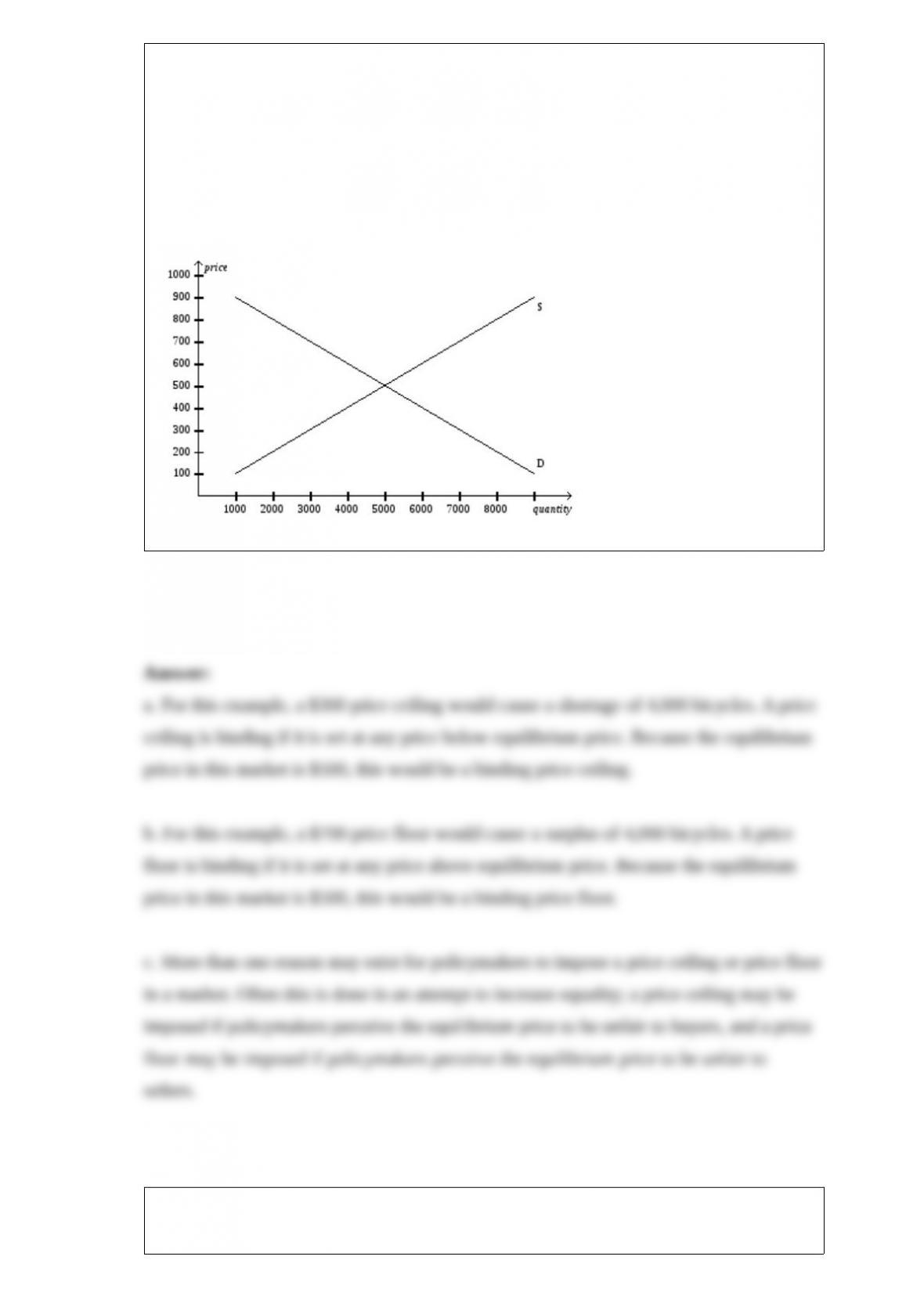
a. Using the graph shown, analyze the effect a $300 price ceiling would have on the
market for ten-speed bicycles. Would this be a binding price ceiling?
b. Using the graph shown, analyze the effect a $700 price floor would have on this
market for ten-speed bicycles. Would this be a binding price floor?
c. Why would policymakers choose to impose a price ceiling or price floor?
Suppose that Slovenia undertakes a policy to increase its saving rate. This policy will
likely

a. have no impact on GDP growth.
b. lead to higher GDP growth for a few years.
c. lead to higher GDP growth for a period of several decades.
d. lead to a permanently higher growth rate.