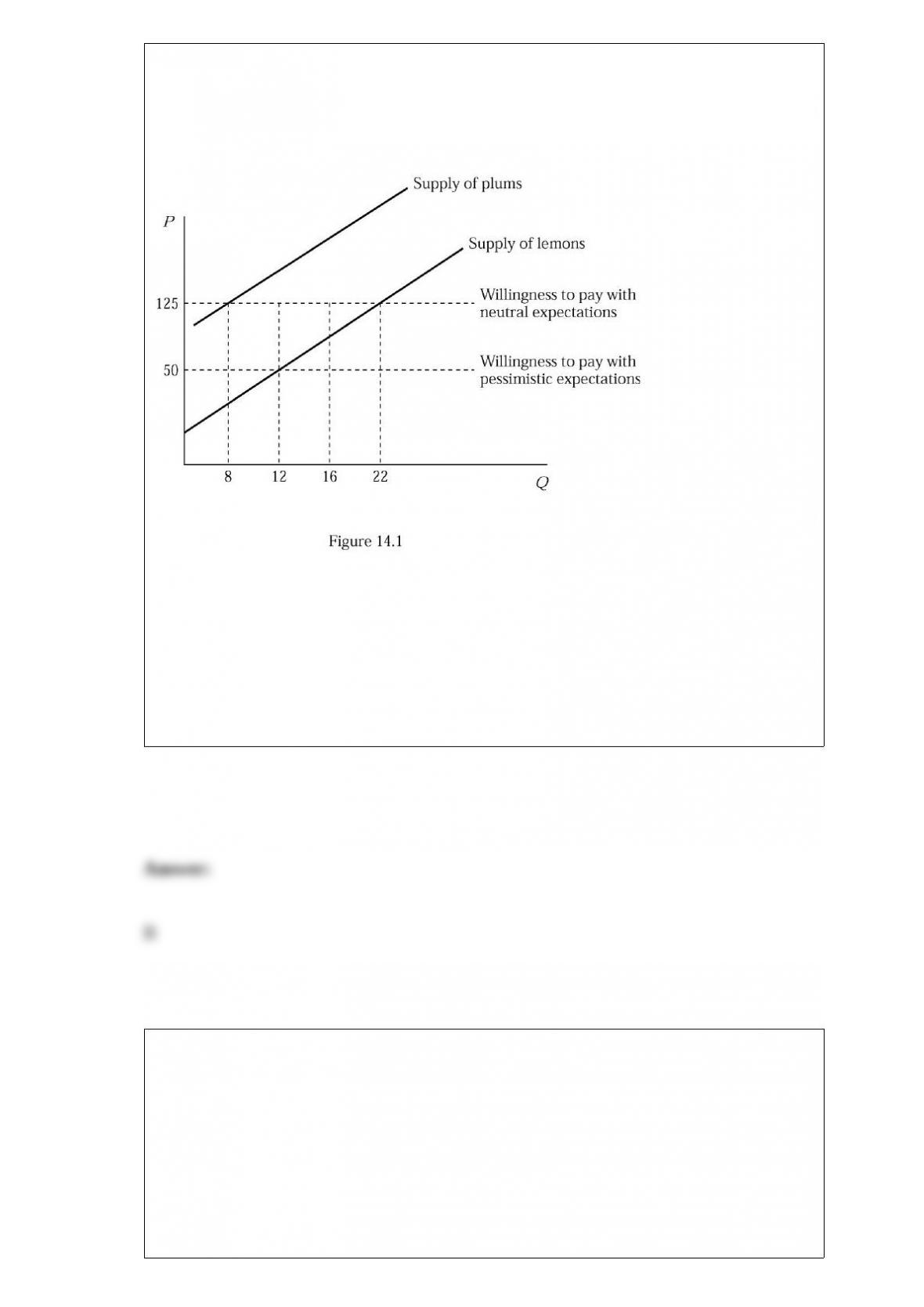
Figure 14.1 represents the market for used bikes. Suppose buyers are willing to pay
$200 for a plum (high-quality) used bike and $50 for a lemon (low-quality) used bike.
If buyers have pessimistic expectations about the used bikes in the market, what
number of used bikes sold will actually be lemons (low quality)?
A) 8
B) 12
C) 16
D) 22
If the variable on the vertical axis increases by 20 and the variable on the horizontal
axis increases by 5, the slope of the line is:
A) 0.25.
B) 4.
C) 15.

D) 100.
The conclusion that the level of output is efficient at the market equilibrium rests on all
of the following assumptions EXCEPT that:
A) buyers and sellers are well-informed.
B) there are no external costs or benefits.
C) the government regulates price and output.
D) the market is perfectly competitive.
Figure 9.1 shows the cost structure of a firm in a perfectly competitive market. If the
firm’s fixed cost increases by 3,000 due to a new government regulation:

A) the marginal cost curve shifts upward.
B) the average variable cost curve shifts upward.
C) the average total cost curve shifts upward.
D) none of the above
Which of the following is NOT a microeconomic question?
A) How does a particular health care reform program affect physicians’ incomes?
B) What would happen to gasoline consumption if the gasoline tax were increased?
C) How should Judy decide how many hours to study for her economics exam?
D) All of the above are microeconomic questions.

If the demand for one good decreases when the price of another good increases, the two
goods are ________ goods.
A) normal
B) inferior
C) complementary
D) substitute
Deciding if a power company will generate electricity from wind power or coal answers
the economic question of:
A) who consumes the products produced.
B) what products will be produced.
C) where will the products be consumed.
D) how will the products be produced.
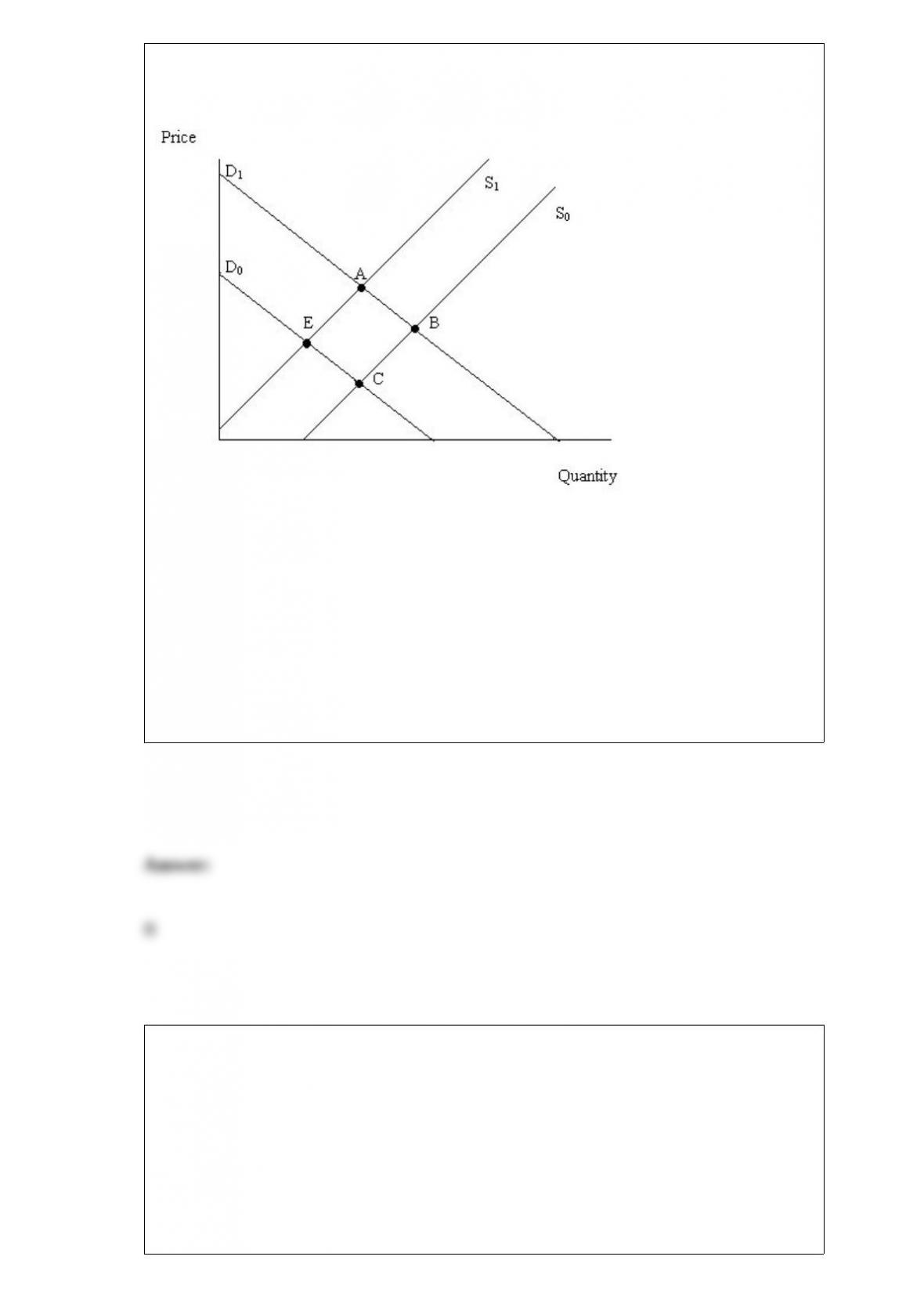
Figure 4.6 illustrates a set of supply and demand curves for a product. When the
economy moves from point C to point E, there has been:
Figure 4.6
A) an increase in supply and a decrease in quantity demanded.
B) a decrease in supply and a decrease in quantity demanded.
C) a decrease in quantity supplied and a decrease in demand.
D) an increase in quantity supplied and a decrease in quantity demanded.
As output increases, it is always true that:
A) average total cost decreases.
B) average variable cost is above marginal cost.
C) average fixed costs decrease.
D) total fixed costs increase.

The law of supply states that:
A) firms supply more of a product as consumer income rises.
B) firms supply more of a product as consumer income falls.
C) firms supply more of a product as the price of the product rises.
D) firms supply more of a product as the price of the product falls.
The median voter group is:
A) a special interest group.
B) a group of voters who express their opinions in television and radio advertisements.
C) the large group of voters in the middle of the political spectrum.
D) all of the above
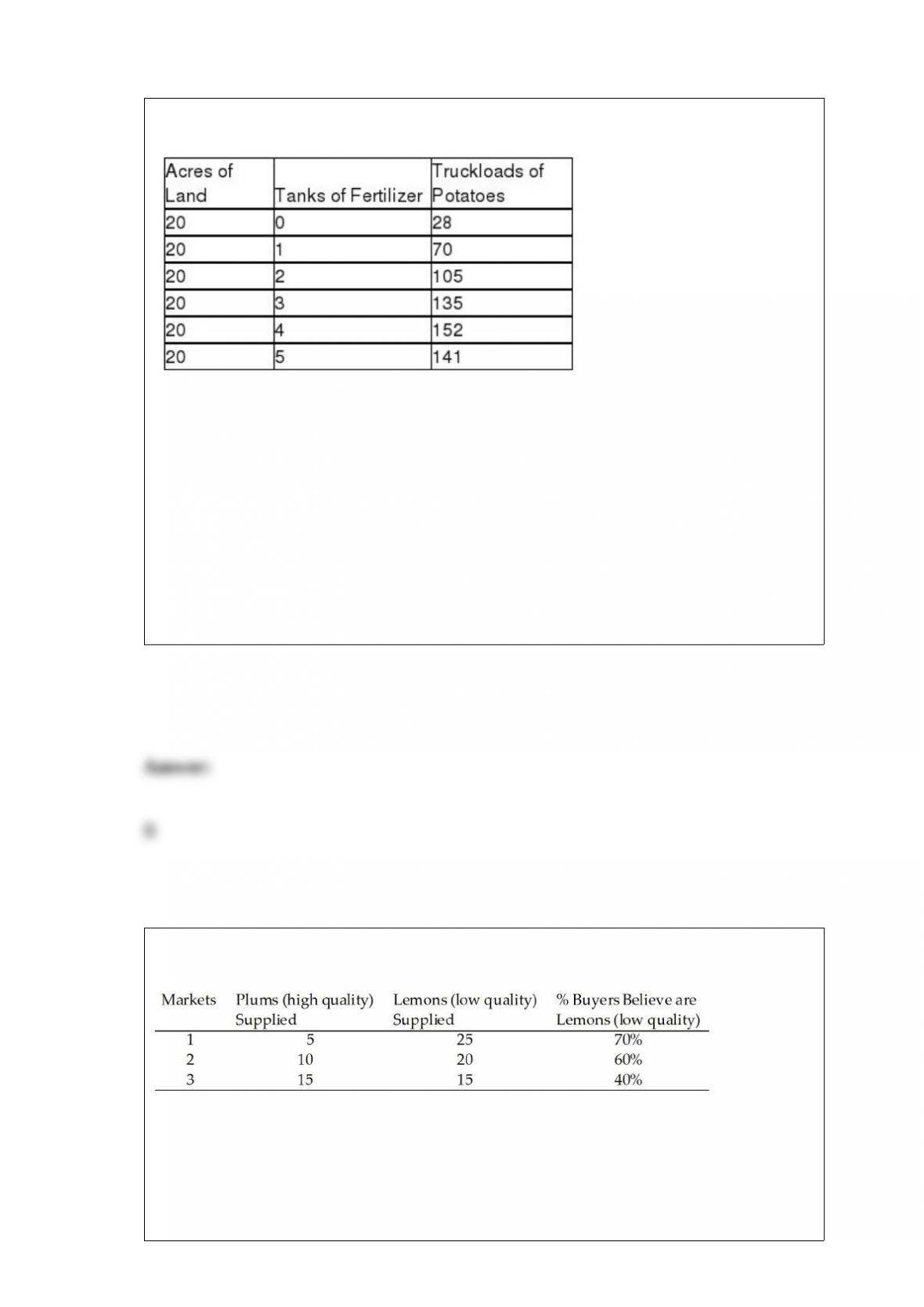
Table 2.4
Increasing the tanks of fertilizer from 4 to 5 will:
A) increase truckloads of potatoes.
B) decrease truckloads of potatoes.
C) have no effect on truckloads of potatoes.
D) require more acres of land.
Table 14.3 represents 3 markets for used stereos. Which of the markets in Table 14.3 are
NOT in equilibrium?
Table 14.3
A) 1 only
B) 2 only
C) 3 only
D) 1, 2, and 3
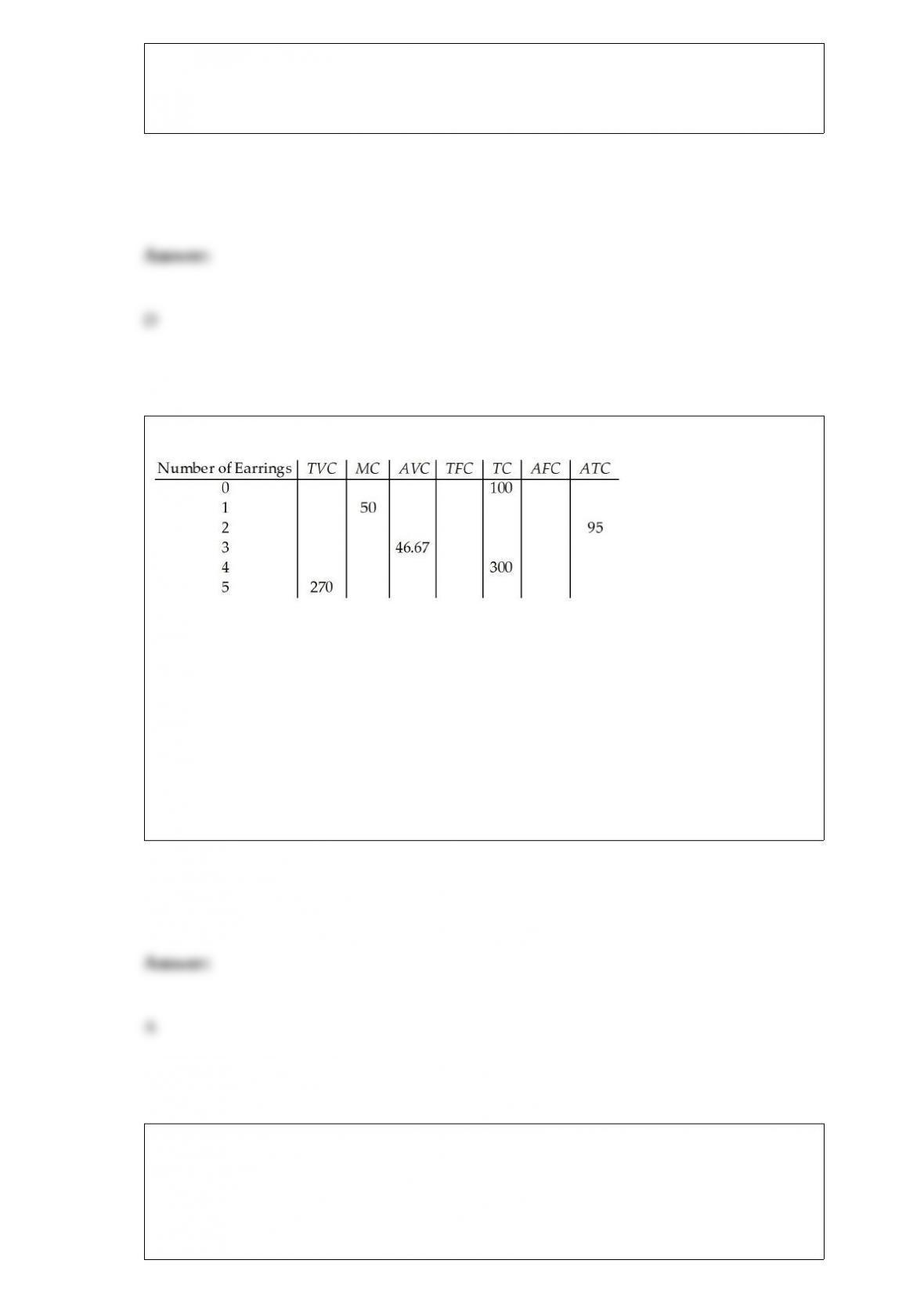
Refer to Table 8.5. If Sherry produces one pair of earrings, her total variable costs are:
Table 8.5
A) $50.
B) $100.
C) $150.
D) indeterminate from this information.
The Act which outlawed stock-purchase mergers that would substantially reduce
competition was the:
A) Sherman Act.

B) Clayton Act.
C) Robinson-Patman Act.
D) Celler-Kefauver Act.
If the costs of the training necessary to perform a job decrease, labor ________ shifts
________.
A) demand; left
B) demand; right
C) supply; left
D) supply; right
Which of the following was a case in which the WTO concluded that dumping had
occurred?
A) Hong Kong VCRs sold in Europe
B) steel from Brazil, India, and Japan sold in the United States
C) American beef sold in Mexico
D) all of the above

Recall the Application about the opportunity cost of starting a new business to
answer the following question(s).
Recall the Application. According to a study of Canadian workers, the ________ a
worker’s earnings in paid employment, the more likely the worker was to become an
entrepreneur because the opportunity cost of that worker leaving a job and starting a
business is ________.
A) higher; higher
B) higher; lower
C) lower; higher
D) lower; lower
If there is an advance in the technology used to produce a product, what is the likely
effect it may have on the supply?
A) The company would not change its manufacturing.
B) More people would be needed to produce the product.
C) It would decrease the supply.
D) It would increase the supply.

Taxes on external costs are unlike other taxes because they:
A) distort the incentives of the firms being taxed.
B) move the allocation of resources closer to the social optimum.
C) lead to a large deadweight loss.
D) raise revenue for the government.
An insecure monopoly is one where:
A) a new patent has been granted.
B) the possibility of a second firm entering exists.
C) no other firms can enter.
D) price-fixing is illegal under the Sherman Act.

The application about the impact inflation has on your potential future salary and the
repayment of student loans, if you earn a salary of $40,000 in the first year and all
prices triple in the next 10 years, what will your nominal annual salary be in 10 years?
A) $20,000
B) $60,000
C) $120,000
D) $180,000
If a firm is a price taker, the demand curve faced by the firm is:
A) horizontal.
B) vertical.
C) downward sloping.
D) upward sloping.
The ability of one person or nation to produce a good at a lower opportunity cost than
another is called a(n):
A) market advantage.
B) comparative advantage.
C) absolute advantage.
D) specialization advantage.
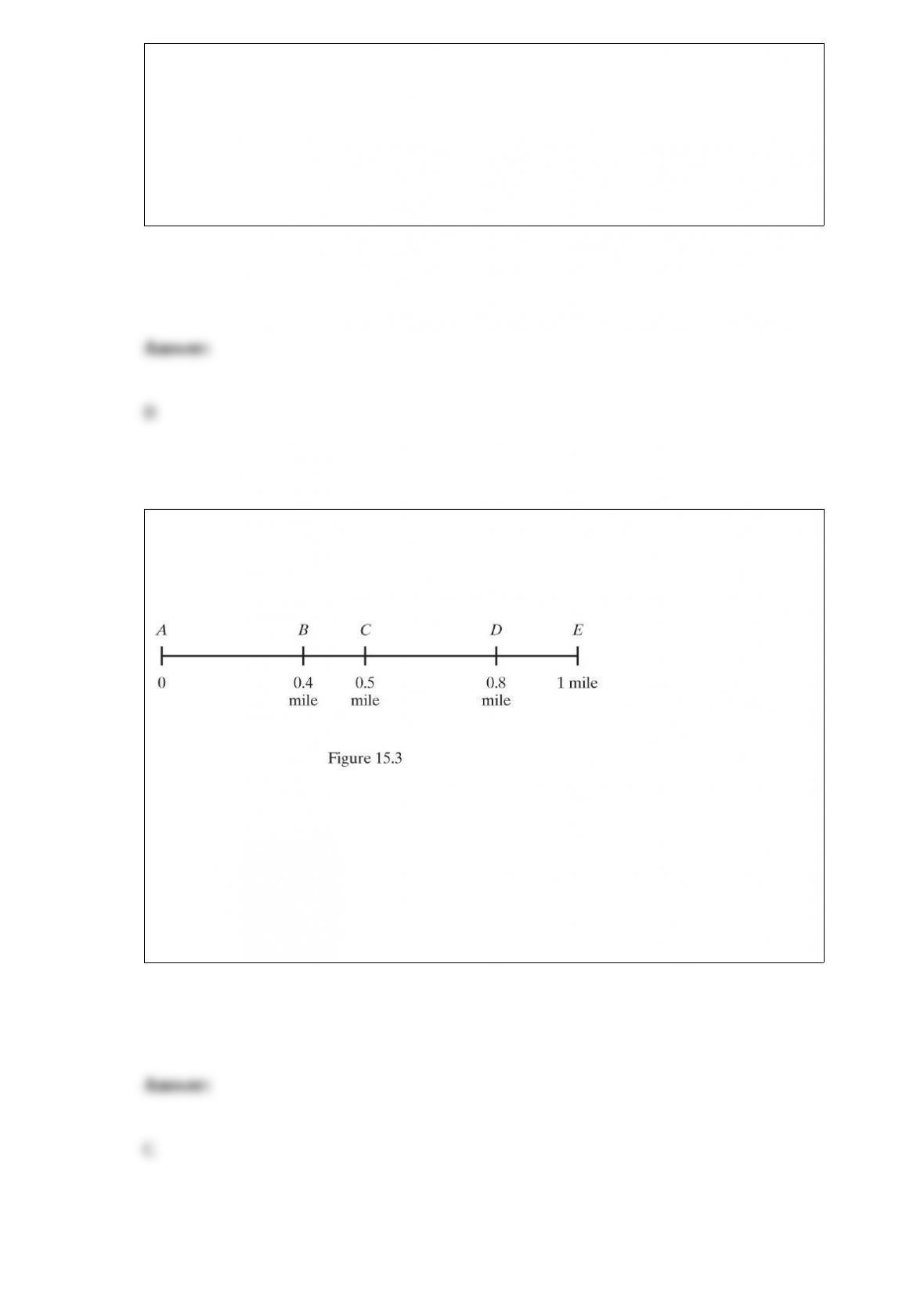
Figure 15.3 depicts a one-mile stretch of beach with 100 swimmers distributed evenly
along the beach. There are two ice cream vendors – 1 and 2 – on the beach selling an
identical product. If swimmers prefer to buy ice cream from the nearer vendor, what is
the median location?
A) A
B) B
C) C
D) D
If the tariffs on the textiles, apparel items and footwear mentioned in the Application
were replaced by equivalent voluntary export restraints (VERs), who would benefit the
most?
A) low-income consumers
B) high-income consumers
C) the U.S. government
D) the foreign manufacturer
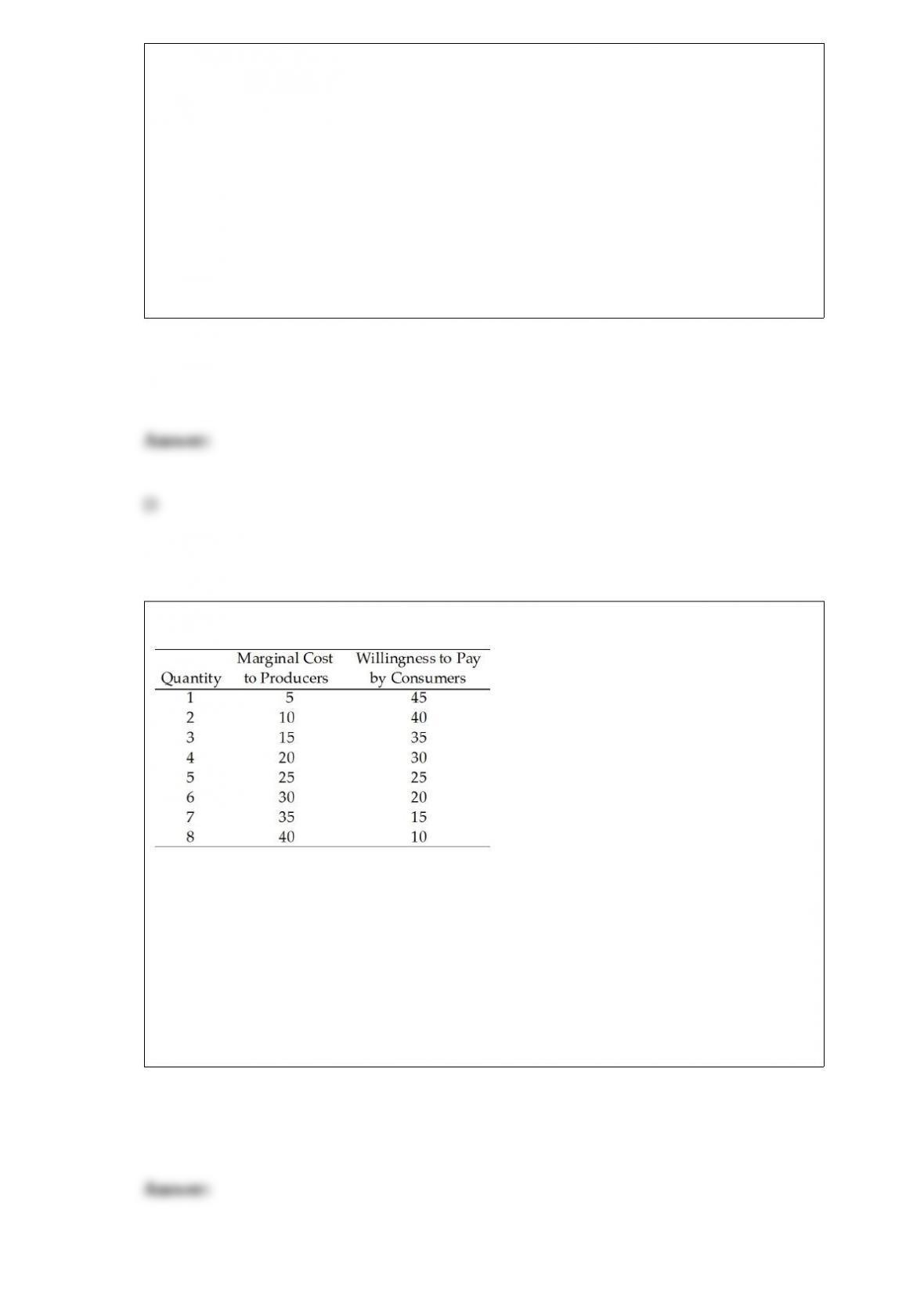
Refer to Table 6.1. When quantity = 7, this market is ________ because ________.
Table 6.1
A) inefficient; willingness to pay > marginal cost
B) inefficient; willingness to pay < marginal cost
C) efficient; willingness to pay = marginal cost
D) producing too much consumer surplus; willingness to pay > marginal cost

The WTO and GATT promote trade by:
A) reducing tariffs.
B) eliminating quotas.
C) reducing agricultural subsidies.
D) all of the above.
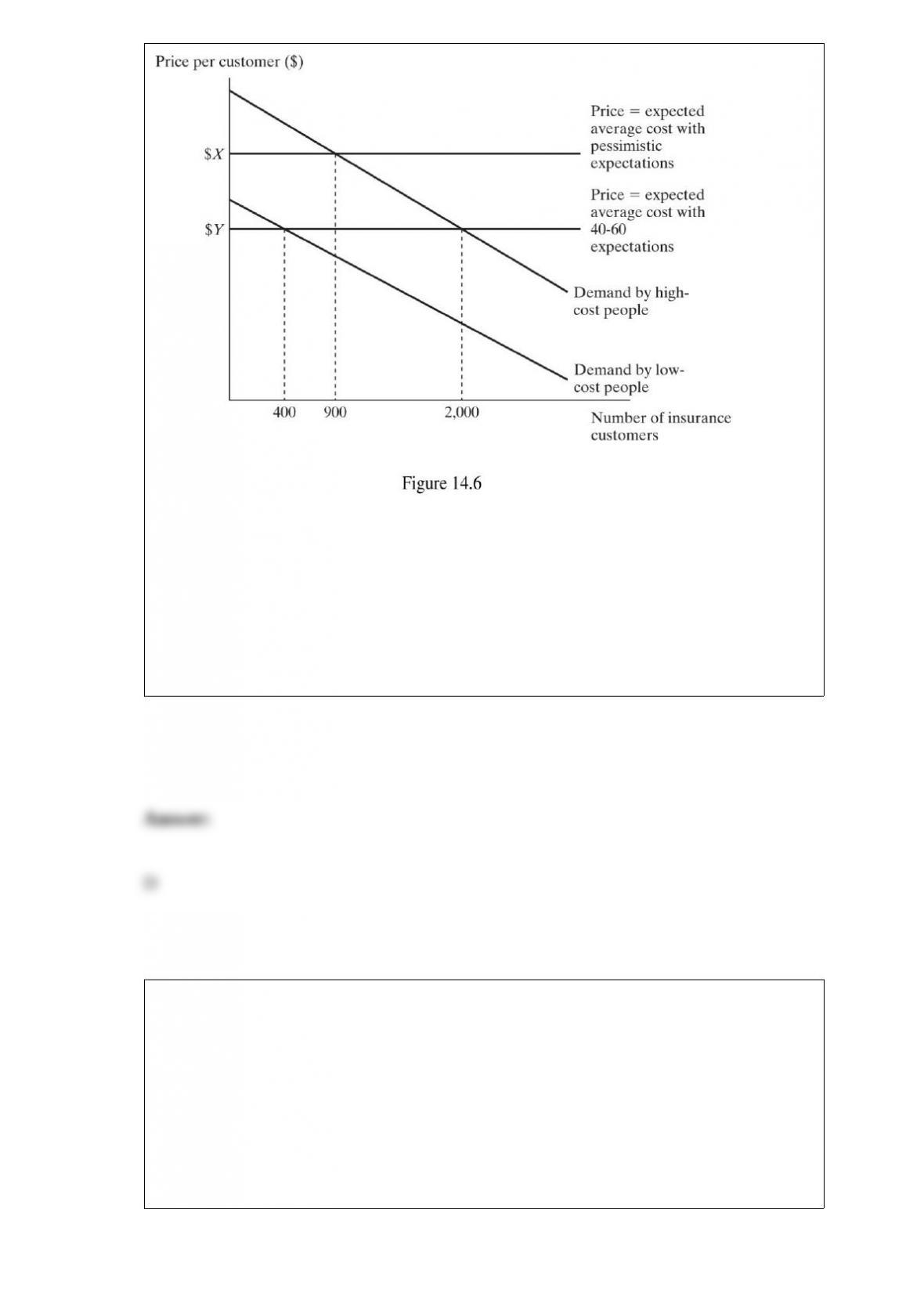
Figure 14.6 represents the market for health insurance. Suppose there are two types of
consumers, low-cost consumers with $2,000 average medical expenses per year, and
high-cost customers with $4,000 average medical expenses per year. If the insurance
companies are pessimistic and set their price according to their pessimistic
expectations:
A) the companies’ pessimism is not justified.
B) the market will include some low-cost and some high-cost customers.
C) the market will include only low-cost customers.
D) the market will include only high-cost customers.
A change in the slope of a budget line reflects:
A) a change in the marginal rate of substitution.
B) a change in the consumer’s preferences.
C) a change in consumer income.
D) a change in the relative prices of the two goods.
Suppose that ABC Beer Brewer faces a linear demand curve and that the current price
for its beer is set at a point where the price elasticity is 1.6. If ABC Beer Brewer
increases the product price:
A) the demand becomes more elastic and total revenue increases.
B) the demand becomes less elastic and total revenue increases.
C) the demand becomes more elastic and total revenue decreases.
D) the demand becomes less elastic and total revenue decreases.
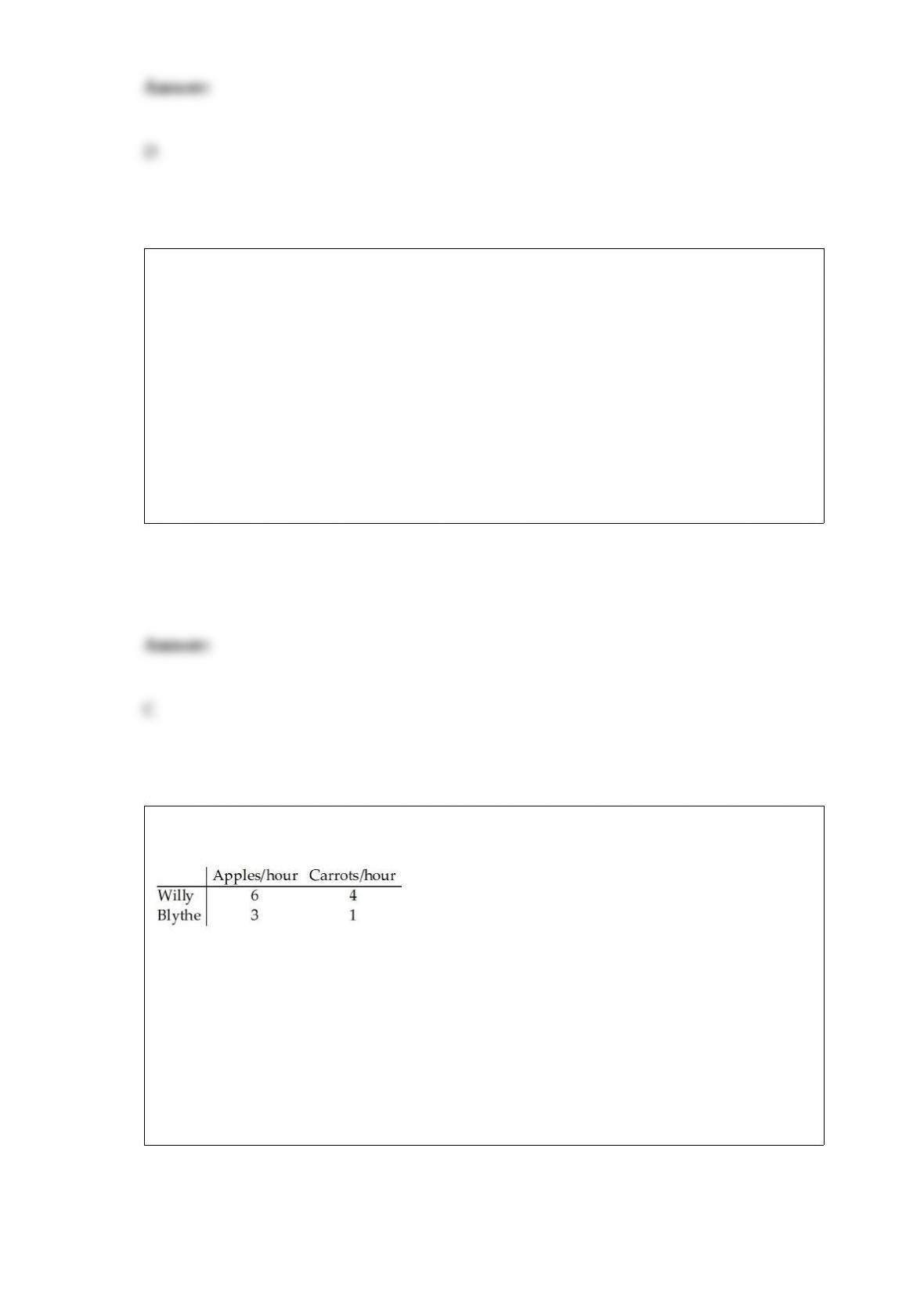
Table 3.1 illustrates Willy and Blythe’s hourly production for apples and carrots. From
the table, we can conclude that:
Table 3.1
A) Blythe has an absolute advantage in producing apples but not carrots.
B) Blythe has an absolute advantage in producing carrots but not apples.
C) Blythe has an absolute advantage in producing both goods.
D) Blythe has an absolute advantage in producing neither good.