Assume that Joe is willing to produce another hamburger that costs $1 to make. Mary is
hungry and is willing to buy a hamburger for $3. According to the No Cash on the
Table Principle, Joe and Mary:
A. will make a trade.
B. will only make a trade if Joe can get Mary to spend more than $3 for the hamburger.
C. will only make a trade if Mary can get Joe to charge less than $1 for the hamburger.
D. will never trade; they will look for better deals.
Starting from long-run equilibrium, a positive inflation shock results in a short-run
equilibrium with ___ inflation and ____ output.
A. higher; higher
B. higher; lower
C. lower; higher
D. lower; lower
An increase in the quantity demanded of tea occurs whenever:
A. the population of tea drinkers grows.
B. the price of coffee rises.
C. tea drinkers receive an increase in their incomes.
D. the price of the tea falls.
Microeconomics differs from macroeconomics in that microeconomics focuses on:
A. the performance of the entire economy.
B. issues such as inflation, unemployment and economic growth.
C. the choices made by individuals the implications of those choices.
D. government policies designed improve the performance of the national economy.
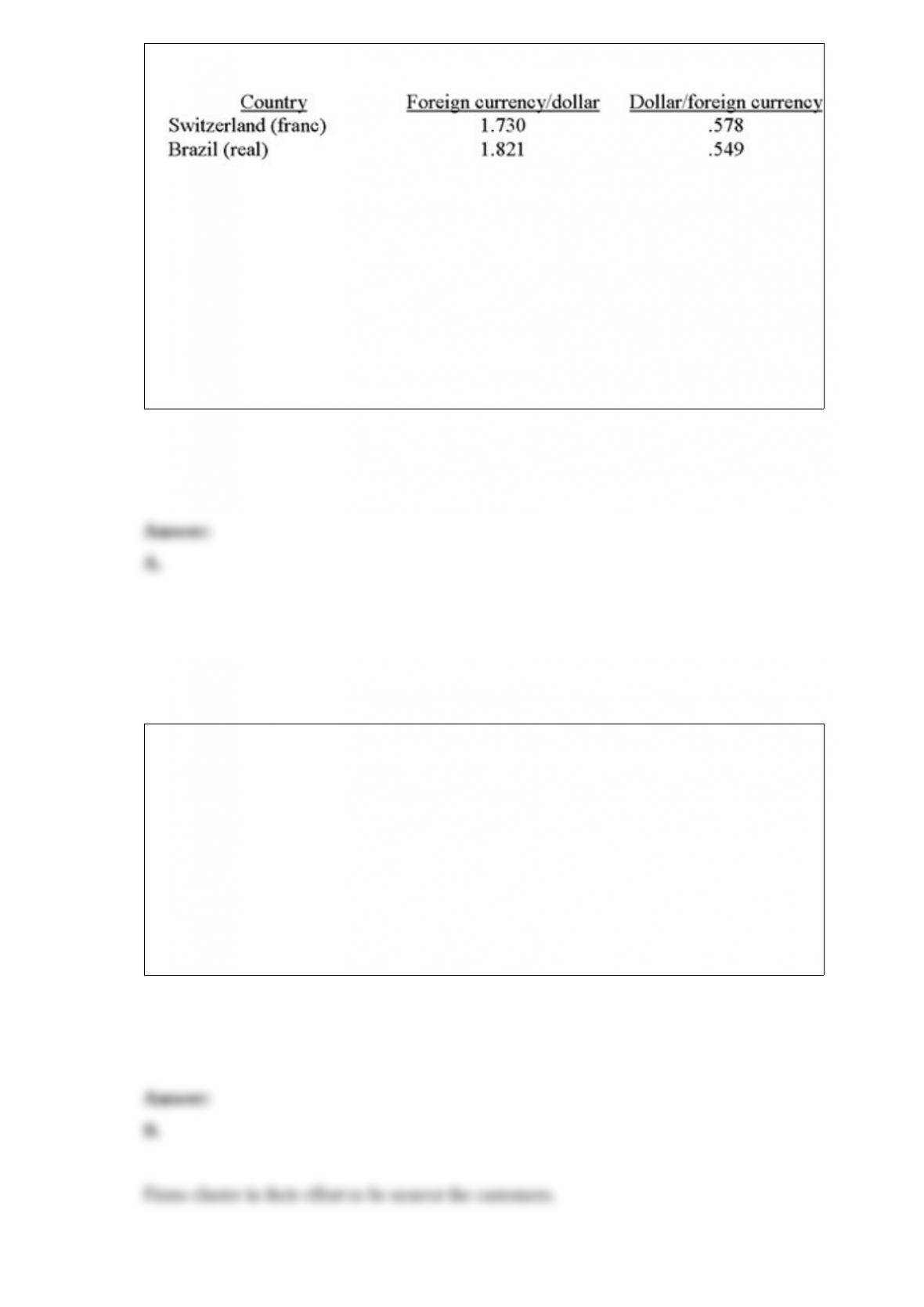
The following table provides nominal exchange rates for the U.S. dollar.
Based on these data, the nominal exchange rate equals approximately ______ reals per
Swiss franc or, equivalently, ______ Swiss francs per real.
A. 1.053; 0.950
B. 0.950; 1.053
C. 0.282; 3.551
D. 3.551; 0.282
The last time you went on a road trip, you noticed that there were several fast food
outlets clustered near some freeway exits, but none at the others. Now that you are
familiar with Hotelling’s model, you know that the reason for this is:
A. zoning laws.
B. firms vying for a favorable location.
C. failure by the firms to correctly distribute themselves.
D. the existence of fast food cartels.
Chris has a one-hour break between classes every Wednesday. Chris can either stay at
the library and study or go to the gym and work out. The decision Chris must make is:
A. not an economic problem because neither activity costs money.
B. not an economic problem because it’s an hour that Chris has no matter what he does.
C. an economic problem because the tuition Chris pays covers the cost of both the gym
and the library.
D. an economic problem because Chris has only one hour, and engaging in one activity
means giving up the other.
An imperfectly competitive firm faces a demand curve that is ______, while a perfectly
competitive firm faces a demand curve that is ______.
A. perfectly inelastic; downward sloping
B. horizontal; downward sloping
C. perfectly inelastic; perfectly elastic
D. downward sloping; perfectly elastic
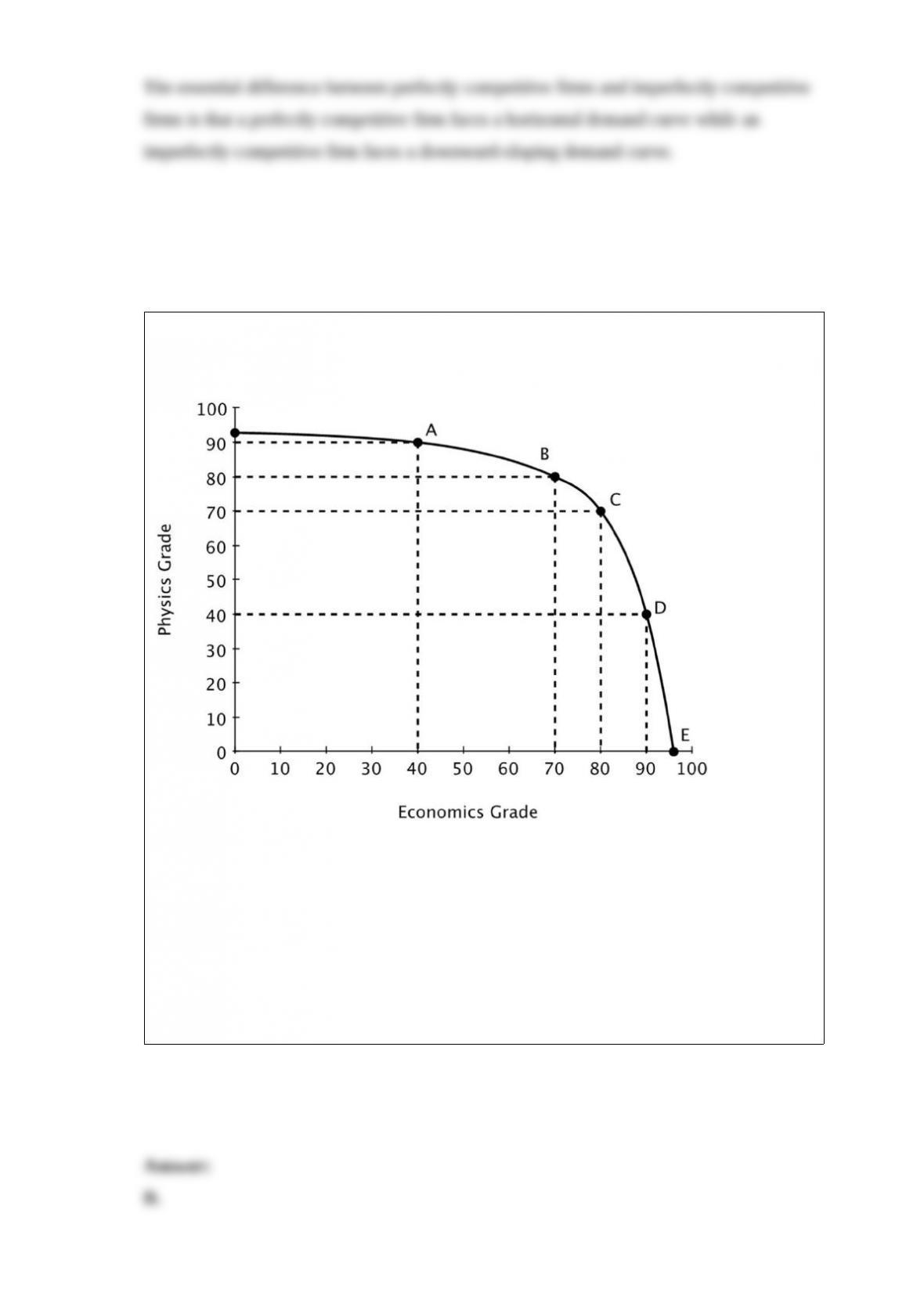
Moe divides his time between studying Physics and studying Economics. His
production possibilities curve for his final grade in each class is shown below.
Which of the following is true?
A. Moe has a comparative advantage in physics.
B. Moe’s opportunity cost of studying for each subject is increasing.
C. Moe has a comparative advantage in economics.
D. Moe has an absolute advantage in economics.
If the demand curve facing a monopolist shifts, then the monopolist’s:
A. marginal revenue curve and profit-maximizing level of output will change.
B. marginal revenue curve will not change, but its profit-maximizing level of output
will.
C. total cost curve will change, but its variable cost curve will not.
D. marginal revenue curve will change, but its profit-maximizing level of output will
not.
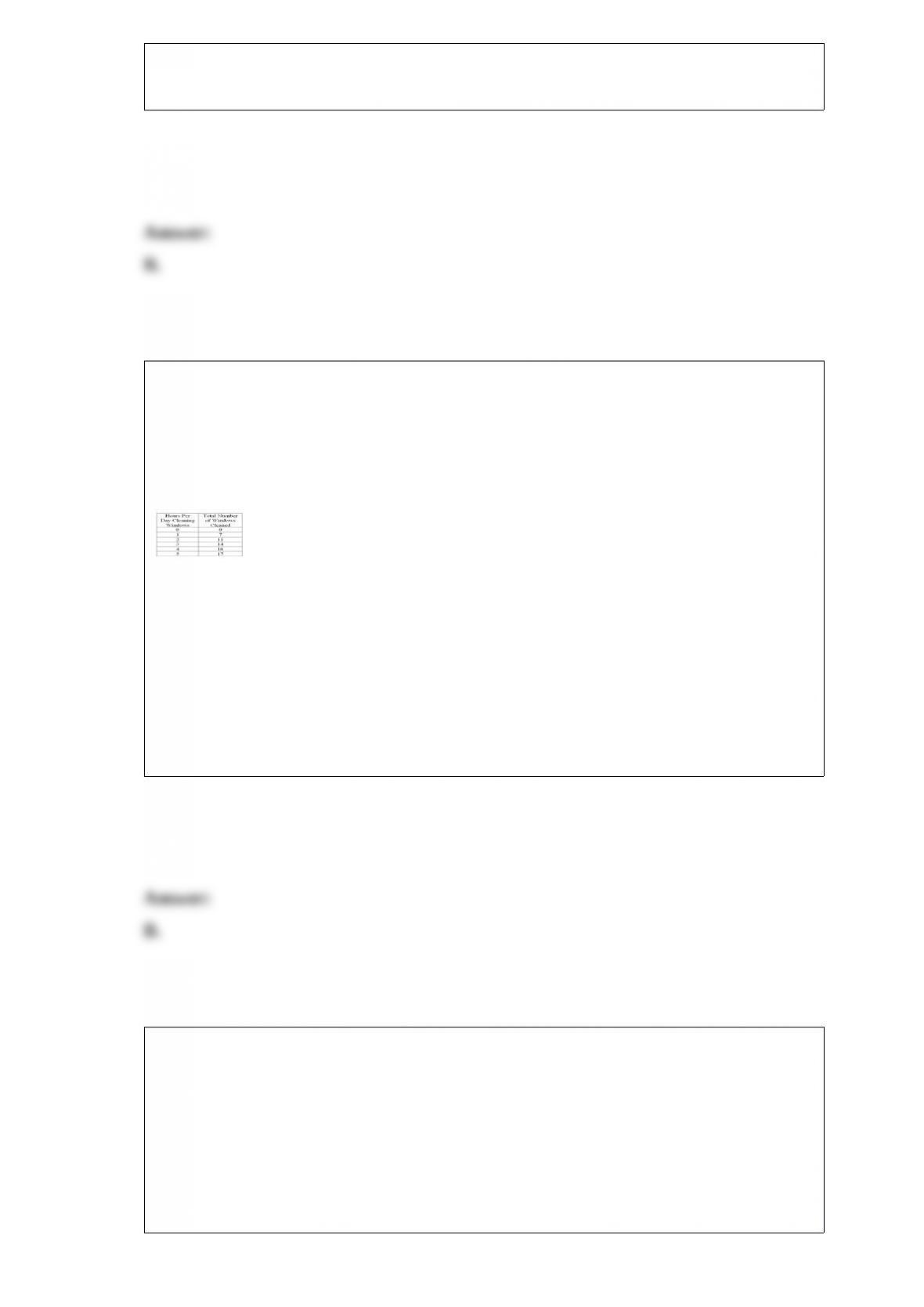
The small city of Pleasantville is considering building a public swimming pool that
costs $1,000. Each resident’s marginal benefit of the swimming pool is shown below. It
takes a 4/5 majority to pass any tax measure, and all residents must vote.
Kyle proposes that the city auction the right to build the pool to the highest-bidding
company. The winning company would be able to charge residents a one-time fee to use
the pool as much as they like, and only residents who pay the fee would be allowed to
use the pool. If the private company could perfectly price discriminate, then:
A. no private company would bid on the right to build the pool.
B. a private company would be willing to bid up to $490 to build the pool.
C. a private company would be willing to bid up to $1,000 to build the pool.
D. a private company would be willing to bid up to $1,490 to build the pool.
John is trying to decide how to divide his time between his job as a stocker in the local
grocery store, which pays $7 per hour for as many hours as he chooses to work, and
cleaning windows for the businesses downtown. He makes $2 for every window he
cleans. John is indifferent between the two tasks, and the number of windows he can
clean depends on how many hours he spends cleaning in a day, as shown in the table
below:
The first hour John spends cleaning windows costs him ______ that he could have
earned in the grocery store.
A. $2
B. $7
C. $14
D. $18
A study that deals with the salaries of university professors would be considered:
A. macroeconomics
B. microeconomics
C. economic naturalism
D. real economics
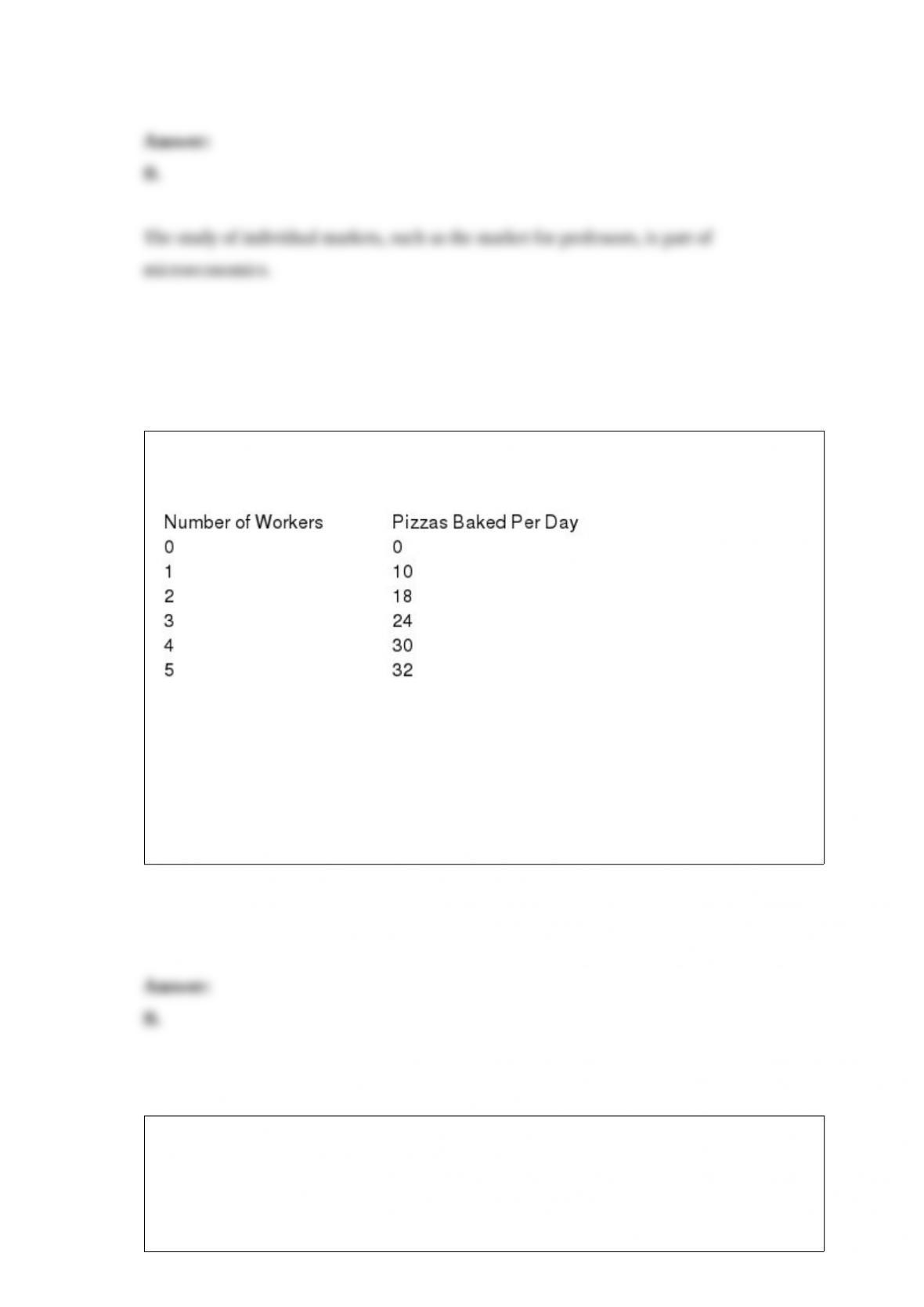
Production data for Joe’s Pizza Parlor are as follows. For simplicity assume that labor is
the only input. Each pizza sells for $5.
A. 1
B. 2
C. 3
D. 4
Growth of real GDP per person is totally determined by the growth of average:
A. labor productivity and the proportion of the population employed.
B. labor productivity and the proportion of the population in the labor force.

C. labor force participation and the share of income going to capital.
D. labor force participation and the share of the population employed.
In Macroland there is $1,000,000 in currency that can either be held by the public as
currency or deposited into banks. Banks’ desired reserve/deposit ratio is 10%. If the
public of Macroland decides to hold more currency, increasing the proportion they hold
from 50% to 75%, the money supply in Macroland will ______.
A. increase.
B. decrease.
C. remain the same.
D. either increase or decrease.
If the absolute value of the slope of the demand curve is 0.25, price is $8 per unit, and
quantity demanded is 12 units, then demand for this good is:
A. perfectly elastic.
B. elastic.
C. unit elastic.

D. inelastic.
______ is/are the market value of final goods and services produced within a country
during a given period of time.
A. GDP
B. Consumption
C. Value added
D. Transfer payments
Refer to the figure below. Private incentives in this market generate deadweight loss
equal to _______.
A. ½ × UW × LM
B. ½ × UV × LN

C. ½ × VW × LN
D. ½ × VW × KM
All of the following are ways to enhance central bank credibility except to:
A. announce inflation targets.
B. appoint inflation hawks as central bankers.
C. put no obligation on the central bank to finance the national deficit.
D. make central bank actions subject to frequent review and veto by the executive and
legislative branches of government.
Refer to the figure below. Suppose the dairy lobby convinces the government to impose
price controls in this market. If the government requires cheese to be sold for a price of
$8 per pound, total consumer surplus in the market would equal:
A. $20 per day

B. $60 per day
C. $80 per day
D. $120 per day
If Jane can produce 3 pairs of shoes per hour, while Bob can produce 2, then ______
has a(n) ______ advantage in producing shoes.
A. Jane; absolute
B. Jane; comparative
C. Bob; absolute
D. Bob; comparative
The following data show the relationship between the number of drivers who leave for
work at 8:00 a.m., their average commute time, and their marginal benefit of
commuting.

If commuters view highway use as having a price of zero, then one can predict that
______ drivers will leave for downtown at 8:00 am.
A. 500
B. 400
C. 300
D. 200
The interest rate that commercial banks charge each other for very short-term loans is
called the:
A. prime rate.
B. federal funds rate.
C. Federal Reserve discount rate.
D. commercial paper rate.
Suppose that Chris had been charging $1.00 per pound for potatoes. When Chris
lowered the price to $0.90 per pound, his total revenue fell. When Chris raised the price
to $1.10, total revenue also fell. Which of the following could explain this?
A. $1.00 is the equilibrium price for potatoes.
B. At 90 cents, there is excess demand for potatoes.
C. $1.10 is more than Chris’s customers’ reservation prices.
D. The price elasticity of demand for potatoes is 1 at a price of $1.00 per pound.
The introduction of a new technology that increases the productivity of labor will:
A. increase the supply of labor.
B. decrease the supply of labor.
C. increase the demand for labor.
D. decrease the demand for labor
Adam Smith’s theory of the invisible hand posits that the most efficient allocation of
resources is often achieved by:
A. reducing economic inequality.
B. government intervention in the market.
C. collective action.
D. the actions of independent, self-interested buyers and sellers.
Saving to meet long-term objectives-such as retirement, college attendance, or to
purchase a home,-is called ______ saving.
A. public
B. bequest
C. precautionary
D. life-cycle
Consider the labor market below.
In the absence of any government intervention, the equilibrium wage is______ per

hour, and the equilibrium employment level is______ workers per hour.
A. $12; 600
B. $12; 200
C. $8; 400
D. $4; 200
Suppose that in most car collisions between cars of unequal size, the smaller car
sustains the most damage and its occupants suffer the most injury. In answering the
following question, assume that, on average, smaller cars generate less air pollution
than larger cars and that every person in the economy drives at least one car. In deciding
what kind of car to buy, individuals:
A. will fully internalize the safety benefit to others of driving a small car.
B. will fully internalize the full cost of the air pollution caused by larger cars.
C. will have a strong incentive buy large cars because large cars are safer than small
cars.
D. not consider their own safety in deciding what kind of car to buy.
If the demand curve for a good is a vertical line at Q = 1, then a decrease in the price of
that good will:
A. decrease the quantity demanded.
B. increase the quantity demanded.
C. lead the quantity demanded to fall to zero.
D. not change the quantity demanded.
There is ______ connection between the strength of a country’s currency and the
strength of its ______.
A. no simple; economy
B. a direct; economy
C. an inverse; central bank independence
D. a solid; real wage growth
Assume one investor bought a 10-year inflation-protected bond with a fixed annual real
rate of 1.5% and another investor bought a 10-year bond without inflation protection
with a nominal annual return of 4.2%. If inflation over the 10-year period averaged 3%,
which investor earned a higher real return?
A. The investor who purchased the inflation protected bond.
B. The investor who purchased the bond without inflation protection.
C. Both investors earned the same real return.
D. Neither investor earned a positive real return.
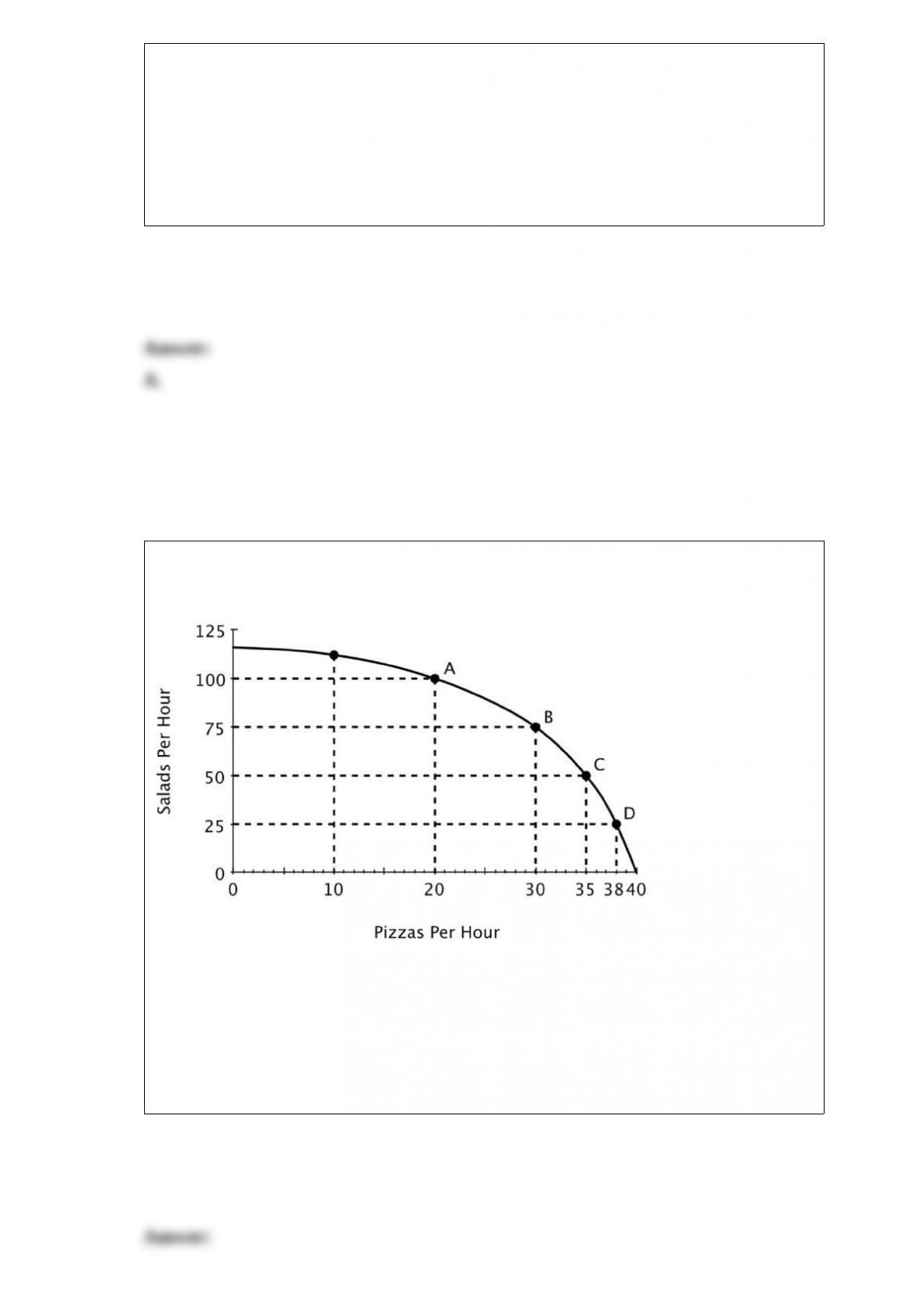
Refer to the figure below. If this restaurant goes from producing 20 to 25 pizzas per
hour, then which of the following statements is true?
A. It has to give up exactly 25 salads.
B. It has to give up more than 12.5 salads.
C. It has to give up exactly 12.5 salads.
D. It has to give up fewer than 12.5 salads.

According to the textbook, middlemen:
A. add no value to economic activity.
B. only add value if the consumer gets a good deal.
C. only add value to themselves.
D. provide value through information and coordination.