
A decrease in the price of large tractors imported into the United States from Russia
a. leaves the GDP deflator unchanged but decreases the consumer price index.
b. decreases the GDP deflator but leaves the consumer price index unchanged.
c. decreases both the GDP deflator and the consumer price index.
d. leaves both the GDP deflator and the consumer price index unchanged.
The saying “Money is a veil.” means that
a. while nominal variables are the first thing we may observe about an economy, what’s
important are the real variables and the forces that determine them.
b. money is the principal medium of exchange in most economies.
c. the primary determinant of short-run economic fluctuations is not real variables, but
rather changes in the money supply.
d. in the long run money is of no importance to the determination of either real or
nominal variables.
If a bushel of wheat costs $6.40 in the United States, costs 40 pesos in Mexico, and the
nominal exchange rate is 10 pesos per dollar, then the real exchange rate is
a. 1.60

b. 1.25
c. 0.625
d. None of the above is correct.
During recessions, automatic stabilizers tend to make the government’s budget
a. move toward deficit.
b. move toward surplus.
c. move toward balance.
d. not necessarily move the budget in any particular direction.
Suppose that the central bank must follow a rule that requires it to increase the money
supply when the price level falls and decrease the money supply when the price level
rises. If the economy starts from long-run equilibrium and aggregate demand shifts
right, the central bank must
a. decrease the money supply, which will move output back towards its long-run level.
b. decrease the money supply, which will move output farther from its long-run level.
c. increase the money supply, which will move output back towards its long-run level.

d. increase the money supply, which will move output farther from its long-run level.
The fact that borrowers sometimes default on their loans by declaring bankruptcy is
directly related to the characteristic of a bond called
a. credit risk.
b. interest risk.
c. term risk.
d. private risk.
During the Great Depression in the early 1930s,
a. bank runs closed many banks.
b. the money supply rose sharply.
c. the Fed decreased reserve requirements.
d. both a and b are correct.
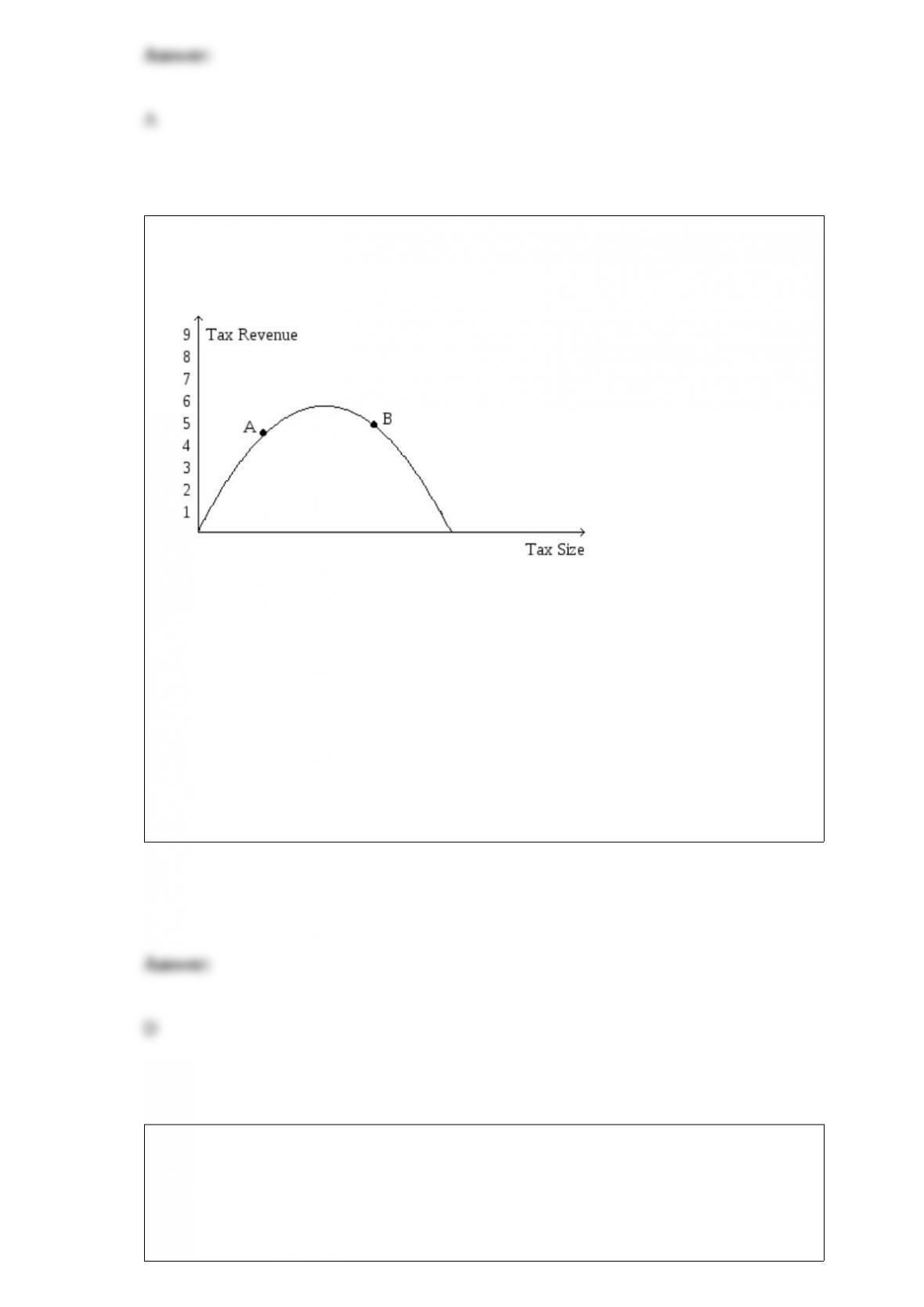
Figure 8-19. The figure represents the relationship between the size of a tax and the tax
revenue raised by that tax.
Refer to Figure 8-19. According to a recent research paper published by the European
Central Bank, which two countries are at a point such as point B if the tax in question is
the tax on capital income?
a. the U.S. and the U.K.
b. France and Germany
c. Italy and Spain
d. Denmark and Sweden
For markets to work well, there must be
a. market power.
b. a central planner.
c. property rights.
d. abundant, not scarce, resources.
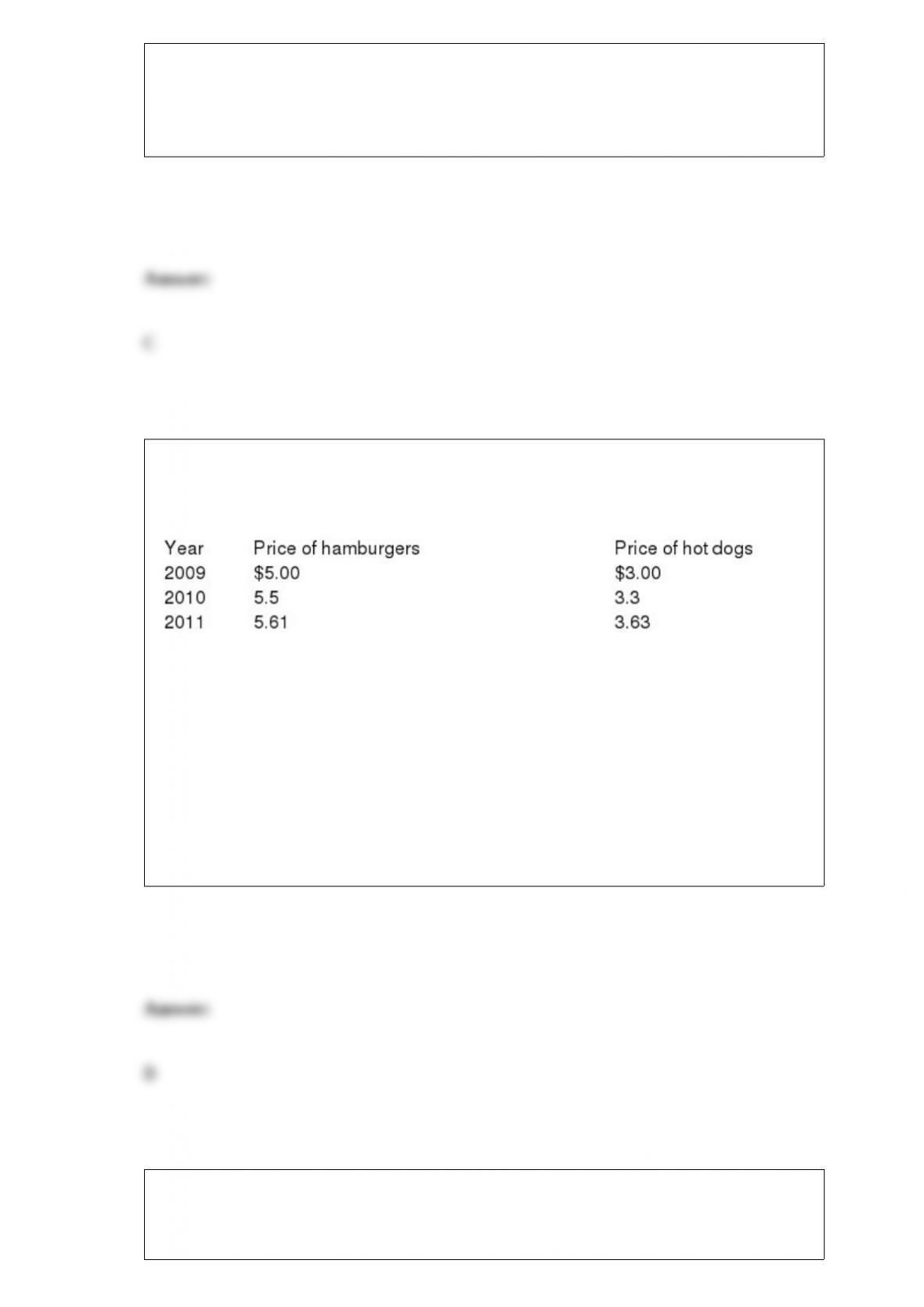
Table 11-6. The table below applies to an economy with only two goods hamburgers
and hot dogs. The fixed basket consists of 4 hamburgers and 8 hot dogs.
Refer to Table 11-6. If the base year is 2010, then the economy’s inflation rate in 2010
is
a. 8 percent.
b. 10 percent.
c. 10.91 percent.
d. 11.11 percent.
Four employers have justified their actions as follows. Whose logic is not consistent
with the logic of efficiency wage theory?

a. Jay develops a new assembly line technology that limits the amount of shirking
workers can do, so he reduces what he pays his employees so as to make it closer to the
equilibrium wage.
b. Kay pays her workers less than the equilibrium wage so they won’t have the time or
money to look for work somewhere else.
c. Ray pays his workers in a developing country more than the going wage hoping that
they will get a better diet and so be more productive.
d. None of the above is consistent with the logic of efficiency wage theory.
Suppose a stock market boom makes people feel wealthier. The increase in wealth
would cause people to desire
a. increased consumption, which shifts the aggregate-demand curve right.
b. increased consumption, which shifts the aggregate-demand curve left.
c. decreased consumption, which shifts the aggregate-demand curve right.
d. decreased consumption, which shifts the aggregate-demand curve left.
Table 11-4
The table below pertains to Wrexington, an economy in which the typical consumer’s
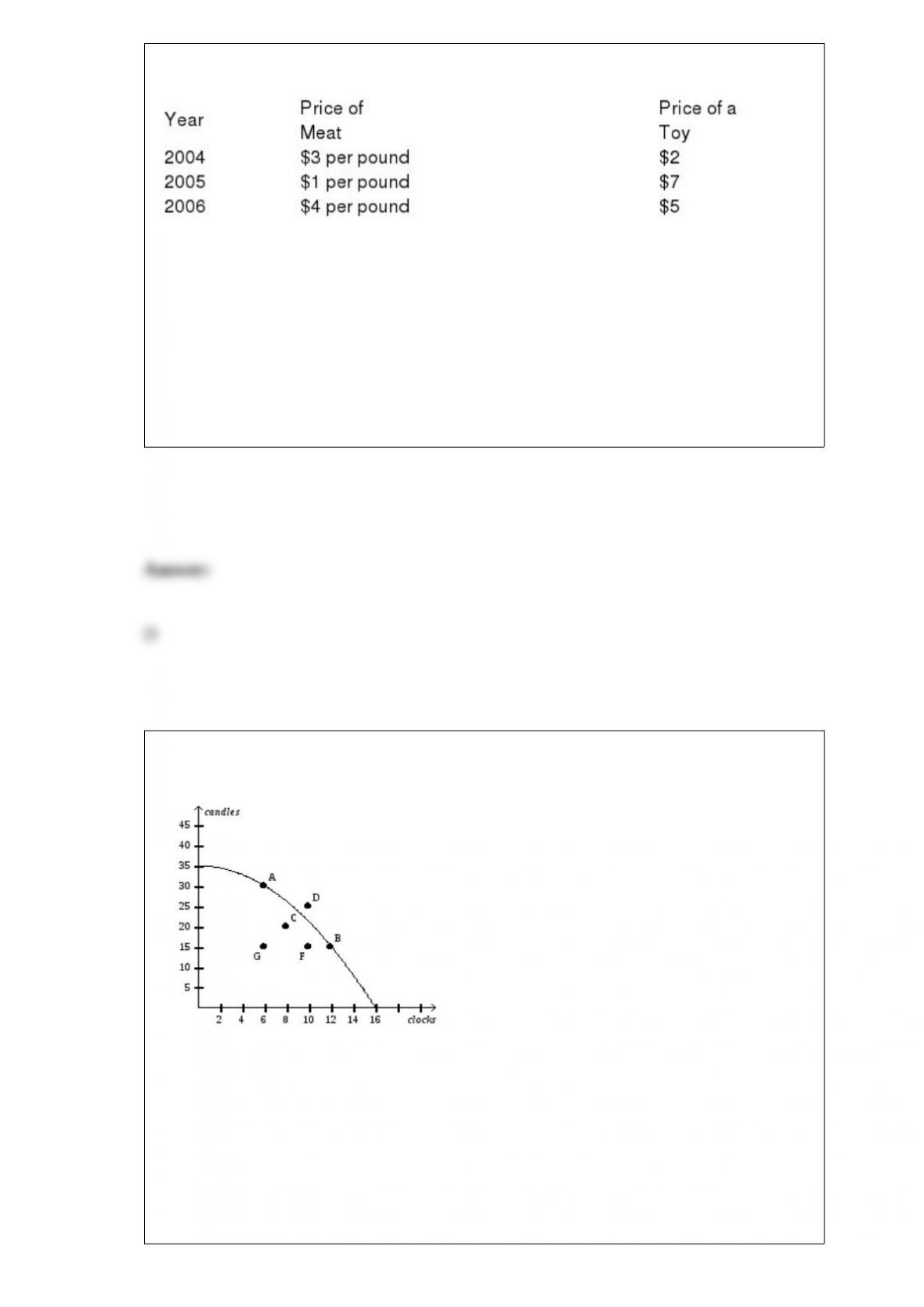
basket consists of 20 pounds of meat and 10 toys.
Refer to Table 11-4. If the base year is 2004, then the CPI in 2004 was
a. 0.
b. 1.
c. 80.
d. 100.
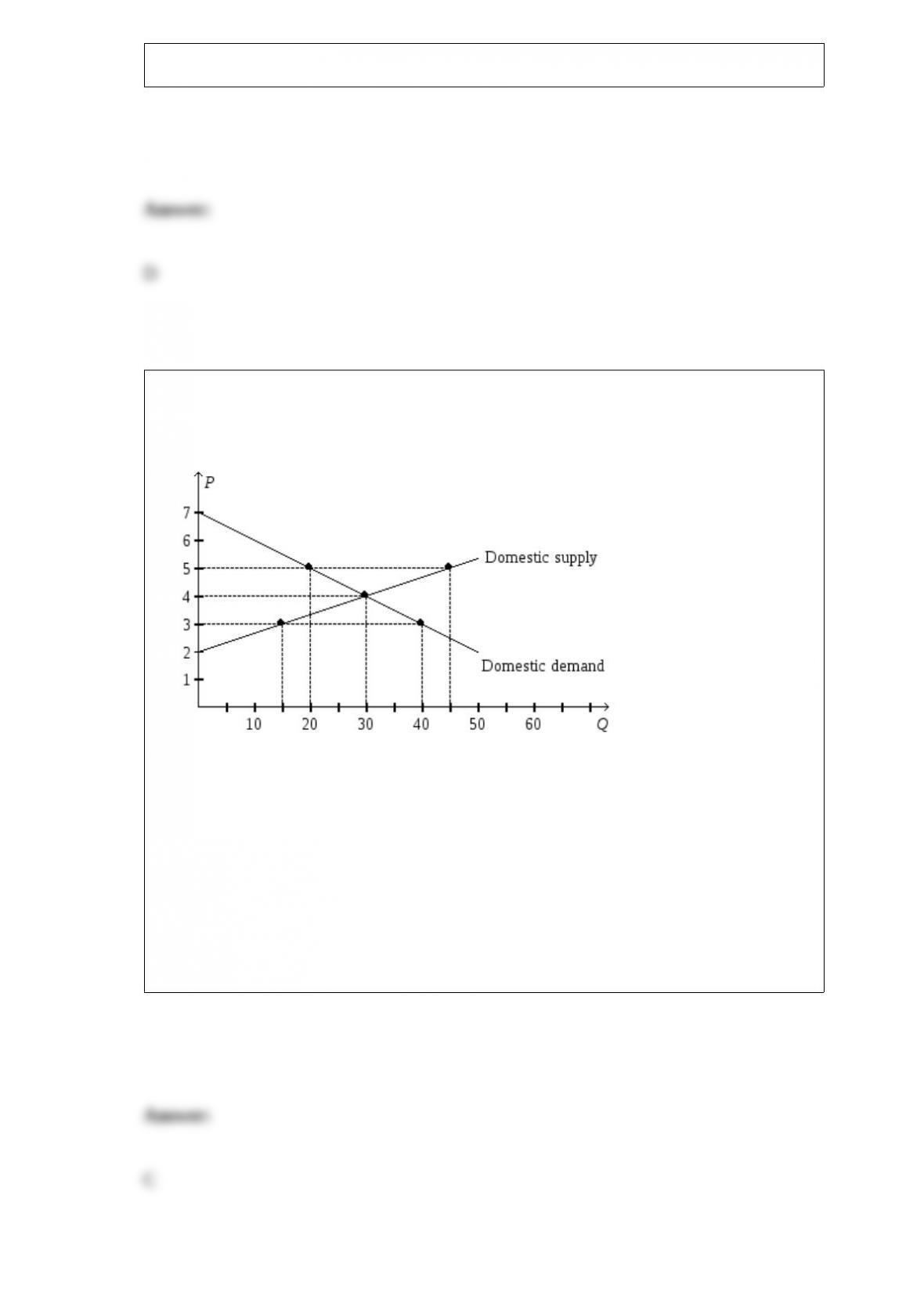
Figure 2-6
Refer to Figure 2-6. What is the opportunity cost of moving from point A to point B?
a. zero
b. 6 clocks
c. 6 clocks and 15 candles
d. 15 candles
Figure 9-18. On the diagram below, Q represents the quantity of peaches and P
represents the price of peaches. The domestic country is Isoland.
Refer to Figure 9-18. If Isoland allows international trade, then it will be an exporter of
peaches if and only if the world price of peaches is
a. above $2.
b. below $4.
c. above $4.
d. below $7.
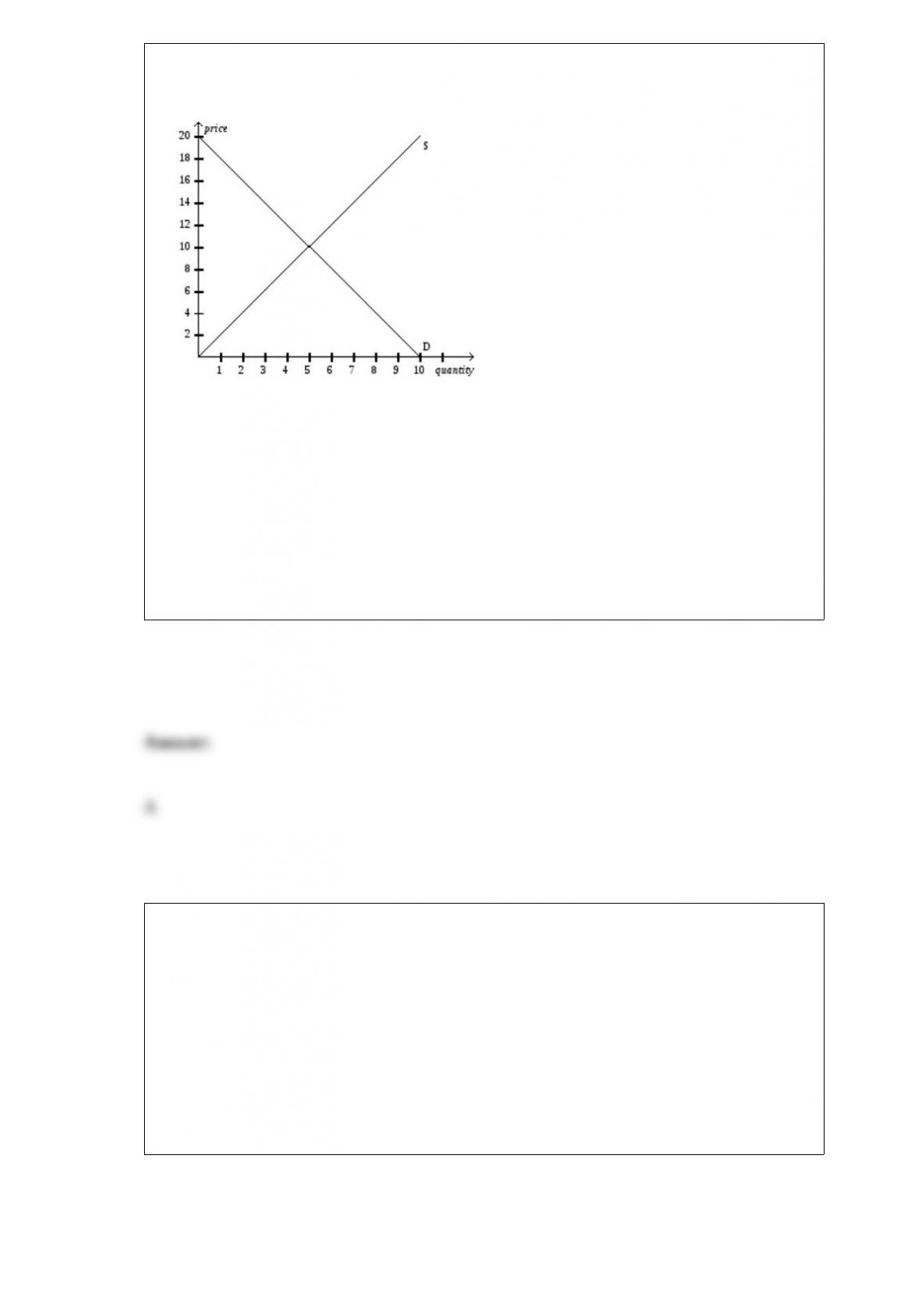
Figure 4-18
Refer to Figure 4-18. What is the equilibrium quantity in this market?
a. 5 units
b. 7.5 units
c. 10 units
d. The equilibrium quantity cannot be determined from this graph.
Which of the following is a determinant of the market supply curve but not a
determinant of an individual seller’s supply?
a. production technology
b. expectations
c. input prices
d. the number of sellers

Five hundred units of good x are currently bought and sold. The marginal buyer is
willing to pay $40 for the 500th unit, and the cost to the marginal seller is $35 for the
500th unit. We know that
a. the equilibrium price of good x is somewhere between $35 and $40.
b. the equilibrium quantity of good x exceeds 500 units.
c. 500 units is not an efficient quantity of good x.
d. All of the above are correct.
At the end of 2003, the government had a debt of about $3,924 billion. During 2004,
real GDP grew by about 4.2 percent and inflation was about 2.6 percent. About what is
the largest deficit the government could have run without raising the debt-to-GDP ratio?
a. About $63 billion.
b. About $165 billion.
c. About $267 billion.
d. About $429 billion.

A leftward shift of a supply curve is called a(n)
a. increase in supply.
b. decrease in supply.
c. decrease in quantity supplied.
d. increase in quantity supplied.
Which of the following would reduce the natural rate of unemployment?
a. both an increase in the rate of money growth and increased unemployment
compensation
b. an increase in the rate of money growth but not increased unemployment
compensation
c. an increase in unemployment compensation but not an increase in the rate of money
growth.
d. neither an increase in unemployment compensation nor an increase in the rate of
money growth.
Which of the following would cause prices to fall and output to rise in the short run?

a. short-run aggregate supply shifts right
b. short-run aggregate supply shifts left
c. aggregate demand shifts right
d. aggregate demand shifts left
The demand for Godiva pumpkin truffles is likely quite elastic because
a. truffles melt easily.
b. this particular type of chocolate is viewed as a necessity by many chocolate lovers.
c. the market is broadly defined.
d. other types of chocolate are good substitutes for this particular flavor.
Suppose a tax of $0.10 per unit on a good creates a deadweight loss of $100. If the tax
is increased to $0.25 per unit, the deadweight loss from the new tax would be
a. $200.
b. $250.
c. $475.

d. $625.
If you put $250 into an account with a 4 percent interest rate, how many years would
you have to wait to have $432.92?
a. 10
b. 14
c. 17
d. 20
When the U.S. real interest rate falls, owning U.S. assets becomes
a. less attractive and so U.S. net capital outflow rises.
b. less attractive and so U.S. net capital outflow falls.
c. more attractive and so U.S. net capital outflow rises.
d. more attractive and so U.S. net capital outflow falls.
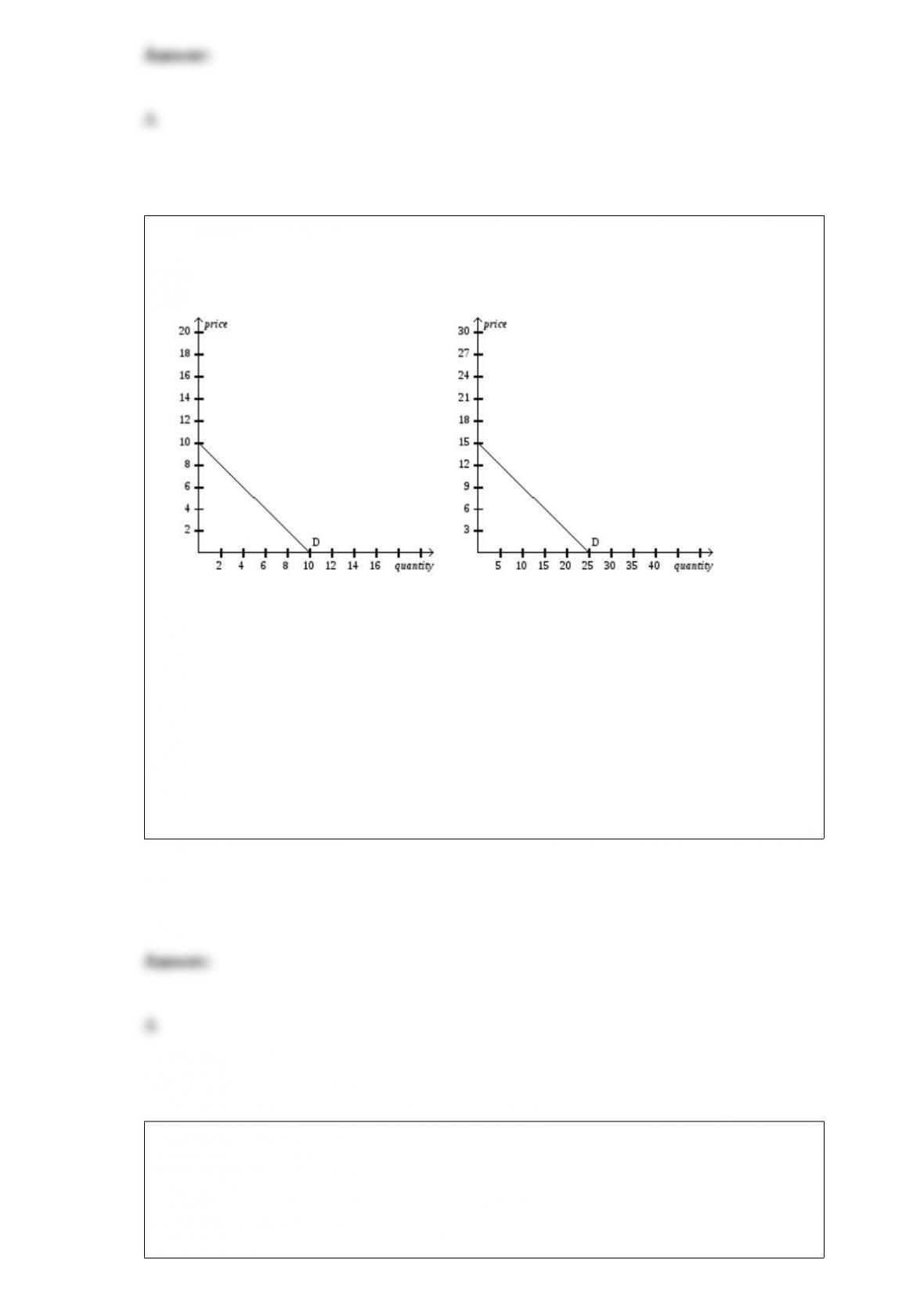
Figure 4-3
Consumer 1 Consumer 2
Refer to Figure 4-3. If these are the only two consumers in the market, then the market
quantity demanded at a price of $15 is
a. 0 units.
b. 10 units.
c. 15 units.
d. 25 units.
Suppose the price elasticity of supply for minivans is 0.3 in the short run and 1.2 in the
long run. If an increase in the demand for minivans causes the price of minivans to
increase by 5%, then the quantity supplied of minivans will increase by about
a. 1.5% in the short run and 6% in the long run.
b. 6% in the short run and 1.5% in the long run.
c. 16.7% in the short run and 2% in the long run.
d. 4.2% in the short run and 7% in the long run.
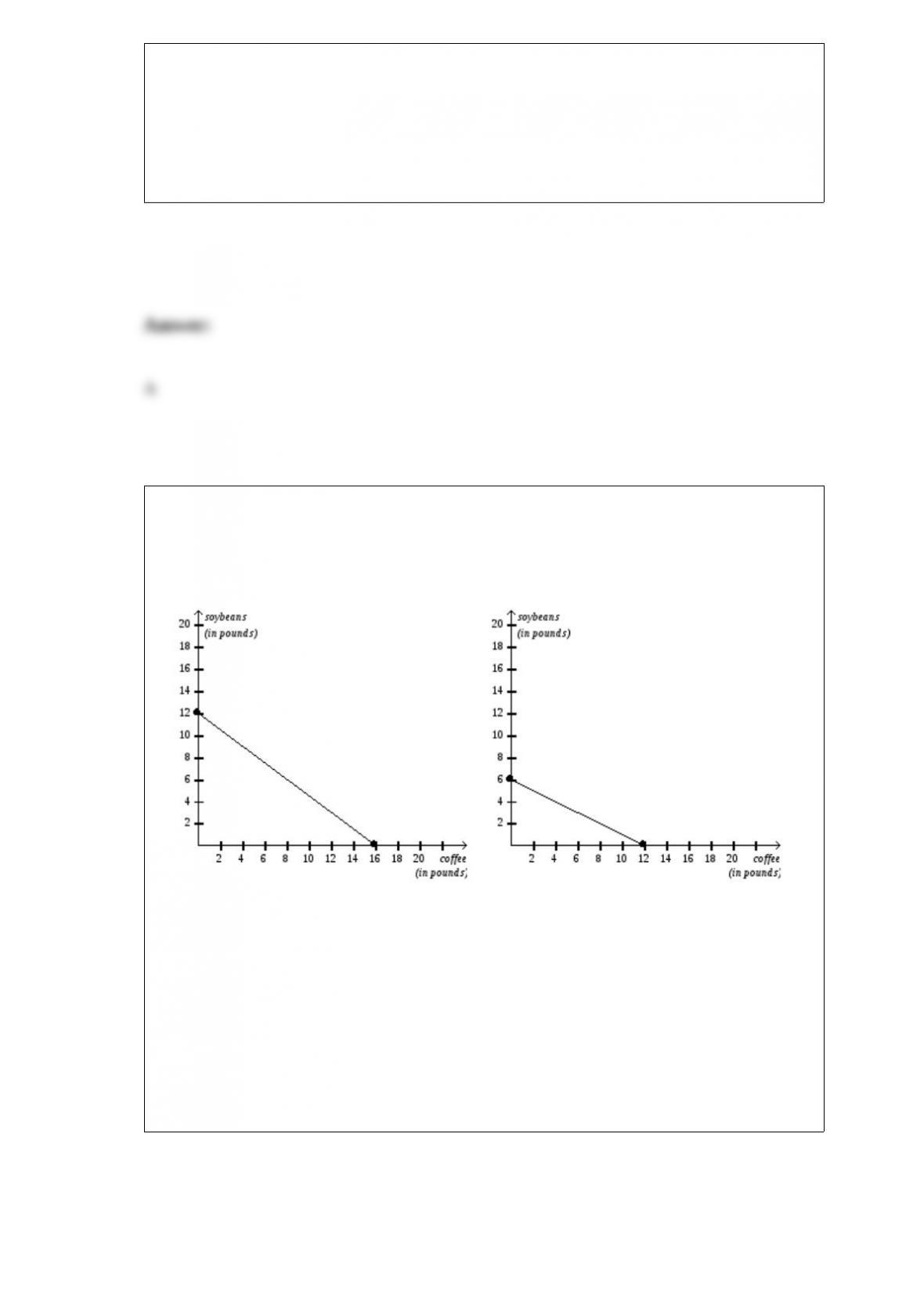
Figure 3-8
Chile’s Production Possibilities Frontier Colombia’s Production Possibilities
Frontier
Refer to Figure 3-8. Chile would incur an opportunity cost of 36 pounds of coffee if it
increased its production of soybeans by
a. 12 pounds.
b. 27 pounds.
c. 30 pounds.
d. 48 pounds.
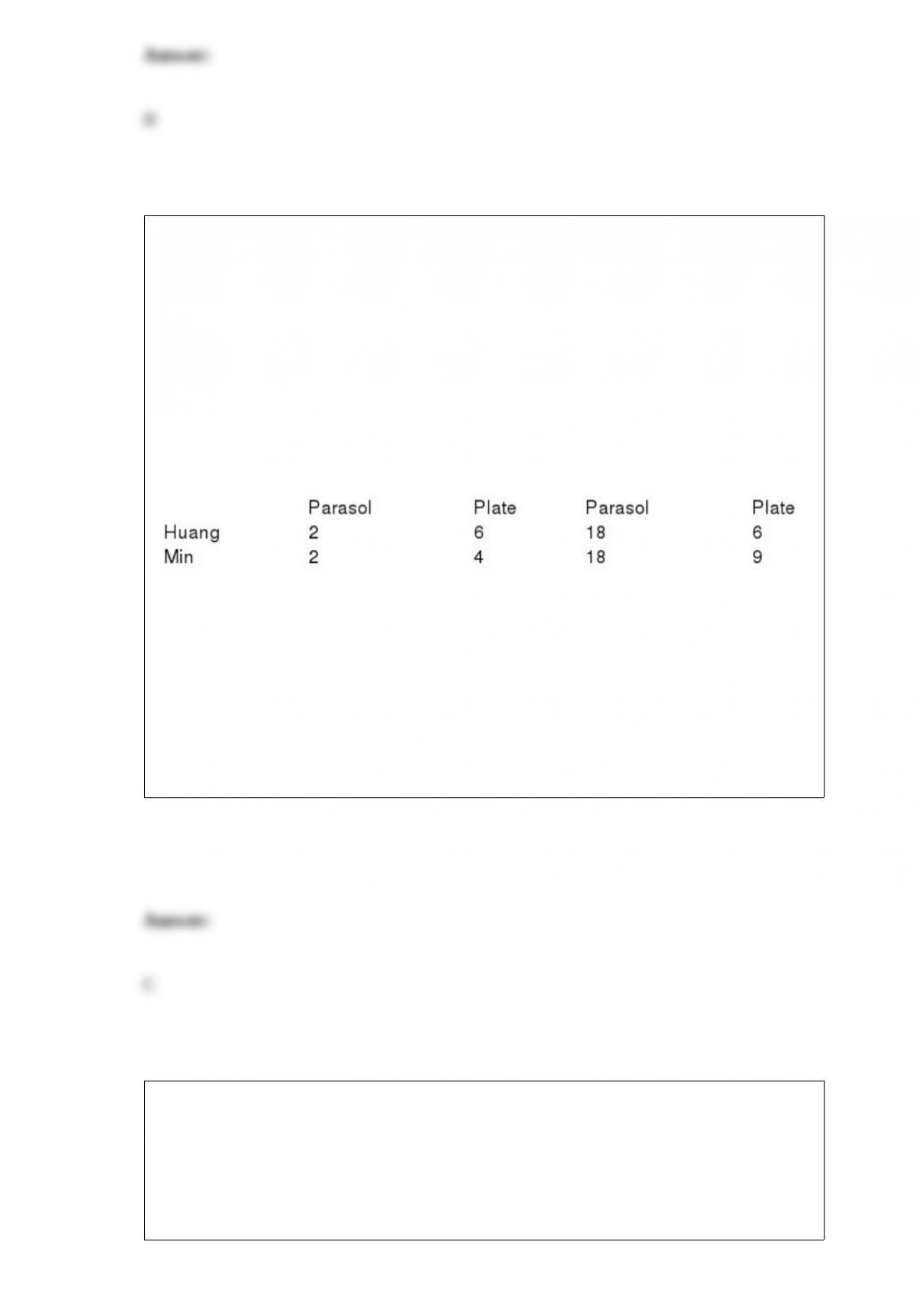
Table 3-8
Assume that Huang and Min can switch between producing parasols and producing
porcelain plates at a constant rate.
Labor Hours Needed
to Make 1 Quantity Produced
in 36 Hours
Refer to Table 3-8. The opportunity cost of 1 plate for Min is
a. 1/3 parasol.
b. 1/2 parasol.
c. 2 parasols.
d. 3 parasols.
Which of the following shifts both short-run and long-run aggregate supply left?
a. a decrease in the actual price level
b. a decrease in the expected price level
c. a decrease in the capital stock
d. a decrease in the money supply
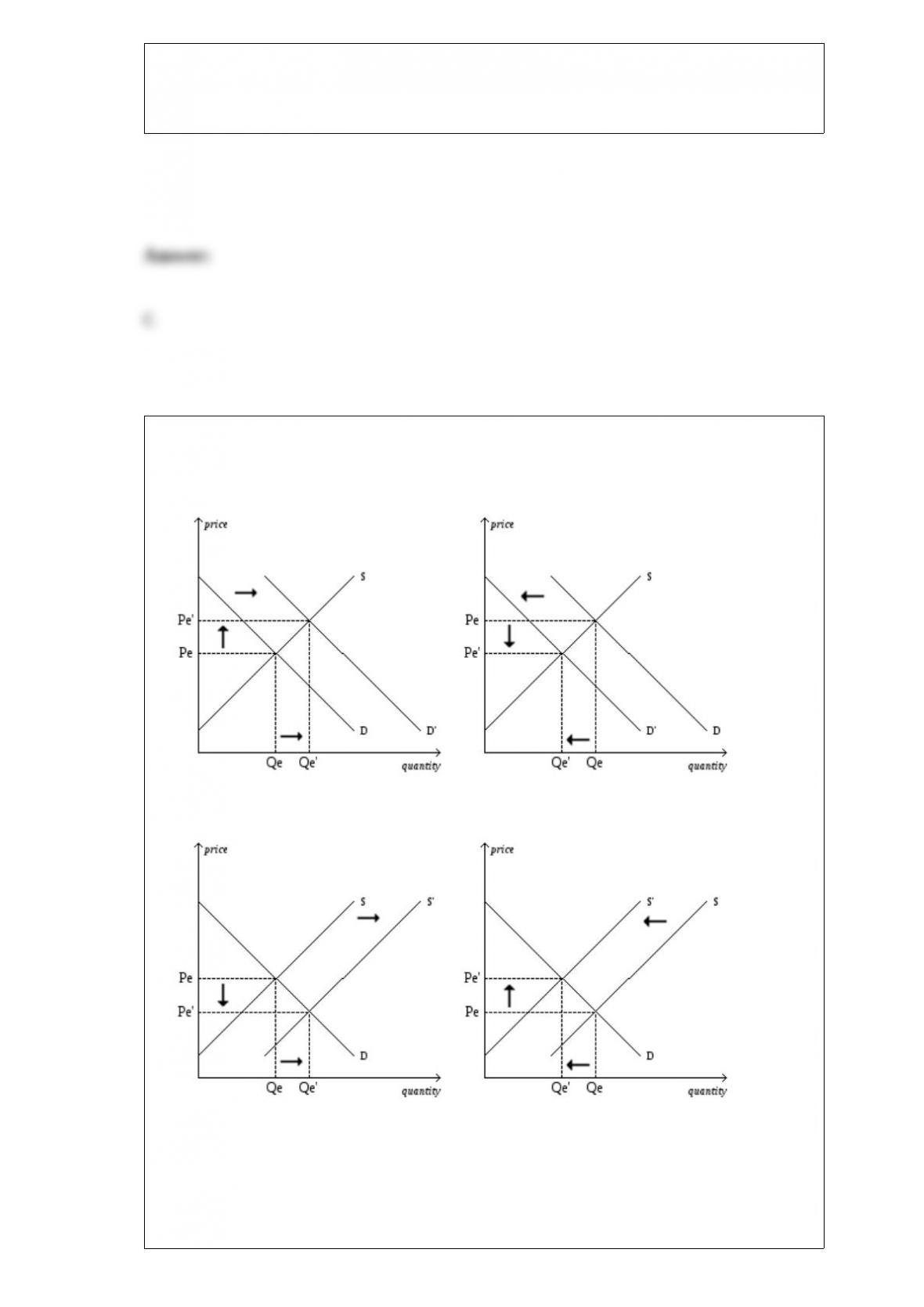
Figure 4-22
Panel (a) Panel (b)
Panel (c) Panel (d)
Refer to Figure 4-22. Panel (c) shows which of the following?
a. an increase in demand and an increase in quantity supplied
b. an increase in demand and an increase in supply

c. an increase in quantity demanded and an increase in quantity supplied
d. an increase in quantity demanded and an increase in supply
In a closed economy, national saving equals
a. investment.
b. income minus the sum of consumption and government purchases.
c. private saving plus public saving.
d. All of the above are correct.
Which of the following causes of unemployment is not associated with a wage rate
above the market equilibrium level?
a. efficiency wages
b. job search
c. minimum-wage laws
d. unions
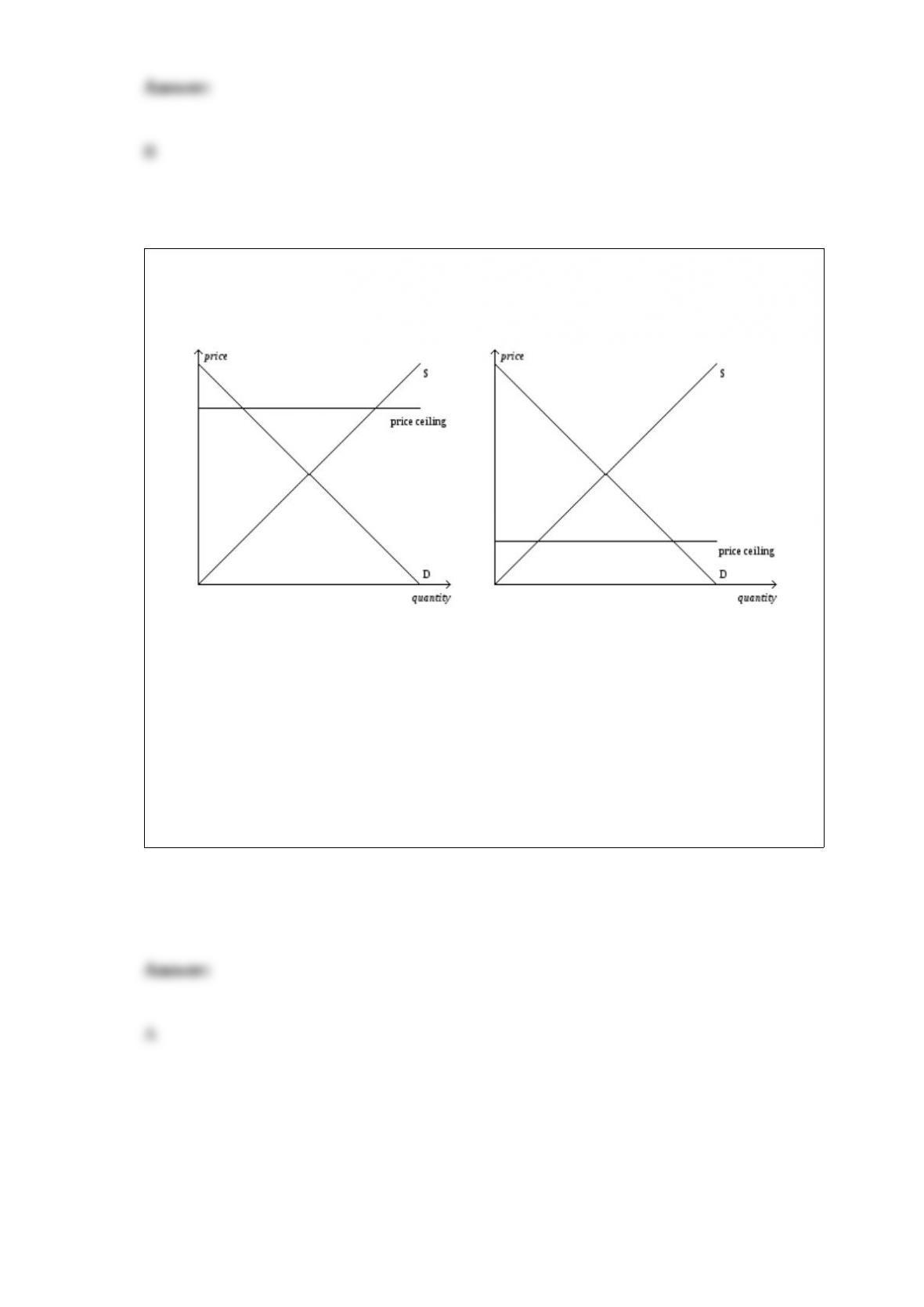
Figure 6-1
Panel (a) Panel (b)
Refer to Figure 6-1. The price ceiling shown in panel (a)
a. is not binding.
b. creates a surplus.
c. creates a shortage.
d. Both a) and b) are correct.