1) At equilibrium real GDP in a private closed economy:
A.the MPC must equal the APC.
B.the slope of the aggregate expenditures schedule equals the MPS.
C.aggregate expenditures and real GDP are equal.
D.planned saving and consumption are equal.
2) in the past several decades u.s. health care expenditures have:
a.risen absolutely, but declined as a percentage of gdp.
b.declined absolutely, but risen as a percentage of gdp.
c.risen absolutely and as a percentage of gdp.
d.declined absolutely and as a percentage of gdp.
3) On a diagram where the interest rate and the quantity of money demanded are shown
on the vertical and horizontal axes respectively, the asset demand for money can be
represented by:
A.a line parallel to the horizontal axis.
B.a vertical line.
C.a downsloping line or curve from left to right.
D.an upsloping line or curve from left to right.
4) in terms of absolute dollar volume, the world’s leading export nations are:
a.germany, the united states, and china.
b.the united states, japan, and canada.
c.japan, china, and great britain.
d.japan, the united states, and france.
5) Present consumption supported by large trade deficits may come at the expense of:
A.permanent debt to foreign interests.
B.permanent foreign ownership of formerly U.S. owned assets.
C.large sacrifices of future consumption.
D.all of these.
6) The study of how people deal with energy scarcity is known as:
A.power economics.
B.utility economics.
C.energy economics.
D.natural resource economics.
7) Price fixing is considered to be a per se violation of the antitrust laws because:
A.a guilty verdict requires proof of injury to consumers.
B.a guilty verdict requires proof of injury to other competitors.
C.the rule of reason is applicable.
D.a guilty verdict requires proof that the activity was attempted, not that it unreasonably
restrained trade.
8) (Last Word) Suppose you deposit $5,000 in a bank which pays 10 percent interest
compounded twice a year. The actual annual interest rate you receive is:
A.10 percent.
B.11 percent.
C.10.25 percent.
D.12 percent.
9)
refer to the above diagram that shows the market for u.s. health care. other things equal,
which of the following would shift the demand curve for medical care from d1 to d2?
a.higher copayments and deductibles in insurance policies.
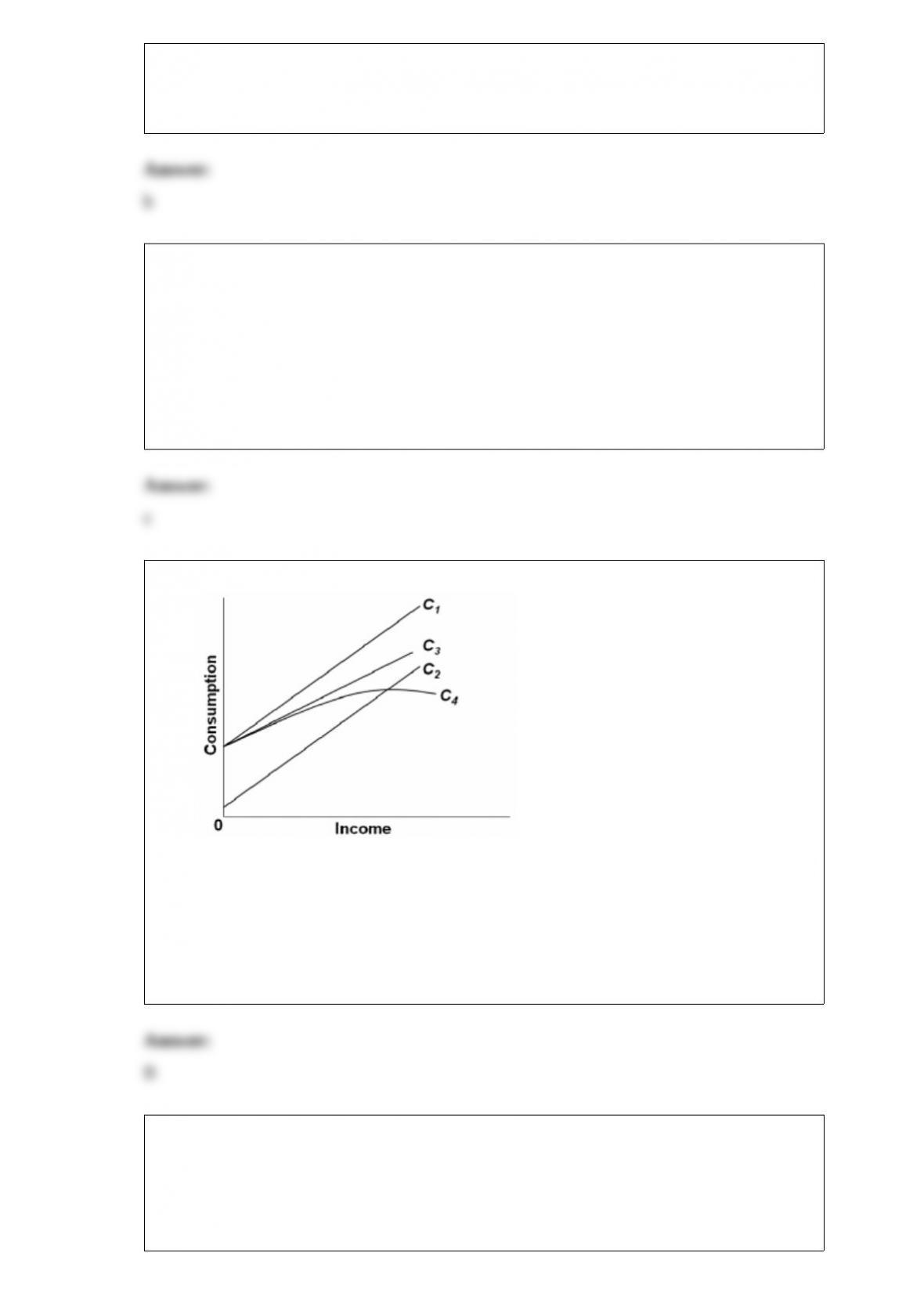
b.an aging population.
c.cutbacks in the government’s medicaid program.
d.restrictions by firms on the eligibility of part-time workers for medical benefits.
10) ebenezer likes to decorate the exterior of his house for the christmas holidays. if his
neighbors enjoy the display then it has created:
a.a negative externality, and government should respond by subsidizing holiday
displays.
b.a negative externality, and government should respond by taxing holiday displays.
c.a positive externality, and government should respond by subsidizing holiday
displays.
d.a positive externality and government should respond by taxing holiday displays.
11)
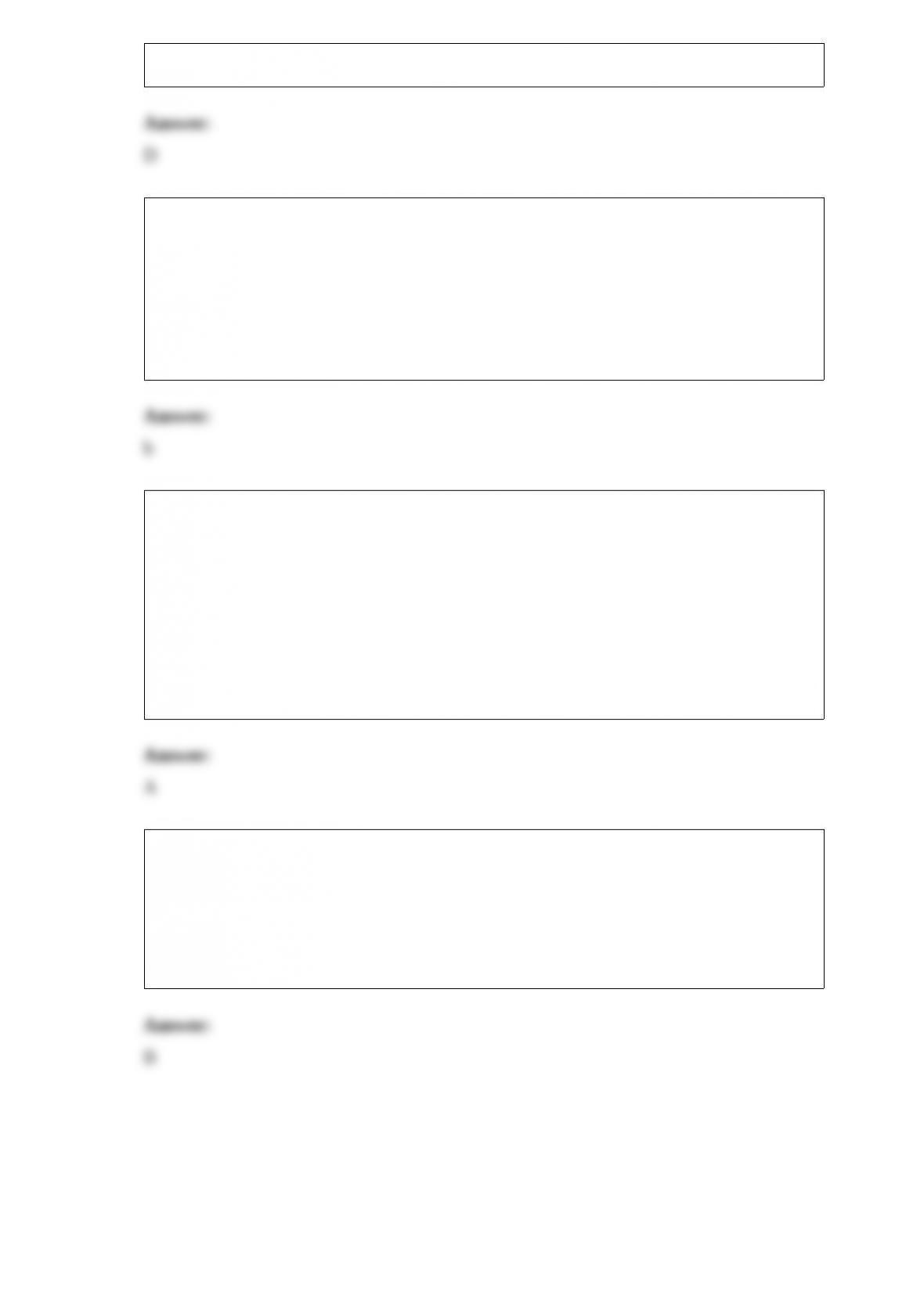
(Advanced analysis) Refer to the above diagram, in which C1 is the before-tax
consumption schedule. The consumption schedule represented by C3 reflects:
A.a progressive tax system.
B.a proportional tax system.
C.a regressive tax system.
D.a higher MPC than is embodied in C1.
12) If technology dictates that labor and capital must be used in fixed proportions, an
increase in the price of capital will cause a firm to use:
A.more labor as a consequence of the substitution effect.
B.more labor as a consequence of the output effect.
C.less labor as a consequence of the substitution effect.
D.less labor as a consequence of the output effect.
13) in recent years the economy of japan has grown, despite the fact that the population
of japan has declined. which of the following would best explain japan’s economic
growth despite having a smaller population?
a.immigration of new workers into japan.
b.advancements in technology that make labor more productive.
c.reduced employment of capital because fewer workers are available to use it.
d.greater consumption of goods imported from other countries.
14) Changes in the equilibrium interest rate will:
A.affect both the size of the domestic output and the allocation of capital goods among
industries.
B.affect the size of the domestic output, but not the allocation of capital goods among
industries.
C.affect the allocation of capital goods among industries, but not the size of the
domestic output.
D.have no perceptible effect on either the size of the domestic output or the allocation
of capital goods among industries.
15) The Earned Income Tax Credit:
A.increases the personal income tax liability of low-income working families.
B.provides a cash payment to low-income working families if their tax credit exceeds
their tax liability.
C.is designed to make labor force employment less attractive.
D.was eliminated as part of welfare reform in 1996.
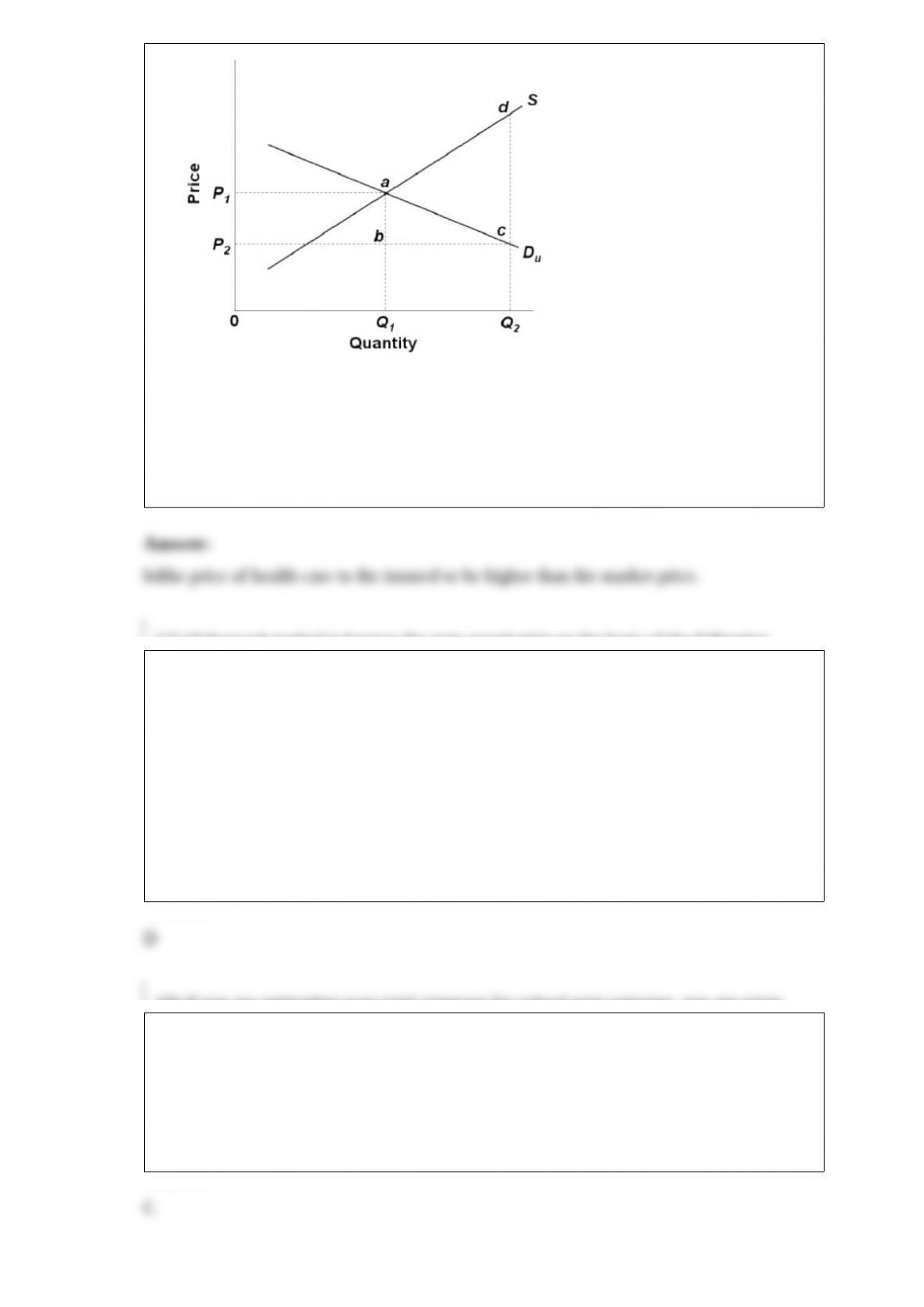
16)
refer to the above demand and supply diagram that relates to the health care market. if
suppliers provide whatever quantity of health care is demanded, health care insurance
causes:
a.resources to be underallocated to the health care industry.
b.resources to be overallocated to the health care industry.
c.health care to be underconsumed.
17) (Advanced analysis) Answer the next question(s) on the basis of the following
consumption and investment data for a private closed economy. Figures are in billions
of dollars.
C = 60 + .6Y
I = I0 = 30
Refer to the above data. In equilibrium the level of consumption spending will be:
A.170.
B.270.
C.160.
D.195.
18) If you are estimating your total expenses for school next semester, you are using
money primarily as:
A.a medium of exchange.
B.a store of value.
C.a unit of account.
D.an economic investment.