
1) what percentage of the u.s. adult population has a college or postcollege education
(as of 2007)?
a.8 percent
b.29 percent
c.41 percent
d.75 percent
2) The total supply of land is:
A.upsloping.
B.perfectly elastic.
C.perfectly inelastic.
D.greater in the short run than in the long run.
3) Which of the monetary policy tools can alter both the level of excess reserves and the
money multiplier?
A.open market operations
B.the reserve ratio
C.the discount rate
D.the federal funds rate
4) One implication of efficiency wages is that:
A.labor turnover is reduced as wages are reduced.
B.the market-clearing wage always exceeds the efficiency wage.
C.worker productivity falls as wage rates rise beyond the equilibrium wage.
D.if the efficiency wage exceeds the market-clearing wage, permanent unemployment
may result.
5) Harry owns a barber shop and charges $6 per haircut. By hiring one barber at $10 per
hour the shop can provide 24 haircuts per 8-hour day. By hiring a second barber at the
same wage rate the shop can now provide a total of 42 haircuts per day.
Refer to the above information. The MRP of the second barber:
A.is 18 haircuts.
B.is $108.
C.is 42 haircuts.
D.is $126.
6) Data on education and earnings reveal:
A.negative age-earnings profiles for male workers.
B.no relationship between the two.
C.a positive relationship between the two.
D.a negative relationship between the two.
7) examples of command economies are:
a.the united states and japan.
b.sweden and norway.
c.mexico and brazil.
d.cuba and north korea.
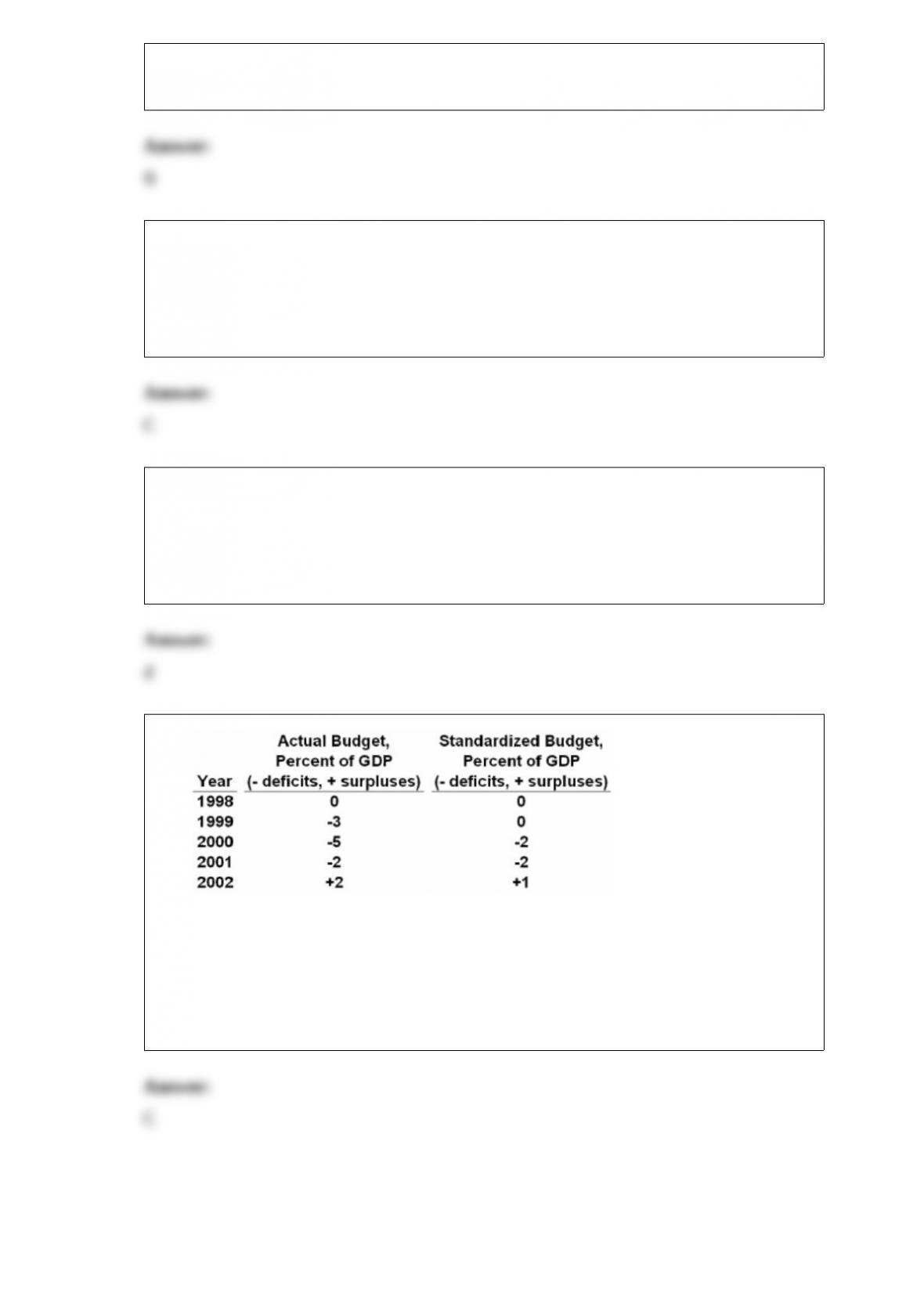
8)
Refer to the above data for a fictional economy. The changes in the budget conditions
between 1998 and 1999 best reflect:
A.demand-pull inflation.
B.an expansionary fiscal policy.
C.a recession.
D.a contractionary fiscal policy.
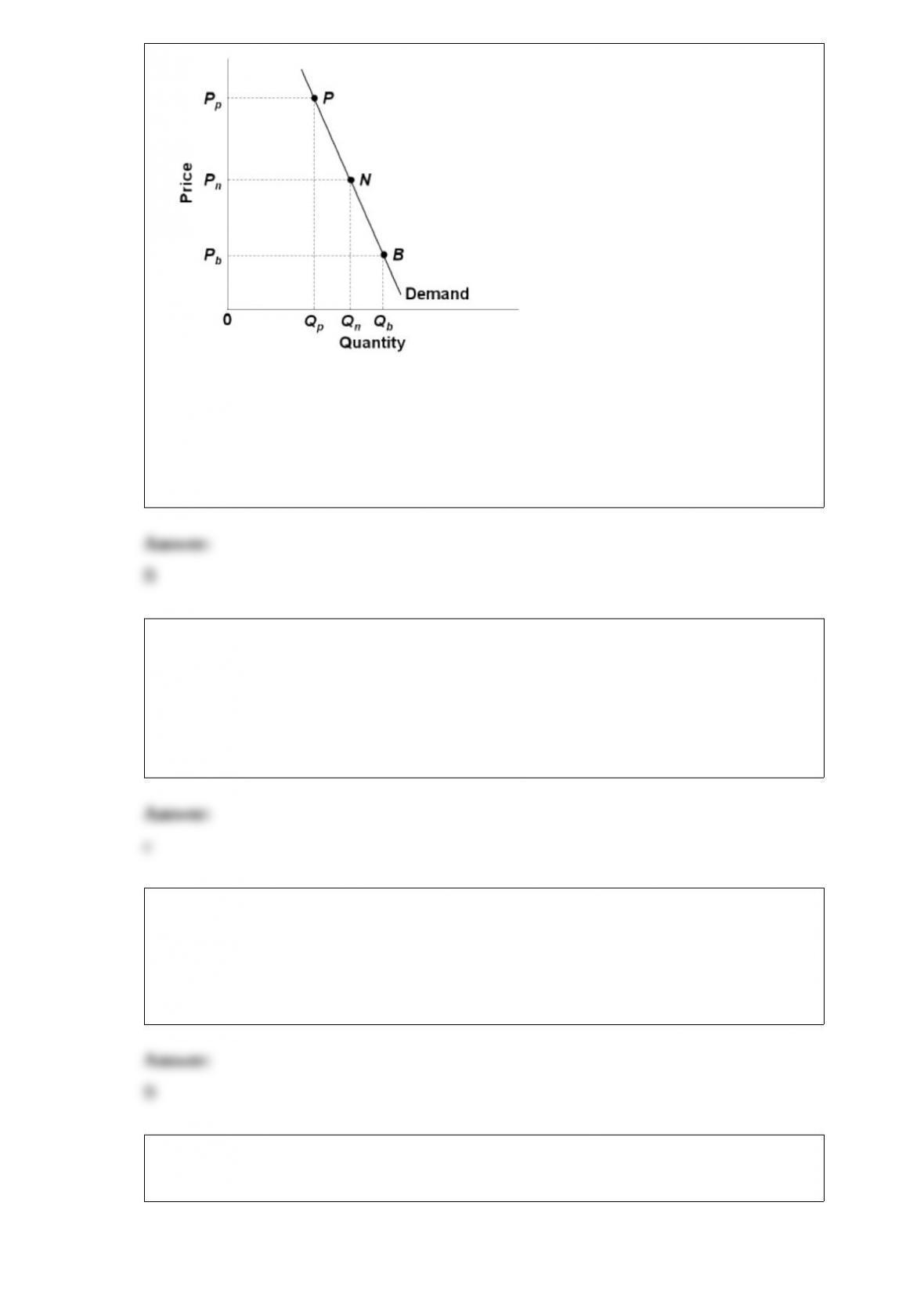
9)
Refer to the above diagram. If farmers produce a bumper crop of Qb, their gross
income:
A.will be 0PpPBQb.
B.will be 0PbBQb.
C.will be Pb Qn.
D.cannot be determined.
10) price ceilings and price floors:
a.cause surpluses and shortages respectively.
b.make the rationing function of free markets more efficient.
c.interfere with the rationing function of prices.
d.shift demand and supply curves and therefore have no effect on the rationing function
of prices.
11) Open-market operations refer to:
A.purchases of stocks in the New York Stock Exchange.
B.the purchase or sale of government securities by the Fed.
C.central bank lending to commercial banks.
D.the specifying of loan maximums on stock purchases.
12) The following table shows marginal costs and benefits of the optimal quantity of
pollution abatement that will occur at a local factory.
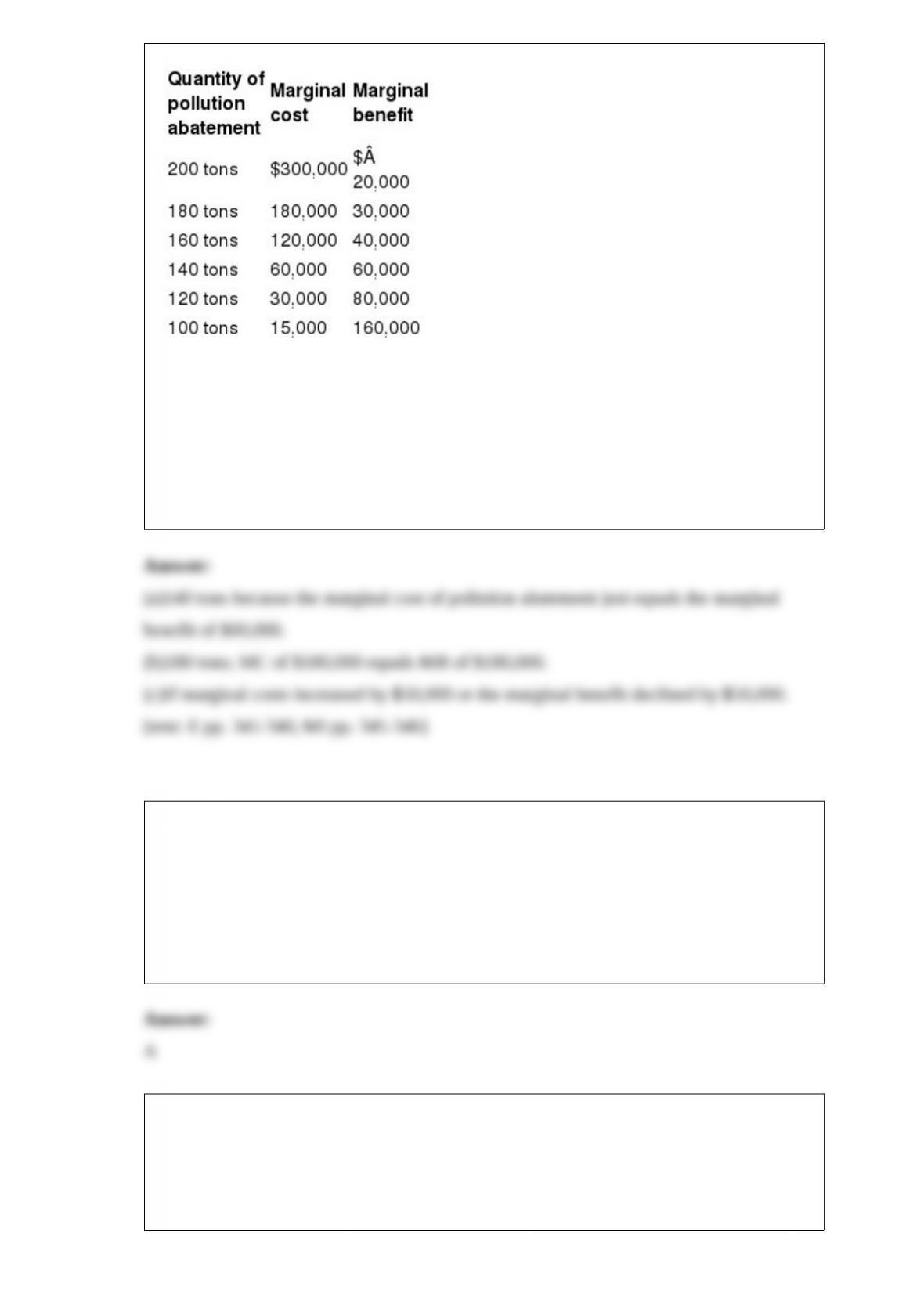
(a) What is the optimal level of pollution abatement? Why?
(b)If the marginal benefit of pollution abatement were to increase by $150,000 at each
level because of the factorys desire to improve its image and environment, what would
the optimal level be? Why?(a)What is the optimal level of pollution abatement? Why?
(c)What might cause the optimal level of pollution abatement to be 120 tons?
13) According to the Taylor rule, if inflation rises 1 percent above a target rate of 2
percent, the Fed should raise the Federal funds rate, relative to the current rate of
inflation, by:
A.0.5 percentage points.
B.1 percentage point.
C.1.5 percentage points.
D.2 percentage points.
14) ticket scalping:
a.imposes economic losses on both buyers and sellers.
b.creates economic gains for both buyers and sellers.
c.imposes losses on buyers, but creates gains for sellers.
d.imposes losses on sellers, but creates gains for buyers.

15) The multiple by which the commercial banking system can increase the supply of
money on the basis of each dollar of excess reserves is equal to:
A.the reciprocal of the legal reserve ratio.
B.1 minus the legal reserve ratio.
C.the reciprocal of the income velocity of money.
D.1/MPS.