Stagflation is caused by
a. a negative supply shock.
b. a positive supply shock.
c. a negative demand shock.
d. a positive demand shock.
e. none of the above.
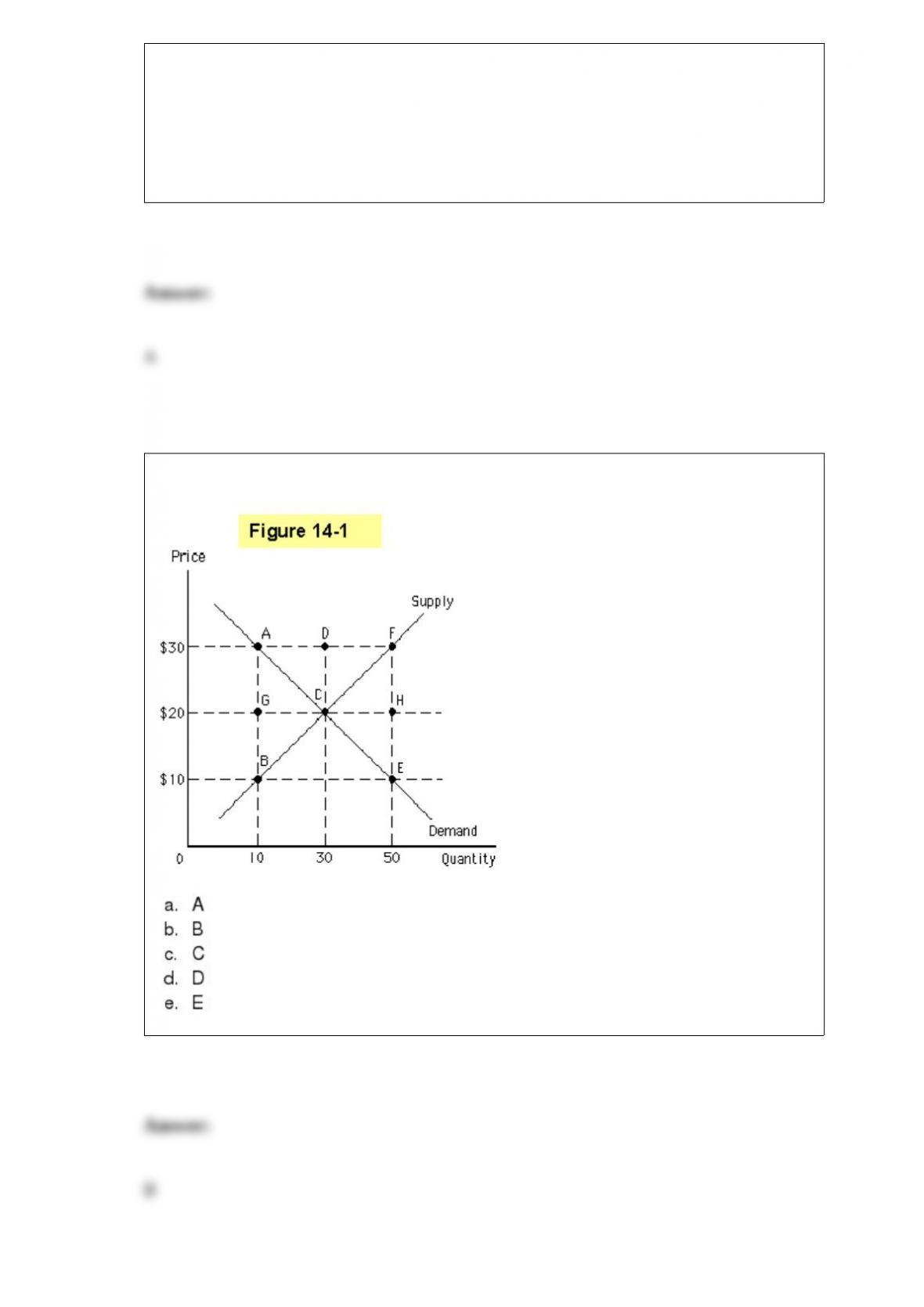
In Figure 14-1, which area represents consumer surplus?

If the Fed wanted to prevent a change in money demand from affecting real GDP, which
of the following rules would be feasible and allow the Fed to attain its goal?
a. Keep government spending constant
b. Keep the money supply constant
c. Keep money demand constant
d. Keep taxes constant
e. Keep the interest rate constant
If Social Security is over-indexed, real payments
a. are lower than they would be if they were correctly indexed.
b. are higher than they would be if they were correctly indexed.
c. are constant.
d. are decreasing.
e. are under-indexed.
Refer to Figure 15-11. Suppose the economy is currently at point D where it is
producing its full-employment level of real GDP ($6.8 trillion). We would expect that,
in the long run,
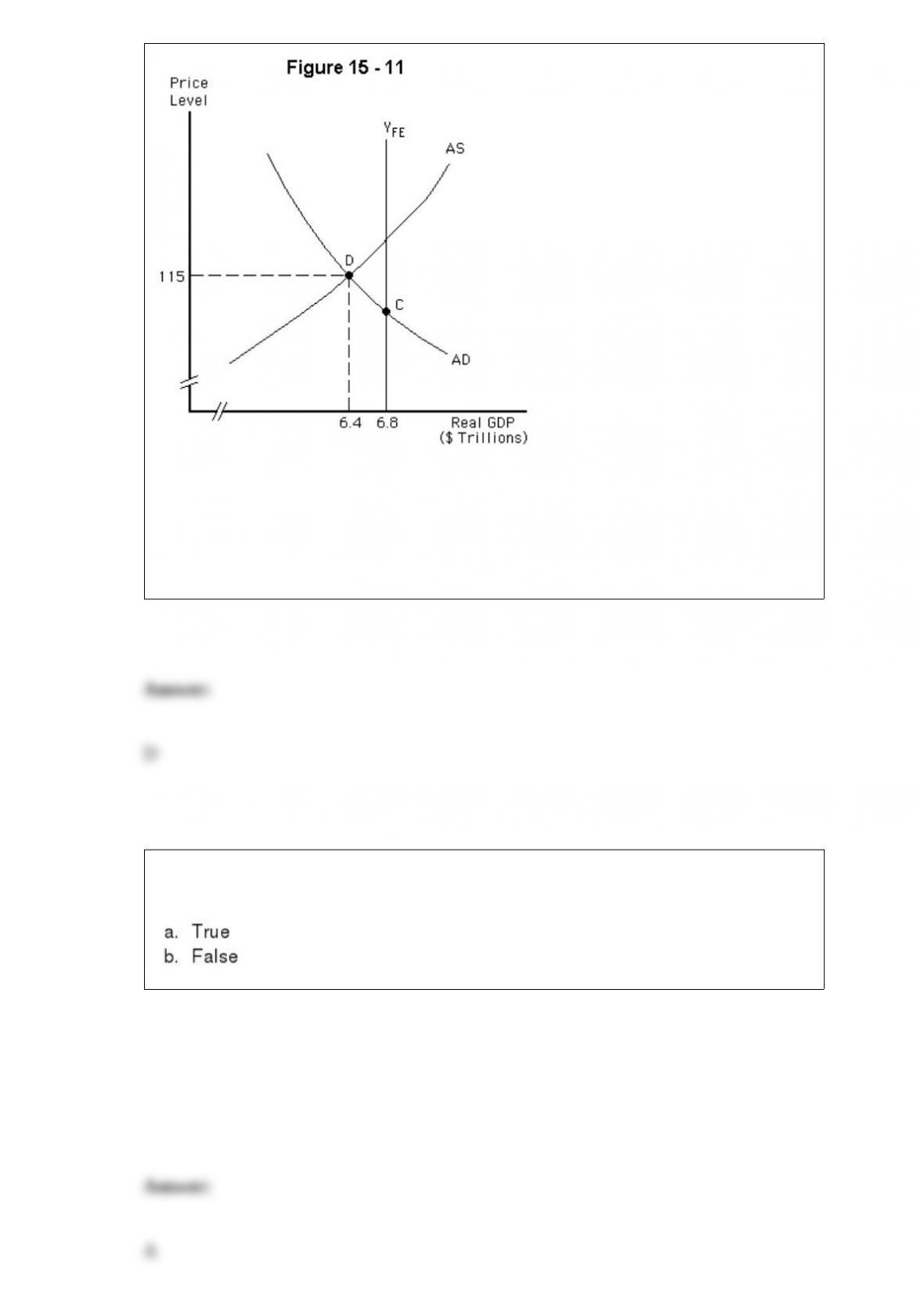
a. the economy will return to point D unless a demand or supply shock occurred
b. wages will fall and aggregate demand will decrease
c. wages will rise and aggregate demand will increase
d. wages will fall and aggregate supply will increase as the economy moves to point C
e. the full-employment level of real GDP would fall to the equilibrium level of real
GDP
Economists generally oppose trade restrictions such as tariffs and quotas; however, if
one these devices must be used, economists generally prefer tariffs to quotas.
The government can safely take on more debt
a. as long as private firms are taking on more debt
b. as long as the debt involves no interest payments
c. if GDP is growing faster than the debt is growing
d. if the interest rate is below 3 percent
e. as long as the debt is growing by less than 3 percent per year
Whether a subsidy for a certain good is given to a demander or supplier is irrelevant
because
Suppose that an economy produces civilian goods and military goods. If technological
breakthroughs increase its ability to produce military goods, then
If the national debt is growing no faster than GDP,
a. the government will have to raise taxes
b. the nation’s standard of living will fall
c. government investment spending will be negative
d. the government can pay interest on the debt without having to raise taxes
e. the government will be unable to pay interest on the debt
The long-run price elasticity of demand for a good is
Which of the following is not a characteristic of a perfectly competitive market