
The Federal Reserve serves as the lender of last resort.
Answer:
GAP is defined as the difference between fixed-rate assets and fixed-rate liabilities.
Answer:
A dual banking system means that both the federal government and individual states
charter banks and credit unions.
Answer:
Individuals, as a group, are not as interest-rate sensitive as wholesale customers.

Answer:
All other things the same, low coupon bonds have greater relative price volatility than
high coupon bonds.
Answer:
Net interest income made up a significant portion of Goldman Groups’ net revenue in
2012.
Answer:
Credit scoring models are less objective than judgmental evaluations.
Answer:

The greater the compounding frequency, the higher the present value, everything else
the same.
Answer:
Under the current risk-based capital requirements, banks must hold capital against
standby letters of credit they have issued as guarantees.
Answer:
Subordinated bank debt is federally insured.
Answer:

Speculators focus on avoiding or reducing risk.
Answer:
Credit cards are profitable for banks because many customers are prince insensitive.
Answer:
The effective annual interest rate will never be less than the simple interest rate.
Answer:
Larger banks hold a larger percentage of earning assets than smaller banks.

Answer:
Real estate lending is popular with bank, in part, due to the growth of the secondary
mortgage market.
Answer:
The greater the compounding frequency, the higher the future value, everything else the
same.
Answer:
All other things the same, longer maturity bonds have greater relative price volatility
than shorter maturity bonds.

Answer:
Losses on credit cards are among the highest of all consumer loan types.
Answer:
The Dodd-Frank Act eliminates “Too-Big-To-Fail” bailouts.
Answer:
Regulatory capital ratios focus on the book value of equity.
Answer:

Eliminating borrowing from the Federal Reserve at the end of fiscal year is an example
or “window dressing.”
Answer:
Banks that use preferred stock understate their ROE relative to banks that do not use
preferred stock.
Answer:
Goldman Group has converted from an investment bank to a bank holding company.
Answer:

Mortgage origination is countercyclical to a bank’s net interest margin business.
Answer:
What constitutes Tier 2 capital varies substantially between countries.
Answer:
Consumer loans are typically very similar such that a comprehensive analytical format
can be used for all loans.
Answer:
Income statement GAP is also known as Omega GAP..

Answer:
Respondent banks buy services from correspondent banks.
Answer:
An independent bank operates a single organization that accepts deposits and makes
loans.
Answer:
Retail banks deal primarily with commercial customers.
Answer:

Total revenue is the same as total operating income.
Answer:
Which of the following will cause a bank’s 1-year cumulative GAP to increase,
everything else the same.
a. An increase in 3-month loans and an offsetting decrease in 6-month loans.
b. An increase in 3-month loans and an offsetting increase in 3-month CDs.
c. A decrease in 3-month CD’s and an offsetting increase in 3-year CDs.
d. a. and c.
e. b. and c.
Answer:
The ability to repay a loan is measured by a firm’s:
a. capacity.
b. collateral.

c. character.
d. capital.
e. credit.
Answer:
Non-interest income includes all of the following except:
a. monthly fee income on checking accounts.
b. late fees on loans.
c. trust income.
d. insufficient funds service charges.
e. all of the above are considered non-interest income.
Answer:
Modified duration:
a. estimates when embedded options will be used.
b. directly indicates how much the price of a security will change given a change in

interest rates.
c. is always greater than maturity.
d. All of the above
e. a. and b.
Answer:
The _________ created a fund originally designed to allow the U.S. Treasury to
purchase distressed assets from financial institutions.
a. Capital Purchase Program
b. Foreclosure Prevention Act
c. Troubled Asset Relief Program
d. Primary Dealer Credit Facility
e. Check 21 Act
Answer:
Which of the following is an example of a Eurocurrency?
a. A branch of a Canadian bank located in Paris accepts a deposit in U.S. dollars.

b. A branch of a U.S. bank located in Tokyo accepts a deposit in Japanese yen.
c. A branch of a U.S. bank located in New York accepts a deposit in U.S. dollars.
d. A branch of a London bank located in Paris accepts a deposit in Euros.
e. A branch of a Swiss bank located in Mexico City accepts a deposit in Mexican pesos.
Answer:
Which of the following is true regarding duration gap analysis?
a. The magnitude of the duration gap is related to the amount of interest rate risk a bank
is subject to.
b. Management can adjust the duration gap to speculate on future interest rate changes.
c. A positive duration gap means a bank’s market value of equity will decrease with an
increase in interest rates.
d. All of the above are true.
e. a. and c.
Answer:
Customer profitability data can be beneficial in helping bank management:

a. develop new products.
b. identify profitable target niches.
c. determine changes in product pricing.
d. All of the above
e. a. and b. only
Answer:
Which of the following is not true regarding common stock?
a. Common stock has no maturity.
b. New issues of common stock may dilute existing shareholder equity.
c. Common stock is a permanent source of funds.
d. Dividends paid are not tax-deductible.
e. Dividends are considered a fixed charge that must be paid.
Answer:
The lack of incentive to guard against risk where one is protected from it is known as:

a. risk aversion
b. too big to fail
c. protection guarantee
d. incentive failure
e. moral hazard
Answer:
What is the primary motivation today of forming a financial holding company?
a. To increase speculation.
b. To branch across state lines.
c. To engage in activities not permitted in a bank holding company.
d. To branch within a particular states boundaries.
e. To reduce the risk of bank failures.
Answer:
Use the following bank information.

What is the weighted average duration of assets?
a. 2.56 years
b. 3.85 years
c. 4.85 years
d. 5.00 years
e. 7.50 years
Answer:
Which of the following is not a use of cash?
a. A decrease in accounts payable
b. An increase in inventory
c. An increase in accounts receivable
d. The payment of cash dividends
e. An increase in wages payable
Answer:

Interest income includes:
a. interest earned on all of the bank’s assets.
b. fees earned on all of the bank’s assets.
c. fees earned on all of the bank’s deposit accounts.
d. all of the above.
e. a. and b. only
Answer:
Which of the following had the greatest net interest margin in 2012?
a. International banks
b. Agricultural banks
c. Credit card lenders
d. Consumer lenders
e. Mortgage lenders
Answer:

Cash in your possession today:
a. is worth less than the same amount of cash received in the future.
b. is worth more than the same amount of cash received in the future.
c. Is worth the same as the same amount of cash to be received in the future.
d. may be worth more or less than the same amount of cash received in the future
depending on the market interest rate.
e. may be worth more or less than the same amount of cash received in the future
depending on the type of investment made.
Answer:
For a bank that has a negative duration gap, an increase in interest rates will cause a(n)
_______ in the economic value of assets, that is _______ than the _________ in the
economic value of liabilities, and a(n) _______ in the economic value of equity.
a. increase, less, increase, increase
b. increase, less, increase, decrease
c. increase, greater, increase, increase
d. decrease, less, decrease, increase
e. decrease, greater decrease, increase
Answer:

Federal Home Loan Bank advances:
a. have maturities ranging from one day to 20 years.
b. can be for any amount with proper collateral.
c. may be callable.
d. all of the above.
e. none of the above.
Answer:
A bank’s cumulative GAP will always be:
a. greater than the periodic GAP.
b. less than the periodic GAP.
c. positive.
d. negative.
e. the sum of the interim periodic GAPs.
Answer:

Which of the following is not listed on a bank’s UBPR as noninterest income?
a. Deposit service charges
b. Insurance commission fees
c. Goodwill impairment
d. Net gains on sales of loans.
e. Investment banking fees
Answer:
Which of the following is not a measure of liability liquidity?
a. Total equity to total assets
b. Core deposits to total assets
c. Total deposits to total assets
d. Federal funds sold to total assets
e. Loan losses to deposits.
Answer:

Which of the following is a way to increase liability sensitivity?
a. Lengthen the maturities of loans.
b. Issue long-term subordinated debt.
c. Borrow more via noncore purchased liabilities.
d. All of the above.
e. None of the above.
Answer:
Jumbo certificates of deposit (CDs) typically:
a. have maturities greater than 10 years..
b. are negotiable.
c. are $1 million in size.
d. All of the above
e. b. and c.
Answer:

Which of the following contains a computer memory chip?
a. Debit card
b. Credit card
c. Smart card
d. Pre-Paid card
e. ATM card
Answer:
A bank has a 1-year $1,000,000 loan outstanding, payable in four equal quarterly
installments. What dollar amount of the loan would be considered rate sensitive in the 0
– 90 day bucket?
a. $0
b. $250,000
c. $500,000
d. $750,000
e. $1,000,000
Answer:

Which of the following is not considered a viable long-term source of bank liquidity?
a. Federal funds sold
b. Short-term Treasury securities
c. Cash
d. High quality short-term municipal securities
e. Reverse repurchase agreements
Answer:
Which of the following is not a difference between futures and forward contracts?
a. Futures contracts are marked-to-market daily, while futures contracts are not.
b. Buyers and sellers deal directly with each other on forward contracts but go through
and exchange with futures contracts.
c. Futures contracts are standardized, forward contracts generally are not.
d. Delivery rarely occurs on futures contracts but generally occurs with forward
contracts.
e. All of the above are differences between futures and forward contracts.
Answer:

Given the following marginal cost estimates associated with obtaining additional
interest-checking account funding:
Market interest rate 0.3%,
Servicing costs: 2.6% of balances
Acquisition costs: 0.2% of balances
Deposit insurance costs = 0.25% of balances
Net investable balance = 85% (10% required reserves and 5% float)
What is the estimated marginal cost of obtaining additional interest-checking balances?
a. 2.85%
b. 3.35%
c. 3.53%
d. 3.72%
e. 3.94%
Answer:
Total operating income is comparable to _________ for a non-financial firm.
a. sales
b. cost of goods sold
c. gross profit
d. earnings before interest and taxes
e. net income
Answer:
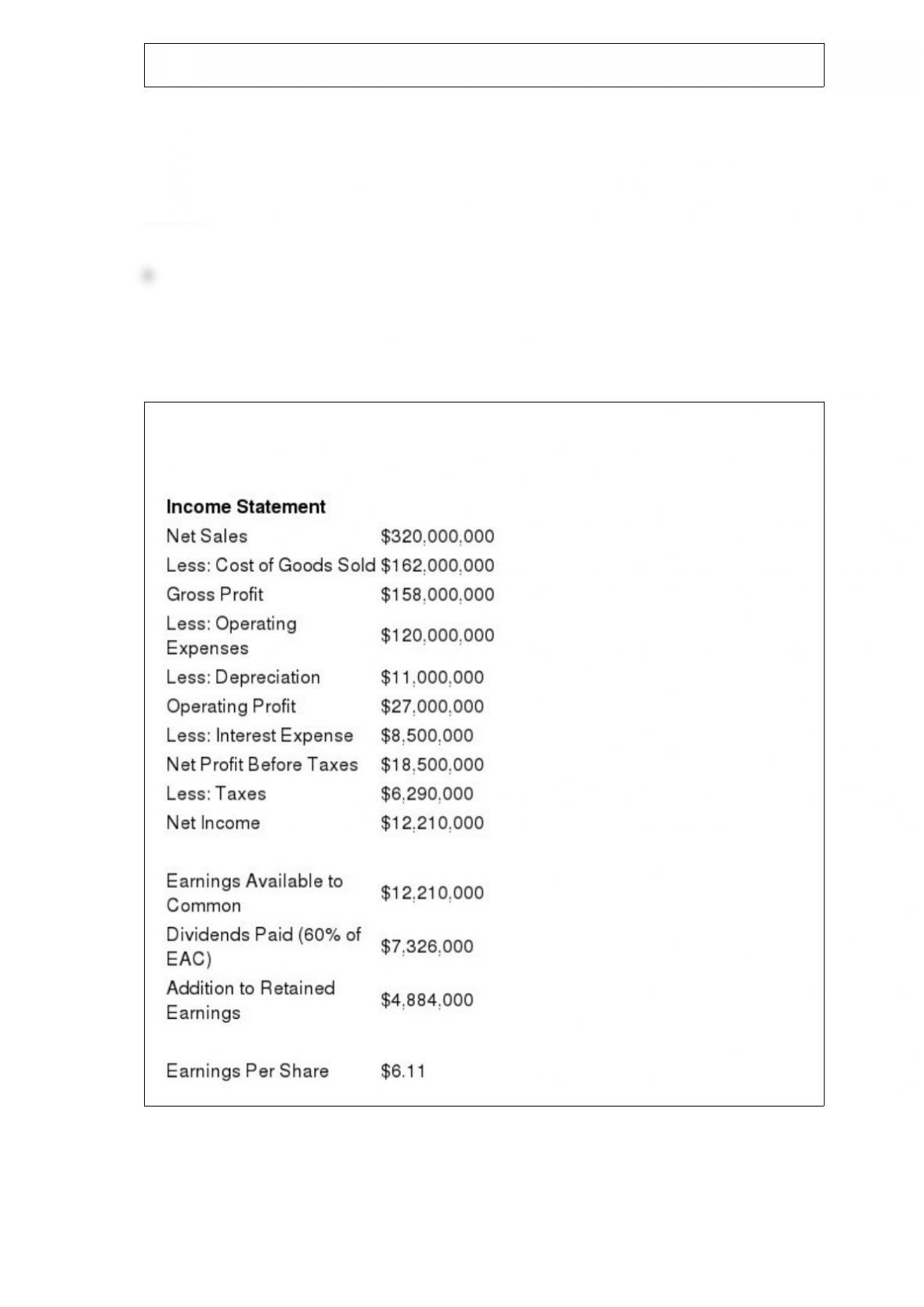
Use the following information on Dylan Enterprises.
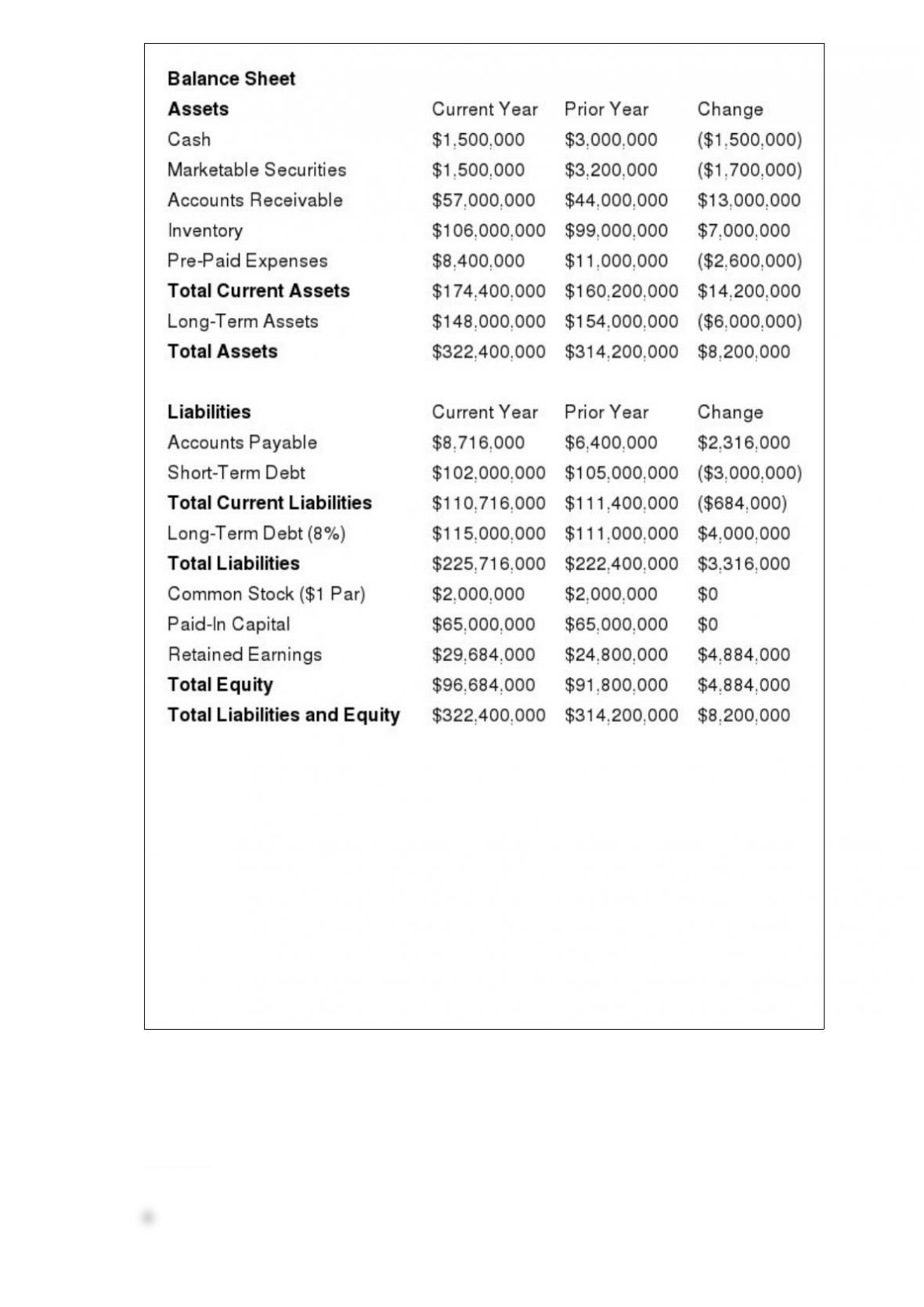
What is Dylan’s return on assets for the current year?
a. 3.8%
b. 5.1%
c. 5.4%
d. 12.6%
a. 13.3%
Answer:
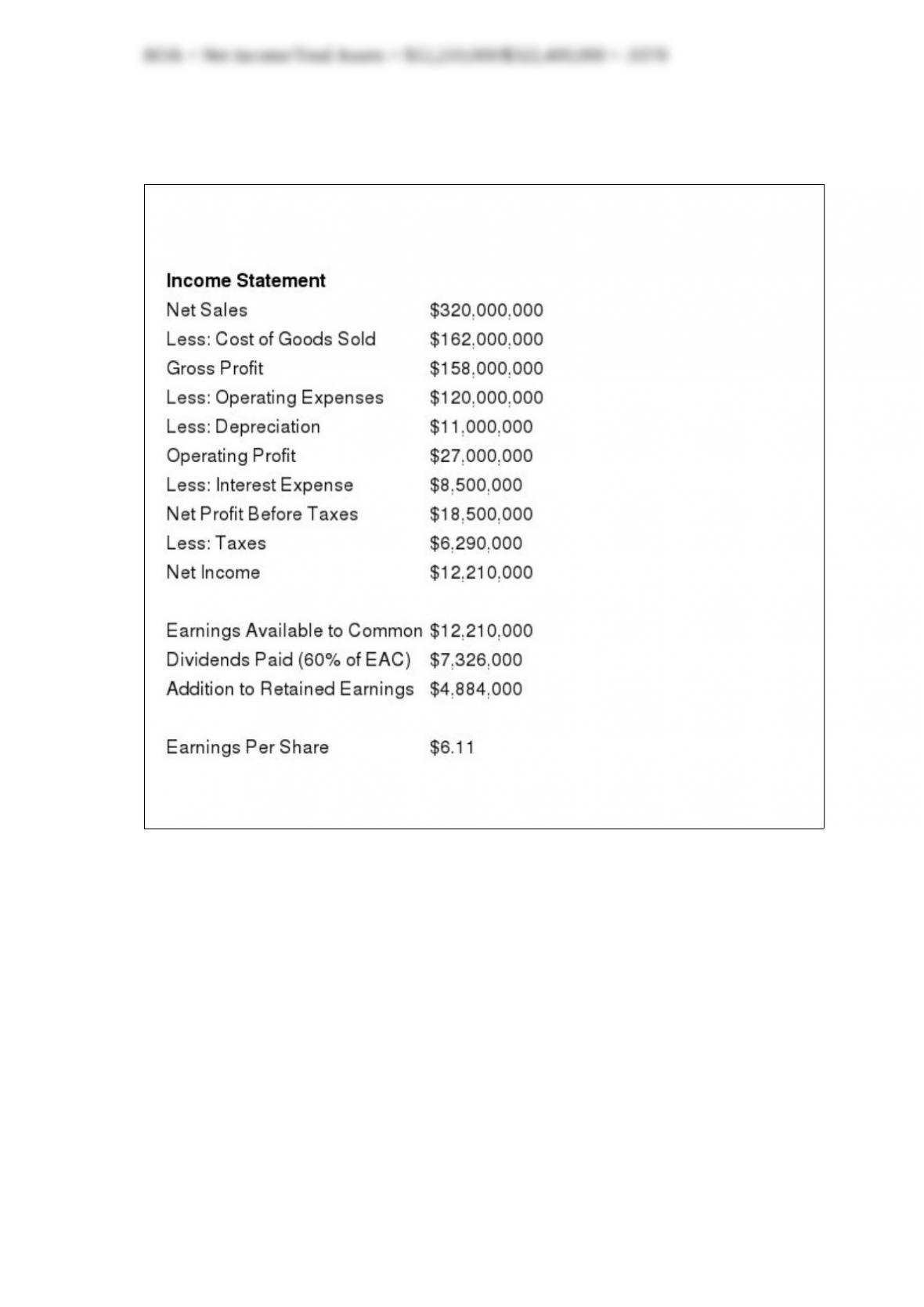
Use the following information on Dylan Enterprises.
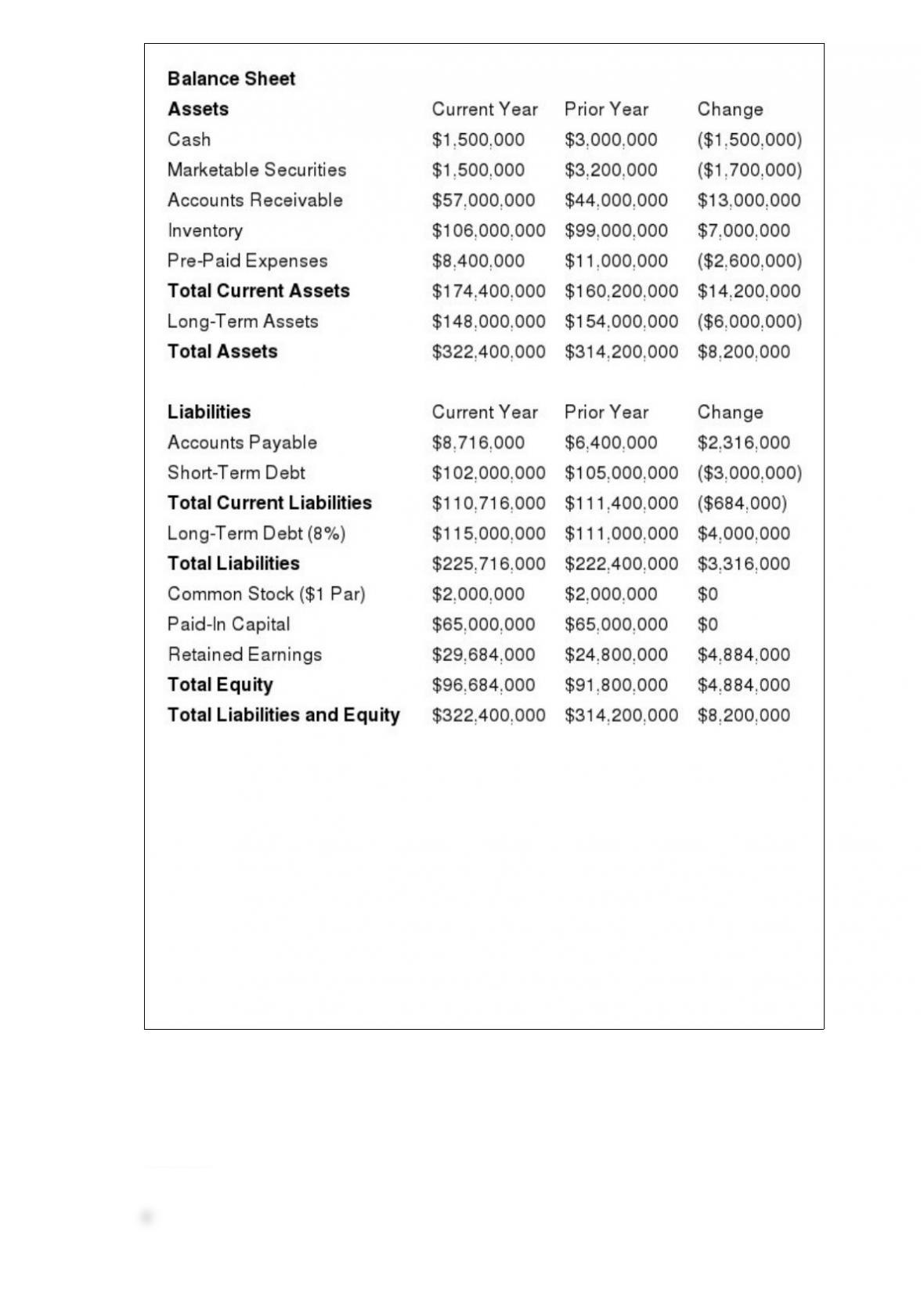
What is Dylan’s current ratio for the current year?
a. 1.36
b. 1.44
c. 1.58
d. 1.68
e. 1.71
Answer:

A 90-day Treasury bill is quoted as having a price of $987.50. What is its bond
equivalent yield?
a. 5.00%
b. 5.13%
c. 5.23%
d. 5.62%
e. 5.79%
Answer:
Mutual of Omaha bank is charted as a:
f. commercial bank.
g. consumer bank.
h. mutual savings bank.
i. thrift.
j. credit union.

Answer:
Answer: