
Special interest groups
a. often gain from public policies that may not be in accord with the interests of the
general public.
b. never gain from public policies that are not in accord with the interests of the general
public.
c. always gain from public policies that are not in accord with the interests of the
general public.
d. never lobby for public policies that are not in accord with the interests of the general
public.
e. always lobby for public policies that are not in accord with the interests of the general
public.
It usually takes less time to buy a six-pack of 7-Up, a loaf of bread, and a half-gallon of
ice cream at a small convenience store (such as a 7-Eleven) than at a large, full-service
grocery store. Which of the following persons is most likely to buy these items at a
convenience store?
a. a person with a high opportunity cost of time
b. a person with a low opportunity cost of time
c. a person who is out of work
d. a person who works at a full-service grocery store
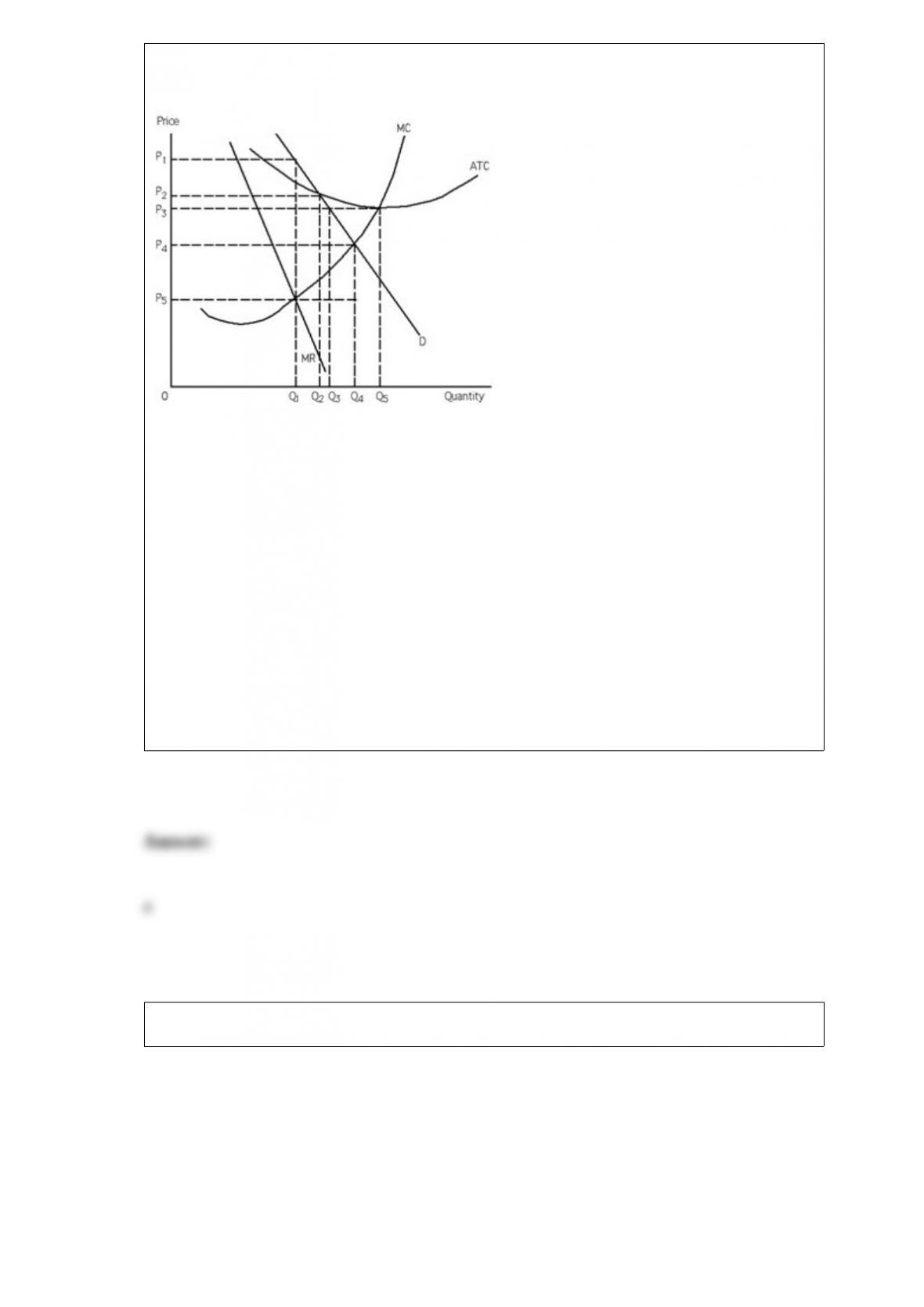
Exhibit 26-4
With no regulation, the profit-maximizing firm would supply __________ units of
output.
a. Q1.
b. Q2.
c. Q3.
d. Q4.
e. Q5.
Exhibit 24-6
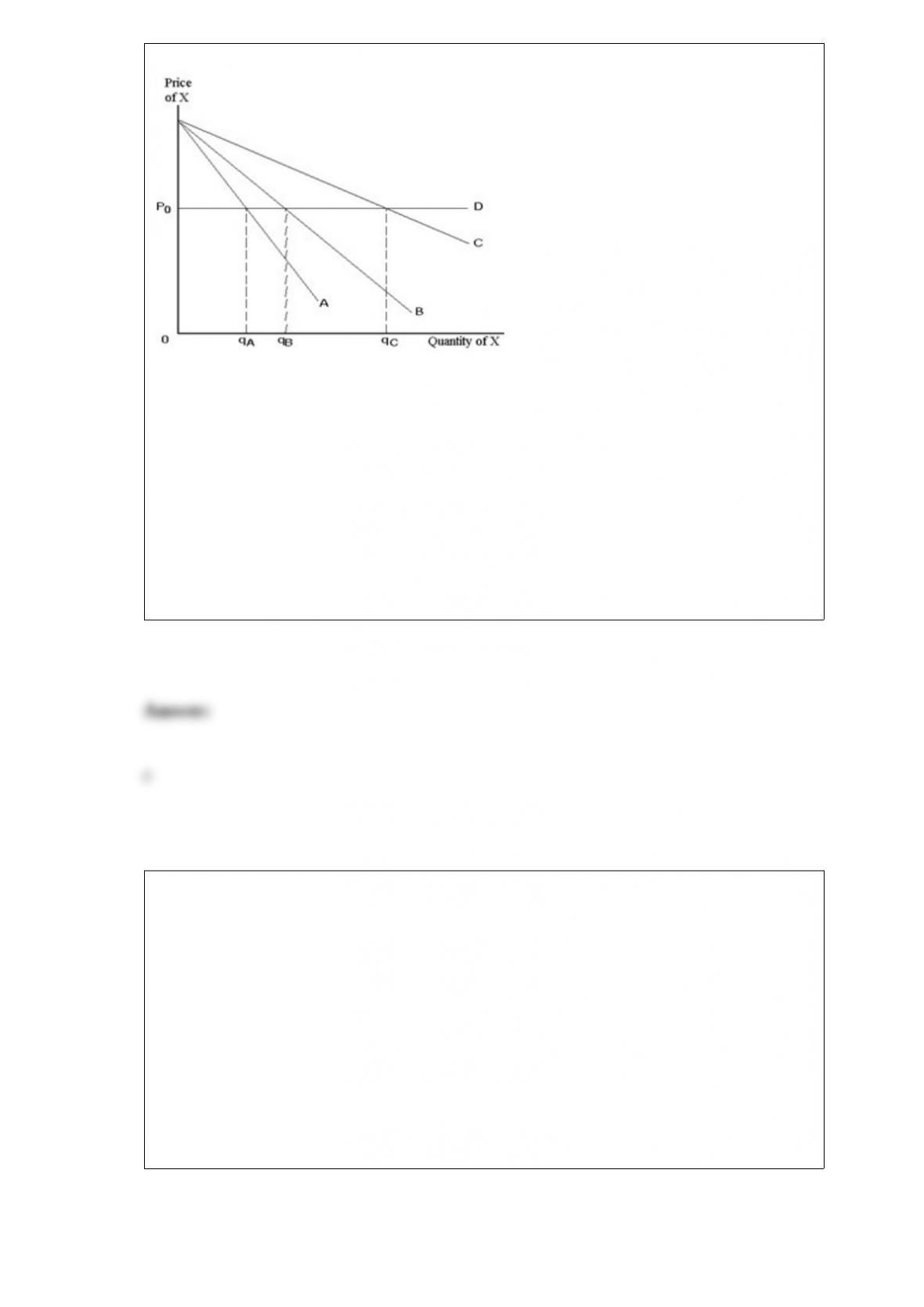
If C is the demand curve facing a perfectly price-discriminating monopolist selling qC
units of X, its marginal revenue curve is
a. A.
b. B.
c. C.
d. D.
A “price taker” is a firm that
a. does not have the ability to control the price of the product it sells.
b. does have the ability, although limited, to control the price of the product it sells.
c. can raise the price of the product (above the market price) and still sell some units of
its product.
d. sells a differentiated product.
e. none of the above

If the firm is producing a quantity of output for which MC > MR, then the firm should
increase production to increase its profits.
a. True
b. False
The higher the cost of processing a loan, the __________ the interest rate charged for
the loan; the lower the expected inflation rate, the __________ the nominal interest rate.
a. higher; lower
b. lower; higher
c. higher; higher
d. lower; lower
Exhibit 28-7
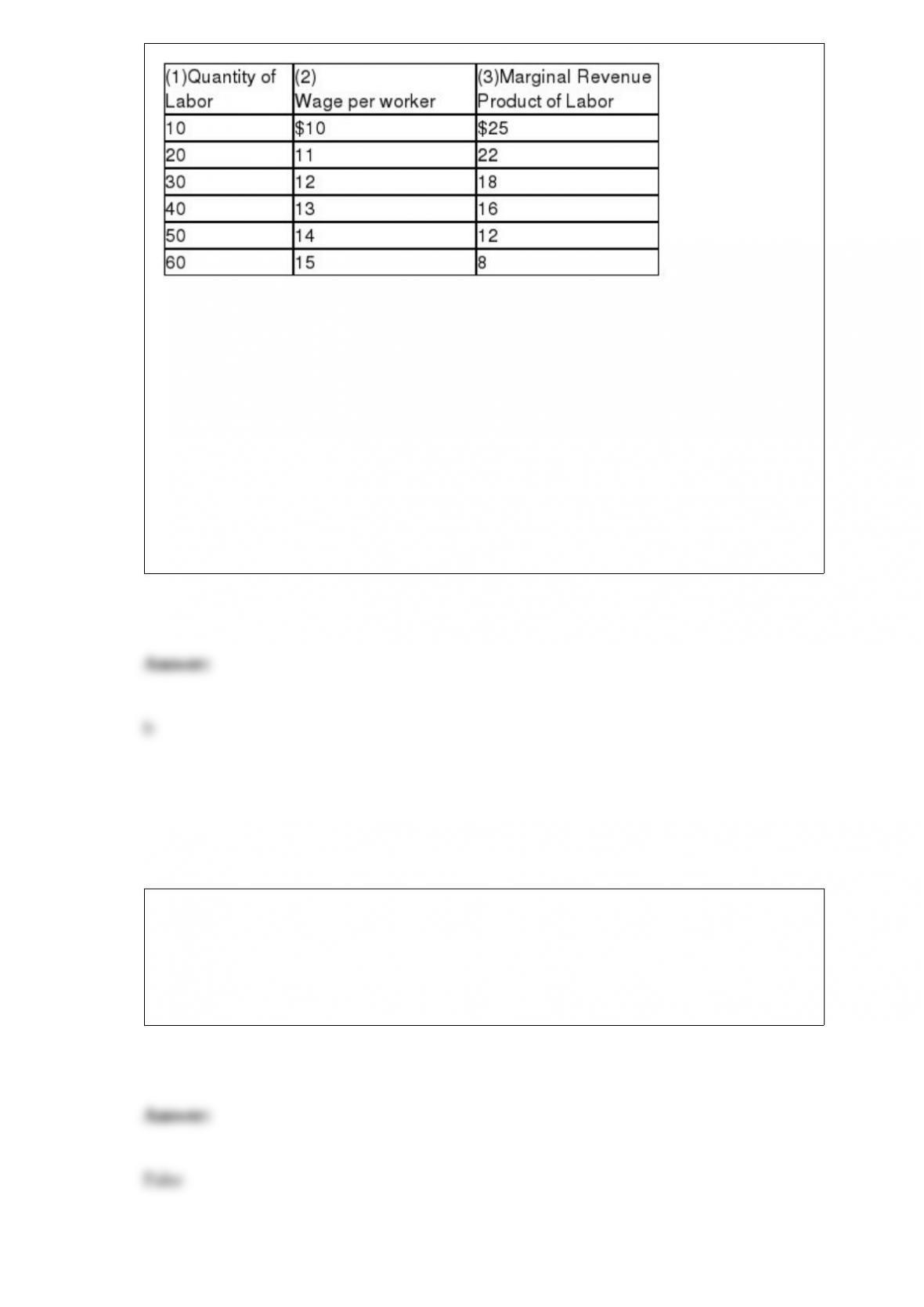
The marginal factor cost of increasing employment from 40 to 50 workers is
a. $120.
b. $18.
c. $14.
d. $160.
e. $15
A firm that earns zero accounting profit is earning a normal profit.
a. True
b. False

If, as a result of market forces, the exchange rate changes from $1 equals 11 pesos to $1
equals 9 pesos, then the dollar has
a. appreciated.
b. been revalued.
c. been devalued.
d. depreciated.
e. There is not enough information to answer the question.
Prices in stores and restaurants in Tokyo are high because
a. land rents are high in Tokyo.
b. the supply of land is high in Tokyo.
c. the demand for living, visiting, and shopping in Tokyo is high.
d. a and b
e. all of the above
If Cassandra bought 16 cotton blouses last year when her income was $40,000 and she
buys 14 cotton blouses this year when her income is $35,000, then for Cassandra cotton
blouses are
a. an inferior good.

b. a normal good.
c. a substitute good.
d. a complementary good.
e. There is not enough information to answer this question.
For a firm that perfectly price discriminates,
a. price is less than marginal revenue.
b. price is greater than marginal revenue.
c. price equals marginal revenue.
d. price has no definite relationship with marginal revenue.
When an economist talks about utility, she is talking about
a. a company that provides electricity, water, gas, etc.
b. the satisfaction, in terms of price, that a producer receives from selling his product.
c. the satisfaction that results from the consumption of a good.
d. the amount of one good that a person is willing to give up in order to get a unit of
another good.

e. the satisfaction that results from the consumption of a good minus the price that must
be paid to get the good.
Which of the following statements is true?
a. A tax applied to an activity that generates a negative externality always brings about
the socially optimal level of output.
b. A subsidy applied to an activity that generates a positive externality always brings
about the socially optimal level of output.
c. a and b
d. none of the above
Exhibit 32-4
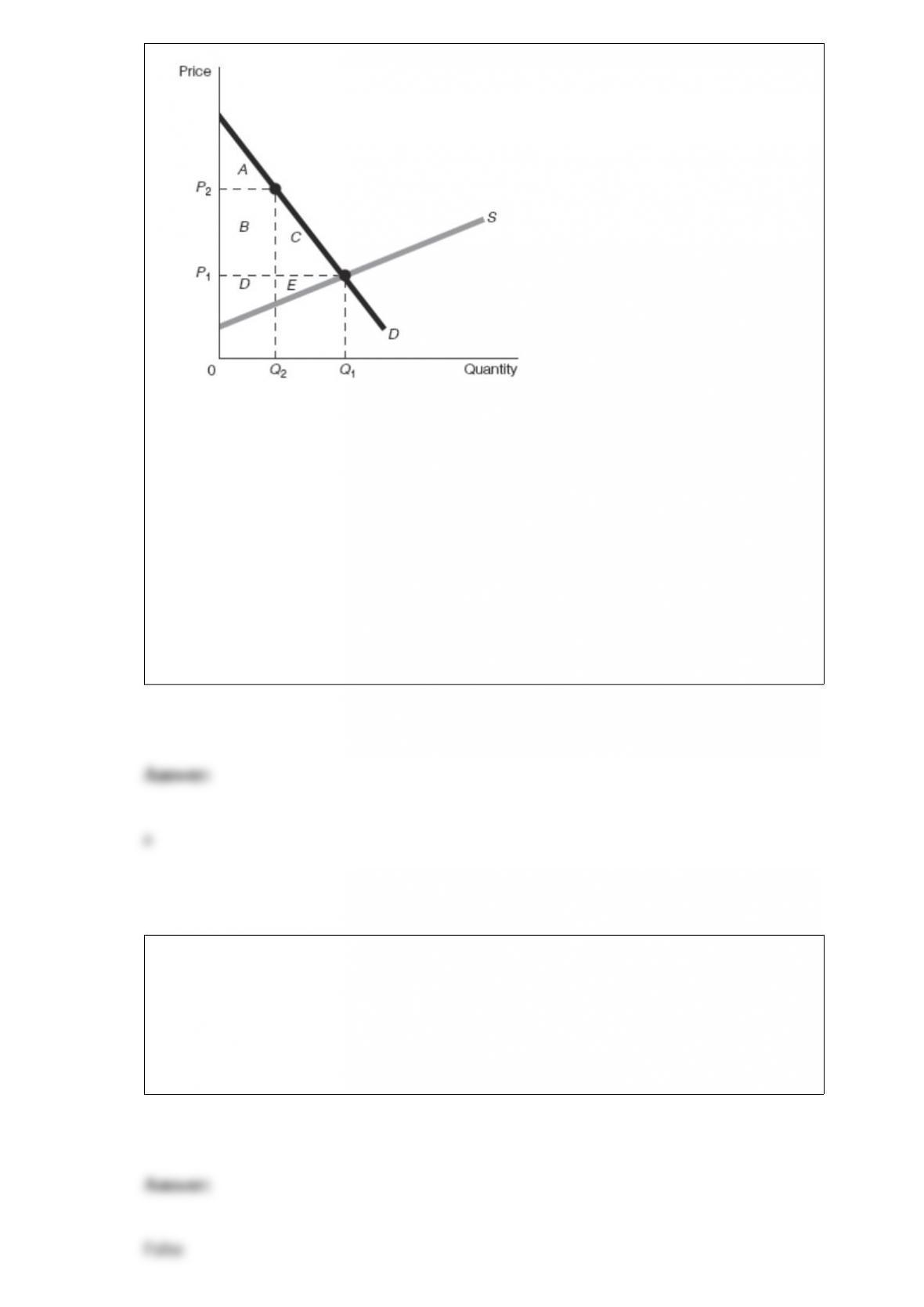
At the market equilibrium price of the good, producers€ surplus is the area
a. D + E
b. A + B + C + D + E
c. A + B + C
d. C + E
e. none of the above
Price discrimination occurs when a seller charges different prices for its product and the
price differences result from differences in the costs of production.
a. True
b. False

If variable X goes down as a result of variable Y going down, then X and Y are
a. directly related.
b. negatively related.
c. inversely related.
d. independent.