
Suppose that real GDP for 2012 was $10,000 billion and real GDP for 2013 was
$11,000 billion. What is the rate of growth of real GDP between 2012 and 2013?
A) 1%
B) 2%
C) 5%
D) 10%
Consider the following methods of pollution reduction:
a. the government sets a target for maximum emissions
b. the government mandates the installation of specific pollution abatement equipment
c. the government imposes a per unit tax on the good that creates pollution
d. the government gives firms a tax rebate for every unit of pollution abated Which of
the above is an example of a command and control approach to reducing pollution?
A) a only
B) b only
C) a and b only
D) a, b, and d only
E) a, b, c, and d

Refer to Figure 28-7. Consider the Phillips curves depicted in the graph above. The Fed
announces its intention to decrease inflation from 10 percent to 5 percent per year, and
it succeeds. If expectations of inflation are reduced to 8 percent by the Fed’s
announcement, the rate of unemployment will be ________ in the short run.
A) less than 5.5 percent
B) 5.5 percent
C) between 5.5 and 7.5 percent
D) 7.5 percent
If labor productivity growth slows down in a country, this will
A) accelerate the increase in real GDP per capita.
B) accelerate the increase in nominal GDP.
C) slow down the increase in real GDP per capita.
D) slow down the increase in nominal GDP.
Borrowers are ________ of loanable funds, and lenders are ________ of loanable
funds.
A) demanders; suppliers
B) suppliers; demanders

C) suppliers; suppliers
D) demanders; demanders
An example of an intermediate good would be
A) a new car.
B) a used car.
C) the rims on a new car.
D) new rims to replace old rims on a used car.
Why do corporations want to keep the price of their stock high?
A) A higher stock price increases the funds the firm can raise when it sells a given
amount of stock.
B) Corporations can pay their managers lower salaries and avoid principal-agent
problems when stock prices are higher.
C) Higher stock prices are correlated with lower expected profitability.
D) All of the above provide incentive for corporations to keep the price of their stock
high.
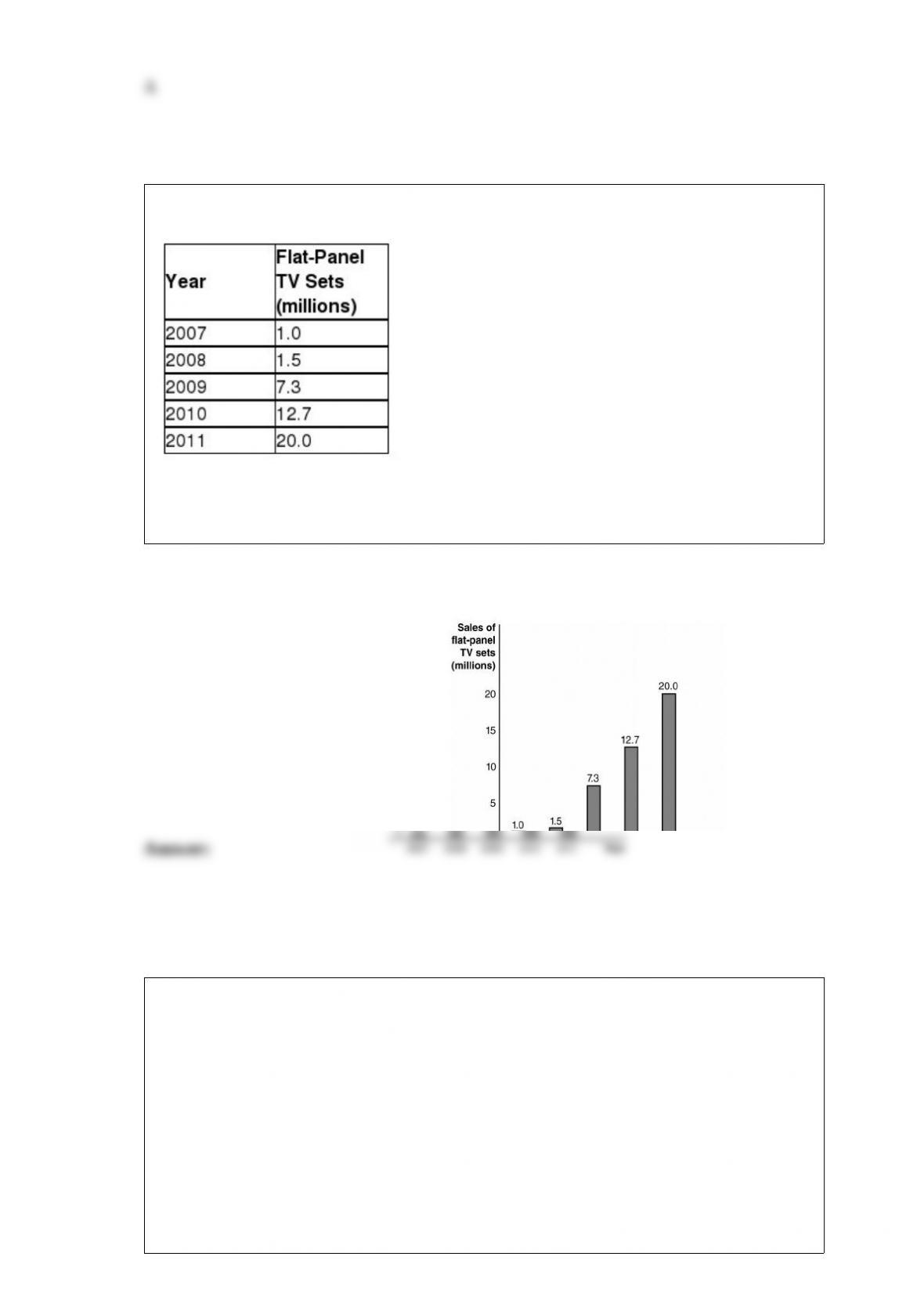
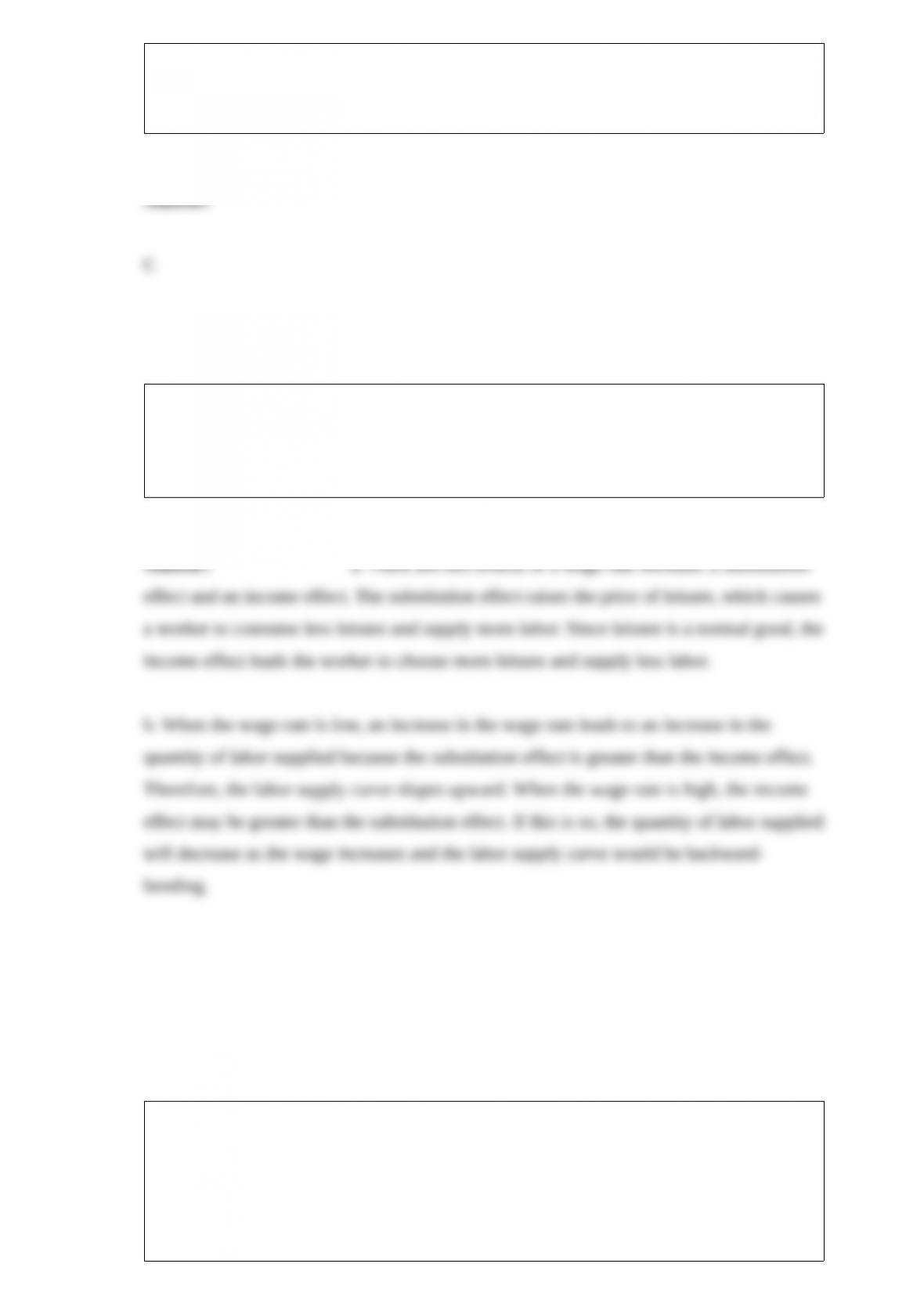
Table 1-8
The table above shows the sales of flat-panel television sets in Central America. Present
the information using a bar graph.
Prices of PlayStation 4 game systems are similar at almost every large retailer and little
price competition occurs among these retailers. An explanation for this is
A) retailers are all price takers.
B) retailers have lobbied state governments to allow them to collude legally to set the
prices of certain products.
C) pricing PlayStation 4 game systems is a repeated game. Over a long period of time a
cooperative equilibrium has been reached where retailers charge high prices for these
systems.
D) retailers are in a prisoner’s dilemma which causes them to all charge the same price
for PlayStation 4 game systems.
a. What are the two effects of an increase in the wage rate on an individual’s labor
supply decision? Briefly explain each effect.
b. Explain how a labor supply curve could be backward-bending.
A quota
A) makes domestic consumers worse off.
B) makes both domestic producers and consumers better off.

C) makes everyone worse off.
D) makes domestic producers worse off.
Which of the following is included in both the U.S. GDP and U.S. GNP?
A) the value of all cars produced by General Motors in the United States
B) the value of all cars produced by Ford in Mexico
C) the value of all cars produced by Toyota in the United States
D) the value of all cars produced by Nissan in Japan and the United States
Twenty-seven countries in Europe have eliminated all tariffs with each other. This
group of countries is known as the
A) European Union.
B) United Federation of Europe.
C) Gruppo Euro.
D) European Free Trade Association.

Which of the following statements about the prisoner’s dilemma is false?
A) The prisoner’s dilemma in a one-shot game leads to a noncooperative, equilibrium
outcome.
B) The prisoner’s dilemma in repeated games could lead to cooperation especially if
there is some enforcement mechanism that punishes a player who does not cooperate.
C) Players caught in a prisoner’s dilemma act in selfish ways that lead to an equilibrium
that is sub-optimal.
D) The prisoner’s dilemma game can never reach a Nash equilibrium as long as players
do not cooperate.