1) import quotas tend to lead to all of the following except:
a.domestic producers of the imported good being harmed
b.domestic consumers of the imported good being harmed
c.prices increasing in the importing country
d.prices falling in the exporting country
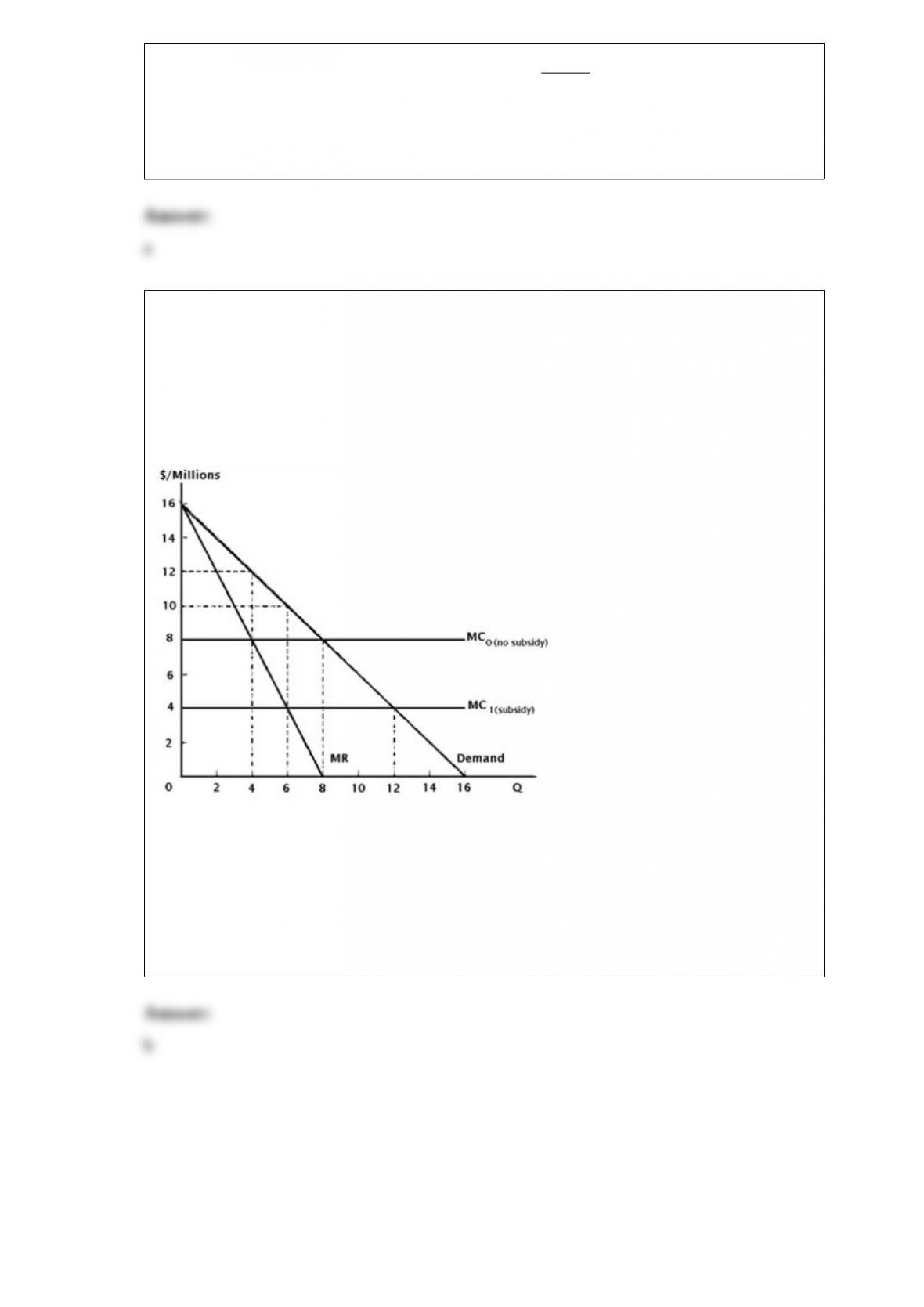
2) assume boeing inc. (of the united states) and airbus industrie (of europe) rival for
monopoly profits in the canadian aircraft market. suppose the two firms face identical
cost and demand conditions, as seen in figure 6.1.
figure 6.1. strategic trade policy: boeing versus airbus
referring to figure 6.1, the airbus subsidy leads to a (an) increase/decrease in canadian
consumer surplus of $____, as compared to the consumer surplus that existed in the
absence of a subsidy.
a.increase of $8 million
b.increase of $10 million
c.decrease of $8 million
d.decrease of $10 million
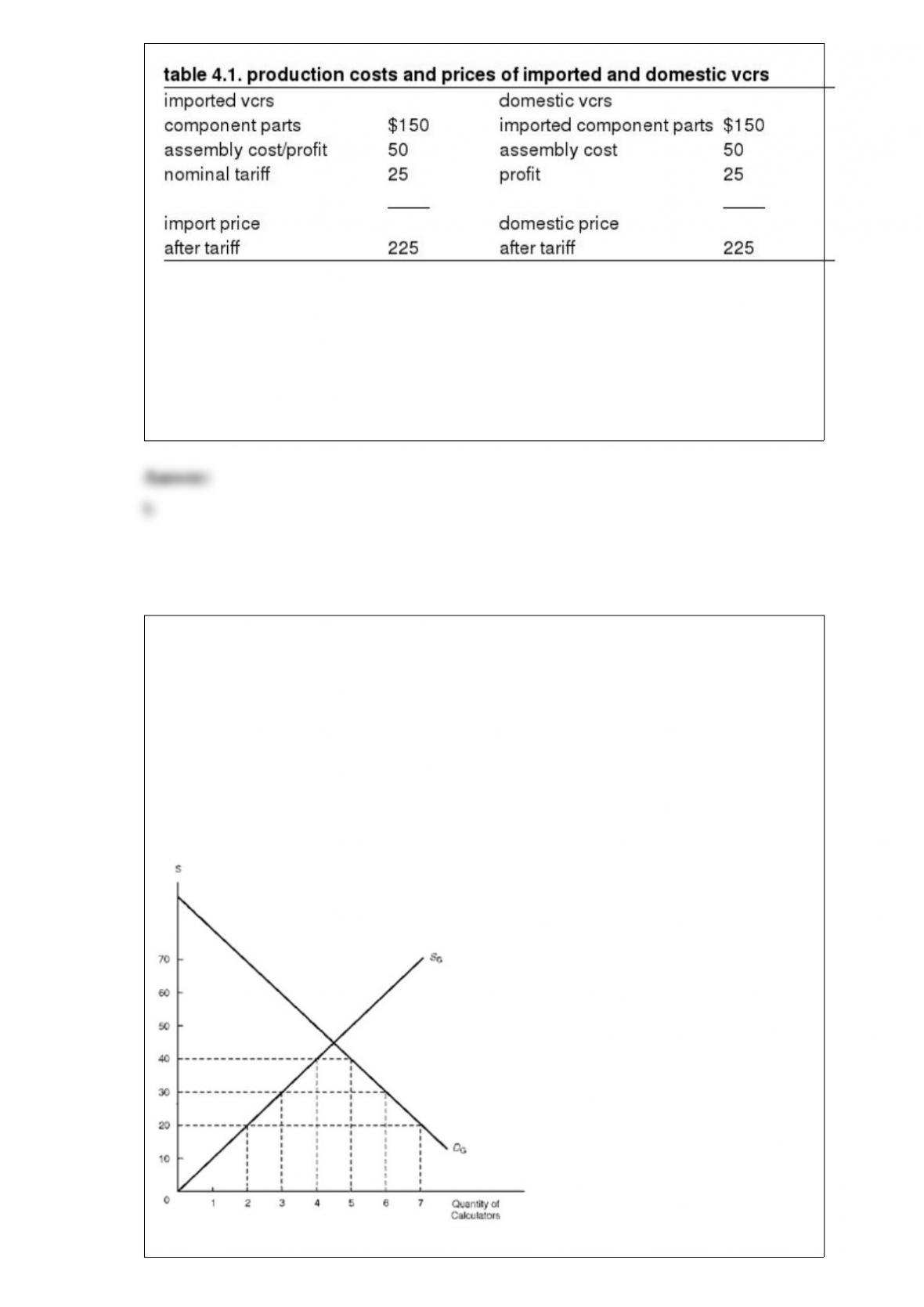
3) consider table 4.1. prior to the tariff, domestic value added equals:
a.$25
b.$50
c.$75
d.$100
4) figure 8.1 depicts the supply and demand schedules of calculators for greece, a
‘small” country that is unable to affect the world price. greece’s supply and demand
schedules of calculators are respectively depicted by sg and dg. assume that greece
imports calculators from either germany or france. suppose germany is the world’s
low-cost producer who can supply calculators to greece at $20 per unit, while france
can supply calculators at $30 per unit.
figure 8.1. effects of a customs union
consider figure 8.1. with free trade, greece imports:

a.3 calculators from france
b.5 calculators from france
c.3 calculators from germany
d.5 calculators from germany
5) given an open economy with high capital mobility, monetary policy is strengthened
under fixed exchange rates.
a.true
b.false
6) intellectual property refers to holdings of rare books and pieces of art that are traded
on the world market.
a.true
b.false
7) unlike adam smith, david ricardo’s trading principle emphasizes the:
a.demand side of the market
b.supply side of the market
c.role of comparative costs
d.role of absolute costs
8) during the 1970s, american oil companies acquired nonenergy companies (e.g.,
copper, auto components) in response to anticipated decreases in investment
opportunities in oil. this type of diversification is referred to as:
a.horizontal integration
b.conglomerate integration
c.forward vertical integration
d.backward vertical integration
9) a closed economy is one in which:
a.imports exactly equal exports, so that trade is balanced
b.domestic firms invest in industries overseas
c.the home economy is isolated from foreign trade
d.saving exactly equals investment at full employment
10) stabilizing commodity prices around long-term trends tends to benefit exporters at
the expense of importers in markets characterized by:
a.demand-side disturbances
b.supply-side disturbances
c.demand-side and supply-side disturbances
d.none of the above
11) if a nation has an open economy, it means that the nation:
a.allows private ownership of capital
b.has flexible exchange rates
c.has fixed exchange rates
d.conducts trade with other countries
12) when transportation costs are added to our trade model, the low-cost exporting
country produces less, consumes more, and exports less than that which occurs in the
absence of transportation costs.
a.true
b.false
13) assume the u.s. has a competitive advantage in producing calculators, while the rest
of the world has a competitive advantage in steel. suppose the u.s. and the rest of the
world enter into an agreement to lower import quotas below existing levels on
calculators and steel. which of the following would least likely occur for the u.s.? rising
levels of:
a.consumer surplus for american buyers of steel
b.producer surplus for american steelmakers
c.production in the american calculator industry
d.producer surplus for american calculator producers
14) owners of resources specific to export industries tend to lose from international
trade, while owners of factors specific to import-competing industries tend to gain.
a.true
b.false
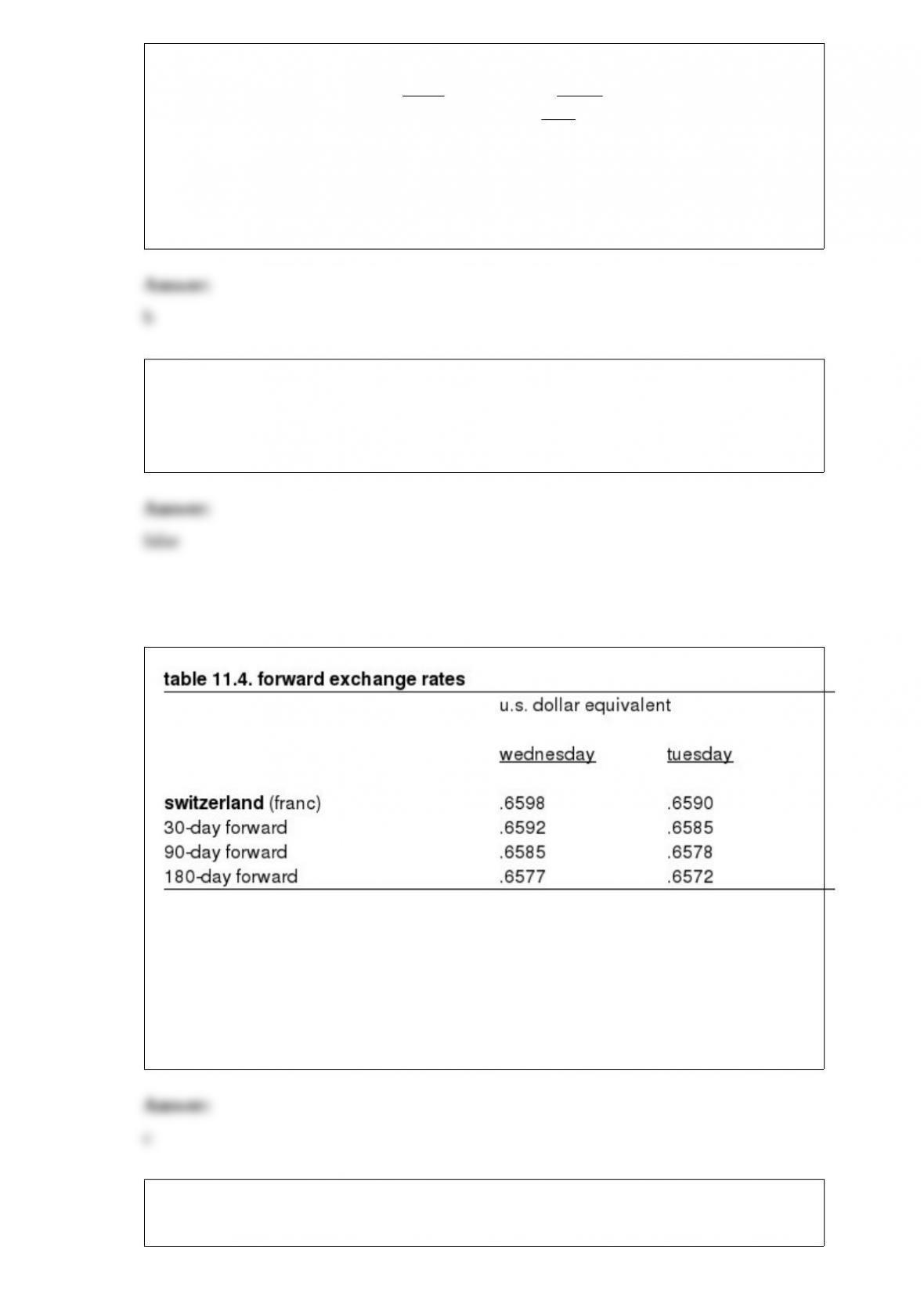
15) refer to table 11.4. on wednesday, the 180-day forward franc was selling at a:
a.0.6 percent premium per annum against the dollar
b.1.6 percent premium per annum against the dollar
c.0.6 percent discount per annum against the dollar
d.1.6 percent discount per annum against the dollar
16) economic interdependence occurs through
a.trade

b.labor migratin
c.capital flows
d.all of these
17) according to the absorption approach, an increase in domestic expenditures must
occur for currency devaluation to promote balance of trade equilibrium.
a.true
b.false
18) the goals of the plaza agreement of 1985 were to combat protectionism in the u.s.
congress, promote world economic expansion by stimulating demand in germany and
japan, and to ease the burden of the u.s. debt service.
a.true
b.false
19) figure 6.3 represents the iraqi computer market. assume iraq purchases all of its
computers from the united states.
figure 6.3 iraqi computer market and economic sanctions
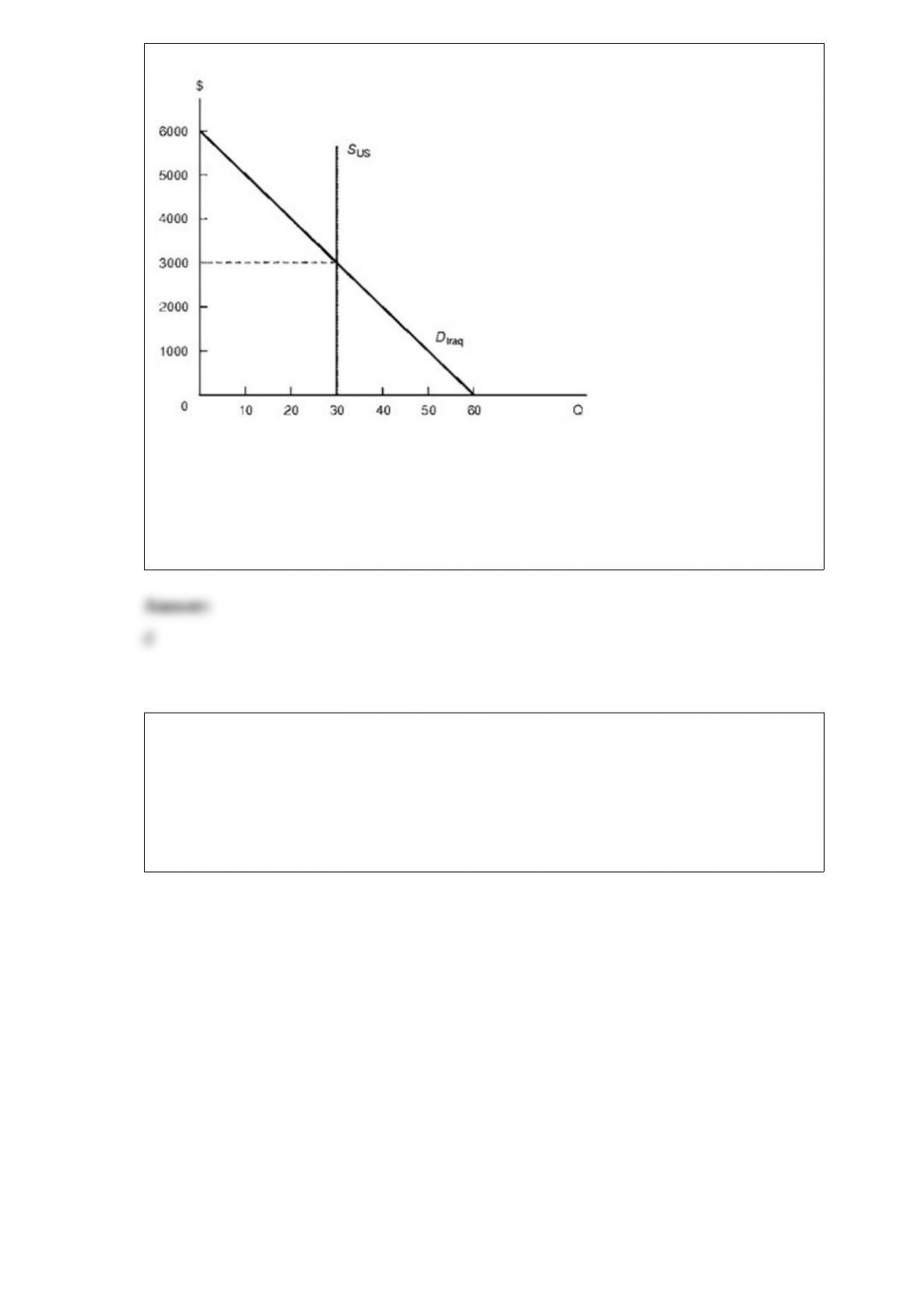
consider figure 6.3. of the quota-induced change in iraqi consumer surplus, $____ is not
transferred to other sectors of iraq’s economy and represents deadweight loss.
a.$5000
b.$10,000
c.$15,000
d.$20,000
20) figure 5.4 illustrates the calculator market for venezuela, assumed to be a ‘small”
country that is unable to affect the world price. svenezuela is the domestic supply
schedule and dvenezuela is the domestic demand schedule.
figure 5.4. venezuelan calculator market
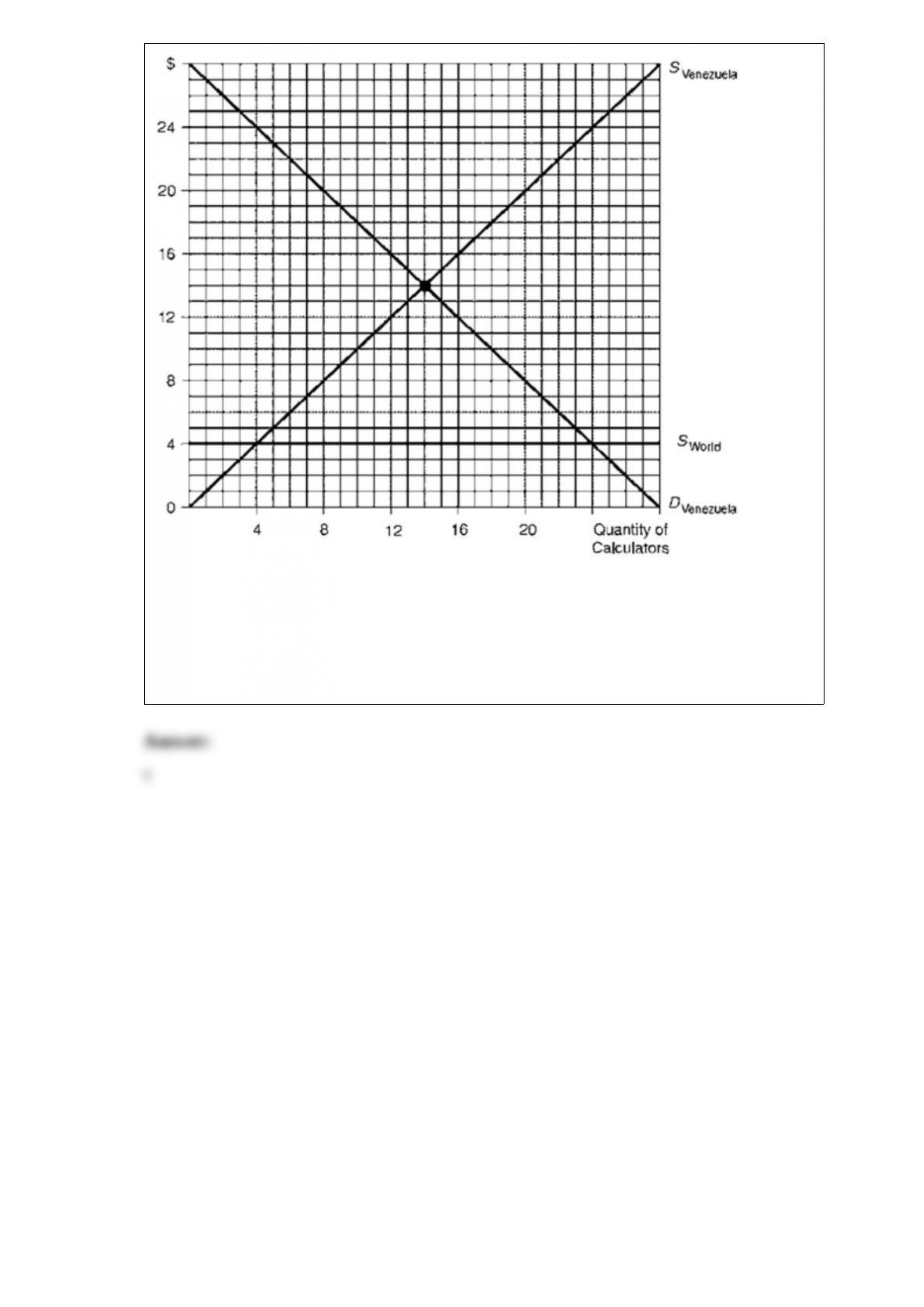
consider figure 5.4. the increase in venezuelan producer surplus under the production
subsidy totals:
a.$16
b.$20
c.$24
d.$32